Category Archives: Uncategorized

Zeeto ee Australia…with the Australians at Vevi

untitled

On OXI Day we commemorate the battle of Greece and Crete. This is the story of the often forgotten battle of Vevi in April 1941.

I have driven and walked through the battlefield many times. In April this year I sat enjoying a great meal at the beautiful Kontosoros Guest House & Restaurant at Xino Nero, a great example of the restored traditional inns that dot the region. It is hard to imagine in this quiet, lush valley that the sounds of war would have filled the air in 1941.

Yet it was here, just to the north of Xino Nero, around the village of Vevi and the winding Kleidi valley to its south, that the first major battle of the 1941 Greek campaign took place. It was also the first engagement of Anzacs in Greece since the arrival of the first diggers on Lemnos in 1915.

Some 34,000 Australian and New Zealand troops arrived in Greece throughout March and early April as part of the Allied force sent to assist in the defence of Greece. As they moved through Greece the Australians received a warm welcome. Villagers waved and gave the thumbs-up sign, calling out “Zeeto ee Australia” – “Long live Australia”.

The battlefield today rests at the top of a quiet, peaceful valley, with a winding road making its way between the narrow defile formed by the steep hills on each side until it emerges into the open at the junction of the road leading to the village of Vevi.

Standing at this cross-roads at the top of the valley and looking to the open plain ahead, one can imagine what confronted the defenders as they searched ahead for the advancing German Army as they deployed for action on 9 and 10 April 1941. Their commander, Australian Brigadier George Vasey, was instructed to hold up the Germans until at least 12 April.

Along the ridges of the hill to the right in front of the village of Kleidi was the Australian 2/8th Battalion, linked up with the 4,500 strong Greek Dodecanese Regiment further on in the area of Lakes Vegorritis and Petron. At the centre, astride the road, were the British 1st Rangers. The Australian 2/4th Battalion deployed on a more than six kilometre front on the hills to the left, with the 21st Greek Brigade to its left. At the centre of the position were strong contingents of Australian and British artillery and New Zealand machine gunners.

Forward from the Rangers, Australian engineers of the 2/1st Australian Field Company had been busy since 7 April creating craters in the roads north of Vevi, blowing up the railway that ran through the valley and a small bridge at the head of the pass, as well as laying a minefield in advance of the defenders’ position.
As I climbed one of the hills in early April it was overcast and had rained. The muddy ground was sticky mud and difficult to traverse. Seventy-four years earlier, in 1941, the young Australians who came here after their long journey from the south without sleep were met with rain in the valleys and snow and fog enveloping the mountains. For most of the Australians this was their first experience of snow – unlike most of their German opponents.

The attacking Germans included an SS brigade, armour and overwhelming air superiority. They made their presence felt on the evening of 9 April when German soldiers in Greek uniforms surprised and captured some British Rangers. Later Germans would call out in English for the defenders to put down their guns. The Australian response was a burst of machine gun fire.
The first two days of the battle saw all German attacks repulsed by mines, artillery and small arms fire. When the Australian artillery stopped the German mechanised advance along the road ahead of the valley on 10 April, General Mackay declared “our first ball!”. Two SS prisoners were taken by soldiers of the 2/8th during the fighting on the 11th. Meanwhile the 21st Greek Brigade had twice repulsed German infantry attacks.

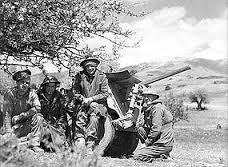
By 11 April the weather had turned for the worse, bringing blizzard conditions to the battlefield. Mist in the heights on each side of the valley made it impossible to see more than fifty yards. The hills on both sides of the valley were covered in snow, captured in the photograph of the 2/4th’s Lieutenant Colonel Dougherty with a Greek officer. The Anzacs reported several guns had frozen overnight and were unable to fire. Some soldiers dropped out of the line with frostbite. As the morning of Easter Saturday approached, the Australians were surprised to hear the sound of a shepherd with his sheep and oxen cart moving near their lines.
At 8.30 am the Germans launched their assault on the defenders. On a wide front east of the road the Germans, supported by intense mortar and machine gun fire, attacked the 2/8th Battalion in close formation at their junction with the Rangers. Under cover of the poor weather, the Germans were able to get to bayonet range before the defenders could see them. All day long the assault ebbed and flowed around the Australian positions. As one Australian soldier remarked of the experience:

“Suddenly you’d see figures appearing out of the wall of snow in front of you, we’d give them all we had and then the snow would close over them again. I thought they’d never stop coming …”

The Germans then launched their main assault at the centre of the pass. As the Rangers in the centre of the Allied defence line fell back, the 2/8th began to withdraw. The German infantry jumped from their trucks and advanced close behind their armoured vehicles. The Australian and British Artillery engaged the Germans on the road in the centre with open sights, delaying their advance. A successful counter-attack by the 2/8th saw it regain vital ground on the ridges and retain the heights to the east of the road.

As the planned withdrawal of the Dodecanese Regiment was completed by 4.00 pm in the face of German attacks on its position, the 2/8th was in danger of being surrounded and were attacked by infantry supported by tanks across its whole front.

By dusk German armour had penetrated deep into the Australian lines and the battalion began to fall back, passing through the village of Kleidi. Platoons and sections became separated in the confusion. Entering the valley floor, they came under heavy machine gun fire. Exhausted men were ordered by their officers to discard unnecessary weapons. Making their way overland, they marched 16 kilometres through heavy mud, reaching Sotir by 9.00 pm and Rodona by 11.00 pm. On their route some of the battalion were fired on by British tanks, presumably near Sotir.

Despite a valiant defence in hastily prepared positions, the 2/8th Battalion was badly mauled at Vevi. The bravery of the Battalion is reflected in the fact that one Victorian member of the 2/8th, Corporal Henry Moran from Waubra near Ballarat, was mentioned-in-despatches for his service during the battle. From the 29 officers and 619 other ranks that had arrived in Greece only weeks before, the Battalion was reduced to 250 weary men who made it safely to Rodona throughout the night. Vasey wrote that their commander, Lieutenant Colonel J.W. Mitchell, arrived “completely exhausted”.

While the infantry pulled back under fire from the advancing German units, Allied artillery and demolitions impeded the Germans as they moved down the valley. The successful retreat under fire of the New Zealand machine-gunners earned the Military Cross for its commander, Lieutenant WF Liley. At 5.00 pm the 2/4th Battalion began its 20-kilometre hike to its transport at Rodona.
During this withdrawal a mixed group of Anzacs were captured by the Germans and shepherded into a field near Xino Nero. The next day, along with other British and Greek prisoners, they would be caught in a deadly fire-fight between Allied and German troops during the rearguard action at Sotir. Thirty were wounded and those killed included 21-year-old Lieutenant John de Meyrick of the 2/4th Battalion. Sotir was one of the few tank battles of the campaign and again halted the Germans.

As the Australian defenders of Vevi crossed the Aliakmon River, they were welcomed by two Australian padres handing out tots of Johnnie Walker Black Label whisky and packets of Sao biscuits. Amongst the Allied losses, some 28 Australians and one or two New Zealanders were killed at Vevi, along with 40 Greek soldiers killed or wounded.

As the day ended, the Australian and New Zealand troops would have been unaware that from 6.00 pm on 12th April the Second Anzac Corps had been formed with the announcement:
“…that the reunion of the Australian and New Zealand Divisions gives all ranks the greatest uplift. The task ahead though difficult is not so desperate as that to which our fathers faced in April 26 years ago. We go to it together with stout hearts and certainty of success.”

The formation of the Second Anzacs at Vevi in Greece lay in the footsteps of the first Anzacs who had walked on Lemnos in 1915. The Australians would continue their fighting retreat across mainland Greece and Crete, adding new battle honours to the Anzacs. Some of the troops that survived the battle at Vevi would be killed or captured during the retreat. Others survived.

New Zealand machine gunner Private B.B. Carter survived Vevi and Greece, making an audacious escape from Crete with three others, including two Australians. Corporal Henry Moran of the 2/8th was another Vevi veteran who was evacuated from Kalamata on 26 April and took part in the defence of Canea in the battle of Crete. After service in the Middle East, Henry would survive the war and return to Ballarat. Another Vevi veteran, Kevin Price of the 2/1st Anti-Tank Regiment, would survive Greece and the war, returning to Malvern in Melbourne, only to find that his local fish and chip shop was now under the management of a Greek family who had witnessed the battle of Vevi.

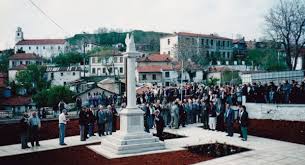
The battle would be remembered by the locals and memorials erected to the honour of those who fought there. At Xino Nero stands a war memorial erected by the locals on the initiative of the village president, Athanasios Altinis, commemorating the battle. I have been fortunate to attend the memorial service held here to honour the Allied soldiers who served and those who fell. Another grand memorial to the battle stands tall on a hill as you enter the Kleidi valley from the south, and as you enter the village of Vevi and turn into its main square, the war memorial contains a plaque dedicated to:
“The members of 2/4th Aust Inf Bn. 6 Aust Div A.I.F, the Greek Armed Forces, and the people of Vevi, who gave their lives in the defence of Greece in 1941.”
images

The battle of Vevi deserves to be commemorated. At the beginning of what was an ill-fated campaign, fought against overwhelming odds, the Anzacs fought bravely against some of the most elite German troops. Enduring terrible conditions, enemy armour and air superiority, they had succeeded in holding up the German advance for three days.

We should ensure that the memory of those brave Anzacs – like Ballarat’s Corporal Henry Moran – along with their Greek and British comrades, who began the defence of Greece at Vevi on 10 April 1941, is restored to its rightful place during the 75th anniversary of the battle of Greece and Crete in 2016.

* Jim Claven is a historian and published author who has been researching the Anzac trail in Greece for a number of years. Jim will be giving a presentation on the Battle of Vevi at the Thessaloniki Association ‘The White’ Hall, High Street Northcote at 3.00 pm on Sunday, 22nd November. All are welcome.

source:Neos Kosmos
Baggage handler at Sharm el-Sheikh ‘could have smuggled bomb on board doomed Russian jet’

Egypt_plane_crash__3489597b

British and American intelligence officers believe Metrojet flight 9268 was downed by a bomb in its luggage hold as suspicion turns on staff at the Egyptian airport.
A baggage handler at Sharm el-Sheikh airport may have smuggled a bomb on board the downed Russian passenger jet, investigators suspect.
British passengers preparing to return home have been told they cannot put any luggage in the hold of their aircraft, which is being treated as the weak link in the airport’s security. Instead their luggage will be sent on in a separate cargo plane.
US officials have said intelligence suggests the Islamic State of Iraq and the Levant (Isil) or another terrorist group may have had “an assist from someone at the airport” and the British security services have discovered evidence of a plot to carry out a major atrocity.
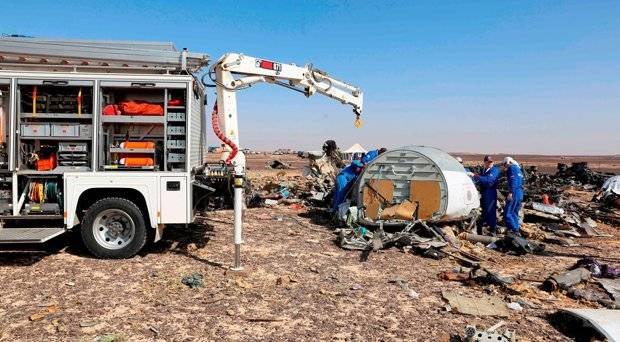
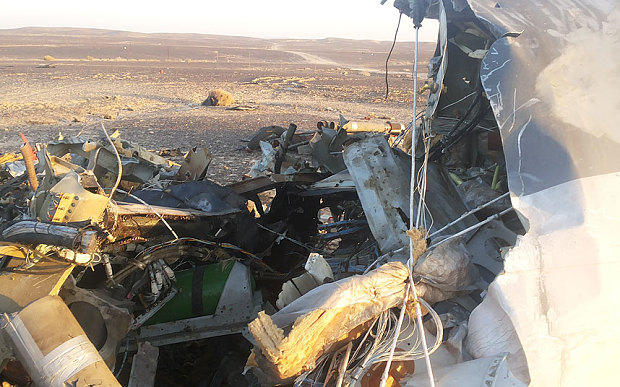
Latest photographs of the wreckage of flight 9268 appear to show holes in the fuselage punched from the inside out, suggesting an explosion inside the Airbus A321.
Internal components including part of a door also appear to have been peppered with shrapnel from inside the cabin.

Baggage handlers, catering staff and other airport workers are being interrogated to determine whether one of them may have been given a bomb to place on board the aircraft.

However, investigators have not ruled out the possibility that if a bomb was the cause of Saturday’s crash, it could have been placed on board in Russia.

Sharm el-Sheikh airport has metal detectors and x-ray scanners, meaning anyone hoping to plant a bomb on an aircraft would run a high risk of being caught if they were a passenger.

But unlike in the UK, airport staff have not previously been required to go through security, making them ideal candidates to smuggle bombs or other items onto aircraft. Problems with the airport’s perimeter were also exposed in June when a man got through a fence between the airport and a hotel and spent four hours vandalising an aircraft before he was finally caught. The incident led to the head of police at the airport being moved after guards were accused of gross negligence.

Isil is known to have the capability to make bombs of the type that would bring down an aircraft, either through a timer or a barometric trigger device, and MI5 has been warning for months that Isil has been planning major atrocities against the West.

Norman Shanks, former head of security for the British airport owner BAA, said airport workers were the most obvious way of getting a bomb on board.

He said: “It could be that a bomb has been put into passengers’ checked baggage after it has cleared security, it could be that a cleaner has put a device under a seat or even one of the catering staff could have smuggled something on board.

“Investigators will be looking at the possibility that a member of airport staff was coerced into doing it by being threatened or their family being taken hostage; it could be that a member of staff is secretly an Isil sympathiser, or a member of Isil could have got a job at the airport somehow.”

EasyJet passengers expecting to fly home on Friday were emailed by the company to say that: “Unfortunately due to the circumstances no checked baggage will be taken onto the flight, this will follow on to your destination airport at a later date.”

Abdel-Waheb Ali, the head of Sharm el-Sheikh International Airport, was sacked on Thursday, as British passengers complained that staff manning the airport scanners were playing games on their mobile phones rather than doing their jobs.

He was one of eight senior airport officials questioned by the local state prosecutor. Also among those questioned was Hani Hagag Hussein, the manager of SS Air, the company that serviced the aircraft and its catering trollies.

Despite the British government asking Egypt to increase security at the airport at the start of this year, passengers who travelled home on Tuesday, four days after the crash, said they were still able to take scissors, liquids and aerosols on board in their hand luggage, in contravention of international standards, because security staff “didn’t seem to care”.

Following the arrival of a team of British security experts, staff at the airport are now being made to go through metal detectors, remove their shoes and submit themselves to pat downs before being allowed air side.

source:telegraph.co.uk

Giant Lake Macquarie prawns: Leader prawns weighing 100g each caught in the lake

untitled 2

YOU don’t see prawns this big in Lake Macquarie every day.

Nearly the length of a man’s forearm, weighing over 100 grams each and well on the way to being mistaken for a lobster, these ‘‘Leader’’ prawns herald the start of the November prawn run.

They certainly had good mates Evan Martins and Adam Morse whooping and hollering about 9pm as the tide turned on a wet and windy Wednesday night.

The boys had backed themselves against the weather, working on the theory that the prawns would be running.

untitled

The gamble paid off.

‘‘We had the lake to ourselves and after a slow start from 9pm to 2am it was on,’’ Adam said.

‘‘Adam got the first big one as it floated by about a metre under the water. Then three minutes later another one came by that I got.

‘‘Then the rest of the night it was exciting, I’ve never seen so much ‘stuff’ in the water.

‘‘Crowned by these huge leader prawns, we got two and saw another, maybe, 10 float by.

‘‘It was the best night of prawning in five years. Insane.’’

Jason Nunn, from Fishermans Warehouse, was impressed with the size and rarity of these colossal crustaceans.

‘‘They’re probably a tiger prawn, some call them pilots, but any way you look at it they’re big prawns mate. You won’t see that all the time.’’

Mr Martins and Mr Maus weren’t keen to cook up their leaders.

‘‘They’re just so thumping big, it’s amazing,’’ Adam said.

source:theherald.com.au

Αυστραλία:Πήγαν για έρωτα και βγήκαν «κουρεμένες»

face

Το κυνήγι του έρωτα μέσω του Facebook στοίχισε σε ορισμένες γυναίκες της Αυστραλίας, πάνω από $350.000

Το κυνήγι του έρωτα μέσω του Facebook στοίχισε σε ορισμένες γυναίκες της Αυστραλίας, σε δύο μόνο περιπτώσεις που έγιναν γνωστές, πάνω από $350.000.

Τη μεγαλύτερη ζημιά, ύψους $300.000, φαίνεται, να την έχει υποστεί μία κυρία από τη Δυτ. Αυστραλία, πιο συγκεκριμένα από την Πέρθη, και μία άλλη από τη Ν.Ν. Ουαλία, με το ποσό των $50.000.

Άλλες που έπεσαν στην παγίδα, προτίμησαν, όπως φαίνεται, να μην εμφανιστούν και, συν τοις άλλοις, εκτεθούν για την ελαφρότητα και την ευκολοπιστία τους, υπολογίζεται εντούτοις ότι είναι αρκετές.

O Επίτροπος Προστασίας Καταναλωτών, Gary Newcombe, δήλωσε ότι πρόκειται για απατεώνες από τη Νιγηρία, οι οποίοι χρησιμοποίησαν το Facebook σε συνδυασμό με μία ιστοσελίδα, προκειμένου να παρουσιάσουν τον “Alan Mc Carty”, έναν διακοσμητή εσωτερικών χώρων από τη Σκοτία (υποτίθεται), ο οποίος τώρα διαμένει (δήθεν) στην Αυστραλία και ζητά τον έρωτα μέσω διαδικτύου.

Δυστυχώς, δεν ήταν λίγες οι γυναίκες που έπεσαν στην παγίδα.

Σήμερα αποκαλύπτεται ότι η φωτογραφία που χρησιμοποιήθηκε ανήκει σ’ έναν ανύποπτο καρκινοπαθή από την Καλιφόρνια των ΗΠΑ.

Παρ’ ότι μέρος των χρημάτων διοχετεύθηκε στις ΗΠΑ ή στο Ντουμπάι, όπου υποτίθεται ότι εργαζόταν ο “Alan MacCarty”, τα χρήματα τελικά κατέληξαν στη Δυτική Αφρική, μέσα από λογαριασμούς απατεώνων.

Πηγή:Νέος Κόσμος

Εκατοντάδες Αυστραλοί πολίτες βοηθούν οικονομικά τους τρομοκράτες

images

Σύνοδος Κορυφής στο τέλος του μήνα για την αντιμετώπιση του προβλήματος.

Η Αυστραλιανή Μυστική Υπηρεσία Οικονομικών Συναλλαγών (AUSTRAC) παρακολουθεί εδώ και αρκετό καιρό πάνω από 100 Αυστραλούς πολίτες τους οποίους υποπτεύεται ότι βοηθούν οικονομικά διεθνείς τρομοκρατικές οργανώσεις.

Για την αντιμετώπιση του προβλήματος, η ομοσπονδιακή κυβέρνηση αποφάσισε να διεξάγει σύντομα Σύνοδο Κορυφής των αρμόδιων υπηρεσιών για να συζητηθεί το πρόβλημα και να βρεθούν τρόποι αντιμετώπισής του.

Η Σύνοδος θα γίνει στο Σίδνεϊ στις 17 και 18 Νοεμβρίου και θα λάβουν μέρος σε αυτή πάνω από 150 αξιωματούχοι και ειδικοί θεμάτων τρομοκρατίας και διεθνών οικονομικών συναλλαγών από 17 χώρες, συμπεριλαμβανόμενης και της Ινδονησίας όπου οι τρομοκρατικές οργανώσεις αντλούν όλο και περισσότερους τζιχαντιστές.

Σύμφωνα με τις πληροφορίες που έχουν δει το φως της δημοσιότητας, ορισμένες τρομοκρατικές οργανώσεις, όπως το Ισλαμικό Κράτος για παράδειγμα, συγκεντρώνουν από εράνους και δωρεές όλο και μεγαλύτερα χρηματικά ποσά από συμπαθούντες που ζουν κυρίως σε χώρες της Δύσης.

Η AUSTRAC και η αστυνομία που διεξάγουν σχετικές έρευνες πιστεύουν ότι το χρηματικό ποσό που καταλήγει στα ταμεία των τρομοκρατών έχει αυξηθεί κατά 300% τον τελευταίο καιρό.

Αυτός είναι και ο λόγος που παρακολουθούνται συστηματικά οι οικονομικές δραστηριότητες πάνω από 100 πολιτών της χώρας τους οποίους οι Αρχές υποψιάζονται ότι βοηθούν τους τρομοκράτες και, ενδεχομένως, τους 120 Αυστραλούς πολίτες που πολεμούν στις τάξεις των τρομοκρατών στη Συρία και το Ιράκ.

Οι ειδικοί πιστεύουν ότι τα υψηλόβαθμα στελέχη του Ισλαμικού Κράτους είναι καλά καταρτισμένα στα οικονομικά θέματα και βρίσκουν συνεχώς διαφορετικούς τρόπους και πηγές απ’ όπου και χρηματοδοτούν τις επιχειρήσεις τους.

Επίσης, χρησιμοποιούν και τα social media για να διαφημίζουν διάφορους τραπεζικούς λογαριασμός, που όποιος θέλει μπορεί να στείλει τη δωρεά του, ενώ παράλληλα κάνουν και εράνους και συγκεντρώνουν χρήματα από τους υποστηρικτές τους.

Αναφερόμενη στο οικονομικό έτος 2014 και 2015, η Αυστραλιανή Μυστική Υπηρεσία Οικονομικών Συναλλαγών υποστηρίζει, ότι πάνω από 53 εκατομμύρια δολάρια συγκέντρωσαν με διάφορους τρόπους οι τρομοκρατικές οργανώσεις, από τα οποία τα 11 εκατομμύρια ήταν σε μετρητά.

Το ποσό αυτό, βέβαια, είναι σταγόνα στον ωκεανό από τα χρήματα που κερδίζουν από την πώληση πετρελαίου στη μαύρη αγορά, τα χρήματα από τις πωλήσεις αρχαιολογικών αντικειμένων, τις κλοπές των χρημάτων από τις τράπεζες περιοχών στις οποίες ελέγχουν, από εκβιασμούς διαφόρων κυβερνήσεων για τον μη αποκεφαλισμό των πολιτών τους που κρατούν ομήρους και διάφορες άλλες τρομοκρατικές δραστηριότητες.

Πηγή:Νέος Κόσμος

Nimetz calls for name resolution

547424-nimetz

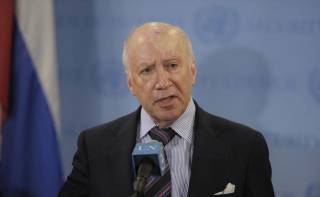
Ambassador Matthew Nimetz, Secretary-General’s Personal Envoy for the talks between Greece and FYROM.

Macedonia name issue very high on the agenda in both Athens and Skopje

United Nations mediator Matthew Nimetz believes it is time to resolve the dispute between Greece and the Former Yugoslav Republic of Macedonia (FYROM) over the latter’s name. In a wide-ranging discussion, Nimetz sets out his thoughts, hopes, but also his worries. He makes it clear that his choice is for there to be a composite name that would include a geographic qualifier. The envoy also talks about a “transitional period” and notes the need for a fast-track process for Skopje to join NATO and the European Union.

During his time in the role, Nimetz has met many leaders and foreign ministers from the two countries. He has listened at length to the positions and arguments of both sides, and has put forward a range of compromise solutions to the name dispute.

Over the last couple of decades, Nimetz has told me on many occasions about the times that he was close to a solution but was unable to clinch one. He has never hidden his disappointment about this. Now, due to the turmoil caused by the refugee crisis and the fears about terrorism spreading, he believes there are pressing reasons for a solution to be found as soon as possible.

Where are we on the name issue?

It is 20 years since the signing of the Interim Agreement and I think I am the only one who sat at the table when it was signed who is still working on the matter. Clearly it is time to resolve it. The migrant issue that so affects the two countries involved in the “name” dispute, the rise of terrorist threats in the region, and the troubling economic issues facing Southeast Europe today are new reasons why settling this issue is vitally important. A settlement would open the door to better cooperation and a stronger Euro-Atlantic approach to dealing with regional issues and would serve the interests of both countries.

Are you optimistic it will be solved soon?

During the past year or so the “name” issue has been lower on the priority list, as both nations involved have faced other important issues. I cannot fault them for this, but I believe it is time to focus with greater intensity on this issue with the goal of resolving it. Let me say I definitely believe it is resolvable, but more than that, it is resolvable in a way that will be positive for both countries. This is not a situation which is what we call a “zero-sum” situation: where one party “wins” and the other “loses.” There can be a resolution that is a “win” for both countries, meeting the national goals that each believes important. What is needed is to put this matter on a fast track and engage the leaders of both countries to solve it. The United Nations process, and the support of friendly parties, can be very important in this process.

Would you opt for the use of the term Macedonia but with a geographic qualifier?

The main building blocks of a solution are, to me, clear, because, after all, we have been talking about this for 20 years. The precise elements of an agreement have to be worked out by the parties, but I will tell you what I think they should consist of. First, there needs to be agreement on a name for the state that includes Macedonia but includes a suitable modifier, in my opinion a geographic modifier would be best, that preserves the dignity of the state but also differentiates it from the large part of Macedonia that is an integral part of Greece.

What about the use of the name and other important elements?

Well, this is the second element. There must be agreement on subsidiary aspects of the name, such as scope of usage and transition period, that I believe can be solved by serious discussions between the two sides with good will. Third, there must be assurances that the issue of any territorial aspirations are forever rejected and that a peaceful and cooperative relationship be the basis for the relationship. Fourth, the identity of the respective people must be respected by whatever agreement is reached. Fifth, the cultural heritage and patrimony of the respective people must also be respected. Sixth, a fast track for admittance to NATO is essential as well as support for setting firm dates for a start to the process of EU entry, which would of course be under the supervision of the European Commission.

What should be the next moves?

The most important thing in my opinion is to put solving this “name” issue very high on the agenda in both Athens and Skopje. The dialogue between the two foreign ministers has, from what I can tell, been a constructive one and my hope is that this will continue. The visit of Foreign Minister [Nikos] Kotzias to Skopje some months back was an important step in the process of building trust, as was the agreement on a series of confidence-building measures. These confidence-building measures, CBMs as they are called, were a good initiative from Athens and the positive way the concept was received in Skopje also reflects a positive atmosphere, but now we must build upon that important step forward in the relationship.

Would it help if the two prime ministers met bilaterally?

At some point, sooner rather than later, a meeting of the two prime ministers would be valuable. Having watched how they handle their roles as leaders and negotiators, and having now met them both at the United Nations General Assembly (UNGA), I believe they are two leaders who know this issue and who definitely know how to negotiate. I think they both have the trust of their country that they will protect the national interests of each, and that they have the strategic vision and political courage to work out a solution.

What is the United Nations’ role at this stage?

source:neos kosmos

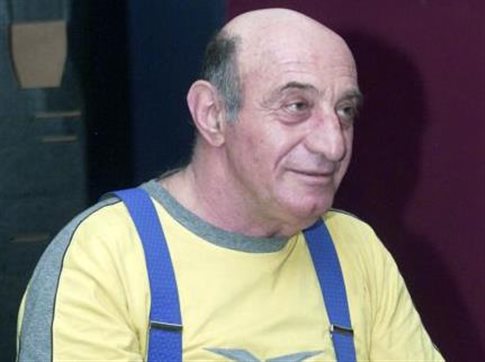
Πέθανε ο γνωστός ηθοποιός Κώστας Τσάκωνας

4C05AD18B6DE289C632EEEC5A26CCCF7

Πέθανε σε ηλικία 72 ετών ο γνωστός κωμικός ηθοποιός Κώστας Τσάκωνας, ο οποίος τα τελευταία χρόνια έδινε μάχη με τον καρκίνο.

Πρόσφατα είχε υποβληθεί σε χειρουργική επέμβαση και είχε νοσηλευτεί σε νοσοκομείο στο κέντρο της Αθήνας.

Η κηδεία του θα πραγματοποιηθεί το Σάββατο, στις 11 το πρωί, από το νεκροταφείο Αργυρούπολης.

Ο Κώστας Τσάκωνας γεννήθηκε στις 12 Οκτωβρίου 1943 στην Αθήνα. Φοίτησε στη Δραματική Σχολή του Λαϊκού Πειραματικού Θεάτρου του Λεωνίδα Τριβιζά και στη δραματική σχολή «Βεάκη».

Η πρώτη του εμφάνιση στον κινηματογράφο ήταν σε μια ταινία μικρού μήκους του Κώστα Ζυρίνη.

Στη συνέχεια έπαιξε σε πολλούς πρωταγωνιστικούς ρόλους στον κινηματογράφο, το θέατρο αλλά και στην τηλεόραση. Χαρακτηριστικός ήταν ο ρόλος του στην ταινία «Μάθε παιδί μου γράμματα».

Πριν πέντε χρόνια είχε υποστεί σοβαρό εγκεφαλικό επεισόδιο, ενώ λίγο αργότερα διαγνώστηκε ότι έπασχε από καρκίνο.

Πηγή:in.gr

US, UK say bomb may have downed Russian jet

Crash1

The United States and Britain say a bomb may have brought down a Russian airliner which crashed in Egypt, as the Islamic State group insisted it caused the disaster.

Britain and Ireland suspended flights to and from the Egyptian Red Sea resort of Sharm el-Sheikh, where the plane took off on Saturday bound for Saint Petersburg before crashing minutes later, killing all 224 people on board.

“A bomb is a highly possible scenario,’ a US official told AFP. ‘It would be something that ISIL would want to do.’

British Prime Minister David Cameron’s office said that ‘as more information has come to light, we have become concerned that the plane may well have been brought down by an explosive device’.

The move comes as Egyptian President Abdel Fattah al-Sisi is set to hold talks with Cameron in London on Thursday, during his first visit to Britain since he led the army’s overthrow of his predecessor Mohamed Morsi.

In Russia, authorities are expected to bury the first victim of the crash – the country’s deadliest air disaster.Moscow and Cairo both dismissed IS’s initial claim it brought down the Airbus A-321 in Egypt’s restive Sinai Peninsula, but the jihadists on Wednesday again insisted they were responsible and promised to reveal how.

If confirmed, it would be the first time the militant group, which controls vast tracts of Syria and Iraq, has bombed a passenger plane.Egyptian officials said investigators probing the plane’s black boxes had extracted the data from one of them for analysis, but added the other had been damaged and required a lot of work.

In a new statement on Wednesday, IS again insisted it had brought down the plane – and challenged sceptics to prove otherwise.’Prove that we didn’t bring it down, and how it came down. We will detail how it came down at the time of our choosing,’ the group said in an audio statement posted online.

The IS affiliate in Egypt is waging a bloody insurgency in the north of the Sinai Peninsula that has killed hundreds of policemen and soldiers.Russian airline Kogalymavia, which operated the plane, has ruled out a technical fault or human error, drawing fire from the head of Russia’s aviation authority for a ‘premature’ assessment.

Experts say the fact that debris and bodies were strewn over a wide area points indicated the aircraft disintegrated in mid-air, meaning the crash was likely caused by either a technical fault or a bomb on board.

source:skynews.com.au

Champions League: Bayern Munich thrashes Arsenal 5-1 in Group F clash

6914094-3x2-700x467

Bayern Munich dismantled Arsenal 5-1 in the Champions League’s Group F after a sensational first-half performance to close on the knock-out stages with two matches left.

The Bavarians, who struck three times in the first half in Munich through Robert Lewandowski, Thomas Mueller and David Alaba, avenged their 2-0 loss in London last month – their only defeat this season – with a dominant performance that underlined their title aspirations.

Substitute Arjen Robben, who made his first appearance in the competition this season after a long injury break, added a fourth soon after coming on in the 55th minute and Mueller grabbed a late fifth. Bayern is on top of the group on nine points.

Injury-hit Arsenal, woeful at the back and toothless up front, pulled a goal back through Olivier Giroud but is bottom on three points after its third loss, behind Olympiakos and Dinamo Zagreb.

Arsenal needs to win its remaining two matches to maintain its slim chances of reaching the last 16.

Meanwhile, a Neymar double and a clinical finish from Luis Suarez handed Barcelona a comfortable 3-0 victory over BATE Borisov that put the defending champions on the verge of qualifying for the last 16 for the 12th consecutive season.

The Brazilian beat goalkeeper Sergei Chernik with his spot-kick after 30 minutes following a foul on substitute Munir El Haddadi by Filip Mladenovic.

Neymar was the provider for Suarez who slotted home into the corner after 60 minutes.

Suarez then crossed for Neymar to slide the ball home after 83 minutes.

The pair have been the driving force behind Barcelona in the absence of the injured Lionel Messi and now have 13 goals between them from five matches.

Barcelona leads Group E now with 10 points from three matches, while BATE have three points.

Chelsea posts morale-boosting win

A stunning free kick from Willian seven minutes from time gave Chelsea a nervy and hard-fought 2-1 Group G win over Dynamo Kiev to lift some of the gloom surrounding Stamford Bridge.

The English champions bossed the match throughout a largely one-sided first half and led at the break after Dynamo centre-back Aleksandar Dragovic headed into his own net after 33 minutes.

Dragovic then scored at the right end when he thundered in Dynamo’s equaliser after 77 minutes as the visitors battled their way back into the match.

Willian, however, stepped up to strike a brilliant free kick that gave Dynamo goal keeper Olexandr Shovkovskiy no chance of saving.

The result left Chelsea in second place on seven points, behind leaders Porto on 10. Dynamo has five points and Maccabi Tel Aviv none.

In other results, AS Roma squandered a two-goal lead but recovered to beat Bayer Leverkusen 3-2 to move into second place in Champions League Group E and Belgian champions Gent stayed in the race for the second spot of Champions League Group H by beating an innocuous Valencia 1-0 at home.

Source:abc.net.au

Maitland:Accused denies killing Elizabeth Dixon

untitled

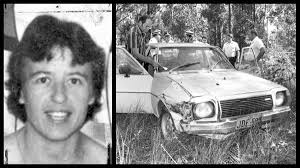
A MAN accused of the 1982 murder of Elizabeth Dixon has admitted to helping dispose of her body but rejects killing her, a court has heard.

Rodney Lawrence has allegedly placed the blame on his dead father-in-law, Bill Phillips, telling relatives and police he had been forced totie up a lifeless Ms Dixon and place her in the boot of her own yellow Mazda 323 before her body was driven to bushland near Ashtonfield and dumped.

But Newcastle Local Court heard on Wednesday that Mr Lawrence’s version, which included Ms Dixon being murdered in her own Metford home, contradicted forensic evidence both at her unit and at the bushland crime scene.

Detective Sergeant Jerry Bowden told a bail hearingthat there was no evidence, including any blood or signsof a struggle, found inside the unit or in the boot at the time of the murder that suggested she had been killed at home before her body was taken.

“No, quite the opposite,” Detective Sergeant Bowden said.

The detective said blood spattering on the interior roof of Ms Dixon’s car, which was consistent with “cast off” stains from a weapon, and the pooling of blood around her body, suggested she was killed inside the vehicle.

She was also still wearing scuffs, or slip-on shoes, and glasses despite claims her body was moved in and out of the car boot, the court heard.

Detective Sergeant Bowden also gave evidence that Mr Phillips had never been a person of interest until named by Mr Lawrence to relatives, and that Mr Phillips had classed the allegation as “ridiculous” when it was put to him by his daughter before his death in 2010.

Mr Lawrence, 64, was last week charged with the murder of Ms Dixon, who was found with 27 stab wounds and head injuries consistent with being struck with a blunt object, possibly a piece of timber found on the back seat.

See your ad here
The Stockton man had applied for bail on Wednesday, his legal aid solicitor citing health problems and the age of the case, including that Mr Lawrence had no criminal history and had strong ties to the area.

When magistrate Robert Stone denied the application, Mr Lawrence said: “You’re joking. I won’t survive.”

Prosecution facts tendered during the bail application said Mr Lawrence told police after his arrest that Mr Phillips had murdered Ms Dixon inside the Metford unit while he slept in a car outside.

He was then ordered to tie her wrists and help dispose of her body before heading home, where he threw out a pair of shoes he said were stained with blood.

The facts alleged Mr Lawrence told police he felt Mr Phillips would kill him if he didn’t follow orders and stated “he never reported the incident to police, because he did not want to be sent to gaol”.

“Some aspects of the accused’s version appeared doubtful, including how his shoes came to be stained with the victim’s blood despite not being present when she was stabbed,” the statement of facts said.

“There also appeared to be many opportunities for the accused to flee from Phillips during the incident and not assist him as he supposedly demanded.”

The court also heard that a significant prosecution witness, who is a relative of Mr Lawrence’s, was concerned for his welfare if the accused was granted bail. Mr Lawrence will reappear in Newcastle Local Court on January 13.

source:theherald.com.au