Category Archives: Uncategorized

Remembering the ANZAC POWs at Pylos and Methoni:ANZAC veteran honoured

P1010066

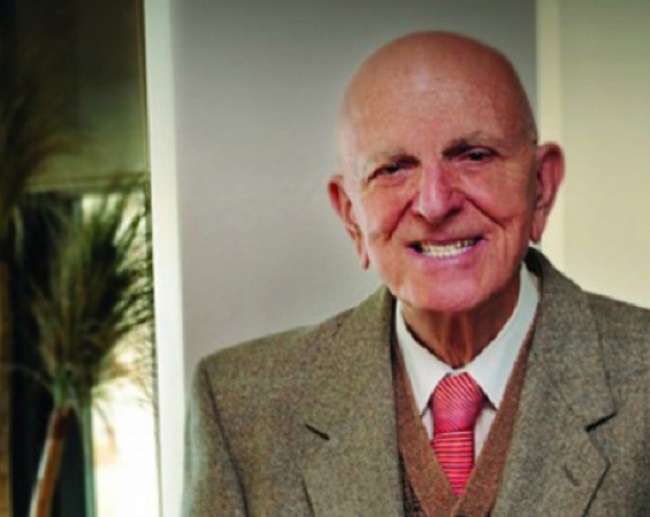
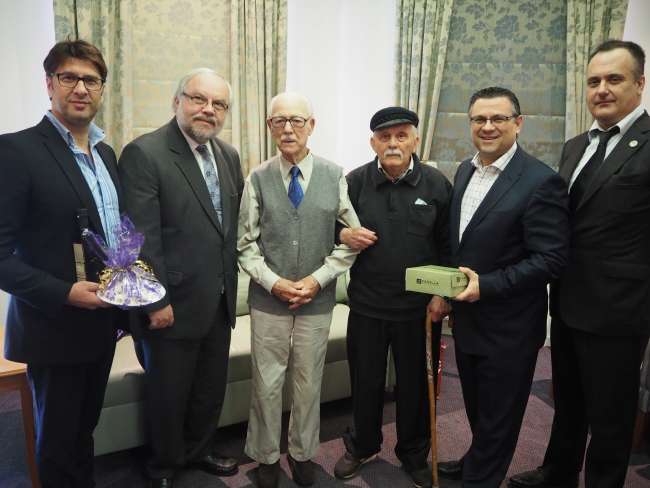
On Sunday 13 December the government of the Hellenic Republic, represented by the Hellenic Ambassador to Australia, His Excellency Mr Charalampos Dafaranos, and accompanied by a small gathering, celebrated the 98th birthday and honoured the service of Bill Rudd, an Anzac veteran from the Second World War.

Essendon-born Bill Rudd served in the Middle East as a Sapper in the 2/7th Field Company, Royal Australian Engineers. He was captured by the Germans during a ferocious engagement as part of the great battle of El Alamein – a battle which began the defeat of the Axis powers in North Africa.

In August 1942 Bill was transported from Benghazi in Libya aboard the Nino Bixio, an Italian transport ship, along with 2,000 other Allied POWs, headed for an internment camp in Italy. POW ships were not identified as such and were often victims of enemy attack.

In waters south west of Greece, 12 nautical miles south west of Pylos, at 4.33 pm on 17 August, Bill’s ship was torpedoed by an Allied submarine. Around 400 of Bill’s comrades were killed in the ensuing tragedy. Many were killed or died in the holds of the ship, as water gushed in and debris crashed on top of them.

At Pylos, the dead and wounded were removed from the ship, the dead being buried temporarily at Pylos. Some of the wounded were taken on Italian hospital ships to Italy. The survivors were taken to the great castle at Pylos. Later they would be transported north and eventually to Italian POW camps.

Bill would escape his captors and see out the war in neutral Switzerland.

The Allied dead and those missing presumed dead would eventually be buried at Athens’ Allied War Cemetery at Phaleron, in war cemeteries in Italy or memorialised at the El Alamein War Cemetery in Egypt.

The Allied submarine – the HMS Turbulent – had only days before its tragic encounter with Bill’s ship been engaged in taking on and dropping off Allied SOE agents and Greek resistance fighters off Crete and Pylos.

Bill has dedicated his life to ensuring that the story of his fellow Allied POWs in Europe is not forgotten, creating and maintaining an excellent website that is linked to the Australian War Memorial.

But particularly, Bill has been hoping that the service and lives of those who suffered in the tragedy of the Nino Bixio in 1942 – and the earlier similar tragedy of the Sebastiano Venier in December 1941 off Methoni – are commemorated in Greece.

A special guest was Mr Nick Georgopoulos, who as an adolescent in Methoni had helped bury some of the dead of the Sebastiano Venier in 1941. He recounted how he had never forgotten that day and the brave Allied soldiers he helped to lay to rest. But one of his fondest memories was of the survivors marching out of Methoni giving the ‘V’ for Victory sign and singing loudly the British marching song, It’s A Long Way To Tipperary.

Mr George Iliopoulis, president of Melbourne’s Panpylian Brotherhood of Navarino, along with Cr Jim Grivokostopoulos, president of the Pantryfilian Association of Melbourne and Victoria, and Paul Sougleris, secretary of the Federation of Messinian Organisations Melbourne and Victoria, are working to make Bill’s desire for a memorial at Pylos and Methoni a reality. In this, they are being assisted by myself.

They are also working to this end with Sydney-based Ms Rhonda Cousens-Georgopoulos and her husband, Peter Georgopoulos, the nephew of Nick Georgopoulos, who have completed much field research into the story.

Mr Iliopoulos, a native of Pylos, presented Bill with a birthday present including produce from the Pylos-Methoni region.

He said that it was an honour both for him and the Panpylian Brotherhood to assist in the erection of a memorial to those like Bill who suffered in these two POW tragedies off the coast of Pylos and Methoni.

“Bill represents one of the enduring links between Greece and Australia. His dedication to the memory of his comrades does great credit to him and is stimulus for us to complete his vision,” he said.

Bill celebrated his 98th birthday with his family on 7 December. Days later, on 9 December, it was the 74th anniversary of the torpedoing of the Sebastiano Venier off Methoni.

The ambassador said that it was honour to meet Mr Rudd and that he had earned the title of palikari.

Among others present at the gathering were Mr Peter Ford, whose father Frank fought with the 2nd NZ Expeditionary Force in Greece and Crete in the Second World War, and Mr Steve Kyritsis of the RSL Hellenic Sub-Branch.

Those interested in supporting the proposal to build a lasting memorial to the Anzac POW’s of Methoni and Pylos should contact Mr George Ilipoulos via email – giliopou@bigpond.net.au

* Jim Claven is a historian, freelance writer and secretary of the Lemnos Gallipoli Commemorative Committee. A Philhellene, he has written extensively on the Hellenic link to Anzac and worked to raise awareness of this link across two world wars in Australia and Greece. One of the major projects he has worked on is The Lemnos Gallipoli Memorial in Albert Park, unveiled in August 2015. He is now completing a major new commemorative book on Lemnos and Gallipoli, and assisting the above project to honor the memory of those Allied soldiers who suffered in the Nino Bixio and Sebastiano Venier tragedies off Pylos and Methoni.

source:neos kosmos
Brussels cancels NYE celebrations, Turkey attack plots foiled with arrests

1451511884026

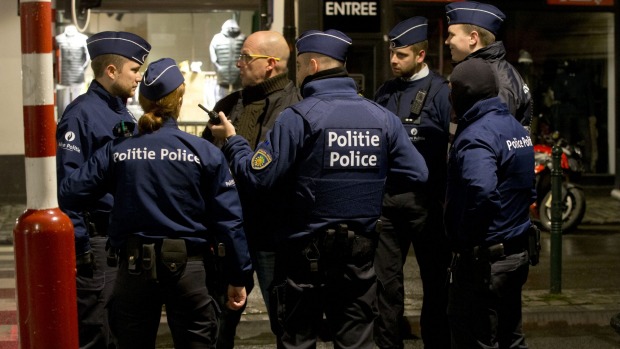
Washington: New Year’s Eve celebrations have been cancelled in Belgium’s capital, Brussels, due to fears of a militant attack, as the city remains on high alert following the Paris terrorism attacks in November.

Brussels mayor Yvan Mayeur told Belgian broadcaster RTBF public festivities planned in the heart of the city would not go ahead.

“Unfortunately we have been forced to cancel the fireworks and all that was planned for tomorrow [Thursday] evening and that would have brought a lot of people together in the centre of Brussels, following a risk analysis by the crisis centre,” Mr Mayeur told Belgian broadcaster RTBF.

Authorities said on Tuesday that two men had been arrested during house searches in different parts of the country in connection with suspected plots to unleash Islamic State-inspired attacks in Brussels.

Belgium’s state security agency said the planned attacks had “the same style” as last month’s rampage in Paris that killed 130 people. IS asserted responsibility for the Paris attacks.

“Together with the interior minister, we’ve decided to not have the celebrations on Thursday evening,” Mr Mayeur said.

The two people arrested, who were likely to appear in court on Thursday, belong to the Kamikaze Riders, a motorbike club whose members are mostly of North African origin and whose bike stunts can be seen in various online videos.

Two of the Paris suicide bombers, Brahim Abdeslam and Bilal Hadfi, had been living in Belgium. On Wednesday, a source close to the French investigation confirmed a report that said at least one man was suspected of having co-ordinated the attacks by mobile phone from Belgium as they were being carried out.

Brussels last cancelled its New Year fireworks in 2007, when it was also on high alert after a plan was foiled to free Tunisian Nizar Trabelsi, convicted of plotting to blow up a military base.

It comes as security concerns plague New Year’s Eve celebrations around the world.

Police in Turkey have detained two suspected IS extremists over a suicide bombing plot during New Year’s Eve celebrations in the country’s capital of Ankara, state media reported on Wednesday.

“They were caught before they had the opportunity to take action,” the Turkish prosecutor’s office said.

The raid underscored the sweeping security precautions in place across the world for holiday events beginning on Thursday. Nearly all major cities plan stepped-up police patrols and surveillance, ranging from London’s fireworks display to New York’s Times Square festivities.

The Ankara prosecutor’s office said the men – both Turkish citizens – had staked out possible attack locations in Ankara. The state-run Anadolu Agency, quoting police and judiciary officials, said the potential bombing sites included areas near bars and a shopping mall.

Turkey’s private NTV news channel, quoting security sources, said the two had “frequently” travelled to and from Syria, where IS holds territory and maintains its stronghold in the city of Raqqa. The report said security officials had been monitoring their movements for at least a month.

Turkish authorities said they seized a bomb-rigged vest for an apparent suicide attack, and a backpack containing an explosive device packed with ball bearings and metal shards.

Turkey, a NATO ally, had been a main pathway for IS recruits and supply lines, including oil smuggled from Syrian fields under the militants’ control. Turkey has not joined the US-led coalition conducting air strikes against IS targets in Syria and Iraq.

But Turkish officials allow US warplanes to use a base near the Syrian border and have taken steps to tighten border controls.

In October, two suicide attackers detonated bombs outside Ankara’s main train station during a peace rally, killing more than 100 people. Turkish officials claim the attack was linked to IS.
source:smh.com.au


Tasmanian Devils’ Mysterious Cancer May Come in Two Varieties

tasmanian-devil-tumor

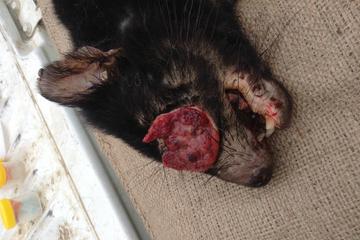
The Tasmanian devil has long been known to suffer from an unusual type of cancer that can spread from animal to animal, but now researchers say the endangered species is plagued by at least two kinds of infectious cancer.

The finding suggests that Tasmanian devils are especially prone to the emergence of contagious tumors, and that transmissible cancers may arise more frequently in nature than previously thought, scientists added.

Tasmanian devils (Sarcophilus harrisii) are marsupials, like kangaroos and opossums; females have pouches to carry and suckle newborns. The furry, dog-size mammals are found only on the island of Tasmania, which sits about 150 miles (240 kilometers) south of Australia. Fossil evidence suggests that Tasmanian devils were once spread across the Australian mainland, but disappeared from the area about 400 years ago.

Devils are known for their offensive smell, disturbing screeches and viciousness while eating. These creatures became the largest living carnivorous marsupial in the world after another species, called the thylacine, or Tasmanian tiger, went extinct in 1936.

Farmers considered the devils pests to livestock, and many of the animals were killed before the species became officially protected in 1941. The Tasmanian devil is not only a key tourism icon for Tasmania, but also ecologically critical to the island’s native ecosystem.

Now, the devils are bedeviled by contagious facial tumors that kill the animals within a year of reaching maturity. The disease was first reported in 1996 at a site in northeast Tasmania. By 2007, the disease had spread across more than half of the devils’ home range. Some populations of the animal have lost up to 89 percent of their members because of this epidemic. Researchers say extinction of devils is possible unless officials can find a way to eradicate the disease.

The disease is spread through biting during fights over food and during mating. (The only other known infectious cancer that can spread through bites occurs in dogs and is known as canine transmissible venereal tumor.)

Previous research suggested that the cancer, which is called devil facial tumor disease (DFTD), originated from a genetic mutation in nerve cells in a single, female Tasmanian devil. In devils that have the disease, cancerous lesions around the mouth, face and neck grow to the point that they prevent the animals from eating, and eventually starving them to death. There are no treatments for the cancer, and it is currently 100 percent fatal.

In the new research, scientists discovered that devils are actually suffering from at least two different transmissible cancers.

“Transmissible cancers are extremely rare, but for two [to occur] in the one species, astonishing,” said study co-author Gregory Woods, an immunologist at the University of Tasmania. “Maybe transmissible cancers are more common than we believe.”

This second type of transmissible cancer in devils, known as DFT2, has been detected in eight devils in southeast Tasmania. It causes facial tumors just like the disease seen before, now dubbed DFT1.

However, DFT2 is genetically distinct from DFT1. For instance, DFT2 possesses a Y chromosome, which means it came from a male and not from a female, as DFT1 did.

The researchers made the discovery when they were growing DFTD1 cells in lab dishes in order to study them, and noticed the cells were behaving slightly unusually, Woods told Live Science. “When we discovered and confirmed the second case, we were absolutely astonished. We almost didn’t believe our own work.”

It remains uncertain why devils are especially susceptible to such cancers. Previous research suggested one culprit is the extremely low level of genetic diversity in the devil population, which is due to their small numbers. Since all living devils are so genetically similar, their immune systems may not easily recognize invading tumor cells as foreigners.

Scientists are seeking to develop a vaccine to help the devils fight against DFT1, but those plans may now need an update, researchers said. “Our vaccine research may have to include this new cancer,” Woods said.

Future research investigating whether transmissible cancers are more widespread than currently thought should analyze “species that are frequently in physical contact,” Woods said.

The scientists detailed their findings online Dec. 28 in the journal Proceedings of the National Academy of Sciences.

source:livescience.com

Australia:National road toll rises to 25

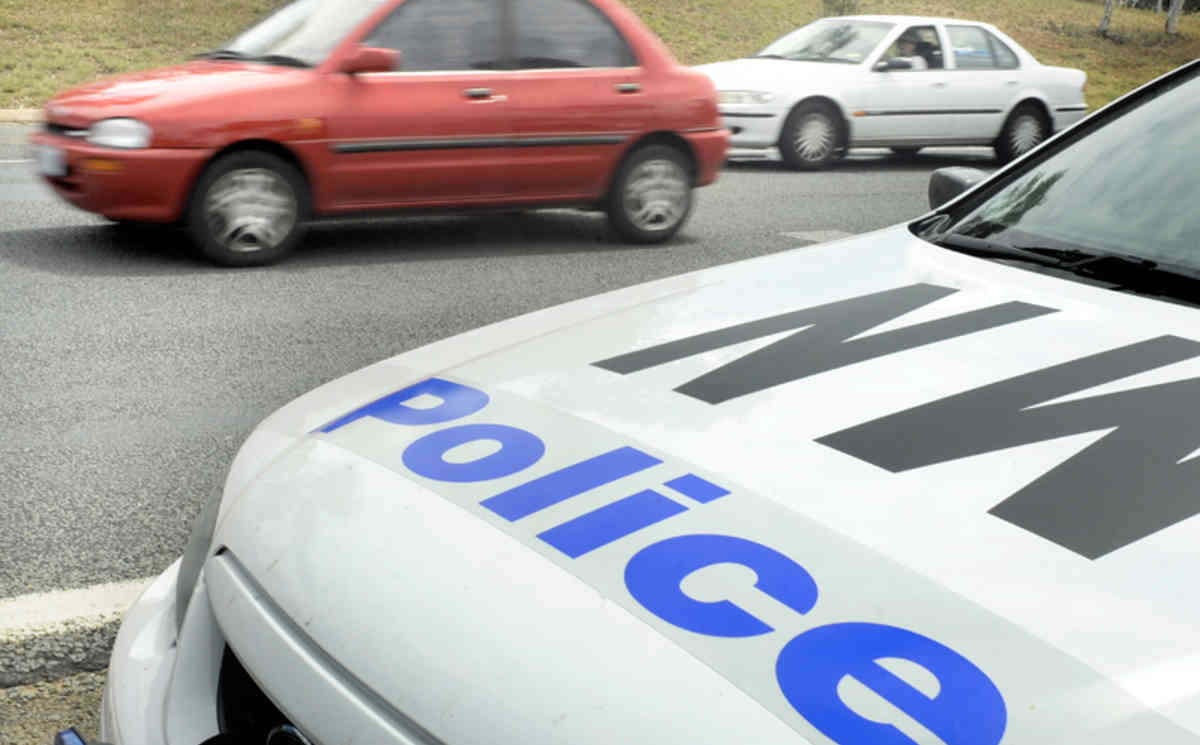
A police car monitors traffic at the launch of the nation wide police campaign RAID in Canberra, Friday, Nov. 21, 2008. RAID (Remove All Impaired Drivers) is aimed at detecting and removing all alcohol and/or drug affected drivers from the nation's roads in the period leading up to the Christmas and New Year holiday period. (AAP Image/Alan Porritt) NO ARCHIVING

A police car monitors traffic at the launch of the nation wide police campaign RAID in Canberra, Friday, Nov. 21, 2008. RAID (Remove All Impaired Drivers) is aimed at detecting and removing all alcohol and/or drug affected drivers from the nation’s roads in the period leading up to the Christmas and New Year holiday period. (AAP Image/Alan Porritt) NO ARCHIVING

Three separate crashes in NSW and Victoria have pushed the country’s national holiday road toll to 25.

A female driver was killed when two cars collided head-on in Whittingham, northwest of Newcastle yesterday afternoon.

Hours later, a 28-year-old motorcyclist died after hitting a tree in Matraville.

While in Melbourne two people were killed after their car slammed into a tree and burst into flames.

The Northern Territory is the only state or territory not to have recorded any road deaths during the holiday toll period, which began last Wednesday.

The national road toll period runs from 0001 December 23, 2015 to 2359 January 3, 2016 local times

source:skynews.com.au

Αυστραλία:Τα νέα Volvo θα προστατεύουν ακόμα και από τα καγκουρό

volvo

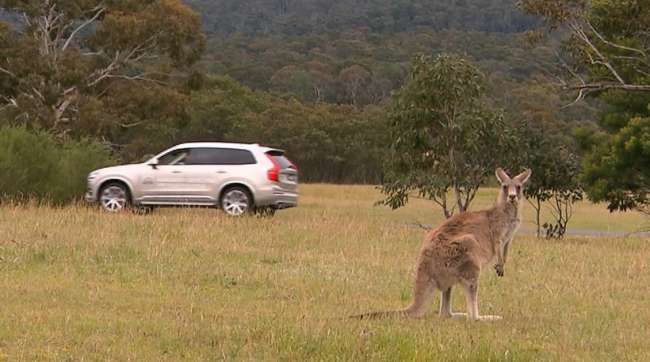
Kάθε χρόνο καταγράφονται περισσότερες από 20.000 συγκρούσεις οχημάτων με καγκουρό.

Μία ομάδα επιστημόνων της σουηδικής μάρκας ταξίδεψε στην Αυστραλία προκειμένου να καταγράψει τη συμπεριφορά των καγκουρό στο φυσικό τους περιβάλλον.

Σύμφωνα με την αυτοκινητική λέσχη της Νέας Νότιας Ουαλίας NRMA, κάθε χρόνο καταγράφονται περισσότερες από 20.000 συγκρούσεις οχημάτων με καγκουρό. Πέρα από το κόστος σε ανθρώπινες ζωές ή σοβαρούς τραυματισμούς, οι ετήσιες αποζημιώσεις από τις ασφαλιστικές εταιρείες ανέρχονται σε 75 εκατ. δολάρια Αυστραλίας.

«Τα καγκουρό είναι απρόβλεπτα ζώα και δύσκολο να τα αποφύγεις, όμως πιστεύουμε ότι θα καταφέρουμε να εξελίξουμε το σύστημα που θα τα αναγνωρίζει και θα αποφεύγει τις συγκρούσεις στους δρόμους ταχείας κυκλοφορίας», σχολίασε ο Martin Magnusson, μηχανολόγος ασφάλειας στη Volvo. «Στη Σουηδία έχουμε κάνει έρευνες που αφορούν μεγαλύτερα και πιο αργά ζώα, όπως η άλκη και η αγελάδα. Το καγκουρό έχουν πιο ασταθή συμπεριφορά και για αυτό κρίναμε σωστό να την εξετάσουμε στο φυσικό τους περιβάλλον».

Τα δεδομένα που θα συγκεντρωθούν θα βοηθήσουν τη Volvo να αναπτύξει το πρώτο σύστημα ανίχνευσης καγκουρό και αποφυγής της σύγκρουσης μαζί τους.

Πηγή:Νέος Κόσμος

Μακρής: Η Αυστραλία μεγαλώνει τεμπέληδες

makris

Συνέντευξη του μοναδικού Έλληνα δισεκατομμυριούχου της Αυστραλίας στην εφημερίδα «The Age»

Το επιχειρηματικό μυαλό και οι δυναμικές του κινήσεις έχουν αναδείξει τον Κώστα Μακρή σε έναν από τους πιο δραστήριους και πολυμήχανους ομογενείς επιχειρηματίες.

Ο Κώστας «Con» Μακρής είναι ο πλουσιότερος Έλληνας της Αυστραλίας και ο μόνος δισεκατομμυριούχος. Θεωρείται -δίκαια- ο βασιλιάς της αγοράς ακινήτων, καθώς είναι ιδιοκτήτης της μεγαλύτερης εταιρίας real estate στην Αδελαΐδα και μίας από τις πιο ισχυρές σε ολόκληρη τη χώρα.

Την παραμονή των Χριστουγέννων η εφημερίδα «The Age» δημοσίευσε συνέντευξή του, όπου, μεταξύ άλλων, ο κ. Μακρής φέρεται να λέει ότι:

*Δεν πιστεύει στα χρηματιστήρια και τις μετοχές. Κατά την άποψή του, η καλύτερη επένδυση είναι στα ακίνητα, αλλά και εκεί πρέπει να γίνεται προσεκτικά. Ο επενδυτής πρέπει να μελετά τις τάσεις και την τοποθεσία.

*Πιστεύει ότι ο νέος πρωθυπουργός, Μάλκολμ Τέρνμπουλ, είναι «σε καλό δρόμο» με την έμφαση στην καινοτομία και την έρευνα.

*Σημειώνει ότι πολλοί νέοι δεν έχουν διάθεση για σκληρή δουλειά και η Αυστραλία «μεγαλώνει τεμπέληδες».

*Προβλέπει ότι αναπόφευκτα, κάποια στιγμή, θα αυξηθούν τα επιτόκια και γι’ αυτό «ο μεγάλος δανεισμός εγκυμονεί κινδύνους».

Ο Κώστας Μακρής, ο οποίος κατάγεται από το Λυγουριό Επιδαύρου, έχει στην κατοχή του 14 εμπορικά κέντρα και ξενοδοχεία, ενώ σε αυτά πρόκειται να προστεθούν σύντομα τα 8 «mall» που ετοιμάζει. Το 2008 βραβεύτηκε από το Εμπορικό Επιμελητήριο Ωκεανίας ως ο πιο ισχυρός επιχειρηματίας της Αυστραλίας, διάκριση που βασίστηκε, κυρίως, στην εντυπωσιακή ρευστότητα που εμφανίζεται στο ταμείο των επιχειρήσεών του.

Στα επόμενα σχέδιά του είναι η ανέγερση του ξενοδοχείου Sheraton στην Αδελαΐδα, δαπάνης 200 εκατομμυρίων δολαρίων.

Ο «Con» Μακρής είναι ένας από τους Έλληνες που δεν ξεχνούν την καταγωγή τους και γι’ αυτό φροντίζει να πηγαίνει τουλάχιστον 5-6 φορές το χρόνο στην Ελλάδα. Η λατρεία του είναι η θάλασσα και τους καλοκαιρινούς μήνες κυριολεκτικά οργώνει το Αιγαίο και το Ιόνιο με την πολυτελή θαλαμηγό του «Ouzo Palace».

«Είμαι απογοητευμένος από την ανάμιξή μου στην ομάδα της Παναχαϊκής» εξομολογείται ο κ. Κώστας Μακρής, αποκαλύπτοντας ότι «εξαπατήθηκα από κακούς συνεργάτες. Μου έφαγαν 10 εκατ. δολάρια μέσα σε 4,5 χρόνια, γιατί έμπλεξα με απατεώνες. Ακόμα θυμάμαι την ημέρα που μού είπε ο δικηγόρος μου ότι χάσαμε το δικαστήριο γιατί στο χώρο της Δικαιοσύνης υπάρχει διαφθορά και διαπλοκή. Στην Αυστραλία πρέπει να είσαι τίμιος για να πας μπροστά, όχι λαμόγιο. Ούτε στην Ουγκάντα δεν επιτρέπονται αυτά τα πράγματα».

Ο ομογενής επιχειρηματίας Κώστας Μακρής, γεννήθηκε στο Λυγουριό της Αργολίδας το 1947 και σε ηλικία 16 ετών μετανάστευσε στην Αυστραλία. Το παρωνύμιό του εκεί είναι «Ελληναράς», ένα παρατσούκλι που απέκτησε το 1998, όταν κυκλοφορούσε με το γιοτ του «Lady Carol» στο λιμάνι του Σίδνεϊ, με αναρτημένη μια μεγάλη ελληνική σημαία. Πριν καταφέρει να δημιουργήσει τη μεγάλη του περιουσία, δοκίμασε ουκ ολίγα επαγγέλματα. Εργάστηκε ως εισπράκτορας αστικού λεωφορείου για τρεις μήνες και, αφού διαπίστωσε ότι αυτή η δουλειά τον κρατάει μακριά από τις επιχειρήσεις, άνοιξε ένα μαγαζί πρόχειρου φαγητού, πουλώντας ψάρι και πατάτες. Μέσα σε λίγα χρόνια κατάφερε να ανοίξει το πρώτο του σούπερ-μάρκετ, μια κίνηση που αποδείχθηκε κομβική για τη μετέπειτα επιχειρηματική του πορεία, καθώς στη συνέχεια δημιούργησε ολόκληρη αλυσίδα σούπερ-μάρκετ. Κατόπιν, ο Κώστας Μακρής επένδυσε σε αλυσίδα πρατηρίων γρήγορου φαγητού και το 1980 στράφηκε στην αγορά ακινήτων. Το 1987 αγόρασε το πρώτο του εμπορικό κέντρο και έκτοτε άρχισε μια χρυσή περίοδος για τον ομογενή επιχειρηματία, καθώς αγόραζε παλαιά κτίρια, επένδυε στην ανακαίνισή τους και τα εκποιούσε σε τιμές πολύ πιο υψηλές από την αγορά τους. Σήμερα ο Κώστας Μακρής έχει τη μεγαλύτερη εταιρία real estate στην Αδελαΐδα και μία από τις μεγαλύτερες στην Αυστραλία. Ο Έλληνας Κροίσος διετέλεσε για ένα διάστημα πρόεδρος της Παναχαϊκής, για την οποία είχε το όραμα να μετατρέψει σε Τσέλσι της Ελλάδας, χωρίς όμως αποτέλεσμα.

Η συνολική του περιουσία είναι τόσο μεγάλη ώστε υπολογίζεται πως ένας εργαζόμενος με μισθό 1.000 δολ. την εβδομάδα θα χρειαζόταν περισσότερα από 200 χρόνια αποταμίευσης για να φτάσει τον «Con» Μακρή.

Πηγή:Νέος Κόσμος

Αυστραλία:Ηλικιωμένη άφησε $4,3 εκατ. στους άστεγους του Newcastle

1442109550279

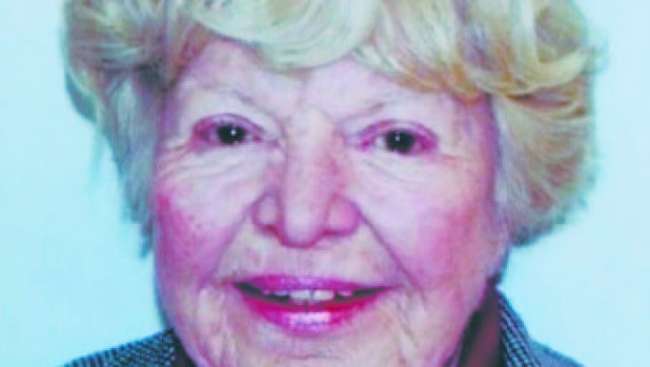
Η Lily Fardell άφησε την περιουσία της στην φιλανθρωπική οργάνωση St. Vincent de Paul.

Μία ηλικιωμένη κυρία από το Newcastle της Νέας Νότιας Ουαλίας άφησε ολόκληρη την περιουσία της στους άστεγους του τόπου της.

Πρόκειται για την Lily Fardell, η οποία πέθανε στις αρχές του χρόνου, αφήνοντας το σπίτι της και όλα της τα υπάρχοντα, αξίας $4,3 εκατομμυρίων, στη φιλανθρωπική οργάνωση St. Vincent de Paul, η οποία φροντίζει και βοηθά τους αστέγους.

Η διαθήκη της Lily Fardell ανοίχτηκε σε δικηγορικό γραφείο του Newcastle πριν λίγες μέρες, παρουσία πολλών συγγενών, φίλων της και εκπροσώπων της φιλανθρωπικής οργάνωσης.

Από το συνολικό ποσόν, τα $2,3 εκατομμύρια προήλθαν από την πώληση του σπιτιού της σε μία από τις ωραίοτερες περιοχές της πόλης και τα υπόλοιπα $2 εκατομμύρια από τον πλειστηριασμό των πραγμάτων αξίας που άφησε.

Πηγή:Νέος Κόσμος

Aυστραλία:Εκατομμυριούχος ομογενής δώρισε $605 εκατομμύρια σε ιδρύματα

santikos

Ο Γιάννης Σαντικός, που δημιούργησε έναν κινηματογράφο και μια αυτοκρατορία ακινήτων στο Σαν Αντόνιο του Τέξας, πέθανε τον Δεκέμβριο του 2014.

Ένα χρόνο μετά το θάνατο του Γιάννη Σαντικού, οι υπεύθυνοι του San Antonio Area Foundation ανακοίνωσαν ότι ο Έλληνας μετανάστης έχει αφήσει στο ίδρυμα δωρεά που ανέρχεται στα $605 εκατομμύρια, για φιλανθρωπικούς σκοπούς.

Ο Γιάννης Σαντικός, που δημιούργησε έναν κινηματογράφο και μια αυτοκρατορία ακινήτων στο Σαν Αντόνιο του Τέξας, πέθανε τον Δεκέμβριο του 2014. Αν και αμέσως μετά το θάνατό του, έγιναν δωρεές σε κάποιους φιλανθρωπικούς σκοπούς, η πλήρης έκταση των δωρεών του ανακοινώθηκε σε συνέντευξη Τύπου στο Σαν Αντόνιο, στις 15 Δεκεμβρίου 2015, σχεδόν ένα χρόνο μετά το θάνατό του. Η SAAF θα διαχειριστεί τη δωρεά με βάση τις επιθυμίες του.

Η διαθήκη που άνοιξε πριν από ένα χρόνο, προέβλεπε άμεσες δωρεές σε φιλανθρωπικά ιδρύματα στην Ελλάδα, συμπεριλαμβανομένων $500.000 προς την Ελληνική Ορθόδοξη Εκκλησία, με τα οποία προσφέρθηκε βοήθεια με τρόφιμα για άπορες οικογένειες στην Ελλάδα.

«Η συγκεκριμένη δωρεά είναι η μεγαλύτερη στην ιστορία των 51 ετών του Ιδρύματος μας και είναι η μεγαλύτερη ενιαία δωρεά στο Σαν Αντόνιο. Ο Σαντικός δώρισε το μεγαλύτερο μέρος της περιουσίας του, συμπεριλαμβανομένου του σινεμά και των κτηματομεσιτικών επιχειρήσεων, μετά από προσεκτική έρευνα σχετικά με την καλύτερη μέθοδο για τη δημιουργία ενός ταμείου με την κληρονομιά του, που θα μπορούσε να κάνει σημαντικές ετήσιες δωρεές. Ο Σαντικός επιθυμούσε να υποστηρίξει ένα ευρύ φάσμα φιλανθρωπικών προγραμμάτων στην περιοχή. Θα υπερτριπλασιάσει το μέγεθος του Ιδρύματος» σύμφωνα με δήλωση από το Ίδρυμα.

Γεννήθηκε και μεγάλωσε στην Ελλάδα. Ο πατέρας του Λούις μετανάστευσε στις Ηνωμένες Πολιτείες το 1911 από την Ελλάδα. Πρώτα εγκαταστάθηκε στο Ουάκο, όπου αρχικά εργάστηκε σε ένα μπακάλικο. Παρατήρησε τις μεγάλες ουρές των ανθρώπων που κάθε μέρα περίμεναν για να μπουν στο Θέατρο Rex. Έτσι, βλέποντας την ευκαιρία άρχισε να κάνει οικονομίες για να αγοράσει το θέατρο, ξεκινώντας ουσιαστικά μια ενασχόληση ενός αιώνα με κινηματογραφικές αίθουσες.

Το 1918 ο Λούις μετακόμισε στο Σαν Αντόνιο, όπου άρχισε τη λειτουργία του το θέατρο Ριάλτο, και τελικά ανοίγοντας το Palace Theatre στο Alamo Plaza τον πρώτο κινηματογράφο-παλάτι και πρόδρομο των μεγαλύτερων κινηματογραφικών συγκροτημάτων της περιοχής.

Ο Λούις επέστρεψε στην Ελλάδα το 1925, όπου γνώρισε και παντρεύτηκε την Τούλα Γάτου και την έφερε μαζί του στο Σαν Αντόνιο. Το 1927, πούλησε τα περισσότερα από τα επιχειρηματικά του συμφέροντα στο Σαν Αντόνιο και επέστρεψε στην Αθήνα, όπου έγινε ένας επιτυχημένος διανομέας ταινιών και όπου ο γεννήθηκε ο Γιάννης. Με την κατοχή και τον εμφύλιο πόλεμο ο Λούις φοβούμενος για την ασφάλεια των παιδιών του, έστειλε τον Ιωάννη και στη συνέχεια την αδερφή του Κική και τον αδελφό του Dean πίσω στο San Antonio το 1946.

Ο Γιάννης εγγράφεται στο Πανεπιστήμιο Αγίας Μαρίας, το 1947, λαμβάνοντας ακαδημαϊκά μαθήματα και μαθήματα της Αγγλικής γλώσσας ταυτόχρονα. Απέκτησε πτυχίο στη διοίκηση επιχειρήσεων μέσα σε 2 χρόνια και 6 μήνες, διάστημα κατά το οποίο ο πατέρας και η μητέρα του τελικά επέστρεψαν στο Σαν Αντόνιο, όπου άνοιξαν το Θέατρο Olmos.

Ακολουθώντας τα βήματα του πατέρα του, ο Ιωάννης ανέλαβε το 1958 την εταιρεία, καθώς οι γονείς του αποφάσισαν να επιστρέψουν στην Ελλάδα. Την επέκτεινε και την οδήγησε στην επιτυχία.

Πηγή:Νέος Κόσμος


Snake versus possum in Boxing Day showdown

untitled

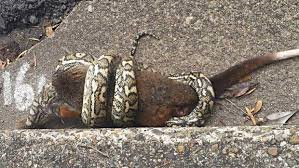
The possum was alive even with its head inside a two-metre python, Adrian Brand realised. When he reached out to touch the marsupial, its tail wrapped around his finger.

Mr Brand witnessed the conspicuous consumption in a city gutter while cycling in Brisbane about 9.30am on Boxing Day. He stopped to see what bystanders were looking at on Gladstone Road and filmed the tussle on his phone.

2

The video – now seen more than 59,000 times on YouTube – shows what appears to be a spotted python repositioning itself ahead of a long lunch. “My guess is the possum fell out of the tree,” Mr Brand said. “It would have been asleep and ambushed by the python. It was being constricted to death.”

One passing mother “freaked out”, telling her child to stay away. “I thought, ‘It’s got a possum in its mouth – it can’t hurt your kid’,” Mr Brand said.

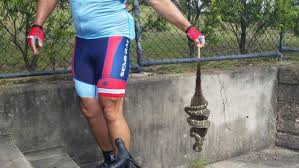
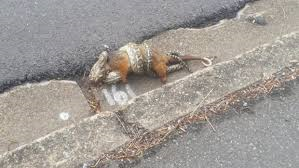
The feast was moveable, a cyclist demonstrated after he decided it should be moved off the road. He picked the possum up by the tail, the snake still coiled tightly around it, and carted the pair away to a nearby garden.

untitled

“I would’ve happily stood there to watch the whole thing,” Mr Brand said. Born in Brisbane, he said he had never seen anything like it before.

“I thought, ‘Wow, that’s awesome’.”

source:theherald.com.au

Giant squid guided back to sea by diver after swimming into Japanese harbour

images0IXC4026

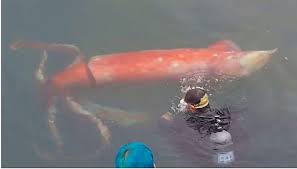
Video has emerged of a giant squid swimming near a pier in central Japan.

The 3.7-metre-long squid was spotted by onlookers at Toyama Bay as it swam under fishing boats for several hours before it was ushered back to open water.

Local dive shop owner Akinobu Kimura told CNN he joined the squid in the water and led it back out to the sea.

“My curiosity was way bigger than fear, so I jumped into the water and [went] close to it,” he said.

“This squid was not damaged and looked lively, spurting ink and trying to entangle his tentacles around me.”

He said he guided the squid towards the ocean where it disappeared into the deep sea.

The giant squid is thought to grow to up to 13 metres in length and typically inhabits deep waters.

source:abc.com.au