Category Archives: Uncategorized

Νέα νησιά δημιούργησε ο κυκλώνας Νείθαν που χτύπησε την Αυστραλία

Για ένα σπάνιο φυσικό φαινόμενο κάνουν λόγω οι ειδικοί, που είδαν την έκταση της Αυστραλίας να αυξάνεται από το πέρασμα του κυκλώνα Νείθαν , που αποκάλυψε νέες λωρίδες γης.

Η έκταση της Αυστραλίας αυξήθηκε χάρη στον πρόσφατο κυκλώνα Νέιθαν! Κι όμως δεν πρόκειται για φάρσα αλλά για ένα σπάνιο φαινόμενο.

Όπως γράφει η εφημερίδα “Guardian”, μετά τον κυκλώνα έκαναν την εμφάνισή τους μικρές λωρίδες γης στον ωκεανό.

Αυτά τα νησιά από άμμο και κοράλλια, σε απόσταση 200 χιλιομέτρων ανοιχτά του Κερνς, στη Βορειοανατολική Αυστραλία, έχουν σφυρηλατηθεί από τη μανία του τροπικού κυκλώνα Νέιθαν.

Όπως λένε  οι ειδικοί, η Θάλασσα των Κοραλλιών είναι ακριβώς το είδος του οικοσυστήματος όπου μπορεί να δημιουργηθεί νέο αυστραλιανό έδαφος.

Πηγή: news247.g

Tι ακριβώς πάει να κάνει ο Αλέξης Τσίπρας στη Μόσχα;

Tι ακριβώς πάει να κάνει ο Αλέξης Τσίπρας στη Μόσχα;
 

Σε ναρκοπέδιο κινείται η ελληνική εξωτερική πολιτική αναφορικά με τη διαμόρφωση των ελληνορωσικών σχέσεων, σε μια περίοδο που η Ελλάδα χρειάζεται τους ευρωπαίους εταίρους για να μην καταρρεύσει οικονομικά. Από την άλλη πλευρά η Μόσχα, που το 1998 υποτιμήθηκε το νόμισμά της έξι φορές, δεν θέλει να μολυνθεί από τον «ελληνικό ιό» της κρίσης, όπως έδειξε και το προηγούμενο της Κύπρου. Άρα τι ακριβώς πάει να κάνει ο Έλληνας πρωθυπουργός στη Μόσχα και τι ακριβώς θα φέρει επιστρέφοντας στην Ελλάδα; Ο Θεοχάρης Γρηγοριάδης, επίκουρος καθηγητής Οικονομίας της Ανατολικής Ευρώπης στο Ελεύθερο Πανεπιστήμιο του Βερολίνου (FU Berlin), επικεντρώνεται καταρχήν στην ευρωπαϊκή αλληλεγγύη, την οποία επικαλείται συνεχώς η ελληνική πλευρά όταν πρόκειται να αντιμετωπίσει την ανθρωπιστική κρίση και τα οικονομικά προβλήματα από τα μέτρα λιτότητας, αλλά που δεν αναγνωρίζει στους εταίρους της.

Δεν κινείται η Ελλάδα με πνεύμα συνεργασίας

«Αυτό που κάνει αυτή τη στιγμή η Ελλάδα αποτελεί κίνηση σαφώς εναντίον των οικονομικών συμφερόντων μεγάλων κρατών της ΕΕ, όπως της Γερμανίας, της Γαλλίας, της Αυστρίας κι άλλων χωρών, που αποφάσισαν να προχωρήσουν από κοινού σε κυρώσεις εναντίον της Ρωσίας, σε διακοπή των εμπορικών σχέσεων της ΕΕ με τη χώρα και σε άλλους περιορισμούς, τους οποίους τώρα η Ελλάδα δείχνει να μην υπολογίζει, επιχειρώντας αυτόνομα και μονομερώς να αλλάξει τη στάση της Ρωσίας ως προς την ίδια», υπογραμμίζει ο Έλληνας καθηγητής σε συνέντευξή του προς τη Deutsche Welle.

«Σε μια περίοδο που χάνονται θέσεις εργασίας στη Γερμανία αλλά και γερμανικές θέσεις εργασίας στη Ρωσία και σε άλλες μετασοβιετικές δημοκρατίες, σε μια περίοδο που η γερμανική ανάπτυξη και οι ρυθμοί ανάπτυξης άλλων μεγάλων οικονομιών της ευρωζώνης μειώνονται, σε μια περίοδο που το ίδιο το ευρώ δέχεται πολλές πιέσεις εξ αιτίας αυτής της κρίσης σε σχέση με το δολάριο και επομένως η ανταγωνιστικότητα της ευρωζώνης παγκοσμίως μειώνεται λόγω των ρωσικών κυρώσεων (…) η Ελλάδα δείχνει ότι κινείται μη συνεργάσιμα, θεωρώντας ότι το συμφέρον της ευρωζώνης δεν είναι και δικό της συμφέρον».

Διεθνείς συμμαχίες για εσωτερική κατανάλωση

Ο Έλληνας καθηγητής περιορίζει κυρίως σε επικοινωνιακό επίπεδο τα οφέλη που θα εισπράξει ο Αλέξης Τσίπρας από τη συνάντησή του με τον πρόεδρο Πούτιν. «Αυτό που ενδιαφέρει τον Τσίπρα είναι να μην πέσει από την κυβέρνηση, αυτό είναι το βασικό. Δεν τον ενδιαφέρει ούτε το τραπεζικό σύστημα, ούτε η φτώχεια που θα έρθει σε ενδεχόμενο Grexit», σημειώνει. «Αυτό που δεν θέλει είναι, αν γίνει το Grexit, να μην πάρει κι αυτόν η μπάλα και πέσει η κυβέρνησή του. Και θέλει να δημιουργήσει διεθνείς συμμαχίες για να ενισχύσει την εσωτερική στήριξη στο πρόσωπό του».

Η ουκρανική κρίση αποτελεί για την ελληνική κυβέρνηση μιας πρώτης τάξης ευκαιρία προς αυτήν την κατεύθυνση. Ο Θεοχάρης Γρηγοριάδης υποστηρίζει ότι η Αθήνα θέλει να χρησιμοποιήσει την περίοδο των κυρώσεων για να κερδίσει χρόνο σε ό,τι αφορά τη ρευστότητα για να αποδεχθεί το Eurogroup τα μέτρα του Γιάνη Βαρουφάκη, ενώ από τη Ρωσία δεν μπορεί να περιμένει κάτι σχετικό. Κι αυτό διότι η Μόσχα είναι πολύ πιο επιφυλακτική από ό,τι οι χώρες της ευρωζώνης ως προς τη διασφάλιση της ελληνικής ρευστότητας. Πώς είναι δυνατόν εξάλλου να γίνουν ρωσικές επενδύσεις σε μια χώρα με διαλυμένο τραπεζικό σύστημα, όταν η Ρωσία επιδιώκει καλούς οικονομικούς δείκτες για να κρατήσει σε αξιοπρεπές επίπεδο τη δική της οικονομία καθώς επίσης και τις οικονομίες με τις οποίες συνεργάζεται, όπως του Καζακστάν και της Λευκορωσίας;

«Πολιτικός οπορτουνισμός»

«Θέλουν να χρησιμοποιήσουν την ουκρανική κρίση ως σημαία ευκαιρίας για να πλήξουν επικοινωνιακά τους δανειστές, επειδή αυτό είναι ένα αδύνατο σημείο στην ευρωπαϊκή οικονομία», υποστηρίζει ο οικονομολόγος. «Κανείς δεν ήθελε την ουκρανική κρίση. Κανείς δεν περίμενε ότι θα μπορούσε να υπάρξει πιθανότητα διαίρεσης και με την Κριμαία και με τις ανατολικές επαρχίες της Ουκρανίας. Ήταν κάτι αδιανόητο και όμως έγινε. Επειδή λοιπόν είναι η αχίλλειος πτέρνα της Ευρώπης και της ευρωζώνης ο κ. Τσίπρας θεωρεί ότι είναι σωστό μαζί με τον κ. Κοτζιά, τον κ. Καμμένο και τον κ. Βαρουφάκη να την χρησιμοποιήσουν για να απειλήσουν τους δανειστές. Αυτό για μένα δείχνει πολιτικό οπορτουνισμό που δεν συνάδει με μια χώρα που θέλει να μείνει στην ΕΕ».

Εκείνο που θεωρεί πάντως ο Θ. Γρηγοριάδης δεδομένο ότι θα αποφέρει η επίσκεψη Τσίπρα στη Μόσχα είναι η μονομερής άρση του ρωσικού εμπάργκο για τα αγροτικά προϊόντα, έτσι ώστε τα ελληνικά ροδάκινα ή το λάδι να μην βαφτίζονται πλέον «λευκορωσικά» καθώς και κάποια θετική δήλωση του Πούτιν για τη συμμετοχή της Ελλάδας στο ρωσοτουρκικό αγωγό φυσικού αερίου Τurkish Stream. Όμως το πιο βασικό θα ήταν η εκδήλωση απτού ενδιαφέροντος των επικεφαλής των ρωσικών σιδηροδρόμων Βλαντίμιρ Γιακούνιν και της Gazprom Αλεξέι Μίλερ να επισκεφθούν την Ελλάδα για να κλείσουν συμφωνίες. Μια τέτοια προοπτική δεν τη θεωρεί εφικτή ο Έλληνας οικονομολόγος, όσο η ελληνική οικονομία βρίσκεται σε άθλια κατάσταση, χωρίς αξιόπιστο τραπεζικό σύστημα και χωρίς πολιτική βούληση της κυβέρνησης ΣΥΡΙΖΑ για ιδιωτικοποιήσεις.

Σακελλαρίδης: Δε στέλνουμε μήνυμα- Εξωτερική πολιτική ασκούμε

“Δε θέλουμε να στείλουμε κάποιο μήνυμα στους εταίρους, αλλά στο πλαίσιο μιας πολυδιάστατης οικονομικής πολιτικής, ο Πρωθυπουργός μπορεί να επισκέπτεται άλλες χώρες και να συζητά για διμερή θέματα”, σχολίασε ο κυβερνητικός εκπρόσωπος Γ. Σακελλαρίδης το πρωί στο Mega δημοσιευματα και σχόλια στο εξωτερικο για την επίσκεψη Τσίπρα στη Μόσχα.

Για το ίδιο θέμα ο Αλ. Φλαμπουράρης είπε στο ΣΚΑΙ πως η Αθήνα «δεν δέχεται παρεμβάσεις για το ποιες συναντήσεις θα κάνει». «Οι επιλογές είναι δικές μας», πρόσθεσε.

Πηγή: madata.gr

Ξεχωριστά τα έθιμα της Μεγάλης Εβδομάδας σε κάθε γωνιά της Ελλάδας

E591DBEB03020BAC38E001F5A3B824CD

Από τη Ρόδο ως τη Κέρκυρα και από την Κρήτη ως τη Θράκη κάθε γωνιά της Ελλάδας γιορτάζει το Πάσχα με το δικό της μοναδικό τρόπο. Έθιμα και παραδόσεις ζωντανεύουν και πάλι στην πλουσιότερη, σε λαογραφικές εκδηλώσεις, γιορτή της χριστιανοσύνης.

Θράκη

Στις Μέτρες της Θράκης, τα παιδιά φτιάχνουν το ομοίωμα του Ιούδα και το περιφέρουν στα σπίτια, ζητώντας κλαδιά για να τον κάψουν την επομένη στον Επιτάφιο. Τη Μεγάλη Παρασκευή η πομπή του Επιταφίου σταματά έξω από ένα παρεκκλήσι, εκεί όπου βρίσκεται έτοιμη η φωτιά για να καεί ο Ιούδας. Τη στιγμή που ο ιερέας διαβάζει το Ευαγγέλιο ανάβουν τη φωτιά και καίνε το ομοίωμα. Αργότερα θα πάρουν μια χούφτα από εκείνη τη στάχτη και θα τη ρίξουν στα μνήματα.

Μακεδονία

Με ένα κόκκινο πανί, που συμβολίζει το αίμα του Χριστού, απλωμένο στο μπαλκόνι ή το παράθυρο, ξεκινούν τη Μεγάλη Πέμπτη οι προετοιμασίες για τη βραδιά της Ανάστασης, ενώ την ίδια ημέρα οι νοικοκυρές βάφουν τα κόκκινα αυγά.

Παλαιότερα στη Μακεδονία η νοικοκυρά έβαζε το πρώτο αυγό στο εικονοστάσι, απ όπου το έβγαζε με την πυροστιά μόνο όταν έβρεχε ή άστραφτε, για να «ξορκίσει» το χαλάζι και τις πλημμύρες. Σε κάποια χωριά της Μακεδονίας, όπως οι Ελευθερές, μέχρι πριν από λίγα χρόνια σημάδευαν το κεφάλι και την πλάτη των μικρών αρνιών με τη μπογιά που είχε χρησιμοποιηθεί για το βάψιμο τον αυγών.

Όσο το κόκκινο πανί ήταν κρεμασμένο στο μπαλκόνι ή το παράθυρο, οι γυναίκες δεν έπλεναν ούτε και άπλωναν ρούχα, γιατί το θεωρούσαν κακό σημάδι, ενώ τα πρώτα αυγά που έβαφαν τα έστελναν μαζί με τσουρέκια στα πεθερικά τους.

Στη Θάσο στην Κοινότητα Λιμεναρίων διατηρείται το πανάρχαιο έθιμο «Για βρέξ Απρίλη μ», που γιορτάζεται την Τρίτη του Πάσχα. Συγκροτήματα απ όλη την Ελλάδα χορεύουν δημοτικούς χορούς.

Στην Ιερισσό της Χαλκιδικής έχουν το έθιμο «Του μαύρου νιου τ αλώνι», που γιορτάζεται την Τρίτη του Πάσχα. Μετά την επιμνημόσυνη δέηση και την εκφώνηση του πανηγυρικού, οι γεροντότεροι αρχίζουν τον χορό. Σιγά-σιγά πιάνονται όλοι οι κάτοικοι και συχνά ο χορός έχει μήκος τετρακόσια μέτρα. Τραγουδούν και χορεύουν όλα τα Πασχαλινά τραγούδια και τελειώνουν με τον «Καγκέλευτο» χορό, που είναι η αναπαράσταση της σφαγής 400 Ιερισσιωτών από τους Τούρκους, κατά την επανάσταση του 1821. Ο χορός περνά κάτω από δάφνινη αψίδα όπου υπάρχουν δύο παλικάρια με υψωμένα σπαθιά και στη μέση του τραγουδιού διπλώνεται στα δύο με τους χορευτές να περνούν ο ένας απέναντι από τον άλλο για τον τελευταίο χαιρετισμό. Κατά την διάρκεια της γιορτής μοιράζεται, καφές που βράζει σε μεγάλο καζάνι «ζωγραφίτικος», τσουρέκια και αυγά.

Στο Λιτόχωρο Πιερίας την Μ.Πέμπτη το βράδυ στολίζονται οι επιτάφιοι που φτιάχνονται από ανύπαντρες κοπέλες, οι οποίες όλη την Σαρακοστή φτιάχνουν λουλούδια από ύφασμα. Την Μ. Παρασκευή το βράδυ γίνεται στο παζάρι η συνάντηση των Επιταφίων που συνοδεύονται από χορωδίες Λιτοχωριτών.

Κεντρική Ελλάδα

Στην Αράχωβα, ανήμερα του Πάσχα ξεκινάει η περιφορά της Εικόνας του Αγίου Γεωργίου την οποία συνοδεύουν περί τα 500 άτομα ντυμένα με παραδοσιακές φορεσιές. Την επομένη πραγματοποιείται αγώνας δρόμου των γερόντων (ανηφορικός δρόμος), οι οποίοι ξεκινούν από την εκκλησία του Αγίου Γεωργίου και φτάνουν στο λόφο. Ακολουθούν χορευτικά συγκροτήματα και το απόγευμα χορεύουν γυναικείοι χορευτικοί σύλλογοι. Οι εκδηλώσεις συνεχίζονται με κλέφτικα αγωνίσματα, όπως το σήκωμα της πέτρας.

Στη Λιβαδειά, το πιο χαρακτηριστικό έθιμο της πόλης, είναι το γνωστό «Πάσχα της Λιβαδειάς», με τους νέους της πόλης να συμμετέχουν στο έθιμο του «λάκκου». Μετά την Ανάσταση και πριν ξημερώσει οι κάτοικοι ετοιμάζουν την φωτιά. Ένας, κάνοντας το σταυρό του, βάζει φωτιά στο σωρό με τη λαμπάδα της Αναστάσεως. Με ραντίσματα νερού και συχνό χτύπημα με ένα μακρύ ξύλο, η θράκα είναι έτοιμη για να ψηθούν τα αρνιά. Το γλέντι διαρκεί μέχρι το απόγευμα και συμπληρώνεται με τη συμμετοχή παραδοσιακών χορευτικών συγκροτημάτων και την καύση πυροτεχνημάτων.

Στο Αιτωλικό, την Μ.Παρασκευή πολλοί προσκυνητές επισκέπτονται το ναό της Κοιμήσεως της Θεοτόκου, όπου βρίσκεται ο Επιτάφιος, ιστορικό κειμήλιο του 13ου-14ου αιώνα. Την Κυριακή του Πάσχα κάθε γειτονιά, είναι μία μεγάλη υπαίθρια ψησταριά, όπου ο χορός και το τραγούδι έχουν τον πρώτο λόγο, ενώ προσφέρονται κρασί και παραδοσιακοί μεζέδες δωρεάν.

Στη Ναύπακτο, το βράδυ της Μ.Παρασκευής, πλήθος κόσμου, ντόπιοι και επισκέπτες, ακολουθούν την περιφορά του Επιταφίου, σχηματίζοντας πομπές, οι οποίες διέρχονται από το λιμάνι, όπου είναι αναμμένες δάδες ειδικά τοποθετημένες στις τάπες του Κάστρου, γύρω από το λιμάνι. Στο μέσον της εισόδου του λιμανιού οι δάδες σχηματίζουν μεγάλο σταυρό, που φωταγωγεί ολόκληρο το λιμάνι παρουσιάζοντας μία φαντασμαγορική εικόνα. Το έθιμο συνδυάζει τη θρησκευτική μυσταγωγία με την ηρωική προσπάθεια του μπουρλοτιέρη Ανεμογιάννη να πυρπολήσει τη τουρκική ναυαρχίδα στο χώρο αυτό.

Πελοπόννησος

Στο Λεωνίδιο, το πιο εντυπωσιακό έθιμο της περιοχής είναι, όταν το βράδυ της Ανάστασης γεμίζει ο ουρανός από φωτεινά «αερόστατα», τα οποία ανυψώνονται από τους πιστούς κάθε ενορίας.

Στην Καλαμάτα, αναβιώνει ένα έθιμο, που πηγάζει από τους απελευθερωτικούς αγώνες του 1821, ο διαγωνισμός των «μπουλουκιών». Οι διαγωνιζόμενοι με παραδοσιακές ενδυμασίες και οπλισμένοι με σαΐτες, δηλαδή με χαρτονένιους σωλήνες γεμάτους μπαρούτι, επιδίδονται σε σαϊτοπόλεμο, στο γήπεδο του Μεσσηνιακού με τη συμμετοχή πλήθους κόσμου.

Κυκλάδες

Στην Κύθνο, το πιο επιβλητικό έθιμο του νησιού είναι αυτό της «Κούνιας». Την Κυριακή του Πάσχα, στην πλατεία του νησιού, στήνεται μία κούνια, στην οποία κουνιούνται αγόρια και κορίτσια ντυμένα με παραδοσιακές στολές. Αυτός ή αυτή που θα κουνήσει κάποιον, δεσμεύεται ενώπιον Θεού και ανθρώπων για γάμο. Το βράδυ του Μ.Σαββάτου επικρατεί το έθιμο του «συχώριου», δηλαδή όλοι όσοι έχουν πεθαμένους συγγενείς φέρνουν στην εκκλησία ψητά, κρασί και ψωμί, τα οποία έχει «διαβάσει» ο παπάς και τα προσφέρουν στους επισκέπτες και στους κατοίκους του νησιού.

Η Σύρος βιώνει με ιδιαίτερο τρόπο το Πάσχα. Οι δύο θρησκευτικές της κοινότητες, η Ορθόδοξη και η Καθολική, γιορτάζουν συγχρόνως τις μέρες του Πάσχα. Οι Επιτάφιοι των Καθολικών στην Άνω Σύρο ξεκινούν από τον ναό του Αγίου Γεωργίου. Στην Ερμούπολη ο επιτάφιος των Καθολικών ξεκινάει από τον Ιερό Ναό Ευαγγελιστών, οι επιτάφιοι των Ορθοδόξων, από τις ενορίες Αγίου Νικολάου, της Κοιμήσεως και τη Μητρόπολη της Μεταμορφώσεως. Κατά την περιφορά τους συναντώνται στην κεντρική πλατεία Μιαούλη, όπου γίνεται κατανυκτική δέηση.

Στην Πάρο, η περιφορά του Επιταφίου της Μάρπησσας, παρουσιάζει ενδιαφέρον καθώς κατά την διάρκειά της, γίνονται δεκαπέντε περίπου στάσεις. Σε κάθε στάση φωτίζεται και ένα σημείο του βουνού, όπου τα παιδιά ντυμένα Ρωμαίοι στρατιώτες ή μαθητές του Χριστού, αναπαριστούν σκηνές από την είσοδο στα Ιεροσόλυμα, την προσευχή στο Όρος των Ελαιών, το Μαρτύριο της Σταύρωσης και την Ανάσταση. Τα μεσάνυχτα του Μ. Σαββάτου, το νησί γεμίζει από φώτα και τον θόρυβο των αμέτρητων πυροτεχνημάτων.

Στη Νάξο την Μεγάλη Παρασκευή οι κοπέλες καθαρίζουν τις εκκλησιές, στολίζουν τον Επιτάφιο και μετά ακολουθεί η περιφορά. Στο πασχαλινό τραπέζι ξεχωρίζει το παραδοσιακό «μπατούδο», κατσικάκι γεμιστό με εντόσθια, λαχανικά, ρύζι, αυγά και τυρί ψημένο στο φούρνο.

Δωδεκάνησα

Στο νησί της Αποκάλυψης, την Πάτμο, επίκεντρο των τελετών και ακολουθιών αποτελεί ο «Νιπτήρας». Στολίζεται με λαμπρές βάγιες και ποικιλία ανοιξιάτικων λουλουδιών. Την Μ.Πέμπτη γίνεται αναπαράσταση του «Μυστικού Δείπνου» του Νιπτήρα σε κεντρική πλατεία της Χώρας. Το Μ. Σάββατο το βράδυ πριν από την Ανάσταση, το Ευαγγέλιο διαβάζεται σε ηρωικό εξάμετρο με κώντιο και την Κυριακή του Πάσχα, στο Μοναστήρι της Πάτμου γίνεται η δεύτερη Ανάσταση κατά την οποία το Αναστάσιμο Ευαγγέλιο διαβάζεται σε επτά γλώσσες και από τον ηγούμενο μοιράζονται κόκκινα αυγά στους πιστούς.

Στη Ρόδο, το Σάββατο του Λαζάρου, τα παιδιά γυρίζουν από πόρτα σε πόρτα και τραγουδούν τον «Λάζαρο», συγκεντρώνοντας χρήματα και αυγά για τους ιερείς. Παλαιότερα, κανένας γεωργός δεν πήγαινε στο χωράφι του να εργαστεί, γιατί όπως πίστευαν, ό,τι έπιαναν θα μαραινόταν. Επιτρεπόταν μόνο η συγκέντρωση ξερών κλαδιών για το άναμμα των φούρνων τη Μεγάλη Εβδομάδα για το ψήσιμο των κουλουριών. Του Λαζάρου, επίσης, σε όλα τα σπίτια οι νοικοκυρές φτιάχνουν στριφτά κουλουράκια, «τα Λαζαράκια», συμβολίζοντας με τον τρόπο αυτό το σώμα του Λαζάρου που ήταν τυλιγμένο στο σάβανο.

Στην Κω, ενώ οι μεγάλοι ασχολούνται με τις πασχαλινές δουλειές και τον εκκλησιασμό, τα παιδιά προετοιμάζονται για την Ανάσταση. Παίρνουν μεγάλα κλειδιά από εκείνα που είχαν οι παλιές κλειδαριές, δένουν με ένα σχοινί το κλειδί με μπαρούτι και βάζουν το καρφί στην τρύπα του κλειδιού, το βράδυ της Ανάστασης το χτυπούν δυνατά στον τοίχο για να εκπυρσοκροτήσει. Άλλοι κόβουν μακριές λωρίδες χαρτιού, βάζουν στην άκρη της κάθε λωρίδας μπαρούτι και ένα φιτίλι, την τυλίγουν τριγωνικά, ώστε να προεξέχει το φιτίλι που το ανάβουν και από την ώρα που ο παπάς λέει το «Χριστός Ανέστη». Το πρωί του Μ. Σαββάτου, η εκκλησία στρώνεται με μικρά μοβ μυρωμένα λουλούδια του βουνού που λέγονται λαμπρές. Οι νοικοκυρές φτιάχνουν τις λαμπρόπιττες και το γεμιστό αρνί.

Στη Χίο, ο ρουκετοπόλεμος είναι ένα παλιό Βρονταδούσικο έθιμο που έχει τις ρίζες του στην τουρκική κατοχή. Αρχικά, οι κάτοικοι των ενοριών του Αγίου Μάρκου και της Παναγίας Ερειθιανής, εκκλησιών που βρίσκονται αντικριστά, έφτιαχναν αυτοσχέδια κανονάκια. Με το πέρασμα του χρόνου όμως αυτά εξελίχθηκαν σε αυτοσχέδιες ρουκέτες, βεγγαλικά, φτιαγμένα από νίτρο, θειάφι και μπαρούτι. Η προετοιμασία των ρουκετών αρχίζει μετά το Πάσχα για να είναι έτοιμες την επόμενη χρονιά. Οι ποσότητες, τα τελευταία χρόνια, φτάνουν στις μερικές χιλιάδες και το θέαμα που δημιουργείται από τις ρουκέτες που εκτοξεύονται στον ουρανό του Βροντάδου το βράδυ της Ανάστασης είναι φαντασμαγορικό. Τα τελευταία χρόνια έχουν ληφθεί μέτρα για την προστασία των παρευρισκομένων, έτσι ώστε να διασωθεί το έθιμο.

Επτάνησα

Στην Κέρκυρα, την Μ.Παρασκευή ξεκινά από την εκκλησία του Αγίου Γεωργίου στο Παλαιό Φρούριο, ο Επιβλητικός Επιτάφιος. Μέχρι της 9.30 το βράδυ, από κάθε εκκλησία βγαίνει ο Επιτάφιος με την απαραίτητη μπάντα της ενορίας, τις χορωδίες, τους πιστούς. Τελευταίος βγαίνει ο μεγαλοπρεπέστατος επιτάφιος της Μητρόπολης. Στις 9 το πρωί γίνεται η περιφορά του Επιταφίου της Εκκλησίας του Αγίου Σπυρίδωνα, καθώς το 1574 οι Βενετσιάνοι απαγόρευσαν στους ορθοδόξους την περιφορά του την Μ.Παρασκευή, και από τότε οι Κερκυραίοι πραγματοποιούν την περιφορά μαζί με το Σεπτό Σκήνωμα του Αγίου. Είναι η πιο παλιά και πιο κατανυκτική Λιτανεία που βγαίνει σε ανάμνηση του θαύματος του Αγίου, που έσωσε τον Κερκυραϊκό λαό από την σιτοδεία.

Στις 11 το πρωί του Μ. Σαββάτου ο κόσμος περιμένει την πρώτη Ανάσταση. Όταν τελειώνει η ακολουθία στη Μητρόπολη, χτυπούν οι καμπάνες των εκκλησιών και από τα παράθυρα των σπιτιών πέφτουν κατά χιλιάδες, πήλινα δοχεία (μπότιδες) στους δρόμους, με μεγάλο κρότο. Αυτό το έθιμο έχει τις ρίζες του στο χωρίον του Ευαγγελίου «Συ δε Κύριε Ανάστησόν με ίνα συντρίψω αυτούς ως σκεύη κεραμέως».

Ένα άλλο Κερκυραϊκό Πασχαλινό έθιμο που αναβιώνει είναι το «Μαστέλο» (βαρέλι). Στην «Pinia» και κάτω από την Μεταλλική Κουκουνάρα που κρέμεται ασάλευτη μαζεύονται οι Φακίνοι, οι αχθοφόροι της πόλης, οι Πινιαδώροι, οι οποίοι τοποθετούσαν στη μέση του πεζοδρομίου ένα ξύλινο βαρέλι. Το στόλιζαν με μυρτιές και βέρντε, του έβαζαν νερό και αυτοί σκορπισμένοι στο γύρο χώρο, παρακαλούσαν τους περαστικούς, που αυτή την ώρα ήταν πάρα πολλοί, να ρίξουν νομίσματα για ευχές στο νερό. Όταν πλησίαζε η ώρα της πρώτης Ανάστασης, οι Πηνιαδώροι σκορπισμένοι στην περιοχή της Πιάτσας κυνηγούσαν να βρουν κάποιον να τον ρίξουν στο βαρέλι. Αυτός μουσκίδι έβρεχε τον κόσμο γύρω του, ενώ περνούσαν οι μπάντες μας, παίζοντας το αλέγκρο μαρς «Μη φοβάστε Γραικοί». Στο τέλος έβγαινε ο βρεγμένος με γέλια και χαρές και έπαιρνε τα χρήματα που είχε το βαρέλι.

Το βράδυ του Μ. Σαββάτου γίνεται η Ανάσταση στην Ανω Πλατεία. Όλα τα παράθυρα των γύρω σπιτιών είναι ανοιχτά με κεράκια αναμμένα. Τα παράθυρα των μεγάλων εξαώροφων σπιτιών, μαζί με το καταπληκτικό θέμα των χιλιάδων κεριών και των πιστών που παρακολουθούν την τελετή της Ανάστασης στη μεγαλύτερη πλατεία της Ελλάδας, συνθέτουν μία μεγαλειώδη εικόνα. Η Αναστάσιμος Ακολουθία συνεχίζεται στον Ιερό Ναό της Αγίας Παρασκευής. Την Κυριακή του Πάσχα κάθε εκκλησία, όπως συμβαίνει και με τους Επιταφίους, βγάζει την Ανάσταση με φιλαρμονικές, σχολεία, προσκόπους και χορωδίες.

Στη Ζάκυνθο, η κατανυκτική ατμόσφαιρα και οι ιδιαιτερότητες του «Ζακυνθινού Πάσχα» με τα ιδιόμορφα «αντέτια» (έθιμα) το κάνουν να είναι ξεχωριστό. Το μεσημέρι της Μ.Παρασκευής, πλήθος πιστών συμμετέχει στην περιφορά του Εσταυρωμένου που διασχίζει όλη την πόλη. Στον Μητροπολιτικό Ναό του Αγίου Νικολάου των Ξένων, η περιφορά του Επιταφίου, σύμφωνα με παμπάλαιο τοπικό έθιμο, γίνεται τις πρώτες πρωινές ώρες του Μ.Σαββάτου, ενώ με την ανατολή του ηλίου, ο Δεσπότης σηκώνει την Ανάσταση. Με το πρώτο χτύπημα της καμπάνας, ο Δεσπότης αφήνει ελεύθερα άσπρα περιστέρια ενώ από το καμπαναριό πετάνε στο δρόμο πήλινα δοχεία, όπως και όλοι οι κάτοικοι του νησιού από τα παράθυρά τους.

Στη Λευκάδα, το βράδυ της Μ.Παρασκευής γίνεται στον κεντρικό δρόμο της πόλης, με κατάληξη την παραδοσιακή, ενετική, κεντρική πλατεία, η περιφορά των Επιταφίων των ενοριών, συνοδεία Φιλαρμονικής. Το Μ.Σάββατο το πρωί, η Φιλαρμονική παίζει στους δρόμους της πόλης χαρούμενους σκοπούς, ενώ οι νοικοκυρές πετούν και σπάζουν έξω από τα σπίτια τους διάφορα πήλινα αγγεία.

Κρήτη

Πριν την ανάσταση, στις Γκαγκάλες Ηρακλείου, όλα τα παιδιά του χωριού μαζεύουν ξύλα και οτιδήποτε άλλο μπορεί να καεί και τα αφήνουν στο προαύλιο της εκκλησίας. Την παραμονή της Ανάστασης σχηματίζουν ένα βουνό από τα ξύλα και στην κορυφή έχουν ένα σκιάχτρο με ένα παλιό κουστούμι που υποτίθεται ότι είναι ο Ιούδας και την ώρα που ο παπάς λέει το «Χριστός Ανέστη» βάζουν φωτιά και τον καίνε. Η νύχτα γίνεται μέρα από τα πυροτεχνήματα, η καμπάνα του χωριού χτυπά συνεχώς και οι παλιότεροι λένε ότι όταν αυτοί ήταν μικροί δεν άφηναν για τρία μερόνυχτα την καμπάνα να σταματήσει για το καλό.

Πηγή:in.gr

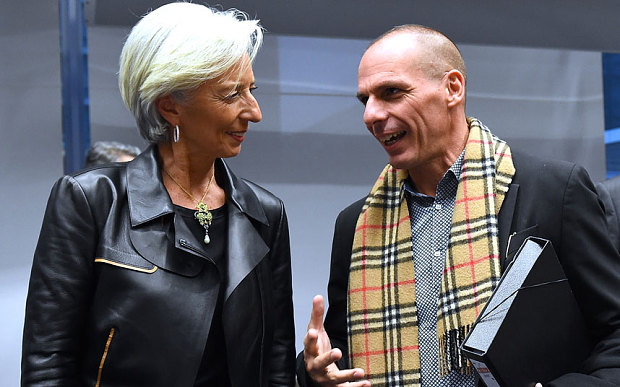
IMF chief Christine Lagarde: Greece will pay us back

greece2_3196747b

Following threats the Leftist government would miss a key €450m loan repayment, Greece’s finance minister assures the IMF will be repaid this week.

Greece’s finance minister has reassured the International Monetary Fund his government will make a key debt repayment this week after meeting with chief Christine Lagarde in Washington.

Following two hours of talks, Ms Lagarde said she had received “confirmation by the minister that payment owing to the Fund would be forthcoming on April 9.”

Greece’s growing insolvency problems have raised fears the country would become the first developed nation to ever fall into an arrears process with the IMF.

However, the informal talks with Yanis Varoufakis on Easter Sunday seemed to have repaired relations between the parties, with Ms Lagarde saying both sides had “agreed that effective cooperation is in everyone’s interest.”

“I reiterated that the Fund remains committed to work together with the authorities to help Greece return to a sustainable path of growth and employment,” said Ms Lagarde in a statement.

Greece faces another crucial few weeks in its bid to stay solvent.

The government must pay out €450m to the IMF on Thursday, followed by its social security bill on April 14. The cash-stricken government will also be required to rollover €2.4bn in maturing bonds this month.

A senior Greek official told The Telegraph last week, the Leftist government would rather default to the IMF rather than “default to our own people, it’s a no-brainer.”

Athens is still awaiting the rubber stamp on a series of reform proposals it has put forward to Brussels in a bid to unlock €7.2bn in rescue cash.

source:telegraph.co.uk

House prices, iron ore and Australian leave RBA grappling for answers

When it happens, the cut will amplify questions about how low the Reserve can safely and usefully go.

When it happens, the cut will amplify questions about how low the Reserve can safely and usefully go. Photo: Reuters

If the Reserve Bank of Australia decides to slice another quarter of a per cent off interest rates on Tuesday we can thank the recent fall in the iron ore price to under $US50 and the stubbornly resilient dollar. If the RBA leaves rates on hold at 2.25 per cent the nation can blame Sydney’s residential property buyers, whose demand has contributed to a sizzling-hot house market.

Tuesday’s rate outcome is keenly anticipated. A cut in rates is expected to result in a boost for the stock market and a fall in the Australian dollar. The maintenance of the current rate would have the reverse effect.

Of course it is not as simple as Sydney property versus a 10-year low in iron ore prices or even the dollar. However, these three features are seen as extreme or potential tipping points in the RBA’s direction on interest rates this week.

Since the March decision to keep rates steady at 2.25 per cent there has been a scarcity of important economic data, and the all important inflation numbers are not due out until later in April.

Nor have there been any wild swings in the fortunes of the global economies that would have a major influence on the RBA’s decision.

Economic growth remains limp and employment trends continue to weaken slightly.

However, nothing monumental has taken place in Australian since February, when the interest rate was dropped by 25 basis points, except from the fall in iron ore prices and continued strength in Sydney’s residential property market.

And bear in mind that the housing bubble around Australia is now deflating in a very ordered way – in all areas other than Sydney, where it continues to rise at alarming levels.

Leading up to the Easter break futures markets were factoring in a 75 per cent chance of a rate cut in April.

Traders are also putting the chance of a rates moving down to an unimaginable 1.5 per cent by August at 50 per cent.

Economists are not that certain. While almost all are factoring in another cut in the first half of this calendar year, many think it won’t come through until May or June.

The RBA has been pretty clear already that it is not yet finished this chapter of the monetary easing cycle – its just a matter of when.

It cites the economy’s growth rates as one of the main drivers for its view that interest rates must continue to fall despite the fact that they are already at historic lows.

The RBA would also like to see the Australian dollar undergo another reasonable fall this year.

The most obvious reason for the RBA to hold off another month would be a fear of further fuelling Sydney property prices or reigniting housing demand in other capital cities.

But it is probably not enough to offset the numerous other factors weighing in favour of a rate cut in April.

While there is always a lag between applying monetary stimulus and its effects being felt in the wider economy, the fact remains that Australians have been the beneficiaries of historically low rates for a few years and other than the property market there is not a lot of evidence that the previous rates cuts have found much traction.

Lower rates have not to date kick started a meaningful improvement in consumer confidence, and business investment remains lacklustre.

Borrowers will clearly have more money in their pockets if interest rates are lowered. (And their cash flow has also been recently bolstered by a fall in the price of petrol.)

However, those with investments in products such as bonds or bank deposits will suffer lower yields.

Perversely, the latest survey by Dun & Bradstreet on business expectations shows there was a lift in the number of firms intending to hire staff in the June quarter. This was despite the survey finding that fewer businesses were anticipating increased sales or profits, in an economy subdued by continued below-trend growth.

“The one relatively bright point is the continued, moderate increase in employment expectations, which is likely linked to record low wages growth rather than a strengthening in economic conditions,” Dun & Bradstreet’s economic adviser Stephen Koukoulas said.

Thus, on balance the case for a rate cut sooner rather than later stacks up. The fear of the effect on residential property is insufficient, according to economists, to justify not lowering rates.

Those buying in the Sydney market as an investment are now taking an increasingly large risk, with rental yields softening to about 3.3 per cent. The prospect of capital gains must become more tenuous as the prices rise.

The supply-side increase must ultimately start to kick in given we are witnessing record levels of construction approvals for dwellings.

If this doesn’t work, the regulators can further sharpen their macro-prudential tools to combat riskier borrowing.

Basically there are numerous ways to tackle the rising value of Sydney property, but little the RBA can do other than employ interest rate policy to counteract the effects of an iron ore price that is falling faster than the dollar, thus creating a stiff headwind to economic recovery.

source:smh.com.au

SPIEGEL Interview with Greek Prime Minister Tsipras: ‘We Don’t Want to Go on Borrowing Forever’

Greek Prime Minister Alexis Tsipras in his office in Athens: "I believe that the euro zone is like a wool sweater: When it starts to unthread, then it can no longer be stopped."

Greek Prime Minister Alexis Tsipras in his office in Athens: “I believe that the euro zone is like a wool sweater: When it starts to unthread, then it can no longer be stopped.”

In a SPIEGEL interview, Greek Prime Minister Alexis Tsipras discusses planned reforms, the polarizing effect his government has had on Europe and the possibility of a “Graccident,” Greece’s accidental exit from the euro zone.

Alex Tsipras seems almost inconspicuous as he stands in his enormous office in Athens’ Maximos Mansion, and very relaxed. Greece’s new, 43-year-old leftist prime minister, a thorn in the side of German leaders in Berlin, has a soft handshake. On the conference table is a pad of paper bearing the government coat of arms along with neatly written notes in preparation for our interview.

Tsipras wants to explain himself and the policies of his government, he says, adding that he hopes to answer questions openly and honestly so that people in Germany understand him better. Now, he says, is the ideal time for such a discussion, coming as it does after the negotiations with Brussels and shortly before Athens intends to present its new reform plans to European Union finance ministers on Monday.The prime minister has given us an hour for the interview. He speaks Greek as he explains his plans in a deep, yet quiet voice, even laughing occasionally while leaning back comfortably. His self-confidence does not come across as arrogant, seeming instead to be rooted in his firm conviction that his position is the right one. He knows, he says, that life is full of compromises and that compromises are also vital for his country’s cooperation with the European Union. “We must leave disaster of all kinds behind us,” Tsipras says. “That, too, is why I wanted to speak with you.”


SPIEGEL: Mr. Prime Minister, most of your European partners are indignant. They accuse you of saying one thing in Brussels and then saying something completely different back home in Athens. Do you understand where such accusations come from?Tsipras: We say the same things in Germany as we do in Greece. But sometimes, problems can be viewed differently, depending on the perspective. (He points to his water glass.) This glass here can be described as being half full or half empty. The reality is that it is a glass filled half-way with water.

SPIEGEL: In Brussels, you have given up your demands for a debt haircut. But back home in Athens, you continue talking about a haircut. What does that have to do with perspective?

Tsipras: At the summit meeting, I used the language of reality. I said: Prior to the bailout program, Greece had a sovereign debt that was 129 percent of its economic output. Now, it is 176 percent. No matter how you look at that, it’s not possible to service that debt. But there are different ways to solve this problem: via a debt cut, debt restructuring or bonds whose payback is tied to growth. The most important thing, though, is solving the true problem: the austerity which has driven debt way up.

SPIEGEL: Are you a linguist or a politician? You told the Greeks that you got rid of the troika and sold it as a victory. But the European Commission, the International Monetary Fund (IMF) and the European Central Bank (ECB) are still monitoring your reforms. Now, they are simply called “the institutions.”

Tsipras: No, it isn’t a question of terminology. It has to do with the core of the issue. Every country in Europe has to work together with these institutions. But that is something very different than a troika that is beholden to nobody. Its officials came to Greece to strictly monitor us. Now, we are again speaking directly with the institutions. Europe has become more democratic because of this change.

SPIEGEL: What change? You still have to submit your reform plans to three “institutions” for approval.

Tsipras: The reforms won’t be approved by the institutions. They have a say in the process and establish a framework that applies to all in Europe. Previously, the situation was such that the troika would send an email telling the Greek government what it had to do. Our planned reforms are necessary, but we are deciding on them ourselves. They aren’t being forced onto us by anyone. We want to stop large-scale tax evasion and tax fraud more than anybody. Thus far, it has only been the low earners and not the wealthy that paid. We also want to make the state more efficient.

SPIEGEL: But we’re still a bit confused. Does Greece want and need a third bailout package in June when you run out of money?

Tsipras: I wouldn’t call it a bailout.

SPIEGEL: What would you call it instead?

Tsipras: I would say that Greece has financing needs. We have massively consolidated our budget in recent years and now have primary surpluses instead of deficits. But we still can’t borrow money ourselves on the capital markets. To do so, we have to win back trust, become competitive and return to growth. Until that time, though, we have to finance ourselves in another way.

SPIEGEL: Which means, you need money from the Europeans.

Tsipras: Look, it’s not about philanthropy for Greece. It’s about joint responsibility and European solidarity. If Greece can’t service its debt, that also has an effect on our partners. As such, a safety net for Greece is necessary and we also have to return to the capital markets as rapidly as possible. But that can’t be combined with a program that has led to a situation of social distress; we need one that brings growth.

SPIEGEL: That is likely the opposite of what the German government would like to hear.

Tsipras: Some believe that investment can be triggered by further reducing labor costs. But we have already reduced them by 40 percent and it has hardly resulted in any new investment at all. The money that has flowed to Greece was aimed at saving the banks — it didn’t solve our liquidity problem. We don’t want to go on borrowing money forever; we want to get out of this tight spot. But we can only commit to measures that we are also able to implement.

SPIEGEL: If we understand you correctly, you want more loans, but you don’t want to subject yourself to any more controls.

Tsipras: In a crumbling society and a country with a humanitarian crisis, you can’t sink wages any further. We can, however, push forward with structural reforms. We want to finally create institutions to efficiently apply taxes. We want to modernize the judiciary so that you no longer have to wait a year for a verdict. In the future, it should be possible to establish a company quickly and without extensive bureaucracy. We will also develop a land and property registry, something that has been promised since 1930.

SPIEGEL: Why do you think you will be successful in doing what your predecessors promised to do, but failed?

Tsipras: Because we are not part of the old system, as our predecessors were. In particular, we will restrict the unrestrained activities of the oligarchs. They control the media and still receive huge loans from the banks, in contrast to normal companies. We would also like to monitor the work of state suppliers, which have established vast cartels. No reasonable person can be opposed to such a plan, and we are determined to tackle it.

SPIEGEL: What about privatizations?

Tsipras: There we do in fact have a different approach. We have to make state assets usable, but we shouldn’t sell everything. Otherwise, the proceeds will disappear directly into the black hole of debt. Instead, we want to use the revenues from state-owned companies to shore up social welfare.

SPIEGEL: On Monday, your government will be presenting your first reform proposals in Brussels, which will then have to be approved by the euro-zone finance ministers. What is your plan?

Tsipras: We will propose six reforms that are ready for implementation. First: combating the humanitarian crisis. We want to create an electronic Citizen Smart Card that can be used to access public services for which applications to seven authorities had to be made in the past. The needy will also be able to use it to pay for groceries and electricity. Second: the necessary administration reform to make the state more efficient. Third: the introduction of a rate payment plan for tax debts. The fourth reform has to do with tax administration and the fifth aims at the creation of a politically independent tax council. The sixth is the creation of a task force for targeted tax audits so as to combat tax evasion in the middle classes as well.

SPIEGEL: The first point sounds like more spending. How do you intend to finance it?

Tsipras: We have already presented a draft law in parliament. It corresponds with our promise to establish social justice. The humanitarian crisis is collateral damage resulting from the bailout program. Today, 35 percent of Greeks live beneath the poverty line and 600,000 children don’t have enough to eat, according to UNICEF. We have already received EU funding for the fight against the humanitarian crisis and I will speak to European Commission President Jean-Claude Juncker in the coming days to find out if we can receive additional funds.

SPIEGEL: In the rest of Europe, people are concerned about your plan to allow Greeks to pay back taxes in up to 100 monthly installments. Are you not concerned that such a plan will cause tax revenues to dry up completely?

Tsipras: Quite to the contrary. It will create immediate revenues for the state. At the moment, the tax debt owed by Greeks is increasing by a billion euros each month. We want to reverse this development. And of course we will not offer this to people who are capable of paying but want to cheat.

SPIEGEL: What exactly is your proposal to create a tax council about?

Tspiras: It will be a tax authority that is independent of politics. Do you know how it was in the past? Major companies could call the prime minister here at Maximos Mansion and the terms would be changed in their favor overnight. That shall no longer be possible.

SPIEGEL: Do you really believe that will enable to you to force the rich to pay?

Tspiras: Surely you know that there are two Greeces. The one Greece is that of 4 million people who live below the poverty line. You can see the other Greece if you go out on a summer evening in a Bouzouki nightclub along the coast or if you go to Mykonos. It is the Greece of the tax evaders and the cheats. We know full well that many of these bars and restaurants don’t issue any receipts. We are going to be very strict against this Greece.

SPIEGEL: And what makes you so confident of success?

Tsipras: We are forming a task force for targeted checks and its staffing is to be changed every two months so that it doesn’t become corrupt. We have a minister who is responsible for combatting tax evasion, a former public prosecutor. An independent organization is to be set up under him that is not influenced by the political system.

SPIEGEL: That sounds very ambitious at a time when your money is already running out. In March, you have to pay back just under €4 billion, but you aren’t officially scheduled to receive the next tranche from the bailout program until the end of April. Will you even manage to get through this month?

Tspiras: I unfortunately have to admit that, during the past 30 days, I have spent 90 percent of my time negotiating how we can meet deadlines in order to secure our financing. That is in no way productive or creative. The meeting of the Euro Group on Feb. 20, when our loan agreement was extended, was an important step. A decision was made to give us breathing room, but the ECB is still holding onto the rope that is around our necks.

SPIEGEL: And where will you get the €4 billion from?

Tsipras: Greece could issue short-term government bonds, so-called T-Bills …

SPIEGEL: … but to do that, you would need the ECB’s agreement, and it’s not going to allow you to do that.

Tsipras: If the ECB insists on this decision, which in our opinion is not the right one, then it will be taking on a major responsibility. Then the thriller we saw before Feb. 20 will return. That, though, would be a political decision that should not be made by technocrats.

SPIEGEL: The ECB is politically independent.

Tspiras: I am confident that the necessary decisions will be made and that we will bridge the financing gap by the end of April.

SPIEGEL: Many experts now fear a “Graccident” — Greece’s accidental exit from the euro. If the ECB doesn’t agree to your T-Bills, that’s exactly what might happen.

Tspiras: I cannot imagine that. People won’t risk Europe’s disintegration over a T-Bill of almost €1.6 billion. There is a saying for this in Greece: A wet man does not fear the rain.

Tispras on Greek Finance Minister Yanis Varoufakis: "Everyone has the right to an opinion." Zoom

AFP

Tispras on Greek Finance Minister Yanis Varoufakis: “Everyone has the right to an opinion.”

SPIEGEL: Afterwards, a far more fundamental conflict awaits. You want to put an end to austerity policies, but German Chancellor Angela Merkel doesn’t want to allow such a thing. These widely divergent positions were glossed over as “creative ambiguity,” as your Finance Minister Yanis Varoufakis put it. However, it will no longer be possible to ignore this brewing conflict in June.Tspiras: That is why we need to put these four months to good use. Europe is facing a dilemma: One either accepts the demands of the people in the south, who have suffered a lot under austerity, and correct the course — or one reacts arrogantly and punitively. If that were to happen, Greece would gradually suffocate. That, though, would no longer just present a financial danger, but also a political one.

SPIEGEL: For whom?

Tsipras: The growing civil movement for a change of course in the south would then become an anti-European current. By punishing Syriza in Greece, you do not slow the dynamic of Podemos in Spain — instead you compel it to become anti-European. By doing so, you strengthen Beppe Grillo in Italy, Marine Le Pen in France — and opponents of the European Union like Nigel Farage in Britain will be very, very pleased.

SPIEGEL: Surely there is support for a loosening of austerity in some countries. But you were isolated during the negotiations with other euro-zone countries. You even attacked the governments of Spain and Portugal in recent days, complaining about their lack of support. Should Europeans really be talking to each other like that?

Tsipras: One cannot speak of a conflict between countries. Greece does not divide states into friends and foes. It was a criticism of the austerity policies. The interpretation that Greece is isolated is entirely wrong. Throughout the entire time of the negotiations, we have experienced solidarity from all of Europe of a kind we haven’t seen since the times of the dictatorship.

SPIEGEL: But there are tensions between Germany and Greece.

Tspiras: The atmosphere that was created in the past — in Greece, but also in Germany — was not good. There is in fact an unfair climate towards Greece in Germany. Media like the Bild newspaper portray all Greeks as greedy bums and con artists. And here in Greece, Germans are portrayed as hard-nosed people who have enmity towards us. But it’s not about a clash between people — it’s one between conservative and leftist forces. The one side is pushing for austerity and the other wants growth.

SPIEGEL: Is your only lever to change austerity a credible threat to leave the euro?

Tsipiras: I rule out a Grexit because I love Europe. I believe that the euro zone is like a wool sweater: When it starts to unthread, then it can no longer be stopped.

SPIEGEL: Some in Germany, including people in the federal government, believe the euro would be stronger without Greece. In your party, too, there’s a minority that wants to return to the drachma.

Tsipras: If we were to hold a referendum tomorrow with the question, “Do you want your dignity or a continuation of this unworthy policy,” then everyone would choose dignity regardless of difficulties that would accompany that decision. But the threat to Europe today isn’t Syriza or Podemos, it’s the Front National in France or AfD in Germany.

SPIEGEL: Many in Berlin haven’t found your government’s performance to be particularly confidence inspiring. They feel provoked by Finance Minister Varoufakis.

Tsipras: Everyone has the right to an opinion. We also don’t meddle in German domestic policy and dictate to Germany who becomes finance minister or chancellor. That is why we would prefer our partners to let us decide who we choose as our representatives.

SPIEGEL: Is it true that you ordered Mr. Varoufakis to give fewer interviews?

Tsipras: I have called for less words and more action from all members of the Ministerial Council (the official name of the government cabinet), not just Mr. Varoufakis.

SPIEGEL: In recent weeks, you have met with many top politicians in Europe. Is it just by chance that you haven’t visited Angela Merkel yet?

Tsipras: That is not by chance. I received an invitation from François Hollande, from Matteo Renzi, from the Austrian federal chancellor and the Belgian prime minister and even from David Cameron, but I have not received an invitation from Angela Merkel. If I were to receive an invitation from the chancellor, I would accept it immediately. I have telephoned with her and we have spoken during summits. I think we have a good relationship and that there’s good chemistry between us.

SPIEGEL: So why don’t you initiate a first visit yourself?Tsipras: So far I have not asked for one; I only became prime minister a short time ago. I have been open to anyone who wants to meet with me. When I needed to speak to Frau Merkel, I called her. I do not go places where I have not been invited.

SPIEGEL: Mr. Prime Minister, we thank you for this interview.

This interview has been translated from the German

source: spiegel.de

The names of 731 Anzacs found in cave under the WW1 battlefields of France

The names of soldiers from Australia's  9th Battalion infantry unit have been found in a cave in northern France.

The names of soldiers from Australia’s 9th Battalion infantry unit have been found in a cave in northern France. Photo: Jeffrey Gusky

Naours, France: A headlamp cuts through the darkness of a rough-hewn passage 100 feet underground to reveal an inscription: “James Cockburn 8th Durham L.I.”

It’s cut so clean it could have been left yesterday. Only the date next to it – April 1, 1917 – roots it in the horrors of World War I.

The piece of graffiti is just one of nearly 2000 century-old inscriptions by Allied soldiers, including Australians, that have recently come to light in Naours, a two-hour drive north of Paris.

Jeffrey Gusky, a photographer and physician from Texas, began photographing the Naours underground city in December and has so far tallied the names of 1,821 servicemen.

Jeffrey Gusky, a photographer and physician from Texas, began photographing the Naours underground city in December and has so far tallied the names of 1,821 servicemen. Photo: Remy de la Mauviniere

Many marked a note for posterity in the face of the doom that trench warfare a few dozen miles away would bring to many.

“It shows how soldiers form a sense of place and an understanding of their role in a harsh and hostile environment,” said historian Ross Wilson of the UK’s Chichester University.

Etchings, even scratched bas-reliefs, were left by many soldiers during the war. But those in Naours “would be one of the highest concentrations of inscriptions on the Western Front” that stretches from Switzerland to the North Sea, said Mr Wilson.

Markings left by  HA Deanate from the American 148th Aero Squadron.

Markings left by HA Deanate from the American 148th Aero Squadron. Photo: Jeffrey Gusky

The site’s proximity to the Somme battlefields, where more than a million men were killed or wounded, adds to the discovery’s importance.

“It provides insight into how they found a sense of meaning in the conflict,” Mr Wilson said.

Naours’ underground city is a three-kilometre-long complex of tunnels with hundreds of chambers dug out over centuries in the chalky Picardy plateau.

During the Middle Ages villagers took shelter there from marauding armies crisscrossing northern France. By the 18th century the quarry’s entrance was blocked off and forgotten.

In 1887 a local priest rediscovered the site and it eventually became a tourist attraction.

That’s what likely drew the soldiers to it during the war, said Gilles Prilaux, an archaeologist for France’s national archaeology institute. He began a three-year study of the tunnels last July, intending to focus on the site’s medieval past – only to stumble upon this more recent slice of history.

“It was a big surprise” Mr Prilaux said of the discovery of the World War I graffiti left by soldiers from Australia, Britain, Canada and the US.

Soldiers left similar inscriptions in tunnels at Arras and Vimy, but unlike those sites, Naours is well back from the front lines and it wasn’t known to have been used as a shelter or hospital like other Western Front quarries.

Photographer Jeff Gusky has tallied 1821 individual names: 731 Australians, 339 British, 55 Americans, a handful of French and Canadians and 662 others whose nationalities have yet to be traced.

“All these guys wanted to be remembered,” Mr Gusky said.

Naours is only a few miles from Vignacourt, a town used as a staging area for troops moving up to and back from the Somme battlefields to the east. Mr Prilaux thinks the young soldiers from distant countries would have heard about the famous Naours caves and taken advantage of a break from war to do some sight-seeing.

That idea is backed by an entry in the diary of Wilfred Joseph Allan Allsop, a 23-year-old private from Sydney.

“At 1pm 10 of us went to the famous caves near Naours where refugees used to hide in times of Invasion,” Private Allsop wrote on January 2, 1917.

Mr Wilson said the importance of studying graffiti like this has only emerged in the last 10 to 20 years.

“What were previously regarded as incidental acts that occur away from the battlefield have been shown to be highly important in understanding the lives of those who experienced the conflict,” Mr Wilson said.

One of the most moving inscriptions at Naours was made by Herbert John Leach, a 25-year-old from Adelaide.

His inscription reads “HJ Leach. Merely a private. 13/7/16. SA Australia.”

On August 23, 1916 – barely a month after he had added his name to the wall – he was killed in action during the Battle of Pozieres.

On his grave, in the Australian cemetery in nearby Flers, his father inscribed “Duty Nobly Done.”

source:smh.com.au

Iran like you’ve never seen it

A strikingly dressed Bandari woman at her stall in Iran’s Panjshambe Bazaar. African and

A strikingly dressed Bandari woman at her stall in Iran’s Panjshambe Bazaar. African and Indian influences are evident throughout the Gulf Coast region. Photo: Brook Mitchell Source: Diimex

IN the small Gulf Coast town of Minab in southern Iran there is a market as famous for its uniquely dressed vendors as it is for its wares.

Each week, Panjshambe Bazaar attracts visitors from all over the region who come to experience the vibrant mix of African, Asian and Arab influences that make up the local tribes, known as the Bandari, which means ‘people of the port’ in Persian.

An Australian photographer captured these amazing images of Minab in Iran. Photo: Brook M

An Australian photographer captured these amazing images of Minab in Iran. Photo: Brook Mitchell Source: Diimex

Here, in stark contrast to the plain black burqas and niqabs seen elsewhere in the Middle East, the women are draped in colour and wear a decorative face mask — made of metal and covered in cloth. The mask dates back to the days of Portuguese colonial rule and was originally worn to deflect the attentions of slave masters, who were always on the hunt for the prettiest girls.

A Bandari woman in the Panjshambe Bazaar (Thursday Market). Photo: Brook Mitchell

A Bandari woman in the Panjshambe Bazaar (Thursday Market). Photo: Brook Mitchell Source: Diimex

Australian-born, Bali-based photographer Brook Mitchell was given the opportunity to document this remarkable place, in all its colourful glory.

“Each mask’s design is determined by the different tribal groups, and the wearing of it is considered a sign of a girl coming of age,” Mitchell told news.com.au. “It apparently helps in a dust storm as well — which are frequent in the area.

A Bandari women in the livestock section of the weekly 'Panjshambe Bazaar'. Photo: Brook

A Bandari women in the livestock section of the weekly ‘Panjshambe Bazaar’. Photo: Brook Mitchell Source: Diimex

“It’s not considered by the locals as oppressive. It’s a legal requirement in Iran for women to wear the head scarf and full length clothing, though these masks are unique to the southern region and small pockets in other Gulf countries. As far as I understand it they have strong cultural significance.”

Sellers at the 'Panjshambe Bazaar'. Photo: Brook Mitchell

Sellers at the ‘Panjshambe Bazaar’. Photo: Brook Mitchell Source: Diimex

Mitchell said Minab was becoming increasingly difficult for international travellers to access because of the current religious and political unrest in the region.

“Good people suffering under an oppressive government is what I think of my time there,” he said.

Goats aplenty at the 'Panjshambe Bazaar'. Photo: Brook Mitchell

Goats aplenty at the ‘Panjshambe Bazaar’. Photo: Brook Mitchell Source: Diimex

“People I met across the country were overwhelmingly open, friendly and curious towards me, especially in the south where tourists are not common. I hope things improve for them soon.

“It’s not so often as a photographer you get to visit a place so visually rewarding that’s also been little visited by outsiders, at least in recent times. I was pretty lucky to get in and see what I did.”

A local Bandari man. Photo: Brook Mitchell

A local Bandari man. Photo: Brook Mitchell Source: Diimex

A Bandari woman wearing a distinctive red mask. Photo: Brook Mitchell

A Bandari woman wearing a distinctive red mask. Photo: Brook Mitchell Source: Diimex

A mural depicting local customs on the island of Hormuz, Persian Gulf. Photo: Brook Mitch

A mural depicting local customs on the island of Hormuz, Persian Gulf. Photo: Brook Mitchell Source: Diimex

A Bandari woman in the weekly 'Panjshambe Bazaar'. After sharing a simple breakfast of fr

A Bandari woman in the weekly ‘Panjshambe Bazaar’. After sharing a simple breakfast of fruit and tea with the photographer this woman was happy for her picture to be taken, something of a rare occurrence in conservative Islamic areas. The bright masks worn by the Bandari are unique to this part of Iran and are said to be a cultural adornment rather than a religious one. Photo: Brook Mitchell Source: Diimex

Even the local artwork captures the Bandari’s striking masks. Photo: Brook Mitchell

Even the local artwork captures the Bandari’s striking masks. Photo: Brook Mitchell Source: Diimex

A carpet seller at the weekly 'Panjshambe Bazaar', Minab, Iran. Photo: Brook Mitchell

A carpet seller at the weekly ‘Panjshambe Bazaar’, Minab, Iran. Photo: Brook Mitchell Source: Diimex

source:news.com.au

These gruesome pics show the dark side of human life on earth

THEY say a picture paints a thousand words.

So in sending a message about overpopulation, environmental group Global Population Speak Out decided to do it with a book of photographs.

Overdevelopment, Overpopulation, Overshoot (OVER) aims to open the world’s eyes to the perils of overpopulation on the planet. The free e-book shows a series of powerful photographs along with expert commentary from human rights, population and conservation experts. Check out a sample of the compelling pictures below:

Dead Polar Bear

Dead Polar Bear: The western fjords on Svalbard, Norway, that normally freeze in winter,

Dead Polar Bear: The western fjords on Svalbard, Norway, that normally freeze in winter, remained ice-free all season. This bear headed north, looking for suitable sea ice to hunt on. Finding none, it eventually died. Pic: Ashley Cooper. Source: Supplied

Ice Waterfall

Ice waterfall: In both the Arctic and Antarctic regions, ice is retreating. Melting water

Ice waterfall: In both the Arctic and Antarctic regions, ice is retreating. Melting water on icecap, North East Land, Svalbard, Norway. Pic: Cotton Coulson/Keenpress. Source: Supplied

“The Arctic situation is snowballing: dangerous changes in the Arctic derived from accumulated anthropogenic greenhouse gases lead to more activities conducive to further greenhouse gas emissions. this situation has the momentum of a runaway train.”– Carlos Duarte.

Shrinking Island

Shrinking Island: One of Earth’s most vulnerable nations to climate change, the Maldives

Shrinking Island: One of Earth’s most vulnerable nations to climate change, the Maldives Islands are severely threatened by rising sea levels. Pic: Peter Essick. Source: Supplied

“The island is full of holes and seawater is coming through these, flooding areas that weren’t normally flooded 10 or 15 years ago. There are projections of about 50 years [before the islands disappear]. After this, we will be drowned.”– Paani Laupepa.

Storm from Space

One of the most powerful and disruptive storms in U.S. history, Hurricane Katrina (2005)

One of the most powerful and disruptive storms in U.S. history, Hurricane Katrina (2005) strikes land. Pic: NASA. Source: Supplied

Airplane Contrails

Airplane Contrails: Globalised transportation networks, especially commercial aviation, a

Airplane Contrails: Globalised transportation networks, especially commercial aviation, are a major contributor of air pollution and greenhouse gas emissions. Photo of contrails in the west London sky over the River Thames, London, England. Pic: Ian Wylie. Source: Supplied

Toxic Landscape

Toxic Landscape: Aerial view of the tar sands region, where mining operations and tailing

Toxic Landscape: Aerial view of the tar sands region, where mining operations and tailings ponds are so vast they can be seen from outer space; Alberta, Canada. Pic: Garth Lentz Source: Supplied

Circles and Squares

Circles and Squares: An industrialised landscape — centre pivot irrigation grid among squ

Circles and Squares: An industrialised landscape — centre pivot irrigation grid among square fields in West Kansas, USA. Pic: Google Earth/Image Landsat. Source: Supplied

Nuclear Meltdown

Nuclear meltdown: The 2011 accident at the Fukushima Daiichi Nuclear Station in Japan gal

Nuclear meltdown: The 2011 accident at the Fukushima Daiichi Nuclear Station in Japan galvanised the world’s attention and again highlighted the risks of nuclear power. As of 2013 it was reported that the damaged plant was still leaking radioactive water into the Pacific Ocean. Pic: Mainichi Newspapers/AFLO. Source: Supplied

“So the big question about nuclear “revival” isn’t just who’d pay for such a turkey, but also … why bother? Why keep on distorting markets and biasing choices to divert scarce resources from the winners to the loser — a far slower, costlier, harder, and riskier niche product — and paying a premium to incur its many problems?” – Amory Lovins

Drain Pipe

Drain Pipe: Tar sands-related tailings ponds are among the largest toxic impoundments on

Drain Pipe: Tar sands-related tailings ponds are among the largest toxic impoundments on Earth and lie in unlined dykes mere meters from the Athabasca River in northern Alberta. Indigenous communities downstream are fearful of being poisoned by toxic seepage into the food chain. Alberta, Canada. Pic: Garth Lentz. Source: Supplied

“Think of Alberta as the Nigeria of the north. (Well, there are a lot more white people in Alberta, and Canada’s military hasn’t killed anybody to protect the oil business.) Both economies have been increasingly dominated by oil. In 2009 Nigeria exported around 2.1 million barrels of oil per day; Canada exported 1.9 million barrels per day. Environmental regulation of the oil industry in both Nigeria and Alberta is lax, and the industry has been actively opposed by native people — the Ogoni, in particular, in Nigeria and the Cree in Alberta.” – Winona LaDuke and Martin Curry.

Oil Spill Fire

Oil Spill Fire: Aerial view of an oil fire following the 2010 Deepwater Horizon oil disas

Oil Spill Fire: Aerial view of an oil fire following the 2010 Deepwater Horizon oil disaster, Gulf of Mexico. Pic: Daniel Beltra. Source: Supplied

Container City

Container City: Shipping containers, indispensable tool of the globalised consumer econom

Container City: Shipping containers, indispensable tool of the globalised consumer economy, reflect the skyline in Singapore, one of the world’s busiest ports. Pic: John Stanmeyer Source: Supplied

Big Hole

Big Hole: The Mir Mine in Russia is the world’s largest diamond mine. Pic: Google Earth/

Big Hole: The Mir Mine in Russia is the world’s largest diamond mine. Pic: Google Earth/ 2014 Digital Globe Source: Supplied

Oil Wells

Oil wells: Depleting oilfields are yet another symptom of ecological overshoot; Kern Rive

Oil wells: Depleting oilfields are yet another symptom of ecological overshoot; Kern River Oil Field, California, US. Pic: Mark Gamba/Corbis. Source: Supplied

Clear-cut

Clear-cut: Industrial forestry degrading public lands, Willamette National Forest, Oregon

Clear-cut: Industrial forestry degrading public lands, Willamette National Forest, Oregon. Pic: Daniel Dancer. Source: Supplied

Computer Dump

Computer Dump: Massive quantities of waste from obsolete computers and other electronics

Computer Dump: Massive quantities of waste from obsolete computers and other electronics are typically shipped to the developing world for sorting and/or disposal. Photo from Accra, Ghana. Pic: Peter Essick. Source: Supplied

Smokestacks and Garbage

Smokestacks and Garbage: Brick kilns dot a dystopian landscape of trash in Bangladesh. Pi

Smokestacks and Garbage: Brick kilns dot a dystopian landscape of trash in Bangladesh. Pic: MR Hasasn. Source: Supplied

Night-time Grid

Night-time Grid: Los Angeles, California, population 15 million typifies America’s consum

Night-time Grid: Los Angeles, California, population 15 million typifies America’s consumption-oriented and car dependent culture. Pic: Mike Hedge. Source: Supplied

“American suburbia represents the greatest miss-allocation of resources in the history of the world. the far-flung housing subdivisions, commercial highway strips, big-box stores, and all the other furnishings and accessories of extreme car dependence will function poorly, if at all, in an oil-scarce future.” – James Howard Kunstler

Satellite Dishes

Satellite Dishes. The rooftops of Aleppo, Syria, one of the world’s oldest cities, are co

Satellite Dishes. The rooftops of Aleppo, Syria, one of the world’s oldest cities, are covered with satellite dishes, linking residents to a globalised consumer culture. Pic: Yann Arthus-Bertrand. Source: Supplied

Urban Scene

Urban Scene. Central area of Barcelona, Spain, population 5 million, density 16,000 per s

Urban Scene. Central area of Barcelona, Spain, population 5 million, density 16,000 per square mile (41,400/km2). Pic: Google Earth/NOAA, U.S. Navy, NGA, GEBCO. Source: Supplied

“Faced with a world that can support either a lot of us consuming a lot less or far fewer of us consuming more, we’re deadlocked: individuals, governments, the media, scientists, environmentalists, economists, human rights workers, liberals, conservatives, business and religious leaders. On the supremely divisive question of the ideal size of the human family, we’re amazingly united in a pact of silence.” – Julia Whitty.

Dead Bird

Dead Bird: On Midway Island, far from the centres of world commerce, an albatross, dead f

Dead Bird: On Midway Island, far from the centres of world commerce, an albatross, dead from ingesting too much plastic, decays on the beach; it is a common sight on the remote island. Pic: Chris Jordan. Source: Supplied

Wave of rubbish

Trash Wave: Indonesian surfer Dede Surinaya catches a wave in a remote but garbage-covere

Trash Wave: Indonesian surfer Dede Surinaya catches a wave in a remote but garbage-covered bay on Java, Indonesia, the world’s most populated island. Pic: Zak Noyle. Source: Supplied

City Night

City night in London: Large urban areas like London, U.K. (population 13 million), repres

City night in London: Large urban areas like London, U.K. (population 13 million), represent a huge amount of embodied energy in their infrastructure as well as require massive ongoing inputs of energy. Pic: Jason Hawkes. Source: Supplied

Tire Dump

Tire Dump: End of the road for these tires is a desert dumping ground in Nevada, USA. Pic

Tire Dump: End of the road for these tires is a desert dumping ground in Nevada, USA. Pic by Daniel Dancer. Source: Supplied

source:news.com.au

Cabramatta West mother Anna Superina dies after failed diagnosis at Fairfield Hospital

Anna Superina, 66, who died September 28 last year after Fairfield Hospital failed to dia

Anna Superina, 66, who died September 28 last year after Fairfield Hospital failed to diagnose her illness. Source: News Corp Australia


AS they waited in an ambulance, Anna Superina and her husband Joe were given a choice by paramedics: Fairfield Hospital or Liverpool Hospital.

Mr Superina chose Fairfield after being told it had a lighter workload than Liverpool, meaning doctors could examine her severe back pain and bout of vomiting more quickly, The Daily Telegraph reports.

But less than four hours after making that decision, Mrs Superina was dead.

She had passed out in the front seat of a car just 500m from the hospital she had just left after suffering an infra-renal ruptured aortic abdominal aneurysm — a tear in the main artery of her stomach.

It was just 45 minutes her hospital discharge. Doctors had not ­diagnosed her condition.

Instead because her blood pressure was falling, analgesics had eased her pain, and the provisional diagnosis was “muscular back pain”, they discharged her.

An internal report commissioned by the hospital found that had Mrs Superina, 66, chosen to go to Liverpool Hospital there was a higher likelihood she may have survived because of services available there.

“We feel robbed by the health system,” her daughter Jo Cutler said.

“We are still in the early stages of loss. If it was an accident, then of course there is still that loss, but at least we can make sense of that.”

Anna Superina’s family are struggling to come to terms with her death. (Front, Brooke Cut

Anna Superina’s family are struggling to come to terms with her death. (Front, Brooke Cutler and Liam Cutler, her husband Joe Superina, Claudia Superina. Back, Anthony Superina, Dean Superina and Melissa McColough) Picture: Bradley Hunter Source: News Corp Australia

Reforms have been brought in at Fairfield Hospital since the incident on September 28.

Barbara Chapman, Fairfield Hospital’s acting general manager, said the incident ­involving Mrs Superina was complex.

Her condition was not only difficult to detect, but also prone to develop without symptoms.

“Following the review, staff have been provided with further education around ­abdominal aortic aneurisms and complex abdominal ­examinations,” Ms Barbara Chapman said.

The incident unfolded about 5am after a bout of vomiting and severe back pain.

Anna Superina and her grieving husband Joe.

Anna Superina and her grieving husband Joe. Source: Supplied

The Superinas called an ambulance, which arrived at 5.15am. They reached Fairfield Hospital at 6.10am.

At 8.25am doctors discharged Mrs Superina. Within 15 minutes, the mother of four and grandmother of six from Cabramatta West had slumped over inside her car, just 500m from the hospital.

After being rushed back to hospital, she was pronounced dead by staff at 9.10am.

Ms Cutler said Mr Superina is suffering most.

“He is carrying that guilt of ‘if I had chosen Liverpool maybe my wife would still be alive today’,” she said.

“He did not know that Fairfield did not have services that mum required.”

Along with an internal hospital report, a separate ­independent report was conducted for the coroner.

It found that had Mrs Superina gone to Liverpool Hospital, which has a vascular surgery service, the “likelihood of survival would have been about 50 per cent.”

Such a service could have resuscitated her, taken her to an operating theatre immediately, where doctors would have tried to stem the bleeding into the abdominal cavity and repair the 50mm tear in the wall of the artery.

An ambulance spokeswoman said paramedics ­always transported patients to the nearest, appropriate hospital that was considered the best suited to treat the ­patient’s condition.

Mrs Cutler said residents of Sydney were being subjected to a “postcode lottery” because certain hospitals, such as Fairfield, had been ill-equipped to deal with medical scenarios like the one faced by her mother.

source:news.com.au