Category Archives: Uncategorized

Τα Aυστραλιανά Μέσα για το Eλληνικό δημοψήφισμα

pagreaus7

Sydney Morning Herald: Το δολάριο “πέφτει – πέφτει”

Το ΟΧΙ των Ελλήνων στο δημοψήφισμα κυριάρχησε τη Δεύτερα το πρωί στα αυστραλιανά παραδοσιακά και ηλεκτρονικά μέσα ενημέρωσης. Το ενδιαφέρον παρέμεινε ισχυρό καθόλη τη διάρκεια της περασμένης εβδομάδας και οι ανταποκρίσεις των καναλιών από την Αθήνα ήταν συνεχείς, κυρίως στα ειδησεογραφικά κανάλια της χώρας. Bέβαια, όπως και στην Ελλάδα κανείς δεν περίμενε, ή έστω πολλύ λίγοι περίμεναν, ότι το ΟΧΙ θα κέρδιζε και μάλιστα με ποσοστό μεγαλύτερο του 60%.

Αν και οι αυστραλιανές εφημερίδες δεν πρόλαβαν να τυπώσουν το αποτέλεσμα λόγω της διαφοράς ώρας, οι ιστότοποί τους ενημερώνονταν συνεχώς για τις πολιτικές και οικονομικές εξελίξεις στην Ελλάδα και την Ευρώπη, ενώ κυριάρχησαν οι δηλώσεις Ελλήνων και Ευρωπαίων αξιωματούχων.

ABC: Σε “ελεύθερη πτώση” το δολάριο

Δύο ολόκληρα σεντς έπεσε το δολάριο το πρωί της Δευτέρας και βρέθηκε στο χαμηλότερο επίπεδο από το 2009. Σύμφωνα με τους αναλυτές, αυτό οφείλεται κυρίως στο ΟΧΙ των Ελλήνων στη νέα συμφωνία για μέτρα λιτότητας που πρότειναν οι δανειστές στις 25 Ιουνίου και που τέθηκε στο δημοψήφισμα της Κυριακής. Το δολάριο κυμαινόταν στα 74.52 αμερικανικά δολάρια αν και αργότερα ανέβηκε στα 74.9 US. Ωστόσο, η ισοτιμία του με το ευρώ δεν άλλαξε σημαντικά και βρέθηκε στα 68 ευρωσεντς.

Σημείωσε δε σημαντικές απώλειες έναντι τους ιαπωνικού γεν.

Αναλυτές τονίζουν ότι οι οικονομικοί κύκλοι ανέμεναν πολύ μικρότερο το ποσοστό διαφοράς στα ΝΑΙ και τα ΟΧΙ, και το 61% ήρθε ώς έκπληξη για τις διεθνείς χρηματαγορές.

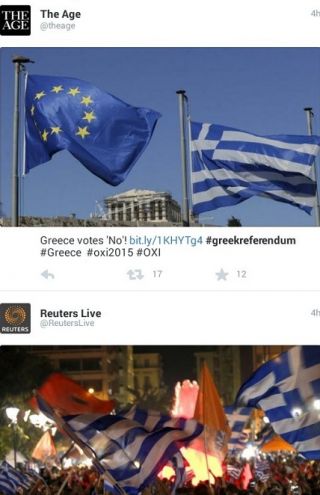
The Age: Οι πανηγυρισμοί στην Αθήνα

Στον ιστότοπο της Age κυριαρχούσαν φωτογραφίες από τους πανηγυρισμούς των υποστηριχτών στο κέντρο της Αθήνας. Το ρεπορτάζ της ηλεκτρονικής έκδοσης της εφημερίδας αναφέρει ότι από νωρίς φαινόταν ότι το ΟΧΙ θα επικρατήσει και κόσμος συνέρρεε στο κέντρο της ελληνικής πρωτεύουσας. “Παρά μία εβδομάδα με κλειστές τράπεζες, ελλείψεις στην αγορά και ειδικά σε εισαγώμενα προϊόντα και φάρμακα, περιορισμοί στις αναλήψεις χρημάτων από τα ATM και τις μεταφορές χρημάτων από το εξωτερικό καθώς και την πολλών εκατομμυρίων διαφημιστική εκστρατεία του ΝΑΙ, το αποτέλεσμα ήταν υπέρ του ΟΧΙ”, αναφέρει της Age.

Δημοσιεύτηκαν και οι πρώτες δηλώσεις του Έλληνα πρωθυπουργού Αλέξη Τσίπρα και του υπουργού Οικονομικών Γιάνη Βαρουφάκη. “To αποτέλεσμα του δημοψηφίσματος είχε ισχυρό αντίκτυπο και στη Νέα Δημοκρατία, αφού παριατήθηκε ο αρχηγός της και πρώην πρωθυπουργός από την αρχηγία του”, αναφέρει χαρακτηριστικά το δημοσίευμα.

Sydney Morning Herald: Το δολάριο “πέφτει – πέφτει”

Και η SMH είχε ανάλυση για την πτώση της ισοτιμίας του αυστραλιανού δολαρίου, η οποία ενδέχεται να πέσει το χαμηλό επίπεδο των 72-73 αμερικανικών σεντς. “το μόνο ερώτημα που απομένει είναι πόσο σύντομα θα συμβεί κάτι τέτοιο. Οι επενδυτές πιστεύουν ότι η άρνηση της Ελλάδας, μέσω του δημοψηφίσματος, να αποδεχθεί νέα μέτρα και μεταρρυθμίσεις με αντάλλαγμα νέα δανειακή σύμβαση με την Ευρωπαϊκή Ένωση, μπορεί να οδηγήσει σε οικονομικό χάος και υποσκάπτει τα θεμέλια της Ευρωζώνης” αναφέρει το δημοσίευμα.

The Australian: Λεπτό – λεπτό η ενημέρωση

Η πανεθνικής κυκλοφορίας Australian μετέδιδε αναλυτικά τα τεκταινόμενα την ημέρα του δημοψηφίσματος. “Οι Έλληνες πολίτες έδειξαν απίστευτο θάρρος ψηφίζοντας ΟΧΙ στο δημοψήφισμα της Κυριακής” αναφέρει ο αρχισυντάκτης του οικονομικού παραρτήματος της εφημερίδας Alan Kohler. “Η πιο πρακτική λύση θα ήταν οι πολίτες να ψήφιζαν ΝΑΙ και έτσι η Ευρωπαϊκή Κεντρική Τράπεζα θα ξανάνοιγε από την Κυριακή το βράδυ και θα διαπραγματευόταν τους όρους του νέου δανείου αργότερα”.

Η εφημερίδα αναφέρει και για την κατακόρυφη πτώση του αυστραλιανού δολαρίου.

Herald Sun: Ανάλυση της κατάστασης

Και η Herald Sun εξηγήσει με απλές ερωταπαντήσεις τι σημαίνει το ΟΧΙ για την Ελλάδα και την Ευρωζώνη. Η ιστοσελίδα ρώτησε τον καθηγητή Οικονομικών του Πανεπιστημίου Nέας Νότιας Ουαλίας Richard Holden να δώσει τις απαντήσεις. “Με την προκήρυξη του δημοψηφίσματος και το κλείσιμο των τραπεζών για μία περίπου εβδομάδα ο ΣΥΡΙΖΑ κατέφερε να φέρει το ελληνικό τραπεζικό σύστημα πολύ κοντά σε ασφυξία. Mε το ΟΧΙ τα ‘χέρια της ΕΚΤ δένονται”, αναφέρει ο καθηγητής. “Aυτοί που διαθέτουν την πραγματική γνώση των χρηματοπιστωτικών αγορών και τα θέματα ρευστότητας, λένε οι Έλληνες πρέπει να σταματήσουν να ‘παίζουν’ με το ΔΝΤ και την ΕΚΤ. Η Ελλάδα θα πρέπει να αρχίσει να τους ακούει αμέσως”.

Πηγή:Neos Kosmos

WA radio telescope hears ancient signal

1436139769339

A ground-breaking radio telescope project in remote Western Australia has captured a signal emitted before the solar system was born.

Six of the Square Kilometre Array Pathfinder project’s 36 dishes, situated 300 kilometres inland from Geraldton, have picked up a wisp of cosmic radio waves coming from the galaxy PKS B1740-517 in the direction of the southern constellation of Ara.

The discovery has astronomers salivating because the five-billion-year-old signal shows ASKAP will be able to detect galaxies other telescopes can’t.

The signal carries the ‘imprint’ of cold hydrogen gas – the raw material for forming stars and plentiful in most galaxies – that it passed through on its way here. Astronomers can detect a galaxy from its hydrogen gas even when its starlight is faint or hidden by dust.

Although tiny, the signal stood out clearly in the ASKAP data.

“This catch shows we’re going to bag a big haul of galaxies,” research leader James Allison of the CSIRO said.

While many radio telescopes are bedevilled by radio interference – unwanted signals that clutter up the spectrum – the ASKAP site is exquisitely radio quiet.

ASKAP also gives astronomers a very large ‘net’ with which to trawl for signals, a 300 MHz wide chunk of radio spectrum to search through.

“That’s more than most telescopes have, and it gives us a better chance of finding something new,” Dr Allison said.

Elaine Sadler, Professor of Astrophysics at the University of Sydney and a member of the research team, plans a large ASKAP survey aimed at detecting several hundred galaxies.

“ASKAP looks at a relatively unexplored part of the radio spectrum, 700 to 1800 megahertz,” Professor Sadler said.

“This means we’ll be able to detect hydrogen gas deeper in space and, thanks to ASKAP’s wide field of view, also over a much larger volume than we could before.

“We’ll be hunting for galaxies that are five to eight billion years old, a timespan that represents a fifth of the universe’s history.”

Ten billion years ago, galaxies were making stars 10 times faster than they do now. By studying galaxies five to eight billion years old, astronomers hope to understand why the rate dropped.

“We want to learn how much hydrogen galaxies had in this period for forming stars,” Professor Sadler said.

“Until now we’ve had few tools for doing that.”

The Square Kilometre Array will be 50 times as sensitive as the best existing radio telescopes, consisting of thousands of linked antennas spanning WA and South Africa.

source:smh.com.au

Germany’s Power Polarizes Europe

BN-JG325_GERPOW_P_20150706162925

The Continent’s most powerful country is grappling with its leadership role—and other nations are, too.

BERLIN—Under the glass Reichstag dome in Germany’s parliament last week, left-wing opposition leader Gregor Gysi lit into Chancellor Angela Merkel for saddling Greece with a staggering unemployment rate, devastating wage cuts, and “soup kitchens upon soup kitchens.”

The chancellor, sitting a few steps away with a blank expression on her face, scrolled through her smartphone.

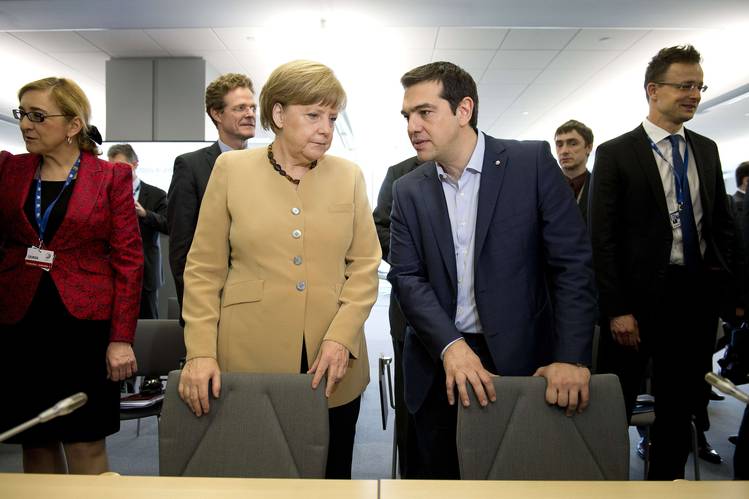
Ms. Merkel’s power after a decade in office has become seemingly untouchable, both within Germany and across Europe. But with the “no” vote in Sunday’s Greek referendum on bailout terms posing the biggest challenge yet to decades of European integration, risks to the European project resulting from Germany’s rise as the Continent’s most powerful country are becoming clear.

On Friday, Spanish antiausterity leader Pablo Iglesias urged his countrymen: “We don’t want to be a German colony.” On Sunday, after Greece’s result became clear, Italian populist Beppe Grillo said, “Now Merkel and bankers will have food for thought.” On Monday, Ms. Merkel flew to Paris for crisis talks amid signs the French government was resisting Berlin’s hard line on Greece.

“What is happening now is a defeat for Germany, especially, far more than for any other country,” said Marcel Fratzscher, head of the German Institute for Economic Research, a leading Berlin think tank. “Germany has, at the end of the day, helped determine most of the European decisions of the last five years.”

Senior German officials, in private moments, marvel at the fact that their country, despite its weak military and inward-looking public, now has a greater impact on most European policy debates than Britain or France, and appears to wield more global influence that at any other time since World War II.

Berlin think-tank elites, diplomats and mainstream politicians generally see the rise of German power as a good thing. They describe the stability, patience and rules-based discipline of today’s German governance as what Europe needs in these turbulent times. Germany—with its export-dependent economy and history-stained national identity—has the most to lose from an unraveling of European integration and is focused on keeping the union strong, they say.

Ms. Merkel’s popularity at home has remained strong through the Greek crisis, holding about steady at 67% in a poll at the end of June. She now must weigh whether to offer additional carrots to Greece to keep the country in the euro and preserve the irreversibility of membership in the common currency—at the risk of political backlash at home and the ire of German fiscal hawks. Only 10% of Germans supported further concessions for Greece in another poll last week.

U.S. officials generally see German leadership as crucial geopolitically, praising Ms. Merkel’s push last year to get all 28 European Union countries to adopt sanctions against Russia over Ukraine. But across Europe, Germany’s power is also straining unity in the EU, an alliance forged as a partnership of equals that now is struggling to accommodate the swelling dominance of one member.

With every crisis in which Ms. Merkel acts as the Continent’s go-to problem solver, the message to many other Europeans is that for all the lip service about the common “European project,” it is the Germans and faceless bureaucrats in Brussels who run the show.

The pushback against German power in Europe is likely to grow if the eurozone crisis worsens or if Berlin’s policies grow more assertive.

In Greece last week, it was the stern face of 72-year-old German Finance Minister Wolfgang Schäuble that appeared on some of the posters urging voters to reject Europe’s bailout offer. “He’s been sucking your blood for five years—now tell him NO,” the posters said.

“They want to humiliate Greece to send a warning to Spain, Portugal and Italy,” Hilario Montero, a pensioner at a pro-Greece demonstration in Madrid recently, said of Berlin and Brussels. “The message is you are not allowed to cross the lines they set.”

Similar to America’s global role, German power polarizes Europe. Ms. Merkel is popular in the European mainstream, even as populist politicians say she is building a “Fourth Reich” dominated by German capitalism.

In Spain, for example, a June poll found Ms. Merkel to be the most disapproved-of foreign politician after Russian President Vladimir Putin, with 54% disapproval. But she also drew one of the higher approval ratings, 39%, besting the leaders of Italy, the European Commission and the United Nations.

The dynamics are similar in France. While more than half of French in a poll last week disapproved of Ms. Merkel’s handling of the Greek crisis, two-thirds of adherents of the main center-right party approved.

Now Greece presents the most direct test for Ms. Merkel’s Europe. Her government played the biggest role in shaping the austerity-and-reforms conditions for eurozone bailouts and was the most influential voice resisting debt relief for Greece.

After Greece asked for a bailout in 2010, the heads of the European Central Bank and the International Monetary Fund traveled to Berlin to exhort German lawmakers to approve one. A year later, Ms. Merkel pushed for rules establishing greater fiscal rigor across the eurozone. In Spain, the press dubbed her la inspectora.

Last September, then-Greek Prime Minister Antonis Samaras flew to Berlin and appealed to Ms. Merkel. Unpopular economic measures Greece was required under bailout terms to enact—including changes to pensions and taxation as well as the rules involving labor, banks and the public payroll—were feeding the rise of a radical left-wing movement, Syriza, he said.

Ms. Merkel held firm and pushed back against offering debt relief. German officials advised the Greeks to tackle tough reforms right away.

Mr. Samaras, amid rising Greek anger over economically stifling austerity measures, lost the election to Syriza leader Alexis Tsipras in January. As the crisis intensified under the new government’s tougher negotiating style, German influence grew even more unmistakable.

In February, just hours after Athens sent eurozone finance ministers a letter asking for an extension of its aid program—and before the ministers had the chance to consult one another on it—the German Finance Ministry emailed reporters a brief statement. “The letter from Athens is not a substantive proposal,” it said, quickly stifling discussion of the letter.

Early last week, while some European officials including French President François Hollande publicly held out hope of a deal before Sunday’s referendum, Ms. Merkel quickly signaled there would be no talks before the vote. Her view prevailed.

For several decades, it was the roughly equal tandem of France and Germany that together called the shots on European policy. Because they often disagreed, their compromises typically ended up as palatable to the rest of Europe.

Then a string of developments—including widespread opposition to the Iraq war, former Chancellor Gerhard Schröder’s 2003 market-friendly economic reforms and the taboo-breaking summer of flag-waving when Germany hosted the 2006 World Cup—started to instill a more confident sense of national identity in a country still living in the shadow of the Nazi era. Economic problems in France weakened the country on the European stage, while British politics grew increasingly inward-looking.

In November 2011, Ms. Merkel’s Christian Democrats gathered on the grounds of the centuries-old Leipzig Trade Fair in eastern Germany for an annual party convention and remarked on Germany’s new influence. It had been just over a year since Greece asked for its first bailout. Some Europeans, including the French, initially resisted pushing for heavy doses of austerity in exchange for aid. But Ms. Merkel—the former physicist who grew up under communism and now oversaw Europe’s largest economy—had won the argument.

“All of a sudden, Europe speaks German,” Volker Kauder, the leader of Ms. Merkel’s conservatives in parliament, said in a speech at the convention. “Not in the language but in the acceptance of the instruments for which Angela Merkel fought so long and so successfully.”

Ms. Merkel’s approval rating at home shot up, from around 40% in 2010 to 70% in 2013, a range where it has remained. A yearslong refrain from German politicians helped keep German voters behind Ms. Merkel even as it estranged Europeans elsewhere: Countries seeking help must also do their Hausaufgaben—their homework.

Facing Putin

In March 2014, Ms. Merkel put her domestic political capital on the line and established Germany as a key European geopolitical power: She took on Mr. Putin. With him on the verge of annexing Crimea, the typically soft-spoken chancellor warned that Russia faced “massive damage,” economically and politically, if it continued intervening in Ukraine.

In ensuing months, Ms. Merkel repeatedly secured unanimity among EU members for rounds of Russia sanctions. Her surprisingly tough line unsettled a pacifist German public that polls show shrinks from foreign-policy involvement and wants a good relationship with its former World War II enemy.

And, as it had at the peak of the eurozone crisis, the German-inspired consensus hid further strains on European unity.

On the EU’s eastern periphery, Germany’s leadership on Ukraine stirred discomfort. Even as Berlin pushed for sanctions, it urged hawkish Western diplomats to avoid provoking Russia by such steps as stationing more NATO troops closer to Russia.

Poland and the Baltic states said troops were needed for their security. The dispute over how to deal with Russia prompted a senior Polish official to exclaim, in one meeting last summer, that Germany was again toying with Poland’s existence—alluding in part to the 1939 Nazi-Soviet nonaggression pact that effectively divided Poland between Russia and Germany.

Other countries, from Italy to Hungary, have chafed at having to put their close ties to Russia on ice amid Ms. Merkel’s push for sanctions.

But to Germany’s south, it is the eurozone crisis that has been the biggest factor in fostering discomfort with Germany’s dominant role on the Continent. In Italy and Spain, opponents of Ms. Merkel have referred to her as the leader of a “Fourth Reich.”

In France, Berlin’s shaping of the crisis response has spawned bitter criticism of Germany, now a popular theme for far-left and far-right alike in a country whose influence used to exceed its neighbors’. In a French poll last December, 74% said Germany had too much sway in European Union politics.

Jean-Luc Mélenchon, founder of the left-wing Parti de Gauche, in May published “Le Hareng de Bismarck—Le Poison Allemand” (“Bismarck’s Herring—the German Poison”), a 208-page denunciation of German supremacy in Europe. Last year, Marine Le Pen of the far-right National Front told Germany’s Der Spiegel magazine Ms. Merkel “wants to impose something on others that will lead to the explosion of the European Union.”

With the crisis in Greece worsening, cracks have started to show in the mainstream. Mr. Hollande, a Socialist, faces a domestic rebellion from members of his parliamentary majority who say he has signed up to German-inspired austerity and abandoned his 2012 election pledge to push pro-growth policies in Europe. Last week, he called on Greece’s creditors to try to reach a solution more quickly.

Within Germany, many politicians and leading commentators say a more assertive German role in Europe is the responsible thing to do. “Politically and economically stable countries cannot hide,” Foreign Minister Frank-Walter Steinmeier said earlier this year. “Germany is a little too big and important to comment on international affairs from the sidelines.”

In March, a prominent Berlin political scientist, Herfried Münkler, published a book, “The Power in the Middle,” that captured the German elite’s foreign-policy Zeitgeist. Germany, he wrote, had the duty to lead Europe because neither Brussels nor another EU country was strong enough to do so.

But in an interview last week, Mr. Münkler said Germany leading Europe alone was “no long-term solution.” For one thing, polls continue to show Germans don’t want more international responsibility. For another, he said, the potential rise of a successful populist party in Germany—as has happened in just about all of Germany’s neighbors, from Poland to the Netherlands to France—would sharpen nationalist rhetoric in Germany and increase Europeans’ aversion to German leadership.

“Germany is in this hegemonic role in Europe because we have no relevant right-wing populist parties,” Mr. Münkler said.

That is why Europe’s current showdown with Greece is critical for the future of Germany’s place in Europe, analysts say.

If Ms. Merkel approves a new lifeline for Athens after weeks of vitriolic debate, she is likely to face a furor from Germany’s right and stoke the country’s incipient euroskeptic movement.

If Greece careens out of the euro, Ms. Merkel will face blame for an episode that has further polarized Europe at a time when controversies over the U.K.’s EU membership and how to treat migrants and refugees are adding to the tensions wrought by the Ukraine crisis.

Claudia Major, a security specialist at the German Institute for International and Security Affairs, said: “If Greece were to leave the eurozone, this may someday be seen as the beginning of the end of the project of European integration—when the Germans were not in the position, as the leading power in shaping Europe, to be able to resolve things with the Greeks.”

source:wsj.com

Wimbledon 2015: Nick Kyrgios labels Dawn Fraser a ‘blatant racist’ following verbal attack

6600844-3x2-340x227

Australian swimming great Dawn Fraser has launched a “racist” attack on Nick Kyrgios after he was knocked out of Wimbledon on Monday night (AEST).

The Canberra-born Kyrgios, who is of Greek and Malaysian heritage, lost a four-set fourth-round clash with 21st seed Richard Gasquet and drew further ire for ‘tanking’ at least one game in the second set.

Fraser, speaking to the Nine Network’s Today Show, said she found his behaviour “absolutely disgusting”.
“I just am so shocked to think that he went out there to play and he tanked, he did all that tanking, that’s terrible,” she said.

Fraser also appeared to take aim at German-born Bernard Tomic, who has come under fire this week after unleashing a tirade of abuse at Tennis Australia, leading to him being axed from the Davis Cup team for the upcoming quarter-final tie against Kazakhstan.

“They should be setting a better example for the younger generation of this great country of ours,” she said.

If they don’t like it, go back to where their parents came from. We don’t need them here in this country to act like that.

Kyrgios, who has been roundly criticised after each of his four matches at SW19 for varying degrees misbehaviour responded on Facebook, calling Fraser a “blatant racist”.

“Throwing a racket, brat. Debating the rules, disrespectful. Frustrated when competing, spoilt. Showing emotion, arrogant. Blatant racist, Australian legend,” he wrote.

Kyrgios’s mother Nill, who was born in Malaysia, took to Twitter to criticise Fraser’s comments.

“I have no comments on Dawn Frasers nasty racist attack…but she is out of line. #unaustralian behaviour,” she posted.

source:abc.net.au

Fraser tells Kyrgios: “go back to where his parents came from”

untitled

Sporting icon Dawn Fraser has told tennis star Nick Kyrgios to ‘go back to where his parents came from’ following his stormy exit from Wimbledon.

Asked to comment on Kyrgios’ antics during his fourth-round grand-slam loss Fraser accused him of ‘tanking’ and setting a poor example for ‘the younger generations of this country.”If they don’t like it they can go back to where their fathers, or their parents came from. We don’t need them here in this country to act like that,’ Fraser told the Nine Network on Tuesday morning.

Born in Canberra, 20-year-old Kyrgios is the son of a Greek-born father and Malaysian-born mother.He was booed on court during his loss to Frenchman Richard Gasquet after he appeared to deliberately fail to return serves during the third game of the second set.

Kyrgios hit back on Facebook accusing Fraser of being a racist: ‘Throwing a racket, brat. Debating the rules, disrespectful. Frustrated when competing, spoilt. Showing emotion, arrogant. Blatant racist, Australian legend.’

A short time later, Fraser stood by her comments during an interview with 3AW, saying Kyrgios wasn’t ‘a very likeable guy’.’When he goes out and does his press interviews to the media he’s not a very likeable guy, as far as being an Australian is concerned,’ she said.She compared the young tennis star to hot-tempered US player John McEnroe, and labelled Kyrgios’ outbursts ‘disgraceful’.’We all had a go at Lleyton Hewitt but his outbursts were to himself, not to the officials,’ she said.’Are we seeing John McEnroe over again?”It’s just disgraceful.’

source:skynews.com.au

Γιατί ο Μιχαλολιάκος δεν θα είναι στο συμβούλιο των πολιτικών αρχηγών

mixaloliakos_madata_340368086

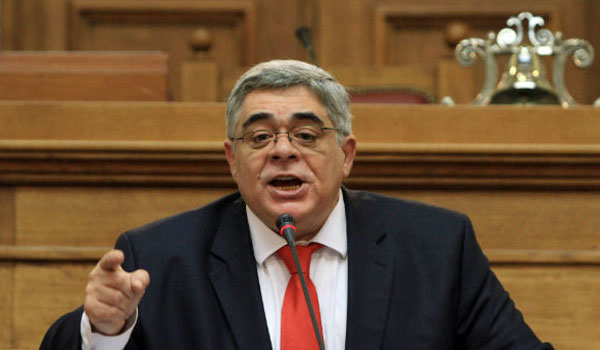
Ο Γενικός Γραμματέας της Χρυσής Αυγής, Νίκος Μιχαλολιάκος, δεν θα βρίσκεται στο συμβούλιο των πολιτικών αρχηγών που συγκάλεσε ο Αλέξης Τσίπρας υπό τον Προκόπη Παυλόπουλο.

Σύμφωνα με ανακοίνωση του αρνήθηκε τη συμμετοχή του στο συμβούλιο των πολιτικών αρχηγών.

Αναλυτικά η ανακοίνωση του Ν.Μιχαλολιάκου:

«Αθήνα, Κύριε Πρόεδρε,

Ευχαριστώ θερμά για την πρόσκλησή σας στο συμβούλιο των πολιτικών αρχηγών. Δυστυχώς όμως, είμαι υποχρεωμένος να αρνηθώ την τιμητική σας πρόσκληση για λόγους ιδεολογικούς και πολιτικούς.

Η δεδομένη ήδη πρόταση της κυβερνήσεως, η οποία εις το παρελθόν κατετέθη, είναι σαφές ότι ευρίσκεται μακράν των θέσεών μας και αποτελεί ένα νέο μνημόνιο.

Η ΧΡΥΣΗ ΑΥΓΗ δεν συμφωνεί με την οποιαδήποτε διαπραγμάτευση, η οποία δεν θέτει σαν προϋπόθεση την μη εκχώρηση της εθνικής κυριαρχίας και αρνείται αυτή να διέπεται από το αγγλικό δίκαιο. Όσο η κυβέρνηση δεν καταγγέλλει με τρόπο ξεκάθαρο τα μνημόνια και την πολιτική τους, δεν επιθυμώ την συμμετοχή μου στο συμβούλιο των πολιτικών αρχηγών.

Ευχαριστώ θερμά

Μετά τιμής
Ν. Γ. Μιχαλολιάκος».

Πηγή:madata.gr

Παραιτήθηκε ο Γιάνης Βαρουφάκης: Κι είναι τιμή μου η απαίτηση των δανειστών

tsipras_baroufakis_madata3_615465579

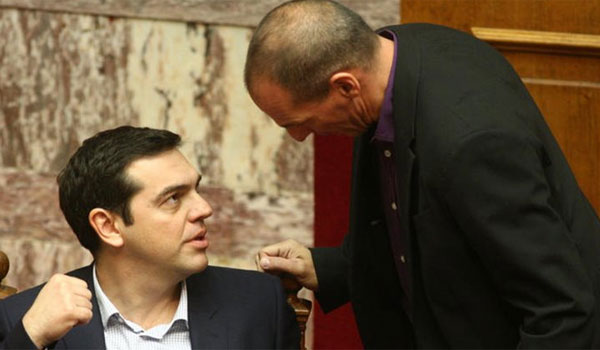
Την παραίτησή του υπέβαλε ο υπουργός Οικονομικών Γιάνης Βαρουφάκης, προκειμένου να διευκολύνει τον πρωθυπουργό στις διαπραγματεύσεις με τους δανειστές.

Ειδικότερα σε σχετική ανακοίνωση που εξέδωσε αναφέρεται χαρακτηριστικά:

«Το δημοψήφισμα της 5ης Ιουλίου θα μείνει στην παγκόσμια ιστορία ως μοναδική στιγμή που ένας μικρός ευρωπαϊκός λαός όρθωσε το ανάστημά του εναντίον της Χρεοδουλοπαροικίας.

Όπως όλες οι δημοκρατικές κατακτήσεις, έτσι κι αυτή η ιστορική απόρριψη του τελεσίγραφου του Eurogroup της 25ης Ιουνίου έχει μεγάλο κόστος.

Είναι λοιπόν απαραίτητο το κεφάλαιο του ΟΧΙ να επενδυθεί άμεσα ώστε να μετατραπεί σε ΝΑΙ σε κάποια έντιμη συμφωνία-επίλυση – με αναδιάρθρωση χρέους, με μειωμένη λιτότητα, με αναδιανομή υπέρ των μη εχόντων, με πραγματικές μεταρρυθμίσεις.

Λίγο μετά την ανακοίνωση των αποτελεσμάτων του δημοψηφίσματος, μου κατέστη γνωστό ότι οι συμμετέχοντες στο Eurogroup, και λοιποί εταίροι, θα «εκτιμούσαν» την… απουσία μου από τις συνεδριάσεις του, κάτι που ο Πρωθυπουργός έκρινε ότι ίσως βοηθήσει στην επίτευξη συμφωνίας. Για αυτό και αποχωρώ από το Υπουργείο Οικονομικών.

Είναι καθήκον μου να βοηθήσω όσο μπορώ τον Αλέξη Τσίπρα να εκμεταλλευτεί, όπως εκείνος κρίνει, το κεφάλαιο που μας δώρησε ο ελληνικός λαός μέσω του δημοψηφίσματος.
Κι είναι τιμή μου η απαίτηση των δανειστών.

Η Αριστερά λειτουργεί συλλογικά και οι αριστεροί δεν αγαπάμε τις καρέκλες. Θα στηρίξω τον Αλέξη Τσίπρα, την νέα ηγεσία του Υπουργείου Οικονομικών, την κυβέρνηση της Αριστεράς.

Η υπερπροσπάθεια να τιμήσουμε τον γενναίο ελληνικό λαό, και το περίφημο ΟΧΙ που χάρισε χτες στους απανταχού δημοκράτες, μόλις ξεκινά!»

Minister No More! Posted on July 6, 2015 by yanisv

The referendum of 5th July will stay in history as a unique moment when a small European nation rose up against debt-bondage. Like all struggles for democratic rights, so too this historic rejection of the Eurogroup’s 25th June ultimatum comes with a large price tag attached. It is, therefore, essential that the great capital bestowed upon our government by the splendid NO vote be invested immediately into a YES to a proper resolution – to an agreement that involves debt restructuring, less austerity, redistribution in favour of the needy, and real reforms.

Soon after the announcement of the referendum results, I was made aware of a certain preference by some Eurogroup participants, and assorted ‘partners’, for my… ‘absence’ from its meetings; an idea that the Prime Minister judged to be potentially helpful to him in reaching an agreement. For this reason I am leaving the Ministry of Finance today.

I consider it my duty to help Alexis Tsipras exploit, as he sees fit, the capital that the Greek people granted us through yesterday’s referendum. And I shall wear the creditors’ loathing with pride. We of the Left know how to act collectively with no care for the privileges of office. I shall support fully Prime Minister Tsipras, the new Minister of Finance, and our government. The superhuman effort to honour the brave people of Greece, and the famous OXI (NO) that they granted to democrats the world over, is just beginning.

Πηγή:madata.gr

German calls for Grexit mount as EU stunned by ‘No’ vote

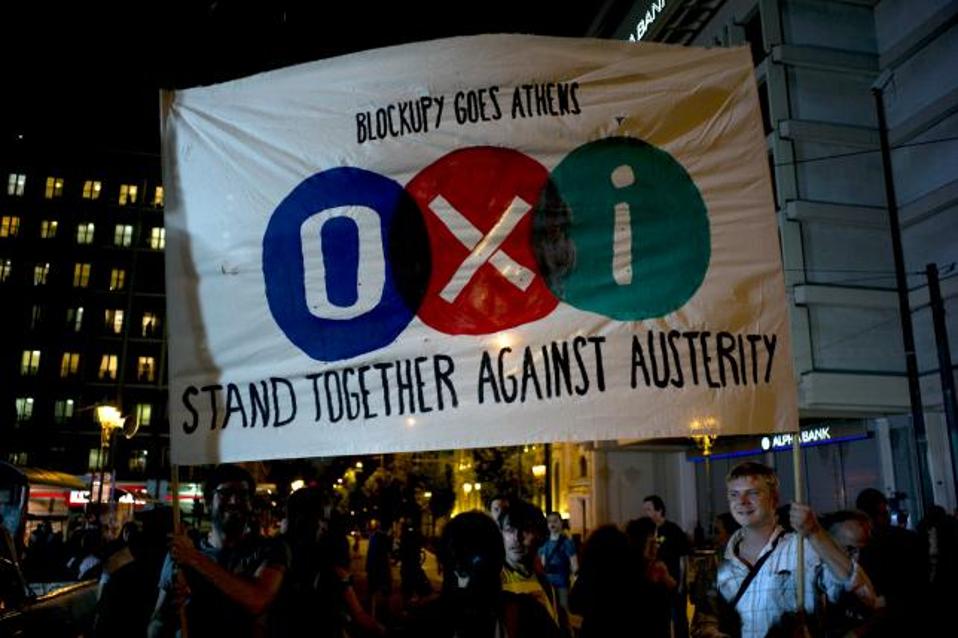
oxi_blockupy_web-thumb-large

France and Germany called for an emergency summit of euro zone leaders to discuss Greece’s stunning referendum vote on Sunday to reject bailout terms, as calls mounted in Berlin to cut Athens loose from Europe’s common currency.

German Chancellor Angela Merkel’s deputy said Athens had wrecked any hope of compromise with its euro zone partners by overwhelmingly rejecting further austerity.

Merkel and French President Francois Hollande conferred by telephone and will meet in Paris on Monday afternoon to seek a joint response. Responding to their call, European Council President Donald Tusk announced that euro zone leaders would meet in Brussels on Tuesday evening (1600 GMT).

German Vice-Chancellor Sigmar Gabriel, leader of Merkel’s centre-left Social Democratic junior coalition partner, said it was hard to conceive of fresh negotiations on lending more billions to Athens after Greeks voted against more austerity.

Leftist Prime Minister Alexis Tsipras had “torn down the last bridges on which Greece and Europe could have moved towards a compromise,” Gabriel told the Tagesspiegel daily.

His comments reflected a mounting public demand in the most powerful EU country, which is also Greece’s biggest creditor, to eject Athens from the 19-nation currency area, of which membership was intended to be irreversible.

It was not clear whether Merkel, who has repeatedly said she wants to keep Greece in the euro zone, would shift to a similarly hard line.

But senior lawmakers in her conservative bloc also spoke firmly: “Now one has to ask the question whether Greece would not be better off outside the euro zone,” Hans Michelbach, a member of the Bavarian Christian Social Union, told Reuters. “Unfortunately, Greece has chosen a path of isolation.”

The vote sharpened differences between Greece’s few remaining sympathizers in the euro zone – mostly in Italy and France – and hardline countries led by Germany that are fed up with pouring loans into Greece.

Italy’s foreign minister, Paolo Gentiloni, said the euro zone should resume efforts to reach a deal with Athens.

“Now it is right to start trying for an agreement again,” he tweeted. “But there is no escape from the Greek labyrinth with a weak Europe that isn’t growing.”

Silence from Brussels

The euro fell sharply in early Asia-Pacific trading on Monday, losing about 1.4 percent against the U.S. dollar, as analysts for Citi, Barclays and other banks said a Greek exit was now their “base case” or most likely outcome.

There was a thunderous silence from top EU policymakers in Brussels and Frankfurt who conferred by telephone but avoided public appearances to comment on an outcome that was a stunning setback for EU governments but delighted Eurosceptic populists.

The European Commission said in a brief statement that it “takes note of and respects” the referendum result.

Jeroen Dijsselbloem, chairman of the Eurogroup of finance ministers of the currency bloc, said in a letter to his Dutch Labour Party members before the vote: “Although the government in Athens would like people to think otherwise, it is about the question of whether Greece stays in the euro zone or not.”

European Parliament President Martin Schulz said the EU should start preparing a humanitarian aid program for Greece.

The 60-40 margin of defeat for the terms of a cash-for-reform deal, which the leftist Greek government rejected a week ago, shocked EU officials who had been heartened by opinion polls showing the ‘Yes’ camp gaining ground as bank closures and the rationing of cash withdrawals began to bite.

It was a personal blow for European Commission President Jean-Claude Juncker, one of the architects of the euro, who worked for months to try to broker a debt deal with Tsipras despite misgivings in Berlin.

Deputy finance ministers and senior officials of the Eurogroup Working Group will hold a conference call on Monday to take stock of the situation, another euro zone official said.

Any future negotiation would run up against the hardening of opinion in Germany.

The head of Germany’s savings bank association said Greece had broken with the rules of the euro zone and should leave the currency bloc. The head of the German exporters’ body said he could not see how Greece could stay in the euro zone now.

Hardline German Finance Minister Wolfgang Schaeuble, denounced in ‘No’ campaign posters as a blood-sucker, has leaned towards making an example of Greece and pushing it towards the exit, sources familiar with his thinking say.

In a weekend newspaper interview, Schaeuble said Athens might consider leaving the currency area temporarily.

Eurosceptics around the EU were jubilant at the rejection of what French far right National Front leader Marine Le Pen called “the European Union oligarchy”.

“It is ‘No’ vote of freedom, of rebellion against European ‘diktats’ of those who want to impose the single currency at any price, through the most inhuman and counter-productive austerity,” she said in a statement.

In Britain, anti-EU UK Independence Party leader Nigel Farage commended Greek voters for “calling the EU’s bluff”.

“EU project is now dying. It’s fantastic to see the courage of the Greek people in the face of political and economic bullying from Brussels,” he said.

Eurosceptics in the Netherlands and Italy joined the chorus of glee at the EU’s discomfiture. In Spain, leader of the new far-left Podemos party, Pablo Iglesias, who is close to Tsipras, tweeted: “Today in Greece, democracy has won.”

source:ekathimerini.com

Τα Aυστραλιανά Μέσα για το Eλληνικό δημοψήφισμα

pagreaus7

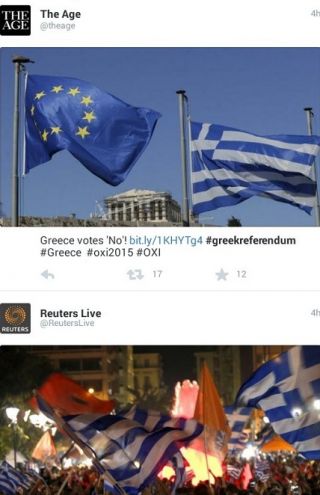
Φωτογραφές από τις ηλεκτρονικές εκδόσεις αυστραλιανών εφημερίδων και διεθνών πρακτορείων ειδήσεων

Sydney Morning Herald: Το δολάριο “πέφτει – πέφτει”

Το ΟΧΙ των Ελλήνων στο δημοψήφισμα κυριάρχησε τη Δεύτερα το πρωί στα αυστραλιανά παραδοσιακά και ηλεκτρονικά μέσα ενημέρωσης. Το ενδιαφέρον παρέμεινε ισχυρό καθόλη τη διάρκεια της περασμένης εβδομάδας και οι ανταποκρίσεις των καναλιών από την Αθήνα ήταν συνεχείς, κυρίως στα ειδησεογραφικά κανάλια της χώρας. Bέβαια, όπως και στην Ελλάδα κανείς δεν περίμενε, ή έστω πολλύ λίγοι περίμεναν, ότι το ΟΧΙ θα κέρδιζε και μάλιστα με ποσοστό μεγαλύτερο του 60%.

Αν και οι αυστραλιανές εφημερίδες δεν πρόλαβαν να τυπώσουν το αποτέλεσμα λόγω της διαφοράς ώρας, οι ιστότοποί τους ενημερώνονταν συνεχώς για τις πολιτικές και οικονομικές εξελίξεις στην Ελλάδα και την Ευρώπη, ενώ κυριάρχησαν οι δηλώσεις Ελλήνων και Ευρωπαίων αξιωματούχων.

ABC: Σε “ελεύθερη πτώση” το δολάριο

Δύο ολόκληρα σεντς έπεσε το δολάριο το πρωί της Δευτέρας και βρέθηκε στο χαμηλότερο επίπεδο από το 2009. Σύμφωνα με τους αναλυτές, αυτό οφείλεται κυρίως στο ΟΧΙ των Ελλήνων στη νέα συμφωνία για μέτρα λιτότητας που πρότειναν οι δανειστές στις 25 Ιουνίου και που τέθηκε στο δημοψήφισμα της Κυριακής. Το δολάριο κυμαινόταν στα 74.52 αμερικανικά δολάρια αν και αργότερα ανέβηκε στα 74.9 US. Ωστόσο, η ισοτιμία του με το ευρώ δεν άλλαξε σημαντικά και βρέθηκε στα 68 ευρωσεντς.

Σημείωσε δε σημαντικές απώλειες έναντι τους ιαπωνικού γεν.

Αναλυτές τονίζουν ότι οι οικονομικοί κύκλοι ανέμεναν πολύ μικρότερο το ποσοστό διαφοράς στα ΝΑΙ και τα ΟΧΙ, και το 61% ήρθε ώς έκπληξη για τις διεθνείς χρηματαγορές.

The Age: Οι πανηγυρισμοί στην Αθήνα

Στον ιστότοπο της Age κυριαρχούσαν φωτογραφίες από τους πανηγυρισμούς των υποστηριχτών στο κέντρο της Αθήνας. Το ρεπορτάζ της ηλεκτρονικής έκδοσης της εφημερίδας αναφέρει ότι από νωρίς φαινόταν ότι το ΟΧΙ θα επικρατήσει και κόσμος συνέρρεε στο κέντρο της ελληνικής πρωτεύουσας. “Παρά μία εβδομάδα με κλειστές τράπεζες, ελλείψεις στην αγορά και ειδικά σε εισαγώμενα προϊόντα και φάρμακα, περιορισμοί στις αναλήψεις χρημάτων από τα ATM και τις μεταφορές χρημάτων από το εξωτερικό καθώς και την πολλών εκατομμυρίων διαφημιστική εκστρατεία του ΝΑΙ, το αποτέλεσμα ήταν υπέρ του ΟΧΙ”, αναφέρει της Age.

Δημοσιεύτηκαν και οι πρώτες δηλώσεις του Έλληνα πρωθυπουργού Αλέξη Τσίπρα και του υπουργού Οικονομικών Γιάνη Βαρουφάκη. “To αποτέλεσμα του δημοψηφίσματος είχε ισχυρό αντίκτυπο και στη Νέα Δημοκρατία, αφού παριατήθηκε ο αρχηγός της και πρώην πρωθυπουργός από την αρχηγία του”, αναφέρει χαρακτηριστικά το δημοσίευμα.

Sydney Morning Herald: Το δολάριο “πέφτει – πέφτει”

Και η SMH είχε ανάλυση για την πτώση της ισοτιμίας του αυστραλιανού δολαρίου, η οποία ενδέχεται να πέσει το χαμηλό επίπεδο των 72-73 αμερικανικών σεντς. “το μόνο ερώτημα που απομένει είναι πόσο σύντομα θα συμβεί κάτι τέτοιο. Οι επενδυτές πιστεύουν ότι η άρνηση της Ελλάδας, μέσω του δημοψηφίσματος, να αποδεχθεί νέα μέτρα και μεταρρυθμίσεις με αντάλλαγμα νέα δανειακή σύμβαση με την Ευρωπαϊκή Ένωση, μπορεί να οδηγήσει σε οικονομικό χάος και υποσκάπτει τα θεμέλια της Ευρωζώνης” αναφέρει το δημοσίευμα.

The Australian: Λεπτό – λεπτό η ενημέρωση

Η πανεθνικής κυκλοφορίας Australian μετέδιδε αναλυτικά τα τεκταινόμενα την ημέρα του δημοψηφίσματος. “Οι Έλληνες πολίτες έδειξαν απίστευτο θάρρος ψηφίζοντας ΟΧΙ στο δημοψήφισμα της Κυριακής” αναφέρει ο αρχισυντάκτης του οικονομικού παραρτήματος της εφημερίδας Alan Kohler. “Η πιο πρακτική λύση θα ήταν οι πολίτες να ψήφιζαν ΝΑΙ και έτσι η Ευρωπαϊκή Κεντρική Τράπεζα θα ξανάνοιγε από την Κυριακή το βράδυ και θα διαπραγματευόταν τους όρους του νέου δανείου αργότερα”.

Η εφημερίδα αναφέρει και για την κατακόρυφη πτώση του αυστραλιανού δολαρίου.

Herald Sun: Ανάλυση της κατάστασης

Και η Herald Sun εξηγήσει με απλές ερωταπαντήσεις τι σημαίνει το ΟΧΙ για την Ελλάδα και την Ευρωζώνη. Η ιστοσελίδα ρώτησε τον καθηγητή Οικονομικών του Πανεπιστημίου Nέας Νότιας Ουαλίας Richard Holden να δώσει τις απαντήσεις. “Με την προκήρυξη του δημοψηφίσματος και το κλείσιμο των τραπεζών για μία περίπου εβδομάδα ο ΣΥΡΙΖΑ κατέφερε να φέρει το ελληνικό τραπεζικό σύστημα πολύ κοντά σε ασφυξία. Mε το ΟΧΙ τα ‘χέρια της ΕΚΤ δένονται”, αναφέρει ο καθηγητής. “Aυτοί που διαθέτουν την πραγματική γνώση των χρηματοπιστωτικών αγορών και τα θέματα ρευστότητας, λένε οι Έλληνες πρέπει να σταματήσουν να ‘παίζουν’ με το ΔΝΤ και την ΕΚΤ. Η Ελλάδα θα πρέπει να αρχίσει να τους ακούει αμέσως”.

Πηγή:Νέος Κόσμος

Yanis Varoufakis steps down following the referendum outcome

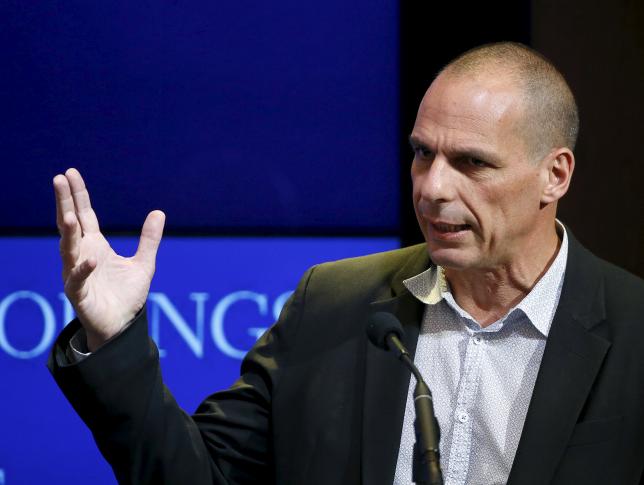
Greek Finance Minister Yanis Varoufakis speaks at the Brookings Institution in Washington April 16, 2015.    REUTERS/Gary Cameron

Yanis Varoufakis has resigned from his post following the historic referendum that voted against accepting creditors’ terms for a bailout.

A few minutes ago the former Finance Minister tweeted:

“The referendum of 5th July will stay in history as a unique moment when a small European nation rose up against debt-bondage.

Like all struggles for democratic rights, so too this historic rejection of the Eurogroup’s 25th June ultimatum comes with a large price tag attached. It is, therefore, essential that the great capital bestowed upon our government by the splendid NO vote be invested immediately into a YES to a proper resolution – to an agreement that involves debt restructuring, less austerity, redistribution in favour of the needy, and real reforms.

Soon after the announcement of the referendum results, I was made aware of a certain preference by some Eurogroup participants, and assorted ‘partners’, for my… ‘absence’ from its meetings; an idea that the Prime Minister judged to be potentially helpful to him in reaching an agreement. For this reason I am leaving the Ministry of Finance today.

I consider it my duty to help Alexis Tsipras exploit, as he sees fit, the capital that the Greek people granted us through yesterday’s referendum.

And I shall wear the creditors’ loathing with pride.

We of the Left know how to act collectively with no care for the privileges of office. I shall support fully Prime Minister Tsipras, the new Minister of Finance, and our government.

The superhuman effort to honour the brave people of Greece, and the famous OXI (NO) that they granted to democrats the world over, is just beginning.”