Category Archives: Uncategorized

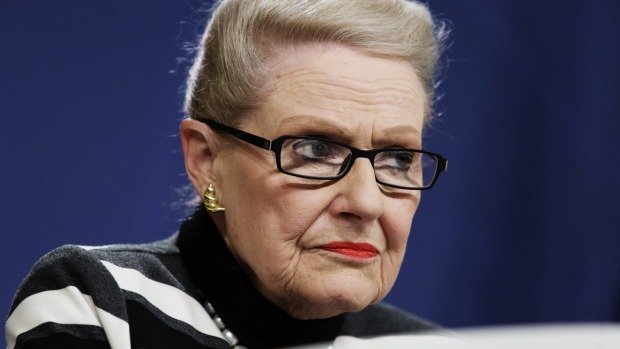
Bronwyn Bishop slugs taxpayers $1000 a day for private limo costs

1437259833414

Embattled federal Speaker Bronwyn Bishop has revealed a federal department is examining two more charter flights she has admitted could have been used to attend party political events.

The development comes as Fairfax Media can reveal that Mrs Bishop charged taxpayers almost $1000 a day to travel in luxurious private limousines during her $90,000 fortnight in Europe.

The Speaker finally conceded on Saturday that she made an “error of judgment” when she chartered a $5227 helicopter to make the short journey from Melbourne to Geelong for a Liberal Party fundraiser last year.

Mrs Bishop refused to say sorry to the Australian taxpayer over the episode, saying her refund was apology enough. Despite admitting the only reason she travelled to Victoria on November 5 last year was for the party event at a golf club, she dismissed any suggestion she would resign her position as head of the federal Parliament.

“One doesn’t resign for an error of judgment that is within the guidelines,” she said.

Mrs Bishop revealed she had also asked the Department of Finance to look into two other charter flights she had taken since becoming Speaker – one to Young and one to Nowra – for the sake of “completeness”.

“There were certainly public meetings, there could have been a fundraiser as well,” she said.

But the charters are far from the only extravagance in Mrs Bishop’s expense reports.

Fairfax Media can reveal the Speaker racked up a $14,000 limo bill in a little over a fortnight during her European trip in October.

On the same trip, Mrs Bishop’s four fellow delegates spent between $1200 and $2800 each on ground transport. They typically travelled by public transport or in more modest embassy-arranged cars.

“There was a black BMW carting her around like royalty,” said a source involved with the trip. “She wasn’t about to take her eight-inch heels on the subway.”

The Speaker’s chief of staff and spokesman Damien Jones, who was on the trip with another staff member, confirmed the spending on Saturday.

“All presiding officers get their own transport,” he told Fairfax Media. “In fact I think any head of delegations gets their own transport. So yes, that accounts for the $14,000.”

Mrs Bishop and her staff also spent $42,000 on flights and $25,000 on meals and accommodation. The other parliamentarians – the Coalition’s Nola Marino and Cory Bernardi​, and Labor’s Glenn Sterle​ and Tony Zappia​ – each spent a fraction of those amounts.

The trip was partly aimed at securing Mrs Bishop a plum new job. She was running for president of the Inter-Parliamentary Union, a democracy group based in Switzerland. She lost the vote to Bangladesh’s candidate.

Reminded the Treasurer had said the helicopter charter “failed the sniff test”, Mrs Bishop said: “Joe [Hockey] says some funny thing sometimes, doesn’t he? I think he said poor people don’t drive cars or something.”

Prime Minister Tony Abbott was standing by his hand-picked Speaker on Saturday. In his first public comments on the expenses scandal, Mr Abbott said he would not ask her to step down.

“No. She’s repaid the money and she does a good job,” Mr Abbott told reporters in Queensland.

“Bronwyn admitted it was probably an error of judgement and she’s repaid the money. She has my confidence.”

Mrs Bishop repaid the $5227 cost of the charter – plus a $1300 penalty – amid intense political and public pressure on Thursday.

Mr Abbott dismissed a suggestion she should stand aside as the department conducts its audit. “I don’t think it’s appropriate to stand aside simply because the finance department might be having a look at something.”

He also dismissed suggestions that Mrs Bishop was being treated differently to former speaker Peter Slipper, who faced criminal charges over his expenses.

Labor has called on the Australian Federal Police to investigate the Bronwyn Bishop expenses scandal without further delay, saying the Department of Finance’s internal audit should not stand in the way of a criminal inquiry.

Opposition waste-watch spokesman Pat Conroy has has written to the AFP for a second time, urging it to probe the chopper episode. The AFP has referred the matter to the finance department under what is known as the Minchin protocol​, which allows the department to conduct an audit to determine whether allegations are credible. If it decides there has been serious and deliberate wrongdoing it can refer the case back to the police.

But Labor believes the protocols do not apply if allegations are referred directly to the AFP.

“Refusing to investigate the allegations against Mrs Bishop would be inconsistent with the approach taken in the Slipper case,” Mr Conroy said. “In any event, the Minchin protocol is no impediment to a police investigation into Mrs Bishop’s conduct.”

Labor believes the case hinges on whether Mrs Bishop signed a Presiding Officer’s Charter Certification form. The form requires the Speaker to confirm that a charter is for her “office holder duties” and states that knowingly giving false or misleading information is a serious criminal offence.

source:smh.com.au
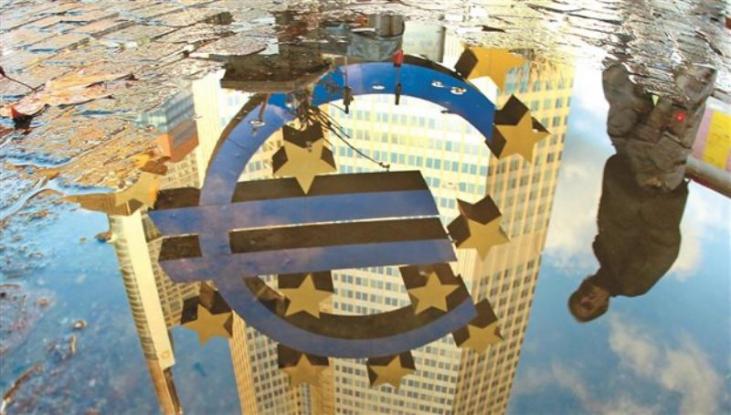
 

Greek crisis: the EU solution solved nothing

grexit_465633954
The modern Greek tragedy isn’t over — after an interlude, there will be more acts. The deal of July 13 will, with luck, avert an immediate financial collapse.

But three problems ­remain: Greece must escape the depression, reduce debt and ­restore competitiveness. All three trace to decisions made in the early days of the euro.

Back when the euro was just an idea, economists warned that the countries involved weren’t suited to using a single currency because they weren’t “an optimum currency area” — a group of nations with similar business ­cycles and substantial political unity, labour mobility and cross-country fiscal transfers.

The euro’s founders did not dispute this judgment; they played down its importance. The order can be reversed, they insisted: First we’ll create the common currency, then we’ll create the conditions that make it work.
Germany’s Helmut Kohl and France’s Francois Mitterand went further, sub-ordinating the economics to a big political idea. What’s the theory of optimum currency areas compared with ensuring Germany and France never go to war again? Hard to argue with that, but it doesn’t ­repeal the laws of economics. The eurozone still isn’t an optimum currency area, and that explains much of the Greek problem.

Start with “similar business ­cycles”. The global financial crisis and ensuing recession hit Greece especially hard. Countries have three weapons to fight recessions: fiscal stimulus, monetary stimulus and currency depreciation. Membership in the eurozone forecloses the latter two. Greece’s large pre-crisis debt starkly limits the first. Hence Greek problem No 1: a recession worse than the Great Depression.

The latest agreement looks likely to make this depression worse. Several previous bailouts held things together with chewing gum and baling wire. But in ­return for loans, Greece’s creditors demanded ruinous austerity. Successive rounds of austerity spread misery and ushered in the left-wing Syriza, but did not reduce Greece’s debt-to-GDP ratio.

According to myth, stubborn Greece has done little to fix its budget. In reality, Greece’s structural budget balance moved from an Olympian 17 per cent of GDP deficit in 2009 to about a 1 per cent surplus in 2014, according to OECD estimates. But the Greek economy shrunk so much that the public debt rose as a share of GDP, to 181 per cent from 135 per cent over those five painful years.

Hence Greek problem No 2: unpayable public debt. Some sort of writedown, restructuring or default is inevitable. Sooner and smoother (eg, a mutually agreed restructuring) seems better than later and messier (eg, a unilateral Greek default).

But Greece’s creditors are so far unwilling to offer much debt relief because that means that some third parties must pitch in money or relinquish claims on Greece. And that brings up the second departure from an ­optimum currency area: the eurozone is not a country; its mechanisms for fiscal transfers across borders are under-developed and contentious.

Compare the US. I live in New Jersey, one of the richest states. We New Jerseyans have been making fiscal transfers to poor states like Mississippi, funnelled through the federal government, for decades. But few of us notice it, and we don’t vote on it. The transfers happen automatically ­because New Jersey and Mississippi are in the same country. Germany and Greece are not. Angela Merkel is right to worry that Germans oppose transfers to Greeks. Would Americans vote for transfers to Mexico?

Greek problem No 3, restoring competitiveness, may be insoluble. One of the most remarkable developments since the founding of the euro has been the extent to which Germany has outpaced the pack in competitiveness. According to data compiled by the European Central Bank, Germany’s unit labour costs have fallen 19.5 per cent, relative to its trading partners, since the end of 1998 — leaving the rest of the eurozone in the dust.

And here’s a surprise. After Germany, which eurozone countries do you think are running second and third in competitiveness? Eureka! It’s Cyprus and Greece, where wages have crumbled under the weight of ferocious unemployment. Greek unit ­labour costs are down 7 per cent. But that still leaves them further behind Germany than when Greece joined the euro.

How do you fix that? Under floating exchange rates, some semblance of parity would be ­restored by currency ­depreciation. But that can’t ­happen with a single currency. The answer could be either huge wage hikes in Germany or more devastating wage cuts in Greece — a terrible solution.

So the Greek problem may never be over as long as Greece remains in the eurozone.

The Wall Street Journal

source:theaustralian.com.au

Discovering Greece by the glass

IMG_7543

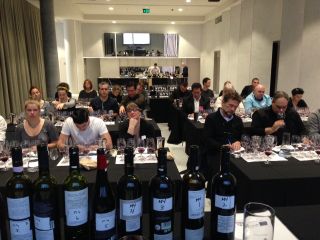
The ‘New Wines of Greece’ masterclasses allowed a variety of Australian professionals to discover the quality of wine the Greek vineyards produce.

The largest deployment of Greek winemakers in Australia proves that, in times of despair, there is an industry that could put the country in the global market.

‘Xinomavro’, ‘agiorgitiko’, ‘assyrtiko’, ‘moschofilero’, ‘malagouzia’. Tongue-twisters are the last thing you expect when you arrive at a wine tasting.

Learning new words, however, is part of the process of discovery, and those who participated in the Greek Wine Masterclasses presented in Sydney and Melbourne in the past couple of weeks seemed to be fascinated by the experience.

“There is a great interest in new wine,” says Yannis Karakasis, who delivered the masterclasses, along with Grigoris Michailos, leading the ‘New Wines of Greece’ roadshow in Australia. The showcase was organised by the Interprofessional Organisation of Vine And Wine of Greece, which brought 27 wine producers from Greece – both established and emerging – to Australia.

The two men are nicknamed ‘the Greek Commanders’, and their webpage (www.winecommanders.com) is a point of reference for the Greek wine community, making them ideal spokespersons for this venture.

“We have many high-profile professionals attending, who are very interested in tasting Greek wine,” says Yannis Karakasis.

“Most of them know next to nothing about Greek wine, they are still stuck in the retsina perception, this is why they are very excited by this tasting.

The average consumer is bored by the same tastes and needs a challenge. Greek wine can do that. We produce wine that goes well with many styles of cuisine – from the simplest to the most complicated dishes – while providing great value for money.

We tasted xinomavro during the masterclass, which is sold in Greece for €7-10 ($10-15) and is great after 15 years. How many wines from other countries in this price-range can do that?”

One of those familiar with Greek wine is David Lamb, who has been importing Greek wine since 2006, thus becoming an unofficial ambassador of the wine.

“It is very important, seeing producers set competition aside and join forces. It wouldn’t happen with other European producers,” he says of the roadshow, which has allowed him make “quite a few contacts and discover new wineries”.

As for the marketability of Greek wine, he believes that “its history alone can be a selling point, let alone its quality. People here are very interested in good food and wine,” he says, hopeful that this could be an important factor.

Eleni Blouchos, project manager of the ‘New Wines of Greece’ roadshow and masterclass, couldn’t agree more.

“Australia has a very healthy and mature wine market; it is experiencing a boom in gastronomy and gourmet restaurants, and the average Australian is a wine-drinker, open to Greek wine,” she says.

“Greece produces wine of high quality, in small quantities. Our strategy should start from that fact. Our aim is to enter a premium market, approaching experts and slowly expanding recognition of Greek wine.”

GREEK WINE IS A SLEEPER

Greek vineyards are found on diverse soil and terrain, at altitudes varying between sea level and often in excess of 1,000 metres. They are largely found on mountain and semi-mountainous terroirs and, to a much lesser degree, on terroirs of continental features.

In geographical terms, Greek vineyards are distinguished into those of northern Greece, central Greece (Attica included), Peloponnese and the Ionian Islands, the Aegean Sea islands and those of Crete. These regions are further subdivided into smaller ones, each with their own particular soil, climate, and topographical features – all of which, when combined with mainly native cultivars, give Greek wines their unique and diverse character.

Assyrtiko (Santorini) wines are rare and distinctive.

These wines are crafted from the indigenous assyrtiko grape, cultivated in some of the world’s oldest vineyards, dating back 3,500 years, on the volcanic island of Santorini. These terroir-driven wines have distinct characteristics structured on minerality and density and complement both seafood and meat dishes. They reflect both the unique volcanic and anhydrous soil of Santorini.

Xinomavro (Naoussa/Amynteo) wines are dry red wines, aged for two years minimum and noted for their bright pale to deep red colour, high acidity, strong tannins and complex aromatic character. The place of origin and most important growing area of the indigenous xinomavro grape is northwestern Greece, in the mono-varietal appellations of Naoussa and Amynteo. These distinguished reds are ideal for food with intense and rich flavours.

According to wine expert Mark Squires, who covers the wines of Greece for the Wine Advocate, a bible for wine connoisseurs around the world, Greek wine is ‘a sleeper’. His statement appeared on a Wall Street Journal report on Greek wines.

“Greece is your classic emerging region”, he is quoted as saying. “When you look at what is happening in Greece, this is a country that is simply a great wine-producing region – they just don’t have much to prove it with yet.”

Angie Giannakodakis, a champion of Greek cuisine through her work for Elyros and Epocha restaurants, begs to differ, and calls for the support of the Greek Australian community.

“The Greek community is not used to Greek wine, given that, in the past, the quality that came to Australia was very poor, for a variety of reasons. But today we have the opportunity to taste very high-quality wine from Greece, from all regions of the country. Greek Australians should drink Greek wine; it is a way to support Greece and help the economy.”

Exports are, in fact, vital for Greek winemakers, given the current situation. “It is the only thing that can support us in a period of crisis,” says Petros Markantonatos, owner of the Gentilini winery in Keffalonia.

“When the Greek economy collapsed, exporting was the only option; it was what supported not only my winery but also many others. Exports will help us grow, produce more and have a safety net outside of Greece, helping the industry survive.”

Find out more at http://www.newwinesofgreece.com

source:Neos Kosmos

« first
‹ previous
1
2

Melbourne stands with Greece

FB_IMG_1437111933643

Evy Yannas talks to Neos Kosmos about the success of the solidarity rally for Greece

The key purpose of this rally was to bring together Greeks and Philhellenes of Melbourne in a peaceful demonstration of love, support and solidarity towards the Greek people who are going through a very difficult time. Our goal was to show the world that we “Stand with Greece” no matter the outcome of the referendum. Importantly, we wanted the Greek people to know that they were not alone in this critical and historic juncture.

We can confidently say that the rally was a success as it achieved all of the aims that it set out to achieve. Up to 1000 people from both Greek and non-Greek backgrounds braved the cold and rainy Melbourne weather to attend and show their support to the Greek people. Most were from the younger Greek generation.

Whilst, this was an open and apolitical rally, many people who attended supported a “No” outcome in the referendum. The voice of “no” to further austerity was clearly heard. Similar turnouts occurred in rallies throughout the country over the weekend, where most people who attended those rallies also supported this notion.

It’s important to emphasise that at the core of these rallies were individuals who took the initiative to show their support to Greece, and to also show their unity with other Greek-Australian communities for this common purpose. These were truly rallies organised by the people and for the people. No organisations were responsible for organising any of them, although the Greek Ambassadors did support the event in Melbourne. For individuals to mobilise gatherings of more than 1500 people around Australia in only 4 days, and with no formal advertising, is no mean feat!

The rallies were reported in major Greek media outlets and hundreds of thank you messages were received from grateful Greeks back in Greece. The events were also congratulated by the Ambassador of Greece to Australia, the honourable Mr Dafaranos who applauded the collective effort around Australia.

The Greek Ambassadors have been very active in supporting Greece and the Greek people during the financial and social crisis since their inception in 2012, and will continue to do so in the future.

source:Neos Kosmos

New film for Nikos Kazantzakis

smaragdis_b_1

Director Yannis Smaragdis.

Yannis Smaragdis announces filming will begin in 2016

Greek director Yannis Smaragdis, known for the films Kavafy, El Greco and God Loves Caviar, has announced his new feature film, Nikos Kazantzakis.

The plot revolves around the life of the prolific poet, novelist and travel writer Nikos Kazantzakis. We are invited to follow him on his actual and spiritual journeys to places he loved and which led him to achieve, as he claimed, the abolition of fear and the conquest of a higher freedom.

“Through the film we want and we think it will highlight the large and attractive personality of Nikos Kazantzakis and the places he lived, loved and was fascinated by. The great Cretan writer said that what determined his life and work was ‘travelling and dreams’.

“This is what we will seek to emerge through the film. His trips to France, Austria, Germany and China, and through them his philosophical and metaphysical pursuits, as well as the ‘inside’, the ‘inner journey’,” says Smaragdis.

Kazantzakis gained international reputation for his works Zorba the Greek, The Last Temptation of Christ and Christ Recrucified among others.

In 1957, he lost the Nobel Prize for Literature to Albert Camus by one vote. Camus later said that Kazantzakis deserved the honour “a hundred times more” than himself. In total, Kazantzakis was nominated in nine different years.

The filming will take place in five different countries, Greece (Crete, Athens, Aegina) France (Paris and Antipolis), Austria (Vienna), Germany (Berlin) and China and is scheduled to begin in April 2016.

Casting includes Odysseus Papaspiliopoulos as the New Kazantzakis, Marina Kalogerou as Eleni Kazantzakis, Theodore Atheridis as George Zorbas, Zeta Duka as Melina Mercouri and Stathis Psaltis in the role of a monk.

According to the director, artists in general and people of cinema undertake a responsibility to give people courage in difficult times through their work.

“In today’s Europe, where there are tensions and differences, art must play its role, which is to unite people and give them strength,” says Smaragdis.

source:Neos Kosmos

Johnny Depp buys a Greek island

strongiliii

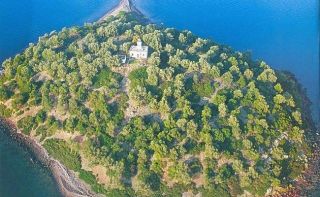
An aerial photo of Strongyli Island, Greece.

The isle of Strogyli, near Kastelorizo to become his new private paradise

Johnny Depp, who is currently filming in Australia is expected in Greece in late July after having reportedly purchased an island in the Aegean.

The Hollywood star has arranged a trip to check out his new property, a small islet in the Dodecanese region, according to the Athens Macedonian News Agency in a statement.

A report by Proto Organization Ltd., a UK agency that handles property acquisitions. claims the actor spent 4 million euros to acquire Strongyli, a tiny islet near Kastelorizo in the Eastern Aegean.

Depp was allegedly represented by the same agent who is handling Angelina Jolie’s and Brad Pitt’s transaction for an island purchase in the Ionian Sea.

source:Neos Kosmos

Germany, not Greece, should say goodbye to the euro

euros22--2-thumb-large

The latest round of wrangling between Greece and its European creditors has demonstrated yet again that countries with such disparate economies should never have entered a currency union. It would be better for all involved, though, if Germany rather than Greece were the first to exit.

After months of grueling negotiations, recriminations and reversals, it’s hard to see any winners. The deal Greece reached with its creditors — if it lasts – pursues the same economic strategy that has failed repeatedly to heal the country. Greeks will get more of the brutal belt-tightening that they voted against. The creditors will probably see even less of their money than they would with a package of reduced austerity and immediate debt relief.

That said, the lead creditor, Germany, has done Europe a service: By proposing the Greece exit the euro, it has broken a political taboo. For decades, politicians have peddled the common currency as a symbol of European unity, despite the flawed economics pointed out as far back as 1971 by the Cambridge professor Nicholas Kaldor. That changed on July 11, when European finance ministers agreed that it could be both sensible and practical for a member country to leave. “In case no agreement can be reached,” they said, “Greece should be offered swift negotiations for a time-out.”

Now that the idea of exit is in the air, though, it’s worth thinking beyond the current political reality and considering who should go. Were Greece to leave, possibly followed by Portugal and Italy in the subsequent years, the countries’ new currencies would fall sharply in value. This would leave them unable to pay debts in euros, triggering cascading defaults. Although the currency depreciation would eventually make them more competitive, the economic pain would be prolonged and would inevitably extend beyond their borders.

If, however, Germany left the euro area – as influential people including Citadel founder Kenneth Griffin, University of Chicago economist Anil Kashyap and the investor George Soros have suggested – there really would be no losers.

A German return to the deutsche mark would cause the value of the euro to fall immediately, giving countries in Europe’s periphery a much-needed boost in competitiveness. Italy and Portugal have about the same gross domestic product today as when the euro was introduced, and the Greek economy, having briefly soared, is now in danger of falling below its starting point. A weaker euro would give them a chance to jump-start growth. If, as would be likely, the Netherlands, Belgium, Austria and Finland followed Germany’s lead, perhaps to form a new currency bloc, the euro would depreciate even further.

The disruption from a German exit would be minor. Because a deutsche mark would buy more goods and services in Europe (and in the rest of the world) than does a euro today, the Germans would become richer in one stroke. Germany’s assets abroad would be worth less in terms of the pricier deutsche marks, but German debts would be easier to repay.

Some Germans worry that a rising deutsche mark would render their exports less competitive abroad. That is actually a desirable outcome for the world — and eventually for Germany, too. For years, Germany has been running a large current account surplus, meaning that it sells a lot more than it buys. The gap has only grown since the start of the crisis, reaching a new record of 215.3 billion euros ($244 billion) in 2014. Such insufficient German demand weakens world growth, which is why the U.S. Treasury and the International Monetary Fund have long prodded the country to buy more. Even the European Commission has concluded that Germany’s current-account imbalance is “excessive.”

Germans know how to live with a stronger exchange rate. Before introduction of the euro, the deutsche mark continuously appreciated in value. German companies adapted by producing higher-quality products. If they reintroduce their currency now, it will give them a new incentive to improve the lagging productivity in the services they produce for themselves.

Perhaps the greatest gain would be political. Germany relishes the role of a hegemon in Europe, but it has proven unwilling to bear the cost. By playing the role of bully with a moral veneer, it is doing the region a disservice. Rather than building “an ever closer union” in Europe, the Germans are endangering its delicate fabric. To stay close, Europe’s nations may need to loosen the ties that bind them so tightly.

source:ekathimerini.com

Greece’s Surrender: A Return to 1919, or to 1905?

Cassidy-Tsipras-Parliament-690-472-16183751

With the vote by Greece’s parliament, early Thursday morning, to accept the harsh terms demanded by the country’s creditors, the debate about how we got to this point is sure to intensify. In a post earlier in the week, when Prime Minister Alexis Tsipras first agreed to the deal, Larry Elliott, the Guardians economics editor, pointed the finger at Tsipras’s Syriza government, saying, “Greeks will be asking today what has been the point of the last month of diplomatic theatre: the endless meetings, the violent rhetoric, the walkouts, and the calling of the referendum. The answer is less than nothing. Untold damage has been caused to the Greek economy for no purpose whatsoever.”

That is a harsh judgment. But Elliott was only echoing what some of Tsipras’s critics inside Greece, on the left as well as on the right, have been saying. This time last year, the country’s blighted economy was enjoying a modest recovery, and its former Prime Minister, Antonis Samaras, was talking of the country abandoning its existing bailout, funded by the troika of the European Central Bank, the European Commission, and the International Monetary Fund, and seeking financing on the private markets instead. Now, almost six months into Syriza’s rule, the economy is in another deep recession. An assessment released last week by the European Commission says that Greece’s G.D.P. will decline by between two and four per cent this year, and that positive growth won’t return until 2017. With tax revenues declining and the budget deficit widening, the Greek government desperately needs more credit to stay afloat—perhaps seventy-five billion euros between now and 2018, according to the E.C. assessment. The country’s banks are on the brink of collapse, and, even assuming an emergency financing deal is finalized in the coming days, capital controls may need to remain in place for months, or years, to prevent Greeks from moving their savings abroad.

And all of this, for what? Two weeks ago, Greeks voted against an offer from the country’s creditors, in the belief that it would keep the economy stuck in the trap caused by the troika’s austerity policies; with this new deal, the country has accepted a package that is equally, or even more, severe. Yanis Varoufakis, the former Greek finance minister, who resigned after the referendum, was one of more than thirty Syriza parliamentarians to vote against the deal. Before the vote was taken, he described the measures agreed upon in Brussels over the weekend as “a new Versailles Treaty”—a reference to the Carthaginian peace that Germany’s enemies imposed upon it after the First World War.

Setting aside the awkward truth that Varoufakis was an architect of the negotiating strategy that led Greece to this juncture, his historical analogy is worth considering. This is not because it’s a dig at the Germans, who have had such outsized influence in imposing austerity measures on Greece, but because it provides an example of an unrealistic agreement between a sovereign state and its creditors—one that had to be repeatedly amended and, ultimately, scrapped.

After the First World War ended, France and the other victorious powers demanded about twelve and a half billion dollars in reparations, which was a bit more than Germany’s G.D.P. at the time. Since Germany clearly couldn’t pay that sum all at once, the Allies asked for annual payments of five hundred million dollars a year, or about four per cent of G.D.P. In 1923, after Germany fell behind on its payments, the Allies occupied the Ruhr, but that didn’t improve matters. The next year, and again in 1928, under the Dawes Plan and the Young Plan, the country’s debts were revised and extended, but this didn’t work either. Eventually, in 1932, most of the reparations were cancelled. (By then, tragically, Adolf Hitler was just months away from being invited to form a government.)

Currently, Greece’s debts amount to about a hundred and seventy-five per cent of its G.D.P., and, unlike Weimar Germany, it doesn’t have powerful export industries that could theoretically generate the funds to pay them off. Going forward, there is little doubt that some of Greece’s obligations, which have already been revised once, in 2012, will have to be written off. Twice in the past couple of weeks, the International Monetary Fund has said as much, and even Wolfgang Schäuble, Germany’s finance minister, appears to agree. In Schäuble’s view, however, which he took public on Thursday, such write-offs violate the rules and spirit of the eurozone—and so, he said, leaving the currency zone and negotiating a new debt agreement from the outside “would perhaps be the better way for Greece.”

It is now patently clear that Schäuble and many of his countrymen would like to get rid of their pesky southern neighbors, leaving unchallenged the German vision of the eurozone as a modern-day gold standard. The Greeks, however, have no intention of leaving, and therein lies a glimmer of hope. For all of their U-turns and failures, Tspiras, Varoufakis, and their colleagues did succeed in highlighting the illogic of endless austerity policies, and they also succeeded in putting debt restructuring on the table. (On Thursday, Mario Draghi, the chairman of the European Central Bank, became the latest expert to say that debt relief is necessary.) For those who viewed the last five months as not just a dispute about the finances of a small country but as part of a much larger battle about the future of Europe, these are important developments. And they will affect not only Greece but other other heavily indebted countries, such as Ireland, Portugal, Italy, and France.

From this perspective, Saturday’s agreement with the creditors isn’t the end: it is the beginning of a movement to wrench Europe away from technocracy, debt deflation, and Teutonic fiscal orthodoxy. This was the vision that Varoufakis spoke about in a speech he gave in Berlin last month, when he called for an end to the vicious cycle of austerity and depression and for a new Europe. And it is the vision that motivates Tsipras and other members of Syriza. “The neoliberals have had the upper hand in Europe for thirty years and we want to move away from that, in form as well as substance,” Dimitris Tzanakopoulos, Tsipras’s chief of staff, told Robert Misik, an Austrian journalist, who has just published a long piece about Greece on Social Europe. “These are political mechanisms that, in the end, disenfranchise whole nations, and you can’t change them all within four months.”

In the Marxist intellectual tradition, from which many senior members of Syriza hail, progress comes about gradually. To overthrow the existing order, you have to first mobilize the masses by stripping back the democratic veil and showing the real workings of the system: only then will the “objective conditions” be ripe for revolutionary change. Tsipras and Syriza didn’t create the conditions to change. But in bringing Greece to the brink, and demonstrating that its creditors were willing to see it collapse if it didn’t buckle to their demands, they did, arguably, succeed in showing up the eurozone as a deflationary straightjacket dominated by creditors. And they did this with all of the world watching. “One must know who the enemy is, in order to fight the enemy,” Alex Andreou, a Greek blogger who is sympathetic to Tsipras, wrote last week. “Syriza has achieved that. Now, it is over to you, Spain. Take what we’ve learned and apply it wisely.”

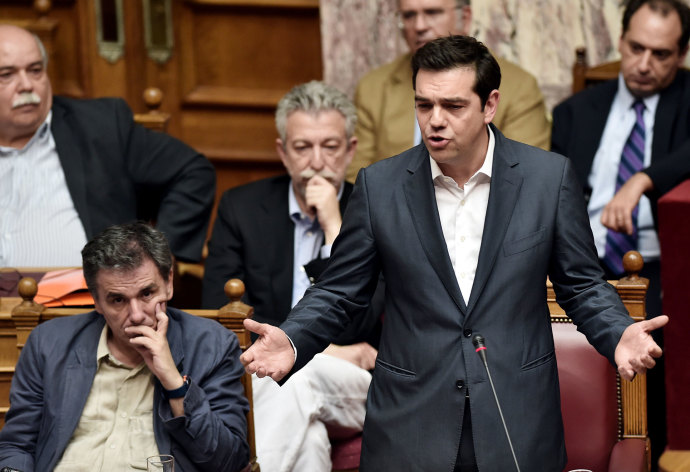
Under this analysis, Syriza’s surrender wasn’t necessarily an ignominious one. As Lenin commented of the failed 1905 revolution in Russia, it was a retreat for a new attack, which ultimately proved successful. “I’m not going to sugarcoat this and pass it off as a success story,” Tsipras said to parliament on Wednesday, prior to the vote, acknowledging that the spending cuts and tax increases contained in the agreement would deal another blow to the Greek economy. However, that wasn’t the full story, Tsipras insisted. “We have left a heritage of dignity and democracy to Europe,” he said. “This fight will bear fruit.”

Only time will tell if that was wishful thinking.

source:newyorker.com


Europa League:Ο ΠΑΟΚ ρίχνεται από νωρίς στην ευρωπαϊκή «μάχη»

1DC0868CCDDFEEBEC6C8CD566BE5EE9A

Το πρώτο βήμα για την πρόκριση θέλει κάνει απόψε (21:00 Novasports 2) ο ΠΑΟΚ, που μπαίνει στη μάχη των ευρωπαϊκών κυπέλλων και συγκεκριμένα στο πρώτο ματς για τον Β’ προκριματικό γύρο του Europa League, στην Κροατία κόντρα στη Λοκομοτίβα Ζάγκρεμπ.

Ο προπονητής του «δικέφαλου», Ιγκορ Τούντορ, δεν θα έχει στη διάθεση του τους Λούκας Πέρεθ, Περέϊρα και Νομπόα.

Ο «δικέφαλος» μετά το τραγικό περσινό φινάλε στο ελληνικό πρωτάθλημα που τον βρήκε στην 4η -και τελευταία- θέση των πλέι οφ και 5η συνολικά στο πρωτάθλημα, καλείται πλέον να αρχίσει τη νέα σεζόν από πολύ νωρίς και να «σώσει» την παρουσία του στο Europa League.

Από εκεί και πέρα στις κυπριακές ομάδες, εκτός έδρας αγωνίζεται η Ομόνοια, η οποία θα παίξει στην Πολωνία κόντρα στη Γιαγκελόνια Μπιάλιστοκ, ενώ ο Απόλλων Λεμεσού θα παίξει στην έδρα του κόντρα στην Τρακάι από τη Λιθουανία.

Συνοπτικά το πρόγραμμα των πρώτων αγώνων για τον Β’ προκριματικό γύρο του Europa League έχει ως εξής:

Λοκομοτίβα Ζάγκρεμπ (Κροατία) – ΠΑΟΚ (ΕΛΛΑΔΑ)
Κουκέσι (Αλβανία) – Μλάντοστ Ποντγκόριτσα (Μαυροβούνιο)
Μπερόε Στάρα Ζαγόρα (Βουλγαρία) – Μπρόντμπι (Δανία)
Σάμροκ Ρόβερς (Ιρλανδία) – Οντς (Νορβηγία)
Ρέϊκιαβικ (Ισλανδία) – Ρόζενμποργκ (Νορβηγία)
Χάποελ Μπέερ Σεβά (Ισραήλ) – Τουν (Ελβετία)
Σλόβαν Μπρατισλάβας (Σλοβακία) – Γιουνιβέρσιτι Κόλετζ Ντάμπλιν (Ιρλανδία)
ΑΙΚ Στοκχόλμης (Σουηδία) – Σιράκ (Αρμενία)
Καϊράτ Αλμάτι (Καζακστάν) – Αλασκέρτ (Αρμενία)
Φερεντσβάρος (Ουγγαρία) – Ζελέζνιτσαρ (Βοσνία)
Λέγκια Βαρσοβίας (Πολωνία) – Μποτοσάνι (Ρουμανία)
Βοϊβοντίνα (Σερβία) – Σπαρτακς Γιούρμαλα (Λετονία)
Βαντούζ (Λιχτενστάιν) – Νόμε Καλιου (Εσθονία)
Ντάτσια Κισινάου (Μολδαβία) – Ζίλινα (Σλοβακία)
Γιαγκελόνια Μπιάλιστοκ (Πολωνία) – ΟΜΟΝΟΙΑ (Κύπρος)
Γέλγκαβα (Λετονία) – Ραμποτνίτσκι (ΠΓΔΜ)
Μλάντα Μπόλεσλαβ (Τσεχία) – Στρομσγκόντσετ (Νορβηγία)
Χαφναρφιορντούρ (Ισλανδία) – Ιντερ Μπακού (Αζερμπαϊτζάν)
Τσουκαρίτσκι (Σερβία) – Καμπάλα (Αζερμπαϊτζάν)
Τσέρνο Μόρε Βάρνα (Βουλγαρία) – Ντιναμό Μινσκ (Λευκορωσία)
Ινβερνές (Σκοτία) – Άστρα (Ρουμανία)
Σαχτιόρ Σολιγκόρσκ (Λευκορωσία) – Βόλφσμπεργκερ (Αυστρία)
Ριέκα (Κροατία) – Αμπερντίν (Σκοτία)
Σπαρτάκ Τρνάβα (Σλοβακία) – Λίνφιλντ (Β. Ιρλανδία)
Τραμπζονσπόρ (Τουρκία) – Ντιφερντάνζ (Λουξεμβούργο)
Γουέστ Χαμ (Αγγλία) – Μπιρκίρκαρα (Μάλτα)
Κοπεγχάγη (Δανία) – Νιούταουν (Ουαλία)
Σαρλερουά (Βέλγιο) – Μπεϊτάρ Ιερουσαλήμ (Ισραήλ)
Απόλλων Λεμεσού (Κύπρος) – Τρακάϊ (Λιθουανία)
Σλασκ Βρότσλαβ (Πολωνία) – Γκέτεμποργκ (Σουηδία)
Ράντερς (Δανία) – Ελφσμποργκ (Σουηδία)
Κόπερ (Σλοβενία) – Χάϊντουκ Σπλιτ (Κροατία)
Σκόντο (Λετονία) – Ντεμπρετσένι (Ουγγαρία)

**Οι ρεβάνς θα διεξαχθούν στις 23 Ιουλίου.

FT: Το απόλυτο έγκλημα της Μέρκελ

tsipras_merkel1_595962822

Όταν το σχεδιαζόμενο ελληνικό πρόγραμμα διάσωσης κατατεθεί προς ψήφιση στην Bundestag την Παρασκευή, η Γερμανίδα καγκελάριος Άγκελα Μέρκελ δεν θα νιώθει καμία ανησυχία για το αν θα εγκριθεί.

Αλλά θα δεχτεί ισχυρές πιέσεις να υπερασπιστεί την διαχείριση της κρίσης και να απαντήσει στα σοβαρά ερωτήματα που εγείρει για την ευρωζώνη, την Ε.Ε. και τον κεντρικό της άξονα, την σχέση ανάμεσα στην Γερμανία και την Γαλλία.

Αν και η καγκελάριος απολαμβάνει ισχυρή στήριξη από το συντηρητικό της κόμμα (CDU/CSU) και από μεγάλο μέρος της κοινής γνώμης, η σκληρή στάση της στην μαραθώνια Σύνοδο της ευρωζώνης στις Βρυξέλλες που διήρκησε ως το πρωί της Δευτέρας έχει παρακινήσει τους επικριτές της στο εσωτερικό και στο εξωτερικό να την κατηγορήσουν για εκφοβισμό της Ελλάδας και ταπείνωση του ηγέτη της.

Για ορισμένους, διέπραξε το απόλυτο έγκλημα στην εξωτερική πολιτική της Γερμανίας: έβαλε σε κίνδυνο την δέσμευση της χώρας στην ευρωπαϊκή ενότητα. «Η Γερμανία έκανε ένα ιστορικό λάθος. Για πρώτη φορά τα τελευταία 60 χρόνια η Γερμανία απαίτησε λιγότερη αντί για περισσότερη Ευρώπη» σημειώνει ο Σβεν Κριστίαν Κίντλερ,

Δεν είναι η πρώτη φορά που ακούγονται οι κατηγορίες αυτές για την 62χρονη καγκελάριο, η οποία προσπαθεί εδώ και καιρό να διευθύνει την Ευρώπη μέσω του Βερολίνου, μερικές φορές παρακάμπτοντας συμμάχους και ευρωπαϊκούς θεσμούς. Αλλά η επίθεση που δέχεται ως η κυρίαρχη ηγέτιδα της Ευρώπης έχει φθάσει σε πρωτοφανή επίπεδα.

Το Spiegel, ένα κεντρο-αριστερό περιοδικό που είναι συχνά επικριτικό απέναντι στην κ. Μέρκελ, ανέφερε σε σχόλιο που αναρτήθηκε στο διαδίκτυο: «Η γερμανική κυβέρνηση κατέστρεψε επτά δεκαετίες μεταπολεμικής διπλωματίας σε μια εβδομάδα».

Η φιλελεύθερη Suddeutsche φιλοξένησε πρωτοσέλιδο για την κ. Μέρκελ με τίτλο: «O νέος εχθρός της Ευρώπης».

Τα γερμανικά μέσα έχουν μεταδώσει τις επικρίσεις κατά του Βερολίνου από το εξωτερικό, ειδικά την έκκληση του Ιταλού πρωθυπουργού να σταματήσει η ταπείνωση της Ελλάδας: «Λέω στην Γερμανία: Ως εδώ».

Στο Βερολίνο, η αντίληψη που επικρατεί είναι ότι η Γερμανία δεν υπονομεύει την ενότητα της ευρωζώνης, αλλά υπερασπίζεται τους κανονισμούς και βοηθάει ένα απείθαρχο μέλος με ένα πακέτο διάσωσης πάνω από 86 δισ. ευρώ. Η κυβέρνηση βρίσκει στήριξη στο γεγονός ότι στην συνάντηση των υπουργών Οικονομικών πριν από την Σύνοδο των ηγετών, 15 από τους 18 εταίρους στην ευρωζώνη επέμειναν από κοινού να ζητηθούν πιο σκληροί όροι από αυτούς που προτάθηκαν την περασμένη εβδομάδα από την Ελλάδα. Μόνο ηΓαλλία, η Ιταλία και η Κύπρος υποστήριξαν ότι το ελληνικό σχέδιο πληροί τις προϋποθέσεις για να αρχίσουν οι τυπικές διαπραγματεύσεις.

Η καγκελάριος θα είναι επίσης ικανοποιημένη με την δημόσια στήριξη που απολαμβάνει με βάση δημοσκοπήσεις που δημοσιεύτηκαν αυτήν την εβδομάδα. Σε δημοσκόπηση τoυ ARD, το 57% τάχθηκε υπέρ του σχεδίου διάσωσης. Μόνο το 13% ανέφερε ότι πηγαίνει πολύ μακριά στις παραχωρήσεις που ζητάει από τον Έλληνα πρωθυπουργό Αλέξη Τσίπρα. Ένα 22% υποστήριξε ότι θα έπρεπε να είναι πιο αυστηρό.

Η κ. Μέρκελ είναι βέβαιο ότι θα κερδίσει την ψήφο της Παρασκευής, με την στήριξη του μεγαλύτερου μέρους του δικού της μπλοκ και άλλων κομμάτων. Αλλά μπορεί να μην δραπετεύσει χωρίς αμυχές. Είναι αντιμέτωπη με την εξέγερση μιας μερίδας σκληροπυρηνικών βουλευτών του κόμματος της που βλέπουν το ελληνικό πρόγραμμα ως μια σπατάλη χρημάτων.

Η Bild, το συντηρητικό ταμπλόιντ, συμφωνεί, λέγοντας την Τετάρτη ότι το κόστος της αποτροπής ενός Grexit – μιας εξόδου της Ελλάδας από την ευρωζώνη – είναι υπερβολικά υψηλό.

Βουλευτές υποστηρίζουν ότι μπορεί να υπάρξουν 50 με 70 αντάρτες μεταξύ των Χριστιανοδημοκρατών και Χριστιανοκοινωνιστών, περίπου διπλάσιοι από τους 29 που αντιτάχθηκαν στην κυβέρνηση στην τελευταία ψήφο για την ελληνική διάσωση την Παρασκευή. Χωρίς τους σκληρούς όρους που η κ. Μέρκελ εξασφάλισε, λένε ότι οι αντάρτες θα μπορούσαν να φτάσουν ως και τους 100 από τους 311 του κόμματος της.

Αν και οι αντάρτες δεν απειλούν το αποτέλεσμα της ψηφοφορίας, μπορεί να πλήξουν την φήμη της καγκελάριου. Μπορούν επίσης να επηρεάσουν την στάση του Βερολίνου στις επερχόμενες διαπραγματεύσεις: Η ψήφος της Παρασκευής απλά δίνει το πράσινο φως για την έναρξη των διαπραγματεύσεων. Ο φόβος μιας ακόμα μεγαλύτερης εξέγερσης, όταν οι βουλευτές θα κληθούν να ψηφίσουν το ίδιο το πρόγραμμα, μπορεί να κάνει ακόμα πιο σκληρή την στάση της κ. Μέρκελ.

Ο Βόλφγκανγκ Σόιμπλε, ο υπουργός Οικονομικών της, φαίνεται ακόμα να είναι υπέρ του προσωρινού Grexit που πρότεινε στις Βρυξέλλες. «Υπάρχουν πολλοί άνθρωποι, πολλοί από αυτούς στην ομοσπονδιακή κυβέρνηση, οι οποίοι είναι πεπεισμένοι ότι για το συμφέρον της Ελλάδας και του ελληνικού λαού είναι πολύ καλύτερη λύση ότι προτείναμε» δήλωσε την Τρίτη.

Ακόμα και ουδέτεροι πολιτικοί αναλυτές την Γερμανία ανησυχούν για την ζημιά που έχει προκαλέσει η υπερβολική σκληρότητα του Βερολίνου στην φήμη της χώρας στην Ευρώπη. «Είμαι φοβισμένος από την ένταση του θυμού» λέει η Κοντάνζ Στελτσενμούλερ του Brookings Institute. «Πρέπει να αλλάξουμε. Μιλάμε στους Ευρωπαίους εταίρους σαν να είναι απλά παρατηρητές».

Ιδιαίτερη ανησυχία προκαλεί το πλήγμα στις γερμανο-γαλλικές σχέσεις, τον άξονα της Ε.Ε., καθώς ανοίγεται ένα ξεκάθαρο ρήγμα ανάμεσα στις πιέσεις της κ. Μέρκελ για αυστηρούς κανόνες και τις εκκλήσεις του Γάλλου προέδρου Φρανσουά Ολάντ για αλληλεγγύη. Οι δύο ηγέτες, που προσπαθούν να παρουσιάσουν μια εικόνα ευρωπαϊκής ενότητας, βρίσκονται συχνά σε αντίθετα μέτωπα, με την κ. Μέρκελ να κρατάει μια σκληρή γραμμή απέναντι στην Ελλάδα και τον κ. Ολάτν να εκλιπαρεί για επιείκεια.

Η εφημερίδα Frankfurter Allgemeine εξέφρασε λύπη για το ότι η «πολιτική της Γερμανίας για την Ευρώπη έχει γίνει εξαιτίας της κλιμάκωσης της ελληνικής κρίσης πιο γερμανική και της Γαλλίας πιο γαλλική».

Πηγή:madata.gr