Category Archives: Uncategorized

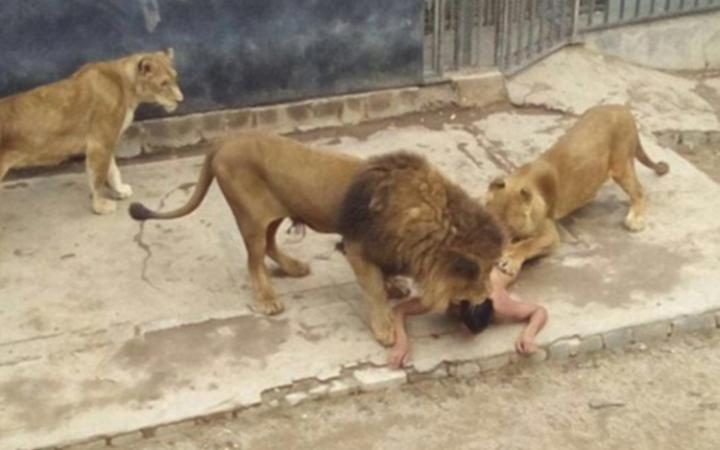
Naked man mauled after entering zoo’s lion pen in apparent suicide attempt

98757647_restricted_lion_mauling-large_trans++eo_i_u9APj8RuoebjoAHt0k9u7HhRJvuo-ZLenGRumA

Zookeepers saved the ‘suicidal’ man by shooting the two lions Credit: NoticiasChelmevision

TWO lions were killed after they severely mauled a man who stripped naked and entered their enclosure in an apparent suicide attempt at a zoo in Chile, authorities said.

The man was taken to a nearby hospital for treatment and was said to be in grave condition.

Director Alejandra Montalba of Santiago’s Metropolitan Zoo told local media the park was crowded with visitors at the time of the incident.

The 20-year-old man broke into the enclosure, took off his clothes and jumped into the middle, horrifying other visitors who witnessed the attack. Zookeepers killed the two lions in order to save his life.

“The zoo has an established protocol because people’s lives are very important to us,” said Montalba, adding that there were no fast-acting tranquillisers available to stop the lions from mauling the man. She said she was “deeply affected” by the deaths of the two lions, a male and a female.

An apparent suicide note was found in the man’s clothing, said Metropolitan Park director Mauricio Fabry. Witness reported he also made religious proclamations.

98757646_restricted_lion_mauling-large_trans++eo_i_u9APj8RuoebjoAHt0k9u7HhRJvuo-ZLenGRumA

The man grapples with the male lion inside the enclosure Credit: NoticiasChelmevision

source:abc.com.au

Τα ελληνικά κρασιά «ετοιμάζονται» να σαγηνεύσουν την γευστική παλέτα των Αυστραλών

epartemis

Επίσκεψη Ελλήνων οινοπαραγωγών στους Αντίποδες με στόχο την αύξηση της παρουσίας των ελληνικών κρασιών στην αυστραλιανή αγορά

Ελληνική αποστολή οινοπαραγωγών και άλλων ειδικών του χώρου, από 23 συνολικά οινοποιίες της χώρας, αναμένεται να επισκεφθεί στα μέσα του Ιούνη την Αυστραλία, με στόχο να παρουσιάσει τα ελληνικά κρασιά στην εγχώρια αγορά και απώτερο σκοπό την αύξηση των εξαγωγών ελληνικού οίνου στην Αυστραλία.

Η εμπορική αποστολή διοργανώθηκε από την Εθνική Διεπαγγελματική Οργάνωση Αμπέλου και Οίνου και είναι η δεύτερη αποστολή οινοπαραγωγών που επισκέπτεται την Αυστραλία. Η πρώτη επαφή των Ελλήνων οινοπαραγωγών με την αυστραλιανή αγορά έγινε πέρυσι με μεγάλη επιτυχία, γεγονός που συνέβαλε στην αύξηση του αριθμού των οινοπαραγωγών που συμμετάσχουν στην φετινή αποστολή. 

«Ανυπομονούμε να επισκεφθούμε και πάλι την Αυστραλία και να συναντήσουμε τους καλούς φίλους που κάναμε κατά την προηγούμενη επίσκεψή μας στην χώρα» δήλωσε ο πρόεδρος της οργάνωσης, κ. Γιάννης Βογιατζής, πριν από λίγες μέρες, αναφερόμενος στην επικείμενη επίσκεψη της αποστολής. 

Ο κ. Βογιατζής υπογράμμισε το αυξανόμενο ενδιαφέρον της αυστραλιανής αγοράς για τα ελληνικά κρασιά, αλλά και το ενδιαφέρον των Αυστραλών οινοπαραγωγών για τις νέες τεχνικές παραγωγής. 

Από τις 19 έως τις 25 Ιουνίου τα μέλη της αποστολής θα δώσουν σεμινάρια γευσιγνωσίας και ομιλίες παρουσιάζοντας πάνω από 70 διαφορετικά κρασιά από κάθε γωνιά της ηπειρωτικής και νησιωτικής Ελλάδας. Παράλληλα, θα επισκεφθούν αυστραλιανές οινοποιίες ανταλλάσσοντας τεχνογνωσία με τους ντόπιους παραγωγούς.

Η επίσκεψη της αποστολής θα έχει τρεις βασικούς προορισμούς, τη Μελβούρνη, το Σίδνεϊ και την Αδελαΐδα όπου και θα λάβουν χώρα τα σεμινάρια γευσιγνωσίας. 

ΑΠΟ TH ΘΗΡΑ ΕΩΣ ΤΗ ΘΕΟΠΕΤΡΑ

Όπως προαναφέραμε, η αποστολή αποτελείται από οινοπαραγωγούς από κάθε γωνιά της Ελλάδας. Επιλέξαμε να αναφερθούμε ενδεικτικά σε μερικά από τα οινοποιεία που θα συμμετάσχουν στην αποστολή, το καθένα εκ των οποίων έχει στο ιστορικό του πολλά βραβεία και καινοτομίες στον χώρο παραγωγής αλλά και εμφιάλωσης οίνου στην Ελλάδα. 

Οινοποιείο Αλεξάκη – Alexakis Wines: Το οινοποιείο Αλεξάκη είναι οικογενειακή επιχείρηση και τα στελέχη της εταιρείας είναι ο Στέλιος Αλεξάκης, ιδρυτής της επιχείρησης κατά τη δεκαετία του 1970, οινολόγος-χημικός μηχανικός, η σύζυγός του Σοφία και τα παιδιά τους, Λάζαρος και Απόστολος, πτυχιούχοι οινολόγοι, από το Πανεπιστήμιο Φλωρεντίας ο πρώτος και από το Φρέσνο της Καλιφόρνια των ΗΠΑ ο δεύτερος. Ο Λάζαρος και ο Απόστολος, με τις καινοτόμες ιδέες και την τεχνογνωσία τους ελέγχουν την παραγωγή, σχεδιάζουν και υλοποιούν τη μελλοντική εξέλιξη του οινοποιείου σεβόμενοι την πολύτιμη κληρονομιά της πρώτης γενιάς. Tο Οινοποιείο Αλεξάκη είναι το μεγαλύτερο ιδιωτικό οινοποιείο της Κρήτης (με αποθηκευτική δυνατότητα 16 εκατ. λίτρα) με πελάτες του τις μεγαλύτερες οινοποιητικές μονάδες της Ελλάδας. Επίσης, τα τελευταία χρόνια έχει ξεκινήσει εξαγωγές στην Αμερική με το brand «Alexakis» και στη Ρωσία και Κίνα με private label.

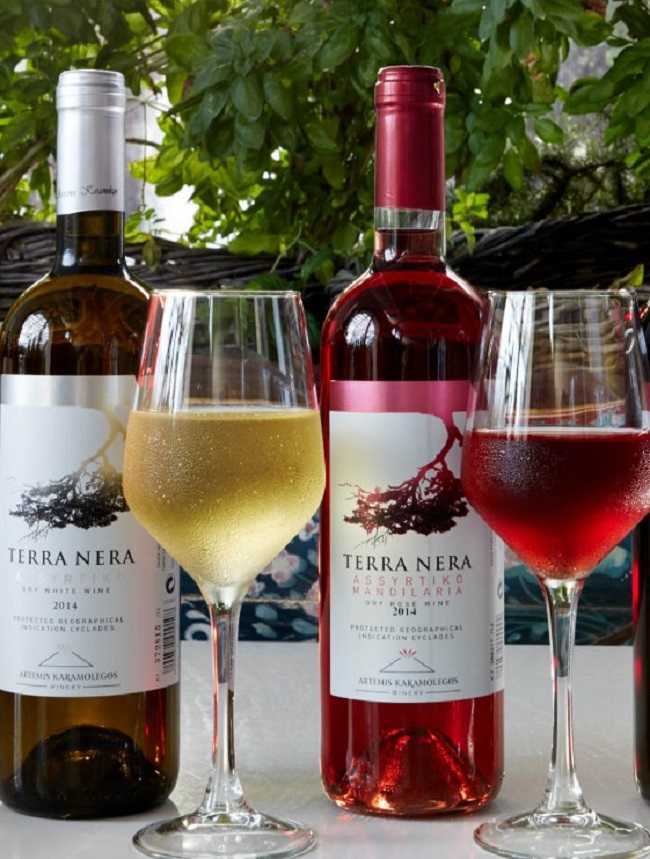
Οινοποιείο Αρτέμη Καραμολέγκου – Artemis Karamolegos Winery: Με ρίζες στον ηφαιστειακό αμπελώνα της Σαντορίνης και παράδοση στην οινοποίηση από το 1952, το οινοποιείο του Αρτέμη Καραμολέγκου συγκαταλέγεται στα πιο δυναμικά και γρήγορα εξελισσόμενα οινοποιεία της Σαντορίνης. Όλα τα κρασιά του έχουν διακριθεί σε σημαντικούς Διεθνείς Διαγωνισμούς Κρασιού. 


Η ιστορία του οινοποιείου έχει τις ρίζες της στις αρχές της δεκαετίας του ’50, όταν ο παππούς Αρτέμης καλλιεργούσε τους αμπελώνες του για να φτιάξει κρασί που θα κάλυπτε τις ανάγκες της δικής του οικογένειας και στη συνέχεια θα το πουλούσε στο νησί και στην υπόλοιπη Ελλάδα. Ο Αρτέμης Καραμολέγκος, ο εγγονός που διαδέχθηκε τον παππού και στη συνέχεια τον πατέρα του στο οινοποιείο, είναι το νέο αίμα της επιχείρησης και από το 2004 μέχρι σήμερα, κατάφερε να οδηγήσει την οικογενειακή επιχείρηση πολλά βήματα μπροστά και με μεγάλη ταχύτητα. Σήμερα η Οινοποιία Αρτέμη Καραμολέγκου παράγει 10 διαφορετικές ετικέτες κρασιών «οδηγώντας» το ασύρτικο, μαζί με τις άλλες τοπικές ποικιλίες σταφυλιού, στην παραγωγή κρασιών αναγνωρισμένων διεθνώς για την ποιότητά τους.

Κτήμα Σκούρα – Domaine Skouras: Το Κτήμα Σκούρα βρίσκεται στη βορειοανατολική πλευρά της Πελοποννήσου, στην Αργολίδα, μόλις λίγα χιλιόμετρα μακριά από την πόλη του Άργους. Ο Γιώργος Σκούρας ξεκίνησε την οινοποιητική του ιστορία χωρίς αμπέλια και χωρίς εξοπλισμό, στο γκαράζ του πατέρα του στο Άργος, νοικιάζοντας αμπελώνες και εξοπλισμό από συναδέλφους οινοποιούς της Νεμέας και εμφιαλώνοντας με χειροκίνητα μηχανήματα. Ο στόχος του ήταν εξαρχής ένας και αδιαπραγμάτευτος: να παραγάγει κρασί υψηλής ποιότητας. Σήμερα το κτήμα παράγει 850.000 φιάλες ετησίως και το 45% της παραγωγής εξάγεται. Ο Γιώργος Σκούρας έχει αρκετές καινοτομίες στο βιογραφικό του. 

Ήταν ο πρώτος οινοποιός στην Ελλάδα που εισήγαγε τη μέθοδο εμφιάλωσης Stelving (βιδωτό καπάκι) σε λευκό κρασί. Τελευταία του καινοτομία, η παλαίωση κρασιών με τη μέθοδο Solera, με την οποία παλαιώνεται, σε ειδικά βαρέλια, το φίνο Sherry στην Ισπανία.


Κτήμα Πόρτο Καρράς- Domaine Porto Carras: Το Κτήμα Πόρτο Καρράς βρίσκεται στην Χαλκιδική και κτίστηκε το 1970 και είναι ο μεγαλύτερος ενιαίος βιολογικός αμπελώνας της Ελλάδας. Η τοποθεσία του σε μια κοιλάδα, είναι επιλεγμένη ώστε να μην είναι ορατή για τον περαστικό, τόσο από τον δρόμο όσο και από τη θάλασσα, προστατεύοντας έτσι την ομορφιά του τοπίου. 

Αξίζει να σημειωθεί ότι η σημαντικότατη συμβολή του πατέρα της σύγχρονης οινολογίας καθηγητή Emile Peynauld του Πανεπιστημίου του Bordeaux, που καθιέρωσε την ιστορική διαδρομή του πρώτου «Ελληνικού» οίνου του Chateau Porto Carras, από Cabernet Sauvignon, το οποίο προσαρμοσμένο ιδανικά στα ασβεστο-σχιστολιθικά εδάφη του κτήματος μεγαλούργησε διεθνώς αποσπώντας βραβεία, μετάλλια και διακρίσεις σε ελληνικούς αλλά και ευρωπαϊκούς διαγωνισμούς. 


Κτήμα Θεόπετρα/ Οινοποιεία Τσιλιλή – Theopetra Estate: Στους πρόποδες των Μετεώρων, στο σπήλαιο της Θεόπετρας, ανακαλύφθηκαν ανάμεσα στα άλλα, κουκούτσια σταφυλιών από την Παλαιολιθική Εποχή που μαρτυρούν την πανάρχαια συνύπαρξη του τόπου με το αμπέλι. Εκεί, στη Ράξα Τρικάλων, ιδρύθηκε το 1989 η αμπελουργία-οινοποιία-αποσταγματοποιία Τσιλιλή. 

Το 1996, η οικογένεια Τσιλιλή δημιούργησε το Κτήμα Θεόπετρα, ένα πρότυπο οινοποιείο- αμπελώνα βιολογικής καλλιέργειας, με σκοπό την ανάδειξη της ιδιαιτερότητας της περιοχής και την αναβίωση σπάνιων ελληνικών ποικιλιών. Η μακραίωνη ιστορική παράδοση και η σύγχρονη τεχνολογία ενώνονται αρμονικά με την ανθρώπινη έμπνευση και διαιωνίζουν την οινική κουλτούρα του τόπου, με σεβασμό στο περιβάλλον (πρόγραμμα Natura 2000).

Την τελευταία δεκαετία, έχοντας ως σκοπό τη συνάντηση των αναγκών του ελληνικού αλλά και διεθνούς καταναλωτικού κοινού με το δημιουργικό όραμα των ανθρώπων της αποσταγματοποιΐας-οινοποιΐας Τσιλιλή, δημιουργούνται νέες σειρές οινικών προϊόντων συνδυάζοντας τις παραδοσιακές αξίες με τις σύγχρονες πρακτικές. Τα αποστάγματα και οι οίνοι της αποσταγματοποιίας-οινοποιίας αποσπούν κάθε χρόνο βραβεία και διακρίσεις σε διεθνείς διαγωνισμούς, όπως το χρυσό μετάλλιο στο διαγωνισμό AWC Vienna 2015 για τον ασκητικό ερυθρό 2013 καθώς και το χρυσό μετάλλιο στον διαγωνισμό Challenge du Vin Bordeaux από το Κτήμα Θεόπετρα για τον οίνο Λημνιώνα-syrah (ρόζε) παραγωγής 2014.

Πηγή:Νέος Κόσμος

Schaeuble said to reject IMF proposal on Greece

schaeuble_bundesbank2_web-thumb-large

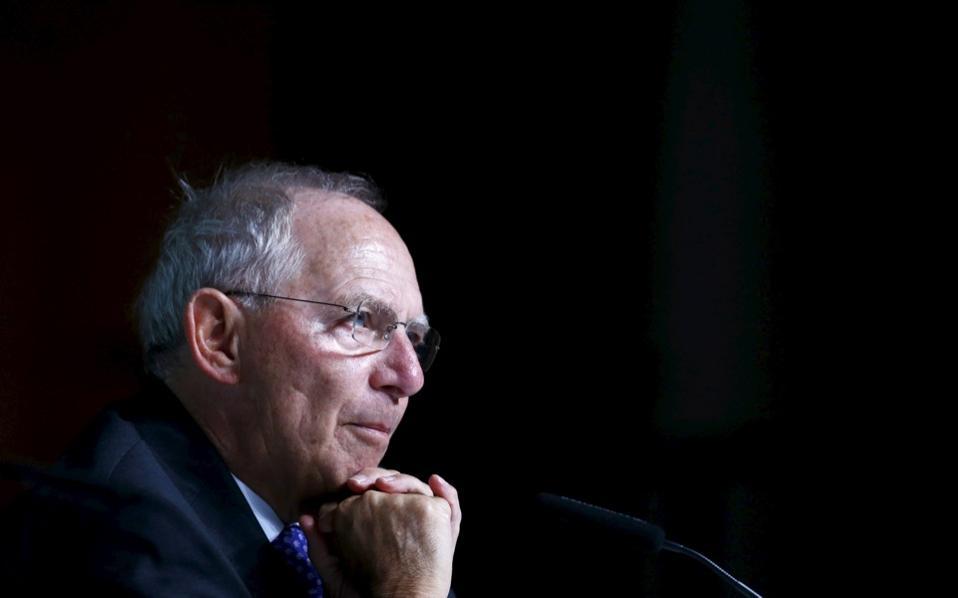
German Finance Minister Wolfgang is said to have rejected a proposal by the International Monetary Fund (IMF) to free Greece from all payments on its bailout loans until 2040.

According to reports, the IMF has recommended that eurozone states accept long delays in the repayment of the country’s bailout loans, which would fall due in the period from 2040 to 2080 under the plan. The Washington-based Fund is also pressing for Greece’s interest rate on its eurozone loans to be fixed for 30 to 40 years at its current average level of 1.5 percent, with all interest payments postponed until loans start falling due.

According to a report in Germany’s Suddeutsche Zeitung on Wednesday, Schaeuble has ruled out freezing interest payments as long as he is finance minister.

The German parliament should not be asked to approve changes to an agreement that was reached after much deliberation last summer, Schaeuble said according to the newspaper.

source:ekathimerini.com

AEK stuns favorite Olympiakos to win the Greek Cup

aek_cup_celebrations_web-thumb-large

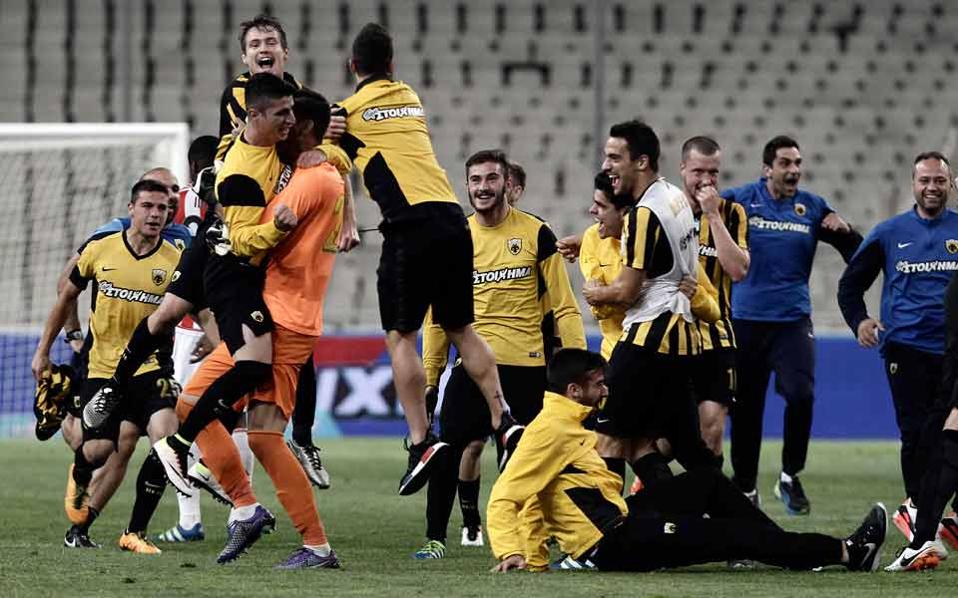
AEK won its 15th Greek Cup, on the year of its return to the top flight, upsetting champion Olympiakos 2-1 in front of nearly empty stands at the Olympic Stadium of Athens in Tuesday’s final, in a game that very nearly never was.

After one cancelation and three postponements, the Cup final took place at last, but only in front of a few fans from each team, who were enough to generate some trouble at the VIP stands of the stadium before kick-off.

Having played no competitive games for almost a month, Olympiakos was far from the team that swept the league with a near-perfect record of 28 wins in 30 games. AEK, the only team that had beaten the Reds in the Super League, did it again in the Cup final, but this time only watched by some 400 people, as the federation had decided.

Coached by caretaker Stelios Manolas, AEK played a composed game in defense and was stinging in its breaks, scoring twice from three chances.

A little before the end of a rather sleepy first half, Ronald Vargas lifted the ball for Petros Mantalos who rose and headed the ball off Olympiakos keeper Roberto and into the Reds’ net to make it 1-0 on the 39th minute.

Six minutes into the second half Vargas and Rafik Djebbour broke in the counter attack, with the Venezuelan passing the ball to the Algerian and he made no mistake for 2-0.

Then Pajtim Kasami and Hernani were replaced by Felipe Pardo and Brown Ideye after 2-0, as Olympiakos coach Marco Silva realized his selection errors and tried to breathe new life into his team with 35 minutes remaining.

Olympiakos hit the woodwork 10 minutes from the end as Arthur Masuaku was unlucky in his shot. Five minutes on Chori Dominguez made the most of a lapse in the concentration of the AEK defense to power the ball home and reduce the arrears with a personal effort.

In the last few minutes the game finally lived up to the names of the two teams, with chances on both ends, but the score stayed at 2-1 in AEK’s favor, triggering wild celebrations at the streets of the suburb of Nea Philadelphia.

source:ekathimerini.com

Greek squad announced for Australian tour

benfica-and-greek-star-kosta-mitroglou

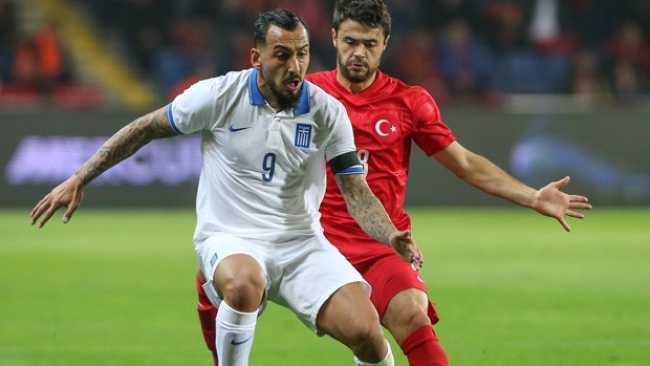
Greece’s Kostas Mitroglou in action with Turkey’s Ahmet Yilmaz Calik during an international friendly soccer match. PHOTO: BURAK KARA/GETTY IMAGES.

Greek national team coach, Michael Skibbe has announced a 31-man squad.

The Greek national football team’s new German-born coach, Michael Skibbe, has announced a 31-man squad for the upcoming Dodoni series of matches against the Socceroos in Australia.

The squad will be further trimmed just before the team leaves for Australia but at this stage it includes a strong selection of players from both domestic and foreign leagues.

Although the largest contingent of players comes from the Greek Super League, they still make up less than half the squad. The next largest contingent comes from the Italian League and includes the likes of Roma’s Vasilis Torosridis. The next biggest contingent plays in the German Bundesliga and Belgian league, while others such as forward Kostas Mitroglou and midfielder Andreas Samaras are teammates at Benfica.

Greece missed qualification for the Euros and is determined to make up for this by qualifying for the next World Cup. The two match series give new coach Skibbe an opportunity to prepare his squad for the start of its World Cup qualifying campaign in September, where Greece’s group opponents include Belgium, Bosnia and Herzegovnia, Estonia and Cyprus. Skibbe recognises the Belgians are early group favourites, but his aim is for Greece to finish no lower than second spot in order to book a ticket to the 2018 World Cup in Russia.

“I believe in good discipline and strong tactical awareness on the pitch,” Skibbe said.

“That was the foundation for Greece’s strongest years in the 2000s and their Euro win, and that’s what we want to return to. The players should wear their country’s colours with dignity and dedication.”

Whomever they face, Socceroos coach Ange Postecoglou can expect to come up against a well-organised Greek side in the two matches scheduled. He will announce the Socceroos squad for the two-match series against Greece next week.

Greek squad:
Goalkeepers:
Orestis Karnezis (Udinese), Stefanos Kapino (Olympiakos)

Defenders: Loukas Vyntra (Hapoel Tel Aviv), Stelios Kitsiou (PAOK), Vangelis Moras (Verona), Michaalis Boukouvalas (Iraklis), Marios Economou (Bologna), Sokratis Papastathopoulos (Borussia Dortmund), Dimitris Siovas (Olympiakos), Kostas Stafylidis (FC Augsburg), Giorgos Tzavellas (PAOK), Vasilis Torosidis (Roma), Jose Holebas (Watford)

Midfielders: Andreas Samaris (Benfica), Alexandros Tziolis (PAOK), Panagiotis Kone (Fiorentina), Giannis Maniatis (Standard Liege), Petros Mantalos (AEK), Dimitris Pelkas (PAOK), Panagiotis Tachtsidis (Genoa), Giannis Fetfatzidis (Al-Ahli), Kostas Fortounis (Olympiakos)

Forwards: Kostas Mitroglou (Benfica), Christos Aravidis (AEK), Apostolos Vellios (Iraklis), Giannis Gianniotas (Apoel), Dimitris Diamantakos (Karlsruher SC), Nikos Karelis (Racing Genk), Anastasios Bakasetas (Panionios), Thanassis Papazoglou (KV Kortrigk), Lazaros Christodoulopoulos (Sampdoria)

Source: Neos Kosmos


Funding to private schools rose ‘at twice the rate of public schools’

untitled

Government funding to private schools has increased at twice the rate of funding to public schools, a new union analysis of My School data has revealed.

Releasing the report on Monday, Australian Education Union federal president Correna Haythorpe slammed the Turnbull government’s plan to scrap the needs-based Gonski funding model after 2017.

She said the move would fail students and further entrench inequity.

The analysis, using the most recent My School data, showed that between 2009 and 2014, combined states and federal government annual funding for independent schools rose by $1911 per student, in increase of 30.3 per cent, not adjusted for inflation.

Funding for public schools rose by $1539 per student, an increase of 14.6 per cent.

For Catholic schools, funding rose by $2332 per student, an increase of 30.2 per cent.

Ms Haythorpe said the figures highlighted the importance of implementing the full six years of Gonski funding, without which the system would regress.

“In the years leading up to Gonski we were not funding schools on the basis of need. We had a flawed and inefficient funding system, which was delivering the biggest gains to private schools,” Ms Haythorpe said.

The first amounts of Gonski funding coming into the system in 2014 was “making a difference in schools – students are beginning to get the smaller classes, one-to-one support and extra literacy and numeracy programs they need”.

“But without the full six years of the Gonski agreements we won’t close these gaps in funding.”

“Malcolm Turnbull’s plan would see gaps in resources between schools grow, and fail to address the inequities caused by a system which gave the biggest funding increases to advantaged schools.

“He wants to return to a system which ignores student need and leaves thousands of students without the support they need to succeed at school.

“Disadvantaged schools don’t need cuts to Gonski. They need the $4.5 billion in investment Labor and the Greens are promising, which will see all schools with the resources they need to educate their students.”

The AEU analysis found that in 2014, independent and Catholic schools had more resources (recurrent funding) per student than public schools, including fees and other income, “despite educating far smaller numbers of disadvantaged students”.

It found there was $17,604 annual funding per student in independent schools, $12,998 per student in Catholic schools, and $12,779 per student in public schools.

In addition, low socio-economic status students comprised 9 per cent of independent school enrolments and 14 per cent of Catholic schools’, compared to 30 per cent of public school enrolments.

But Federal Education Minister Simon Birmingham said Labor and the unions were selectively using data to peddle a scare campaign.

He said between 2004-05 and 2013-14 Federal funding on a per-student basis for government schools had grown in real terms by 66.1 per cent, and funding for non-government schools had grown by 18 per cent.

Public school students received “significantly more total government funding per student than what goes to private school students”.

“On average, total government funding for a student going to a public school is over $16,000 per year, while the support for a student attending an non-government school is $9,300 – more than 40 per cent less.”

Mr Birmingham said: “Any disparate growth in funding for non-government schools relative to government schools is entirely down to state government decisions, given federal support has been growing much faster in the government sector.

The Coalition was “the only party with a fully funded and affordable plan that ensures money is directed where it’s most needed and focuses on proven measures that will improve outcomes in literacy, numeracy, STEM subjects and prepare students for the jobs of the future”.

“We will build on the existing record base for federal funding in schools, which will grow by $4.1 billion or 26.5 per cent from 2015-16 to 2019-20 including increasing funding to government schools by an estimated 33 per cent and to non-government schools by an estimated 22 per cent.”

Source:theherald.com.au

Greek tourism threatened by new measures

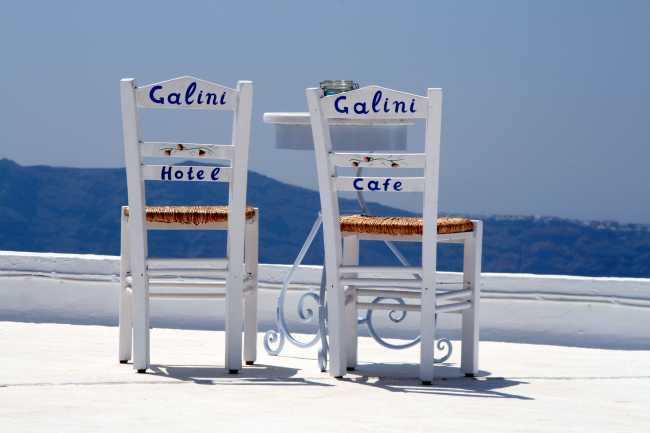
santorini-1183546_1920

Officials concerned that reality might not live up to highly optimistic forecasts

The Greek tourism high season is set to start soon and expectations are very high. The sector, after all, has been one of the few in the Greek economy to show signs of health. After last year’s record figures, the tourism industry had been bracing for further growth. These expecations, however, seem to be highly undermined by the wave of new austerity measures that are bound to be applied on the sector. 

This stark realization cast a dark shadow on the annual meeting of the Association of Hellenic Tourism Enterprises. Addressing the members of the Association, its president, Andreas Andreadis, issued a warning for anyone involved to prepare for the effects of the new wave of heavy taxation set to be imposed on tourism. 

The tourism industry is also bound to experience the consequences of the delays in the bailout review that has – once again – put the Greek economy on hold. Greece’s creditors are adamant on a new set of austerity measures to be imposed as a prerequisite for the review and the effects will be felt throughout the economical spectrum. 

Among the measures that are specifically targeted to the hospitality and tourism sector are increases in the cost of accomodation, , food service, soft and alcoholic beverages, museum tickets and a series of basic products and services that will make package holidays more expensive. Furthermore, PM Alexis Tsipras already announced the imposition of an “stayover levy” to be introduced in hotel bookings from 2018.  

Given that the tax burden included in the third bailout agreement has already hit the industry, signaling a decline of up to 10 per cent, these new measures are believed as presnting a new threat to the sector. According to the Association, 40 per cent of accomodation units are already struggling for survival and the need for the banks to effectively assist the healthier among them is crucial. 

Source:Neos Kosmos

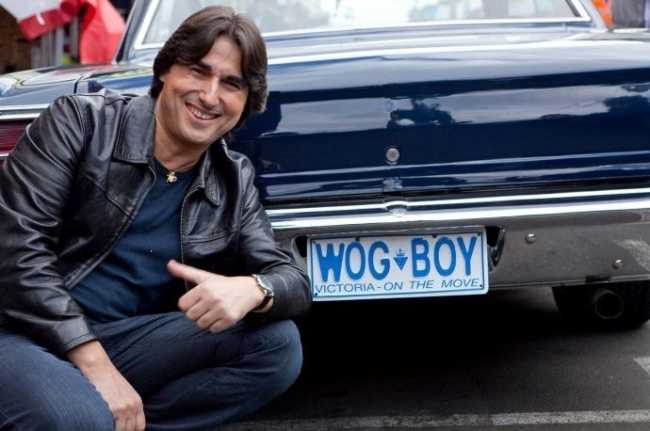
The fascinating stories behind ‘Greek’ license plates in Victoria

wog%20boy

As a boy, I was entranced by Gerald Durrell’s description, in his brilliant account of his idyllic childhood in Corfu My Family and other Animals, of how he came to name his coracle-shaped boat the “Bootle,” only to have appended onto it, the word “Bumtrinket,” at the suggested of his brother, the famous author, Lawrence Durrell.

My first car was similarly roundish in shape and beetle-like. By that stage, personalized number plates were no longer a novelty of the rich or the petrol-headed but were widely in use. The “Bootle-Bumtrinket” being much too long to fit on a Victorian license plate, I wanted to acquire to the plate: “Bizdouno,” a word that I felt carried phonetically beetle-like connotations. The fervor of my youthful enthusiasm was quickly doused by my horrified mother. “You can’t call your car ‘Bizdouno,'” she exclaimed. “It’s the name your aunt uses to refer to one of her neighbours. She will find out and think you’ve set out to offend her.” Apparently the lady in question was given a nickname that referred to her place of origin, Bizdouni, in Epirus. My motor vehicle on the other hand, originated in an assembly line in Geelong, a considerable distance away.

Unperturbed, I insisted upon my chosen name, or by way of compromise, “Bitsoulas” being a contraction of “Glymbitsoulas” a fictional bogeyman used to scare children, having been told that my driving has similar properties. I was all set to register a plate bearing this name, when I discovered that “Bitsoulas” was the name of an extremely popular discotheque in the Athenian suburb of Glyfada, in the nineteen eighties. In the end, having also rejected other options such “Freno” (to remind me to apply the same in a timely fashion) and “Zhaba” the local word in my maternal ancestral village for a large fat female toad (which is exactly what my car looked like), I finally settled upon a license plate bearing the word KAPO, which is good Greek-Australian for motor-vehicle which is why, I believe, my father surreptitiously consulted Vicroads and obtained personalised license plates n my behalf, bearing my Greek initials, KK. Now, whenever I pull up to family or community functions, I am invariably accosted with the question: “Hey KK, what happened to the E?” referring to the fact that the abbreviation of the Communist Party of Greece is KKE in Greek. “I’m a member of the Communist International,” I always reply, “We believe the Revolution will sweep away borders which are bourgeois constructions created in order to dominate workers and thus have no need for the E (which stands for Greece).” This exposition is enough to permit my interlocutors to move on to the next topic.

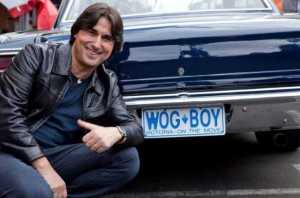
‘Greek’ license plates in Victoria are fascinating as they provide a unique insight not only into how their owners view their identity but also, how they choose to express this down the generations. Whereas Anglo-Australians may choose to put their names or nicknames on their plates, the first generation of Greek plate holders have invariably sought to place on their vehicles, their place of origin. Thus, I have throughout the years, beheld plates proudly bearing the words Samos, Sparta, Kalamata, Epirus 1 (whose owner drove on the freeway in front of me, at the same tempo as an Epirot funeral dirge,) Fteri (a village in Achaia), Korinthos, Kriti, Lefkada, Lamia, and countless others. As His Honour Justice Emilios Kyrou outlines in his book Call Me Emilios, such public assertions of identity can often be liberating for those who have had to suppress aspects of their ethnic origin for whichever reason. The owner of the license plate ‘Kosma,’ could certainly relate to this.

Proving that one’s region can supply a way of expression of one’s personal identity, driving around Melbourne, one can come across Pontos, Pontus and even Pontia, to describe the female of the species. With such plates, one has to be careful however. The owner of Assos, turned out not to be a Greek claiming that he was the best at everything, but rather, a Turk from the homonymous town, on the Asia Minor coast opposite Lesvos. The owner of the license plate Coglan (meaning young boy or catamite), from which the Greek word τσογλάνι (scoundrel) is derived, was also Turkish. This license plate is a menace to society as I almost smashed into a tree when first I noticed it.

Interestingly enough, just as some personalized number plates display affiliations to community groups such as football teams, (there are numerous Greek Australian license plates bearing versions of Greek football team names, ‘PAOK’ and ‘AEK’ being the most common,) members of our community often feel so proud of their local clubs or brotherhoods, that they choose to brand their cars with their names. Thus, in the previous decades, there was a spate of members of the Pontian Association “Pontiaki Estia” obtaining license plates such as ‘ESTIA 1,’ ‘ESTIA 2’ and so on. Such persons still continue to drive among us, displaying a dedication to their club that members of the Greek Orthodox Community of Melbourne and Victoria have not. I am fully in favour of an alteration to that organisation’s constitution in order to compel its president to drive around with GOCMV 1 license plates, or in the alternative ‘Chief’ or its Greek equivalent ‘Tsiftis,’ though I am reliably informed that the latter has already been taken. The Greek Orthodox Archdiocese is possessed of numerous number plates bearing the initials GA. Furthermore, I would love to see how the president of the Benevolent Brotherhood of Kolindros, Pafsilypos would devise a number plate for himself.

Further than ascribing to their cars, their place of origin, Greeks also give them labels denoting abstract concepts, as in the case of ‘Agapi,’ unquestionably the ‘Love Bug’ of Greek Australia and paradoxically enough, ‘Oneiro’ for a motor vehicle that does not appear to be particular expensive, leading the viewer to muse whether in fact the owner is dreaming of a better car, or, whether, owing to limited means, his current mode of conveyance represents the extent of his capacity to dream. I regularly see driving around in my local area an ‘Aetos,’ though how the vehicle can fly like an eagle given the proliferation of speed humps in our suburb, is anyone’s guess. ‘Telios,’ could well be as described, though evidently he cannot spell, and as for ‘Alitis,’ the less said about him, the better.

Finally, driving around Pascoe Vale a few days ago, I came ‘Atheos,’ meaning Atheist. The fact that someone felt so deeply about denying the existence of a Creator, that they were moved not only to state this in an utterly most public way, but also in Greek, made a profound impression upon me. In years to come, scholars may view this as a public manifestation of the debate that perennially rages within the Greek pages of Neos Kosmos as to the desirability or veracity of Christianity. My own view is that this license plate has been painstakingly calculated so as to elicit the response: «Πω, πω, αυτός δεν έχει το Θεό του.» Incidentally, my parish priest swears that Atheos is often to e seen parked outside the church, for its owner often pops in to light a candle..

As the Greek Australian community becomes assimilated, fewer of its members are choosing to employ Greek upon their personalized license plates, considering such a phenomenon to be outmoded or too ‘woggy.’ Those that do, often attempt to employ words in their wrong context, such as an acquaintance who attempted to register ‘Komvio’ because in Google translate, this was provided as the equivalent of ‘Stud,’ showing how the phenomenon can be used to trace our community’s level of understanding of the Greek language and its accompanying cultural connotations and express these in an intelligible form. Yet for Komvio and for others, such as the owner of ‘Romios’ (literally meaning Roman but referring to a Byzantine/Orthodox identity) the personalised license plate is still a powerful and emotive medium for asserting one’s identity within the context of a multicultural society. Historians and sociologists would do well to study this phenomenon, outlining the social and psychological reasons for its existence as it provides a novel yardstick for the acculturation of our community, prior to its inevitable demise.

source:Neos Kosmos

PAOK comes from behind to beat AEK as play-offs start

rodrigues_shhh_web-thumb-large

PAOK comes from behind to beat AEK as play-offs start | Sports | ekathimerini.com https://pagead2.googlesyndication.com/pub-config/r20160212/ca-pub-5242430365160383.js//www.google-analytics.com/analytics.jshttp://ajax.googleapis.com/ajax/libs/jquery/1.8.3/jquery.min.js/scripts/user-script.js?2710120109/scripts/vendor/custom.modernizr.js?2710120109/scripts/foundation.min.js?2710120109/scripts/jquery.mCustomScrollbar.min.js?2710120109http://cdnjs.cloudflare.com/ajax/libs/jquery-mousewheel/3.0.6/jquery.mousewheel.min.js/scripts/jquery.flexslider.js?2710120109/scripts/jquery.zoom.js?2710120109/scripts/chosen/chosen.jquery.js?2710120109//

PAOK was the net gainer of the first round of the Super League play-offs that started on Wednesday, as it came from behind to beat AEK at home, while mini-league leader Panathinaikos escaped with a draw from Panionios.

PAOK beat AEK 2-1 in front of empty stands as the Thessaloniki club served its penultimate game of the stadium ban for the riots during the Cup game against Olympiakos.

Its goalkeeper Panayiotis Glykos gave away a cheap goal losing grip of the ball to allow AEK Jakob Johansson to open the score in the first half, but goals by Garry Rodrigues and Yiannis Mystakidis in the second halfgave the host a precious home win.

The match was marred by fights between the two sets of players after the final whistle.

At Nea Smyrni, Panionios also capitalized on a goalkeeping error, by Panathinaikos’s Luke Steele, with Karim Ansarifard opening the score, but Sebastian Leto responded with a shot from outside the area for the final 1-1 score.

Panathinaikos and PAOK are on three points and will meet this weekend in Athens, AEK is on two points and Panionios on one. AEK will host Panionios next.

source:ekathimerini.com

Greek politicians’ wealth declarations made public

michaloliakos-thumb-large

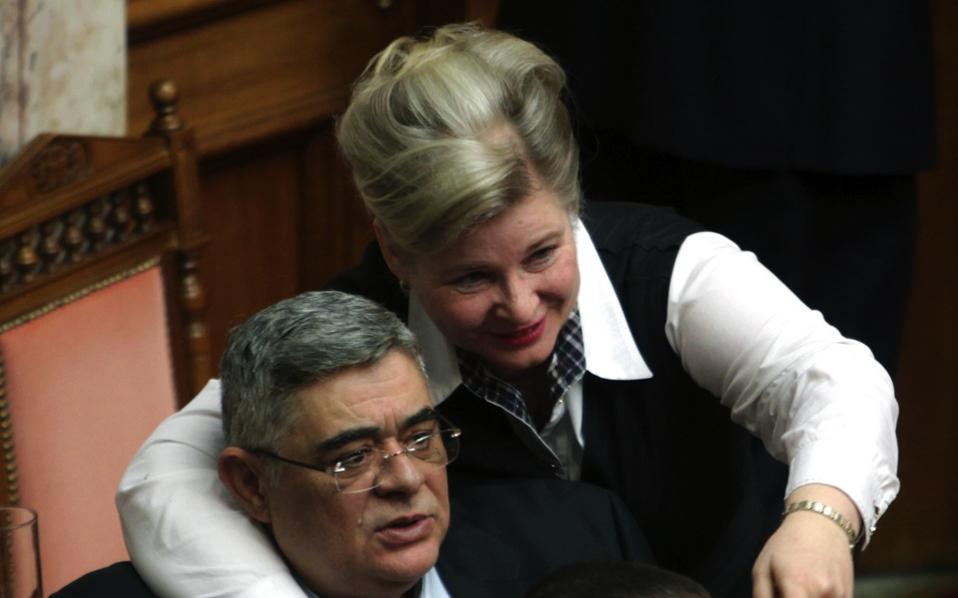
Golden Dawn leader Nikos Michaloliakos and his wife and party MP Eleni Zaroulia declared a joint annual income of 271,000 euros in 2013, the highest among party leaders, while the general secretary of the communist KKE party, Dimitris Koutsoumbas, had the lowest earnings at 44,000 euros, according to their “pothen esches” (income source declarations) made public by Parliament on Wednesday.

The earnings of the far-right leader and Zaroulia – 87,188 euros from their MP salaries and 183,862 from other sources – reportedly spiked once they entered Parliament in 2012, compared to previous declarations.

The declarations, which refer to 2012, do not include those of Union of Centrists leader Vassilis Leventis, Potami chief Stavros Theodorakis and other current lawmakers who were not MPs at the time.

Prime Minister Alexis Tsipras declared an income of 66,864 euros from his MP salary, a further 2,460 euros in other earnings and 6,999 euros in the bank.

Opposition New Democracy leader Kyriakos Mitsotakis declared annual earnings of 70,397 euros from his MP salary and another 11,203.79 euros from other sources. The conservative leader also declared bank deposits of 162,306 euros.

Panos Kammenos, defense minister and leader of the ruling coalition’s junior party, declared annual earnings of 179,493 euros and bank deposits of 44,439 euros.

Finance Minister Euclid Tsakalotos earned 45,512.63 euros from his MP salary and 16,737.72 euros in other income, while Economy Minister Giorgos Stathakis declared 28,113.23 euros from his MP salary and 44,521.97 euros from other sources.

The declarations were made public following repeated criticism of Parliament for delays in the release of lawmakers’ sources of income.

Source:ekathimerini.com