Monthly Archives: October 2015

Αυστραλία:Η Eλληνική παροικία τιμά την επέτειο του «ΟΧΙ»

shohi

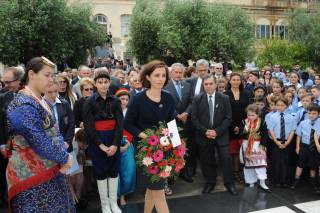
Η Πρόξενος της Ελλάδας στην Μελβούρνη, κ. Χριστίνα Σημαντηράκη, καταθέτει στεφάνι στην μνήμη των πεσόντων. (Φώτο: Κώστας Ντεβές)

Δοξολογία, κατάθεση στεφάνων και εκδηλώσεις στην Μελβούρνη και το Σίδνεϊ.

Η ιστορική επέτειος του «ΟΧΙ» τιμήθηκε την περασμένη Κυριακή από πολυάριθμους ομογενείς που κατέκλυσαν τους χώρους της Ιεράς Μονής Άξιον Εστί, όπου έγινε και η σχετική εκδήλωση.

Το πρόγραμμα περιελάμβανε δοξολογία, απαγγελίες από μαθητές, κατάθεση στεφάνων στο Μνημείο των Πεσόντων και ομιλίες. Ακολούθησε το ετήσιο παραδοσιακό πανηγύρι της Ενορίας του Άξιον Εστί. Την Τετάρτη, ανήμερα της 75ης ιστορικής επετείου της 28ης Οκτωβρίου 1940, θα γίνουν εκδηλώσεις στη Μελβούρνη και το Σίδνεϊ.

Πηγή:Νέος Κόσμος

Κορυφώνονται με τις παρελάσεις οι εκδηλώσεις για την 28η Οκτωβρίου

52868FFF1C95B67EC9B41B7B52CDEA06

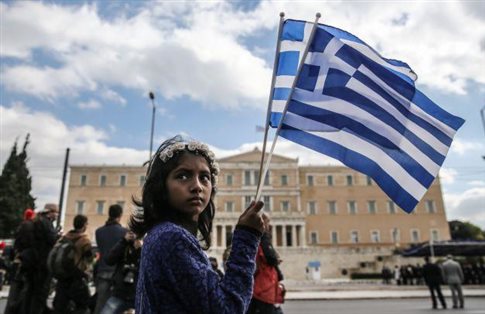
Με τη στρατιωτική παρέλαση στη Θεσσαλονίκη και τη μαθητική στην Αθήνα κορυφώνονται οι εκδηλώσεις για την επέτειο της 28ης Οκτωβρίου.

Η στρατιωτική παρέλαση στη Θεσσαλονίκη, παρουσία του Προέδρου της Δημοκρατίας, Προκόπη Παυλόπουλου, πραγματοποιείται χωρίς κάγκελα, μετά την αντίδραση του αναπληρωτή υπουργού Προστασίας του Πολίτη, Νίκου Τόσκα.

Το παρόν στη στρατριωτική παρέλαση δίνει και ο υπουργός Εθνικής Άμυνας, Πάνος Καμμένος.

Νωρίτερα, ο κ. Παυλόπουλος κατέθεσε στεφάνι στο Ηρώο του Γ’ Σώματος Στρατού. Μετά το τέλος της παρέλασης θα επισκεφθεί το νοσοκομείο Παπαγεωργίου και στη συνέχεια θα αναχωρήσει για την Αθήνα.

Ενώπιον του υπουργού Παιδείας και Θρησκευμάτων Νίκου Φίλη πραγματοποιήθηκε στην πλατεία Συντάγματος η καθιερωμένη μαθητική παρέλαση για την επέτειο του «Όχι».

Σταδιακά δίδονται στην κυκλοφορία οι δρόμοι που είχαν κλείσει νωρίτερα.

«Εύχομαι του χρόνου να δούμε το φως της ανάπτυξης» δήλωσε ο υπουργός Παιδείας, που παρακολούθησε την παρέλαση και τόνισε ότι η επέτειος είναι μήνυμα κατά του ρατσισμού και του φασισμού.

Εκτός από τον υπουργό Παιδείας, την παρέλαση παρακολούθησαν ο δήμαρχος Αθηναίων Γιωργος Καμίνης, καθώς επίσης και εκπρόσωποι των κομμάτων και της εκκλησίας.

«H σημασία του αντιφασιστικού αγώνα είναι πάλι επίκαιρη. Η ενότητα και ο ενθουσιασμός που επέδειξε σύσσωμος ο ελληνικός λαός το 1940 είναι παράδειγμα για την σημερινή κρίσιμη περίοδο» τόνισε ο κ. Καμίνης.

Στην παρέλαση συμμετείχαν φέτος όλα τα σχολεία της Α’ Αθηνών, δημοτικά, γυμνάσια και λύκεια, με τον σημαιοφόρο τους και πέντε παραστάτες το καθένα, καθώς επίσης και το σώμα Ελλήνων Προσκόπων και Οδηγισμού και ομάδα των Special Olympics.

Πριν την έναρξη της παρέλασης, κατατέθηκαν στεφάνια στο μνημείο του Αγνώστου Στρατιώτη, εκ μέρους της πολιτειακής, πολιτικής και στρατιωτικής ηγεσίας της χώρας, έγινε η ανάκρουση του εθνικού ύμνου και εκ μέρους της κυβέρνησης, ο υπουργός Παιδείας, Έρευνας και Θρησκευμάτων Νικος Φίλης επιθεώρησε το στρατιωτικό άγημα.

Πηγή:in.gr

Newcastle Football: 2016 SKILL ACQUISITION PROGRAM BOYS SQUADS ANNOUNCED

12193643_838944689559256_7655062528925029544_n

Well done to all the boys who trialled for our SAP squads at the beginning of the month, it is with great pleasure we announce the following boys who were successful in gaining a position…

–UNDER 10S–
Matt Brain
Max Bryant
Joel Bucci
Connor Chapman
Connor Clarke
Bryce Duggan
Levi Foster
Toby Gallagher
Charlie Halls
Giles Harrison
Samuel Holmes
Ethan Lewis
Jamie Lloyd  *
Lorcan McCallum
Charlie McGrath
Dejan Nikic
Harry Phillips
Cooper Radley
Kalen Routley
Noah Schuberth
Charlie Stevenson  *
Max Temelkovski
Oliver Tobin
George Tsamouras *
Lucas Walshe *
Kurtis White
Kayde Wise  *

  • Hamilton Olympic

–UNDER 11S–
Luis Bardetta
Byron Bennett
Lachlan Bray-Shone
Sam Carroll
Blake Carter
Oscar Cathcart
Dylan Christoffersen
Mitchell Connors
Cameron Davies
Linus Deeming
Jack Donovan-Schultz
Ryan Duchemin
Liam Endicott
Max Fallon
Remi Flood
Jordie Fuller
Lachlan Graham
Sam Jackson
Matt Kacev
Bailey Kacev
Mason King
Jack Kirk
Jack Knowles
Cael Mowbray
Cody Nancarrow
Bailey Newton
Matt Novak
Ben Pearce
Charlie Phillips
Ethan Pichardo
Oliver Rasser
Nate Robertson
Byron Waddell

–UNDER 12S–
Ned Amidy
Max Bailey
Marco Baker
Christian Bracco
Sam Brain
Michael Byrnes
Hallam Carlson
Cooper Clark
Jay Coffey
Seb Darney
Will De Vitis
Adrian Delmoni
Kai Evans
Pat Farrell
Myles Gaffney
Lachlan Griffiths
Max Hatton
Oliver Hilton
Matt Honnery
Declan Hughes
Daniel Kacev
Zaik Luck
Daniel Martinelli
Kilian McCarthy
Zac McShane
Tom O’Connor
Riley Parker
Scott Philpotts
Xavier Radley
Jai Rodway
Oscar Ward
Flynn Watson
Corey Winiarczyk

source: Newcastle Football

Ο θησαυρός του πολεμιστή στην Πύλο «πύλη» μεταξύ πολιτισμών;

23344149_warrior_pylos_limghandler

Τον γύρο του κόσμου κάνει η αρχαιολογική ανακάλυψη που είδε το φως στην Πύλο. Ο ασύλητος τάφος του πολεμιστή και ο θησαυρός του μπορεί να «κρύβουν» απαντήσεις για την άνοδο του μυκηναϊκού πολιτισμού και την παρακμή του μινωικού πολιτισμού.

Πώς περάσαμε από τον μινωικό στον μυκηναϊκό πολιτισμό; Ο Τόμας Μπόγκαν, διευθυντής του Ινστιτούτου Μελέτης Προϊστορικού Αιγαίου Ανατολικής Κρήτης λέει σύμφωνα με την εφημερίδα The New York Times, ότι ο πολεμιστής πέθανε πριν αρχίσει να κατασκευάζεται το ανάκτορο του Νέστορα και ότι ο τάφος είναι γεμάτος με αντικείμενα που φτιάχτηκαν στην Κρήτη.

«Πρόκειται για μία περίοδο μετασχηματισμού της Εποχής του Χαλκού» σημειώνει ο Μπόγκαν.

Ο πολεμιστής τάφηκε περίπου το 1.500 π.Χ. Στο ίδιο σημείο, στον Άνω Εγκλιανό, πολλά χρόνια αργότερα, ανεγέρθηκε το μυκηναϊκό ανάκτορο του Νέστορος.

Ο Τζέιμς Σ.Ράιτ, διευθυντής της Αμερικανικής Σχολής Κλασσικών Σπουδών στην Αθήνα, σημειώνει ότι ο τάφος είναι της περιόδου που βρίσκεται «στην καρδιά της σχέσης του πολιτισμού της ενδοχώρας με του ανώτερου πολιτισμού της Κρήτης» και εκτιμά ότι θα βοηθήσει τους ερευνητές να κατανοήσουν πώς ορισμένα στοιχεία του μινωικού πολιτισμού υιοθετήθηκαν από τον μυκηναϊκό πολιτισμό.

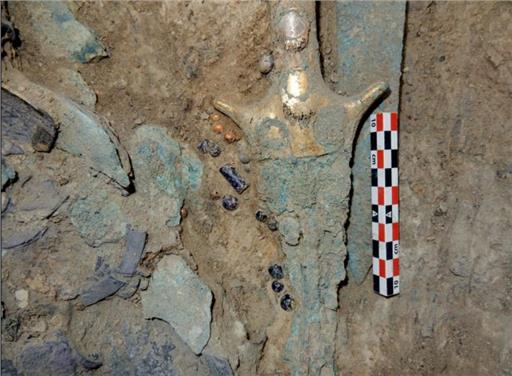
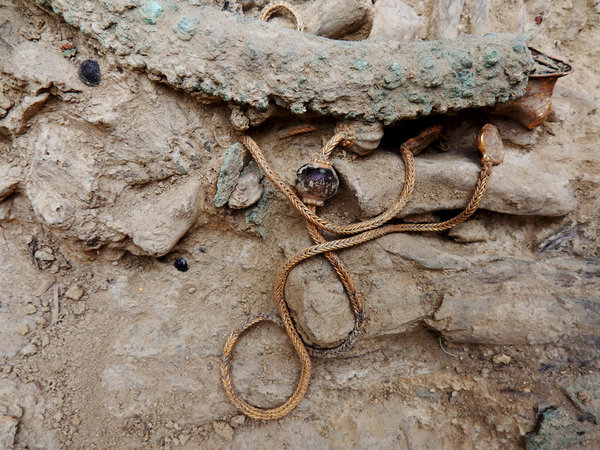
Στον τάφο του πολεμιστή βρέθηκαν σπάνια ευρήματα: χάλκινο σπαθί με επιχρυσωμένη ελεφαντοστέινη λαβή, χρυσά σφραγιστικά δακτυλίδια και κύπελλα, σπάνια χρυσή αλυσίδα, ασημένια κύπελλα -ορισμένα με χρυσά χείλη-, χάλκινα αγγεία και κύπελλα, χάλκινος αμφορέας, χάλκινες πρόχοι, καθώς και χάλκινες λεκανίδες, περισσότεροι από πενήντα σφραγιδόλιθοι τεμάχια ελεφαντοστού με εγχάρακτες παραστάσεις και περισσότερες από 1.000 ψήφους από πολύτιμους λίθους.

«Πιθανότατα έχουμε να δούμε τόσο πλούσιο τάφο από τη δεκαετία του 1950» αναφέρει ο Τζ.Ράιτ.

Οι ανασκαφές διεξήχθησαν από το ζεύγος Τζακ Λ.Ντέιβις και Σάρον Ρ.Στόκερ από το Πανεπιστήμιο του Σινσινάτι, οι οποίοι πραγματοποιούν ανασκαφές στην Πύλο εδώ και 25 χρόνια.

Σύμφωνα με τους New York Times, ο τάφος βρέθηκε κοντά στην επιφάνεια και οι επιστήμονες εκφράζουν έκπληξη για το γεγονός ότι έμεινε ασύλητος επί 35 αιώνες.

Όταν οι αρχαιολόγοι ανακάλυψαν τον τάφο -και πριν δουν τον θησαυρό του- δεν ήταν πολύ αισιόδοξοι. Πίστευαν ότι ίσως επρόκειτο για νεότερη κατασκευή ή ακόμα και εάν επρόκειτο για προϊστορική κατασκευή θα είχε συληθεί. Λίγες ημέρες αργότερα, ο επικεφαλής της ανασκαφής του έστειλε μήνυμα: «Βρήκα χαλκό».

Ο τάφος ήταν σχεδόν απείραχτος και μόνο η μεγάλη πέτρα που τον σκέπαζε είχε πέσει πάνω στο ξύλινο φέρετρο.

Αν και το φέρετρο δεν υπάρχει πια, οι αρχαιολόγοι βρήκαν τα οστά ενός άνδρα, ηλικίας 30 έως 35 ετών. Στα αριστερά του υπήρχαν τα όπλα του, ανάμεσά τους ένα χάλκινο σπαθί με επιχρυσωμένη ελεφαντοστέινη λαβή, ενώ στα δεξιά του υπήρχαν τέσσερα χρυσά δαχτυλίδια με μινωικές εγχαράξεις και περίπου 50 σφραγιδόλιθοι στην επιφάνεια των οποίων απεικονίζονται θεές, ταύροι με ακροβάτες πιασμένους από τα κέρατά τους (ταυροκαθάψια).

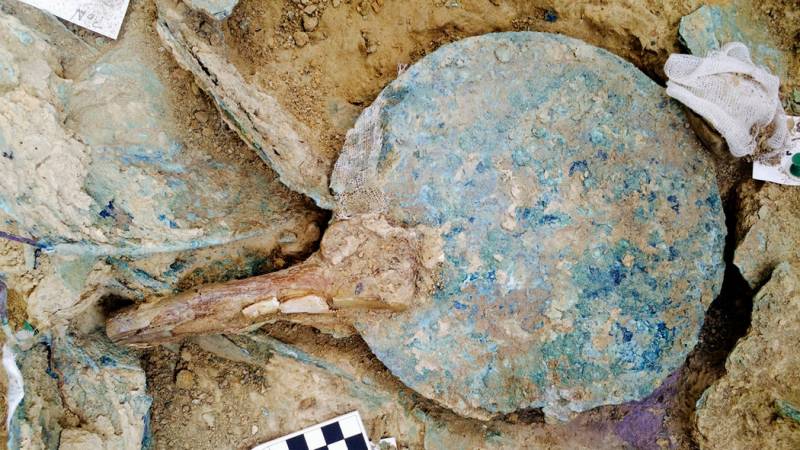
Στα πόδια του νεκρού, βρέθηκε ελεφαντοστέινο πλακίδιο με απεικόνιση φτερωτού γρύπα και δίπλα του χάλκινος καθρέπτης με ελεφαντοστέινη λαβή.

Εξαιτίας αυτού του τελευταίου ευρήματος, οι Δρ. Ντέιβις και Δρ. Στόκερ αποκαλούν τον πολεμιστή ως «πολεμιστή – γρύπα». Θεωρούν, πάντως, ότι υπήρξε πολύ σημαντική προσωπικότητα της κοινωνίας του.

Ο Δρ. Ντέιβις πιστεύει ότι τα αντικείμενα που βρέθηκαν στον τάφο δεν ήταν λάφυρα πολέμου. Εκτιμά ότι «είχαν ήδη ένα νόημα για τον άνθρωπο που τάφηκε σε αυτόν τον τάφο».

«Πρόκειται για την κρίσιμη περίοδο, κατά την οποία θρησκευτικές ιδέες μεταφέρονταν από την Κρήτη στην ενδοχώρα» σημειώνει.

Τώρα, οι επιστήμονες θα χρησιμοποιήσουν σύγχρονες μεθόδους για να μάθουν περισσότερα για τον πολεμιστή. Για παράδειγμα ανάλυση του DNA -εάν δείγμα του καταφέρει να βρεθεί στα δόντια του πολεμιστή- μπορεί να δώσει απάντηση για το πού στην Ελλάδα γεννήθηκε.

Παράλληλα, φυτικό υλικό -εάν βρεθεί στον τάφο- μπορεί να δώσει απάντηση για το πότε χρονολογείται η ταφή.

Το σίγουρο είναι ότι ο «πολεμιστής-γρύπας» έχει ακόμα πολλά μυστικά να αποκαλύψει…

Πηγή:in.gr

Ο Σκίμπε αναλαμβάνει τον πάγκο της Εθνικής Eλλάδας

8356D895895F142056F1147F51B00CF7

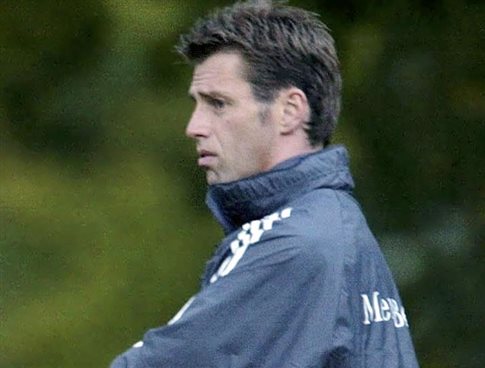
Η επίσημη ανακοίνωση απομένει πλέον από την ΕΠΟ για τον Μίχαελ Σκίμπε, που εκτός συγκλονιστικού απροόπτου θα είναι ο νέος ομοσπονδιακός τεχνικός, αφού ο 50χρονος Γερμανός έχει συμφωνήσει σε όλες τις βασικές λεπτομέρειες με την Ομοσπονδία.

Ο Σκίμπε δεν ήταν στις πρώτες θέσεις της λίστας των υποψηφίων, όμως μετά το “ναυάγιο” με τον Μπερντ Σούστερ ανέβηκε πολλές θέσεις έναντι των υπόλοιπων υποψηφίων, καθώς θεωρήθηκε ότι είναι σε ηλικία που έχει κίνητρο και φιλοδοξίες.

Ο Σκίμπε ήταν προπονητής στην Εσκισεχίρσπορ, με την οποία έλυσε το συμβόλαιό του. Καλές συστάσεις για την αξία του έδωσε στον πρόεδρο της ΕΠΟ, Γιώργο Γκιρτζίκη, ο Φάνης Γκέκας, ο οποίος είχε συνεργαστεί μαζί του τόσο στην τουρκική ομάδα όσο και στις Μπάγερ Λεβερκούζεν, Άιντραχτ Φρανκφούρτης. Το καθοριστικό ραντεβού του κ. Γκιρτζίκη με τον Γερμανό τεχνικό έγινε, όπως αναφέρουν οι πληροφορίες, στην Κωνσταντινούπολη, οπότε και επήλθε μια αρχική συμφωνία.

Ως προς τις οικονομικές απολαβές το συμβόλαιο του Σκίμπε δεν θα ξεπερνά το πλαφόν των 600.000 ευρώ το χρόνο που είχε θέσει ως “ταβάνι” η ΕΠΟ, όμως σε περίπτωση πρόκρισης της Εθνικής ομάδας στην τελική φάση του Παγκοσμίου Κυπέλλου της Ρωσίας θα εισπράξει το διόλου ευκαταφρόνητο ποσό των 800.000 ευρώ ως πριμ.

Να σημειωθεί ότι ο Σκίμπε δεν είχε αντίρρηση για το ρόλο του Κώστα Τσάνα ως βοηθού του, σημείο το οποίο είχε αποτελέσει μία από τις αιτίες “ρήξης” με τον Μπερντ Σούστερ, όμως θα έχει και το δικό του συνεργάτη.

Το θέμα θα τεθεί προς συζήτηση στο διοικητικό συμβούλιο της Πέμπτης, οπότε και εκτός πολύ μεγάλης έκπληξης θα ανακοινωθεί η συμφωνία.

Unlooted tomb in Pylos a stunning discovery

27PYLOSJP3-blog427

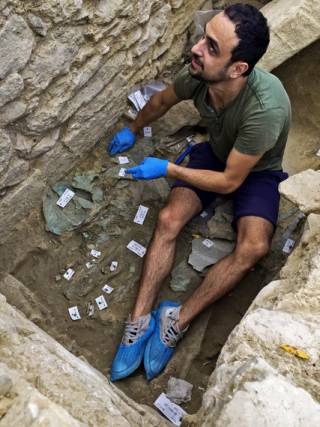
Alex Zokos, a conservator, removed a bronze jug at the site. Photo: Department of Classics/University of Cincinnati

One of the richest graves unearthed in Greece

Archaeologists digging at Pylos, an ancient city on the southwest coast of Greece, have discovered the rich grave of a warrior who was buried at the dawn of European civilization.

He lies with a yardlong bronze sword and a remarkable collection of gold rings, precious jewels and beautifully carved seals. Archaeologists expressed astonishment at the richness of the find and its potential for shedding light on the emergence of the Mycenaean civilization, the lost world of Agamemnon, Nestor, Odysseus and other heroes described in the epics of Homer.

“Probably not since the 1950s have we found such a rich tomb,” said James C. Wright, the director of the American School of Classical Studies at Athens.

27PYLOSCOVER-master1050-v2

A bronze mirror with an ivory handle found in a grave of a warrior at Pylos in Greece.

Seeing the tomb “was a real highlight of my archaeological career,” said Thomas M. Brogan, the director of the Institute for Aegean Prehistory Study Center for East Crete, noting that “you can count on one hand the number of tombs as wealthy as this one.”

The warrior’s grave belongs to a time and place that give it special significance. He was buried around 1500 B.C., next to the site on Pylos on which, many years later, arose the palace of Nestor, a large administrative center that was destroyed in 1180 B.C., about the same time as Homer’s Troy. The palace was part of the Mycenaean civilization; from its ashes, classical Greek culture arose several centuries later.

27PYLOSJP1-articleLarge

The palaces found at Mycene, Pylos and elsewhere on the Greek mainland have a common inspiration: All borrowed heavily from the Minoan civilization that arose on the large island of Crete, southeast of Pylos. The Minoans were culturally dominant to the Mycenaeans but were later overrun by them.

How, then, did Minoan culture pass to the Mycenaeans? The warrior’s grave may hold many answers. He died before the palaces began to be built, and his grave is full of artifacts made in Crete. “This is a transformative moment in the Bronze Age,” Dr. Brogan said.

The grave, in Dr. Wright’s view, lies “at the date at the heart of the relationship of the mainland culture to the higher culture of Crete” and will help scholars understand how the state cultures that developed in Crete were adopted into what became the Mycenaean palace culture on the mainland.

Warriors probably competed for status as stratified societies formed on the mainland. This developing warrior society liked to show off its power through high-quality goods, like Cretan seal stones and gold cups — “lots of bling,” as Dr. Wright put it. “Perhaps we can theorize that this site was that of a rising chiefdom,” he said.

The grave was discovered this spring, on May 18, by Jack L. Davis and Sharon R. Stocker, a husband-and-wife team at the University of Cincinnati who have been excavating at Pylos for 25 years.

The top of the warrior’s shaft grave lies at ground level, seemingly so easy to find that it is quite surprising the tomb lay intact for 35 centuries.

“It is indeed mind boggling that we were first,” Dr. Davis wrote in an email. “I’m still shaking my head in disbelief. So many walked over it so many times, including our own team.”

The palace at Pylos was first excavated by Carl Blegen, also of the University of Cincinnati, who on his first day of digging in 1939 discovered a large cache of tablets written in the script known as Linear B, later deciphered as the earliest written form of Greek.

Whether or not Blegen’s luck was on their mind, Dr. Davis and Dr. Stocker started this season to excavate outside the palace in hope of hitting the dwellings that may have surrounded it and learning how ordinary citizens lived. On their first day of digging, they struck two walls at right angles. First they assumed the structure was a house, then a room, and finally a grave.

“I was very pessimistic about this,” Dr. Davis said, thinking that the grave was probably some medieval construction, or that even if it was prehistoric it would almost certainly have been robbed. But a few days later, he received a text message from the supervising archaeologist saying, “I hit bronze.”

source:neos kosmos


Code red for Greece:State revenues miss target by 2 billion euros

Greeces-Financial-Crisis_Feature-Image

Budget data paint a dramatic picture, especially in the revenues department, owing to the inability of citizens to pay their taxes.

The revised data of the 2015 state budget up to September point to a hole of 2 billion euros, while had the targets not been made more realistic the revenues gap would have come close to 5 billion euros.

Despite the adverse conditions, the budget showed a primary surplus of 3 billion euros at the end of September, but this is exclusively attributed to the state’s payments halt. However, to meet the budget targets, the state coffers need to receive no less than 19.1 billion euros in the last three months of the year, according to figures released by the Finance Ministry yesterday.

The net revenues of the state budget amounted to 34.29 billion euros at end-September, missing the revised target by 2.05 billion euros or 5.6 percent. The shortfall in income tax takings amounted to 194 million euros, while non-tax revenues lagged by 71 million.

State budget expenditure came to just 36.19 billion euros, down 3.88 billion from the target set by the budget and 1.89 billion euros from the same period last year.

Source: Kathimerini

Australian media on OXI 28 October 1940

oxi7

How the Australian media reported the events of October and November 1940 in Greece.

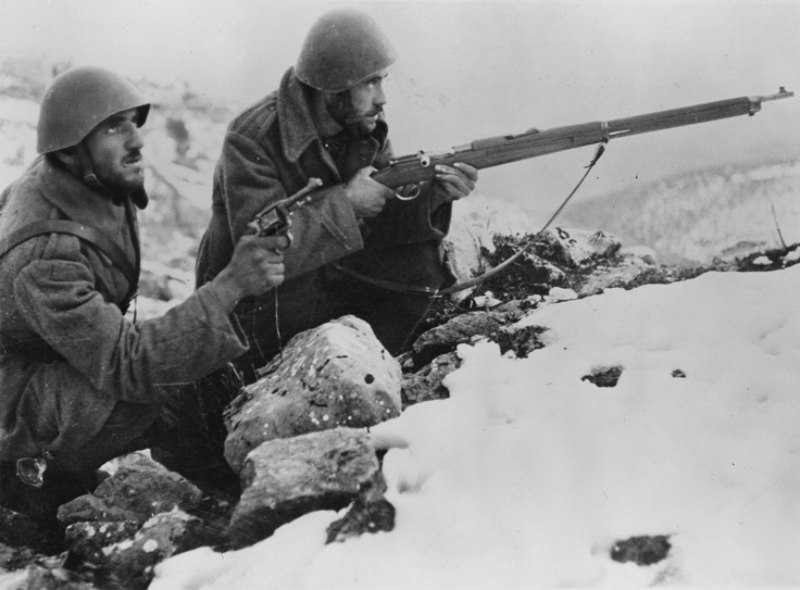
Next Wednesday, the Greek Australian Memorial in Melbourne and the Anzac Memorial in Sydney will be the focal point of commemorations of Hellenic National Day. On 28 October 1940, fascist dictator Benito Mussolini’s forces invaded officially neutral Hellas, having received a firm ‘NO’ to his demands to occupy strategic ports and islands around the Ionian and Aegean Seas. The events have been discussed at some length. How did the Australian media report on the heady events of October and November 1940, the days when an utterly unprepared Hellenic state fought – and defeated – the Nazis’ key ally? How do those events remain relevant in 2015?

Under the headline ‘Italy’s flagrant aggression’, Melbourne’s The Age opened its coverage of the invasion with the following:

‘A small mountainous country, with long indented coasts and many islands, Greece has for years sought by agreements and treaties to promote good relations with her neighbours while carefully avoiding the least provocation to the Axis powers.

Actually, the country has been too poor to indulge revisionist ambitions, and too much immersed in domestic affairs to show more than a self-protective concern for foreign affairs.’

Reading the newspapers of the time – available online thanks to the National Library of Australia – the main target for Mussolini’s men was the coast of Epirus and the best port in south-eastern Europe, Thessaloniki. What evolved into the ‘Greek Campaign’ of 1941, concluding with the Battle of Crete in May, began as the struggle ‘between the invading Italian forces and the British Navy’, according to Brisbane’s The Telegraph (29 October 1940).

This key port in the last war is likely to be one in the present campaign. It was through this centre that the Allied forces in the last war struck upwards into the Balkans in the campaign that resulted in the overthrow of Bulgaria, and carried the war towards Constantinople.

The strategic island of Kerkyra (Corfu), across from the heel of the Italian peninsula, was ‘in an ideal position for use by the British fleet’. While the first Australian troops landed in Hellas in March 1941 – they joined their New Zealand comrades to form the Second Anzac Corps the following month – the Royal Australian Navy had an active presence in Hellenic waters from July 1940.

The ill-fated HMAS Sydney (originally named the HMS Phaeton) patrolled the waters around Crete and Kythera for some time. During the Battle of Cape Spada (Crete’s north-western extremity), the Australian light cruiser damaged the high-speed light cruisers Giovanni dalle Bande Nere and Bartolomeo Colleoni (the latter sinking with the loss of 121 lives). HMAS Sydney remained on duty around the Aegean until January 1941, but was not involved in another major engagement.

A few days after the initial assault, Perth’s The West Australian informed its readers: ‘GREEKS ATTACK – ENEMY REPULSED IN EAST – ADVANCE INTO ALBANIA – ITALIAN PRESSURE IN EPIRUS’. According to Italian communiqués, their forces were ‘attempting to drive down the coast in Epirus towards Yanina’, mentioning ‘bombing raids’ against the Epirote capital. Indeed, ‘one Rome statement claims that the advance has reached Yanina’. (4 November 1940, page 7).

The reality on the ground was very different. The fascist advance on Florina ‘(with Salonika as the ultimate object)’ had already been stopped by the Hellene defenders, with a counter-attack underway.

Similarly, while I recall my grandmother’s stories of hearing the Italian air-raids on Ioannina, about 20 kilometres away, the city would not fall to the Axis for more than six months.

Australian media outlets often quoted the statement of the Hellene Ambassador to London in November 1940. M. Simopoulos declared that:

“Hellenism united throughout the world is fighting today for its freedom and independence. Hellas has not survived for thousands of years to become anybody’s serf now. We are proud that our country finds itself in this struggle by the side of a great, heroic nation fighting for a common ideal, and as the King of Britain said to our King, ‘Your fight is our fight’.” (The West Australian 4 November 1940, page 7)

The longer the Hellenic resistance to the Axis invasion lasted – let’s not forget the fascists were assisted by Albanian collaborator units in their initial assault – the more gushing the praise of Hellenism became.

The 21 December 1940 issue of The Australian Women’s Weekly features a large photograph of the ‘Dancing Guardsman of King of Greece’ under the headline ‘THEY CAN FIGHT, TOO!’ The Evzones are described as ‘magnificent specimens of a race counted among the most handsome in the world. They have long been famed for their dancing, but it is their fighting the world admires just now’.

Such admiration was far from universal in Australia, as attested by the anti-Greek riots in 1930s Kalgoorlie.

RELEVANCE TO 2015

The articles in the Australian media on the failed attempt to conquer Hellas in October 1940 number in the thousands. Literally. Reading even a handful of them, such as those here, illustrate a few key points.

First, so little has changed in Hellenic society. One has only to listen to the media from Athens to understand just how ‘immersed in domestic affairs’ society in the Greek state remains.

Second, these articles, cartoons, photographs and drawings demonstrate how deeply intertwined Australia and Hellenism have been throughout the 20th century.

Australians (of Hellenic background and otherwise) served in Hellas (from Macedonia to Crete, from Epiros to Megisti) in every conflict fought there in the last century – Balkan Wars (1912-1913), World War One (1914-1918), World War Two (1939-1945), Civil War (1946-49) – serving in either military or humanitarian roles.

Hellenes and Australians served alongside each other in the South African War (1899-1902), the Korean War (1950-53), the Vietnam War, the Gulf Wars, Afghanistan, Iraq, and elsewhere. At no time have Australians and Hellenes fought against each other.

The Anzac legend has deep roots in Hellenic soil and water; it was on Lemnos, around Thessaloniki, around Thermopylae, on Crete, and elsewhere, that Anzacs fought ‘for a common ideal’.

This shared heritage should be used by history and language educators, by politicians and lobbyists, by individuals and associations, by clergy and laity, to promote Hellenism and the Hellenic ideals every single day. These ideals are shared by all Australians and are great segues to promoting Hellenic education in all its forms: language, history, culture.

If we – Australian Hellenes – do not undertake this, then who will?

* Dr Panayiotis Diamadis lectures in Genocide Studies at the University of Technology, Sydney, and teaches history at a Catholic college in Sydney.

source:Neos Kosmos

Gino and Mark Stocco: Body found on property where father and son fugitives arrested near Dunedoo, NSW

6892660-3x2-700x467

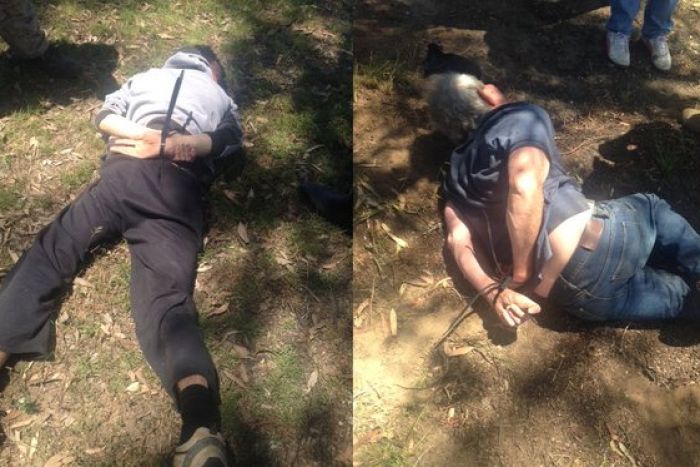
A man’s body has been found on the property where police arrested Gino and Mark Stocco, near Dunedoo in central western New South Wales.

The father and son fugitives Gino, 57, and Mark, 35, wanted after allegedly shooting at police in NSW, were taken into custody after a search spanning three states.

The pair, who had been wanted by police for eight years, were found at a property at Elong Elong, near Dunedoo.

Police said no shots were fired and no-one was injured during the arrest.

The body of the man found after the men were arrested is believed to be that of a 68-year-old who has been missing since early October.

The cause of his death is not yet known.

A crime scene has been established at the property.

An ambulance was on standby in Dunedoo at the time of the men’s arrests but a spokeswoman said it was not needed.

The pair are being taken to Dubbo police station to be charged.

There was an unconfirmed sighting of the Stoccos at about 7:00am at Hillston, which is a five-hour drive south-west of Dunedoo.

Bakery owner Donna Francis said the men were recognised by other customers who called police.

“I’m thinking to myself, are they the Stocco fellows?” she said.

“And I kept looking at them, but the father actually has a clean face now.

“I’ve only seen the police, the local ones, once and they asked me had I recognised them, and I said, well, I think it was them, I’m not 100 per cent sure.”

Elong Elong property ‘very isolated’

Elong Elong Rural Property Centre director Denise Male said she sold the property Pinevale, where the men were arrested, only last year.

She said it was an isolated property that backed onto the Goonoo State Forrest, which is traversed by many remote access roads.

“It’s a very remote and private property,” she said.

“It’s a brilliant thing that police have tracked them down to that location, because it’s very isolated.”

Police have been running a major operation to capture the Stoccos since they allegedly shot at police with a high-powered rifle during a car chase in Wagga Wagga in NSW earlier this month.

A local roadworker said he saw a number of police and ambulance vehicles travelling up the road.

“I thought something must have been up, and yeah they kicked us off our job site and told us we had to get out,” he said.

“And yeah, apparently it was the blokes who have been wanted for a long time. At least they caught them I suppose.

“In Warrumbungle Shire you don’t usually see too much of this action going on.”

They were on Australia’s most-wanted list for a number of violent crimes and property offences in Queensland, NSW and Victoria.

They were sighted at Gundagai in southern New South Wales on Saturday October 24, when they stopped to fill up a white Toyota LandCruiser with fuel, and drove away without paying.

NSW Police also received a report of a sighting east of Wagga Wagga in the morning on October 25 but had been unable to confirm it, they said.

There were also multiple sightings of the stolen vehicle in Victoria, including an unconfirmed sighting at Sale, in the state’s south east, on October 24.

The men had likely been changing their appearance, including shaving their beards, police said.

They were also believed to have frequently changed the licence plates on the LandCruiser ute.

There was speculation the pair could have stockpiles of supplies and weapons throughout NSW and Victoria.

Police described them as “fairly resourceful individuals”.

source:abc.net.au

Stoke City beats Chelsea on penalties in League Cup, Sheffield Wednesday stuns Arsenal

6891432-3x2-700x467

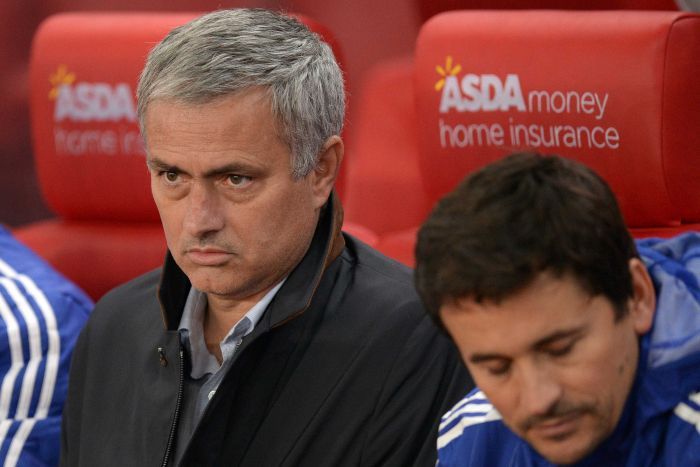
Eden Hazard has squandered the decisive penalty as Stoke City deepened Chelsea manager Jose Mourinho’s woes with victory in the League Cup, while second-tier Sheffield Wednesday stunned Arsenal 3-0.

After Jon Walters put Stoke ahead with a fine 20-yard shot at the Britannia Stadium, Chelsea substitute Loic Remy, on for the injured Diego Costa, lashed home an injury-time equaliser to make the score 1-1.

Following a goalless period of extra time, the first nine penalties of the shootout were all scored, only for the out-of-form Hazard to see his 10th spot-kick parried by Stoke goalkeeper Jack Butland.

The Belgian’s mishap condemned Mourinho’s side to their ninth defeat in all competitions this season and saw the holders exit the tournament in the fourth round.

It came hot on the heels of a 2-1 defeat at West Ham United on Saturday, which left Mourinho facing a Football Association misconduct charge after being sent to the stands, and ramped up the pressure on the Portuguese ahead of Saturday’s Premier League home game with Liverpool.

With Chelsea currently 15th in the league table and third in their Champions League group, British newspapers have speculated that Mourinho could be sacked if their fortunes do not improve quickly.

At Hillsborough, Arsene Wenger’s Arsenal were well beaten by Championship side Wednesday and also lost Alex Oxlade-Chamberlain and Theo Walcott to injury in the first half.

Ross Wallace put Wednesday ahead after 27 minutes and then teed up Lucas Joao for the hosts’ second goal shortly before half-time, with Sam Hutchinson completing victory early in the second period.

Asked how his young fringe players had handled the occasion, Wenger delivered a scathing assessment, telling Sky Sports: “It was too high for them. They are not ready to play at this level, none of them.”

Acres of space

On the injuries his team suffered, he added: “We are short now because we lose Chamberlain today, we lose Walcott and we have already a few injuries.

“It is a big blow for us, of course to lose the game, but even more for the other competitions, which are very important for us, to lose two players of that stature.”

It was Wednesday’s second Premier League scalp in this season’s competition, following their third-round win at Newcastle United, and brought Arsenal’s run of four successive victories to an end.

Wenger made eight changes to the team that beat Everton 2-1 on Saturday for the trip to Hillsborough, which was a repeat of the 1993 final.

Oxlade-Chamberlain was one of only three players who kept their places, along with Petr Cech and Olivier Giroud, but he went off in the fifth minute after pulling up while running along the touchline.

Walcott replaced his England team-mate, but he in turn was forced off 13 minutes later with an apparent calf injury.

Ismael Bennacer, a 17-year-old midfielder, came on, joining Glen Kamara and Alex Iwobi in making his Arsenal debut.

Wednesday took the lead nine minutes later when a neat move down their left flank culminated in Daniel Pudil cutting the ball back for Wallace to steer a first-time shot inside the left-hand post.

Wallace teed up Wednesday’s goal in the 40th minute after a short corner, swinging over a cross from the left for striker Joao to head home.

Wednesday completed victory six minutes into the second half when Barry Bannan’s free-kick found Tom Lees in acres of space at the back post and he volleyed across goal for Hutchinson to score with his knees.

In the morning’s other matches, Everton did just enough to progress past Norwich in a 1-1 draw thanks to Leon Osman’s second-half equaliser to cancel out Sebastian Bassong’s opener, before the Toffees progressed 4-3 on penalties.

Hull City also advanced 5-4 on penalties following a 1-1 draw with Premiership outfit Leicester.

source:abc.net.au