Daily Archives: October 21, 2015

Τα 4 από τα 10 χειρότερα αεροδρόμια της Ευρώπης είναι Eλληνικά!

bv01391

Πρόκειται για τα αεροδρόμια τεσσάρων νησιών, της Σαντορίνης, της Ρόδου, του Ηρακλείου, και της Κέρκυρας

Τέσσερα από τα ελληνικά περιφερειακά αεροδρόμια που βρίσκονται σε φάση ιδιωτικοποίησης, συγκαταλέγονται στα 10 χειρότερα της Ευρώπης.

Ο λόγος για τα αεροδρόμια τεσσάρων νησιών, της Σαντορίνης, της Ρόδου, του Ηρακλείου, και της Κέρκυρας, τα οποία πάσχουν σοβαρά από πλευράς τόσο υποδομών όσο και παροχής υπηρεσιών.

Στην ετήσια κατάταξη της ιστοσελίδας “Sleepingairports.net” που έγινε με βάση έρευνα σε 10.000 τουρίστες, η Ελλάδα έχει την τιμητική της.

Σαν 2ο χειρότερο αεροδρόμιο της Ευρώπης ψηφίστηκε η Σαντορίνη όπου οι επιβάτες διαπιστώνουν εμφανής έλλειψη θέσεων και εστιατορίων, όπως και ελλείψεις στην ασφάλεια. Πολλοί μάλιστα προτείνουν να κατεδαφιστεί το αεροδρόμιο και να χτιστεί ένα νέο στη θέση του!

Την 3η θέση της «μαύρης» λίστας καταλαμβάνει το αεροδρόμιο της Ρόδου, με τα παράπονα των επιβατών να εστιάζουν στις ατελείωτες ουρές για κάθε υπηρεσία, από το check-in, μέχρι και τον έλεγχο ασφαλείας. Σημαντικά παράπονα υπάρχουν και για την καθαριότητα, την κατάσταση στην οποία βρίσκονται οι τουαλέτες του αεροδρομίου, όπως και για το γεγονός ότι οι επιβάτες δυσκολεύονται να αγοράσουν μέσα στο αεροδρόμιο ένα σνακ.

Στη… 4η χειρότερη θέση βρίσκουμε το αεροδρόμιο του Ηρακλείου. Στην έρευνα καταγράφεται η απορία πολλών τουριστών ότι παρ’ ότι είναι ένα πολυσύχναστο αεροδρόμιο, εντούτοις, διαθέτει μόλις ένα μηχάνημα για τον έλεγχο. Κάποιο συνιστούν να μην ταξιδεύει κανείς σε αυτό τον προορισμό τους καλοκαιρινούς μήνες.

Τέλος, στην 6η θέση της «μαύρης λίστας» συναντάμε την Κέρκυρα. Εδώ το πρόβλημα εστιάζεται τόσο στις τεράστιες ουρές για τον έλεγχο ασφαλείας, όσο και στο γεγονός ότι το αεροδρόμιο είναι μικρό με λίγες άβολες θέσεις για εκείνους που περιμένουν να επιβιβαστούν.

Στον αντίποδα, το αεροδρόμιο «Ελευθέριος Βενιζέλος», που επίσης συγκαταλέγεται στα υπό αποκρατικοποίηση περιουσιακά στοιχεία του Δημοσίου, πλασάρεται σε πολύ καλή θέση, αλλά αυτή τη φορά στη «λευκή λίστα», με τα δέκα καλύτερα αεροδρόμια πανευρωπαϊκά.

Τα σχόλια είναι στη συντριπτική τους πλειοψηφία θετικά. Αφορούν τη καθαριότητα, τις πολλές θέσεις που υπάρχουν για τον κόσμο, το εξυπηρετικό και ευχάριστο προσωπικό, το γεγονός ότι υπάρχουν αρκετοί διαθέσιμοι υπολογιστές διαρκώς. Θετική εντύπωση αφήνει και η δωρεάν έκθεση ελλαδικών και βυζαντινών έργων τέχνης, στο αεροδρόμιο.

Πηγή: Νέος Κόσμος

The call that gave police the breakthrough in two baffling murder investigations

1445416454537

Bodies identified: Karlie Jade Pearce-Steven and her daughter Khandalyce Kiara Pearce. Photo: NSW Police

It was call 1267 and then 1271 to CrimeStoppers that provided the key breakthrough to two baffling murder investigations running in two separate states.

Homicide detectives in NSW had exhausted almost every avenue in the last five years trying to identify a young woman whose remains were uncovered in the Belanglo State Forest, south of Sydney, in August 2010.

South Australian police had worked tirelessly since July to discover who was the young girl discovered dumped with clothing and a quilt in a suitcase in bushland off the Karoonda Highway near Wynarka without any luck.

Then, on October 8, the first call came through that not only provided a breakthrough but linked the two investigations in the most tragic way.

The caller outlined that single mother, Karlie Jade Pearce-Stevenson and her daughter Khandalyce had been missing for six years.

“The initial caller identified that Karlie and Khandalyce had been missing since about 2009, although at the time of the call there wasn’t a missing person report in existence,” South Australian police Detective Superintendent Des Bray said.

That call was the 1267th received by South Australian detectives in relation to the Wynarka investigation.

Four calls later, someone provided a photograph showing Khandalyce in a stroller with the quilt that was found in the suitcase with her bones. Then a later photograph showed Khandalyce wearing a pink dress found in the suitcase.

“As a result of that we were able to progress a lot of work around government records and were quickly able to ascertain that Khandalyce had her immunisation but after that there were no records and she was never enrolled in school,” Detective Bray said.

Police were able to gain access to Khandalyce’s medical records and matched a previous blood sample with DNA from the bones found in the suitcase.

The investigation then turned to Khandalyce’s mother, Karlie Jade Pearce-Stevenson, who left the Northern Territory with her child between 2006 and 2008.

Investigators contacted homicide detectives in NSW and the focus turned to the case of a young woman whose bones were discovered in the Belanglo State Forest in 2010.

She had been known as “Angel” due to the “angelic” motif on the T-shirt that was found with her remains.

DNA from those bones, which were sitting unidentified in a box in the Glebe Morgue, were cross-matched to the bones found at Wynarka.

By Friday night last week, police had confirmed Angel was in fact Karlie Pearce-Stevenson, Khandalyce’s mother.

It was the breakthrough two strike forces in two states had been waiting for.

“This is one of the most shocking crimes, shocking and unimaginable and another family has been torn apart and devastated,” Detective Bray said.

“Those people that are responsible for this crime are truly evil and must be quickly caught and held to account for what they’ve done.”

Police sources have confirmed as of a month ago, detectives on either case hadn’t even compared notes on the investigations or looked at possible links.

Karlie’s mother had reported her daughter missing to Northern Territory police on September 4, 2009 but she withdrew the report six days later after receiving information that Karlie was “alive and well”, police say.

It is understood the mother had received a text message or a phone call telling her Karlie was ok but didn’t want any further communication with her.

However investigators aren’t certain whether it what Karlie or someone else that made the call or message.

Even after 2009, her family believed the mother and daughter were living safe and well interstate.

Karlie’s mother died from an illness in 2010.

Before this week’s breakthrough, police had been painstakingly going through names drawn from searches of government databases, including immunisation and centrelink, hoping for a breakthrough.

In the Wynarka case, if a child got to a certain age and stopped appearing on records, her name might have made the list.

Now police have the names and have compared them against some government databases, it appears the mother and daughter were “completely off the grid”.

The last reported signing of the pair was on November 8, 2008. Karlie was seen driving a car with Khandalyce on the Stuart Highway near Coober Pedy in South Australia.

At the time Karlie was aged 20 and Khandalyce was two.

“It’s absolutely baffling,” head of the NSW homicide squad Detective Superintendent Michael Willing said. “Here we have a young mum and a little girl who decide to leave the Northern Territory for whatever reason … and travel around Australia and then their remains are discovered years later.

“It’s a complete mystery to us.”

Detectives have numerous lines of inquiry but would not say if they had a suspect in the killings. All they would say was that both mother and daughter suffered violent deaths and that family members have been ruled out as suspects.

The pair at different times had visited friends in Darwin, Alice Springs, Adelaide and Canberra and investigators wanted anyone who might have seen mother and daughter at motels or caravan parks between 2006 and 2008 to come forward.

A joint agency operation involving homicide detectives in South Australia, NSW, the Northern Territory and ACT has now been established to investigate both deaths.

source:smh.com.au


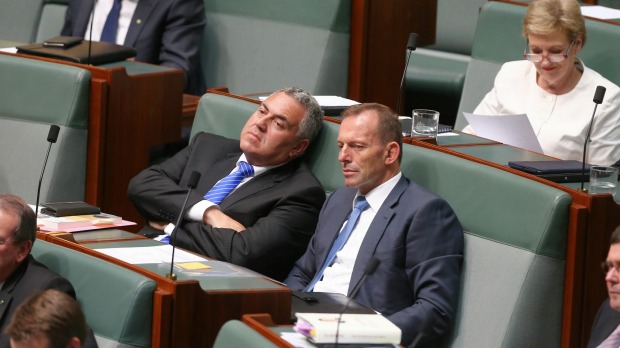
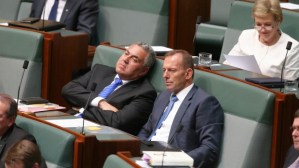
Joe Hockey quits: how the man who could have been prime minister crashed and burned

1445387731242

Joe Hockey has climbed Africa’s highest peak, Mt Kilimanjaro, and once rescued Kevin Rudd from a fast-flowing river while trekking the Kokoda Track.

But he never got to climb to the very top of Australian politics and when, finally, he got caught in the torrent that swept away Tony Abbott, he couldn’t save himself.

Now, aged 50, he is simply another body floating down the relentless river of political disappointment.

It is a long way from the days of his youth when – according to his biographer, Madonna King – he told classmates and neighbours he wanted to be prime minister.

He reached, of course, the job leadership hopefuls always see as the last-but-one rung on the way to the top – treasurer.

But a disastrous inability to explain or sell his first budget almost 18 months ago, combined with a central role in a serially dysfunctional government, has finally left his political career in ashes.

Unwilling to take another ministerial portfolio or even serve in a Malcolm Turnbull government, he won’t, however, be entirely cast aside from the affairs of state.

He is to be given the most senior of all Australia’s diplomatic missions: Ambassador to Washington.

It has become the landfall for Australian politicians washing down that river: Andrew Peacock, the Liberal leader who never made it to prime minister; Kim Beazley, current ambassador and former Labor leader who never became prime minister; now Joe Hockey, who tried to become Liberal leader and wanted to be prime minister but fell short.

One of Hockey’s jobs in Washington will contain an echo of his time as treasurer. Last year, visiting Washington, he was asked by Beazley to find some money to renovate the embassy, which is in such a decrepit state it has been cloaked in scaffolding and heavy drapes to prevent injury to pedestrians from falling debris.

Treasurer Hockey found $237 million in this year’s budget to rebuild the place. As ambassador, the project might take his mind off unhappier recent memories.

Avuncular Joe, we used to call him. Jolly Joe.

He was, in late 2009, Australia’s most popular Liberal politician – ahead of Malcolm Turnbull, way ahead of Tony Abbott. Smokin’ Joe.

That was then. When it came to capitalising on his popularity, with the Liberal leadership seemingly within his grasp, he suffered an attack of indecisiveness.

It was December 1, 2009.

Political careers are made of “what ifs” and “mights”. Joe Hockey might – just might – have become prime minister if he hadn’t shilly-shallied back then.

Malcolm Turnbull’s first period of leadership was terminal in late 2009. He supported an emissions trading scheme.

Joe Hockey was known as a moderate, and also supported such a scheme. He didn’t particularly want to bring down Turnbull under those circumstances because he’d be seen to be taking power with the support of tough right-wingers.

He tweeted, asking followers what he should do; he suggested a conscience vote on an emissions trading scheme, and he locked himself away in his office saying nothing publicly as number counters and deal makers went to work.

At the last minute, when the leadership spilled, Joe put up his hand. To Hockey’s great surprise, so did Turnbull. He thought he had a deal with Turnbull and reportedly never trusted him afterwards, though Turnbull, in fact, had said publicly he would stand.

The hard men had done their work. Hockey was eliminated in the first ballot and Abbott went on to defeat Turnbull by a single vote.

What if Hockey had grasped the moment, got the numbers men activated?

He’ll never know. Not now. It’s a “what if”, about as useful as asking what if Hockey hadn’t put out his hand to save Rudd from being swept away by that raging stream on the Kokoda Track in 2006, a year before Rudd became prime minister.

In the end, anyway, Hockey won’t be remembered for that brief, lost tilt at leadership, though plenty of ABC viewers may forever have burned into their memories the shining moment when, during a 2012 episode of Kitchen Cabinet, he showed Annabell Crabb his Canberra bedroom, revealing a Bart Simpson pillow slip. He was still Jovial Joe.

His political gravestone was chiselled less than two years later around his first budget: May, 2014.

New treasurers try to get the tough business of cutting costs and raising revenue out of the way in their first budgets. There is a customary howling from various constituencies, but it usually dies away in a few weeks and the country and the government moves on.

But Hockey’s first budget, which came after he declared the end of “the age of entitlement”, was considered so punishing to so many that it settled as a never-ending millstone around the Abbott government’s neck. Among the less palatable offerings considered bad news for pensioners, the disabled and the ill, the young unemployed were to be denied unemployment benefits for six months.

Hockey was reported to have been seen dancing in his office to the song “Best Day of My Life” just before delivering the budget, in which he declared Australians ought to be lifters, not leaners (he protested he was just having a reunion with his young son).

A couple of months later, he went on radio to defend petrol excise as a “progressive tax” and uttered a phrase that will dog him forever:

“The poorest people either don’t have cars or actually don’t drive very far in many cases.” It took him days to begin climbing down. He seemed politically tone deaf.

With the budget stinking and the government on the ropes, his authorised biography was released, revealing he’d wanted an even tougher budget. Just to top things off, Hockey took his family off to Fiji on holiday just as the government was trying to come to grips with a difficult new Senate.

“People criticised Joe for going on holidays to Fiji. Now some of us are sorry he came back,” political veteran journalist Laurie Oakes reported a disgruntled Liberal as saying.

The biography injected poison into the turbulent Coalition soup: it quoted Abbott’s chief of staff and fierce gatekeeper, Peta Credlin, on the matter of who was Abbott’s most likely successor.

“Joe’s absolutely a contender,” Credlin said. “And he’s probably got his head above every other contender, but I think we’re a long way from saying he’s an heir apparent – and he’d say that, too.”

It was a red rag to a bull for those like Turnbull and Julie Bishop, who saw themselves as contenders at least as worthy as Hockey. He’d allowed himself, for a multitude of reasons, to become a marked man, and Credlin had sealed it.

The Abbott government’s problems, of course, proved wider than those created by and around Joe Hockey – Abbott himself created damaging story after damaging story as 2014 turned into 2015 and staggered along.

But Jovial Joe never properly reappeared.

He was so infuriated by a headline (Treasurer for Sale) and story in Fairfax newspapers, that he sued for defamation. In the end, the story was not found defamatory, but the headline – if seen without the story – and a two tweets were found to be so. Hockey was awarded $200,000 in damages, but Fairfax was ordered to pay just 15 per cent of his costs. The case is likely to have cost him several hundreds of thousands of dollars, and some of his colleagues thought it a long distraction when he didn’t need it.

Hockey came to be considered Sulky Joe and Sloppy Joe, though his second budget received a much improved reception with its immediate 100 per cent tax deduction on anything purchased for up to $20,000 for more than two million small businesses.

In fact, the Sloppy Joe tag came many years previously, when he was human services minister. It was 2004, and Hockey wanted to introduce an Access Card that all Australians would need to carry, and which would have a photograph, signature and unique identification number.

He had clearly failed to study the uproar surrounding the Hawke government’s doomed attempt to introduce the Australia Card in the 1980s.

He called for tenders for two Access Card projects each worth hundreds of millions of dollars ahead of submitting the legislation to Parliament and spent $3 million advertising the proposed card.

His department, which had 18 people working full-time on the plan, hired a public relations consultant and a “branding consultant” to promote it. All before the legislation approving the card had been passed by the Senate, and before all of the legislation had even been written.

Private firms wasted millions preparing tenders.

In the end, it came to nothing – a Liberal-dominated committee, recognising that the cart had been put well before the horse, recommended that it all go back to the drawing board.

Hockey was, of course, a young politician then, still learning the ropes, on his way up. But some of those around him looked askance, draped him with the “Sloppy Joe” tag, and wondered later whether it was a sign about his judgment.

Hockey came to Parliament with a back-story that served him well: the son of a Palestinian-Armenian immigrant born in Bethlehem and an Australian-born mother, the family starting out together in a little delicatessen. Joseph Benedict Hockey got his second name in honour of Labor prime minister Ben Chifley, whose immigration policies had brought Hockey’s father to Australia.

Young Hockey became an activisit President of the Sydney University Students’ Representative Council, was invited to join the Labor Party, but decided he was a Liberal.

He played rugby at university with Tony Abbott, and got a hard lesson: he got knocked cold by the future prime minister when he dropped his knees into Abbott’s kidneys.

Nevertheless, Hockey went on to hitch his political fortunes to Abbott who, according to the new Treasurer, Scott Morrison, was prepared to throw Hockey “under a bus” at the last minute of their shared saga.

Abbott, Morrison said on radio, had tried to save himself by offering Morrison the deputy’s position, meaning he could ask for – and get – Hockey’s job as treasurer.

It was all too late. Abbott and Hockey were swept away together, down the ever-flowing river of political disappointment.

Source:smh.com.au

Sydney weather: leave early or leave late to dodge thunderstorms and lightning


1445376255161

Commuters may want to keep an eye on the radar this afternoon and evening, as two new waves of thunderstorms are likely to sweep over Sydney.

The city is likely to cop storms of the intensity of Tuesday afternoon’s, which generated about 9000 lightning strikes within a 40-km radius of Bankstown in a six-hour period, according to the Weatherzone Total Lightning Network.

While most of the strikes were cloud-to-cloud, many of them also reached the ground, hitting two women in separate incidents.

Wednesday’s conditions will again be favourable for thunderstorms, with high humidity and temperatures expected to reach 31 degrees in the city and 33 degrees in the west.

“This afternoon does look similar” to Tuesday’s conditions, said Brett Dutschke, a senior meteorologist with Weatherzone. “The peak time should be mid- to late-afternoon.”

The storms are likely to move through more quickly than Tuesday’s, and may be more active in the city’s west rather than across the whole Sydney Basin, he said.

However, the first bout is likely to be followed by more instability.

“Once we get to late evening, the chances of thunderstorms increase again, with more rain developing amid the storms,” Mr Dutschke said.

The thunder and rain may be heavy at times by midnight and “might wake a few people up”, he said.

Wednesday’s top may be the last time the city gets above 30 degrees this month, as more humidity and rain arrive, particularly by early to middle of next week.

“It looks like a relatively wet end to the month, not just for Sydney but for NSW as a whole,” Mr Dutschke said.

The rain will be welcomed in many regions that have been relatively dry for October and earlier.

Many parts of south-eastern Australia have been posting record heat so far this month.

Walgett, in the state’s north-west, is likely to mark its 22nd day in a row of temperatures above 30 degrees, with the Bureau of Meteorology forecasting at least another six.

The town’s previous longest run of such days in October was 15.

Sydney will post its fourth day in October of 30 degrees or warmer on Wednesday, if the forecast is accurate – more than double the average 1.6 such days.

Melbourne has been even more abnormal, posting its fifth day of 30-plus temperatures on Tuesday, compared with an average of fewer than one such days in October.

source:smh.com.au

Brown Ideye goal sees off Dinamo Zagreb to raise Olympiakos hopes

untitled

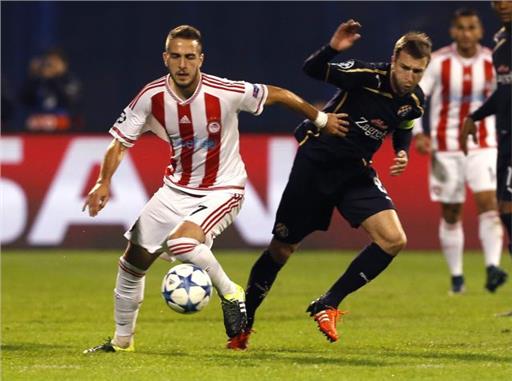
Olympiakos boosted their hopes of reaching the Champions League knockout stages after aBrown Ideye goal helped them to a 1-0 Group F win at Dinamo Zagreb on Tuesday.

The result left Olympiakos level with Bayern Munich at the top of the section with six points from three games after the German side suffered a 2-0 setback at Arsenal. Dinamo and Arsenal have three points each.

Nigerian Ideye scored the 79th-minute winner with a superb finish from a tight angle, redeeming himself for an astonishing miss earlier in the second half.

Dinamo had the upper hand in the opening period but the best chance fell to the visitors when a viciously dipping shot by defender Arthur Masuaku forced a good save from the home team’s goalkeeper Eduardo.

Dinamo pounded a series of fizzing crosses into the penalty area but to no great effect as a packed Olympiakos defence held their own.

Both sides missed a sitter each in the space of a minute shortly after the break when Dinamo’s Domagoj Antolic hit the post from close range before Ideye skewed his shot wide from three yards with the goal at his mercy.

Marko Rog’s trickling shot shaved the Olympiakos woodwork before Ideye raced clear of his marker on the left flank and buried the ball past Eduardo with a crisp finish.

The substitute Ángelo Henríquez missed Dinamo’s last chance to salvage a point, heading inches wide of the far post after a good cross from the right by full-back Alexandru Mățel.

Source:theguardian.com


Ο Ολυμπιακός άλωσε και το Ζάγκρεμπ και… βλέπει «16»

23267768_15871793_limghandler

Μία ακόμη μαγική νύχτα για τον Ολυμπιακό στη φάση των ομίλων του Champions League. Μετά το Εμιρέιτς, οι «ερυθρόλευκοι» άλωσαν και το Μάξιμιρ του Ζάγκρεμπ με 1-0 χάρη σε γκολάρα του Ιντέγε και πλέον κρατάνε στα χέρια τους την υπόθεση πρόκριση για τους «16» της διοργάνωσης.

Οι πρωταθλητές Ελλάδας έφτασαν τους έξι βαθμούς και πλέον ισοβαθμούν με την Μπάγερν Μονάχου στην πρώτη θέση του βαθμολογικού πίνακα στον 6ο όμιλο. Επόμενη ευρωπαϊκή στάση για τον Ολυμπιακό, θα είναι το ματς της 4ης Νοεμβρίου με την Ντιναμό στο «Γ. Καραϊσκάκης», εκεί όπου ευελπιστεί ότι θα εξασφαλίσει την πρόκριση στην επόμενη φάση του θεσμού.

Αναγνωριστικό και για τις δύο ομάδες, ήταν το πρώτο ημίχρονο στο στάδιο Μαξιμίρ. Ο Ολυμπιακός, ο οποίος ξεκίνησε χωρίς εκπλήξεις στη σύνθεσή του και με τον Μιλιβόγεβιτς να πραγματοποιεί ντεμπούτο (ήταν τιμωρημένος στα ματς με Μπάγερν και Άρσεναλ), φάνηκε να ελέγχει το ρυθμό του αγώνα, αφού πρώτα χρειάστηκε να συμπληρωθεί το πρώτο ημίωρο.

Τριάντα λεπτά κακού ποδοσφαίρου, με τους γηπεδούχους να έχουν μία και μόνο ευκαιρία, κι αυτήν, από στημένη φάση. Συγκεκριμένα στο 28` και από την εκτέλεση φάουλ του Μασάντο από θέση έξω αριστερά, ο Μαζουακού έκανε την κεφαλιά προς τα πίσω, όμως ο Ρομπέρτο ήταν σε ετοιμότητα και μπλόκαρε. Στο 32ο λεπτό, το σουτ του Μαζουακού από περίπου 30 μέρα, ο Εντουάρντο έπεσε και απέκρουσε δύσκολα.

Όσο νωθρές εμφανίστηκαν οι δύο ομάδες στο πρώτο ημίχρονο, τόσο ζωήρεψαν στο δεύτερο, χάνοντας εκατέρωθεν σημαντικές ευκαιρίες για να ανοίξουν το σκορ μέσα σε διάστημα τριών λεπτών και συγκεκριμένα από το 52` έως το 54`.

Η αρχή έγινε από την Ντιναμό με τον Άντολιτς να σημαδεύει το δεξί κάθετο δοκάρι της εστίας του Ρομπέρτο, ενώ δύο λεπτά αργότερα, ο Ελαμπντελαουί άνοιξε ωραία στον Πάρντο, εξαιρετικό γύρισμα του δεύτερου στον Ιντέγε, με τον Νιγηριανό να αστοχεί με προβολή σε κενή εστία! Στο 77` η Ντιναμό είχε και δεύτερο δοκάρι. Από το λάθος διώξιμο της μπάλας από τους «ερυθρόλευκος», ο Ρογκ έπιασε το πλασέ, η μπάλα κόντραρε στα σώματα αμυντικών και κατέληξε στην εξωτερική πλευρά του αριστερού δοκαριού.

Η Ντιναμό έκανε τα δοκάρια, ο Ολυμπιακός ήταν αυτός που άνοιξε το σκορ. Στο 79ο λεπτό, από μπαλιά του Σιόβα στην πλάτη της άμυνας, ο Νιγηριανός από πολύ πλάγια θέση δεν πασάρει στον Ντομίνγκεζ που έρχοταν από πίσω, αλλά πλάσαρε ιδανικά νικώντας τον Εντουάρντο στην κλειστή του γωνία. Τρίτο σερί γκολ για τον Ιντέγε (δύο στο πρωτάθλημα, ένα στην Ευρώπη) για τον Νιγηριανό επιθετικό, ο οποίος νωρίτερα είχε χάσει το… άχαστο, αλλά πλέον ήταν ο ήρωας του Ολυμπιακού.

Στο 85` ο Ντομίνγκεζ από καλή θέση, δεν έκανε καλό σουτ, με αποτέλεσμα να μπλοκάρει εύκολα ο Εντουάρντο, ενώ ένα λεπτό αργότερα, το αριστερό σουτ του Ντομίνγκεζ, απέκρουσε ο γκολκίπερ των Κροατών. Στο 89` η μπάλα από την κεφαλιά του Τσόριτς έφυγε μόλις άουτ, ενώ στο τέταρτο λεπτό των καθυστερήσεων, οι Κροάτες διαμαρτυρήθηκαν για χέρι, όμως ο Ταλιαβέντο το μόνο που υπέδειξε ήταν το τέλος του αγώνα.

Διαιτητής: Πάολο Ταλιαβέντο (Ιταλία)

Κίτρινες κάρτες:
Ταραβέλ (40`), Σουντανί (80`) – Σιόβας (82`)

ΝΤΙΝΑΜΟ ΖΑΓΚΡΕΜΠ (Ζόραν Μάμιτς):
Εντουάρντο, Άντονιτς, Σουντάνι, Μασάντο, Φερνάντες (73` Ενρίκες), Σάντος, Χότζιτς (60` Πιάτσα), Πίβαριτς, Ρογκ (87` Τσόριτς), Ματέλ, Ταραβέλ.

ΟΛΥΜΠΙΑΚΟΣ (Μάρκο Σίλβα):
Ρομπέρτο, Ελεμπντελαουί, Μποτία, Σιόβας, Μαζουακού, Μιλιβόγεβιτς, Κασάμι, Πάρντο (83` Σαλίνο), Φορτούνης (72` Τσόρι Ντομίνγκες), Σεμπά (89` Ντα Κόστα), Ιντέγε.

Πηγή:in.gr

Champion’s League: Zenit perfect, Barcelona win, Arsenal beat Bayern

2296340_w2

Zenit kept up their perfect record, Barcelona also opened up a big group lead, Arsenal defeated Bayern München, and there was a record-equalling 4-4 draw in Leverkusen.

Group E
BATE Borisov 0-2 Barcelona
Two second-half goals from Ivan Rakitić ensured Barcelona opened up a three-point cushion in the group as BATE remain in third thanks to Roma’s draw.

Bayer Leverkusen 4-4 Roma
It was the equal highest-scoring draw in UEFA Champions League history as both teams lost two-goal leads. Javier Hernández had put Leverkusen 2-0 up within 19 minutes only for Daniele De Rossi, on his 501st Roma appearance, to level before half-time. Miralem Pjanić and Iago Falqué seemed to have won it for the visitors but in the last seven minutes Kevin Kampl and Admir Mehmedi had other ideas to keep Leverkusen in second.

Group F
Arsenal 2-0 Bayern München
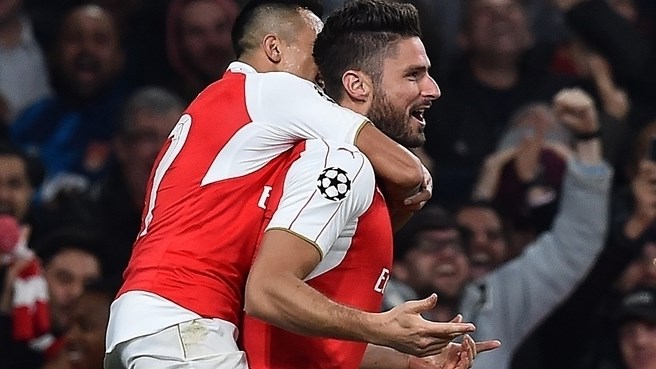
Bayern’s perfect start was ended, but not for want of trying after Manuel Neuer’s stunning first-half save from Theo Walcott. In the last 14 minutes substitute Olivier Giroud and Mesut Özil got Arsenal off the mark.

Dinamo Zagreb 0-1 Olympiacos
Olympiacos moved alongside Bayern on six points, three ahead of Dinamo and Arsenal, courtesy of Ideye Brown’s goal with 11 minutes to go. It gave the Greek champions, who had lost all three road trips last term, a second straight away win in the group.

Group G
Porto 2-0 Maccabi Tel-Aviv
Porto were captained by Rúben Neves, at 18 nearly two years younger than any previous UEFA Champions League skipper, and his team triumphed through goals late in the first half from Vincent Aboubakar and Yacine Brahimi.

Group H
Zenit 3-1 Lyon
It is three victories out of three for Zenit, who had never previously won even their opening two group games. They had the perfect start on three minutes through Artem Dzyuba. Although an incredible 49th-minute flick from Alexandre Lacazette levelled matters, Hulk’s equally fine effort and Danny ensured Zenit stayed three points above Valencia.

Valencia 2-1 Gent
Valencia are five points ahead of Lyon and Gent but required two own goals as Gent pushed them all the way. Sofiane Feghouli’s touch was turned into the visitors’ net by Lasse Nielsen on 15 minutes but before half-time a superb shot by Thomas Foket made it 1-1. However, with 18 minutes left, José Gayà’s cross-shot deflected in off Stefan Mitrović.

Source:uefa.com