Daily Archives: October 13, 2015

Αννίτα Πάνια: Χώρισα με τον Καρβέλα γιατί είναι σατανιστής

pania_982837849

Η εκπομπή «Πρωινό» και η Σάσα Σταμάτη, συνάντησε την Αννίτα Πάνια πριν την πρεμιέρα της εκπομπής της στο Έψιλον και μεταξύ άλλων μίλησε και για τις φήμες χωρισμού από τον Νίκο Καρβέλα.

Όταν ρωτήθηκε για τον γιο της Ανδρέα, δήλωσε: «Ο Ανδρέας πάει Δευτέρα δημοτικού, αλλά δεν τρελαίνομαι να μιλάω δημοσίως για το παιδί…».

Σχετικά με το αν έχει χωρίσει με το Νίκο Καρβέλα, είπε με χιούμορ: «Είναι σατανιστής ο Νίκος και γι’ αυτό χώρισα. Εγώ είμαι άνθρωπος του Θεού» σημείωσε η παρουσιάστρια και τόνισε ότι της αρέσουν πολύ τα νέα του τραγούδια.

Πηγή:madata.gr

Aυστραλία:Επέζησε επί έξι μέρες στην έρημο τρώγοντας μυρμήγκια!

erimos_552799371

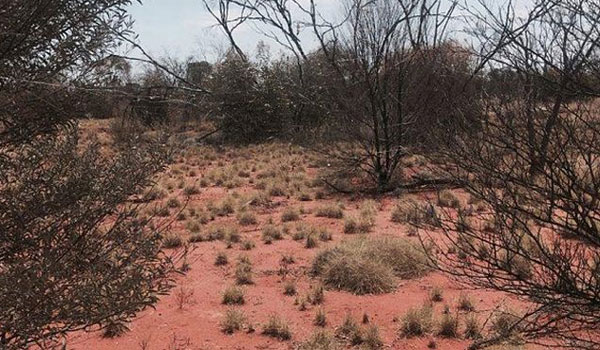
Ακούγετε απίστευτο, όμως είναι πραγματικότητα! Ένας άνδρας χάθηκε στην έρημο και επέζησε επί έξι μέρες τρώγοντας μυρμήγκια!

Συγκεκριμένα, ο άνδρας, ο οποίος επί έξι μέρες αγνοούνταν σε μία απομακρυσμένη έρημο της Αυστραλίας, σε συνθήκες ακραίας ζέστης και χωρίς νερό, βρέθηκε σήμερα ζωντανός καθώς επιβίωσε τρώγοντας μαύρα μυρμήγκια, ανακοίνωσε η αστυνομία.

Ο 62χρονος Ρεγκ Φόγκερντι εξαφανίστηκε στις 7 Οκτωβρίου ενώ κατευθυνόταν για κυνήγι σε περιοχή περίπου 950 χιλιόμετρα βορειοανατολικά του Περθ.

Όταν δεν επέστρεψε, η οικογένειά του σήμανε συναγερμό και ξεκίνησε η έρευνα της αστυνομίας μέχρι τον εντοπισμό του 15 χιλιόμετρα απ΄όπου είχαν χαθεί τα ίχνη του.

Όπως δήλωσε ο επικεφαλής της αστυνομίας του Γκόλντφιλντς Άντι Γκρέιτγουντ, ο Φόγκερντι ήταν καθισμένος κάτω από ένα δέντρο επί δύο μέρες χωρίς νερό.

“Έτρωγε μαύρα μυρμήγκια, έτσι επέζησε, τόσο εξαιρετικές ικανότητες επιβίωσης διαθέτει και εξαιρετικές είναι και οι ικανότητες διάσωσης από τους άνδρες μας που τον εντόπισαν σε μία υπερβολικά απομακρυσμένη περιοχή”, δήλωσε ο ίδιος στην εφημερίδα West Australian.

“Ήταν υπερβολικά αφυδατωμένος, είχε κάποιες παραισθήσεις, αλλά του δώσαμε τις πρώτες βοήθειες και τον ενυδατώσαμε και είναι ευχάριστο ότι τώρα στέκεται όρθιος και μιλάει. Ήταν υπερβολική η ζέστη και υπερβολικά απομακρυσμένη (η περιοχή) και οι περισσότεροι προφανώς δεν θα επιβίωναν”.

Πηγή:madata.gr

Athens knew of CIA, NSA involvement in 2004 wiretaps

snowden-570

Kathimerini, in a joint investigation with international publication The Intercept spent months researching the case both in Greece and the USA

It was the morning of 9 March, 2005. Panayiotis Tsalikidis was heading to have coffee with his brother Costas in Kolonos, downtown Athens, before a meeting. As he entered the building, he heard his mother screaming: “Cut him down!”

He entered the apartment and saw his brother’s body hanging in front of the bathroom door. “I immediately called my wife and asked her to bring a high-definition camera so I could take some pictures on the spot, because I didn’t believe it was a suicide,” says Panayiotis today.

A decade later, the Tsalikidis family continues to believe that the death of the 39-year-old Vodafone technician was instigated by a third party. The evidence they have managed to painstakingly gather over the years, together with the written statements of the judicial authorities who worked on the case, clearly suggest that Costas Tsalikidis’ death is inextricably linked to the bugging through the Vodafone network of the phones of high-ranking government officials during the administration of Costas Karamanlis, including the prime minister himself.

“It’s not easy to talk about such a loss,” says Panayiotis’ wife, Eleni, her eyes brimming with tears. “We still feel kind of guilty for being unable – through no fault of our own – to get answers. I’d like to believe that there are people who will choose to talk one day.”

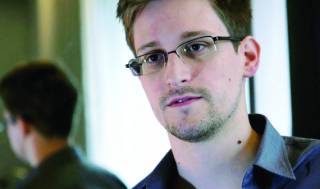
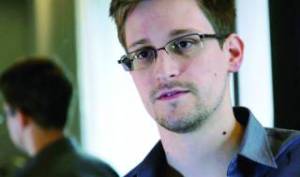
Kathimerini, in a joint investigation with international publication The Intercept and noted reporter James Bamford, spent months researching the case both in Greece and the USA, and now presents, for the first time, testimonies from high-ranking US intelligence officials who either took part or have knowledge of the phone-tapping operation in Greece. The Kathimerini investigation also brought to light for the first time previously unpublished NSA documents pertaining to Greece and the wiretapping scandal that emerged by gaining exclusive access to the archive of former US intelligence analyst Edward Snowden.

HELPING WITH SECURITY AHEAD OF THE OLYMPICS
The 2004 Athens Olympics were the first Summer Games to take place after 9/11. Safety concerns were evident in both the international media as well the constant pressure from American officials on their Greek counterparts.

As it emerges from previously unpublished documents from the Snowden archive, US intelligence agencies started drawing up operation plans for the Games some two years in advance. According to one of the documents seen by Kathimerini, at least four NSA strategists had been working on the subject of gathering information for the Athens Olympics since 2002 and, in cooperation with other departments within the agency, ensured “that an analytic attack was in place and that the targets’ social networks are defined”.

“Although the first race, dive, and somersault are still a year away the intelligence community is in full ‘training mode’ for the event,” reads another document, dated 15 August, 2003. “In truth, NSA has been gearing up for the 2004 Olympics for quite some time, in anticipation of playing a larger role than ever before at the international games.”

According to the same document, cooperation between the Greek and the American intelligence agencies was to be very close. “The security organisation that the NSA will support is EYP,” says the document, referring to the Greek National Intelligence Service, while another explains that “the co-location of IC (Intelligence Community) analysts both at the US embassy in Athens as well as at the Greek Intelligence agency” significantly enhanced the capabilities and quality of information collection.

However, despite the fact that cooperation was close and NSA officials had been placed inside EYP, the one bone of contention that remained between the Greek and US authorities in the period leading up to the Games was the technical inability of Greece’s law enforcement to surveil suspicious phone calls and electronic communications on a mass scale. EYP’s capabilities were limited to very localised surveillance within a very specific distance. “From an American point of view, that was terrifyingly primitive,” says Brady Kiesling, who resigned his post as head of the political section of the US Embassy in Athens in protest at the US invasion of Iraq just a few months before the Games.

Under immense pressure from the US, the Public Order Ministry leadership under the PASOK government had already called a meeting in December 2003 between the three cell phone providers at the time (Vodafone, Cosmote, Tim) to discuss how lawful interception could take place.

General elections scheduled for March, however, made it impossible for the necessary – yet politically sensitive – presidential decree to be issued.

However, even after the elections, when a New Democracy government came to power and the ministry was taken over by Giorgos Voulgarakis – who had said in similar meetings in April 2004 that lawful interception was “just a matter of a week’s preparation” on the part of the providers – until the flame was lit at the Olympic Stadium in Athens, no legal framework for lawful taps was in place.

In any case, on 4 August, 2004, some 6,500 lines of code were added to the source code of the software used by Vodafone to operate its network. The developer of that software, which is used by cell phone companies all over the world, was Swedish tech giant Ericsson. The input of those 6,500 lines of code of illegal software activated a subsystem of the Ericsson software called Lawful Intercept, normally used by authorities to intercept phone calls.

The Lawful Intercept subsystem – which up until then was part of the Vodafone network but not active as the provider had not purchased the digital key needed to activate it – was now able to forward a stream of intercepted calls to 14 shadow cell phones and possibly to digital data recorders for storing and processing.

More than a decade since that day, and for the first time, a former high-ranking US intelligence official who was involved with the 2004 phone tapping in Greece openly admits that the secret operation was carried out by the NSA and that, in its initial stage at least, it had the green light from the Greek government: “The Greeks identified terrorist nets, so NSA put these devices in there and they told the Greeks, ‘OK, when it’s done we’ll turn it off.’ They put them in the Athens communications system, with the knowledge and approval of the Greek government, this was to help with security during the Olympics.”

EVIDENCE POINTS TO LARGE NUMBER OF OPERATIVES
According to classified NSA documents from the Snowden archive brought to light by Kathimerini, the preparations of the US intelligence agencies were unprecedented for any event.

According to a classified NSA report seen by Kathimerini, such information was available to the US intelligence community and had, in fact, been collected prior to the Games by the CIA, which “recorded the GSM networks in Athens”, referring to the Global System for Mobile communications.

The NSA documents confirm that the US intelligence mission to Athens during the Games included members of both groups, while TAO – according to a 2004 NSA report – “performed CNE [Computer Network Exploitation] operations against Greek communications providers.”

According to a report by the Hellenic Authority for Communication Security and Privacy (ADAE) in 2006 though, the participation of Vodafone insiders was “absolutely necessary” in certain phases of the wiretapping operation. This, as Snowden’s documents show, may have been the work of the CIA.

Another group that works under the NSA is the Special Collection Service (SCS), staffed by the NSA and CIA.

Known inside the agency as F6, the group is not just mentioned in the PowerPoint presentation as one of the ways of accessing the Lawful Intercept subsystem, but also, according to previous NSA document leaks, was permanently headquartered inside the US Embassy in Athens.

Furthermore, a former US intelligence official involved in the wiretapping operation explains that recruiting telecom company employees around the world is standard practice, in which the CIA and the NSA work together. “For example, at a foreign Ministry of Post and Telecommunications, if NSA determines it needs to get access to that system, NSA and/or the CIA in coordination would come up with a mechanism that would allow them to replicate the existing switch to be swapped out. The CIA would then go and seek out the person who had access to that switch, go in there, and then it would be the CIA that would effect the operation. And then the take from it would be exploited by the NSA.”

“Human intelligence guys can provide sometimes the needed physical access without which you just can’t do the signals intelligence activity,” confirms General Michael Hayden, NSA head from 1999 to 2005, who, according to the documents published in the Snowden archive so far, ran America’s biggest domestic bugging operation without the necessary warrants. Asked whether he remembers the Greek bugging case, he said it is “not something I can talk about”.

Chris Inglis, deputy director of the NSA from 2006 to 2014, was also asked whether the agency was involved in the Greek wiretapping, which he neither confirmed nor denied. “I couldn’t say whether NSA was involved in that or any other activity that might have been alleged to be conducted by an intelligence service, let alone NSA,” he said.

So the question of who could have carried out the operation in Greece remained unanswered for years, until the name of William Basil came to the fore.

THE ‘TELEPHONE MAN’ WHO GREW UP ON KARPATHOS
Two months before the bugging operation began, a woman walked into a store on Akti Miaouli Street in Piraeus and bought four cell phones with SIM cards. A 2011 ADAE investigation found that within a few weeks of purchase, the devices were used as shadow phones to receive the calls intercepted from the Vodafone network, while at least one was later used with a SIM card registered to the US Embassy in Athens and made calls to the central exchange, the emergency line, the Marine guard and the FBI office in the building on Vassilissis Sofias Avenue. The devices and cards, according to the testimony of the store manager, were purchased by the wife of William Basil, a CIA agent whose family came from the island of Karpathos.

“We used to call him the telephone man,” said a former CIA colleague of Basil’s in Athens. “All we do is we buy burner phones.”

Basil, 65, was born in Baltimore in December 1950. He and his sister travelled to Karpathos when they were still children to witness their father’s second marriage after he divorced their mother, Madeleine. A few months after returning to America, in the early 1960s, the family returned to Karpathos for good. Today, childhood friends on the island still remember ‘Billy’. “He was a bit Americanised,” one of them said. “We were a big group of kids swimming all day beneath the houses at the port. Billy had a canoe; he had things other kids didn’t.”

Basil and his cousin, Nikos Kritikos, grew up in the same house. “Our aunt Marigoula raised us. He’s amazingly smart.” Nikos’ father and Basil’s uncle, retired schoolteacher Manolis Kritikos, remembers Billy as a restless kid with a passion for the island’s history and that of his father’s village. “He enjoyed talking to the elders. And he loved Greece and [the village of] Olympos more than anything.”

When Basil got older he moved to Athens to attend the American Community Schools, graduating in 1968. He returned to the US, enlisted in the army and served in Alaska. At the end of his service he became a deputy sheriff in Baltimore County for a spell and then went on to work, for the next two decades, at the CIA Security Office as a polygraph expert. He grew tired of the job and, citing his knowledge of Greek, applied to and was accepted in the operational arm of the CIA, where he often enjoyed diplomatic immunity. Basil soon found himself serving as secretary at the US Embassy in Athens, even though in reality he worked for the CIA station situated on the top floor of the embassy, as a terrorism expert. “He never hid what he did,” says his cousin, Nikos Kritikos, who believed that Basil was chief of security at the embassy. “He’d often call and say he was in the Middle East. His job was to get a feel of these societies and write reports.”

A colleague from the embassy remembers Basil wearing a bullet-proof vest under his shirt, with a 9mm pistol clipped to his belt and driving an armoured car. It appears that his duties also included maintaining contacts with the Greek security and intelligence services. “He worked with the Greek police and conducted seminars for Greek policemen,” says Kritikos. “He gave the impression that he had friends in high places, that he knew interior and public order ministers.”

LEAVING VODAFONE WAS ‘MATTER OF LIFE AND DEATH’
Costas Tsalikidis, 39, was an engineer with a broad range of interests. He liked to go to the Monastiraki market in downtown Athens to look for rare vinyl records. He loved traveling around Greece, while shortly before his death, he had been looking for an apartment for himself and his fiancee. Everyone close to him agrees that there was nothing in his behavior to suggest he could have killed himself.

In the last year of his life he was responsible for redesigning the Vodafone network in light of the Athens Olympics but also for its transition to 3G technology. A person of method, he kept detailed notes in a series of blue notebooks. In one of these, a few weeks before his death, he wrote the word ‘Fever’, citing an overload in parts of the network.

“It is certain that he found something which led to his demise,” says his brother, Panayiotis. A month-and-a-half before Costas was found hanging in front of his bathroom door, on 24 January, 2005 someone had attempted to install additional illegal software at Vodafone’s headquarters in Paeania, east of Athens. By the next morning, thousands of subscribers had called complaining that they were unable to send text messages. The alarm was raised immediately both at Vodafone and at supplier Ericsson, while technicians in Greece and abroad scrambled to find out what was wrong.

A few days later, on January 31, Costas submitted his resignation. He was convinced to take a few days off, from February 2 to 8, and to return to work, at least until a replacement was found. Shortly before that he had told his fiancee – without going into detail – that he was afraid the company was about to go bust. He made her swear she wouldn’t tell anyone. He also said that he felt he had to leave Vodafone, that it was “a matter of life and death”.

After weeks of checks, on Friday 4 March, Ericsson technicians informed Vodafone in Greece that they had found evidence of unauthorised software. The following Monday, the malware was isolated at Ericsson HQ in Sweden, while at Vodafone in Athens, Costas sat in on a number of closed-door meetings where tempers were running high.

“In one visit by his foreign bosses, he was criticised for his work,” Costas’ fiancee said in her testimony to the police. “The phrase ‘take a bucket of shit and stick your heads in it’ was also heard” on that visit, she added.

The day after that, the CEO of Vodafone Greece, Giorgos Koronias, ordered the malware deactivated and removed from the company’s network. The only opportunity the Greek authorities had to catch the perpetrators of the wiretaps in the act was gone for good. That was also the day that Costas had his last telephone conversation with his fiancee.

“He told me he was worried about his mother because she was running a high fever,” she testified. “How can someone who is worried about his mother hang himself at night knowing that she would be the one to find him in the morning?”

The day after Costas’ death, on 10 March, 2005, Koronias asked Yiannis Angelou, head of the PM’s political office, to schedule a meeting with Karamanlis on the issue of the wiretaps. The premier was in Madrid, so Angelou arranged it so that Koronias would meet with him and Public Order Minister Giorgos Voulgarakis. That was also the day that the presidential decree allowing wiretaps was published in the Government Gazette, bearing the signatures of Voulgarakis, among other officials. It was the one thing missing before the Olympics – a decree granting authorities the permission they needed to conduct legal wiretaps via telecom providers.

THE POLITICAL BURIAL OF AN INVESTIGATION
“Coincidences happen,” says a high-ranking official in the Karamanlis government in regard to the publication of the decree the next day after Costas’ death.

When confronted by Kathimerini with the testimony of a former US intelligence agent involved in the Athens operation who said that the wiretaps began “with the knowledge and approval of the Greek government”, the former government official didn’t have to think twice before responding: “That makes sense. I’m not surprised.”

The Greek government that had given the green light for the wiretaps to start did not ensure that they would ever end, so the trap that had been set up for potential terrorists eyeing the Athens Games as a target ended up snaring the government itself. Why did this happen? According to a Snowden document, joint CIA-NSA task forces often intercept the communications of host countries, as they “on a number of occasions and for whatever reason have been unwilling to share information”.

A former NSA official with extensive bugging experience offers his own explanation: “They never (remove it),” the official said with a laugh, about such software.

“Once you have access, you have access. You have the opportunity to put implants in, that’s an opportunity.”

Two weeks after the death of Costas Tsalikidis, in a closed meeting between Karamanlis’ associates at the Maximos Mansion, the idea was floated to bury the whole affair. According to sources close to the former premier, he quashed the plan over fears it could emerge later.

Meanwhile, Basil left Athens for Sudan. A few months later, on 4 August, 2005, he was issued a visa by the Greek Embassy in Khartoum and returned to Greece with a diplomatic passport granting him full immunity.

The investigation into Costas’ death was left to the police, without the family being informed about the wider implications, while the case of the wiretaps was forwarded for preliminary investigation by then head of the Athens prosecutor’s office and later justice minister Dimitris Papangelopoulos, as well as to EYP.

In February 2006, Minister of State Theodoros Roussopoulos, Voulgarakis and Justice Minister Anastasis Papaligouras briefed the media on the affair and said that an 11-month secret investigation had not yielded any tangible evidence. At the same press conference, Voulgarakis praised Koronias for his handling of the issue on the part of Vodafone.

The Tsakalidis family has had its own cross to bear these past 10 years as the case has been forwarded from one prosecutor to another – well-known names in judicial circles – without result and was at times even closed despite the plethora of evidence and the clearly perfunctory investigations.

The case appeared to gather fresh momentum when it was undertaken by magistrate Dimitris Foukas. In 2014, reports regarding his findings made mention of an American agent who may have knowledge of the bugging operation. That same period, according to well-informed sources, Basil made a call to a prominent lawyer, Ilias Anagnostopoulos, who met in person with the prosecutor and said that his client was willing to testify.

If there are questions then of course I will answer them,” the lawyer was told by Basil, who, before retiring from service, was promoted to CIA deputy station chief in Islamabad and later returned to the US, where he was appointed to chief of human resources in the service’s counterterrorism unit. In the meantime, Basil’s name and speculation about his involvement in the operation was leaked to the Greek press. Worried about the attention, he called Anagnostopoulos again and told him to drop the subject.

His cousin, Nikos Kritikos, does not believe that Basil could be responsible for the bugging.

“There is no way he would do what they say he did,” said Kritikos. “They know how much he loves Greece and they would have sent someone else to do something like this. There’s no way he did it.”

The last time he was seen and photographed in Athens was at his daughter’s wedding in 2013.

In February, Foukas issued a warrant for his arrest on charges of espionage and violating communications privacy laws based on the evidence suggesting that his wife bought the shadow phones from Piraeus on his behalf.

The magistrate also drafted a report – something that legal experts say is unusual at this stage of proceedings. The document, which does not make any mention of Costas Tsalikidis’ death, was lumped together with other wiretapping cases allegedly involving EYP officers, as well as with that related to a suspected attempt on Karamanlis’ life. No connection between the cases is made in the documents; they are simply filed together.

Foukas asserts that the hardest part of the case is knowing “where criminal liability begins and politics end”.

For its part, the Tsalikidis family, uninterested in political games, insists on asking questions about why and how Costas died.

Source: Kathimerini

Greek animal lover gives up job to found a dog shelter

Takis5

Theoklitos Proestakis has single-handedly saved more than 200 dogs over the last three years

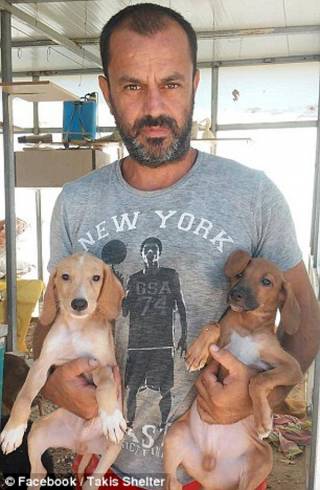
Theoklitos Proestakis, a dentist from Greece, gave up his career to build a shelter for stray animals in Ierapetra, Crete and has single-handedly saved more than 200 dogs over the last three years.

Theoklitos, 44, widely known as Takis, deeply saddened by the cruelty and atrocities against animals in Greece and especially his island, decided to launch Takis shelter and try to save as many strays as he could.

Since the crisis began, many Greek families chose to abandon their dogs, after not being able to provide for them.

“One day I went to the rubbish dump and I saw so many dogs lying there dead or helpless with broken legs, starving, so skinny and so sick and dying. It horrified me,” Takis explains.

“I just wanted to help them, so I started looking after them, taking them food and water and I was so happy when I saw they started to get stronger.”

Due to the lack of a neutering culture in the area, many puppies are being dumped in the wilderness and left to starve, if not killed or abused.

Takis’ neighbours, however, started to get really angry with him and even threatened to kill the dogs as they were becoming a “nuisance”.

He would often find dogs thrown out of cars, tied to fences and poles under extreme weather conditions.

With the local authorities either unable or most of the times unwilling to help, Takis moved to the outskirts of the town and built the shelter with his life savings, paying from his own pocket to help neuter strays.

“I am absolutely alone here at the shelter; I have no money, I had to sell my car, I had to sell my caravan, I have nothing. I had to borrow money.

“I was ready to sell it a few months ago, because I couldn’t see how I could carry on,” he says.

It wasn’t until Takis came across a dog named Fellnase that a turning point was signalled for Takis and his shelter. The animal had been brutally abused, skinned alive and left to die in the summer heat.

“Since I uploaded the photos of the abused dog and the work that I had done to heal her, people all over the world have been offering to help,” he tells Neos Kosmos.

“All the money comes from donations. Some 98 per cent of the donations come from outside Greece, mostly from Europe and the United States.”

The dog shelter has expanded to cover an area of 5,200 square-metres and costs nearly €1,300 on a monthly basis just to feed the animals, not to mention an extra €700 for vet bills on top of that.

Vets in Greece can’t afford to do anything for free, according to Takis, and even though he gets discounted rates it still costs €150 to neuter a female dog.

“This is my life. It’s difficult but I love it,” Takis enthuses.

“I work so hard here but when I see the dogs happy and enjoying themselves and learning to trust people again then it’s all worth it.’

A fundraising site has recently been set up to save the shelter, feed and cater for the animals’ veterinary needs as well as pay for airport expenses for the dogs rehomed abroad.

“My next move will be to finish the cat shelter I’m building and pay off everyone who has offered me their services in good faith.”

source:Neos Kosmos

Athens rules out joint sea patrols with Turkey

images5N3FLF1Y

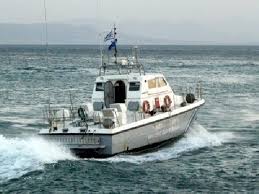
Diplomatic sources in Athens Monday ruled out the prospect of Greek and Turkish naval forces conducting joint patrols in the eastern Aegean in a bid to curb a dramatic influx of migrants and refugees.

Speaking to Kathimerini, the same sources from the Greek Foreign Ministry stated that no official European documents raise the issue of joint sea patrols – which was first reported in the German press ahead of the draft action plan signed last week between the European Union and Turkey on the support of refugees and migration management.

According to the plan, Turkey will “strengthen the interception capacity of the Turkish Coast Guard, notably by upgrading its surveillance equipment, increasing its patrolling activity and search and rescue capacity, and stepping up its cooperation with the Hellenic Coast Guard.”
In an interview with Germany’s Bild newspaper published Monday, Chancellor Angela Merkel heralded closer cooperation between Greece, Turkey and EU border agency Frontex.

“In the Aegean Sea, between Greece and Turkey, both NATO members, traffickers do whatever they want,” she told the paper.

Diplomatic circles in Athens suggest that Ankara is tempted to use the refugee crisis as a tool for prompting additional EU aid, concessions on the issue of EU visas, or the creation of a buffer zone behind the Syrian border.

In a related development, UN High Commissioner for Refugees (UNHCR) Antonio Guterres criticized the EU’s newly launched relocation scheme, suggesting it lacks a human dimension.

“You cannot just look [at] people and say ‘You go to Germany, you go to Sweden, you go to Romania, you go to Portugal, you go to Spain’ without having a process of information of taking into account the interests, for instance family, links, preferences,” Portugal’s former prime minister said during a press conference in Athens at the end of a three-day visit to Greece.

Greek officials said Monday a total of 1,624 people had been rescued over the past three days as they tried to reach the country.

source:ekathimerini.com

Taliban targets descendants of Alexander the Great

kalash_1486002c

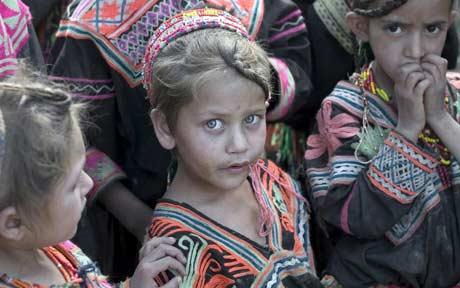
The group, believed to be descendants of Alexander the Great’s invading army, were shielded from conservative Islam by the steep slopes of their remote valleys.

While Sikhs, Hindus, and Christians were slowly driven out of Pakistan’s North West Frontier Province by Muslim militants, the Kalash were free to drink their own distilled spirits and smoke cannabis.

But the militant maulanas of the Taliban have finally caught up with them and declared war on their culture and heritage by kidnapping their most devoted supporter.

Taliban commanders have taken Professor Athanasion Larounis, a Greek aid worker who has generated £2.5 million in donations to build schools, clinics, clean water projects and a museum.

They are now demanding £1.25 million and the release of three militant leaders in exchange for his safe return.

According to local police, it was Professor Larounis’s dedication to preserving Kalasha culture that Taliban commanders in Nuristan, on the Afghan side of the border that made him a target.

Confirmation of the Taliban’s role in his kidnapping came as their leader Mullah Omar urged American and Nato leaders to learn from the history of Alexander the Great’s invasion of Afghanistan and his defeat by Pushtun tribesmen in the 4BC.

He was kidnapped on Sep 8, when five masked Taliban broke into the three storey museum where he was living, killed a policeman guarding the building, tied a teacher to a post and grabbed the professor from his bed.

Ajmeer Kalash, a Kalash teacher who witnessed the incident, said he had saved his own life by pretending to be a Muslim.

“I did not understand their language and they did not understand mine. I tried to make them understand in Urdu language that I’m a teacher at the school.”

He said the men asked for his religion and “I told them that I’m a Muslim by reciting Kalma, though I’m a Kalash.”

“They brought out the Greek national and they opened fire at his police guard. The policeman died on the spot. They took me and the Greek citizen to the forest. There they tied my hands to a tree and left me there and went away,” he said.

Locals said the professor had been visiting the area since 1994 when he first came as a tourist and fell in love with the area’s unique culture and its people’s links to his own in Greece and Macedonia.

Today there are an estimated 3,000 Kalasha left in three remote and steep valleys in Chitral in Pakistan’s North West Frontier Province. The children wear their hair in orthodox Jewish-style ringlets and sport bright coloured topi hats. The women occasionally have tattooed faces, wear long black robes with coloured embroidery.

The Kalash are known as ‘Black Kafirs’ to local Muslims who regard them, and their women in particular, as immoral. They are scornful of their festivals and rituals, which include a rite of passage in which a prepubescent boy is fattened in the mountains over a summer and then when he returns is allowed to have sex with any woman he chooses.

Married Kalash women are able to elope with other men if the object of their desire accepts a written proposal and agrees to may double her dowry to the abandoned husband – often in cows.

Professor Larounis, who is believed to have been living in the Kalash Valleys with his wife, had generated around two and a half million pounds in aid for 20 projects in the Kalash Valleys, including clean water schemes, and the museum in Broon village in Bumburet.

Since his kidnapping Kalash women have demonstrated for his release, while elders have travelled to Nuristan to try to negotiate with his kidnappers.

source:telegraph.co.uk

Ο ΘΑΝΑΤΟΣ ΤΟΥ ΠΕΡΙΠΤΕΡΟΥ! Καταργούνται μετά από 118 χρόνια ζωής στην Ελλάδα

periptero23-600x450

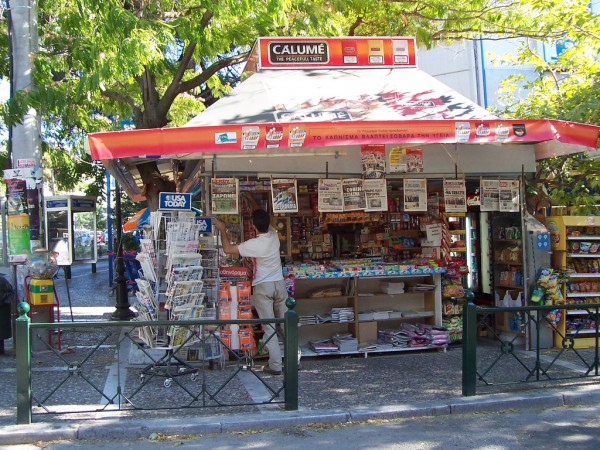
Η Ελληνική πρωτοτυπία πλέον καταργήθηκε με το Πολυνομοσχέδιο. Τέλος λοιπόν και ο θεσμός των περίπτερων στην Ελλάδα. Κάθε περιπτερούχος που βγαίνει στην σύνταξη θα κλείνει και την επιχείρηση.

Σε ανεργία υποχρεώνει η κυβέρνηση δώδεκα χιλιάδες περιπτερούχους μαζί με τις οικογένειές τους, αφού με την ψήφιση του πολυνομοσχεδίου, τα περίπτερα καταργούνται.
Σύμφωνα με την πρόταση που κατέθεσε το υπουργείο ανάπτυξης για τις διατάξεις των περιπτέρων που αφορούν τις μισθώσεις, η οποία είναι πλέον νόμος (μέσω της ψήφισης του πολυνομοσχεδίου), η άδεια δεν θα μπορεί να μεταβιβαστεί μετά τον θάνατό του κατόχου, με αποτέλεσμα η επιχείρηση να κλείνει οριστικά!

Όπως γίνεται κατανοητό, τα πάντα γίνονται προς όφελος των μεγάλων συμφερόντων και των Super Markets, με αντάλλαγμα το αίμα, την ανέχεια και τη δυστυχία των Ελλήνων.

Η άγνωστη ιστορία του περίπτερου

Τα περίπτερα αποτελούν ιστορικό χαρακτηριστικό της αστικής ζωής στην Ελλάδα και είναι άμεσα συνδεδεμένα με την ανάπτυξη της Αθήνας.
Τα πρώτα περίπτερα έκαναν την εμφάνιση τους στις αρχές του 20ου αιώνα, ως ελάχιστη μορφή οικονομικής βοήθειας προς τους τραυματίες και τους ανάπηρους των συνεχιζόμενων πολέμων στους οποίους συμμετείχε, η Ελλάδα.

Πιο συγκεκριμένα, τα πρώτα περίπτερα εμφανίστηκαν, μετά την ήττα της Ελλάδας στον πόλεμο του 1897 με την Τουρκία, σε αστικά κέντρα της περιφέρειας. Στην Αθήνα το πρώτο περίπτερο έκανε την εμφάνισή του στην οδό Πανεπιστημίου το φθινόπωρο του 1911.

Ένα μικρό πρόχειρα κατασκευασμένο ξύλινο κουβούκλιο με ελάχιστα προϊόντα, προσπαθούσε να καλύψει τις ελάχιστες οικονομικές ανάγκες της εποχής και να δώσει μια ανάσα σε ανθρώπους που είχαν δώσει σημαντικό κομμάτι της ζωής τους για την Ελλάδα.

Ο γνωστός χρονογράφος και ποιητής των αρχών του 20ου αιώνα Σωτήρης Σκίπης σε άρθρο του στην εφημερίδα ΣΚΡΙΠΤ στις 20 Οκτωβρίου 1919 γράφει για τα πρώτα περίπτερα που έκανα την εμφάνισή τους στην Αθήνα: «Άξιος συγχαρητηρίων έγινε ο κ. Δήμαρχος ο οποίος αποφάσισε την ανέγερσιν πολλών περιπτέρων εις τας Αθήνας, τα οποία θα εκχωρήσει εις τους τραυματίας του πολέμου, η εις μέλη οικογενειών φονευθέντων πολεμιστών».

«Δεν φαντάζεται κανείς πόσα καλά θα προκύψουν αμέσως-αμέσως, εκ της ανεγέρσεως των περιπτέρων. Τα περίπτερα θα είναι ένας στολισμός της πόλεως, θα εξυπηρετηθούν δι’ αυτών και θα εύρουν πόρον ζωής πλειστοί ανάπηροι των δύο πολέμων. Θα εξαπλωθή δια του μέσου τούτου το ελληνικόν έντυπον, είτε εφημερίς, είτε περιοδικόν, είτε φυλλάδιον, είτε βιβλίο. Και θα γίνουν αίτια όπως οι μεγάλαι επαρχιακαί μας πόλεις θα κουνηθούν λιγάκι και θα μιμηθούν λιγάκι των πρωτεύουσαν».

Πηγή:briefingnews.gr

Alex and Eve: Can you mix oil and water?

movie_peter1

Director Peter Andrikidis says love can make anything happen, especially in Australia.

Following its successful run as a stage play, the cross-cultural comedy of Alex and Eve, by Alex Lykos will make it on the big screen, in a movie directed by Peter Andrikidis (The Kings of Mykonos, Wog Boy2, East West 101).

The much-anticipated adaptation, to premiere in national cinemas on 22 October, was filmed in western Sydney’s suburbs, and follows Alex, a Greek Orthodox man who falls hopelessly in love with Eve, a Lebanese woman.

“To me, Australian film needs to represent an Australia of diverse ethnic backgrounds,” Peter Andrikidis tells Neos Kosmos.

“The Australia I know and live in is full of amazing cultures and when I walk down my suburban street, I see a diverse mixed ethnicity of residents, which has been ignored on our film screens for a long time.”

In an effort to inspire respect towards all cultures and religions, the creators of the film aim to put across a message of unity through a love story.

“We need more films like Alex and Eve,” Peter says.

“Most of us have travelled to different destinations and learnt to accept and ‘not fear’ people we are told are ‘different’.

“There is no such thing as ‘different’ as in the end we are all from the same tribe; humanity.”

The film explores Australia’s urban multiculturalism with both the Greek and Lebanese families in the most realistic way possible.

“This term is very familiar to me, having directed all 20 episodes of East West 101 which was a career highlight for me – and really put me in touch with the amazingly diverse culture of actors in this country,” Peter says.

“I think Alex and Eve, for me, was an extension of this but in a more comedic tone.”

The hardest part was to research and direct the Lebanese material – as there are so many opinions on how a family works and how weddings are done.

As religion functions differently in the family unit, the production team tried to find the best material and cast actors who could speak Arabic and were or had been of Muslim background.

“We had an Islamic advisor on set for the Lebanese family material to be able to properly touch on their culture,” he says.

“Andrea Demetriades, Rahel Romahn, Simon Elrahi, Helen Chebatte and Wafa Lahoud did a lot of research for their roles and most were fluent in Arabic.”

Surprisingly, Peter selected a Greek actress to embody a Lebanese woman and an Italian man to play the Greek male leading character.

“We did extensive casting for six months and finally chose Andrea Demetriades as Eve – because she is truly an amazingly gifted actor; world class,” the director says, whilst emphasising her comic timing and dramatic acting.

“We then auditioned Andrea with various leading male actors and I found the chemistry between Richard Brancatisano and her to be the most truthful. They are brilliant together.”

Meanwhile, Peter believes that there is sometimes a naive innocence from the older Greek generations to protect their offspring, but their heart is always in the right place.

Both Peter Andrikidis and Alex Lykos have parentage from the island of Samos, therefore it was essential to work with a script that touches upon the ways of Greek migrant families. To Peter, however, this love story is somewhat more familiar as his mother is Irish Australian and his dad is Greek, born in Alexandria, Egypt. “My parents are a mixed couple who fell in love and married at a young age in 1958 and have just celebrated 57 years of marriage,” he enthuses. “They represented the new Australia of the 1960s and went through some of the ups and downs of the characters inAlex and Eve.”

As Peter was brought up in a house with his grandparents and parents living under the same roof, he learned to understand the Greek humour and drama in the scripted material.

In fact, he put a generous touch of his grandfather Pandelis Andrikidis in Alex’s father George, played by Tony Nikolakopoulos.

“My grandfather was very strong and opinionated as head of the family and wanted the best for all his children,” he adds.

“It’s all about family and making a better life for your children – this is a universal mantra for all cultures worldwide. This is for me the essence of Alex and Eve.”

The film will first be screened at The Delphi Bank Greek Film Festival, which opens next Tuesday 14 October, followed by an encore screening on Sunday 18 October.

source:neos kosmos

Gough Whitlam dismissal recreated on Twitter by Museum of Australian Democracy

images74XI6RNM

The Museum of Australian Democracy (MoAD) in Canberra is using Twitter to mark the 40th anniversary of the 1975 dismissal of the Whitlam government.

From today, MoAD, based at Old Parliament House, is “live tweeting” the events of the dismissal, through the voices of participants like then prime minister Gough Whitlam, caretaker prime minister Malcolm Fraser, and governor-general Sir John Kerr.

The Twitter campaign, using the hashtag #Dismissal1975, will run until November 11 – following the timeline of the historic time in Australia’s political history.

MoAD senior historian Libby Stewart said the campaign would bring to life the intrigue and the drama of the dismissal, while also helping highlight the changes in the way Australians now engage with democracy.

“For many people it is hard to imagine a time when information was not so readily available to everyone across the country,” Ms Stewart said.

“If the Whitlam Government had access to a 24-hour news cycle and social media channels like Twitter, the chain of events that led to the dismissal might have gone a very differently.”

Writer Paul Daley was in charge of collating the information into tweets of 140 characters or less.

“The dismissal of the Whitlam government was a historic moment in Australia’s political history and one of a few rare moments in world-wide political history where a head of state has used the powers arguably granted by that position to act independently of advice of the government,” Mr Daley said.

“Faced with a vast body of research-books, media, transcripts of speeches, personal recollections and the official documents – this became a wonderful, confronting and challenging project.

“It was certainly a journey of discovery that brought me a new perception of and intrigue with events of almost half a century ago.”

#Dismissal1975 will also share and feature some of the iconic documents, film and photos from the dismissal, including the letter of dismissal signed by the then governor-general, now housed at the National Archives.

MoAD director Daryl Karp said the campaign was about getting Australians to engage with politics in a different way by using channels they use every day, particularly a younger generation.

“Museums around the world are changing the way that they help their audiences interact with their exhibitions,” Mr Karp said.

“At the museum, digital technology is part of our toolkit to enrich users’ experiences and create collaborative communities that engage in lively conversations.”

source:abc.net.au

MH17 victim’s father not expecting answers as Dutch authorities prepare to deliver final report

5627416-3x2-340x227

Dutch authorities will unveil a partial reconstruction of the Malaysia Airlines jet that crashed over Ukraine as they deliver their final report at a media briefing in The Netherlands.

They are expected to confirm it was brought down by a Russian-made Buk surface-to-air missile.

On Tuesday morning in The Netherlands, Thomas Schansman will get in his car and drive an hour south bracing himself to hear more details about his son’s death.

He has spent much of the past 15 months trying to block the heartache of that day in July last year but the release of the Dutch Safety Board’s final report is an important step.

“It’s the first time the families will all be together to be told formally what brought down the plane,” Mr Schansman told the ABC.

“We all know it was a Buk missile but to hear them tell us that in a formal setting is important.”

MH17 was en route from Amsterdam to Kuala Lumpur when the Boeing 777 crashed over eastern Ukraine, where Russian-backed rebels were fighting Ukrainian forces.

The Dutch lost 193 citizens. There were 38 Australians onboard.

The Dutch Safety Board’s chairman Tjibbe Joustra will speak with the families, show them pictures, take questions and provide them with copies of the report.

They will then stay in The Hague and watch a live broadcast of the media conference at the Gilze-Rijen air base.

Australian families will not get a similar briefing and the Australian Government will not get a copy of the report before it is published.

The Ambassador to The Netherlands, former Senator Brett Mason, will be at the media briefing.

Mr Joustra has already said there will be no time for questions or separate interviews.

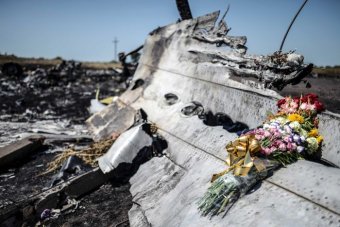
But the media will be given access to a reconstruction of the jet that has been completed using wreckage salvaged from the crash site.

Families will be able to visit the airbase in the days following to also see it.

Mr Schansman does not have great expectations that he will learn anything new in the report.

“I do expect the safety board will say something about the responsibility of the air traffic control systems or also the responsibility of the different countries involved like Ukraine,” he said.

What he really wants is an apology for what he firmly believes was an accident.

“If we are able to find the people who are responsible for it and if they are willing to say, ‘Guys, we never intended to shoot down this aircraft’, that is what I’d like to hear — that it was an accident, that it was never their intention,” Mr Schansman said.

“But, I have not heard from Russia, I’ve not heard from anybody in this regard.”

Missile maker says it will unveil ‘real reason’ for crash

The most widely-credited explanation for the crash was that a Russian-built Buk missile was in the hands of rebels and was fired by mistake at the civilian jet.

But there were other theories including Russian suggestions the Ukrainians brought it down with an air-to-air missile.

Mr Schansman called them “crazy stories”.

“I find them unbelievable and when I read them I skip them over as soon as I see these kind of stories,” he said.

There is still a criminal inquiry underway but Mr Schansman doubts anyone will ever be charged or found responsible for operating the missile launcher.

That report is not due until the middle of next year.

And in another twist, the Russian maker of Buk missiles said it would also hold a briefing on Tuesday to unveil the “real reason” for the disaster.

It was previously said the Buk model in question was last produced in Russia in 1999 and was used by the Ukrainian military.

source:abc.net.au