Monthly Archives: July 2015

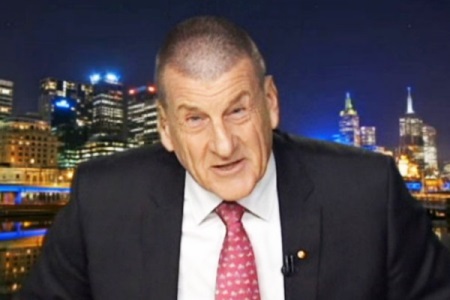
Kennett: “We have been leaderless for the past 10 years”.

2138790

FORMER Victorian premier Jeff Kennett has accused Australia’s politicians of lacking vision, saying the nation had been “leaderless” for a decade.

Mr Kennett appeared on ABC’s Lateline program on Wednesday and said he was concerned that a lot of politicians were being “governed” by the polls instead of a long-term plan for the future.

The outspoken Liberal Party elder argued federal governments should be allowed to serve for four years, rather than the current maximum three-year term.

“Three years does not give them enough time to introduce the reforms that are necessary and then hope to rebuild their standing in the community,” he said.

Mr Kennett had been asked on the current affairs show to discuss NSW Premier Mike Baird’s proposal to increase the rate of GST from 10 to 15 per cent in order to pay for the rising costs of healthcare.

This idea was lambasted by Mr Kennett as “profoundly wrong”. He said an increase to the GST or Medicare levy would alleviate any pressure for the states to engage in other reforms, and was unlikely to be a long-term fix for funding shortfalls.

“You remove the incentive to continue reform and you put in a bastardised form of tax reform which in three years time will already be seen to be obsolete,” he said.

Lack of vision

The Abbott government’s recently-released agricultural white paper was used by Mr Kennett as an example of an absence of political vision.

“There wasn’t a simple statement … that started the white paper about what the objective was,” he said.

“My objective might have been ‘I want Australian agriculture and processing manufacturing to be able to feed a billion people by 2050’.

“We have an agricultural white paper that’s not a clear KPI [key performance indicator]. There is no vision. But that’s where Australia has been now for 10 years. We have been leaderless.”

source:.theland.com.au


Scientists: “Think twice before before replying to alien signal

23-07-2015_7-01-21_am-b5ejb0s7f9vonxf3kk2_fct365x273x85_0_t620

A SCIENTIST responsible for finding signs of life on other planets has warned that human beings should probably think twice before making contact with aliens.

Professor Matthew Bailes is based at Swinburne University in Melbourne – and is leading Australia’s efforts to find signs of extra-terrestrial life.

But he warned that making contact with aliens capable of transmitting powerful signals to Earth over tens of thousands of light years could lead humanity into disaster, because they’re likely to be so much more advanced.

“The history of weak civilisations contacting more advanced civilisations is not a happy one,” he said.

Prof Bailes was recently put in charge of the Breakthrough Prize Foundation’s $100m search for alien life, which is being financed by Russian billionaire Yuri Milner and is backed by Professor Stephen Hawking.

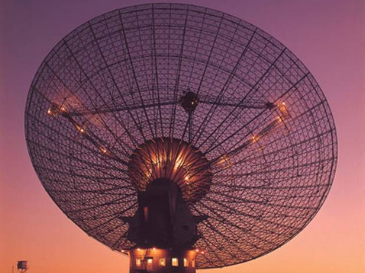
The team working on the project will use the Parkes radio telescope – one of the largest in the world – to scan the universe in what has been described as bringing a “Silicon Valley approach to the search for intelligent life”.

The initiative will cover 10 times more area of sky than previous programmes, according to News24.

The first moonwalk in 1969 was beamed to the Parkes telescope where it was beamed around the world Prof Bailes told the news outlet that sophisticated computers would have to be installed at Parkes – which was the first telescope to receive transmissions showing Neil Armstrong setting foot on the Moon in 1969 – to sort through as many as a billion samples a second to try to detect patterns or likely signals.

“The difficulty is to know what sort of signal we are looking for,” Prof Bailes said. “There is no manual on how to find aliens. We’ll have to imagine the sort of transmissions an alien race might send.”

The computers, he warned, would take a year to build, and the project has five years to run. But he said that the signal – if and when it arrives – would likely be quite feeble after travelling across such vast distances.

He said that scientists hope that aliens will send a pattern human beings would be able to recognise – such as prime numbers.

But he warned that we may all be “long dead and buried” before we worked out how to reply – and the aliens got an answer.

source:theporter.com.au

Median house price in Sydney tops $1 million for first time

1437591944897

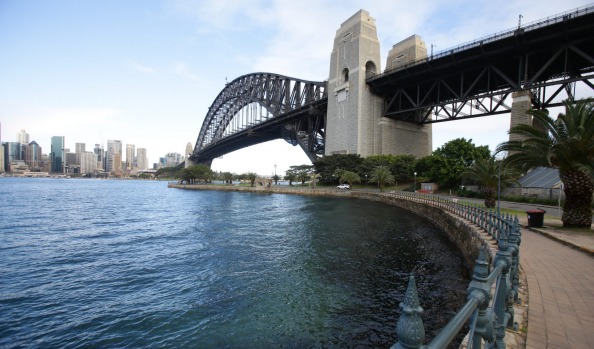
Sydney’s median house price has climbed higher than London to top $1 million, Domain Group figures show. 

The 22.9 per cent increase in the year to June to $1,000,616 – the quickest pace of gain since at least the late 80s – put the NSW capital above London, where the equivalent was $900,000, but still below New York, where it was $1.5 million, and Paris, where it was about $2 million.

The rise – from $814,285 a year earlier – did nothing to dampen the city’s attraction for investors, Domain senior economist Andrew Wilson said.

Even though rental yields were falling as rental increases failed to keep up with rising dwelling prices, a better return than from alternatives such as term deposits, kept drawing investors into the sector, even with unheard-of price levels. Vacancy rates were holding. But the good news for investors was bad news for first-home buyers as it showed homes in the NSW capital were moving further out of reach.

 <img src=”/content/dam/images/g/i/i/6/m/b/image.imgtype.afrArticleInline.620×0.png/1437565255142.png” alt=” ” width=”620″ class=”lazy620x0″/>

“Those yields are still well ahead of deposit rate, so that’s got to be attractive for investors,” Dr Wilson said. “We’re ticking a lot of boxes for investors at the moment. The only box not being ticked is the entry-level price, which is climbing.”

The next-fastest rate of growth after Sydney’s houses came in Sydney apartments, which jumped 13.9 per cent to a median $656,078 from $575,824 a year earlier.

Interest rates a drawcard

Still, the figures by Fairfax Media-owned Domain also showed that the record-low interest rates were drawing investors to Melbourne, where annual house price growth was up 10.3 per cent to a median $668,030 and apartment price growth was up 4.5 per cent, putting the median figure at $443,549.

“Investors are now starting to target that Melbourne market,” Dr Wilson said. “We’ve seen a combination of what was the strongest auction market in 40 years in Melbourne, transferred to price growth.”

A surprise performer was Canberra. The nation’s capital enjoyed a 5.4 per cent jump in house prices, even as apartments in Walter Burley Griffin’s master-planned town shed 6.8 per cent of their value.

“The Canberra market improved for a third consecutive quarter on a better economic climate and a more user-friendly federal budget,” Dr Wilson said.

In Brisbane, house prices rose a pedestrian 1.9 per cent and apartment prices shed 3.2 per cent, as part of an adjustment process the state was going through, he said.

“The Queensland state economy is still pulling that market back,” he said.

An adjustment was also inevitable in Perth, but the 1.4 per cent decline in house prices and the 2.1 per cent fall in apartments was a “reasonable result”, Dr Wilson said.

“That’s a pretty good result for the Perth market,” he said. “It is a weakening market, but that weakness seems to be a modest outcome.”

source:.afr.com

Greece Tackles Final Reform Hurdle Before New Bailout Talks

689E0F69CB31A65DCE5CE6EFCDDE5C79

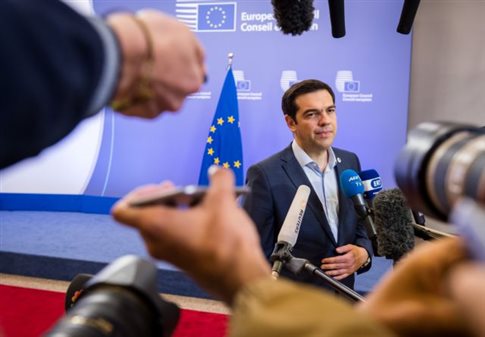
ATHENS, Greece — Greek lawmakers held a whirlwind debate into the early hours Thursday on further reforms demanded by international creditors in return for a third multi-billion-euro bailout, with attention focusing on government rebels who oppose the measures.

Despite the revolt in Prime Minister Alexis Tsipras’ own party, parliament is expected to approve the draft legislation in the second such crucial vote in a week — and again with broad support from pro-eurozone opposition parties. Failure to do so would derail the bailout and rekindle fears over Greece’s future in the shared euro currency.

As with last week’s vote, Tsipras’ main problem lies with hard-line lawmakers in his party, many of whom see the reforms as a betrayal of the anti-austerity platform that brought their Syriza party to power in January.

Addressing parliament, Tsipras said the reforms were a necessary price to pay to keep Greece alive after stormy talks with its creditors nearly collapsed earlier this month.

“We have chosen a compromise that forces us to implement a program in which we do not believe, and we will implement it because the alternatives are tough,” he told lawmakers. “We are summoned today to legislate under a state of emergency.”

Tsipras also ruled out resigning.

“The presence of the left in this government isn’t about the pursuit of office, it’s a bastion from which to fight for our people’s interests,” he said. “And as far as I’m concerned, I won’t abandon this bastion, at least of my own free will.”

Tsipras said approval would give Greece breathing room to quash speculation that the country will be forced to abandon the euro, and help it regain market confidence and eventually tap bond markets again.

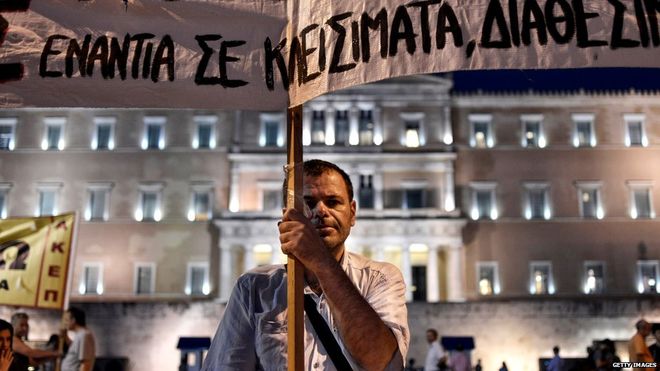
Before the debate got underway, about 10,000 people demonstrated outside parliament, protesting the latest measures to overhaul Greece’s judicial and banking sectors. Minor violence marred the end of the protest when a few teenagers threw petrol bombs at riot police, but no injuries or arrests were reported.

Negotiations with creditors are expected to start soon after the latest package of reforms is approved.

The radical left-led government hopes the new bailout talks can conclude before Aug. 20, when Greece must repay a debt worth more than 3 billion euros ($3.3 billion) to the European Central Bank.

On Wednesday, the ECB provided a new vital cash injection to Greece’s battered banks. A European banking official told The Associated Press the ECB decided to increase emergency liquidity to Greek banks by 900 million euros ($980 million) — the second such cash injection in just under a week.

Fearing a run by depositors flocking to take their savings out of Greek banks, the government imposed capital controls more than three weeks ago, restricting daily withdrawals to 60 euros ($65) per account holder. Extra ECB liquidity means that Greek banks will still be able to hand out cash.

Greece has relied on bailout loans totaling 240 billion euros since 2010 after it was locked out of international money markets. It nearly crashed out of the eurozone this month, after relations between Athens and its creditors hit rock-bottom, and was only saved by a last-minute U-turn from Tsipras.

Thursday’s vote is Tsipras’ second crunch test in parliament in a week. The reforms, included in a nearly 1,000-page bill, are among the prerequisites Greece’s European creditors have insisted upon in order for negotiations to begin on a third bailout for Greece worth around 85 billion euros ($93 billion).

Many in Tsipras’ Syriza party, including former finance minister Yanis Varoufakis, voted against last week’s austerity measures, which included a big hike to sales taxes that took effect on Monday. If more than a handful of others join the dissent in Thursday’s vote, then Tsipras’ government could be in trouble.

Although he would still retain a nominal parliamentary majority — as he has shown no inclination to expel rebels — Tsipras would be politically hamstrung, depending on the support of opposition parties to pass any new reforms.

At least five Syriza lawmakers said Wednesday they would vote against the draft law — including the firebrand parliament speaker, Zoe Konstantopoulou. In a letter to Greece’s president and Tsipras, Konstantopoulou asserted the measures were a “violent attack on democracy,” arguing that lawmakers had been given very little time to study the voluminous bill.

Tsipras has accused party critics of acting irresponsibly.

“I’ve seen a lot of reactions and heroic statements, but so far I haven’t heard any alternative proposal,” Tsipras told party lawmakers on Tuesday, according to a senior government official. The official asked not to be named, citing the sensitivity of the parliamentary vote.

The reforms being considered Thursday are aimed at reducing the country’s court backlog and speeding up revenue-related cases. Greek lawyers’ associations oppose them, arguing that they will have the opposite effect.

Justice Minister Nikos Paraskevopoulos conceded that the government would have preferred changes, but added that Greece is “in a state of emergency” and the alternative to accepting the proposed reforms would be the country’s forced exit from the eurozone.

“Out of two problems, I chose the milder one,” he said.

Lawmakers have also been called on to approve reforms related to banking union mechanisms, aimed at reducing the risk for European governments from bank crises.

In Brussels, Pierre Moscovici, the European Union’s top economy official, said he hopes the bailout deal can be signed by mid-August, although he acknowledged that means Greece has to meet a “punishing” schedule. Moscovici said he welcomed the latest vote even though it did not include all details hoped for on reducing early retirement and farmers’ taxation.

In return for Greece’s bailouts, successive governments have had to enact harsh austerity measures to try to get public finances into shape. Though the annual deficit has been reduced dramatically, the country’s debt burden has risen as the Greek economy has shrunk by around a quarter.

The European Union’s statistics agency announced Wednesday that Greece was making some progress on the debt front at the start of 2015, improvement that was largely erased by the bank closures and other recent events.

Following repayments to European creditors and the International Monetary Fund, Eurostat said Greece’s debt fell to 301 billion euros at the end of the first quarter from 317 billion at the end of 2014. That took the country’s debt burden down to 168.8 percent from 177.1 percent.

Greece’s debt still remains the highest in the 19-country eurozone by a wide margin.

source:nytimes.com

Greece crisis: MPs to vote on crucial reforms

_84432919_84432918

Greek MPs are debating a second set of reforms they need to approve to secure a €86bn bailout, as thousands protest against further austerity measures.

The protest outside parliament briefly turned violent, with petrol bombs and stones thrown at police.

Earlier, Greece’s PM urged rebels within his own Syriza party to support the reforms demanded by creditors.

Meanwhile, the European Central Bank (ECB) has increased its cash lifeline to Greek banks.

The emergency injection of an extra €900m (£630m), the ECB’s second in a week, came just hours before the vote.

It is needed until Greece secures its third international bailout – the negotiations of which cannot begin until Greece’s parliament has approved the tough new reforms.

Fire bomb explodes near riot police in Athens on 22 July 2015

The protest in Athens’ Syntagma Square – called by Greece’s public sector union – was reported to have been largely peaceful, until a number of petrol bombs were thrown in the direction of police.

The BBC’s Piers Scholfield, tweeted from the scene that a small number of anarchists – no more than a few dozen – attempted to create a disturbance but the situation soon calmed down.

Yanis Varoufakis, left, with Finance Minister Euclid Tsakalotos in parliament on 22 July 2015
The former and current Greek finance ministers, with opposing views on the reforms under debate

Inside parliament, PM Alexis Tsipras turned up the heat on members of his own party who had voted against last week’s reforms, accusing them of “hiding behind the safety of my signature”.

The proposed reforms are expected to get parliamentary approval with the support of opposition parties, but Mr Tsipras hopes to avoid a rebellion from within the ranks of Syriza.

Some 32 of the radical-left party’s 149 MPs – including former Finance Minister Yanis Varoufakis – voted against the first tranche of bailout measures last week. Another six abstained.

The rebellion reduced Mr Tsipras’s support within his own ruling coalition to 123 MPs, barely more than the minimum 120 required to sustain a minority government.

He said the Greek people had “pinned their hopes” on the government’s ability to find a solution to the debt crisis, addressing Syriza MPs on Tuesday night.

line

Defining moment for Tsipras – by Chris Morris, BBC News, Athens

For a man who was forced into a fairly abrupt U-turn, Alexis Tsipras remains extraordinarily popular.

If he calls an early election in the coming months – and that still feels like the most likely option – it would be a huge surprise if he didn’t win comfortably and emerge stronger.

That’s partly because the opposition is in disarray. But also because many Greeks like the fact that he appeared to stand up for national pride.

For the moment Mr Tsipras is trying to put pressure on dissenters within his own party. He had heard plenty of heroic speeches, the prime minister said, but not seen any alternative proposals.

It’s partly a reminder that he could move to exclude those who are disloyal if another election is just around the corner.

But he has to get the bailout approved first – and that’s not yet a done deal.

Finance Minister Euclid Tsakalotos said it was “extremely important” for the vote on financial and judicial reforms to pass so that talks on the bailout could begin on Friday.

Last week’s vote was on the austerity measures imposed by Greece’s creditors – a mix of economic reforms and budget cuts demanded by the eurozone countries and institutions before bailout talks could continue.

The measures due to be presented to parliament on Wednesday are of a more structural nature, including:

  • a code of civil protection aimed at speeding up court cases
  • the adoption of an EU directive to bolster banks and protect savers’ deposits of less than €100,000
  • the introduction of rules that would see bank shareholders and creditors – not taxpayers – cover costs of a failed bank

More contentious measures – phasing out early retirement and tax rises for farmers – have been pushed back to August.

Asked if the threat of a Greek exit from the euro – or Grexit – had passed, EU Economic Affairs Commissioner Pierre Moscovici said on Tuesday: “I think we’ve made a big step in that direction.”

The International Monetary Fund (IMF) confirmed on Monday that Greece had cleared its overdue debt repayments of €2.05bn and was no longer in arrears.

source:bbc.com

Μπακογιάννη: «Μη φρικάρετε, ο Σόιμπλε είναι φιλέλληνας»

1283

Αν δεν το ακούγαμε με τα αυτιά μας, αν δεν τον βλέπαμε στο βίντεο που θα παρακολουθείστε, δεν θα πιστεύαμε ότι θα υπήρχε πολιτικός στην Ελλάδα, ότι θα υπήρχε σε κάθε περίπτωση άνθρωπος σε αυτόν τον τόπο, που θα χαρακτήριζε τον Βόλφγκανγκ Σόιμπλε «Φιλέλληνα».

Κι όμως, η Ντόρα Μπακογιάννη διατηρεί αυτή την πρωτιά. Σε συνέντευξη που παραχώρησε στο thepressproject.gr είπε: «Μην φρικάρετε, ο Σόιμπλε είναι φιλέλληνας».

Δείτε το βίντεο με την ανάλυση της Ντόρας Μπακογιάννη και θα καταλάβετε

Πηγή:tilestwra.com

Europe’s Impossible Dream

grexit_465633954

There’s a bit of a lull in the news from Europe, but the underlying situation is as terrible as ever. Greece is experiencing a slump worse than the Great Depression, and nothing happening now offers hope of recovery. Spain has been hailed as a success story, because its economy is finally growing — but it still has 22 percent unemployment. And there is an arc of stagnation across the continent’s top: Finland is experiencing a depression comparable to that in southern Europe, and Denmark and the Netherlands are also doing very badly.

How did things go so wrong? The answer is that this is what happens when self-indulgent politicians ignore arithmetic and the lessons of history. And no, I’m not talking about leftists in Greece or elsewhere; I’m talking about ultra-respectable men in Berlin, Paris, and Brussels, who have spent a quarter-century trying to run Europe on the basis of fantasy economics.

To someone who didn’t know much economics, or chose to ignore awkward questions, establishing a unified European currency sounded like a great idea. It would make doing business across national borders easier, while serving as a powerful symbol of unity. Who could have foreseen the huge problems the euro would eventually cause?

Actually, lots of people. In January 2010 two European economists published an article titled “It Can’t Happen, It’s a Bad Idea, It Won’t Last,” mocking American economists who had warned that the euro would cause big problems. As it turned out, the article was an accidental classic: at the very moment it was being written, all those dire warnings were in the process of being vindicated. And the article’s intended hall of shame — the long list of economists it cites for wrongheaded pessimism — has instead become a sort of honor roll, a who’s who of those who got it more or less right.

The only big mistake of the euroskeptics was underestimating just how much damage the single currency would do.

The point is that it wasn’t at all hard to see, right from the beginning, that currency union without political union was a very dubious project. So why did Europe go ahead with it?

Mainly, I’d say, because the idea of the euro sounded so good. That is, it sounded forward-looking, European-minded, exactly the kind of thing that appeals to the kind of people who give speeches at Davos. Such people didn’t want nerdy economists telling them that their glamorous vision was a bad idea.

Indeed, within Europe’s elite it quickly became very hard to raise objections to the currency project. I remember the atmosphere of the early 1990s very well: anyone who questioned the desirability of the euro was effectively shut out of the discussion. Furthermore, if you were an American expressing doubts you were invariably accused of ulterior motives — of being hostile to Europe, or wanting to preserve the dollar’s “exorbitant privilege.”

And the euro came. For a decade after its introduction a huge financial bubble masked its underlying problems. But now, as I said, all of the skeptics’ fears have been vindicated.

Furthermore, the story doesn’t end there. When the predicted and predictable strains on the euro began, Europe’s policy response was to impose draconian austerity on debtor nations — and to deny the simple logic and historical evidence indicating that such policies would inflict terrible economic damage while failing to achieve the promised debt reduction.

It’s astonishing even now how blithely top European officials dismissed warnings that slashing government spending and raising taxes would cause deep recessions, how they insisted that all would be well because fiscal discipline would inspire confidence. (It didn’t.) The truth is that trying to deal with large debts through austerity alone — in particular, while simultaneously pursuing a hard-money policy — has never worked. It didn’t work for Britain after World War I, despite immense sacrifices; why would anyone expect it to work for Greece?

What should Europe do now? There are no good answers — but the reason there are no good answers is because the euro has turned into a Roach Motel, a trap that’s hard to escape. If Greece still had its own currency, the case for devaluing that currency, improving Greek competitiveness and ending deflation, would be overwhelming.

The fact that Greece no longer has a currency, that it would have to create one from scratch, vastly raises the stakes. My guess is that euro exit will still prove necessary. And in any case it will be essential to write down much of Greece’s debt.

But we’re not having a clear discussion of these options, because European discourse is still dominated by ideas the continent’s elite would like to be true, but aren’t. And Europe is paying a terrible price for this monstrous self-indulgence.

source:nytimes.com

Ανακοίνωσε τον Μπεντέκε η Λίβερπουλ

B915FEADA10D59EFC6DD420866D700A7

Η Άστον Βίλα είχε προτείνει νέο συμβόλαιο στον Κρίστιαν Μπεντέκε, αλλά ο Βέλγος διεθνής επιθετικός προτίμησε να κάνει το άλμα στην καριέρα του και να φορέσει τη φανέλα της Λίβερπουλ.

Σύμφωνα με τα αγγλικά ΜΜΕ, ο Μπεντέκε, ο οποίος βοήθησε την Άστον Βίλα να αποφύγει τον υποβιβασμό από την Πρέμιερ Λιγκ με 12 γκολ στις τελευταίες 13 εμφανίσεις του, πέρασε από ιατρικές εξετάσεις την Τρίτη και την Τετάρτη υπέγραψε με την ομάδα του Μπρένταν Ρότζερς.

Ο 24χρονος διεθνής άσος είχε ακόμη δύο χρόνια συμβόλαιο με το σύλλογο του Μπέρμιγχαμ, αλλά η Λίβερπουλ πλήρωσε τη ρήτρα αποδέσμευσης 45,5 εκατ. ευρώ και τον απέκτησε γιατί ήθελε να παίξει σε ομάδα που μετέχει στις ευρωπαϊκές διοργανώσεις.

Πηγή:in.gr

Παραίτηση Μαρκαριάν από την Εθνική, δεν τη δέχεται η ΕΠΟ

AA17148E24C39190A352616C4B24ADCD

Παρλθόν από τον πάγκο της Εθνικής αποτελεί ο Σέρχιο Μαρκαριάν, ο οποίος με δήλωσή του γνωστοποίησε ότι παραιτήθηκε από το τιμόνι της γαλανόλευκης. Ο Ουρουγουανός προπονητής τονίζει μεταξύ άλλων ότι «ήρθα στην Ελλάδα για την Εθνική Ομάδα σε μία κρίσιμη στιγμή. Ανέλαβα μία δύσκολη δουλειά.

Έκανα την προσπάθεια μου και από την ημέρα που ήρθα εργάζομαι πολλές ώρες με μεγάλη αγάπη για τη δουλειά που κάνω. Ζητώ συγνώμη από τους Έλληνες φιλάθλους, διότι τα αποτελέσματα στους αγώνες μας δεν ήταν τόσο καλά».

Συγκεκριμένα ο Ουρουγουανός τεχνικός προχώρησε στην παρακάτω δήλωση:

«Ήρθα στην Ελλάδα για την Εθνική Ομάδα σε μία κρίσιμη στιγμή. Ανέλαβα μία δύσκολη δουλειά. Ευχαριστώ τον Θεό για την ευκαιρία που μου έδωσε. Έκανα την προσπάθεια μου και από την ημέρα που ήρθα εργάζομαι πολλές ώρες με μεγάλη αγάπη για τη δουλειά που κάνω.

Η Εθνική Ομάδα έδειξε μέσα στο γήπεδο τη δουλειά μας. Ζητώ συγνώμη από τους Έλληνες φιλάθλους, διότι τα αποτελέσματα στους αγώνες μας δεν ήταν τόσο καλά. Τώρα παίρνω μία δύσκολη απόφαση. Τελειώνω τη συνεργασία μου με την Εθνική Ομάδα.

Ευχαριστώ πολύ τους παίκτες, τον κόσμο, την ΕΠΟ και τους συνεργάτες μου στην Ομοσπονδία, καθώς επίσης τα ΜΜΕ για τον σεβασμό που έδειξαν προς το πρόσωπό μου».

Δεν τη δέχεται η ΕΠΟ

Πάντως, η πρώτη αντίδραση από την πλευρά της ΕΠΟ είναι ότι δεν θα κάνει αποδεκτή την παραίτηση, αφού στην Ομοσπονδία αναγνωρίζουν τη δουλειά του Μαρκαριάν και θέλουν να συνεχίσουν τη συνεργασία τους.

«Δεν την κάνω αποδεκτή. Συνεχίζω να τον πιστεύω και να τον εμπιστεύομαι», δήλωσε χαρακτηριστικά ο πρόεδρος της ΕΠΟ Γιώργος Γκιρτζίκης στον SuperSport FM, λίγο μετά την παραίτηση του Ουρουγουανού.

Υπενθυμίζεται ότι ο Μαρκαριάν έχει κοουτσάρει την Εθνική μόλις σε δύο επίσημους αγώνες.

Πηγή:in.gr

Σαμάνοι και εξωγήινοι στη Βαυαρία: Κύκλος σε χωράφι συναρπάζει

1D152EBB75759BC028C1DCB50AF69BCC

Ένα εντυπωσιάκο, ακριβέστατο και πανέμορφο (από αέρος) «αγρογλυφικό» έχει γίνει η τοπική ατραξιόν σε χωριό της γερμανικής Βαυαρίας: Χωράφι με σιτάρι βρέθηκε μυστηριωδώς κουρεμένο στο σχήμα ενός οκταγώνου μέσα σε έναν τεράστιο κύκλο.

Το έργο ανακαλύφθηκε το περασμένο Σαββατοκύριακο. Σε χωράφι με σιτάρι κοντά στο Μπίμπουργκ του Άλινγκ, ο κύκλος έχει «ζωγραφιστεί» με κόψιμο του σιταριού σε διάμετρο περίπου 60 μέτρων και αφήνοντας στο εσωτερικό του σπαρτά έτσι ώστε να σχηματίζουν ένα οκτάγωνο αστέρι με αρκετά περίτεχνες γραμμές.

Επιλήφθηκε η αστυνομία, η οποία έκανε την κίνηση να δημοσιεύσει φωτογραφία του έργου από ελικόπτερο -με αρκετές δόσεις χιούμορ, εγείροντας στη σχετική νακοίνωση το ερώτημα αν ευθύνονται…. εξωγήινοι. Μετά τη φωτογραφία όμως, τα υπόλοιπα ήρθαν από μόνα τους.

Καθώς λίγος μυστικισμός δεν έβλαψε κανέναν, διάφοροι ρομαντικοί επισκέπτονται έκτοτε το χωράφι για να «νιώσουν την ενέργεια» του κύκλου. Το αγροτικό βαυαρικό τοπίο, οι χαλαροί ρυθμοί της υπαίθρου, ακόμη και το καλοκαίρι κάνουν αρκετούς να αισθάνονται γαλήνη: «Εάν ανοίξει κανείς τον εαυτό του, το αισθάνεται» λέει, για παράδειγμα, μία επισκέπτρια μιλώντας στην Sueddeutsche Zeitung.

Μεταξύ όσων βρίσκουν γαλήνη στον κύκλο δεν βρίσκεται όμως σε καμία περίπτωση ο ιδιοκτήτης του χωραφιού.

Το τηλέφωνό του δεν έχει σταματήσει να χτυπά από τότε που διαδόθηκε η ύπαρξη του κύκλου -κάποιοι του ζητούν την άδεια ακόμη και να κοιμηθούν το βράδυ στο χωράφι, ώστε να «νιώσουν καλύτερα την ενέργεια».

Σύμφωνα δε με τις εκτιμήσεις της αστυνομίας, η οικονομική ζημιά για τον αγρότη κυμαίνεται κοντά στα 3.000 ευρώ.

Πηγή:in.gr