Daily Archives: May 29, 2014

Tony Abbott scotches idea of collecting HECS debt from dead students

imagesCANJSX19

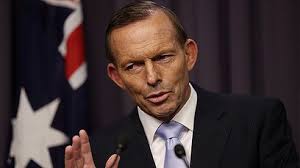
Prime Minister Tony Abbott has slapped down his Education Minister and ruled out collecting outstanding HECS debts from the estates of dead students.

Mr Abbott said on Thursday morning that the government was not going to change existing rules around HECS debts from the deceased.

”This government is not going to change the existing rules, and the existing rules in respect of university debt . . . is that they cease on decease,” he told ABC radio.

His comments come after Education Minister Christopher Pyne floated the idea of collecting student debts from the dead as a way of boosting the budget bottom line.

Treasurer Joe Hockey also earlier on Thursday appeared to back the idea.

”It shouldn’t be different to any other loan,” he told the Nine Network. ”It’s only against the state of the individual. It’s not going to go across families and so on.”

Mr Pyne told Fairfax Media on Wednesday he had no “ideological opposition” to collecting debts from the estates of former students who

died owing money to the government.

“[If] an elderly person passes away with a HECS debt, they wouldn’t be able to say to the bank, we’re not paying back our mortgage, yet they are at the moment entitled to not pay back their HECS debt,” Mr Pyne said.

Mr Pyne said safeguards would be needed to ensure the families of young deceased students would not be affected.

“For example you might want to have an age limit,” Mr Pyne told The Australian Financial Review. ”This would ensure that families of people who died young owing a HECS debt would not be penalised.”

But Mr Abbott said ”the government is not going to change existing rules”.

Currently, any debts owed on the income-contingent loans are cancelled upon death. It’s rare for people to die before paying off their student loans.

Labor, the Greens and the Palmer United Party are opposed to the government’s plans to deregulate university fees and increase the interest rate on HECS debts. If these measures are blocked in the Senate it would hit the government’s bid to return to surplus –making the politically-sensitive idea of collecting money from the dead more attractive.

The Grattan Institute estimates the policy, which was not part of the budget, could save up to $800 million a year.
Labor higher education spokesman Kim Carr branded the idea a death tax.

“The government is grasping for a distraction to its policies,” he said. “This would cut to the core of HECS by introducing a death tax that may cost more to administer than it would raise in revenue.

”The idea of HECS is you only repay it when you are earning above the threshold.”

Meanwhile, new modelling from Curtin University’s National Centre for Student Equity in Higher Education says the government’s plans to deregulate university fees and charge compound interest on student loans could mean students had debts for longer.

”Fewer students will be expected to pay off their debt in full in their lifetime,” the report, released on Thursday, said.

A student who graduates with a $50,000 HECS-HELP debt would have to earn an average of $80,000 a year to pay it off before retirement.

And a student who earned an average of less than $80,000 a year throughout their working life would still have a debt when they turned 70, the modelling shows.

The National Tertiary Education Union says the government is shifting debt and costs away from government and onto students.

HELP debt would rise about $53 billion in 2016/17 to more than $200 million by the mid-2020s, it said.

source: smh.com.au
Navy official says acoustic pings are unrelated to missing MH370 jetliner

425578-71a53d9e-e6b9-11e3-addf-ef174a6b8f2d

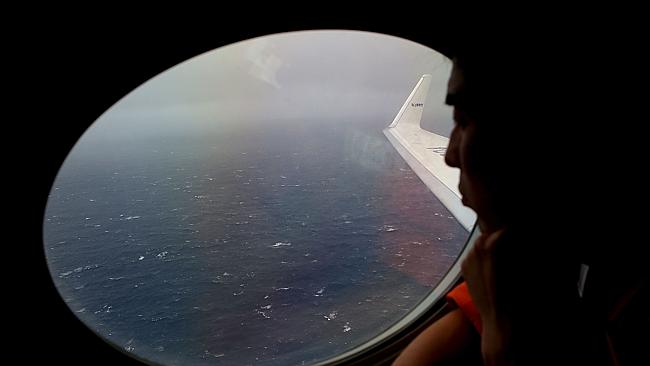
THE four acoustic pings detected in the search for missing Malaysia Airlines Flight MH370 are not from the plane’s black boxes, according to the US Navy.

A Navy official has told CNN that the pings are now universally believed to have come from a man-made source unrelated to the missing jetliner, and not from the plane’s data or cockpit voice recorders.

Michael Dean, the Navy’s deputy director of ocean engineering has told CNN that if the pings had come from the recorders, searchers would have found them.

“Our best theory at this point is that (the pings were) likely some sound produced by the ship … or within the electronics of the Towed Pinger Locator,” Dean said.

“Always your fear any time you put electronic equipment in the water is that if any water gets in and grounds or shorts something out, that you could start producing sound.”

When asked if the other nations involved in the search effort also believed the pings were unrelated to MH370, Dean answered “yes”.

He went on to tell CNN that it is not possible to categorically rule out that the pings came from the black boxes but that there is no evidence to suggest they did.

This comes after News Corp Australia last week revealed that underwater scientists have labelled the search for MH370 a “debacle” and say Prime Minister Tony Abbott was playing politics when he prematurely announced the black box pingers had been found.

The acoustic experts, who do not wish to be identified, said the four crucial signals detected by a US pinger locator were almost certainly not from the missing Malaysian Airlines plane’s black boxes, but from another man-made source.

They insisted that the signals were in the wrong frequency and detected too far apart to be from the boxes.

“As soon as I saw the frequency and the distance between the pings I knew it couldn’t be the aircraft pinger,” one scientist told News Corp Australia.

That conclusion is supported by the lack of success from a detailed search of the area conducted by the US deep sea drone ‘Bluefin 21’.

In answer to questions from News Corp Australia the Joint Agency Coordination Centre (JACC) said that the signals were “likely” sourced from electronic equipment and were “believed to be” consistent with the Flight Data Recorder.

However the scientists said the 33.3 kilohertz frequency of the signal was very different to the 37.5 kilohertz generated by underwater acoustic beacons. The signals were also detected some 30km and four days apart.

The JACC has refused a request to release recordings of the signals for independent analysis and it did not release the exact location or precise depth of the signals.

Agency head retired defence chief Air Chief Marshal Angus Houston said the signals were still being analysed to ensure nothing was overlooked.

Meanwhile the families of passengers aboard missing flight MH370 accuse Malaysia of a cover-up over newly released satellite data, saying it is incomplete and does not prove that the plane crashed in the southern Indian Ocean.

This comes as the first stage of the search off the west coast of Australia concludes without finding any debris from the missing Boeing 777.

The Malaysian Airlines flight, with 239 passengers and crew on board, disappeared in the early hours of March 8 on a flight from Kuala Lumpur to Beijing. Since then no trace of the jetliner has been found, despite a multi-million dollar search effort.

source: news.com.au

Το ήξερες οτι η Βραζιλία είναι πρώτη στα …

mudial2014_481004212

Όσοι είχατε την άποψη ότι η Βραζιλία είναι διάσημη για την σάμπα, το Καρναβάλι του Ρίο, τον καφέ, το ποδόσφαιρο και τις φαβέλες (φτωχογειτονιές), ίσως θα πρέπει να αναθεωρήσετε την άποψη σας.

Για την ακρίβεια να προσθέσετε σε όλα αυτά και ότι οι Βραζιλιάνοι τρελαίνονται για τα social media. Έχουν πάθος με το facebook, το twitter, το Υοu Tube.

Μόλις πέρσι σε έρευνα της έγκυρης Wall Street Journal, είχε δοθεί στη Βραζιλία η ονομασία: «Παγκόσμια πρωτεύουσα των Social Media»!

Η έρευνα έδειξε ότι η Βραζιλία είναι Νο2 αγορά στο Facebook, Νο 3 στην αντίστοιχη του Twitter και Νο2 στην κίνηση του YouTube.

Αν προσθέσουμε και την έξαρση των Social Media τα τελευταία χρόνια, εύκολα αντιλαμβάνεται κανείς ότι εκτός των άλλων έχουμε να κάνουμε με το Mundial του Facebook και του Τwitter.

Άλλωστε το παγκόσμιο κύπελλο και οι Ολυμπιακοί αγώνες έδιναν την ευκαιρία στην εκτόξευση της τεχνολογίας.

Το 1930 η χρήση του τηλεφώνου εκτοξεύτηκε στη διάρκεια του Μουντιάλ της Ουρουγουάης όπως και έγινε αντίστοιχα με το ίντερνετ το 1996 στην Ολυμπιάδα της Ατλάντα.

Το 2002 οι Κορεάτες και οι Ιάπωνες ήταν οι πρώτοι διοργανωτές που δημιούργησαν websites για να εκμεταλλευτούν εμπορικά το Μουντιάλ και με την ευκαιρία η δημοτικότητα του προϊόντος έφθασε στο υψηλότερο ποσοστό που είχε ποτέ.

Τέσσερα χρόνια στη Γερμανία το 2006, το internet δεν έκανε άλματα σε σχέση με το 2002 καθώς δεν είχαν μπει ακόμη στη ζωή μας σε παγκόσμιο επίπεδο τα social media.

To twitter «γεννήθηκε» άλλωστε λίγο πριν το Γερμανικό Μουντιάλ τον Μάρτιο του 2006 και διαδόθηκε αρκετά μετά τους αγώνες ενώ το Facebook παρά το ότι «γεννήθηκε» τον Φεβρουάριο του 2004, δεν είχε ευρύτατα διαδοθεί το 2006.

Η πρώτη έκρηξη των Social Media ήρθε επί της ουσίας στο Μουντιάλ του 2010 καθώς η Κίνα δεν ήταν έτοιμη σε αυτό το επίπεδο στην Ολυμπιάδα του 2008.

Στην Ευρώπη το Euro του 2008 αποτέλεσε την απαρχή της επικοινωνίας μέσω social media και απογειώθηκε το 2012 λόγω της Ολυμπιάδας του Λονδίνου (κυρίως) και του Euro στα γήπεδα της Πολωνίας και της Ουκρανίας.

Πηγή: Pamesports.gr

Occupancy rate grows at Athens hotels

hotel_customers_390_2605

Athens hotels enjoyed the highest increase on a European level in terms of their average occupancy rate in April.

Athens hotels enjoyed the highest increase on a European level in terms of their average occupancy rate in April, as the latest STR Global report on the continent’s hotels showed that the Greek capital’s rate grew 17.3 percentage points, reaching 64.9 percent.

Notably, Greek Easter was in April this year, while in 2013 it has been in May.

The biggest decline on an annual basis was for Istanbul hotels, which slid 12.2 percentage points.

Hotels in Greece also showed the second-biggest year-on-year increase – 23.7 percent – for average revenue per available room, which reached 59.5 euros. However, despite the significant growth on both counts, Athens hotels still lag the European average rates of 68.3 percent in occupancy and 69.70 euros of revenues per room.

Foreign tourism arrivals posted an impressive 26.1 percent increase in March, reaching 457,000, according to Bank of Greece figures.

Source: Kathimerini