Daily Archives: May 21, 2014

PM called a coward for cancelling visit

skynews_img_1200_745

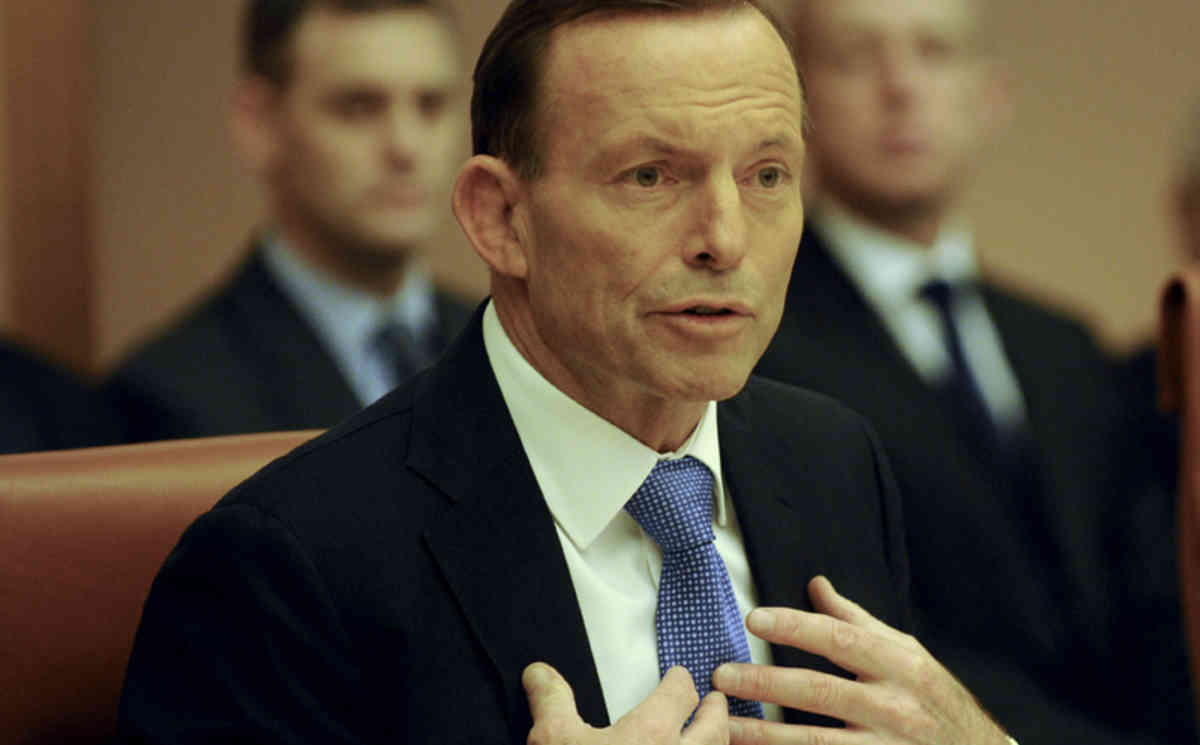
Prime Minister Tony Abbott is behaving like a coward by cancelling his visit to a university amid nationwide protests, a student union says.

Mr Abbott and his Education Minister Christopher Pyne were due to visit a Geelong research facility at Deakin University on Wednesday, but called it off after federal police raised concerns about their personal safety.

The visit was to have coincided with a national day of student protests against the government’s higher education reforms, including removing caps on fees universities can charge.National Union of Students president Deanna Taylor said Mr Abbott must explain why he’s worried about facing students and answering their questions.

‘I think the prime minister and his ministers are being a bit cowardly and trying to portray students as though they’re violent rabble-rousers who are out to cause trouble, which isn’t the case at all,’ she told AAP.

‘They’re trying to make us sound like spoiled little brats who don’t know how good we’ve got it. They have a very clear agenda.

‘Ms Taylor said an expected 2000-strong rally in Melbourne would be the nation’s biggest, but thousands more would rally across the country in all capital cities except Darwin.She said government plans to deregulate fees would burden students with debt for 30-40 years and hinder them from buying a house or car.’We shouldn’t basically be penalising people for getting a higher education,’ she said.

In the past week, protesters at Sydney and Melbourne universities have come under fire for heckling Foreign Minister Julie Bishop and former federal Liberal MP Sophie Mirabella.

But Ms Taylor says students are so incensed by the proposed changes they are doing what they can to get their point across.

‘Not all students have access to the corridors of power and can’t go and lobby politicians,’ she said.’For a lot of students who are disenfranchised, protesting and demonstrating is really their only way of voicing their discontent.

‘Mr Pyne said it was the prime minister’s decision, in conjunction with his office, to call off the Geelong visit after receiving the police brief.'(He thought) it would be wiser to not go and create that tumult at Deakin so students can get on with their studies unmolested by the Socialist Alternative, which seem quite intent on shutting down democracy in Australia,’ Mr Pyne told the ABC.Socialist Alternative is a far-left wing organisation that publishes the Red Flag paper.

Victorian Premier Denis Napthine is still expected to visit the university.

source: skynews.com.au
Global warming could make male sea turtles disappear

imagesTDKE9499

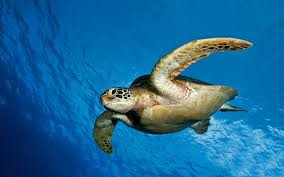
Global warming may not be so bad for sea turtles — at least, not at first. One of the quirks of sea turtles, along with many other reptiles, is that temperature determines the sex of their offspring.

At around 84.2 degrees Fahrenheit (29 degrees Celsius) the ratio of males to females is fairly even, but as temperature rises, more and more hatchlings end up as females. Researchers from Swansea University in Wales calculated how that will change for one major population of sea turtles as the globe warms over the next century, and while they found that it would mean a growing population at first, eventually there will be too few males around.

Their research, which is being published today in Nature Climate Change, was focused on a population of loggerhead turtles in Sal, Cape Verde, an island to the west of Northern Africa. For the past 150 years, the temperature there has put the number of female hatchlings laid on light-sand beaches between roughly 50 and 70 percent of those born. Right now, the population of Sal is beginning to see a distinct uptick in the number of females, and the researchers believe that will steadily increase to around 80 percent of hatchlings on light-sand beaches in 2050 to about 98 percent by 2100.

“The possibility of sea turtles becoming extinct is not a far-fetched scenario,” Graeme Hays, Swansea’s aquatic biology chair, says in a statement. Even though the sex ratio will tip heavily toward females at Sal in the near future, male turtles’ tendency to mate more often means that the population should be able to continue growing for a while. But eventually, the researchers say that human intervention will likely be necessary to cool the turtles’ nests to ensure that males are brought into the population.

“Eventually a point will be reached when there are insufficient males to fertilize all eggs,” they write. “Ultimately if males are so scarce that egg fertility is compromised, management intervention will be needed. Translocating nests from dark beaches to [cooler] light beaches could be a strategy to produce more male hatchlings. Another strategy would be to shade nests (for example, with beach vegetation) to lower incubation temperatures.”

Though the paper only focuses on Sal, the researchers say that it can be repeated just about anywhere — and may need to be in order to monitor the safety of populations. The researchers also warn that warming isn’t likely to be the only big impact on sea turtles over the next century: in particular, rising sea levels could lead to the destruction of the beaches where they mate. Still, the researchers’ estimates show a striking example of how changing climates can impact a population. For these loggerhead turtles, it’s perhaps for the better at first, but only for so long.

Socceroos To Take Pay Cuts After World Cup, Still Without Major Sponsor

Australia v Costa Rica

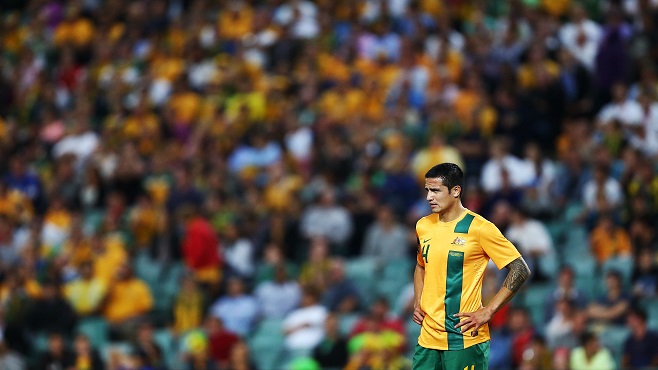
Australia are on the way to Brazil as the lowest ranked nation but one of the highest paid.

The 2014 World Cup is rapidly approaching but the big dollar earnings days are about to end for Australia’s Socceroos as Football Federation Australia examines the team’s ailing financial situation.

FFA boss David Gallop warned Tuesday of cuts to player match fees ahead of what is to be the third consecutive World Cup appearance for the Socceroos.

The highly paid, fresh faced Socceroos squad face South Africa at ANZ Stadium early next week for a final international friendly before heading off to Brazil where the inexperienced squad is expected to come up against a tough time against Spain, the Netherlands and Chile in the group stage.

Players are currently paid $6,500 for each international cap and combined with prize money will see the squad take home some $2.6 million regardless of their performance, making them one of the highest paid teams in Brazil despite a tournament-low FIFA ranking. A group stage knockout would see each player still earn $150,000 for fewer than five hours on the pitch.

Gallop intends to restructure player pay so that it better reflects the overall earning potential of each Socceroos’ outing according to the AAP..

“It’s a product of where we were at that time but the next four-year cycle, I think we can come up with a more reasonable system,” Gallop said Tuesday of the lucrative deal the players received last time contract’s were negotiated.

“We need to look at the tiers of games we’re involved in.

“When we’re playing top-class opposition and there’s a big opportunity to make gate receipts, then the pay can be at one level.

“But when the Socceroos play in lesser games in the next four-year cycle then, as we did last year with the EAFF (East Asian Football Federation) tournament, we need to be looking at appropriate remuneration for those games.”

The Socceroos face a more immediate problem heading into the World Cup- a lack of a major sponsor.

Qantas pulled their backing last year and the hope is a big-time will jump on board a month out from the tournament kick off.

“It’s a bit of a concern,” Gallop told the AAP.

“These four weeks are an important few weeks.

“It’s not very often that we pull these guys in from every corner of the globe and get this intense opportunity to spend time with them.

Australia kick of their World Cup campaign against Chile on June 13 in Cuiaba.

source: craveonline.com