Category Archives: Uncategorized

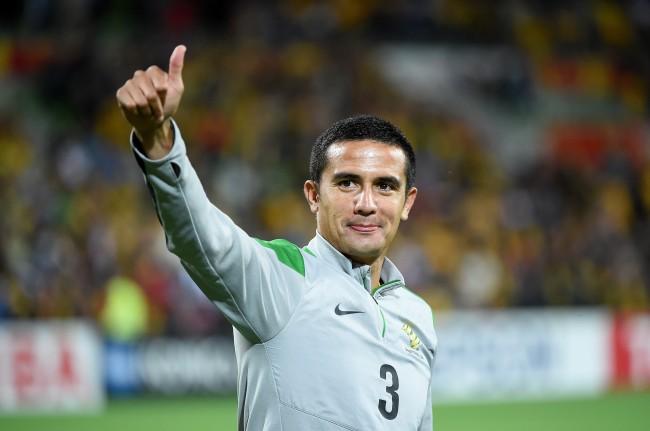
‘A beautiful partnership’ as Cahill joins Melbourne City

Tim%20Cahill

Melbourne City and the A-League have finally got their man, ending months of speculation

When Melbourne City coach John van ‘t Schip says it’s a beautiful partnership, he’s referring to the prospect of City’s prized recruit Tim Cahill joining forces with last season’s Golden Boot winner Bruno Fornaroli. But one could imagine the same sentiments expressed by FFA CEO David Gallop, who is hoping that Cahill and the A-League form a beautiful partnership, one that will reap rewards in terms of viewing audiences, attendances, sponsorship and TV rights.

Melbourne City and the A-League have finally got their man, ending months of speculation on Thursday, when the club announced that Cahill will join the club on a three-year deal after he successfully completed a medical in New York with Melbourne City’s sister club New York City FC.

The FFA took steps back in May to put in place and set in motion the pulleys and levers necessary to get Australia’s highest profile player to return home to the A-League. It was then that the FFA announced changes to the regulations governing the recruitment of marquee players by A-League clubs. It introduced a new category of Full-Season Guest Marquee, enabling A-League clubs to recruit an additional marquee player above the two marquee spots they are currently allowed outside the salary cap, providing the player in question meets stringent footballing and marketing criteria.

“When FFA announced the 2016-19 Strategic Plan in May, the marquee player issue was front and centre to rejuvenate the Hyundai A-League, and Tim Cahill was top of the wish-list,” said FFA CEO David Gallop.

“We’re really pleased that Melbourne City has taken the opportunity of the new regulations and the marquee fund to bring Tim home. Importantly, all clubs have recognised the importance of this initiative and some are actively pursuing other Full Season Guest Marquee options.

“Tim’s arrival is the biggest transfer move in the A-League’s history because no player is more popular or has had a bigger impact on the modern game in Australia than Tim Cahill.

“Today’s news fits perfectly with our new marketing campaign to appeal to young families and convert more football participants into A-League fans,” said Gallop.

“Tim Cahill’s debut season will give millions of fans a compelling reason to watch the A-League, get to a match, pick a team and become a member. I know this signing will be a huge boost to the profile and reach of the A-League, which is already a globally recognised domestic competition and among the best in Asia.”

Cahill’s contract is a three-year deal with a two-part structure. The first part secures his playing future for two years in the A-League, taking him up to the 2018 World Cup in Russia. The final year of his contract will see him become part of the City Football Group’s coaching team, and enable his transition into a post-playing career as a coach.

For Melbourne City fans, it means they can again look forward to watching their team top the goal-scoring charts, with the Socceroos’ all-time leading scorer Cahill joining forces with last season’s Golden Boot winner Bruno Fornaroli.

“We have very ambitious targets at Melbourne City,” Melbourne City coach John van ‘t Schip commented on the signing. “We want to win every time we step on the pitch, and in doing so we want to bring success for our fans who have been so loyal to us. Tim is an important part of realising that ambition. The depth and breadth of his experience will be very important to us on the field and also in the dressing room.

“He is without doubt one of the most loved sports stars in this country, and I think the fact that he is back in his home country is important to the fans, and is fantastic for us as a club. I see in Cahill and Bruno Fornaroli a beautiful footballing partnership – we are very focused on our pre-season preparations and the time that the team have together now is very important.”

Cahill gets to meet his new team-mates when he starts pre-season training with Melbourne City on Monday 15 August.


Source:Neos Kosmos
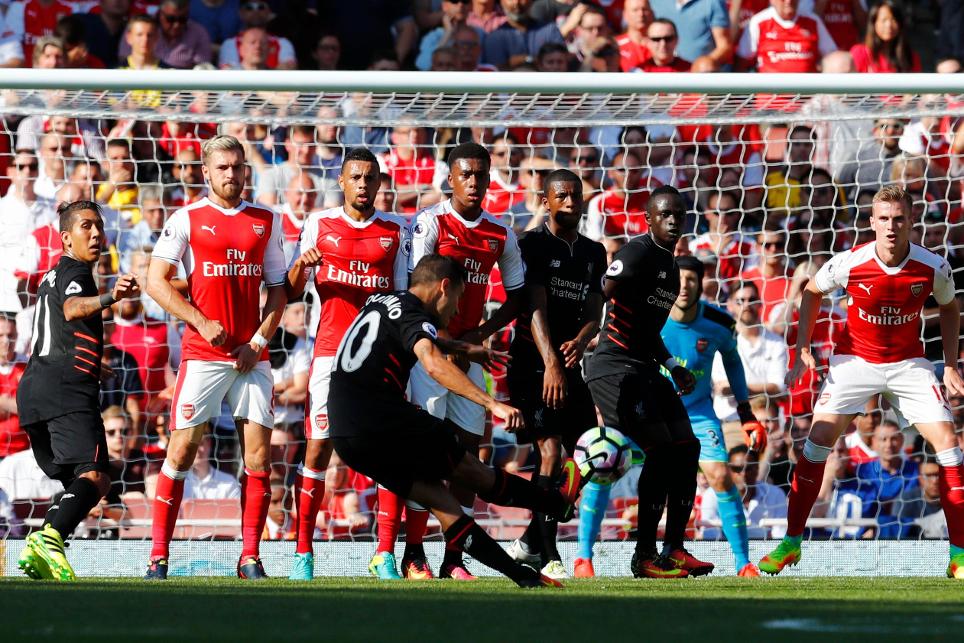
Liverpool edge Arsenal 4-3 in seven-goal thriller

2016-08-14T161040Z_114192640_MT1ACI14544838_RTRMADP_3_SOCCER-ENGLAND-ARS-LIV

Philippe Coutinho brace and Sadio Mane debut goal helps Merseysiders stun Arsenal at Emirates Stadium.

Liverpool got their 2016/17 Premier League campaign off to a wonderful start by edging a pulsating encounter at Emirates Stadium winning 4-3 at Arsenal.

Despite falling behind to Theo Walcott’s strike, Jurgen Klopp’s side raced into a 4-1 lead thanks to a Philippe Coutinho brace and goals by Adam Lallana and Sadio Mane. With the Merseysiders threatening a rout, the Gunners responded with two efforts of their own from Alex Oxlade-Chamberlain and Calum Chambers, but the visitors held on for a memorable victory in north London.

Arsenal began the first half well, dominating possession and playing on the front foot, and should have taken the lead on 28 minute, when they were awarded a penalty for a foul by Alberto Moreno on Walcott, whose feet were too quick for the Spaniard’s lunge.

Walcott elected to take the spot-kick himself but was denied by Simon Mignolet, who guessed right to parry the ball away.

However, Walcott did not have long to wait before making amends, latching on to Alex Iwobi’s pass to drive low across Mignolet and into the far left-hand corner.

Arsenal’s makeshift central defensive pairing of Chambers and summer signing Rob Holding had been largely untroubled until Coutinho’s moment of magic, but there was nothing any of the Arsenal defenders could do when, from 30 yards out, the Brazilian planted a curling free-kick into the top left-hand corner of Petr Cech’s net.

Liverpool began the second half as they meant to go on, Lallana giving his side the lead after chesting down Georginho Wijnaldum’s cross and slotting past the advancing Cech four minutes after the restart.

Just six minutes later it was 3-1 as a delightful team move found Nathaniel Clyne haring down the left and picking out Coutinho to score again with a fierce, first-time finish.

Arsenal appeared to be unravelling as Aaron Ramsey went off with a hamstring problem and moments later Sadio Mane scored a wonderful individual goal, powering down the right flank, cutting inside three players and firing emphatically into the top corner.

Alex Oxlade-Chamberlain gave the home fans faint hope with a mazy individual goal which left four opponents in his wake and Mignolet fooled by his low shot on 64 minutes, and within 11 minutes that hope became more real as Chambers rose to glance in Santi Cazorla’s free-kick.

Now the Gunners’ tails were up but, try as they might, they could not match Liverpool’s four goals.

source:premierleague.com

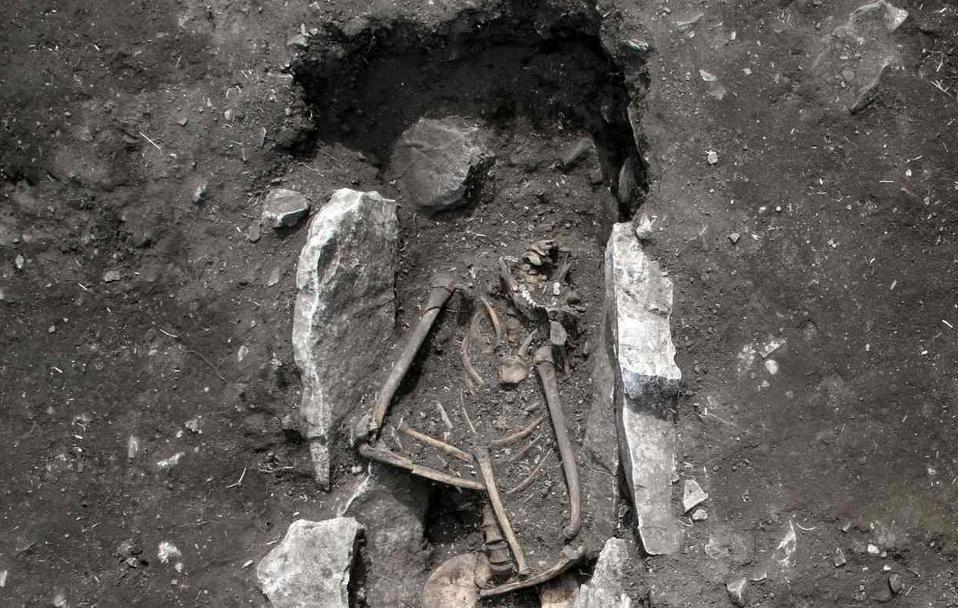
Ancient teenage skeleton unearthed on mountain top could confirm darkest Greek legend

lykaion_skeleton_web-thumb-large

Archaeologists have made a sinister discovery at the top of a Greek mountain which might corroborate one of the darkest legends of antiquity.

Excavations this summer on Mount Lykaion, once worshipped as the birthplace of the god Zeus, uncovered the 3,000-year-old skeleton of a teenager amid a mound of ashes built up over a millennium from sacrificed animals.

Greece’s Culture Ministry said Wednesday that the skeleton, probably of an adolescent boy, was found in the heart of the 30-meter (100-foot) broad ash altar, next to a man-made stone platform.

Excavators say it’s too early to speculate on the nature of the teenager’s death but the discovery is remarkable because the remote Mount Lykaion was for centuries associated with the most nefarious of Greek cults: Ancient writers — including Plato — linked it with human sacrifice to Zeus, a practice which has very rarely been confirmed by archaeologists anywhere in the Greek world and never on mainland Greece.

According to legend, a boy was sacrificed with the animals and all the meat was cooked and eaten together. Whoever ate the human part would become a wolf for nine years.

“Several ancient literary sources mention rumours that human sacrifice took place at the altar, but up until a few weeks ago there has been no trace whatsoever of human bones discovered at the site,” said excavator David Gilman Romano, professor of Greek archaeology at the University of Arizona.

“Whether it’s a sacrifice or not, this is a sacrificial altar … so it’s not a place where you would bury an individual. It’s not a cemetery,” Romano told The Associated Press. A very unusual detail, he said, was that the upper part of the skull was missing, while the body was laid among two lines of stones on an east-west axis, with stone slabs covering the pelvis.

The mountaintop in the Peloponnese region is the earliest known site where Zeus was worshipped, and even without the possible human sacrifice element it was a place of massive slaughter. From at least the 16th century B.C. until just after the time of Alexander the Great, tens of thousands of animals were killed there in the god’s honour.

Human presence at the site goes back more than 5,000 years. There’s no sign yet that the cult is as old as that, but it’s unclear why people should otherwise choose to settle on the barren, exposed summit.

Pottery found with the human remains dates them to the 11th century B.C., right at the end of the Mycenaean era, whose heroes were immortalized in Greek myth and Homer’s epics, and several of whose palaces have been excavated.

So far, only about 7 percent of the altar has been excavated, between 2007-2010 and again this year.

Source:ekathimerini.com

Sydney Opera House gets $202m renovation in first big facelift since 1973

untitled

Concert hall will have to close for almost two years but Sydney Symphony Orchestra conductor says it will be ‘as amazing inside as it is from the outside’

Multimillion-dollar upgrades to the Sydney Opera House will make the concert hall “inside as extraordinary and as amazing as it is from the outside”, the artistic director and chief conductor of the Sydney Symphony Orchestra has said.

David Robertson welcomed Thursday’s announcement of the most substantial changes to the building since it opened in 1973, which aim to improve the acoustics, accessibility and versatility of the concert hall, and to improve disabled access to the whole building.

The chief executive of the Opera House, Louise Herron, said technical systems and equipment “that, frankly, have reached the end of their working life” would be replaced. The concert hall will have to be closed for almost two years.

A 3D sound system and drapes – currently put up for individual events – would be installed for amplified performances, as well as quieter airconditioning. The acoustic reflectors resembling glass doughnuts above the stage would be replaced by a concert ceiling to better contain the sound.

Herron said the concert hall renovations would be the most disruptive stage of what was likely to be a four-year process, and as such would not begin until mid-2019, with view to completion in early 2021.

The $202m investment from the New South Wales government was essential for the building’s future, Herron said.

The upgrade was expected to be substantially completed in just over four years, although work would be staggered to allow the Opera House to remain open throughout.

New lifts and an escalator to the foyer would be installed to improve access and more of the building would be opened to the public.

A tunnel cutting through the northern foyer, beneath the stairs to the concert hall, would be “revolutionary” for people with disabilities, Herron said. Up to 26 wheelchair-accessible seating positions would be added to various parts of the concert hall.

A call centre and legal office on the north-western corner of the site would be transformed into a creative learning centre for children for workshops, talks and performances. There would also be a separate, permanent “digital classroom”. Construction on this space would begin late next year and finish mid-2018.

A function centre on the ground floor would be able to accommodate 190 seats and 500 people standing, and enable the “very ugly” marquee on the northern broadwalk to be removed, Herron said.

A new lounge and cafe and more seating would be added to the box office foyer in two stages, beginning in 2017 and 2019. From 2018, the space under the stairs would be renovated to be made more pedestrian-friendly, with seating and “digital art walls”. The bitumen would be removed to connect the area with the forecourt.

The plans released on Thursday were only working designs, Herron stressed, to allow more consultation and to ensure the process was as smooth as possible.

Bistro Mozart would close at the end of this month and be replaced by more seating and food options.

Herron said the upgrades were governed by the design principles of Jørn Utzon, the late Danish architect who designed the building – as evidenced by the inclusion of his son Jan, also an architect, on a panel approving the changes.

“It’s balancing our heritage and our future and that’s what we’ve tried to do with the utmost respect,” she said.

All $202m of the upgrades are paid for by the state government, which deputy premier, Troy Grant, said was “honoured” to play such a key role.


“The Sydney Opera House has played an important role in our nation’s history and embarking on these renewal projects will ensure that it continues to be relevant for generations to come.”

The Opera House itself has already invested $43m into renovating the Joan Sutherland theatre.

But Labor’s arts spokesman, Walt Secord, said the government was spending money on the Opera House while neglecting less prestigious projects in western Sydney.

“While the Sydney Opera House needs some improvement, a fair share of the $600m arts infrastructure fund must be spent on arts in western Sydney,” he said in a statement.

“Unfortunately, there is a massive funding imbalance towards Sydney’s east – with western Sydney arts receiving very little. Western Sydney deserves its fair share.”

Utzon was 38 when he won the international competition to design an opera house on Bennelong Point in 1957. After a series of delays in construction and a change in government, he resigned from the project and returned to Denmark in 1966.

The Opera House was completed by an Australian architect, Peter Hall. Utzon eventually returned to the Opera House fold, contributing to recent redesigns. He died in 2008.

Source:theguardian.com


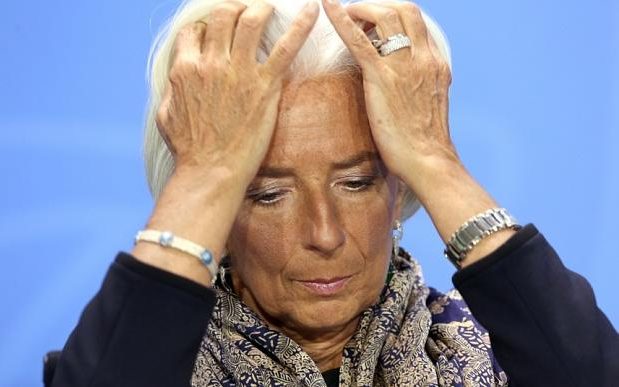
IMF admits disastrous love affair with the euro and apologises for the immolation of Greece

largarde_3537542b-large_trans++pJliwavx4coWFCaEkEsb3kvxIt-lGGWCWqwLa_RXJU8

The International Monetary Fund’s top staff misled their own board, made a series of calamitous misjudgments in Greece, became euphoric cheerleaders for the euro project, ignored warning signs of impending crisis, and collectively failed to grasp an elemental concept of currency theory. 

This is the lacerating verdict of the IMF’s top watchdog on the fund’s tangled political role in the eurozone debt crisis, the most damaging episode in the history of the Bretton Woods institutions. 

It describes a “culture of complacency”, prone to “superficial and mechanistic” analysis, and traces a shocking breakdown in the governance of the IMF, leaving it unclear who is ultimately in charge of this extremely powerful organisation. 

The report by the IMF’s Independent Evaluation Office (IEO) goes above the head of the managing director, Christine Lagarde. It answers solely to the board of executive directors, and those from Asia and Latin America are clearly incensed at the way European Union insiders used the fund to rescue their own rich currency union and banking system.

The three main bailouts for Greece, Portugal and Ireland were unprecedented in scale and character. The trio were each allowed to borrow over 2,000pc of their allocated quota – more than three times the normal limit – and accounted for 80pc of all lending by the fund between 2011 and 2014.

In an astonishing admission, the report said its own investigators were unable to obtain key records or penetrate the activities of secretive “ad-hoc task forces”. Mrs Lagarde herself is not accused of obstruction.

“Many documents were prepared outside the regular established channels; written documentation on some sensitive matters could not be located. The IEO in some instances has not been able to determine who made certain decisions or what information was available, nor has it been able to assess the relative roles of management and staff,” it said.

The report said the whole approach to the eurozone was characterised by “groupthink” and intellectual capture. They had no fall-back plans on how to tackle a systemic crisis in the eurozone – or how to deal with the politics of a multinational currency union – because they had ruled out any possibility that it could happen.

“Before the launch of the euro, the IMF’s public statements tended to emphasise the advantages of the common currency,” it said. Some staff members warned that the design of the euro was fundamentally flawed but they were overruled.

“After a heated internal debate, the view supportive of what was perceived to be Europe’s political project ultimately prevailed,” it said.

This pro-EMU bias continued to corrupt their thinking for years. “The IMF remained upbeat about the soundness of the European banking system and the quality of banking supervision in euro-area countries until after the start of the global financial crisis in mid-2007. This lapse was largely due to the IMF’s readiness to take the reassurances of national and euro area authorities at face value,” it said.

The IMF persistently played down the risks posed by ballooning current account deficits and the flood of capital pouring into the eurozone periphery, and neglected the danger of a “sudden stop” in capital flows.

The IMF was asleep when the huge imbalances built up. It did not even see a funding risk in Greece 

“The possibility of a balance of payments crisis in a monetary union was thought to be all but non-existent,” it said. As late as mid-2007, the IMF still thought that “in view of Greece’s EMU membership, the availability of external financing is not a concern”.

At root was a failure to grasp the elemental point that currency unions with no treasury or political union to back them up are inherently vulnerable to debt crises. States facing a shock no longer have sovereign tools to defend themselves. Devaluation risk is switched into bankruptcy risk.

“In a monetary union, the basics of debt dynamics change as countries forgo monetary policy and exchange rate adjustment tools,” said the report. This would be amplified by a “vicious feedback between banks and sovereigns”, each taking the other down. That the IMF failed to anticipate any of this was a serious scientific and professional failure.

In Greece, the IMF violated its own cardinal rule by signing off on a bailout in 2010 even though it could offer no assurance that the package would bring the country’s debts under control or clear the way for recovery, and many suspected from the start that it was doomed.

The organisation got around this by slipping through a radical change in IMF rescue policy, allowing an exemption (since abolished) if there was a risk of systemic contagion. “The board was not consulted or informed,” it said. The directors discovered the bombshell “tucked into the text” of the Greek package, but by then it was a fait accompli.

The IMF was in an invidious position when it was first drawn into the Greek crisis.  The Lehman crisis was still fresh. “There were concerns that such a credit event could spread to other members of the euro area, and more widely to a fragile global economy,” said the report.

The eurozone had no firewall against contagion, and its banks were tottering. The European Central Bank had not yet stepped up to the plate as lender of last resort. It was deemed too dangerous to push for a debt restructuring in Greece.

The forecasts for Greek growth compared with what actually happened (thin black line)

While the fund’s actions were understandable in the white heat of the crisis, the harsh truth is that the bailout sacrificed Greece in a “holding action” to save the euro and north European banks. Greece endured the traditional IMF shock of austerity, without the offsetting IMF cure of debt relief and devaluation to restore viability.

A sub-report on the Greek saga said the country was forced to go through a staggering squeeze, equal to 11pc of GDP over the first three years. This set off a self-feeding downward spiral. The worse it became, the more Greece was forced to cut – what ex-finance minister Yanis Varoufakis called “fiscal water-boarding”.

“The automatic stabilisers were not allowed to operate, thus aggravating the pro-cyclicality of the fiscal policy, which exacerbated the contraction,” said the report.

The attempt to force through an “internal devaluation” of 20pc to 30pc by means of deflationary wage cuts was self-defeating since it necessarily shrank the economic base and sent the debt trajectory spiralling upwards. “A fundamental problem was the inconsistency between attempting to regain price competitiveness and simultaneously trying to reduce the debt to nominal GDP ratio,” it said.

The IMF thought the fiscal multiplier was 0.5 when it may in reality have been five times as high, given the fragility of the Greek system. The result is that nominal GDP ended 25pc lower than the IMF’s projections, and unemployment soared to 25pc instead of 15pc as expected. “The magnitude of Greece’s growth forecast errors looks extraordinary,” it said.

The strategy relied on forlorn hopes that the “confidence fairy” would lift Greece out of this policy-induced nose-dive. “Highly optimistic” plans to raise $50bn from privatisation sales came to little. Some assets did not even have clear legal ownership. The chronic “lack of realism” lasted until late 2011. By then the damage was done.

The injustice is that the cost of the bailouts was switched to ordinary Greek citizens  – the least able to support the burden  – and it was never acknowledged that the true motive of EU-IMF Troika policy was to protect monetary union. Indeed, the Greeks were repeatedly blamed for failures that stemmed from the policy itself. This unfairness – the root of so much bitterness in Greece – is finally recognised in the report.

 “If preventing international contagion was an essential concern, the cost of its prevention should have been borne – at least in part – by the international community as the prime beneficiary,” it said.

Better late than never.

source: telegraph.co.uk

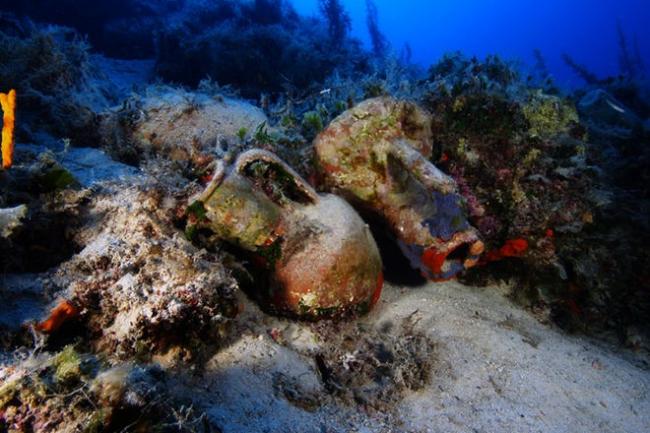
45 ancient shipwrecks discovered off Greek islands

Shipwrecks%2004

The discoveries made in waters as deep as 65 meters

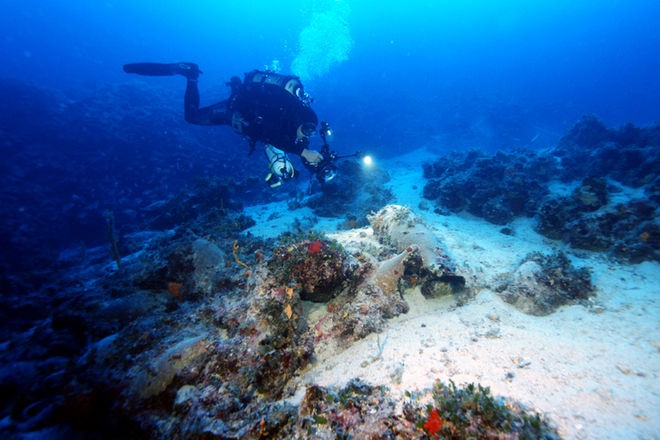
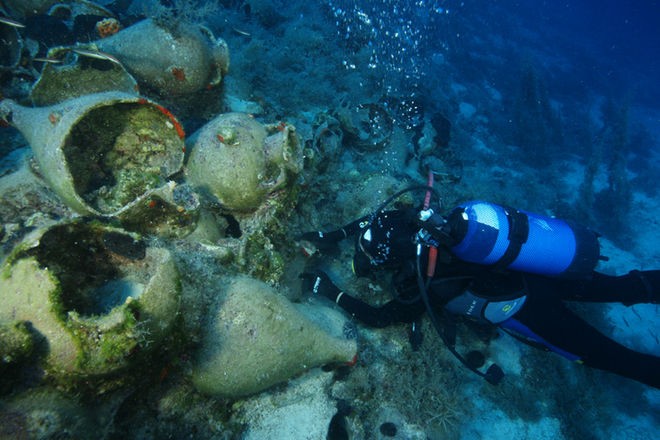
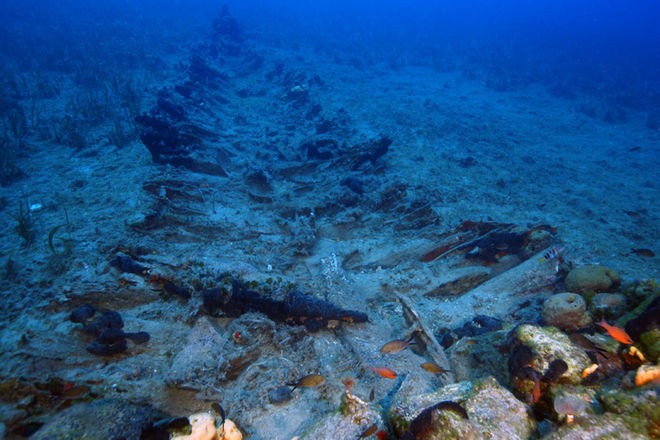
In two recent expeditions, a dive team of archaeologists has discovered 45 shipwrecks in total between the Greek islands of Samos and Ikaria, reports website Deeper Blue.

While 22 were identified last autumn, the most recent 23 finds were produced as part of the 2016 Fuorni Underwater Survey, which was undertaken between 8 June and 2 July.

In total 25 divers took part from the Greek Ephorate of Underwater Antiquities and the U.S. non-profit RPM Nautical Foundation, with the discoveries made in waters as deep as 65 meters.

Shipwreck

In addition to the discovery of the shipwrecks, which dated back to the Greek golden age right through to the early 19th century, many were also found to have anchors, pottery and amphorae in their surrounds.

The sunken cargo of amphoras for example, was found to date as far back as the late Archaic period (c. 525-480 BC).

Shipwrecks%2002

A spokesperson from Greek Ephorate attributed the successful expeditions to the extensive knowledge of locals, which had been shared and documented.

“Crucial to the success of the investigation has been the awareness of the local population and the extensive information about the existence of antiquities on the seabed provided by the fishing community and the divers of Fourni and the sponge-divers from Kalymnos, which enabled a fast-track approach,” they told DiverNet.

Shipwrecks%2003

According to a statement on the RPM Nautical Foundation’s website, the next step is to “fully catalogue and document the underwater cultural heritage of the archipelago and learn more about ancient trade and navigation in the Aegean Sea.”

Samples from each artefact were brought back to the surface, in the hope that lab tests will reveal further information regarding their historical significance.

source:neos kosmos

Port war: Baird government’s “strictly confidential” agreement protects Botany container terminal against Newcastle competition

untitled
THE state government has finally confirmed it struck a “strictly confidential” agreement with the private operator of Port Botany and Port Kembla to compensate it against any competing container terminal in Newcastle.

The government has repeatedly denied or disputed the existence of such an agreement, which has been the subject of more than 100 separate questions to parliament over the past two years.

Treasurer Gladys Berejiklian was still saying on Thursday that there was no “legislated container cap at the Port of Newcastle”, and that there was nothing to “prohibit” one in the future.

But Ms Berejiklian did not question the 11-page “Port Commitment” document obtained by the Newcastle Herald, which explains how the operator of any future Newcastle container terminal would have to pay compensation to the government, which would pass the money on to the operator of Port Botany and Port Kembla.

The commitment document contains a formula for calculating the compensation, which centres on the average cost of moving containers through Botany.

Based on reported Botany charges of about $120 for a full container and $75 for an empty one, Newcastle would have to pay Botany about $1 million for every typical container ship that passed through the northern port.

Opposition leader Luke Foley – who was already critical of the port privatisations – said it was “frankly an outrage” that the government had used a confidental agreement to artificially restrain Newcastle’s port growth.

“The government needs to fess up, come clean and stop lying through its teeth,” Mr Foley said.

“Labor has questioned Ms Berejiklian on this very issue in the Parliament. The Herald has been relentless in its pursuit for answers. Even when presented with the smoking gun, Mr Baird’s Government still doesn’t have the guts to be upfront with people in the Hunter.”

Newcastle MP Tim Crakanthorp said he had asked 37 questions in parliament on the subject, “only only to be given non-answers, re-directions and contradictory responses”.

“The Coalition has continually refused to disclose the details of any anti-competitive arrangements,” Mr Crakanthorp said. “In light of this document beginning released it is time the government set the record straight.”

Former BHP public affairs manager Greg Cameron – who helped run the original plan to put a container terminal on the former steelworks site after the steelworks shut in 1999, said he was stunned at the content of the agreement revealed by the Herald.

“This charge does not appear in any NSW government policy document, planning instrument, freight plan, transport strategy, or budget,” Mr Cameron said.

The document, available on the Herald website, confirms that Newcastle is allowed to move 30,000 containers a year – increasing by 6 per cent annually – before it must pay compensation.

Port Botany’s handles about 2 million containers a year and the legislated limit on its expansion was removed in 2012.

The Botany and Kembla lessee, NSW Ports, and the Newcastle operator, Port of Newcastle, both referred lease questions to the government. But the Newcastle operator said it was “open-minded” on the future of the former steelworks site.

source:theherald.com.au

Australia guards famous white whale Migaloo from eager fans

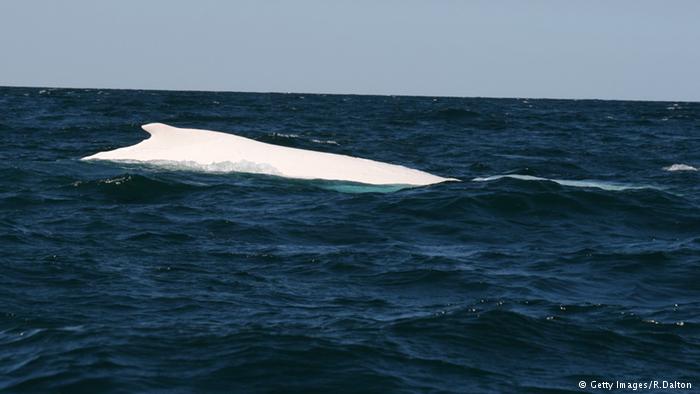
0,,19431660_303,00http://b.scorecardresearch.com/beacon.js//wurfl.io/wurfl.js// /js/de.dw.cdaLanguage.min.jsWildlife officials in Australia have set up an escort for the rare white humpback Migaloo, who is heading up the coast to the Great Barrier Reef to mate. They warned the crowd of onlookers against disturbing the animal.

http://b.scorecardresearch.com/beacon.js//wurfl.io/wurfl.js// /js/de.dw.cdaLanguage.min.jsAll boats needed to stay at least 500 meters (547 yards) from Migaloo, Queensland Environment Minister Steven Miles said on Thursday.

The white humpback is under state protection, granting him a perimeter five times wider than that of a normal whale.

http://b.scorecardresearch.com/beacon.js//wurfl.io/wurfl.js// /js/de.dw.cdaLanguage.min.js“Anyone breaking these rules and harassing the whales should be ashamed of themselves,” he said in a statement. “Stop and think about how you would feel if you were responsible for hurting one of the few white whales in the world.”

Officials made the announcement after media reported helicopters, boats, and drones coming out to spot Migaloo off Australia’s Gold Coast the day before.

http://b.scorecardresearch.com/beacon.js//wurfl.io/wurfl.js// /js/de.dw.cdaLanguage.min.js‘Safe passage’

The fine for getting too close to a whale can vary between several hundred and several thousands of dollars.

The rules are in place to “protect the whales and give them safe passage during their migration along the Queensland coast,” according to Miles.

http://b.scorecardresearch.com/beacon.js//wurfl.io/wurfl.js// /js/de.dw.cdaLanguage.min.jsMigaloo was previously spotted off Byron Bay earlier this week.

“I cried. I screamed ‘You gorgeous whale, thank you for being here for us today,'” Alison Reid, who saw the animal on a whale watching cruise, told national radio on Tuesday. “It was just an incredible sight, it was so unreal.”

Children’s hero

The albino animal was first spotted in the same area in 1991, and has since become a symbol of preservation for environmental activists. He was later sighted by scientists, who asked the elders of an Aboriginal village to name him. The name Migaloo means “white fella.” Samples of his skin and his singing voice confirmed he was a male, and researchers believe he is about 30 years old. He is one of the two known completely white humpbacks in the world.

http://b.scorecardresearch.com/beacon.js//wurfl.io/wurfl.js// /js/de.dw.cdaLanguage.min.jsMigaloo collided with a boat in 2003, leaving scars on his back, according to one of the websites dedicated to him, migalo.com.au. He is also the topic of an Australian children’s book.

The humpback population in east Australia is estimated to over 15,000 specimens, recovering from the brink of extinction after a whaling ban in the 1960s. They grow to be between 12 to 15 meters long and can weigh up to 40 tons. They eat between 1,000 and 1,500 kg of plankton, krill and small fish every day.

source:www.dw.com

IMF rapped for failures over Greece

imf_logo-thumb-largeThe International Monetary Fund failed to demand debt relief as part of Greece’s initial bailout in 2010 even though many of its officials believed this was crucial for the program’s success, according to an internal probe into the IMF’s handling of European bailouts published Thursday, which found that the Fund bent its own rules and gave in to political pressure.

“Critically, there was no rigorous attempt to articulate a convincing path to restoring debt sustainability in Greece, other than a program of official financing, fiscal adjustment and structural reforms,” the IMF’s Internal Evaluation Office (IEO) said in its report, obtained by Kathimerini and first published earlier this month.

The report said the Fund came under “pressure” to agree to the Greek bailout even though senior staff members did not believe the debt was sustainable. It noted that then IMF managing director Dominique Strauss-Kahn decided “to go along with the decision already reached by European policymakers and take a chance” that stability could be restored in Greece without prior debt restructuring.

In comparison, the IEO found, the Fund’s bailouts of Ireland and Portugal were much more efficient, boosted by strong “national ownership” of the programs and enforcement of reforms.

According to the IEO, the IMF’s rules on granting exceptional access, which require board involvement from the outset, were “followed only in a perfunctory manner.” It added that amendments were made that departed from the Fund’s usual process, allowing a “systemic exemption” that allowed the Greek bailout to proceed.

Responding to the findings of the report, Managing Director Christine Lagarde said she believed the IEO did not adequately prove that the IMF’s technical analysis came under undue political pressure. The IMF’s involvement in the programs for Greece, Portugal and Ireland was a “qualified success,” she said. “Greece, however, was unique,” she added. “While initial economic targets proved overly ambitious, the program was beset by recurrent political crises, pushback from vested interests and severe implementation problems that led to a much deeper-than-expected output contraction.”

The IMF has yet to decide whether to join Greece’s third bailout, calling for debt relief.

source:ekathimerini.com

From Mustafa Kemal to Recep Teyyip Erdogan: So this is Turkey

turkey-cde%20(2)

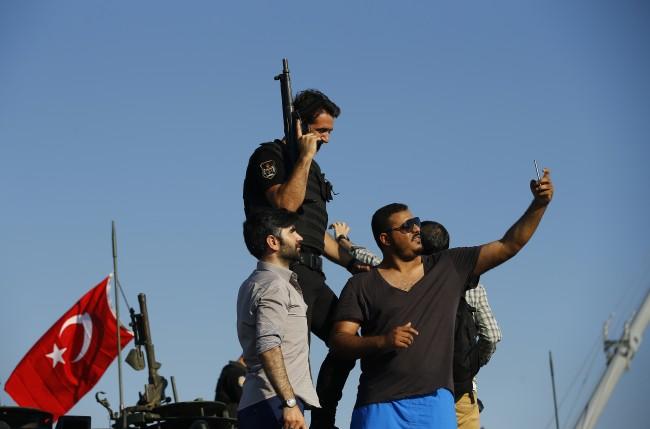
A Turkish man takes a selfie with a Turkish police officer, loyal to the government, as they stand atop tanks abandoned by Turkish army officers, against a backdrop of Istanbul’s iconic Bosporus Bridge on Saturday, July 16, 2016. Photo: AAP via AP Photo/Emrah Gurel.

Considering the failure of the 2004 coup attempt against Turkish prime minister and now President Recep Teyyip Erdogan, one could be forgiven for assuming the Kemalist devotees of dead dictator Mustafa Kemal had been vanquished from the political scene. One would have expected a seizure of power after Erdogan shot down a Russian plane and nearly triggered a third world war. As it now appears, the political cult around Mustafa Kemal within the Turkish military still exists.

Mustafa Kemal was the murderous and bloodthirsty general who waged war during the First World War as the Ottoman Empire was in the midst of collapsing. Following the end of the war and the partition of the Ottoman Empire, which initially resulted in the liberation of the Armenians through the establishment of the Republic of Armenia and the liberation of Greek territory in Smyrna and Eastern Thrace by Greece, Turkish genocide should have been permanently ended.

Mustafa Kemal emerged among the Turks as Hitler was later to do in Germany. As a fanatical and racist leader, he denied the right to life of any communities other than his own. Lou Ureneck’s recent book The Great Fire makes for difficult reading. Even as it became clear that Smyrna was to be taken by the Turks, the nationalist movement under Kemal insisted that the Armenian and Greek Christians were not to escape with their lives. The Turks went about hunting down all Armenians and Greeks irrespective of age or gender and proceeded to slaughter them. To the credit of many American and European civilians who were in Smyrna, Armenians and Greeks were hidden and protected. The same credit cannot be given to the representatives of the American, British, French, or Italian governments officially. Individual representatives of those governments did in fact provide support for Greeks and Armenians but this was in defiance of official orders.

Mustafa Kemal presided over the slaughter of all Greek and Armenian Christians in territory that his movement conquered. This was followed by the ethnic cleansing of over one million Greeks from Eastern Thrace and Asia Minor following the signing of the Lausanne Treaty in 1923. Mustafa Kemal acted the part of statesman for unscrupulous and gullible westerners. He forced the Turks to shave and wear suits, and he forced women to dress in modern European style and to get rid of Islamic dress.

The west is easily duped by those who wish to flatter them. Kemal declared that Turkey should be European and so that was enough for western governments to praise him. Well, it was not that easy. That Kemal made concessions to tobacco companies and oil interests certainly helped bestow support on his regime. Ironically, the most honest and realistic assessment of Kemal and his movement came from Hitler and the Nazis. Stefan Ihrig, in his book Ataturk in the Nazi Imagination (Ataturk is the name given to Kemal by the Turkish National Assembly in 1934, meaning ‘Father’) describes how Nazi party newspapers of the period admired Kemal and depicted Greeks and Armenians in Anatolia as being the equivalent of the Jews in Germany.
Hitler and Mussolini both considered Kemal a mentor or teacher. In Turkey, the cult of personality around Kemal came into being. The world was able to recognise the sickness of personality cults when they were established around the likes of Hitler or Stalin, but the personality cult of Kemal was never recognised as depraved. The myth came about that Kemal was a secular democrat. Kemal was secular but a democrat no. He was a dictator who killed his opponents after finishing off the Greeks and the Armenians.

Upon his death, the generals in Turkey maintained their loyalty to the cult of their leader. It was in 1960 that the first Kemalist-inspired coup was brought about when the regime of Turkish Prime Minister Adnan Menderes was overthrown. As with the participants in Turkey today, there were no good guys in 1960. Menderes was becoming increasingly authoritarian and he was also the man who set in motion the conflict in Cyprus and the anti-Greek pogroms in Constantinople in 1955. In April 1955, Archbishop Makarios and George Grivas of Cyprus sought to end British rule in Cyprus and to unite with Greece. The Greeks were 80 per cent of the population and the Turks 18 percent.

Menderes and the Turkish government formed a new political party ‘Cyprus is Turkish’, and with British help started the conflict that resulted with the invasion of Cyprus in 1974. It was Menderes who ordered the bombing of the Turkish Consulate in Thessaloniki (which includes on its property the house where Kemal was born). Having already instructed thuggish gangs to attack Greek churches and homes in Constantinople, the Turks bombed Kemal’s house to add to the Turkish population’s anti-Greek sentiments.

Mustafa Kemal in Turkey came to resemble some sort of pagan god, with the generals as his disciples. The 1960 coup established Kemal as the supreme ruler in Turkey even though he had been dead since 1938. Two more coups were carried out in 1971 and 1980. The prime minister in both these coups was the narcissistic Suleyman Demirel. Demirel once mentioned that Turkey had conflicts with Greece, Cyprus, Armenia and the Kurds and was not at fault in any of them. The generals can be given credit for this. The leaders they have traditionally overthrown are vile and despicable personalities.

Speaking of vile personalities, mention must be made of Erdogan’s mentor Necmettin Erbekan and his coalition partner Tansu Ciller. Erbekan was deputy prime minister under Prime Minister Bulent Ecevit when Turkey invaded Cyprus in 1974. For Erbekan, the invasion of 37 percent of Cyprus was not enough; he wanted Turkey to take the whole of Cyprus. He became the first Islamist prime minister in 1996 when he was the leader of a coalition government which included Tansu Ciller’s True Path Party. In August 1996, the Grey Wolves, notorious Turkish fascists, murdered Greek protesters Tasos Isaac and Solomos Solomou in cold blood. Solomou was shot down for trying to pull down the Turkish flag after attending the funeral of his cousin Isaac.

Solomou’s murder was openly praised by the psychotic Tansu Ciller, proving that Turkey’s female politicians can be just as evil and cold-blooded as their male colleagues. When the generals had enough of Erbekan’s efforts to Islamicise Turkey they used political pressure to bring down the government, hence the use of the term ‘silent coup’ for the 1997 coup. In 1994, Erdogan had been elected Mayor of Constantinople. One of his first actions at the time was to declare his intent to visit the Ecumenical Patriarchate, where he declared the gates from which Patriarch Gregory V was hanged in 1821 and which have been closed since would be opened just for him.

In 1998, Erdogan was forcibly removed as mayor and imprisoned for some of his radical writings expressed though a particular poem. In 2002, he was elected prime minister but was barred from taking office and for a brief time his colleague (and future president) Abdullah Gul would take over the prime minister’s office. And so the Islamic revolution marched on. In 2004, the generals’ coup attempt failed and Erdogan gradually became more powerful and began challenging the United States and Israel, whom the Kemalists had easily manipulated for decades.

In most recent years, Erdogan has behaved in an increasingly authoritarian way. He has begun restricting freedom of speech and nearly started a world war in 2015 with Russia. Turkey’s leaders all resemble one another in an important way. They are narcissistic and incapable of respecting the rights of anybody else. In this regard, Turkish Kemalists and Islamists are exactly the same.

Now the Turkish military has attempted to restore Kemal’s revolution yet again. The problem here is Kemal’s revolution was lost long ago. The Turkish generals pose as nationalists but Erdogan is the real nationalist who espouses the restoration of the Ottoman Empire. Even if Erdogan goes his movement will outlast him, and Turkish Islamists may not be willing to walk away quietly in the event that the generals triumph. Turkey is another Islamic country. It has never been anything else, notwithstanding the pathetic adulation of American and European propagandists and useful idiots.

Kemal’s revolution is long gone. Erdogan’s repeated victories and support for Islamic movements elsewhere (Syria for example) have overtaken Kemalism. Kemalism’s last vestiges lie in the borders of the Turkish Republic. Even here, Kemalism is under threat. The Kurds, who represent the largest stateless people in the world at over 30 million, are fighting effectively against Islamic State. The Kurds represent a real alternative to Turkey, which is just a mess of a country at this point.

If the generals were to succeed this would be bad for Greek and Armenian interests. American and Israeli support for Turkey would be immediate and unconditional. What Greece has never realised is that Athens can never compete with Turkey in terms of geostrategic support. Greece can only gain at the expense of Turkey if the west were to eventually cut off Turkey. And that could theoretically happen only with Erdogan or another Islamist in power in Turkey. Greece deserves much blame here. Greece has failed to launch any sort of diplomatic offensive over the last 20 years as it became obvious Turkey was becoming Islamic.

What will happen in Turkey is uncertain. What should be obvious is that Turkey by necessity must be weakened. There can be no security for Greece or Cyprus next to a strong Turkey. The Kemalists kept Turkey strong for decades. Their return will be catastrophic for Greece and Cyprus.

source:neos kosmos