Category Archives: Uncategorized

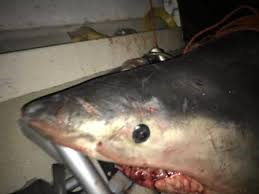
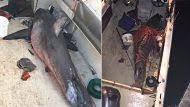
Great white shark jumps into fisherman’s boat off Evans Head

The great white shark knocked fisherman Terry Selwood off his feet. Photo: Marine Rescue Evans Head

Fisherman Terry Selwood was sitting on an esky in the middle of his small boat, enjoying the solitude of an afternoon’s fishing off the NSW North Coast, when all hell broke loose in the middle of the ocean.

Out of the corner of his eye, the 73-year-old saw something launch itself over the side of his 5½-metre vessel, which was bobbing about two kilometres off the coast of Evans Head, on Saturday afternoon.

The next thing Mr Selwood knew, he had been knocked off his esky onto the deck, and was eye-to-eye with a large shark as it thrashed about next to him.

The shark was estimated to be 2.7 metres long. Photo: Marine Rescue Evans Head

“There I was on all fours and he’s looking at me and I’m looking at him, and then he started to do the dance around and shake, and I couldn’t get out quick enough onto the gunnel [side of the boat],” Mr Selwood told the ABC.

A Department of Primary Industries spokeswoman confirmed to Fairfax Media that fisheries staff had since identified the shark, estimated to be 2.7 metres long, as a great white shark.

Mr Selwood was not bitten, but suffered a number of cuts to his right arm, and the animal’s rough skin tore the skin off it.

He was able to grab his radio and make a distress call, received by Marine Rescue Evans Head.

Lance Fountain, a member of Marine Rescue Evans Head, said he and two other crew members immediately launched a boat and arrived to find Mr Selwood “standing up on the port side … covered in blood with numerous lacerations on his right forearm”.

The shark, identified as a great white, on Terry Selwood’s boat. Photo: Marine Rescue Evans Head

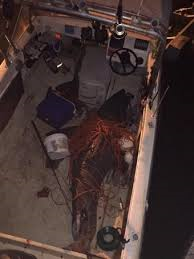
“A large shark was also found in the cabin of the not-so-large fishing boat,” Mr Franklin said.

Mr Selwood was quickly transferred onto the deck of the rescue boat, where his injuries were assessed and treated.

Mr Selwood recounted his incredible story as they returned to land, Mr Franklin said.

The fisherman explained how the shark suddenly launched itself out of the water, clearing the engine and landing on the deck, where it thrashed about violently.

“In the process, it knocked the stunned 73-year-old fisherman onto the deck as well,” Mr Franklin posted on the Marine Rescue Evans Head Facebook page.

“Fighting to get to his feet and as far away from the shark as possible, the fisherman was relentlessly knocked about the deck and cabin, which is where he sustained most of his injuries.

“Eventually the fisherman was able to clamber up onto the port side gunwale of the boat where he remained while the shark continued to thrash about the deck of the boat.”

When they reached shore, Mr Selwood was taken by NSW Ambulance paramedics to Lismore Base Hospital where he received a number of stitches to his arm. He has since been released, and will make a full recovery.

Mr Franklin said the rescue boat then returned to Mr Selwood’s boat and towed it to shore, with the shark on board.

The animal had died, and its body was retrieved by Department of Primary Industries staff.

source:smh.com.au

Yancoal’s $3.3 billion Hunter coal purchase gives it a key strategic voice in Newcastle’s port

CHINESE Government entity Yancoal will have the right to appoint the chair, two directors and potentially the chief executive of Port Waratah Coal Services after the greenlighting of Yancoal’s $3.3 billion purchase of Rio Tinto’s Hunter coal assets.

The largest acquisition of Australian assets by a Chinese Government-controlled company will give Yancoal a powerful hold on key elements of the Hunter coal chain.

This will include ownership of some of the region’s largest mines and a 36.5 per cent strategic stake in Port Waratah Coal and its Carrington and Kooragang terminals, in addition to Yancoal’s existing 27 per cent stake in Newcastle’s third coal terminal.

The Foreign Investment Review Board recommended the deal go ahead after blocking Chinese bids for the Kidman rural empire and the $10 billion Ausgrid sale, while greenlighting smaller renewable energy projects.

Yancoal Australia, which is 78 per cent owned by Yanzhou Coal Mining, which in turn is controlled by an arm of the Chinese Government, will gain Rio Tinto assets under holding company Coal & Allied, including a 67.6 per cent interest in the Hunter Valley Operations mine, an 80 per cent interest in Mount Thorley and 55.6 per cent interest in the Warkworth mine.

Yancoal’s existing Hunter assets are the giant Moolarben mine between Denman and Mudgee, which could produce 21 million tonnes of coal per year, and the much smaller, suspended or troubled mines at Ashton, Austar, Stratford Duralie, Abel, Tasman and Donaldson.

Port Waratah Coal Services chief executive officer Hennie du Plooy confirmed that a Yancoal purchase of Rio Tinto assets would include the transfer of Rio Tinto’s right to nominate three of Port Waratah’s 10 directors, with one as the board chair, and the right to nominate the chief executive for the board’s approval.

The purchase “appears to demonstrate a level of confidence in the ongoing presence of the industry in the Hunter region”, Mr du Plooy said, although there were important steps that had yet to be met including raising funds for the deal. Yanzhou is reported to be willing to invest $US1 billion of fresh equity into Yancoal Australia. 

The purchase also has to be ratified by Rio Tinto and Yancoal shareholders. Rio Tinto is not expected to hold an extraordinary general meeting until after it holds its annual general meeting in early May. The purchase is not expected to be finalised until later this year.

“In terms of the transaction, there’s quite a bit still to go,” Mr du Plooy said.

The Yancoal deal comes three years after the Westpac-backed Hastings Fund Management and the Chinese Government’s China Merchants paid $1.75 billion for a 98-year lease of the Port of Newcastle in a 50/50 joint venture in 2014.

While the deal would give Yancoal considerable clout in the Hunter coal industry, the company would remain a customer of Port Waratah Coal Services, which operates under the Long Term Commercial Framework agreement approved by the Australian Competition and Consumer Commission.

“The port needs to serve all the Hunter Valley coal chain,” Mr du Plooy said.

Yancoal has an existing 12 million ship or pay contract with Port Waratah Coal, and a $2.5 billion, 27 per cent stake in the Newcastle Coal Infrastructure Group’s third terminal where it has a contract to ship 14.6 million tonnes annually.

The port needs to serve all the Hunter Valley coal chain. – Port Waratah Coal Services chief executive Hennie du Plooy.

Hunter MP Joel Fitzgibbon welcomed Yancoal’s investment in the Hunter “which comes at a time when some of the better-known multinationals are divesting their coal interests”.

“I’m confident Yancoal understands that maintaining Coal & Allied’s workforce will be key to a healthy return on investment. For me, it’s all about jobs,” Mr Fitzgibbon said.

Australia Institute economist Rod Campbell said Yancoal gaining influence within Port Waratah Coal Services “could be great for Hunter mining, as they aren’t as beholden to the mates club that is big coal in Australia”.

“This means they could speak out against the biggest threat to NSW coal – the subsidisation of Adani’s infrastructure and huge volumes of new thermal coal going into seaborne markets from the Galilee Basin in Queensland,” Mr Campbell said.

“Glencore has spoken out about the madness of subsidising Adani, and even (Queensland Resources Council chief executive) Ian Macfarlane admits that many of his members aren’t happy. This could put Yancoal in a position to defend Hunter coal as Rio has never been prepared to do.”

Yancoal gaining influence within Port Waratah Coal Services could be great for Hunter mining, as they aren’t as beholden to the mates club that is big coal in Australia. – Australia Institute economist Rod Campbell.

Camberwell resident Wendy Bowman, who refused to sell her property to Yancoal and won two court cases that stopped its Ashton South East open cut expansion, questioned whether the deal would go ahead, and whether Yancoal’s history of mine operations in the Hunter was positive.

“They haven’t been anywhere near me since the court cases. They haven’t tried to talk to me because they know if I sold that would be the end of everyone from here to Maison Dieu. They own mines in the Hunter but it’s not exactly a great record they have here,” Mrs Bowman said.

If the deal goes ahead Yancoal will have its giant Moolarben mine in addition to large stakes in Hunter Valley Operations and Mount Thorley Warkworth. In 2016 Rio Tinto’s production share in those mines was 17.1 million tonnes.

Under Rio Tinto’s obligations under the HVO joint venture agreement with Mitsubishi, Yancoal Australia will also make a “tag” offer to Mitsubishi to acquire its 32.4 per cent interest in the Hunter Valley Operations mine.

Rio Tinto has announced or completed at least $7.7 billion of divestments since 2013, including the sale of its interests in the Bengalla coal mine and Mount Pleasant coal project in the Hunter.

Yancoal’s purchase of Rio Tinto’s Hunter coal assets was both a Chinese Government endorsement of the NSW thermal coal export industry and a reflection of China’s “going global” mandate while its domestic coal industry contracts, energy analyst Tim Buckley said.

He described the purchase as an “opportunistic move” by Yancoal on the back of Rio Tinto’s effective exist from thermal coal across the globe.

“Obviously some read the transaction as a Chinese Government endorsement of the NSW thermal coal export industry, which in part it is,” he said.

“But Yancoal’s track record on acquisitions this decade is less than stellar. I think it is more of an opportunistic move for a company in a domestic Chinese industry that is contracting, to look offshore for growth, facilitating the global industry rationalisation in the process.

 “China’s central government has given a clear mandate to the strategy of ‘going global’, and this transaction is another set in that process.”

source:Newcastle Herald

 

The Missing Australian Soldiers from the Battle of Vevi

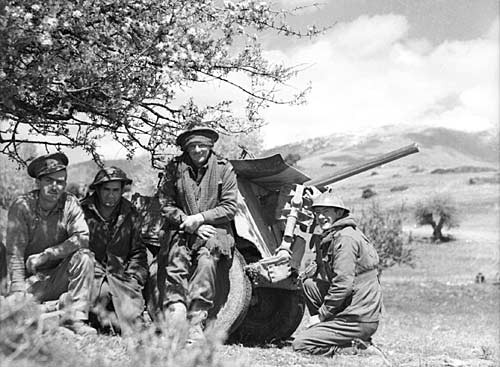
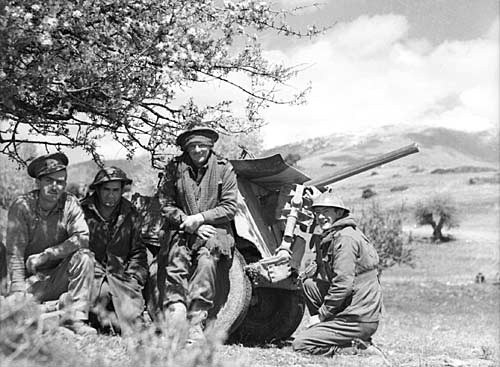
Members of the Australian 2/1st Anti-Tank Regiment resting, 13 April 1941, after their withdrawal from the Vevi area.

Former NT Minister Peter Toyne and Historian Tom Tsamouras will present a lecture entitled ‘The Missing Australian Soldiers from the Battle of Vevi’, on Thursday 20 April, at 7:00pm, at the Ithacan Philanthropic Society as a part of the Greek History and Culture Seminars, offered by the Greek Community of Melbourne.

The first action during the Second World War on Greek soil between the German and Hellenic forces was on the little village of Vevi in the municipality of Florina. This began on 11th April 1941 and marked the first of numerous clashes during which Hellenic and ANZAC forces fought side by side! After the “Battle of Vevi”, a small number of soldiers from the two Australian battalions that fought there, were reported missing in action and their bodies have never been found. Information by locals to Australian Brigadier Keith Rossi in 1981 about the possible grave site of these missing men has led to many people from Greece and Australia researching about the possible grave site of their remains. Tom Tsamouras, a school teacher from Newcastle and Peter Toyne, former MP from the NT, are two researches who have spent years trying to locate the resting place of these men.

Tom Tsamouras was born in Karditsa, Greece in 1962 and migrated with his family to Australia in 1969. He was educated at Hamilton Primary and Merewether High school in Newcastle and graduated from the University of Newcastle in 1983 with a Bachelor of Arts degree. In 1984 he completed a Graduate Diploma in Education through the University of Sydney and in 1986 graduated from the University of New England with a Master of Letters degree. Between 1987 and 1990 he worked in Greece teaching English as a second language. In 1992 he was appointed at Muswellbrook High School as an English/History teacher and in 1993 he transferred to Maitland High School where he teaches English to this day. In 1997 he also joined the network of Symban World Radio and produced a variety of weekly radio programmes in the Greek language until 2012. Today he lives in Newcastle with his wife Irene and three children Alexandra, George and Madeline.

Peter Toyne was born in Melbourne and early career there included 5 years of scientific research into the origins of breast cancer and then a ten year secondary teaching career. He moved to the Northern Territory in 1980 and took up various educational and community development roles in the Central Australian region over the next 16 years- all this time based in bush communities. Some of the significant projects in which he played a prominent role were the establishment of the Warlpiri Media Association, Warlukurlangu Artists, the Tanami Network, Open learning based secondary education, Indigenous adult education, development of Teaching courses through Bachelor College, and numerous smaller enterprises. In 1996 He was elected to the NT Parliament as the Member for Stuart and served for 10 years as opposition spokesperson for education. When the Labor government assumed power in 2001 he became the Attorney General and Justice Minister and later took on the additional responsibility as Minister for Health and Minister for Central Australia. He retired from politics in 2006 and now balances family life, and an active career as an artist and architectural glass designer.
When: Thursday, 20 April 2017, 7:00pm
Where: Ithacan Philanthropic Society (Level 2, 329 Elizabeth St, Melbourne)

source: https://www.greekcommunity.com.au/gocmv_public/index.php/en/about-us/press/432-the-missing-australian-soldiers-from-the-battle-of-vevi

Oι Αγνοούμενοι Αυστραλοί στρατιώτες στη Μάχη της Βεύης

Members of the Australian 2/1st Anti-Tank Regiment resting, 13 April 1941, after their withdrawal from the Vevi area.

Ο πρώην υπουργός της Βόρειας Επικράτειας Peter Toyne και ο καθηγητής Tom Tsamouras θα παρουσιάσουν διάλεξη με τίτλο «Οι αγνοούμενοι Αυστραλοί στρατιώτες στη Μάχη της Βεύης», την Πέμπτη 20 Απριλίου στις 7:00 μ.μ., στην αίθουσα διαλέξεων της Φιλανθρωπικής Ενωσης Ιθακήσιων, στο πλαίσιο των Σεμιναρίων Ελληνικής Ιστορίας και Πολιτισμού, που προσφέρει η Ελληνική Κοινότητα Μελβούρνης.

Η πρώτη μάχη κατά τη διάρκεια του Δευτέρου Παγκοσμίου Πολέμου επί ελληνικού εδάφους μεταξύ των γερμανικών και των ελληνικών δυνάμεων ήταν στο μικρό χωριό της Βεύης του Δήμου Φλώρινας.

Ξεκίνησε στις 11 Απριλίου 1941 και σηματοδότησε την πρώτη από πολλές συγκρούσεις στη διάρκεια της οποίας Ελληνικές και ANZAC δυνάμεις πολέμησαν δίπλα-δίπλα! Μετά την «Μάχη της Βεύης», ένας μικρός αριθμός στρατιωτών από τα δύο τάγματα της Αυστραλίας που πολέμησαν εκεί, αναφέρθηκαν ως αγνοούμενοι στη μάχη και τα πτώματά τους δεν βρέθηκαν ποτέ.
Οι πληροφορίες από τους ντόπιους στον αυστραλιανό ταξίαρχο Keith Rossi το 1981, σχετικά με τον πιθανή τάφο αυτών που αγνοούνταν έχει οδηγήσει σε μια έρευνα πολλών από την Ελλάδα και την Αυστραλία για να βρεθούν τα λείψανά τους.

Ο καθηγητής Tom Tsamouras, από το Newcastle και ο Peter Toyne, πρώην βουλευτής και υπουργός από τη Βόρεια Επικράτεια, είναι δύο ερευνητές που έχουν προσπαθήσει πολλά χρόνια για να εντοπίσουν τους τάφους αυτών των ανθρώπων.

Ο Tom Tsamouras γεννήθηκε στην Καρδίτσα το 1962 και μετανάστευσε με την οικογένειά του στην Αυστραλία το 1969. Aποφοίτησε από το Πανεπιστήμιο του Newcastle το 1983 με πτυχίο Bachelor of Arts.

Το 1984 ολοκλήρωσε το Μεταπτυχιακό Δίπλωμά του στην Εκπαίδευση στο Πανεπιστήμιο του Σίδνεϊ και το 1986 αποφοίτησε από το Πανεπιστήμιο της Νέας Αγγλίας με Master of Letters. Μεταξύ 1987 και 1990 δίδαξε στην Ελλάδα την Αγγλική ως δεύτερη γλώσσα. Το 1992 διορίστηκε στο γυμνάσιο Muswellbrook ως καθηγητής Αγγλικών και Ιστορίας και το 1993 μετατέθηκε στο Maitland High School, όπου διδάσκει Αγγλικά ως σήμερα. Από το 1997 ασχολήθηκε με την παραγωγή εβδομαδιαίων ραδιοφωνικών προγραμμάτων στην ελληνική γλώσσα μέχρι το 2012. Σήμερα ζει στο Newcastle με την οικογένειά του.

Ο Peter Toyne γεννήθηκε στη Μελβούρνη και στις αρχές της σταδιοδρομίας του περιλαμβάνονται 5 χρόνια επιστημονικής έρευνας σχετικά με τον καρκίνο του μαστού και στη συνέχεια, δεκαετή σταδιοδρομία στη δευτεροβάθμια εκπαίδευση. Μετακόμισε στη Βόρεια Επικράτεια το 1980 και ανέλαβε διάφορους εκπαιδευτικούς και αναπτυξιακούς ρόλους σε κοινότητες στην περιοχή της Κεντρικής Αυστραλίας για τα επόμενα 16 χρόνια

Μερικά από τα σημαντικά έργα στα οποία έπαιξε πρωταγωνιστικό ρόλο ήταν η ίδρυση της Warlpiri Media Association, του Warlukurlangu Artists, του Tanami Network, του Open Learning με βάση τη δευτεροβάθμια εκπαίδευση, του Προγράμματος εκπαίδευσης ενηλίκων Αμπορίτζιναλ, και την ανάπτυξη μαθημάτων διδασκαλίας μέσω του Bachelor College. Το 1996 εξελέγη στο Κοινοβούλιο της Βόρειας Επικράτειας ως βουλευτής στην έδρα Stuart και υπηρέτησε για 10 χρόνια ως εκπρόσωπος της αντιπολίτευσης για την εκπαίδευση. Όταν η κυβέρνηση των Εργατικών ανέλαβε την εξουσία το 2001, ανέλαβε υπουργός Υγείας και Κεντρικής Αυστραλίας. Αποσύρθηκε από την πολιτική το 2006 και τώρα ισορροπεί την οικογενειακή ζωή και την ενεργό καριέρα ως καλλιτέχνης σχεδιαστής.

Πότε: Πέμπτη, 20 Aπριλίου 2017, 7:00μμ
Πού: Φιλανθρωπική Ενωση Ιθακήσιων (2ος Οροφος, 329 Elizabeth St, Melbourne)

Πηγή: https://www.greekcommunity.com.au/gocmv_public/index.php/el/about-us/press/432-the-missing-australian-soldiers-from-the-battle-of-vevi

Olympiacos and APOEL farewell Europa League 16

The Red’s performance was disappointing, while APOEL put the pressure on too late

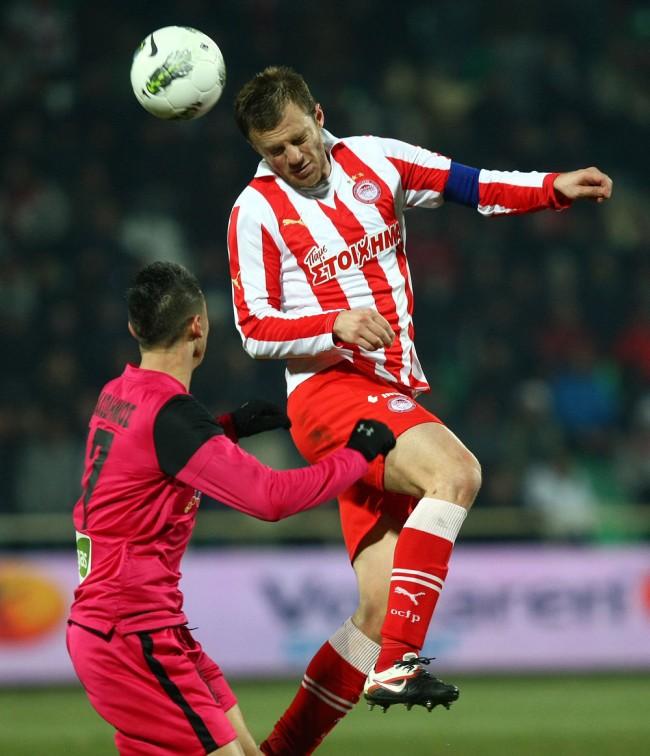
Olympiakos suffered a 4-1 defeat at Besiktas on Thursday night to get eliminated with a 5-2 aggregate score.

Even though the Turkish team played with only 10 of its men for almost 55 minutes after a straight red card shown to Vincent Aboubakar, the Reds’ performance was disappointing.

Let down by its defence and its keeper, Olympiakos let two goals in from the Turks during the first 22 minutes, first through Aboubakar and then via Ryan Babel.

The Piraeus team bounced back for a moment with a spectacular volley by Tarik Elyounoussi that hit the back of the net, and gained a man’s advantage on the 39th when Aboubakar hit Panayiotis Retsos offering the Greek side a 2-1.

While the Reds needed one more goal to go through, the closest they got was Costas Fortounis’ go at the net with the ball hitting the frame.

It was on the 75th minute that Babel scored his second goal and Besiktas’s third with the final score being work of substitute Cenk Tosun, six minutes before the end.

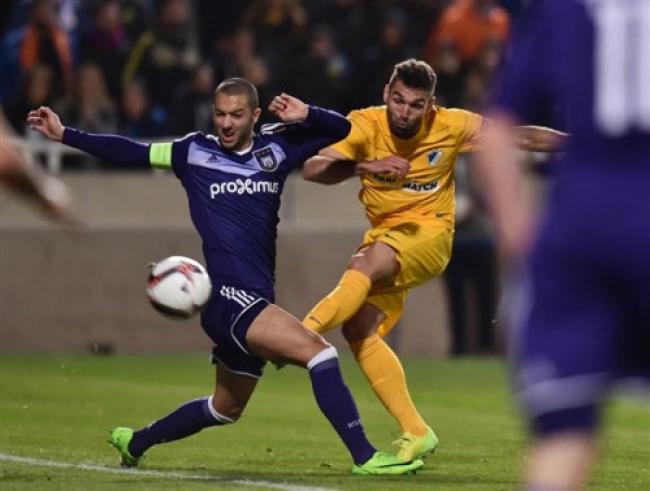
On the Cyprus front now, Substitute Frank Acheampong scored with his first touch to seal a 1-0 second-leg win for Anderlecht as APOEL were beaten 2-0 on aggregate in the last 16 of the Europa League.

Early openings came and went for Lukasz Teodorczyk and APOEL were fortunate to head into the interval still level as goalkeeper Boy Waterman was worked time and time again, fourfourtwo reports.

The visitors’ improvement in the second half was minimal, though, while the Ghana international’s impact was immediate.

Pieros Sotiriou and Lorenzo Ebecilio snapped APOEL’s first notable efforts off target while Teodorczyk missed another headed chance and Waterman scrambled across his line to stop Hanni’s shot, but the deadlock was finally broken with 25 minutes remaining.

Hanni drove into the area on the left and delivered a centre that Waterman could only help towards the waiting Acheampong, who had the simple task of converting into an empty net.

APOEL rallied, with Ruben Martinez saving well from Kostakis Artymatas, but the pressure came too late for the visitors as they crashed out.

Source: Neos Kosmos

NPL clubs across Australia press for seat at FFA Congress

This period marks a critical juncture in the history of the game Down Under, and the NPL clubs know it.

NPL clubs across Australia are on the march sensing a critical juncture in the history of the game in this country. A newly formed association, representing 90 per cent of the 110-115 NPL clubs nationwide, has convened an inaugural meeting in Melbourne this Monday to elect officials and prioritise its objectives.

Spokesperson for the Association of Australian Football Clubs (AAFC), Thomas Kalas, says the meeting is expected to draw 60-70 representatives from all over the country.

Impetus for the formation of the group was the FFA’s recent announcement of the need to develop a new model of ownership and structure for the A-League and W-League, following its analysis which revealed that expansion under the current model would lead to unsustainable losses.

The announcement set off alarm bells for the NPL clubs. As Kalas explained to Neos Kosmos, “The NPL clubs have been starved for way too long. We’ve locked the money in the top tier of football, A-League, and FFA headquarters in Sydney, and we’ve starved the rest of the football landscape in Australia to the point where everyone is struggling and has had enough, to be frank.

“Football is where it is today because we’ve been following a flawed strategy. The FFA came out publicly two weeks ago, where they said the financial model is wrong for football. After that came out, we were extremely alarmed, because that has massive repercussions for the football landscape. We need to get involved and we need to help.”

With the FFA under pressure from FIFA to change its constitution and governance structures, the formation of the AAFC is a timely move by the NPL clubs to have a stronger voice and become involved in the decision making.

Kalas told Neos Kosmos that the AAFC has already notified the FFA that it wants “a seat at the congress that is scheduled at the end of the month alongside the A-League Clubs and the PFA (Professional Footballers Association), where they will determine the voting structures for the change in the constitution.”

The AAFC has also briefed FIFA of its intention to pursue direct representation at the forthcoming FFA Congress and direct representation on the FFA board.

“We represent over 30,000 players across Australia. I hope they (FFA) understand we have a lot of expertise. We have a lot of insight. Obviously what they’ve rolled out these past years, has not worked, so we need to help, for our membership. We need to focus on that area. If we don’t invest in infrastructure, facilities and fund that tier of football, Australia’s football future is in very dire circumstances.”

“Football in Australia is funded from the bottom up. We need to change that mechanism and what model we decide, will be determined on the table, but we need to be there to argue the case and to explain and to educate, because sometimes people are a little bit too removed from the coalface, from what their decisions have repercussions and impact on.
“It’s not just asking for money. We have to change the model of football. What we did in Australia over the last decade, we tried to build football without building a football culture… to fill stadiums with deep football culture will take two or three generations. In the interim, we need to invest, develop, and grow the football clubs in the tiers under the A-League, because that’s the engine for football growth.”

It’s not yet clear what the AAFC’s preferred model would look like, but it’s reasonable to assume it would involve the introduction of a second-tier national competition at some stage. Kalas says the AAFC will commission a study to help build a model.

“We can’t do this quickly. It’s not going to be next month or next year. We’ve got to make sure we get it right this time. We’re going to build a football model for Australia. This time we’ve got to do it right.”

Source: Neos Kosmos

Roar signs former Greek international defender

avraam-papadop

Avraam Papadopoulos is headed back to the country of his birth to continue his football-playing career in the A-League

After a false alarm earlier in the year, Australian-born former Greek international Avraam Papadopoulos is headed back to the country of his birth to continue his football-playing career in the A-League.

Brisbane Roar has announced it has signed the central defender to strengthen John Aloisi’s defence as the Roar prepares for an Asian Champions League campaign as well as a domestic finals campaign.

The 32-year-old Papadopoulos will join the Roar as an injury replacement for defender Daniel Boawles, who appears to be out for a lengthy break following an injury sustained in last weekend’s 2-2 A-League draw with Melbourne City.

Roar has signed Papadopoulos despite recent reports Sydney FC had considered signing him as a replacement for the departed Matt Jurman but decided against the move once it became known that Papadopoulos was still the subject of ongoing match-fixing investigations stemming back to his playing days in the Greek Super League.

But this hasn’t deterred Roar, which has been anxious to find an injury replacement prior to the looming AFC Asians Champions League player registration deadline.

“Avraam is a footballer who has experience playing at the highest level for both club and country. He is currently still in Europe but will join the playing group as soon as possible,” Brisbane Roar’s football director Craig Moore said of Papadopoulos.

Melbourne-born Papadopoulos played 37 times for the Greek national team, last appearing in 2013 after also being a member of the team which played at the 2010 World Cup finals.

After first playing for Aris in Greece, he became an important part of the defence of Olympiakos between 2008-14, making 124 appearances and helping the team win five Greek Super League titles. After leaving Olympiakos, Papadopoulos earned the distinction of becoming the first Greek footballer to play in the Chinese Super League when he joined Shanghai Shenhua in 2015, followed by a 2016 season playing in the Japanese J1 League with Jubilo Iwata.

Source: Neos Kosmos

Hunter coal mines to Chinese for $3.2 billion

untitled

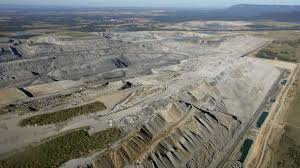
With the acquisition, Yancoal will now own some of the largest single coal mines in Australia, with a suite of mines in NSW and Queensland. It is yet to clarify how it will fund the purchase, although a share issue is expected to be launched in the June quarter.

The Chinese-controlled company will more than double in size, producing more than 42 million tonnes of coal in Australia.

News of the sale triggered a surge in Rio shares in London trading overnight, rallyig by more than 3 per cent.

Rio is to receive an immediate $US1.95 ($2.6) billion, in cash, with the remaining $US500 ($660) million paid in annual $US100 ($132) million instalments.

The sale of Rio’s Coal & Allied unit represents the culmination of an extensive assessment of all strategic options for these assets, the Anglo-Australian miner said, and it comes after “a comprehensive market testing and price discovery process” along with negotiations with a number of potential buyers.

The mines being sold to Yancoal produced 25.9 million tonnes of thermal and semi-soft coking coal in 2016 of which Rio’s share was 17.1 million tonnes. The net assets subject to this sale agreement had earnings before tax of $US102 million in the 2015, and a gross asset value attributable to them of $US1.895 billion as at June 2016.

Yancoal Australia is 78 per cent owned by Yanzhou Coal Mining Co of Hong Kong, which is in turn controlled by an arm of the Chinese government. Yancoal sells around 25 million tonnes of coal annually produced at its Australian mines.

The deal is subject to state and federal government scrutiny, Rio said.

Following settlement, Yancoal is to a pay royalties of $US2 a tonne as long as the thermal coal price is over $US75 a tonne.

Yancoal’s offshore parent said it will pump $US1 billion of additional equity into its Australian arm while also looking for other investors to take up shares in any fund raising.

source:theherald.com.au

Belgian Philhellene warms up 7,000 children and 40 schools in northern Greece

jamarconcert

‘This is a small token of my appreciation towards Greece’ – Jimmy Jamar

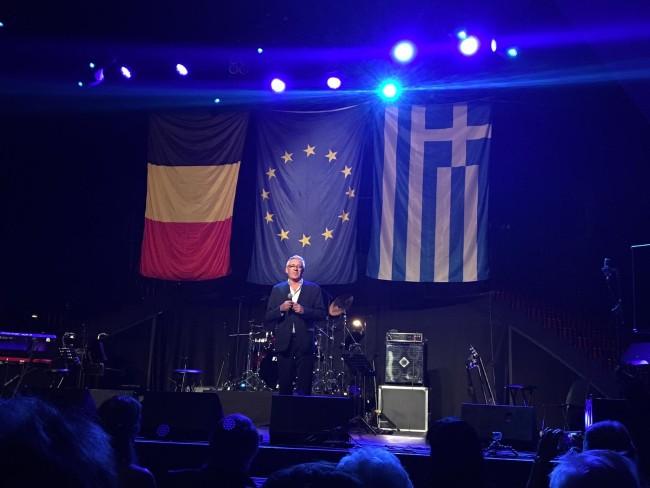
Through his charity initiative ‘Fuel for Schools’, Goodwill Ambassador Jimmy Jamar, who is also the head of the European Commission Representation in Belgium, has managed to raise €35,278 in order to heat 40 schools and 7,000 students in northern Greece.

It all started back in 2012 when, as a sign of solidarity and friendship towards the Greek people, a group of Belgian and European citizens living in Brussels launched a cultural event by the name of 12 Hours for Greece. Besides promoting Greek culture and gastronomy, the aim of the initiative, which is run entirely by volunteers, is to raise money and support Greek associations operating within the fields of health and education.

In previous years, the events have enticed thousands of people and have hosted well-respected Greek and Belgian artists such as Lavrentis Machairitsas, Dionysis Savvopoulos, Aleka Kanellidou, Panos Mouzourakis, Georges Corraface and Salvatore Adamo, in an attempt to raise funds and assist the Make-a-Wish Foundation, To Hamogelo tou Paidiou (The Smile of a Child), Médecins sans Frontières, ELEPAP (Greek Association for Handicapped Children) and the International Foundation for Greece.

Jimmy Jamar studied law and international relations in Belgium, Switzerland, Italy and the United States. He joined the European Commission in 1994 and, besides being the head of the commission representation in Belgium, he is also a real philanthropist and a true Philhellene.

In an interview with Neos Kosmos, Jamar talks about his 12 Hours for Greece initiative, his charity organisation and his endless love affair with Greece, which counts back to 1969 when the head commissioner first set foot in Katakolon in the Peloponnese.

What inspired you to go ahead and set up an initiative that helps Greek people?
It all started in the winter of 2011-2012, at the peak of the crisis. I decided that as a friend of Greece I had to do something and help in any way I could. I was posted in the Netherlands at the time and on my return, in February 2011, I had exactly 10 weeks to organise my first 12 Hours for Greece.

During those 10 weeks, I founded a charity organisation, booked a theatre, set up a 12-hour program with readings and dances and put together a fabulous music concert. I hardly slept during that period but the outcome was a great success that attracted lots of media attention and was received extremely well by thousands of people.

How did this year’s fundraising go and are you pleased with the outcome?
On 22 October we organised the fifth consecutive 12 Hours for Greece event and I can safely say that the spirit is evident more than ever. We collected just over €35,000, which enables us to heat 40 schools and subsequently keep more than 7,000 children and their teachers warm during the winter months. I just came back from my first tour of northern Greece, between Alexandroupoli and Kavala, where we delivered fuel to eight of these schools. I will be back again in January, to visit another eight schools on the island of Samothraki and several others.

How long did it take you to collect the funds and attract sponsorships?
I work on this project all year round. In the first part of the year, I try to identify potential sponsors and spend a lot of time with them in order to show them what it is that we do. I also visit Belgian schools in an attempt to establish connections with schools in northern Greece.

Then I start planning for the concert, which is usually pencilled in for October. I select the performing artists, organise all bookings and travel arrangements and, together with a small organising committee we schedule meetings with Greek restaurant owners to encourage them to offer meals to people that need it most. Once we collect the funds from the concert, together with the International Foundation for Greece, we select the schools that will receive our assistance and start deliveries in December.

How hard was it to collect the funds and encourage people to donate towards this cause?
The project is now well known among the Greek community in Brussels, but of course, it’s always difficult to collect money. Some people think the crisis is over just because Greece doesn’t feature in the front pages of the world media any more. This perception is entirely incorrect.

I always invite those people to come with me and visit the schools so that they can see for themselves that the situation remains rather dramatic. There are hundreds of schools that struggle to purchase fuel. I saw the empty tanks.

How did the Greeks of Belgium welcome the initiative?
Brussels has a large and very well-organised Greek community of around 20,000 people. People here and in Greece are well aware of our initiative, therefore we receive a tremendous amount of support from the Greeks living in Belgium, as well as from many Belgians and foreigners living in Brussels.

How many schools did you visit in Greece and what was the reaction of the Greek people?
I initially organised a press conference in Athens on 12 December and the majority of the artists that performed in the Brussels’ concert on 22 October (Lavrentis Machairitsas, Vassilis Lekkas, Alexandra Gravas, Petros Bouras) attended. That’s always a very emotional and passionate moment for everyone. The artists describe their experiences from Brussels, their reasons for participating in the initiative and the feelings they brought back home from their time in Belgium.

Then, together with the president of the International Foundation for Greece, Aspasia Leventis, we flew to Alexandroupoli where we started fuel deliveries.

Overall, we travelled 400 kilometres in one day, going through from Alexandroupoli to Kavala and distributing fuel to eight schools. So far we have visited one school in Avanta (near Alexandroupoli), three schools at Stavroupoli near Xanthi, two in Paranesti (between Xanthi and Drama) and two in Nevrokopi (just south of the Bulgarian border).

I could never even attempt to describe and one could never fathom the emotions and reactions we experience at every school that we visit. Meeting with the school principals, the teachers, the students and their parents is such an amazing and moving experience that it fuels the soul with more energy to get back on the road and collect more funds for those people who need it the most.

You have written two books on Greece. You have set up a not-for-profit organisation whose aim is to assist the country in a time of turmoil, you own a house in Folegandros and you are always very complimentary towards our country. It seems like you have an endless love affair with Greece. Is that true?
I love Greece. I have always loved this country ever since I set foot in the harbour of Katakolon in the spring of 1969. It is a relationship that has been building up over all these years. My project for the schools is just a small token of appreciation for everything that Greece has given me and my wife, who is Greek, throughout the years. We both visit Greece as much as we can and stay at our little house in Folegandros, a beautiful little island in the Aegean.
The truth of it is, my love for Greece first started 45 years ago, and it hasn’t stopped since.

source:neoskosmos.com

Greek Orthodox church to be sued after woman slips on wet leaf

springvale

The 70-year-old is claiming damages, including the cost of past and future medical expenses

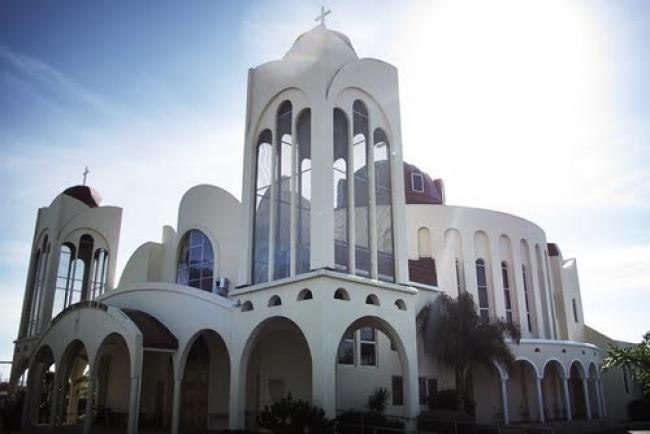
Springvale’s St Athanasios Greek Orthodox Church is being sued based on claims by a 70-year-old parishioner that she slipped on a wet leaf at the premises.

According to a report by the Herald Sun, Penelope Liakopoulos said that the church was negligent in its failure to remove the leaf from the foyer of the premises, or should at least have warned her over its presence.

In the statement that was lodged with the Country Court, Ms Liakopoulos claimed that as a result of the incident she fractured her right wrist.

Described as a traumatic experience, she was required to undergo surgery and has continued to endure aftereffects such as ongoing pain and restricted movement and is claiming damages, including past and future medical expenses.

Ms Liakopoulos says the church has a duty of care to parishioners to avoid exposing them to such potential risks, and that they failed to do so.

She says the church should have an anti-slip coating on the floor of the building’s entrance, and have a system in place for inspecting floors “for slip hazards such as the leaf”, or preventing them from entering the premises.

In an interview with Neos Kosmos, St Athanasios parish priest Father Efstathios Ladas said he did not know exactly what had happened, but added that Ms Liakopoulos is clearly seeking compensation through her allegations.

Father Ladas says that the church’s solicitor and insurance company are currently handling the matter.

source:neoskosmos.com