Category Archives: Uncategorized

Kangaroo cull in Canberra’s nature parks to target almost 2,500 eastern greys

images

The number of eastern grey kangaroos in the territory will be reduced by almost 2,500 during a controversial annual cull, the ACT Government has announced.

Parks and Conservation director Daniel Iglesias said 2,466 kangaroos would be culled across Canberra’s nature parks between April 30 until August 1.

That number is up almost 1,000 animals on last year’s target of 1,600 kangaroos.

Mr Iglesias said after successive years of culling some areas like Mulligans Flat now had sustainable kangaroo numbers, but this year culling would also take place in Gungaderra Nature Reserve, resulting in a higher target number.

“There isn’t a need to cull in those areas at all this year, so what we’ve done is we’ve incorporated some priority nature reserves which we haven’t culled in before,” he said.

Mr Iglesias said the majority of the extra quota was accounted for by culling at Gungaderra Nature Reserve.

“Culling of overabundant kangaroos is currently the most humane method of population control available to the ACT Government as a responsible land manager,” he said.

“However we are continuing to explore alternative, non-lethal options to reduce the population of kangaroos and protect the biodiversity of Canberra’s nature reserves.”

In July the Government will begin a two-year trial into the effectiveness of contraceptive darts to control kangaroo numbers across Canberra.

The drug, GonaCon, has been used overseas to stop female deer, bison and boar from producing young, but the ACT trial on about 200 kangaroos will be an Australian first.

The annual culls have been marred by various protests and legal challenges over the past six years, with animal activists arguing there was no scientific evidence to prove reducing kangaroo numbers helped the environment.

The Government has consistently argued that heavy grazing by kangaroos threatened the survival of some grassland sites and species.

But last year Animal Liberation ACT took legal action to try to stop the kangaroo culls and also opposed fertility control measures.

As a result, 1,519 animals were shot during 2014’s winter at eight reserves, just short of the target of 1,600 after court action slowed the start of the annual cull.

This year Callum Brae Nature Reserve, Crace Nature Reserve, Goorooyarroo Nature Reserve, Gungaderra Nature Reserve, Kama Nature Reserve, Mount Painter Nature Reserve, Mulanggari Nature Reserve, Wanniassa Hills Nature Reserve and the Pinnacle Nature Reserve will be closed during the evening between Thursday April 30 and Friday August 1.

source:abc.net.au
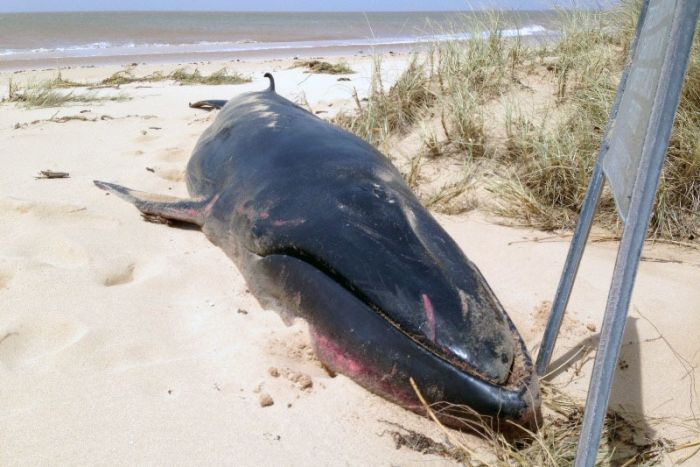
Omura’s whale: Rare carcass washed up on WA beach to shed light on biology of little-known species

6391756-3x2-700x467

A rare Omura’s whale has been found washed up on a West Australian beach, giving scientists a chance to learn more about the species.

The rarely sighted whale was discovered on a remote beach at Exmouth, at the tip of the state’s North West Cape, after Tropical Cyclone Olwyn tore through the area last month.

It is the first sighting of the species in WA and only the second in Australia.

Identifying the 5.68-metre juvenile female was difficult for Department of Parks and Wildlife staff, but DNA profiling confirmed it was an Omura’s whale.

WA Environment Minister Albert Jacob said the find was “highly significant” for whale scientists because very little was known about the species.

“Omura’s whale was only described in scientific journals for the first time in 2003 and is apparently restricted to tropical and subtropical waters,” he said.

“The knowledge we gain from this whale will help to improve field identification guides to better understand the whale’s regional distribution.”

The species is usually found in Indonesian waters, the Philippines and the Sea of Japan.

Second ever sighting in Australia

Department of Parks and Wildlife officer Doug Coughran said it was the first recorded sighting of the species in Western Australia and only the second nationally.

He said the discovery was extremely valuable to the scientific community.

“It’s a species that has similarities to others but nothing that was obvious other than that hooked dorsal fin and there’s not a lot known about how they look in the field because there’s so few records and very little in the literature about key identifying features and that’s what we’re trying to establish and this will help,” Mr Coughran said.

“Collectively we’ve written a manuscript to a journal for peer review and once it gets through that process it then contributes to the extension of the range.

“It was not thought to be that far south in the eastern side of the Indian Ocean – it was only known from the waters north of the equator and down as far as the Indonesian waters and across to New Guinea.”

Mr Coughran praised the work of those near Exmouth who helped get him DNA samples so soon after the cyclone hit.

“What’s likely to have happened was it’s brought up, dumped by its own weight and died during the dark hours of the night and wasn’t found until the morning,” he said.

“The fact that they [the residents] all came out of their cyclone shelters that morning and the first phone call they got I think was from me asking them to bolt up there and find it and then get hold of a sample … they did a terrific job when you consider all the debris all around.”

Omura’s whales have a sleek body shape and several unique skeletal features, including 53 vertebrae and four digits on each pectoral fin.

The carcass has been buried and the skeleton will be recovered in a few years for further scientific investigation and possibly for public display in museums.

source:abc.net.au

Russia to deliver S-300 missiles to Iran as sign of ‘good will’ over nuclear talks

index

The $800 million deal to supply Iran with the sophisticated S-300 air defense system had been frozen for years amid objections from the United States and Israel. Both nations objected Monday.

Russia informed Iran Monday it would soon make good on the long-overdue delivery of a sophisticated air defense system, a sign that Tehran is already reaping the benefits of international negotiations over its nuclear program.

For Iran, the lifting of international sanctions is central to the high-stakes diplomatic standoff over curbing its nuclear ambitions. While an agreement is supposed to be finalized by June 30, how and when to lift the sanctions remains a stubborn sticking point.

But for Russia, the interim agreement reached earlier this month in Lausanne, Switzerland between Iran and the so-called P5+1 world powers was all it needed to abolish a ban on supplying Tehran with the sophisticated S-300 missile system, which is designed to intercept warplanes and ballistic missiles at a range of up to 150 kilometers (93 miles).

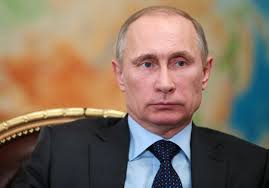
Russian President Vladimir Putin signed a decree lifting the ban Monday, Reuters reported. The move, which significantly bolsters Iran’s military capability, also may signal Moscow’s push for a head start in the race to benefit from the possible opening up of the Islamic republic.

“It was done in the spirit of good will in order to encourage progress in talks,” Russian Foreign Minister Sergey Lavrov said in a televised statement. “We are convinced that at this stage there is no longer need for such an embargo, specifically for a separate, voluntary Russian embargo.”

The $800 million deal to supply the S-300 missile system, which is similar to the US Patriot missile system, was signed in 2007.

In 2010, then-President Dmitry Medvedev called off the deal because of tightened UN sanctions on Iran and strong objections from the United States and Israel. The two nations feared it could be used to protect Iranian nuclear sites from air strikes.

Israeli officials expressed similar concerns following the announcement Monday. Israeli Intelligence Minister Yuval Steinitz denounced Russia’s decision to lift the ban as proof of Tehran’s newfound “legitimacy” following the nuclear talks, Agence France Presse reported.

“This is a direct result of the legitimacy that Iran is receiving from the nuclear deal that is being prepared, and proof that the Iranian economic growth which follows the lifting of sanctions will be exploited for arming itself and not for the welfare of the Iranian people,” Mr. Steinitz said in a statement.

According to the White House, US Secretary of State John Kerry raised objections over the move in a phone call Monday with Mr. Lavrov.

Russia is a main supplier of arms to Middle Eastern countries, including to governments that don’t recognize the Jewish state. Israeli leaders have long tried to persuade Moscow to scale down its cooperation with Iran and Syria.

Russian arms sales have plummeted in recent months, in part because of Western sanctions over the conflict in Ukraine. The country sold $5.98 billion worth of military equipment worldwide in 2014, down from $8.46 billion the previous year, according to the Stockholm International Peace Research Institute (SIPRI). In comparison, the United States, the world’s largest arms exporter, sold $10.2 billion worth of equipment last year.

Lavrov didn’t say when Moscow would deliver the S-300 missile system to Iran, according to the Associated Press. But he was quoted by Interfax, the state-run Russian news agency, as saying that the Kremlin was ready to supply it “promptly.”

Iran was the16th largest buyer of Russian arms last year, purchasing $4 million in missiles, according to SIPRI.


source:csmonitor.com

Joe Hockey hits back at Peter Costello

889446-0953e17c-e22c-11e4-a040-21c719ecae94

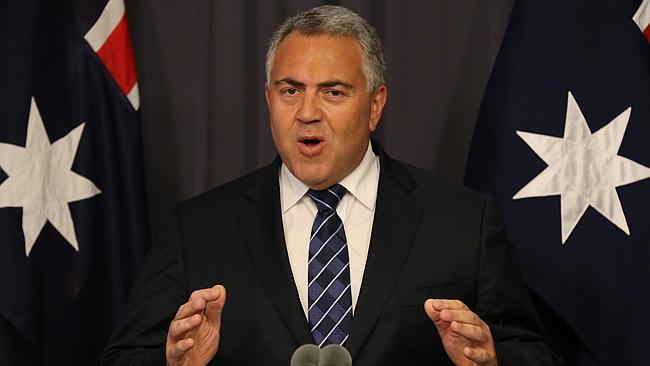
Treasurer Joe Hockey at a press conference at Parliament House in Canberra following his meeting with State and Territory Treasurers in search of a greater slice of the GST pie. Source: News Corp Australia

Opposition Leader Bill Shorten has ridiculed Treasurer Joe Hockey’s war of words with Peter Costello and Western Australia over the GST, citing it as evidence of a government “in disarray’’ with “no Plan B’’ to manage collapsing iron ore prices.

Joe Hockey lashed out at Mr Costello after the former treasurer accused the Abbott government of launching a “debased” tax discussion that could create “poverty traps” and damage the economy.

At a press conference in Sydney, Mr Shorten said the government’s “budget mess, dishonesty and incompetence” were undermining consumer and business confidence.

“It is a complete joke, what we are seeing at the moment. We are seeing former Liberal treasurers attack current Liberal treasurers, you’ve got the states begging for crumbs from the bowl of Joe Hockey and Tony Abbott all because Joe Hockey and Tony Abbott cut $80 billion from state-funded hospitals and schools in their last budget,’’ Mr Shorten said.

“This is a government in disarray. If Peter Costello is right, Joe Hockey is a joke — but Australians stopped laughing a long time ago.”

Mr Shorten said the Coalition had “no plan B” to manage collapsing iron ore prices.

“The transition from the mining sector to the non-mining sector is underway, and experts have been looking at this for two years. And what’s Joe Hockey and Tony Abbott’s plan? They don’t have one,” he said.

The Treasurer, speaking from the New York Stock Exchange early this morning, said he would consider freezing Western Australia’s plummeting GST revenue but demanded Perth commence the “absolutely necessary structural reforms” of privatisation and business deregulation.

Earlier Mr Costello described the government’s commitment to “lower, simpler, fairer” taxes as a “morbid joke”, noting the Coalition had foreshadowed possible tax increases on banks, multinational companies and superannuation accounts.

The senior Howard government minister argued the government should be cutting income taxes to alleviate bracket creep, rather than pushing up taxes.

Mr Hockey said Mr Costello’s analysis was “wrong” and urged him to stop “longing for yesterday”.

“I really wish that I had the tax revenue that Peter Costello had when we were last in government because if we had the same level of tax collections I’d be collecting an extra $25 billion today,” Mr Hockey told Sky News, saying the falling revenues had compounded increased spending under Labor.

“Everyone’s entitled to give free advice and frankly that’s what it’s worth; it’s free advice.

“I would suggest that people stop looking back to what was and focus on the challenges of today and the challenges of tomorrow. No matter who they are, we’ve got to look to the future rather than longing for yesterday.”

Mr Hockey also said it was “certainly” an option to freeze WA’s collapsing GST revenue if the other states agreed.

“I think the other states are putting appropriate pressure on Western Australia to undertake the sort of difficult but absolutely necessary structural reform in the West Australian economy that is necessary for it to continue to strengthen over time,” Mr Hockey said.

“When NSW has just gone through a very tough political fight over the sale of poles and wires, Western Australia still owns its TAB and still owns its poles and wires and at the moment has no intention of going down the road of microeconomic reform that other states have taken.”

“Western Australia has antiquated laws in relation to retail trading hours and in relation to retail. For example they have restrictions on the sale of lights at night time, which creates real problems for lighting suppliers who I think are allowed to sell light bulbs at night but not light fittings.”

In Western Australia, hardware stores are allowed to open before 11am on Sundays if they stock light bulbs. However they are not permitted to sell light fittings until after 11am.

As South Australia threatens to introduce a long-abolished tax on financial transactions to compensate for federal cuts, Mr Hockey conceded “any state is entitled to introduce its own taxes”.

Writing in The Daily Telegraph, Mr Costello urged the Coalition to deal with “a tax problem”.

“High taxes can be unfair taxes when they take away a person’s justly earned income and reduce the reward for effort.

“As people lose benefits and pay higher taxes … this creates a huge disincentive to work. It creates poverty traps. And, it heightens the incentive to ‘hide’ additional income.

“Another thing curiously absent from this “conversation” is any assessment of how these new taxes will affect economic growth and job creation. Taxes reduce economic activity.

“The Abbott government has already increased the top marginal tax rate to its highest level in 25 years. That did nothing for the economy. It made no difference to the budget deficit.”

source:theaustralian.com.au

Japan to push ahead with Antarctic whale hunt plans

Three minke whales dead on deck the Japanese ship Nisshin Maru in the Southern Ocean in January last year.

Three minke whales dead on deck the Japanese ship Nisshin Maru in the Southern Ocean in January last year. Photo: AFP/Sea Shepherd

Japan is to push on with its attempt to revive Antarctic whaling, after independent experts found it had failed to justify a new hunt.

A plan for a revamped “research whaling” program killing nearly 4000 whales was rejected by an Expert Panel of the International Whaling Commission in a report released on Monday night.

The report will go before the IWC’s full scientific committee next month,  and Japan’s IWC Commissioner, Joji Morishita, said it would try to convince the committee to approve the plan.

But Mr Morishita cautioned that might not be easy.

“The scientific committee is more political than the panel,” he told Associated Press.

“I won’t be surprised if we face some countries that oppose our plans, not because of science.

“But we hope to work toward a resumption (of whaling) at the end of the year.”

The plan, called NEWREP-A was put forward by Japan after its previous program was outlawed by the International Court of Justice in a case brought by Australia.

Australia told the court that the “research” was disguised commercial whaling, in breach of a global moratorium.

Under NEWREP-A, Japan proposes taking 330 minke whales annually in a 12-year program, for a total kill of 3996 – on top of the nearly 10,000 already taken under its previous scientific permits.

Its scientists set two broad objectives for NEWREP-A: obtaining more precise information on minkes should the moratorium ever be lifted; and investigating the Antarctic marine ecosystem.

But the IWC expert panel said in its report that Japan had failed to provide enough information to determine whether killing more minke whales was necessary to meet the research objectives.

“Therefore, the current proposal does not demonstrate the need for lethal sampling to achieve those objectives,” the panel concluded.

The IWC expert panel said considerable work had been undertaken to develop NEWREP-A.

“However … the present proposal contains insufficient information for the panel complete a full review,” its report said.

It proposed a new work program by the Japanese, which might take several years,  to provide more scientific information before a full review of the program could be completed under IWC rules.

Japanese Prime Minister Shinzo Abe has re-committed the country to pursuing Antarctic whaling after the ICJ decision.

“Japan, looking at international law and scientific grounds, will engage in research of whaling in order to collect the indispensable scientific information in order to manage the whale resources,” Mr Abe said on his visit to Australia last year.

Lobbyists from the International Fund for Animal Welfare celebrated the Expert Panel’s decision.

“It’s 2015. You don’t need to be a scientific expert to know there’s no need to slaughter whales in the Southern Ocean,” said Patrick Ramage, global whales program manager for IFAW.

source:smh.com.au

Peter Greste delivers warning on Q&A: ‘If we ignore it, it will come back to bite us’

The star panellist of <i>Q&A</i> was journalist Peter Greste, third from left, who is as gently spoken as he is persuasive.

The star panellist of Q&A was journalist Peter Greste, third from left, who is as gently spoken as he is persuasive. Photo: ABC

Peter Greste had many thoughtful things to say on Monday night’s Q&A, but perhaps his most essential was this: “If we ignore it, it will come back to bite us in the arse.”

It was not intended as a universal admonition to Australians – he was talking specifically about the implications of the recent university massacre in Kenya – but coming from Greste it might as well have been a broader warning to be careful what you vote for.

When you’ve spent 400 days locked in an Egyptian prison for the crime of doing your job, you come decorated with a certain assumed moral authority. A tougher task is to wear that garb well. Peter Greste – as gently spoken as he is persuasive of view – carried the garlands effortlessly. He commanded the field so easily that once again you wondered why Q&A had not dispensed with its five-panel tradition and handed the floor to its star attraction.

He showed that when one’s recent life experiences put one’s beliefs to the test, gratitude only goes so far. Greste has recently been effusive in his thanks for the efforts made towards his release by politicians – notably and correctly, to Foreign Minister Julie Bishop, whose face-to-face diplomacy on his behalf he compared a few weeks back to her counterparts being “hugged by the Terminator”.

Of course, Greste’s fight for freedom was a bipartisan issue – as bipartisan, for example, as the debate over data retention. Or, for another example, the fight against terrorism being summoned as justification for almost anything. Or, for yet another bipartisan embrace of a focus group winner, the dog-whistle demonisation of a particular religious group.

Whatever their support for him personally, Greste was not about to give either major party a free pass on these shortcomings, even if he didn’t make reference to either in his answers. The implication of his experience brought the weight.

He was at his most powerful in response to an audience question on the Koran and its alleged influence on terrorist acts.

His opening line dispatched the obvious but necessary: “I think if you dig around the Bible you’ll find plenty of excuses as well.”

Then he went on.

“Look, there are 1.5 billion Muslims in the world today, 23 per cent of the world’s population is Islamic. We’re not at war with 23 per cent of the world’s population,” he said.

“We can dig around and find all sorts of excuses. To my mind this is one of the biggest problems. This is not a clash of civilisations.”

Greste argued eloquently against the recently legislated collection of metadata – “we’re creating a lot of dark spaces within government” –  and warned against falling into line a behind policy built around what host Tony Jones called “the T word”.

Did Greste think Australia was exempt from politicians invoking it to justify their agenda?

“No, I don’t,” Greste replied.

“I think terrorism is clearly a big issue  … but I think there is a real danger that terrorism is used as a kind of scare tactic, as this way of government taking it as an opportunity to impose all sorts of draconian restrictions and limitations which it would never get away with under other circumstances.”

Greste’s presence had his two fellow panellists from the federal parliament – the Coalition’s Mitch Fifield and Labor’s Alannah MacTiernan – scrabbling to find areas of agreement with their heroic Q&A desk partner.

Fifield tried this, on the question of a global code of governance for the rights of journalists: “We’ve got to acknowledge that Peter has earned the right through his unique commitment to freedom of the press to have any proposition that he puts forward seriously looked at.”

But Fifield, like MacTiernan, was pushing the proverbial uphill, as when the Labor MP tried to have it both ways on Labor’s support for the metadata bill. As Jones told her: “That sort of begs the question as to why you voted for it.”

Indeed it did, and it was a question she couldn’t properly answer. It made you wonder, how would your run-of-the-mill Aussie pollie answer other questions, such as this one to Greste: just how did he get through those 400 days?

If you’d told him what awaited beforehand, “I’d have thought I’d go mad”, he admitted. But when asked to answer the challenge, he’d learned: “I’m tougher than I thought I was.”

And that summed it up: in Greste’s presence, the politicians were left to wonder what a really tough question looks like.

source:smh.com.au

Η ίδια η Ελληνική κυβέρνηση επιδιώκει το Grexit, λέει σύμβουλος του Σόιμπλε

C4E42008971BB4AA61B3905F8187D11B

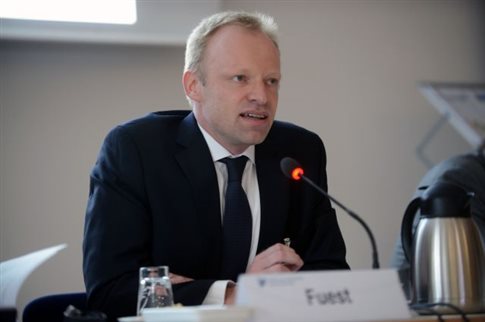
Μέχρι πρόσφατα, ο Γερμανός οικονομολόγος, πρόεδρος του Κέντρου Ευρωπαϊκής Οικονομικής Έρευνας του Μάνχαιμ και μέλος της Επιστημονικής Επιτροπής του γερμανικού υπουργείου Οικονομικών, Κλέμενς Φούεστ, τοποθετούνταν εναντίον μιας εξόδου της Ελλάδας από το ευρώ.

Τώρα, σε σημερινή συνέντευξή του στην αυστριακή εφημερίδα Der Standard, ο εκ των συμβούλων του Βόλφγκανγκ Σόιμπλε, εμφανίζεται να πιστεύει ότι η νέα ελληνική κυβέρνηση θέλει η ίδια ένα Grexit και τη συμβουλεύει πως εάν συμβαίνει κάτι τέτοιο, να μην περιμένει άλλο.

Στη συνέντευξή του, ο Κλέμενς Φούεστ αποφαίνεται αρχικά ότι δεν διακρίνει προσπάθεια της Ελλάδας να φέρει ισορροπία ανάμεσα στην κοινωνική απάλυνση και στην πολιτική λιτότητας και ότι η κυβέρνηση θα έπρεπε να αρχίσει μία σοβαρή συζήτηση με τους δανειστές για το πώς θα επιτύχει τους στόχους εξυγίανσης στον κρατικό προϋπολογισμό και πώς αυτό μπορεί να είναι συμβατό με στοιχειώδη κοινωνικά κεκτημένα, κάτι που, κατά την άποψή του, δεν είναι αδύνατο.

Προσθέτει δε, ότι αυτό μπορεί να επιτευχθεί, για παράδειγμα, με την αύξηση του φόρου στα ακίνητα ή με την ιδιωτικοποίηση επιχειρήσεων και την εφαρμογή των αναγκαίων μεταρρυθμίσεων, όμως, αντί αυτού, όπως λέει, «η κυβέρνηση στην Ελλάδα προσλαμβάνει ανθρώπους στο δημόσιο τομέα, ο οποίος ούτως ή άλλως έχει ήδη πολλούς υπαλλήλους, αυξάνει τον κατώτατο μισθό και σταματά τις ιδιωτικοποιήσεις».

«Είναι δύσκολο να κατανοήσει κανείς τι θέλει η ελληνική κυβέρνηση και κανείς έχει την εντύπωση, ότι η ίδια επιδιώκει το Grexit» αποφαίνεται ο Γερμανός οικονομολόγος για να προσθέσει ότι το κύριο πρόβλημα στην περίπτωση μίας εξόδου της Ελλάδας από το ευρώ δεν είναι η σταθερότητα των χρηματαγορών, αλλά σημαντικότερες θα ήταν οι πολιτικές και οικονομικές συνέπειες, προπάντων για την ίδια την Ελλάδα.

Ο ίδιος, όπως σημειώνει, εκφράζει φόβους ότι θα οξυνθεί η κρίση στην Ελλάδα, εάν παραμένει τους επόμενους μήνες αυτή η εκκρεμότητα με υψηλή ανασφάλεια για το μέλλον της χώρας και υπό αυτή την έννοια θεωρεί «ανεύθυνο τον τρόπο που συμπεριφέρεται η κυβέρνηση, η οποία, αν πραγματικά θέλει την έξοδο από το ευρώ, δεν θα πρέπει να περιμένει άλλο».

Πηγή: in.gr

Διαψεύδει η κυβέρνηση τους Financial Times για «συμφωνία ή χρεοκοπία»

Διαψεύδει η κυβέρνηση τους Financial Times για «συμφωνία ή χρεοκοπία»

Η Ελλάδα προετοιμάζεται για χρεοκοπία εάν δεν υπάρξει συμφωνία στις διαπραγματεύσεις με τους εταίρους και δανειστές, γράφουν οι Financial Times επικαλούμενοι Έλληνα κυβερνητικό αξιωματούχο, ο οποίος δηλώνει ότι «φθάσαμε στο τέλος του δρόμου».

Διαψεύδουν κύκλοι του Μεγάρου Μαξίμου το δημοσίευμα των FT, όπως και σενάρια πρόωρης κάλπης στα οποία επανήλθε η γερμανική Bild, λέγοντας ότι την 24η Απριλίου θα αποδειχθεί μία ακόμη ημερομηνία που δεν θα έλθει το τέλος του κόσμου.

Η Ελλάδα ετοιμάζεται να προχωρήσει σε ένα δραματικό βήμα και να κηρύξει πτώχευση εκτός και αν μπορέσει να κλείσει συμφωνία με τους διεθνείς πιστωτές της, έως τα τέλη του Απριλίου, γράφουν οι Financial Times.

Η εφημερίδα υποστηρίζει πως σύμφωνα με τις ίδιες πηγές, η κυβέρνηση αποφάσισε να παρακρατήσει την δόση των 2,5 δισ. ευρώ στο ΔΝΤ, που πρέπει να καταβληθεί τον Μάιο και τον Ιούνιο, εάν δεν επιτευχθεί συμφωνία.

«Φτάσαμε στο τέλος του δρόμου […] εάν οι Ευρωπαίοι δεν ελευθερώσουν ρευστό από το πρόγραμμα διάσωσης, δεν υπάρχει εναλλακτική» ανέφερε αξιωματούχος της κυβέρνησης που επικαλούνται οι FT.

Η εφημερίδα γράφει πως η Γερμανία και άλλοι εταίροι της Ελλάδας υποστηρίζουν ότι είναι σίγουροι πως η ευρωζώνη είναι αρκετά δυνατή για να αντεπεξέλθει τις συνέπειες μιας ελληνικής πτώχευσης, αλλά ορισμένοι αξιωματούχοι αναγνωρίζουν ότι θα είναι μια «βουτιά στο άγνωστο».

Υπογραμμίζεται επίσης και η δήλωση του υπουργού Οικονομικών της Ελλάδας Γ.Βαρουφάκη, ο οποίος επιβεβαίωσε τη δέσμευση της Αθήνας να φτάσει σε συμφωνία με τους εταίρους αναφέροντας πως «συνεχίζουμε αδιαλείπτως να αναζητούμε αμοιβαία επωφελή λύση, σύμφωνα με τις εντολές που λάβαμε στις εκλογές».

Κυβερνητικές πηγές διέψευσαν το δημοσίευμα τονίζοντας ότι δεν θα υπάρξει καμία χρεοκοπία, η κυβέρνηση δεν προετοιμάζεται για χρεοκοπία και θα απογοητευτούν όσοι υποστηρίζουν κάτι τέτοιο. Το Μέγαρο Μαξίμου σημειώνει ότι συνεχίζονται οι διαπραγματεύσεις με εντατικούς ρυθμούς για μία αμοιβαία επωφελή λύση και η 24η Απριλίου θα αποδειχθεί μία ακόμη ημερομηνία που δεν θα συμβεί το τέλος του κόσμου.

«Έχουν προηγηθεί η 25η Ιανουαρίου [εκλογές], η 28η Φεβρουαρίου [ημερομηνία λήξης της συμφωνίας Σαμαρά], η 9η Απριλίου [δόση προς ΔΝΤ]. Αυτό που φαίνεται να ενοχλεί είναι ότι η ελληνική κυβέρνηση είναι αποφασισμένη να βάλει τέλος στις πολιτικές λιτότητας βάζοντας ψηλά στην ευρωπαϊκή ατζέντα το ζήτημα της ανάπτυξης. Περιμένουμε με ενδιαφέρον το άρθρο των Financial Times της 25ης Απριλίου» αναφέρουν πηγές του Μαξίμου.

Κυβερνητικοί κύκλοι είχαν διαψεύσει νωρίτερα τη Δευτέρα και δημοσίευμα της Bild που επανερχόταν στα σενάρια προκήρυξης πρόωρων εκλογών, υποστηρίζοντας ότι ο πρωθυπουργός Αλέξης Τσίπρας εξετάζει το ενδεχόμενο σχετίζοντάς το με την έκβαση των διαπραγματεύσεων με τους εταίρους και δανειστές.

Οι δηλώσεις στους Financial Times, όπως και προηγούμενες από την ελληνική πλευρά φαίνεται πως έχουν δημιουργήσει κλίμα δυσαρέσκειας στους κόλπους της Κομισιόν.

Όπως μετέδωσε το βράδυ της Δευτέρας το Mega, το οποίο επικοινώνησε με πηγές των Βρυξελλών, αυτές οι πηγές τόνισαν ότι κάποιες κυβερνήσεις και κάποια στελέχη έχουν υιοθετήσει έναν ρόλο «σχολιαστή» τις τελευταίες μέρες ο οποίος -όπως έλεγαν- βλάπτει την διαπραγμάτευση.

Σημείωναν οι ίδιες πηγές ότι αυτό που έχει ενδιαφέρον είναι η ουσία και υποστήριζαν ότι οι διαπραγματεύσεις με την Ελλάδα προχωρούν αλλά με πολύ αργό ρυθμό, καλώντας την κυβέρνηση και τους θεσμούς να επιταχύνουν ώστε να υπάρξει συμφωνία στο Eurogroup της 24ης Απριλίου.

Πηγή:in.gr

Athens University pleads for end to sit-in, now in third week

katalipsi-antieksousiaston-stin-prutaneia-tou-ekpa-thumb-large

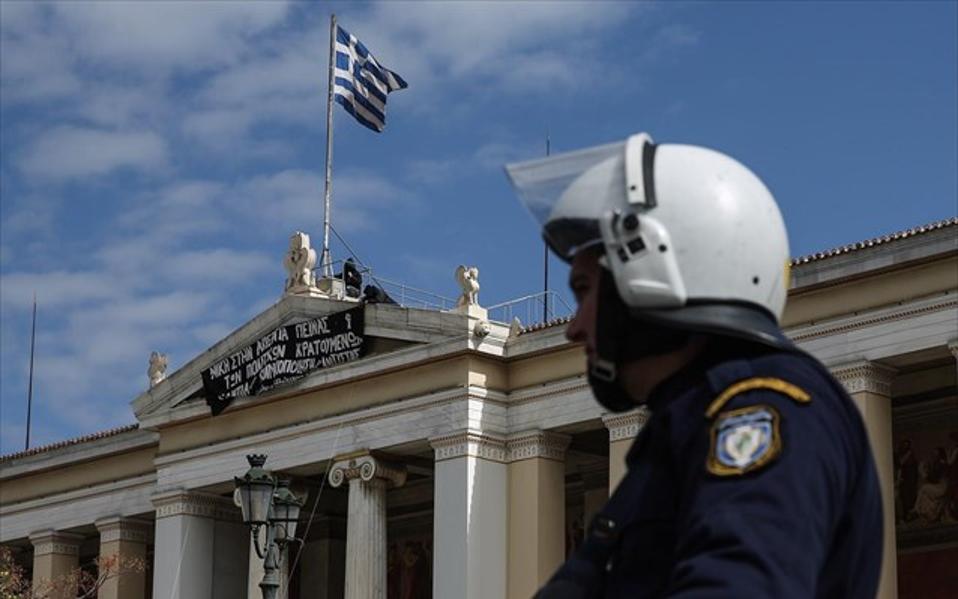
The rectorate of Athens University wrote to Prime Minister Alexis Tsipras and party leaders on Monday asking them to find a way to end the occupation of the institution’s main building by anti-establishment protesters.

The protesters have been staging a sit-in demonstration at the university for the last 15 days, demanding the closure of maximum security prisons and the release of some suspects detained on suspicion of being accomplices to members of urban guerrilla groups.

In the letter, the university officials say that the protest is severely hampering the institution’s day-to-day activities. They also express concern that, according to their sources, there are addicts taking drugs on the university premises.

source:ekathimerini.com

Australian man charged with 145 child sex offences

110983-sex-predator-raped-kids-in-hotel-rooms-

An alleged predator used social media to find 28 young victims in 3 states, Queensland police say. Source: AAP

SYDNEY: An Australian man was charged on Monday with 145 sex offences against at least 28 children, including rape, after allegedly using social media to groom them.

Police claim the 47-year-old from Warwick, southwest of Brisbane, Queensland, used several aliases online — including Jazz, Jazzman and David Bourne — to prey on children under the age of 16.

His alleged crimes, including making and distributing child pornography, were committed between 2002 to 2015, and involved victims in Australia.

Police claim he asked the children for indecent photos and then used them to extort and in some cases rape, film and photograph them.

Detective Senior Constable Russell Joyce told the Warwick Daily News that a complaint was made in April last year, which sparked a lengthy investigation to track down victims.

“The reactions when we have found them have been everything from embarrassment to shock and in some respects, relief,” he said.

“We are still going and we believe there are more victims out there.”

Joyce added: “The Internet is where the kids are these days and it is so hard for parents to keep track of what they’re doing.”

Queensland police minister Jo-Ann Miller urged parents to closely monitor their children’s online activity, giving warning that sex offenders are skilled at using technology to prey on them.

“It’s not good enough to say you don’t understand Facebook or you can’t work out how to use an iPhone,” she said.

“You need to learn about what your children are using so you can guide, assist and supervise their use.”

The man, who was not named, was remanded in custody until July 20.

Stay updated on the go with Times of India News App. Click here to download it for your device.

source:indiatimes.com