Category Archives: Uncategorized

Ioannides pays tribute to Anzac nurses of Lemnos

women in war 03

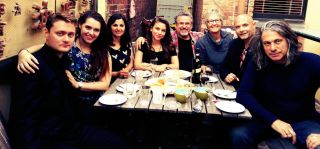
The Australian cast and crew of Women in War: Composer Tassos Ioannides (C) with his daughter and actress Artemis Ioannides (his left), along with librettist Deborah Parsons (his right) and director Alkinos Tsilimidos (R).

Women in War opera composer Tassos Ioannides visited the WWI Military Cemetery in Portianou village in Lemnos.

To help commemorate the anniversary of the centenary of the Gallipoli Campaign and Battle of Çanakkale, Women in War opera composer Tassos Ioannides visited the WWI Military Cemetery in Portianou village in Lemnos.

He was joined by family members of the iconic Anzac nurse, Matron Grace Wilson of the third Australian General Hospital on Lemnos.

In further recognition of the important role that women played during the war, Lemnian nurses participated in the Centenary Commemoration march at Mudros, paying tribute to the determination and fortitude of the nurses who served on the island.

With Women in War set to commence its previews during the month of July in Greece, Turkey and Australia, during Ioaninides’ recent visit down under, the Australian cast and crew gathered in Melbourne for an Aussie style BBQ get together.

The Australian cast and crew are scheduled to travel to Greece in June, where they will meet up with their Turkish and Greek colleagues for intensive preparation and rehearsal for the opera.

source:Neos Kosmos

AMHRC plans meeting ‘on Macedonian matters’ in Greece

Untitled

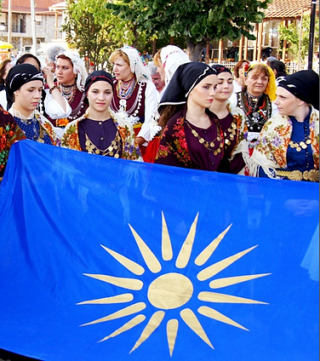
Macedonian youths of Florina, with the Greek macedonian flag. [Photo: Bilwander]

A meeting of academics due to take place in northern Greece in July – jointly coordinated by the Melbourne-based Australian Macedonian Human Rights Committee (AMHRC) – will inflame tensions, cultivate regional instability and is a political stunt, according to leading Greek Australian commentators.

The AMHRC, together with the Greek political party Rainbow and Brussels-based European Free Alliance party, announced they are to organise an ‘International Scholarly Conference on Macedonian matters’ to take place in Florina between July 16 and 19.

The Victorian organisers of the event say it will be similar to one coordinated by the AMHRC at Melbourne’s Monash University two years ago, “marking the 100th anniversary of the end of the second Balkan War and the partition of Macedonia”.

A media release for the July meeting said “given the success of the first … the AMHRC, in cooperation with scholars who participated in the earlier conference, have decided to assemble for a second … historic conference in Lerin … and culminate with the annual ‘Ilinden’ Macedonian cultural festival in the village of Ovchareni [Meliti in Greek]”.

AMHRC says the conference’s intention is “to make a substantial contribution to an understanding of modern Macedonian history from a variety of perspectives, including sociological, linguistic, anthropological and political”.

The press release for the conference refers to it as taking place in “Lerin [Florina in Greek] Aegean Macedonia, Greece…” and that members of the European Parliament will also be in attendance.

Meanwhile the event has been described as “a provocation and political stunt” by Greek Australian community leaders and academics.

Professor Anastasios Tamis told Neos Kosmos the event would “inflame already intense tensions in the region and cultivate instability”, and that the conference would be “a politically motivated assembly of extreme nationalists whose aim is to portray that ‘Macedonia’
is not just a geographic region – where various ethnicities lived for hundreds of years – sharing common cultural concepts and religious perceptions, but the country of the new ethnicity of the Balkans, namely the ‘Macedonians’ “.

“The conference is simply being called in Florina, Greece to negate the claims of Greeks on Macedonia and to generate ill tensions,” added the professor.
Meanwhile, the ‘history wars’ continue. Another much-respected Australian historian described the event – according to the details supplied in its publicity – as “one-sided”.

Emiritus Professor John Melville-Jones of the University of Western Australia told Neos Kosmos that information included in the conference’s press release was historically inaccurate.

“A century ago there was no separate country called Macedonia, so it was not ‘partitioned’. The revival of ‘Macedonia’ (in the sense of the enlarged province that was created by the Romans in the middle of the second century BC) was only an idea – being pushed by activists in Serbia and Bulgaria and perhaps in northern Greece”.

“It would have been more accurate to say that after World War I, Macedonia was restored approximately to the boundaries that had existed before the Roman conquest, so that the Greeks received approximately what Philip II had made into Macedonia, and the Serbians and Bulgarians received the rest. Also, in the Balkan Wars there was no such thing as a Macedonian army”.

Neos Kosmos approached the conference organisers requesting further information on the event. The request was declined.

source:Neos Kosmos

Kohler claims Greece a ‘giant mess’

alan

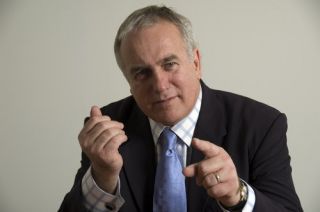
Journalist Alan Kohler.

Reflecting on a recent trip he took to Greece

Well-known financial commentator and journalist Alan Kohler says Greeks have lost their way in contrast to their glorious ancient past, in an article for The Australian.

He refers to Greece as “not quite third world, but close” in the article entitled ‘How Greece’s golden age became a giant mess’.

Giving a brief timeline of modern Greece while showing the ups and downs, Kohler recalls how in the ’60s Greece was the “coolest nation on earth”, making reference to Maria Callas, Jackie and Aristotle Onassis, Olympic Airlines, and Anthony Quinn as Zorba the Greek.

Reflecting on a recent trip he took to Greece, the journalist sets the scene of the modern day capital, saying “the first thing that struck me about Athens was the graffiti: it was everywhere. And we’re not talking Banksy or street art here, but messy scribbles. The second was all the boarded-up buildings and the third thing was the rubbish in the streets,” he writes.

Highlighting social and political instability as two of the main issues of modern Greece, he concluded that Greece’s acceptance into the eurozone was a mistake – more evident in the current political climate than ever.

The harsh critique of Greece’s state of affairs is encapsulated in his final sentence, stating “individually Greeks truly are wonderful people, but together they are a total stuff-up”.
Source: The Australian

Mortgage default fears grow in Sydney and Melbourne, as affordability erode

images

Risks of mortgage defaults in Sydney and Melbourne are growing as soaring house prices are matched with bigger loans and deteriorating affordability, ratings agency Moody’s warns.

Housing affordability has eroded in Australia’s two biggest cities during the past year, as house prices rose sharply while wages remained flat.

Sydneysiders living in two-income households are spending 35.1 per cent — or more than a third — of their income on mortgage repayments, while Melbourne households are spending 28.2 per cent, Moody’s Housing Affordability Measure found.

Sydney households with only one income earner would be spending more than 70 per cent to pay the mortgage, which is not sustainable, Moody’s says.

Less affordable mortgages increase the risk of default and delinquency and these risks will grow when interest rates rise from their current lows to more normal levels, Moody’s says.

The average standard variable mortgage rate currently sits at 5.65 per cent, but the 10-year average is 7.18 per cent, the ratings agency said.

“The larger loan sizes and repayment obligations of new mortgages in Sydney and Melbourne are especially problematic since these mortgages are being underwritten at historically low interest rates,” the report said.

“Borrowers who took out loans at historically low interest rates are at a greater risk of not being able to afford repayments when interest rates eventually rise.”

Applying various stress scenarios, including further gains in house prices, rising interest rates and falls in household income, Moody’s found that Sydney would suffer the worst deterioration in housing affordability of all the capital cities.

Nationally, housing affordability remained steady over the past year with households spending 27 per cent of their income to repay their mortgages — lower than the 10-year average.

Affordability improved in Perth and Brisbane and remained steady in Adelaide.

PAYING OFF A HOME LOAN AROUND AUSTRALIA

* National average, 27 per cent of income in March 2015, unchanged from March 2014

* Sydney, 35.1 per cent, up from 32.8 per cent

* Melbourne, 28.2 per cent, up from 27.5 per cent

* Brisbane, 23.4 per cent, down from 24.4 per cent

* Perth, 21.9 per cent, down from 24.6 per cent

* Adelaide, 22.1 per cent, unchanged

(Source: Moody’s)


Έκθεση Παγκόσμιας Ευτυχίας: Στην Ελλάδα η χαρά αγνοείται

95D3F4B2DC89854868E958B69837FB1B

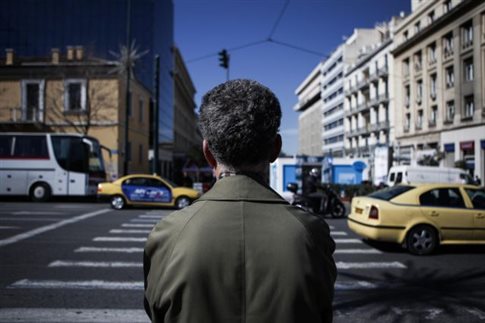
Έκθεση Παγκόσμιας Ευτυχίας: Στην Ελλάδα η χαρά αγνοείται Ελλάδα, μια χώρα που βυθίζεται στην κατήφεια (Πηγή: Νίκος Παλαιολόγου / SOOC)

Η Ελλάδα είναι η χώρα με τη μεγαλύτερη πτώση των επιπέδων ευτυχίας στα χρόνια της παγκόσμιας οικονομικής κρίσης, δείχνει η φετινή Έκθεση Παγκόσμιας Ευτυχίας. Οι απώλειες, όμως, δεν αποδίδονται μόνο στην οικονομία αλλά και στην κατάρρευση των κοινωνικών θεσμών.

Η έκθεση συντάχθηκε από οικονόμους, νευροεπιστήμονες και μαθηματικούς του Δικτύου Βιώσιμων Αναπτυξιακών Λύσεων (SDSN), μια πρωτοβουλία που εγκαινιάστηκε από τα Ηνωμένα Έθνη το 2012 αλλά λειτουργεί ανεξάρτητα.

Βασίζεται στην ιδέα ότι «η ευημερία και η ευτυχία είναι κρίσιμοι δείκτες της οικονομικής και κοινωνικής ανάπτυξης των εθνών, και θα πρέπει να αποτελούν βασικούς στόχους των πολιτικών τους».

Σύμφωνα με τους συντάκτες της έκθεσης, τα τρία τέταρτα των διαφορών ανάμεσα στις χώρες όσον φορά τα επίπεδα ευτυχίας των πολιτών της εξηγούνται από έξι βασικές παραμέτρους: το κατά κεφαλήν ΑΕΠ, το προσδόκιμο υγιούς ζωής, την κοινωνική στήριξη, την ελευθερία, την απουσία διαφθοράς και τη γενναιοδωρία.

Η τρίτη έκδοση της έκθεσης από το 2012 ως σήμερα καλύπτει 158 χώρες και βασίστηκε σε δεδομένα της Παγκόσμιας Δημοσκόπησης Gallup για το διάστημα 2012-2014. Οι ερωτηθέντες κλήθηκαν να βαθμολογήσουν τον εαυτό τους σε μια κλίμακα από το 0, που αντιστοιχεί στη χειρότερη δυνατή ζωή, μέχρι το μέγιστο βαθμό του 10, ο οποίος αντιστοιχεί στην καλύτερη δυνατή ζωή.

Η Ελλάδα έρχεται 102η στη λίστα με βαθμό 4,857 μονάδων, κάτω από τον παγκόσμιο μέσο όρο του 5,1. Αυτό σημαίνει ότι η χώρα υποχώρησε κατά 0,891 μονάδες μονάδων σε σχέση με το 2010, όταν βρισκόταν στην 70ή θέση με 5,435 μονάδες.

Αν μάλιστα εξετάσουμε το σύνολο των απωλειών από τη διετία 2005-2007 μέχρι το 2014, η Ελλάδα παρουσιάζει πτώση 1,470 μονάδων, μεγαλύτερη από ό,τι σε οποιαδήποτε άλλη χώρα.

Άλλες χώρες με μεγάλη μείωση το ίδιο χρονικό διάστημα είναι η Αίγυπτος (-1,231) και η Ιταλία (-0,764).

Οι πέντε πιο ευτυχισμένες χώρες είναι:

  1. Ελβετία (7,587)
  2. Ισλανδία (7,561)
  3. Δανία (7,527)
  4. Νορβηγία (7,522)
  5. Καναδάς (7,427)

Και οι πέντε λιγότερο ευτυχισμένες:

  1. Τόγκο (2,839)
  2. Μπουρούντι (2,906)
  3. Συρία (3,006)
  4. Μπενίν (3,340)
  5. Ρουάντα (3,465)

Η έκθεση δίνει σημασία στη δραματική πτώση της Ελλάδας, στην οποία «η απώλειες ήταν πολύ μεγαλύτερες σε σχέση με ό,τι θα μπορούσε να εξηγηθεί άμεσα από τις οικονομικές συνέπειες».

Η περίπτωση της Ελλάδας, λένε οι συντάκτες, ενισχύει την άποψη ότι η πτώση της ευτυχίας μπορεί να έλθει ως αποτέλεσμα της «κατάρρευσης των κοινωνικών θεσμών» και της «διάβρωσης του κοινωνικού ιστού».

Ένδειξη που συνηγορεί σε αυτή την άποψη είναι το γεγονός ότι η Ιρλανδία και η Ισλανδία, χώρες που επλήγησαν από την κρίση, δεν εμφάνισαν σημαντική υποχώρηση στα επίπεδα ευτυχίας.

Σε κάθε περίπτωση, το SDSN θεωρεί ότι η έκθεση θα πρέπει να ληφθεί υπόψη στη διαμόρφωση οικονομικών και άλλων πολιτικών από τη διεθνή κοινότητα.

Προτείνει μάλιστα να ληφθούν υπόψη τα ευρήματά του όταν οι χώρες-μέλη του ΟΗΕ συναντηθούν το Σεπτέμβριο για να καθορίσουν τους λεγόμενους Στόχους Βιώσιμης Ανάπτυξης.

Πηγή:in.gr

If Greece falls, no one wants their prints on the murder weapon

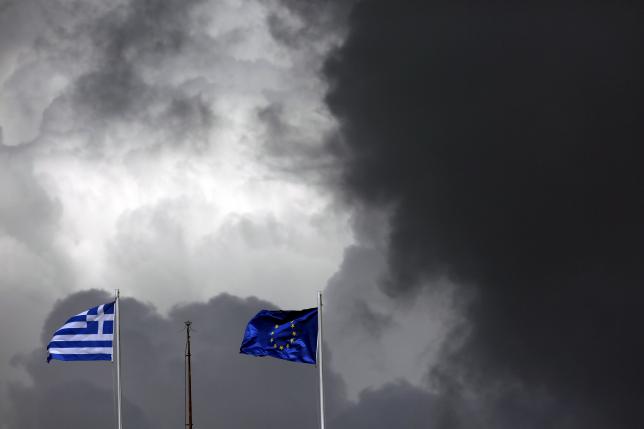
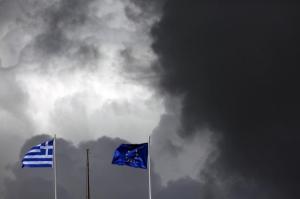
A European Union flag and a Greek national flag flutter atop a building in central Athens

«We’re going bust.» «No, you’re not.» «You’re strangling us.» «No we’re not.» «You owe us for World War Two.» «We gave already.”

The game of chicken between Greece and its international creditors is turning into a vicious blame game as Athens lurches closer to bankruptcy with no cash-for-reform agreement in sight.

Europe’s political leaders and central bankers and Greek politicians agree on only one thing: if Greece goes down, they don’t want their fingerprints on the murder weapon.

If Athens runs out of cash and defaults in the coming weeks, as seems increasingly possible, no one wants to be accused of having pushed it over the edge or failed to try to save it.

Greece’s leftist government has already identified its culprit of choice – Germany, Europe’s main paymaster, accused of having inflicted toxic austerity policies on Greeks, causing a «humanitarian crisis».

Euro zone governments are preparing the ground to blame the novice government of Prime Minister Alexis Tsipras for having blustered, obstructed, failed to meet commitments and evaded hard choices while Athens burned.

“We are doing everything we can to save Greece from itself, but in the end, it’s up to them,» is the message pouring out of Berlin, Brussels and IMF headquarters in Washington.

Tsipras and outspoken Finance Minister Yanis Varoufakis tried at first to mount a coalition against Berlin, touring France, Italy, Britain, Brussels and media studios after their election. They found no allies outside the media.

Tsipras revived demands for reparations for the Nazi German occupation of Greece in 1941-44, which his government put at 279 billion euros ($303.5 billion) – more than its 240 billion euro bailout from the euro zone and the International Monetary Fund.

Berlin responded that it had already compensated victims and a 1990 agreement with the four victorious World War Two powers on German unification had put an end to war claims.

German Chancellor Angela Merkel has been careful to express goodwill and tried to build a relationship of trust with Tsipras while insisting Greece must meet its lenders’ reform conditions, which include fiercely resisted pension cuts and labor reforms.

“Everything must be done to prevent» Greece running out of money, she said after talks with Tsipras last week. «On the German side, we are prepared to provide all the support that is asked of us. But of course reforms must be done,» she added.

Investors briefly hoped her pledge might be a turning point, similar to European Central Bank President Mario Draghi’s 2012 vow to do «whatever it takes to preserve the euro».

But Merkel’s comments could also be interpreted as an exercise in pre-emptive blame avoidance. Unlike Draghi, she did not say who should do everything to stop Greece going bust.

Her finance minister, Wolfgang Schaeuble, is openly sceptical of whether Athens can avoid crashing out of the euro zone.

Angry euro zone finance ministers made clear they were far from a deal with Greece, rejected Varoufakis’ plea for early cash in return for partial reform and told him they would not even discuss longer-term funding and debt relief until Greece signed and implemented a full reform plan.

While Greece’s leaders insist Europe must heed and respect the democratic will of the Greek people, its creditors reply that they too have democratic mandates from their voters.

In Varoufakis’ narrative, euro zone countries did not lend all that money to save Greece in the first place but to protect their own banks, which had imprudently lent Athens billions.

Nonsense, say euro zone officials. Those banks took losses in 2012 when Greek debt to private bondholders was restructured.

Varoufakis has widened the circle of blame to the ECB, accusing it of «asphyxiating» Greece by starving its banks of liquidity and severely limiting their short-term lending to the government.

That prompted an indignant response from ECB President Mario Draghi, who told the European Parliament the central bank’s support for Greece amounted to some 110 billion euros, but it was barred by treaty from monetary funding of governments.

For weeks Greek officials have been telling their euro zone counterparts they have run out of money, only to find spare cash to make the next debt payment. «They have cried wolf so often that when they are really going bust, no one will believe them,» one EU negotiator said on condition of anonymity.

Insiders say the ECB is determined that the central bank will not be the institution that pulls the plug. If it considers support for Greek banks is no longer tenable, it will seek a political decision by European Union governments.

“This is not something unelected central bankers should decide,» a source in the Eurosystem of central banks said.

European Commission President Jean-Claude Juncker is eager to hold Tsipras’ hand until the last minute in the hope that he will impose an unpalatable economic reform deal on left-wingers in his Syriza party before it is too late.

For Juncker, one of the fathers of Europe’s single currency, the departure of a single member from the 19-nation euro zone would be a grievous blow to the bloc’s global standing and could set a dangerous precedent, encouraging investors to speculate against other member states in future crises.

Even if it stayed in the euro zone, a Greek default on other European governments or the ECB would be one of the most acrimonious moments in the history of the European Union.

Amid mutual recrimination over ruined Greek savers and cheated European taxpayers, some fear demonstrations by Greek pensioners or hospital patients and violence in Athens.

If it happens, there will be plenty of blame to go around, but no one to take responsibility.

source:ekathimerini.com

Merkel, Tsipras agree to stay in touch to reach debt deal

ekso2-thumb-large-thumb-large

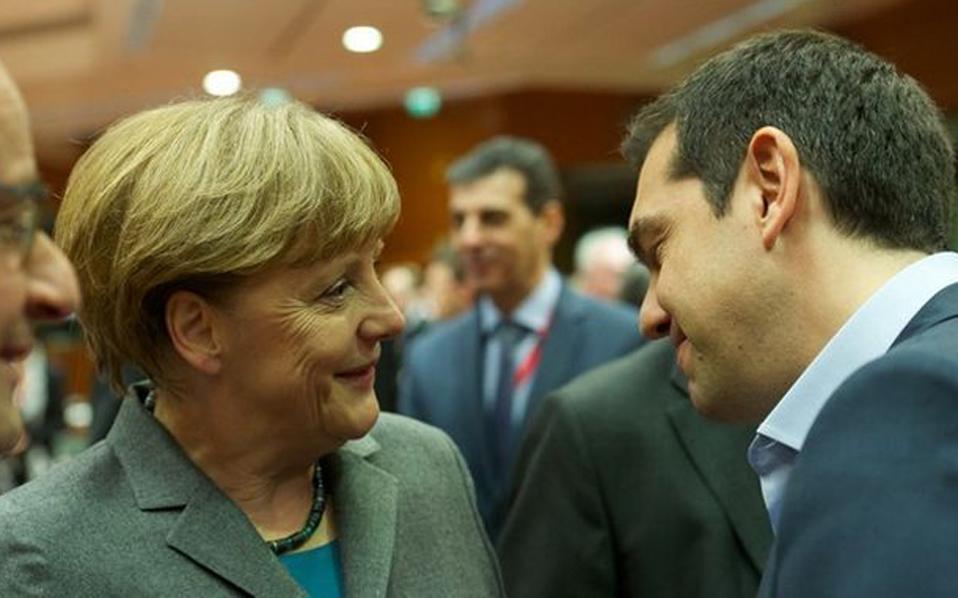
Greek Prime Minister Alexis Tsipras and German Chancellor Angela Merkel agreed in a phone conversation on Sunday to maintain contact during talks between Athens and its lenders to reach a debt deal, a Greek government official said.

“During their communication, they expressed their common will for a steady communication throughout the course of negotiations in order to have a mutually beneficial solution soon,» said the official, who declined to be named.

Shut out of international markets and locked in talks with its European Union and International Monetary Fund creditors over its proposed reform-for-cash deal, Greece risks running out of cash within weeks.

But during a regular meeting at the Latvian capital of Riga on Friday, euro zone finance ministers warned its government that it would get no fresh aid until it agreed to a complete economic reform plan.

The official said that the technical teams from Greece and its creditors — the so-called Brussels Group — would hold a teleconference on Monday and convene on Wednesday to speed up negotiations.

Three months of fruitless negotiations have raised tensions between Greek Finance Minister Yanis Varoufakis and euro zone colleagues in Riga on Friday.

Euro zone ministers – the so-called Eurogroup – bemoaned talks they felt «were going nowhere» and one minister said that maybe it was time governments prepared for the plan B of a Greek default.

Responding to reports that he was isolated in debt talks, Varoufakis tweeted a quotation by American statesman Franklin Roosevelt on Sunday which read «they are unanimous in their hate for me; and I welcome their hatred.”

Varoufakis said the quote expressed his feelings in recent days.

source:ekathimerini.com

Ερντογάν: «Οι τελευταίες χώρες που μπορούν να μιλάνε για γενοκτονία είναι η Γερμανία, η Ρωσία και η Γαλλία»

erdogan-2-702x336

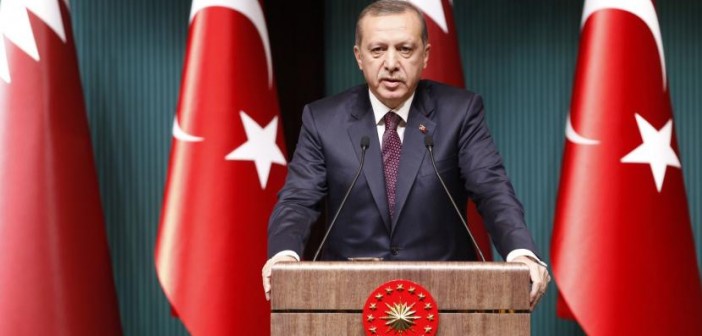
Ο πρόεδρος της Τουρκίας Ρετζέπ Ταγίπ Ερντογάν επανέλαβε σήμερα τις επικριτικές δηλώσεις κατά ξένων ηγετών και της Ευρωπαϊκής Ένωσης που χαρακτήρισαν «γενοκτονία» τις σφαγές των Αρμενίων από την Οθωμανική Αυτοκρατορία το 1915.

Κατά τη διάρκεια διάσκεψης επιχειρηματιών στην Κωνσταντινούπολη, ο Ερντογάν κατηγόρησε τους προέδρους της Γαλλίας, της Γερμανίας και της Ρωσίας, οι οποίοι χρησιμοποίησαν τον όρο «γενοκτονία» κατά τις τελετές μνήμης, ότι «υποστηρίζουν τις θέσεις που βασίζονται στα αρμενικά ψέματα».

«Θα προτιμούσαμε να μην έχουν έρθει στην Αρμενία ούτε ο (πρόεδρος της Ρωσίας Βλαντίμιρ) Πούτιν, ούτε ο (πρόεδρος της Γαλλίας Φρανσουά) Ολάντ, αναφερόμενος στην παρουσία των δύο προέδρων στην χθεσινή τελετή, κατά την οποία τόσο ο Ολάντ, όσο και ο Πούτιν κάλεσαν την Τουρκία να αναγνωρίσει την αρμενική γενοκτονία.

«Οι τελευταίες χώρες που μπορούν να μιλάνε για γενοκτονία είναι η Γερμανία, η Ρωσία και η Γαλλία», είπε ο Ερντογάν καλώντας τους «να καθαρίσουν τους λεκέδες της δικής τους ιστορίας».

Την προηγουμένη ο πρόεδρος της Τουρκίας είχε… περιλάβει τον πρόεδρο της Γερμανίας Γιοακίμ Γκάουκ και τον Βλαντίμιρ Πούτιν για την χρησιμοποίηση εκ μέρους τους του όρου «γενοκτονία». Ήταν η πρώτη που φορά που Γερμανός πρόεδρος αναγνώρισε την αρμενική γενοκτονία.

Ο Ερντογάν κατηγόρησε επίσης την Ευρωπαϊκή Ενωση ότι «δεν λέει την αλήθεια», μετά την έκκληση που απηύθυνε το Ευρωκοινοβούλιο στις 15 Απριλίου προς την Τουρκία να αναγνωρίσει την αρμενική γενοκτονία.

«Ε, Ευρωπαϊκή Ενωση, δεν έχουμε ανάγκη τις σκέψεις σας, κρατείστε τις για σας… Έχουν αυτιά που δεν ακούν, μάτια που δεν βλέπουν και γλώσσες που δεν λένε την αλήθεια», είπε.

ΠΗΓΗ : TO ΠΟΝΤΙΚΙ

Migrant boat crisis: the story of the Greek hero on the beach

Boat-migrant-being-rescue-008

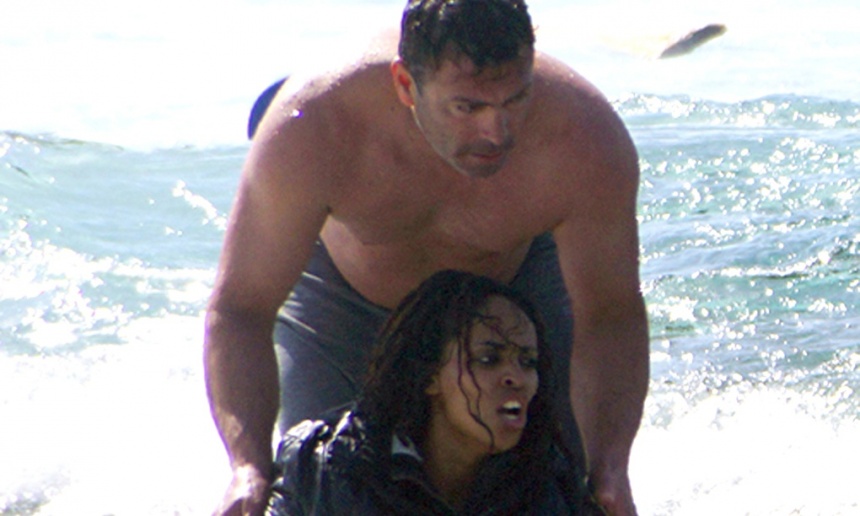
Antonis Deligiorgis saving Wegasi Nebiat: ‘I was having trouble lifting her out of the sea, then instinctively, I put her over my shoulder.’ Photograph: Argiris Mantikos/AP

It was an image that came to symbolise desperation and valour: the desperation of those who will take on the sea – and the men who ferry human cargo across it – to flee the ills that cannot keep them in their own countries. And the valour of those on Europe’s southern shores who rush to save them when tragedy strikes.

Last week on the island of Rhodes, war, repression, dictatorship in distant Eritrea were far from the mind of army sergeant Antonis Deligiorgis. The world inhabited by Wegasi Nebiat, a 24-year-old Eritrean in the cabin of a yacht sailing towards the isle, was still far away.

The boat disintegrated in a matter of minutes. It was as if it was made of paper
Antonis Deligiorgis

At 8am on Monday there was nothing that indicated the two would meet. Stationed in Rhodes, the burly soldier accompanied his wife, Theodora, on the school run. “Then we thought we’d grab a coffee,” he told the Observer in an exclusive interview recounting what would soon ensue. “We stopped by a cafe on the seafront.”

Deligiorgis had his back to the sea when the vessel carrying Nebiat struck the jagged rocks fishermen on Rhodes grow up learning to avoid. Within seconds the rickety boat packed with Syrians and Eritreans was listing. The odyssey that had originated six hours earlier at the Turkish port of Marmaris – where thousands of Europe-bound migrants are now said to be amassed – was about to end in the strong currents off Zefyros Beach.

For Nebiat, whose journey to Europe began in early March – her parents paid $10,000 for a voyage that would see her walk, bus and fly her way to “freedom” – the reef was her first contact with the continent she had prayed to reach. Soon she was in the water clinging to a rubber buoy.

“The boat disintegrated in a matter of minutes,” the father-of-two recalled. “It was as if it was made of paper. By the time I left the café at 10 past 10, a lot of people had rushed to the scene. The coastguard was there, a Super Puma [helicopter] was in the air, the ambulance brigade had come, fishermen had gathered in their caiques. Without really giving it a second’s thought, I did what I had to do. By 10:15 I had taken off my shirt and was in the water.”

Deligiorgis brought 20 of the 93 migrants to shore singlehandedly. “At first I wore my shoes but soon had to take them off,” he said, speaking by telephone from Rhodes. “The water was full of oil from the boat and was very bitter and the rocks were slippery and very sharp. I cut myself quite badly on my hands and feet, but all I could think of was saving those poor people.”

In the chaos of the rescue, the 34-year-old cannot remember if he saved three or four men, or three or four children, or five or six women: “What I do remember was seeing a man who was around 40 die. He was flailing about, he couldn’t breathe, he was choking, and though I tried was impossible to reach. Anyone who could was hanging on to the wreckage.”

I’ve never seen anything like it, the terror that can haunt a human’s eyes.
Babis Manias, fisherman

Deligiorgis says he was helped by the survival skills and techniques learned in the army: “But the waves were so big, so relentless. They kept coming and coming.” He had been in the water for about 20 minutes when he saw Nebiat gripping the buoy. “She was having great problems breathing,” he said. “There were some guys from the coastguard around me who had jumped in with all their clothes on. I was having trouble lifting her out of the sea. They helped and then, instinctively, I put her over my shoulder.”

On Friday it emerged that he had also rescued a woman who gave birth to a healthy baby boy in Rhodes general hospital. In a sign of her gratitude, the Eritrean, who did not want to be identified, told nurses she would name her son after him. While Deligiorgis’s heroism has raised the spirits of a nation grappling with its worst economic crisis in modern times, he is far from alone. All week there have been stories of acts of kindness, great and small, by islanders who rushed to help the emigrés. One woman stripped her own child to swaddle a Syrian baby, hundreds rushed to donate food and clothes.

“They are souls, like us,” said Babis Manias, a fisherman, breaking down as he recalled saving a child.

“We couldn’t believe it at first. We thought it was a tourist boat, what with all the hotels along the beach. I’ve never seen anything like it, the terror that can haunt a human’s eyes.” Forget the ‘war on smuggling’, we need to be helping refugees in need.

The incident has highlighted the extraordinary sacrifice people on the frontline of Fortress Europe will often make as the humanitarian disaster unfolding on the continent’s outer reaches becomes ever more real. Last week close to 2,000 migrants were reported entering he country with the vast majority coming through its far-flung Aegean isles. Most were said to be Syrian students and other professionals able to afford passage to the west.

“As long as there are crises in their own countries and desperation and despair, they will look to Europe,” said Giorgos Tsarbopoulos, who heads the United Nations refugee mission in Athens. “And as long as there are no legal alternatives they will take these great risks to get here.”

Like other passengers, Nebiat, who would spend most of the week in hospital being treated for suspected pneumonia, has no desire to stay in Greece. Sweden is her goal. And on Thursday she boarded a ferry bound for Piraeus, the continuation of a journey that began in the Eritrean capital of Asmara, took her to Sudan and from there to Turkey travelling on a fake passport. “I am lucky,” she said as she was reunited with those who made the journey with her. “Very lucky to be alive.”

Deligiorgis falls silent at the mention of heroism. There was nothing brave, he says, about fulfilling his duty “as a human, as a man”. But recounting the moment he plucked the Eritrean from the sea, he admits the memory will linger. “I will never forget her face,” he says. “Ever.”

source:theguardian.com

Η λίστα με τα 14 πιο παράξενα χωριά του κόσμου, με την Μονεμβάσια στην δεύτερη θέση

Ένα χωριό μέσα σε ένα κρατήρα ηφαιστείου, σπίτια χτισμένα από πυλό κρυμμένα κάτω από την γη, μια μικρή πόλη στην μέση του πάγου, και άλλα πολλά χωριά που συγκαταλέγονται στην λίστα με τα 14 πιο παράξενα του κόσμου. Την δεύτερη θέση έχει η Μονεμβάσια Λακωνίας. Σύμφωνα με την Daily Mail αυτοί είναι οι μαγευτικοί οικισμοί σε μαγευτικούς προορισμούς.

1. Aogashima, Θάλασσα Φιλιππίνων

Ίσως το τελευταίο μέρος που θα περίμενε κανείς να βρει μια ζωντανή κοινότητα μέσα σε ένα τροπικό ηφαιστειογενές νησί στη Θάλασσα των Φιλιππίνων. Στην καρδιά του κρατήρα του ανενεργού ηφαιστείου, βρίσκεται ένα από τα πιο όμορφα χωριά, όπου ζούνε 200 γενναίοι χωρικοί.

2. Μονεμβασιά, Ελλάδα

Η Μονεμβασιά είναι ένας οικισμός που κρύβεται πίσω από ένα τεράστιο βράχο στη Λακωνία στην Ελλάδα. Το νησί χωρίστηκε από την ηπειρωτική χώρα το 375 μ.Χ. από σεισμό, όπου με ένα μικρό διάδρομο γίνεται η εύκολη πρόσβαση. Η θέα στο κόλπο της Παλαιάς Μονεμβάσιας είναι συγκλονιστική.

3. Μονή Phugtal, Ινδία

Το κρυφό χωριό στο γκρεμό της Phuktal ή Μονή Phugtal είναι ένα από τα πιο απομονωμένα μοναστήρια στη βόρεια Ινδία. Κατασκευασμένο από λάσπη και ξύλο, βρίσκεται στην είσοδο μιας σπηλιάς πάνω σε ένα βράχο που «κοιτάει» στην νότιο-ανατολική Zanskar στην περιοχή Λαντάκ.
Μοιάζοντας με μία γιγαντιαία «κηρήθρα μελλισών» ιδρύθηκε στις αρχές του 12ου αιώνα, αλλά παρέμεινε ένα κρυμμένος θησαυρό, μέχρι το 1800, όταν ο Αλέξανδρος Cosmo ντε Κόρος επισκέφθηκε τον τόπο, και έμεινε εκεί για ένα χρόνο.

4. Isortoq, Γροιλανδία

Με 64 κατοίκους, το χωριό Isortoq της Γροιλανδίας, βρίσκεται κάπου στην μέση του πουθενά του χιονιού και του πάγου.Οι κάτοικοι Inuit όπως ονομάζονται, είναι αναγκασμένοι να επιβιώσουν μόνο με βάση το κρέας, αφού οι πολικές θερμοκρασίες δεν επιτρέπουν την ανάπτυξη φυτών.

5. Gásadalur Village, Δανία

Το απομονωμένο χωριό της Gásadalur βρίσκεται στη δυτική πλευρά του Vágar στις Νήσους Φερόε. Την συγκλονιστική θέα στο Ρεύμα του Κόλπου του Βόρειου Ατλαντικού βλέπουν καθημερινά μόνο 16 κάτοικοι που έχουν επικοινωνία με τον «έξω» κόσμο μέσω μιας σήραγγας που χτίστηκε μέσα στα βουνά το 2004.

6. Huacachina, Περού…

Πηγή: newsone.gr