Category Archives: Uncategorized

ΠΓΔΜ: Το συγκυβερνών αλβανικό κόμμα είχε μεσολαβήσει με τους ενόπλους

EAC90AA070967D1D65C6704252A36E01

Το χάος στο Κουμάνοβο έριξε «εθνοτικό λάδι» στη φωτιά της πολιτικής κρίσης στην ΠΓΔΜ

Σε διαπραγματεύσεις με την ομάδα ενόπλων κατά τα δραματικά γεγονότα στο Κουμάνοβο της ΠΓΔΜ βρισκόταν το συγκυβερνών αλβανικό κόμμα DUI, όπως ανέφερε ο αρχηγός του Αλί Αχμέτι. Οι ένοπλοι, σύμφωνα με τον ίδιο, είχαν ζητήσει τη διαμεσολάβησή του για να δαιφύγουν, κάτι που ο ίδιος αρνήθηκε και, μετά από διαπραγματεύσεις, τους έπεισε να παραδοθούν.

Τα αιματηρά περιστατικά στο Κουμάνοβο έχουν προστεθεί στο σκηνικό της πολιτικής κρίσης στα Σκόπια. Η αντιπολίτευση, που ζητά την παραίτηση του πρωθυπουργού Νίκολα Γκρούεφσκι κατηγορώντας την για παρακολουθήσεις και διαφθορά, θα προχωρήσει την Κυριακή σε μεγάλη διαδήλωση ενώ το απόγευμα της Πέμπτης η συνάντηση των πολιτικών αρχηγών αποδείχθηκε άκαρπη.

Ο Αχμέτι, το κόμμα του οποίου συμμετέχει στην κυβέρνηση συνασπισμού, ανέφερε σε συνέντευξη του στον αλβανόφωνο τηλεοπτικό σταθμό των Σκοπίων Alsat ότι όταν ξεκίνησαν οι μάχες στο Κουμάνοβο, νωρίς το πρωί του περασμένου Σαββάτου, ένα μέλος από την ομάδα των ένοπλων Αλβανών του τηλεφώνησε και του ζήτησε να μεσολαβήσει, ώστε να δημιουργηθεί ένας διάδρομος για να μπορέσουν να διαφύγουν.

Ο Αχμέτι υποστήριξε πως απέρριψε το αίτημα αυτό των ένοπλων και μετά από συνεχείς διαπραγματεύσεις τους έπεισε να παραδοθούν στην αστυνομία. Για τις διαπραγματεύσεις αυτές ενημέρωνε σε όλη τη διάρκεια τόσο τον Ν.Γκρούεφσκι, όσο και εκπροσώπους της διεθνούς κοινότητας στη χώρα.

Ο αρχηγός του μεγαλύτερου αλβανικού κόμματος στην ΠΓΔΜ ανέφερε ότι ορισμένοι από τους σκοτωμένους και συλληφθέντες ένοπλους στα επεισόδια του Κουμάνοβο ήταν το 2001 μαχητές του UCK.

Ο Αχμέτι είχε διατελέσει πολιτικός διοικητής του «Εθνικού Απελευθερωτικού Στρατού» και μετά τις συγκρούσεις του 2001 σχημάτισε το κόμμα DUI, το οποίο αναδείχθηκε αμέσως σε μεγαλύτερο αλβανικό κόμμα στην ΠΓΔΜ.

Ο αρχηγός του DUI ανέφερε ότι εδώ και μεγάλο χρονικό διάστημα γνώριζε για κινήσεις ένοπλων Αλβανών στην ΠΓΔΜ και πως μερικές ημέρες πριν από τα αιματηρά επεισόδια στο Κουμάνοβο, ένας στενός συνεργάτης του συναντήθηκε με κάποιους από αυτούς και προσπάθησε να τους πείσει να εγκαταλείψουν τη δράση τους, χωρίς όμως αποτέλεσμα.

Κατά τις συμπλοκές του περασμένου Σαββατοκύριακου στο Κουμάνοβο,οι οποίες ήταν οι σοβαρότερες μετά τις συγκρούσεις του 2001 στην ΠΓΔΜ, σκοτώθηκαν 14 ένοπλοι Αλβανοί και οχτώ αστυνομικοί, ενώ 30 μέλη της ένοπλης ομάδας παραδόθηκαν στην αστυνομία της ΠΓΔΜ, η οποία και τους ανακρίνει.

Ο πρωθυπουργός της ΠΓΔΜ Νίκολα Γκρούεφσκι, μετά το τέλος των συγκρούσεων στο Κουμάνοβο, είχε δηλώσει ότι «τρομοκρατική ομάδα» αποτελούμενη από περίπου 40 μέλη, εισήλθε τις προηγούμενες ημέρες στην ΠΓΔΜ από «γειτονική χώρα» που δεν κατονόμασε, και βρήκε καταφύγιο στο Κουμάνοβο, απ’ όπου σχεδίαζε να πραγματοποιήσει επιθέσεις σε αστυνομικά τμήματα σε κυβερνητικά κτίρια, σε αθλητικές εγκαταστάσεις και σε εμπορικά κέντρα. Απώτερος στόχος σύμφωνα με τον κ.Γκρούεφσκι ήταν η αποσταθεροποίηση της ΠΓΔΜ.

Ο Αλί Αχμέτι υποστήριξε ότι δεν γνώριζε τόσο για τα κίνητρα, όσο και για τους σκοπούς της ομάδας των ένοπλων Αλβανών που συγκρούστηκαν με την αστυνομία στο Κουμάνοβο.

Ο Αχμέτι επανέλαβε ότι οι Αλβανοί, τόσο στην ΠΓΔΜ όσο και στο Κόσοβο και στην Αλβανία, τάσσονται ανεπιφύλακτα υπέρ της σταθερότητας της ΠΓΔΜ και της πιστής εφαρμογής της ειρηνευτικής συμφωνίας της Οχρίδας, με την οποία έλαβαν τέλος οι διεθνοτικές συγκρούσεις στην ΠΓΔΜ το 2001 και ο αλβανικός πληθυσμός, που αποτελεί το 25% της χώρας, απέκτησε δικαιώματα που διεκδικούσε.

Πηγή:in.gr

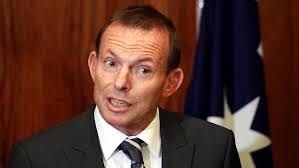
Aυστραλία:Δίνει τα ρέστα του ο Άμποτ για την επανεκλογή του

imagesCA61VDXL

Μετά την αποτυχία του περυσινού προϋπολογισμού και την πτώση της δημοτικότητάς τους, ο πρωθυπουργός, ο υπουργός Οικονομικών και όλα τα κορυφαία στελέχη της κυβέρνησης «ξέχασαν» όσα μας έλεγαν πέρυσι.

Ο ΕΤΗΣΙΟΣ προϋπολογισμός που κατέθεσε την Τρίτη ο υπουργός Οικονομικών (ή Θησαυροφύλακας, όπως έχουμε συνηθίσει να τον αποκαλούμε εδώ), Τζο Χόκι, δεν αφορά το μέλλον της Αυστραλίας. Αφορά την επιβίωση της κυβέρνησης Άμποτ.

Μετά την αποτυχία του περυσινού προϋπολογισμού και την πτώση της δημοτικότητάς τους, ο πρωθυπουργός, ο υπουργός Οικονομικών και όλα τα κορυφαία στελέχη της κυβέρνησης «ξέχασαν» όσα μας έλεγαν πέρυσι.

Το υπενθυμίζουμε εμείς για όσους έχουν ασθενική μνήμη:

Μας έλεγαν, λοιπόν, ότι η Αυστραλία είναι στο δρόμο της Ελλάδας και επιβάλλονται δραστικές περικοπές και ριζοσπαστικές μεταρρυθμίσεις για να εξυγιανθεί η οικονομία και να εξασφαλιστεί το μέλλον της χώρας και των πολιτών της.

Πολλά από τα μέτρα που εξαγγέλθηκαν πέρυσι δεν εφαρμόστηκαν (λόγω Γερουσίας) και το εξωτερικό χρέος αυξήθηκε ακόμα περισσότερο.

Παρ’ όλα αυτά, η κυβέρνηση ξέχασε τις περικοπές και τις μεταρρυθμίσεις, ξέχασε τα όσα έλεγε πέρυσι περί αναγκαιότητας λήψης των μέτρων και ότι «δεν υπάρχει άλλη επιλογή», και φέτος κατέθεσε έναν προϋπολογισμό με κάποιες παροχές, ελάχιστες περικοπές και σχεδόν καμιά σημαντική μεταρρύθμιση.

Όλοι οι πολιτικοί αναλυτές συμφωνούν ότι στόχος της κυβέρνησης είναι η ανάκτηση της δημοτικότητάς της και η ενδεχόμενη πρόωρη προσφυγή στις κάλπες, σε περίπτωση που δεν μπορέσει να «περάσει» κάποια από τα μέτρα της από την (εχθρική) Γερουσία.

Εκτιμούν, ακόμα, ότι θα είναι ιδιαίτερα δύσκολο για το Εργατικό Κόμμα να καταψηφίσει κάποια από τα μέτρα, γιατί σε περίπτωση προσφυγής στις κάλπες οι ψηφοφόροι που θα κέρδιζαν από τις παροχές που προβλέπει ο προϋπολογισμός και θα στραφούν κατά της Εργατικής παράταξης.

Με τον προϋπολογισμό που κατέθεσε η κυβέρνηση, προβλέπει ο ρυθμός ανάπτυξης της οικονομίας να φτάσει στο 3.5%, αν και κάποιοι θεωρούν αισιόδοξη την πρόβλεψη αυτή.

Αν η πρόβλεψη επαληθευτεί, αυτό σημαίνει δημιουργία χιλιάδων θέσεων εργασίας, μείωση της ανεργίας, αύξηση των εσόδων του κράτους και μείωση των ελλειμμάτων.

Η κυβέρνηση εκτιμά ότι, με τις παροχές της στις μικρές επιχειρήσεις (γράφουμε αναλυτικά σε άλλη στήλη), τις οποίες θεωρεί «ραχοκοκαλιά» της οικονομίας, θα επιτευχθεί η οικονομική ανάκαμψη μετά την σημαντική πτώση της εξαγωγής μεταλλευμάτων.

Οι επόμενοι μήνες θα το δείξουν.

Αυτό που απέδειξε (και) ο φετινός προϋπολογισμός, είναι ότι οι πολιτικοί «λένε και πράττουν» ανάλογα με το πολιτικό κλίμα που επικρατεί.

Πέρυσι η κυβέρνηση μας έλεγε πως θα πτωχεύσουμε αν δεν γίνουν δραστικές περικοπές και δεν μειωθούν τα ελλείμματα, φέτος προκειμένου να μη χάσει τις εκλογές «θυσιάζει το μέλλον της χώρας», τα ξεχνά όλα και προσπαθεί να ανακτήσει το χαμένο έδαφος. Είναι το μόνο που την νοιάζει.

Πηγή:Νέος Κόσμος

Australia:Pontian genocide commemorative events on this weekend

kerasounda

On 19 May, 1919, Mustafa Kemal himself disembarked at Samsous to begin organising the final phase of the Pontian genocide, assisted by his German advisers.

The Coordinating Committee of Pontian Associations in Melbourne (SEPSM) is hosting various events to honour the Pontian genocide

The Coordinating Committee of Pontian Associations in Melbourne (SEPSM) is organising various commemorative events, expressing the community’s commitment to continue the struggle for the international recognition of the Pontian genocide.

On Monday 11 May 2015, the Willoughby City Council in the North of Sydney passed a motion recognising the Armenian, Greek and Assyrian genocides. The motion was introduced by Councillor John Hooper and passed unanimously. The first point of the motion reads as follows:

“Willoughby City Council recognises the genocide of the Armenian, Greek and Assyrian peoples by the then Ottoman government between 1915 and 1922 and condemns these and all other acts of genocide and crimes against humanity as the ultimate act of intolerance.
Willoughby City Council endorses the resolution of the NSW parliament on 17 April 1997 that it:

– recognises and condemns the genocide of the Armenians by the then Ottoman government between 1915 and 1922, and designated 24 April of every year thereafter as a day of remembrance of the 1.5 million Armenians who fell victim to the first genocide of the twentieth century;

– recognises that Assyrians and Greeks were subjected to qualitatively similar genocides by the then Ottoman government between 1915 and 1922;

– reaffirms its condemnation of the genocide of the Assyrians, Armenians and Greeks, and all other acts of genocide as the ultimate act of intolerance;

– recognises the importance of remembering and learning from such dark chapters in human history to ensure that such crimes against humanity are not allowed to be repeated;
– acknowledges and pays tribute to the contribution of the Anzac servicemen who aided the survivors of the genocide; and
– acknowledges the significant humanitarian relief contribution made by the people of New South Wales to the victims and survivors of the genocide.”

On Saturday 16 May at 11.00 am, there will be a wreath-laying ceremony at the Australian Hellenic Memorial Foundation, followed by a lecture held by Professor Nikolaos Lygeros (3.00 pm), an acclaimed Greek mathematician, writer, poet, painter and director, who has presented works on archaeology, socioeconomic and geopolitical evolution as well as several studies on the Asia Minor, Pontian, Assyrian and Armenian genocides, published in the US, Canada, Europe and Sydney.

On Sunday 17 May (10.00 am), a memorial service will be held at the Axion Esti Greek Orthodox Monastery (7 Hartington St, Northcote). Another commemorative liturgy at the St Efstathios church (221 Dorcas St, South Melbourne) will also be performed (10.00 am).

The Greek Orthodox Community of Melbourne in conjunction with the Pontian Community of Melbourne and Victoria and the Coordinating Committee of Pontian Associations Melbourne for the Commemoration of the Genocide of the Greeks of Pontus, the Greek Australian Cultural League of Melbourne and Victoria are organising a commemorative event, presided by Cathy Alexopoulos at the Greek Orthodox Community of Melbourne headquarters on Monday 6.00 pm.

On Tuesday 19 May (4.00 pm), Professor Nikolaos Lygeros will be the MC and host of a second lecture on the Pontian history and genocide at the Pontian Assassination’s ‘Panagia Soumela’ event hall.

Moreover, Dean Kalymniou will host a lecture at the Greek Cultural Centre (Mezzanine level, 168 Lonsdale St, Melbourne), titled ‘The Pontian International Empire of Trapezounta’, on the same day (7.00 pm), in conjunction the Greek Orthodox Community of Melbourne and Victoria.

The Sts Anargiri Greek Language Centre in Oakleigh (88-81 Willesdoen Rd) will screen the historical documentary Ta Hnaria ton Argonafton at its Multipurpose Hall on Friday 22 May (doors open 6.45 pm). For more information contact Kostas Pataridis (0433188992 and kpataridis@oakleighgrammar.vic.edu.au). RSVP before Saturday 16 May.

Finally, on Sunday 31 May the commemorative events will culminate with the community’s student and school awards. The ceremony will take place at the Pontian Community of Melbourne offices (345 Victoria Street, Brunswick) at 2.30 pm.

* In 1994, May 19 was sanctioned by the Greek parliament as the day to commemorate the Pontian Greek genocide by the Turks. The Pontian Greeks had been struggling for three millennia to survive in the area, while preserving one of Greece’s more ancient and vibrant cultures. Turkey has yet to recognise one of the darkest moments in the history of mankind, which cost the lives of 350,000 Pontian Greeks who were slaughtered and persecuted from their homeland in Pontus.

source:Neos Kosmos

Australia:Battle of Crete commemorations

promo249780606

Battle for Greece and Crete Commemoration Service

74th anniversary events announced for Sydney and Melbourne.

This year’s Battle of Crete anniversary commemorations in Australia will begin on Saturday 16 May in Sydney, with the laying of wreaths at the Martin Place cenotaph. The service commences at 1.45 pm.

His Excellency General the Honourable David Hurley AC DSC (Ret’d), Governor of New South Wales, accompanied by Mrs Linda Hurley, will be attending, along with guest of honour Lieutenant General Georgios Paraschopoulos, accompanied by Colonel Vasileios Broumas of the Hellenic Defence Force.

Also present will be honoured veterans, state and federal parliamentarians and consular representatives. In addition to the Martin Place ceremony, the 74th anniversary of the Greece and Crete campaigns will be commemorated at the following locations in Sydney:

Saturday 16 May 7.00 pm
Battle of Crete Annual Ball. For bookings contact the Cretan Association of NSW on 0439 665 011 or 0408 636 107.
Sunday 17 May 9.30 am
Memorial Service. Greek Archdiocese Church, Redfern.
Monday 18 May 7.00 pm
Launch of the book Battle of Crete – the Untold Stories. Kogarah Library, Belgrave Street, Kogarah.
Sunday 24 May 11.00am

Memorial Service. Garrison Church, cnr Argyle and Lower Fort St, Millers Point, The Rocks.

The NSW commemorations are co-ordinated by the Joint Committee for the Commemoration of the Battle of Crete and Greek Campaigns.
In Melbourne, official commemorations begin on Saturday 23 May with the official Battle of Crete Dinner Dance, under the auspices of the Cretan Federation of Australia & New Zealand and in honour of Battle of Crete Veterans. The event will begin at 7.00 pm and take place at the Cretan Brotherhood of Melbourne & Victoria, 148 Nicholson Street, Brunswick East.

Victorian commemorations will continue the following day with the following program:
Sunday 24 May
10.00 am Church Service at the Greek Orthodox Holy Archdiocesan Cathedral of St. Eustathios, 221 Dorcas Street, South Melbourne, officiated by Bishop Ezekiel of Dervis.
12.00 pm Parade and wreath laying ceremony at the Shrine of Remembrance, with the participation of religious, consular and political representatives and veterans.
12.30 pm Visit to the Cretan olive tree planted by Veterans of the Battle of Crete in the Domain Gardens.
1.00 pm Ceremony at the Australian Hellenic Memorial in Domain Gardens hosted by the Australian Hellenic Memorial Foundation.
2.30 pm Luncheon in honour of the visiting officers of the Greek Armed Forces, at the Cretan Village, Pancretan Association of Melbourne, 90 Cathies Lane, Wantirna South.

The Victorian commemorations are co-ordinated by the Cretan Brotherhood of Melbourne & Victoria and the Pancretan Association of Melbourne.

source:Neos Kosmos

White Gold, Deep Blue: Australian pearling’s Greek contribution

pearling

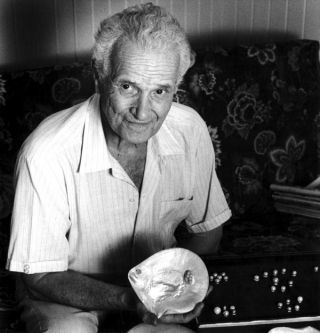
Denis George, pearl cultivator, with his life’s work (Cairns, Qld, 1987) Denis’ work has been one of the pivotal contributions to the pioneering of Australian pearl cultivation. Photo by Effy Alexakis, from the In Their Own Image: Greek-Australians National Project Archives

The odyssey of the Australian pearling industry and its long link with the Greek community as told by historian Leonard Janiszewski and photographer Effy Alexakis.

Greeks have been involved in Australian pearling since at least the late 1880s – initially in the pearl shell industry and then in pearl cultivation. As Macquarie University historian Leonard Janiszewski and documentary photographer Effy Alexakis point out, the strength of the Greek contribution far outweighs their actual numbers.

Pearling in Australia commenced as early as the 1850s, apparently around Shark Bay in Western Australia. Gradually the activity progressed further north along the continent’s north-western coastline. Initially, the pearl shells were gathered only from shallow water, but gradually the activity burgeoned into the more highly organised and commercial deep-sea pearling. Pearl oysters were not only sought for their pearls, but more importantly, the real commercial undertaking of the pearlers was to supply local and overseas markets with oyster shell. The shell was highly valued for its iridescent lining – mother-of-pearl – which was utilised in the manufacture of buttons, a variety of ornaments such as pearl cameos, belts, fan and knife handles, jewellery boxes, and inlays on clocks.

Early Australian pearling ports included Nickol Bay, Onslow, Cossack and Port Hedland. By the 1890s, Broome, located on the northern point of Roebuck Bay in Western Australia, had become Australia’s chief pearling port. At the same time Darwin in the Northern Territory had begun to play a small part in pearling operations. East of Darwin across the Gulf of Carpentaria, regular pearling had begun north of Thursday Island. By 1904, there were 403 pearl luggers in Western Australia, the majority in Broome, 378 at Thursday Island, located just north-west of Cape York, and approximately fifty in Darwin. During its heyday Thursday Island was reputedly the largest pearling port that ever existed.

These Australian pearling ports attracted adventurers, seafarers and migrants – an intoxicating mixture of potential danger and the romance of the sea, infused with an offer of income, proved too persuasive for many. Some were engaged in assisting with the provision of land-based goods and services required by the luggers and their crews, while others opted to live precariously close to the razor’s edge and dive for the white gold in the deep blue.

Evidenced amongst the conglomerate of international faces drawn together by the enticing lure of these pearling ports were, perhaps not surprisingly, those of Greeks.

One of the earliest Greeks known to have become involved with the Australian pearling industry was Athanasios Avgoustis (Arthur Auguste), who is said to have arrived in Broome around 1888. He is reported to have ‘worked at the pearling grounds… for some time’, before departing for Fremantle. Interestingly, Antonio Julian, who arrived with three other Greeks in Albany, Western Australia, early in 1870, appears to have journeyed north to Cossack where he undertook work as a pearl diver – how soon after his arrival though is unknown; he died in 1887 in Cossack.

Another early Greek pioneer pearler was Theodosis Michael Paspalis, who arrived with his family in Port Hedland during 1919. A tobacco merchant from Kastellorizo, who had sailed his own trading vessel around the islands of the Aegean, Theodosis purchased a share in a pearling lugger whilst also establishing a grocery store business. Regrettably, Paspalis died after only a few years in Australia, but his interest in the local pearling industry was later taken up by his sons, Michael and Nicholas, and a daughter, Mary.

Georgios Marinos and Georgios Thomas were also early Greek pearlers working out of Port Hedland. Both had commenced pearling before Paspalis’ arrival, as had Jack Kootsookis who operated out of Broome. A little later, Broome became homeport for Greek pearl diver, Michael Canaris. Another Greek pearler of the period, John Theoharris, who was based on Thursday Island, was affectionately dubbed by the local Aboriginals, ‘King John’.

Like these men, apparently a number of other Greeks (overwhelmingly from Kastellorizo) had also succeeded in undertaking work at Australia’s pearling ports before the early 1920s – primarily as divers, crewmen, carpenters or pearl shellers. Some, like Georgios Thomas, obtained several pearling permits, and although these were threatened with suspension during World War I, he and other such enterprising Greeks benefited from the boom times that followed the war. Broome for example, in 1925, boasted 400 pearling luggers, it produced 80% of the world’s market of mother-of-pearl, and had acquired a population of some 5,000 inhabitants.

From the late 1920s, global economic depression forced a decline in the mother-of-pearl industry, and although it survived, the former dynamism and vitality that had previously characterised Australian pearling, could not be resuscitated. With the entry of the Japanese into World War II, the industry dramatically collapsed. In Broome alone, some 500 Japanese were employed by pearling companies, and all were to be rounded up and interned as enemy aliens. Many luggers were set ablaze on the beaches for fear that they would fall into enemy hands, while others were commandeered and sailed to the relative safety of Perth.

Following the war, with the barring of Japanese divers and crews from the Australian pearling fields, a major chapter of Greek involvement with the industry opened. Replacements had to be found if Australian pearling was to be revived.

The Kalymnian Brotherhood in Sydney (formally constituted in 1951), suggested that replacement crews should be sought from amongst the unemployed
sponge divers on Kalymnos, one of the Dodecanese islands; a synthetic cellulose sponge had been developed and demand for the natural product had slowly begun a downwards slide, which after 1958, would be accelerated by the large scale European production of a high quality synthetic sponge. The suggestion was taken very seriously, particularly given the highly successful use of Kalymnian divers at Tarpon Springs in Florida, USA, from the 1890s onwards.

A government report was prepared by an Australian Immigration Department official, Eugene Gorman, on the feasibility of the proposal to bring the Kalymnians out. When he visited Kalymnos in late 1951, Gorman found numerous potential recruits all elated by the possibility of migrating to Australia. Charmian Clift’s and George Johnston’s collaborative novel, The Sponge Divers, written during their nine month sojourn on Kalymnos from December 1954 to August 1955, suggests the emotional effervescence ignited by the potential of migration to Australia: ‘All Kalymnos is unsettled, restless, drunk with these ridiculous hopes and expectations… [to] be able to go to Australia… There’ll be plenty work for everyone, good money, nobody will go hungry.’
With the acceptance of the idea amongst both Greek and non-Greek lugger operators in Broome and Darwin, which included the Haritos brothers (who were of Greek background), A. E. and W. T. Duffield, the Bowden Pearling Company, Michael Paspalis, Nicholas Paspaley (Michael’s brother had anglicised his surname) and H. O. and R. N. Hockings, the project was given the official go ahead. As George Haritos, who managed the Haritos’ pearling enterprise recalled: ‘We were asked if anyone wanted Greek divers – Paspaley, Gonzales, Billy Sing, Curly Bell and ourselves; these were the luggers [lugger owners] at the time. I volunteered to give them [the Kalymnian divers] a try.’

Two Kalymnian diving crews were brought to Australia at government expense, the first in 1954, and the second in 1955, – the Inter-Governmental Committee for European Migration (I.C.E.M.) arranged for their passage. Both crews totalled twelve men. While the first crew was based in Darwin, the second crew was dispatched to Broome. Unfortunately the diving experience and skill of the Kalymnians were negated, principally by two factors. The diving system used by the Australian pearl luggers was different to that with which the Kalymnians were familiar – ‘half’ deep sea diving suits were employed rather than ‘full’ suits – and the huge tides and murky tropical waters off the north-west Australian coast were a stark contrast to the calm clarity of the Mediterranean where tidal changes are often imperceptible. According to Nomikos Pasterikos, who was ‘capitanos’ amongst the 1954 Kalymnian contingent, ‘when you bent to pick up the shell, the water came up over your head – we couldn’t wear the “half” suits’. Both Pasterikos and Tony Papadonakis (a line tender) firmly indicate that the conditions were dangerously unfamiliar. One diver, Theo Halkitis, recalls that diving was undertaken ‘with quite antiquated methods and equipment’. Halkitis was injured when his air supply line became caught in the lugger’s propeller shaft – no protective guards had been installed. Whilst Halkitis was lucky to escape with his life, tragically on 24 May 1956, Hristos Kontoyiannis was not. The Coroner’s inquest found that the death of the chief diver of the Kalymnian crewed lugger, Postboy, was the result of: ‘asphyxia… when the propeller cut the air-line… The accident was caused when the lugger… was forced backwards by three heavy and unexpected waves thus fouling the air-line which was in its normal position over… the stern.’

While the Coroner uncovered no evidence of negligence on the part of the crew members, public gossip ridiculed the unfortunate seamen with suggestions that such a mishap would not have occurred with a Japanese crew. For some of the Kalymnians, such talk underlined what they sensed to be a strong desire by a number of lugger operators to regain the use of cheap Japanese labour. Claims that Kontoyiannis’ untimely death was a result of ‘sabotage’ also arose. In 1976, the dead diver’s son arrived from Greece to both retrieve his father’s bones, and to uncover the ‘real story’ surrounding the tragedy. He returned to Greece unconvinced by the Coroner’s report.

Disheartened by the unfamiliar conditions and equipment, members of each Kalymnian crew broke their contracts and sought land-based employment in Darwin. The project’s dismal failure was an embarrassment for the Australian Government, but not for too long, as a crash occurred in the pearl shell market at the close of the 1950s – plastics were superseding mother-of-pearl in the production of buttons and other shell-related goods. Most lugger operators quickly abandoned the industry – though faint echoes of it remained until the early 1970s. The Kalymnian crews primarily immersed themselves into Darwin’s booming, post-war building industry.

Despite the failure of the Kalymnian experiment during the 1950s, the period did witness the successful establishment of an unusual Greek pearler within the industry – Mary Dakas (nee Paspalis, the sister of Michael and Nicholas), who went into pearling in her own right in 1949 and has been acknowledged as ‘most probably Australia’s only Greek female pearl lugger operator’.

Left with boats and a marine workshop in Fremantle after the accidental electrocution of her second husband, Christopher Dakas, in 1948, Mary quickly resolved to enter into the staunchly male domain of pearling. Her father’s experiences in the industry during the late 1910s and the early 1920s, coupled with the pearling activities of her brothers, and the potential commercial resurgence of the sea-based enterprise, possibly tempered her decision after the war. Moving to Broome, she was soon operating luggers out of both Broome and Port Hedland. As Mary explained: ‘I had four boats pearling. I started with the Swallow in 1949. My son Manuel built the Kestrel on the beach at Broome, and we added the Jedda and one other to the fleet. We did well while the price of shell held up.’

When the pearl shell market plummeted in the very late 1950s, Mary was unable to sell her original lugger, Swallow, and it was left to rot on the beach amongst those vessels abandoned by other lugger operators – the sands were a graveyard for the last vestiges of a passing era. Mary died in 1985, aged seventy-six, and was buried at Perth’s Karrakatta Cemetery. A Dakas Street in Broome commemorates this unique Greek-Australian pioneer pearler who has been described as ‘a fascinating lady… [of] very strong character… [because] to take over the running of her luggers as she did… was against all the conventions of a very class conscious Broome of the 40s and 50s’.

One of Mary’s younger brothers, Nicholas Paspaley, also succeeded in making quite a name for himself in pearling. Nicholas acquired his first lugger during the early 1930s. After World War II he purchased four luggers from the navy and became the ‘first man back into pearling out of Darwin’. His fleet ‘prospered as well as pearling could’ until the crash of the pearl shell market in the late 1950s. Yet this was not the end of Paspaley’s romance with the sea but rather a new beginning. As Nicholas’ wife, Vivienne, points out: ‘When the price fell [for pearl shell], we went solely into pearl culture.’

Nicholas Paspaley’s course was now set on becoming a master pearler in commercial pearl cultivation. The pearl would replace the pearl shell as the central focus of his activities, though the shell would be retained as a by-product for the inlay market. Cultured pearl farming had arrived in northern Australia in a very big way with the establishment in 1956 of a joint Australian and Japanese cultured pearl farm at Kuri Bay, some 420 km north of Broome. Under the guidance of Japanese businessman, Tokuichi Kuribayashi (after whom Kuri Bay is named), the venture developed into ‘the largest pearl culture farm in the world’. Nicholas was inspired.

In 1963, the Paspaley Pearling Company entered into a working arrangement with a Japanese firm, Arafura Pearling Company, and commenced culture pearl operations at Port Essington, part of the Cobourg Peninsula east of Darwin. Initially Paspaley’s arrangement with the Japanese was unsuccessful, but they later reached an agreement. While the Japanese would contribute the technical knowledge and skill, Nicholas’ company would provide the necessary vessels, the farm, much of the equipment, and the living pearl shell. From then on, Paspaley never looked back – during the early 1980s his Port Essington pearling farm was using up to 70,000 shells per year in its production. Nicholas died in 1984 in his late 60s, but the company continued to prosper under his son Nicholas Paspaley junior, who managed the enterprise with his sisters Roslynne and Marilynne. By the early 1990s the Paspaley Pearling Company was said to control some 60% of Australia’s cultured pearl industry.

During the late 1970s, another Greek of Kastellorizian background became interested in Australia’s cultured pearl industry: Western Australia’s prawn-fishing magnate, Michael G. Kailis. Kailis’ Broome Pearls was the first company to train Australian pearl technicians and it established Broome’s first successful pearl farm. Michael and his wife, Dr Patricia Kailis, were often described as a ‘formidable team’, and following her husband’s death in 1999, Patricia has continued to be involved in pearl cultivation.

Despite Paspaley’s and Kailis’ achievements in the commercial development of pearl cultivation in Australia, they were both preceded in their area of interest by another Greek: Con Denis George (Georgiades), who preferred to be addressed as Denis George. Born in Constantinople (Istanbul), Denis migrated from Athens to Sydney in 1948. As a youth, he had acquired a deep familiarity with the sea, and in 1949, whilst reading for leisure in Sydney’s libraries, he became fascinated by Australia’s pearl shell. The thought of possibly cultivating a south seas pearl for commercial distribution germinated, nourished by the fact that the large Australian pearl oyster would provide a cultured pearl much bigger than the small Japanese oysters. Pearl cultivation techniques had popularly been associated with the Japanese, but Denis discovered that during the late 1880s and early 1890s an Australian naturalist, William Savelle-Kent, had successfully experimented with south seas pearl oysters and a cultured pearl had resulted. Between 1952 and 1966, Denis experimented with oysters around Stradbroke Island, Cairns, Fitzroy Island, Thursday Island and nearby Packe Island. At the same time, he attempted to attract government and private backing to commercialise his technical achievements. Denis wanted to set up a solely Australian owned pearl cultivation enterprise arguing that: ‘The Japanese have a $50 million a year pearl industry. Why shouldn’t we?’

 Disillusioned by the failure of his efforts to commercialise his work, and believing that this had occurred because official Australian support was unashamedly being directed towards Japanese-led ventures, Denis George left Australia for Papua New Guinea. He spent the next sixteen years on Pear Island in Milne Bay, where he continued his work in pearl cultivation. After returning to Australia, Denis concentrated on documenting and publishing his technical knowledge and experience. He died in 2001 still dreaming of a profitable wholly Australian owned pearl cultivation industry stretching from Shark Bay, Western Australia, right across the continent’s northern coastline to Brisbane’s Moreton Bay. Denis’ work has been recognised as one of the pivotal contributions to the pioneering of Australian pearl cultivation.Throughout the greater part of the development of the Australian pearling industry, Greek involvement became increasingly conspicuous. Yet, many earlier historical insights into the industry have failed to recognise their consistent and at times, influential, contribution.

source:Neos Kosmos

The “Bell-Bearers” of Northern Greece become viral

Vavdinoudis2

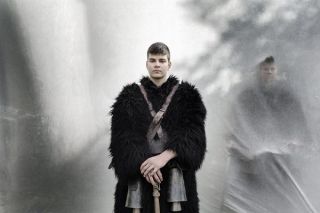
Nick Vavdinoudis’s four portraits that won the second place in the international competition “Travel Photographer of the Year”, among thousands of entries from around the world

An acclaimed Greek photographer makes famous an ancient Greek tradition of Macedonia.

They couldn’t believe that they were going to become famous. Northern Greece’s locals stood in front of the Nick Vavdinoudis’s lens and the result was seen by millions of people around the globe. Greek photographer Nick Vavdinoudis won second place in the international competition “Travel Photographer of the Year”, among thousands of entries from around the world. His photographs will be exhibited in the prestigious Royal Geographical Society’s gallery in London from July to September this year. Nick’s photographs were posted on the popular social media giant ‘yatzer’ and they become viral!
Through his “Faces + Masks” series, Vavdinoudis captures the unusual yet ancient customs of certain towns and villages in the rural area of Eastern Macedonia. Known for their elaborate animalistic costumes and symbolic rituals, these customs take place at the beginning of January (around the 6th to be exact) and coincide with the Orthodox Christian holiday of the baptism of Christ. They are believed to date back to before Christianity, veritably to ancient Dionysian celebrations of fertility due to their apparent chthonic and shamanistic nature.
According to Vavdinoudis, the locals see no contradiction between the pagan character of their customs and their Christian context, since these rituals are meant to be ”a praise to a fertile and good year”, a gesture which in turn ”rests on the pillars of fruitfulness and productivity.”
Vavdinoudis told Neos Kosmos the story behind the photos that took place in villages located near the cities of Drama and Kavala, in Greece’s Macedonia.

-How did you decide to take this photographic journey?
“I attended as a visitor to the local custom and I was impressed by the primordial sense of the custom. I wanted to photograph the people and not the event. This ritual has many different names such as ‘Momogeri’, ‘Niggers’, ‘Babougera’, depending on the village that hosts it, and has roots in antiquity and in Dionysian festivals.”

– How were you treated by the locals?
“The difficulty was to convince them to participate. Once that was achieved, the rest was easier. They started to call people from nearby villages and for two years weekends were filled with the deafening noise of bells that were worn on the locals’ waists. They stood in front of the camera naturally and I didn’t have to make any corrections. The shootings took place at the villages Monastiraki, Xiropotamos, Petrousa, Pagoneri, Volakas of Drama Distinct and the village Nikisiani of Kavala District.”

-Do you believe that Greek tradition is slowly dying?
“Greek traditions are inexhaustible. The popular culture is the mirror of a people’s nation and it must be reconnected to the tradition, in particularly when young people are participating. The cultural associations are strong pillars of the Greek tradition, because they hold and raise our folk culture. They actually transform them from a static museum piece into a living organism.”

-Traditions are part of the identity of Diaspora’s Hellenism. And in Australia there are many cultural associations and communities that are trying hard to keep up with the tradition customs. Have you ever thought about or tried to bring your work in our country?
“Honestly, I have thought to present my work to Greek Australians. But the costly transfer of the exhibitions to a destination such as Australia is a concern. This, combined with the current economic situation in Greece, makes it difficult to cover the costs. My photographs will be exhibited at the famous Royal Geographical Society of London from July to September.”

source:Neos Kosmos

B-1 bombers coming to Australia to deter Beijing’s South China Sea ambitions: US

Bound for Australian skies: The US B-1 Bomber.

Bound for Australian skies: The US B-1 Bomber. Photo: Supplied

The US military plans to station B-1 strategic bombers and surveillance aircraft in Australia as part of efforts to deter Chinese ambitions in the South China Sea, a senior US government official has revealed, apparently pre-empting any announcement by the Australian government.

During testimony before the US Senate Foreign Relations Committee on Wednesday, US Defence Department Assistant Secretary for Asian and Pacific Security Affairs David Shear announced that in addition to the movement of US Marine and Army units around the Western Pacific region, “we will be placing additional Air Force assets in Australia as well, including B-1 bombers and surveillance aircraft.”

The US plan comes as the Obama administration moves to boost US naval forces and air power in the South China Sea to assert the right of free passage and challenge China’s efforts to buttress its maritime territorial claims through the construction of airfields and artificial islands.

The B-1 Lancer bomber, commonly called “Bone” (originally from “B-One”) was first deployed by the US Air Force in the mid 1980s and is expected to continue as a strategic bomber until the mid 2030s.

US B-52 bombers have previously been temporarily deployed to Darwin, to take part in exercises with the Royal Australian Air Force, in 2012 and in late 2014, as a consequence of a joint Force Posture Initiative agreed by former prime minister Julia Gillard and US President Barack Obama in 2011.

About 1150 US Marines began arriving in Darwin this week for six months training during the Top End’s dry season. The marines are the fourth rotation of US troops deployed to the Northern Territory since 2011. The plan is to gradually increase the number of US Marines rotating through Darwin to 2500 troops by 2017.

Disclosed ahead of any statement by the Australian government, the US plan to deploy B-1 bombers and surveillance aircraft to Australia comes as part of the US military’s broader “pivot” to the Asia-Pacific region.

Assistant Defence Secretary Shear made it clear on Wednesday that the US intends to challenge China’s claims to sovereignty over large parts of the South China Sea.

“We claim the right of innocent passage in such areas, and we exercise that right regularly, both in the South China Sea and globally,” Mr Shear told the Senate Foreign Relations committee.

Similar views were expressed by Assistant Secretary of State for East Asian and Pacific Affairs Daniel Russel, who also told the Senate committee “No matter how much sand you pile on a reef in the South China Sea, you can’t manufacture sovereignty.”

The Chinese Foreign Ministry has voiced “serious concern” about the US officials’s remarks.

Spokeswoman Hua Chunying told a press conference on Wednesday that China supported freedom of navigation in the South China Sea but “freedom of navigation does not give one country’s military aircraft and ships free access to another country’s territorial waters and airspace.”

She said China would “resolutely safeguard its territorial sovereignty” and urged the US “not to take any risks or make any provocations.”

The Australian Defence Department has not yet commented on the US announcement.

source:smh.com.au

Indonesia urged to stop ‘two-finger” virginity tests for female military applicants

6471518-3x2-340x227

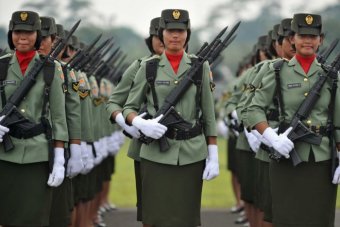
Indonesia has been urged to stop virginity tests for female military applicants, with human rights activists calling the practice “cruel, inhuman and degrading”.

Human Rights Watch (HRW) said the examinations, normally carried out through a “two-finger test” to ensure the hymen is intact, are a form of gender-based violence and “scientifically baseless”.

The Indonesian military defended the practice, saying that people of low morals could “damage the military”.

“If a person has low morals, then she cannot join the military. Because if she joins the military it will damage the military, which must handle a huge duty,” military spokesman Fuad Basya said.

“They are responsible for the country’s sovereignty, the unity of the territory, the safety of the nation.”

Indonesia denies it also checks women who are planning to marry officers.

This is just the latest controversy around virginity tests in Muslim-majority Indonesia, with the police facing criticism last year for subjecting female applicants to undergo the examinations.

The HRW said the military “should immediately end the use of so-called virginity tests, which violate the prohibition of cruel, inhuman, and degrading treatment under international human rights law”.

The group interviewed 11 recruits and officers’ fiancees who had undergone the tests at military hospitals on the main island of Java. They also spoke to people involved in conducting the tests.

Those examined described the practice as painful, embarrassing and traumatic.

“I felt humiliated. It was very tense,” said one applicant tested in 2013, cited anonymously in HRW’s report.

She added that she was “shocked” that the doctor performing the test was a man.

“It’s against the rights of every woman,” she said.

The test has been standard for decades and one retired air force officer, also cited anonymously, recalled having it done in 1984.

She said four years later she got married but could not make love to her husband for months “because of the trauma that I had with that ‘virginity test’.”

The HRW report comes ahead of a meeting next week on the island of Bali organised by the International Committee of Military Medicine, a body that fosters cooperation between medical services of armed forces worldwide.

source:abc.net.au

Greece’s Varoufakis says debt swap fills Draghi’s ‘soul with fear’

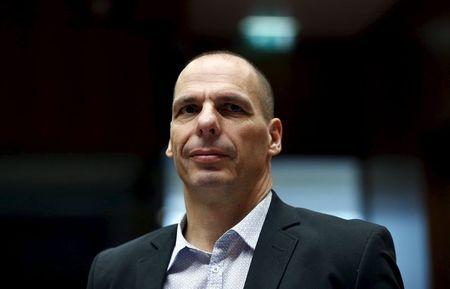
Greece's Finance Minister Yanis Varoufakis attends an European Union finance ministers meeting in Brussels, Belgium, May 12, 2015.   REUTERS/Francois Lenoir

Greece’s Finance Minister Yanis Varoufakis attends an European Union finance ministers meeting in Brussels, Belgium, May 12, 2015. REUTERS/Francois Lenoir

ATHENS (Reuters) – Repayment of what Greece owes to the European Central Bank should be pushed into the future, but it is not an option because it fills ECB chief Mario Draghi’s “soul with fear”, Greece’s finance minister said on Thursday.

Yanis Varoufakis said Draghi, president of the European Central Bank, cannot risk irritating Germany with such a debt swap because of Berlin’s objection to his bond-buying programme.

Varoufakis first raised the idea of swapping Greek debt for growth-linked or perpetual bonds when his leftist government came to power earlier this year, But Athens has since dropped the proposal after it got a cool reception from euro zone partners.

The outspoken minister, who has been sidelined in talks with European Union and International Monetary Fund lenders, brought it up again on Thursday, saying 27 billion euros of bonds owed to the ECB after 6.7 billion euros worth are repaid in July and August should be pushed back.

“What must be done (is that) these 27 billion of bonds that are still held by the ECB should be taken from there and sent overnight to the distant future,” he told parliament.

“How could this be done? Through a swap. The idea of a swap between the Greek government and the ECB fills Mr. Draghi’s soul with fear. Because you know that Mr. Draghi is in a big struggle against the Bundesbank, which is fighting against QE. Mr. Weidmann in particular is opposing it.”

Varoufakis was referring to the ECB’s quantitative easing (QE) or bond-buying plan and Bundesbank President Jens Weidmann’s unabashed criticism of it.

Varoufakis said the bond-buying plan is “everything for Mr. Draghi” but that “allowing such a swap of our own new bonds with these bonds … would feed Mr. Weidmann with excuses to create problems with the ECB’s QE.”

Prime Minister Alexis Tsipras’s government stormed to power in January promising it would end austerity and demand a debt writeoff from lenders to make the country’s debt manageable.

It has spoken little about debt relief in recent months as it tries to focus on reaching a deal with lenders on a cash-for-reforms deal, which has proved difficult amid a deadlock on pension and labour issues.

(Reporting by Lefteris Papadimas and Renee Maltezou, Writing by Deepa Babington Editing by Jeremy Gaunt)

source:uk.news.yahoo.com

Προκλητικό βρετανικό δημοσίευμα μετά τις δηλώσεις Ξυδάκη για τα Γλυπτά

//

Προκλητικό βρετανικό δημοσίευμα μετά τις δηλώσεις Ξυδάκη για τα Γλυπτά
Τουλάχιστον προκλητικό είναι δημοσίευμα της βρετανικής εφημερίδας Telegraph, μετά τις δηλώσεις του αναπληρωτή υπουργού Πολιτισμού Νίκου Ξυδάκη ότι δεν θα διεκδικήσει η Ελλάδα νομικά τα Γλυπτά του Παρθενώνα, παρά το πρόσφατο πόρισμα της δικηγόρου Αμάλ Αλαμουντίν που καλούσε την Ελλάδα να αναλάβει νομική δράση.

Ο κ. Ξυδάκης είπε την Τετάρτη, μιλώντας στο Mega: «Η οδός για τη διεκδίκηση της επιστροφής των Γλυπτών είναι η διπλωματική και η πολιτική». Και συνέχισε: «Δεν μπορείς να πηγαίνεις σε δίκες για οποιοδήποτε θέμα, αφενός, και, αφετέρου, στα διεθνή δικαστήρια η έκβαση είναι αβέβαιη, δεν είναι τόσο εύκολα τα πράγματα».

Η δήλωση ήρθε λιγότερο από 48 ώρες μετά τη δημοσίευση του πορίσματος, το οποίο συνέταξε η Αμάλ Κλούνεϊ. Το πόρισμα ανέφερε χαρακτηριστικά: «Πρέπει να προχωρήσετε νομικά. Aν δεν το κάνετε στο προσεχές μέλλον, η ευκαιρία μπορεί να χαθεί Ή τώρα ή ποτέ… H ώρα (της διεκδίκησης) έχει έρθει…»

Προκλητικό βρετανικό δημοσίευμα μετά τις δηλώσεις Ξυδάκη για τα Γλυπτά – Ειδήσεις – Πολιτισμός – in.gr //

«Η Ελλάδα γνωρίζει ότι δεν έχει νομικό δικαίωμα στα Ελγίνεια και γι’ αυτό δεν θα κάνει μήνυση στη Βρετανία» είναι ο σκανδαλώδης τίτλος δημοσιεύματος της εφημερίδας Telegraph.

Και η εφημερίδα συνεχίζει: «Με το τέλος της μήνυσης της Αμάλ Κλούνι κατά της κυβέρνησής μας, το Βρετανικό Μουσείο μπορεί να συνεχίσει την τεράστια προσφορά του στον κόσμο».

Ανάμεσα στα «επιχειρήματα» της εφημερίδας είναι ότι επειδή τα βρετανικά δικαστήρια είναι παγκοσμίως αναγνωρισμένα για την ικανότητά τους να λύνουν διαμάχες πάνω σε διεθνή ζητήματα, ο κ. Ξυδάκης «λογικά θεώρησε» -όπως αναφέρει η Telegraph- ότι η απόφαση ενός διεθνούς δικαστηρίου δεν θα είναι πολύ διαφορετική.

Και στον ίδιο προκλητικό τόνο συνεχίζει: «Δεν πρόκειται για έκπληξη καθώς -αντίθετα με την ευρέως διαδεδομένη παρανόηση- δεν υπάρχει τίποτα παράνομο στον τρόπο που ο Λόρδος Έλγιν έσωσε τα Γλυπτά του Παρθενώνα».

«Η Ελλάδα εγκαταλείπει την υπόθεση των Ελγίνειων Μαρμάρων» ανέφερε ο εξωτερικός τίτλος θέματος του BBC. Μέσα η είδηση μεταδόθηκε σωστά, καθώς το BBC αναφέρει ότι η Ελλάδα αποκλείει την ανάληψη νομικής δράσης για το θέμα που έχει μετατραπεί σε πικρή διαμάχη ανάμεσα στις δύο χώρες. Στη συνέχεια ο τίτλος άλλαξε και το ρήμα από «εγκαταλείπει» έγινε «αποκλείει».

Ο βρετανικός Guardian έσπευσε να υπερασπιστεί την Ελλάδα, λέγοντας ότι τα «Γλυπτά του Παρθενώνα αποτελούν θαύματα της γλυπτικής, σύμβολα του ελληνικού έθνους». Η Σαρλότ Χίγκινς αναφέρει ότι αν και η Ελλάδα «απέρριψε ήσυχα την πιθανότητα ανάληψης νομικής δράσης […] η επιθυμία να τα δει κανείς πίσω στην Αθήνα παραμένει πιο έντονη από ποτέ».

«Η τεράστια συναισθηματική σημασία και ο εθνικός συμβολισμός που συνδέονται με τα Γλυπτά είναι σχετικά πρόσφατος» αναφέρει η εφημερίδα «και σίγουρα θα ήταν ξένη για τους Αθηναίους που έχτισαν τον μεγάλο ναό της θεάς τους πάνω στις στάχτες του προκατόχου του που κάηκε από την περσική στρατιωτική εισβολή στο 480 π.Χ.» αναφέρει στο σχόλιό του ο Guardian.

Η συντάκτρια του θέματος επισημαίνει ότι στη διάρκεια των αιώνων που ακολούθησαν, τα Γλυπτά απέκτησαν νέα νοήματα, νοήματα που και να ήθελε κανείς δεν θα μπορούσε πια να αφαιρέσει.

«Για την Αθήνα, το επιχείρημα αυτό φαίνεται προφανές: να τα φέρει σπίτι τους, στο Μουσείο της Ακρόπολης, όπου βρίσκεται ήδη περίπου το ένα τρίτο των Γλυπτών του Παρθενώνα και να τους επιτρέψει πλήρως να πουν την ιστορία αυτού του εκπληκτικού ναού, που χτίστηκε σε μια κατεστραμμένη από τον πόλεμο, νικήτρια πόλη – κράτος» τονίζει η εφημερίδα.

Αφού αναφέρεται στο επιχείρημα της Βρετανίας ότι το Βρετανικό Μουσείο αποτελεί ένα μουσείο παγκόσμιας ιστορίας και ότι εκεί τα Γλυπτά μπορεί να τα θαυμάσει κανείς σε συνδυασμό με άλλα εκπληκτικά αντικείμενα και μνημεία από άλλες χώρες, πολιτισμούς και ηπείρους.

Και καταλήγει ότι τα επιχειρήματα είναι ισορροπημένα και ότι «ο πόλεμος για τα Μάρμαρα» δείχνει ότι θα προχωρήσει μπροστά, «στο μέλλον».

Δήλωση Ξυδάκη

Εν τω μεταξύ, σε ανακοίνωσή του, το υπουργείο Πολιτισμού ανέφερε το απόγευμα της Πέμπτης ότι σε ερώτηση δημοσιογράφου σχετικά με τη στρατηγική της ελληνικής κυβέρνησης όσον αφορά τη διεκδίκηση των Γλυπτών του Παρθενώνα, ο κ. Ξυδάκης είπε:

«Οι νομικές γνωματεύσεις είναι εξαιρετικά χρήσιμες και ενισχύουν την επιχειρηματολογία της Ελλάδας για την επιστροφή των γλυπτών του Παρθενώνα, ωστόσο η ελληνική κυβέρνηση ουδέποτε δήλωσε ότι δεσμεύεται στο άμεσο μέλλον να ακολουθήσει τη δικαστική οδό».

Ο αναπληρωτής υπουργός Πολιτισμού πρόσθεσε ότι η δικαστική οδός «είναι μια από τις πολλές οδούς που ανοίγονται μπροστά μας».

«Ο πολυετής αγώνας με πολιτικά και διπλωματικά μέσα με σκοπό τη διαφώτιση της διεθνούς κοινής γνώμης έχει φέρει ήδη εντυπωσιακά αποτελέσματα. Το μεγαλύτερο μέρος της κοινής γνώμης, και μάλιστα στη Βρετανία, διάκειται ευνοϊκά στην επιστροφή των Γλυπτών» αναφέρει ο αναπληρωτής υπουργός Πολιτισμού.

Και προσθέτει: «Σε κάθε περίπτωση η ελληνική Κυβέρνηση, αξιοποιώντας την πλούσια πείρα του παρελθόντος, επιλέγει τα προσφορότερα μέσα, τους όρους και το πεδίο για την επίτευξη των στόχων της».

Πηγή:in.gr