Category Archives: Uncategorized

Eurogroup head says deal with Greece still possible by June 18

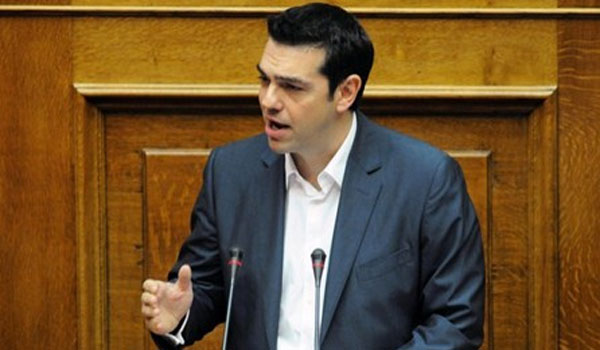
tsipras_915927517

Greece and its creditors can still reach a deal on what reforms the cash-strapped country has to implement to get more loans and avoid default, in time for the next meeting of euro zone finance ministers on June 18, the chairman of the ministers said.

Speaking to reporters on a visit to Helsinki, however, Jeroen Dijsselbloem warned that time was running out fast and the institutions representing the creditors needed time to assess whether new proposals Greece might make.

Dijsselbloem, who is also the finance minister of the Netherlands, said that while only a few issues remained to be solved in the four-month-old negotiations, the latest proposals from Athens, submitted to the institutions on Monday, did not make the cut.

“We are still open to serious alternatives, but the alternatives of the last couple of days have not been of a high enough standard,” he told a news conference after talks with Finish Finance Minister Alexander Stubb.

“In the last talks which I had together with (European Commission) President (Jean-Claude) Juncker and Prime Minister (Alexis) Tsipras, we made quite clear that there is room to put in alternative measures, but… the bottom line is that it has to add up, because Greece has to become financially independent again,” he said.
Source: Reuters (Reporting By Jussi Rosendahl, writing by Jan Strupczewski)


Κηρύσσει ταξικό πόλεμο ο Θησαυροφύλακας με τα σχόλιά του

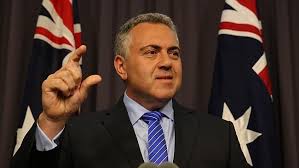
images

«Θέλετε σπίτι; Βρείτε καλοπληρωμένες δουλειές!» η δήλωση του Joe Hockey και εμμέσως πλην σαφώς η λύση που προτείνει για να αποκτήσουν ιδιόκτητη κατοικία οι νέοι Αυστραλοί.

Μια συμβουλή είχε ο ομοσπονδιακός Υπουργός Οικονομικών, Joe Hockey, προς τους νέους που επιθυμούν να μπουν στην αγορά ακινήτων: να βρουν μία “καλή δουλειά με καλά χρήματα”. Η δήλωση έγινε στο πλαίσιο συνέντευξης Τύπου με θέμα την νομοθεσία προς ρύθμιση των επενδύσεων από το εξωτερικό στην αυστραλιανή αγορά ακινήτων.

Σε επισήμανση δημοσιογράφου ότι οι τιμές των ακινήτων στο Σίδνεϊ είναι απλησίαστες για τους νέους αγοραστές, ο Joe Hockey αρνήθηκε την διαπίστωση λέγοντας: “αν οι τιμές ήταν απαγορευτικές, κανείς δεν θα αγόραζε”.

Στη συνέχεια προχώρησε προς την ‘συμβουλή’: “Το σημείο εκκίνησης για τους αγοραστές πρώτης κατοικίας είναι να βρουν μία καλή δουλειά με καλές απολαβές”.

Η δήλωση του υπουργού σήκωσε θύελλα αντιδράσεων, προκαλώντας την θυμηδία στα μέσα κοινωνικής δικτύωσης, αλλά και την αγανάκτηση μέρους της κοινής γνώμης. Οι σχολιαστές τόνισαν την αύξηση της ανεργίας στους νέους, κατηγορώντας τον υπεύθυνο της οικονομικής πολιτικής της κυβέρνησης για δηλώσεις επιπέδου Μαρίας Αντουανέτας, θυμίζει εποχές ταξικού πολέμου και φανερώνει  ότι η οπτική του είναι τελείως αποκομμένη από την πραγματικότητα που αντιμετωπίζουν οι Αυστραλοί πολίτες, ειδικότερα οι νέοι.

Απαντώντας στις επικρίσεις, ο Υπουργός βγήκε στο ραδιόφωνο του ABC, λέγοντας ότι η κυβέρνηση κάνει ό,τι μπορεί, όχι μόνο για να ελαφρύνει το κόστος ζωής για τα νοικοκυριά, αλλά κυρίως για να κάνει προσιτή την αγορά κατοικίας για τους νεοεισερχόμενους σ’ αυτήν. Κι ενώ ο κ. Hockey αρνήθηκε να απολογηθεί για τα σχόλιά του, παραδέχθηκε ότι είναι χρέος της κυβέρνησης να βοηθήσει τους πολίτες να βρουν καλύτερα αμοιβόμενη απασχόληση.

Σε μία άλλη αποστροφή του λόγου του, ο θησαυροφύλακας προσπάθησε να διασκεδάσει τις ανησυχίες για την δημιουργία φούσκας στην αγορά ακινήτων, προτείνοντας ως απάντηση στις υψηλές τιμές, την επιπλέον δόμηση. Όσο για το Σώμα Επιθεώρησης Αλλοδαπών Επενδύσεων, έχει ήδη εξετάσει περίπου 200 υποθέσεις παράνομης αγοράς ακινήτων, σε πολλές περιπτώσεις από αγοραστές που προσήλθαν μόνοι τους, ώστε να διαλυθούν οι αμφιβολίες τους ως προς το κατά πόσον έχουν παρανομήσει. Βάσει της ισχύουσας νομοθεσίας, οι επενδυτές από το εξωτερικό μπορούν να αγοράσουν νέα ακίνητη περιουσία στην Αυστραλία, αλλά οφείλουν να ζητήσουν άδεια προτού αγοράσουν υπάρχουσες κατοικίες, ενώ οι προσωρινοί κάτοικοι υποχρεούνται να πουλήσουν τα ακίνητά τους, προτού φύγουν από την χώρα. Η κυβέρνηση έχει θέσει σε λειτουργία την τηλεφωνική γραμμή 1800050377 για καταγγελίες πολιτών που υποψιάζονται παράτυπες αγοραπωλησίες ακινήτων.

Ωστόσο, ο Υπουργός, φροντίζοντας να καλωσορίσει τις επενδύσεις αλλοδαπών στην αγορά ακινήτων γιατί ανεβάζουν την αξία τους, προειδοποίησε τους πολίτες για τους κινδύνους ρατσιστικής στοχοποίησης, τονίζοντας ότι πολλές οικογένειες με καταγωγή από την Κίνα βρίσκονται στην Αυστραλία περισσότερα χρόνια από την δική του οικογένεια.

Πηγή:Νέος Κόσμος

Χάνει εκατομύρια με το τσουβάλι η κυβέρνηση Άμποτ

Ο ανεξάρτητος γερουσιαστής John Madigan

Υπολογίζεται ότι έχουν χαθεί πάνω από $1 δις από μέτρα τα οποία είχε προγραμματίσει να θέσει σε εφαρμογή κατά το παρόν οικονομικό έτος, αλλά μπλοκαρίστηκαν από τη Γερουσία.

Σε $64 εκ. εβδομαδιαίως υπολογίζονται οι απώλειες της κυβέρνησης Άμποτ, από μέτρα που αναγγέλθηκαν στον προϋπολογισμό και θα έμπαιναν σε εφαρμογή από την 1η Ιουλίου.

Μερικά από τα αναγγελθέντα μέτρα αφορούν περικοπές οικογενειακών φοροαπαλλαγών, κυβερνητικές προσφορές και επιδόματα ανεργίας.

Ανεξάρτητοι γερουσιαστές εκφράζουν ανεπιφύλακτα τη δυσαρέσκειά τους για το γεγονός ότι έχουν μείνει στο σκοτάδι, πιέζουν, δε, την κυβέρνηση να αποκαλύψει την ατζέντα της για τις επόμενες εβδομάδες, ελπίζοντας να επιτύχουν κάποια συμφωνία, η οποία και θα ανοίξει την πόρτα προκειμένου να περάσουν κάποια από αυτά από τη Βουλή.

Για παράδειγμα, ο γερουσιαστής του κόμματος Family First, Bob Day, δήλωσε ότι δεν υπήρξε καμμία προσέγγιση εκ μέρους της κυβέρνησης, για τις περικοπές στις οικογενειακές φοροαπαλλαγές, ενώ ο ανεξάρτητος γερουσιαστής John Madigan, ανησυχεί για το ίδιο θέμα και για τις επιπτώσεις που ενδέχεται να έχει σε οικογένειες με έναν μόνο εργαζόμενο.

ΑΠΩΛΕΙΕΣ

Υπολογίζεται ότι ήδη έχουν χαθεί πάνω από $1 δις από μέτρα τα οποία είχαν προγραμματιστεί να τεθούν σε εφαρμογή κατά το παρόν οικονομικό έτος, αλλά μπλοκαρίστηκαν από τη Γερουσία.

Είναι γεγονός πλέον, ότι η κυβέρνηση Άμποτ διατρέχει τον κίνδυνο να μην έχει επαρκή χρόνο για να αποφύγει μεγαλύτερες απώλειες οι οποίες υπολογίζονται σε $3.3 δις για το τρέχον οικονομικό έτος.

Για την κωλυσιεργία της κυβέρνησης, ο Άμποτ δέχεται βέλη και εκ των έσω: «Είναι απαράδεκτο. Πάμε από βδομάδα σε βδομάδα. Το πρόβλημα είναι ότι η μια αναβολή διαδέχεται την άλλη. Δεν είναι συνεπείς στην ατζέντα και μετά πρέπει να ξεκινήσεις πάλι από την αρχή» σχολίασε ο γερουσιαστής του Συνασπισμού, David Leyonhjelm.

Πηγή:Νέος Κόσμος

Σε λίγη ώρα η νέα συνάντηση Τσίπρα – Γιούνκερ

Greek Prime Minister Alexis Tsipras walks with European Commission President Jean-Claude Juncker (L) ahead of a meeting at the EU Commission headquarters in Brussels, Belgium, June 3, 2015.   REUTERS/Francois Lenoir

Σε λίγη ώρα ξεκινά η νέα συνάντηση του έλληνα πρωθυπουργού Αλέξη Τσίπρα με τον πρόεδρο της Κομισιόν Ζαν Κλοντ Γιούνκερ, με στόχο να γεφυρωθούν οι εναπομείνασες διαφορές μεταξύ της Ελλάδας και των δανειστών για να κλείσει η συμφωνία, όπως δήλωσε και μετά τη συνάντηση με Μέρκελ και Ολάντ τα ξημερώματα ο κ. Τσίπρας.

Ο έλληνας πρωθυπουργός είχε συνάντηση με τον κ. Γιούνκερ το απόγευμα της Τετάρτης πριν από την τριμερή.

Σύμφωνα με τις έως τώρα πληροφορίες, η Ελλάδα ζητά επέκταση του προγράμματος κατά εννέα μήνες, δηλαδή έως τον Μάρτιο του 2016, οπότε ολοκληρώνεται και το πρόγραμμα του ΔΝΤ.

Οι βασικοί άξονες είναι να αγοράσει o Ευρωπαϊκός Μηχανισμός Στήριξης τα ελληνικά ομόλογα που έχει στην κατοχή της η ΕΚΤ και λήγουν το καλοκαίρι.

Επίσης, η ελληνική κυβέρνηση προτείνει να χρησιμοποιηθούν τα περίπου 11 δισ. που βρίσκονταν μέχρι πρόσφατα στο Ταμείο Χρηματοπιστωτικής Σταθερότητας και τώρα έχουν περάσει στον ESM και να αυξηθεί το όριο έκδοσης εντόκων γραμματίων από την ΕΚΤ.

Με αυτά τα δεδομένα, η ελληνική πλευρά δηλώνει διατεθειμένη να συζητήσει τους στόχους για τα πρωτογενή πλεονάσματα -για τα οποία παραμένει διαφωνία-, επισημαίνοντας ωστόσο ότι δεν έχει οριστικοποιηθεί ακόμα τίποτα.

Ο επικεφαλής του Eurogroup Γερούν Ντάισελμπλουμ δήλωσε ότι απομένουν μόνο λίγα ζητήματα προς επίλυση, αλλά χρειάζεται χρόνος για τεχνική εργασία από τους θεσμούς πριν από το Eurogroup της 18ης Ιουνίου.

Πηγή:in.gr

Μέρκελ: Συμφωνήσαμε με τον Τσίπρα να κλείσουν όλα τα ανοιχτά θέματα

Μέρκελ: Συμφωνήσαμε με τον Τσίπρα να κλείσουν όλα τα ανοιχτά θέματα

Η Άνγκελα Μέρκελ

Τη δέσμευση της Ελλάδας να εντατικοποιήσει τις συζητήσεις με τους θεσμούς προκειμένου να κλείσουν όλα τα ανοιχτά θέματα εξέφρασε η γερμανίδα καγκελάριος, Άνγκελα Μέρκελ στους δημοσιογράφους κατά την άφιξή της στη συνάντηση μεταξύ των αρχηγών της ΕΕ και της Λατινικής Αμερικής.

«Στο τέλος των συνομιλιών υπήρξε απόλυτη συμφωνία ότι η Ελλάδα θα εργαστεί εντατικά και με υψηλή πίεση με τα τρία θεσμικά όργανα κατά τις προσεχείς ημέρες για να λύσει όλα τα ανοικτά ζητήματα» δήλωσε η Μέρκελ.

Στην τριμερή συνάντηση της Τετάρτης, που κράτησε δύο ώρες οι τρεις ηγέτες, Αλέξης Τσίπρας, Άνγκελα Μέρκελ και Φρανσουά Ολάντ, συμφώνησαν να εντατικοποιηθεί η διαδικασία γεφύρωσης των διαφόρων που απομένουν, με στόχο την έγκαιρη επίτευξη συμφωνίας που θα επιτρέπει στην Ελλάδα να επιστρέψει στην ανάπτυξη με κοινωνική συνοχή και βιώσιμο χρέος.

Εκπρόσωπος της γερμανικής κυβέρνησης δήλωσε ότι οι τρεις ηγέτες συμφώνησαν ότι οι διαπραγματεύσεις πρέπει να εντατικοποιηθούν. «Συμφωνήθηκε ομοφώνως ότι οι συνομιλίες ανάμεσα στην ελληνική κυβέρνηση και τους Θεσμούς πρέπει να συνεχιστούν με μεγάλη ένταση» δήλωσε ο Γερμανός εκπρόσωπος.
Σε δηλώσεις του μετά τη συνάντηση με Μέρκελ και Ολάντ τόνισε την ανάγκη να δοθεί μία βιώσιμη λύση. Δήλωσε ότι το κλίμα στη συνάντηση ήταν πολύ καλό και φιλικό. «Αποφασίσαμε να εντατικοποιηθούν οι συζητήσεις για να γεφυρωθούν οι διαφορές», συμπλήρωσε.

Πηγή:in.gr

Greece:Parliamentary committee approves draft citizenship law

A new bill which would lead to some 100,000 second-generation immigrants being granted Greek citizenship was approved on Wednesday by a parliamentary committee ahead of a vote at the House’s plenary session expected next week.

The bill was backed by leftist SYRIZA, Potami, PASOK and Independent Greeks, despite objections by many in the ranks of the junior coalition partner.

Due to objections among many of its MPs, New Democracy said it would reserve judgment until the plenary session vote, which is expected next week.

Alternate Minister for Immigration Policy Tasia Christodoulopoulou indicated that the bill could be amended before its final version as “the greatest possible consensus should be achieved.”

The bill stipulates that applicants must have been enrolled at a Greek primary school and that their parents must have lived legally in Greece for five years prior to the applicant’s birth.

source:ekathimerini.com

S&P downgrades Greece, says default likely if no debt deal

Standard & Poor’s on Wednesday downgraded Greece’s credit rating one notch further into junk territory, saying it’s likely the country will default on its commercial debt within a year if it can’t strike a deal with its creditors.

Greece has shown it is giving higher priority to its pensions and other domestic spending than making debt payments on time, the rating agency said. The country has delayed making a June 5 debt payment to the International Monetary Fund and must pay the lending organization 1.6 billion euros by the end of this month.

The move reflects “our opinion that in the absence of an agreement between Greece and its official creditors, the Greek government will likely default on its commercial debt within the next 12 months,” the agency said in its report.

The downgrade comes as Greek leaders are locked in negotiations with European officials over the terms of a fresh $8.1 billion (7.2 billion euros) rescue loan. The loan is needed for the country to make payments to the IMF and European creditors.

Yet European leaders said Wednesday that Greece needs to promise greater economic reforms in return for the funds. They are demanding steep cuts to Greece’s pensions, as well as higher sales taxes and larger budget surpluses.

Greek Prime Minister Alexis Tsipras has said he would make some concessions, but would not impose further pension cuts.

S&P said that money is flowing out of Greece’s banks, which are dependent on the European Central Bank for financial support. Those outflows could ultimately force the country to block that money from leaving the country, the ratings agency said, precipitating an exit from the euro zone.

In addition, any agreement between Greece and its creditors in the next two weeks would likely only provide temporary relief, covering payments for the next three months, S&P said.

source:ekathimerini.com

MH370 mystery: Maths professor says Malaysia Airlines plane nosedived into ocean and stayed intact

Supplied Editorial mh370 chen nosedive

Nosedive … researchers used computer simulations to conclude that a 90-degree nosedive explains the lack of debris where MH370 was said to have crashed. Picture: Texas A&M University at Qatar/Notices of the American Mathematical Society Source: Supplied

THE mysterious disappearance of Malaysia Airlines Flight MH370 has sparked numerous conspiracy theories.

Now a team of mathematicians claims the Boeing 777 vanished without a trace because it plunged into the Indian Ocean at a 90-degree angle.

The perfect nosedive kept the aircraft intact and explains why no debris or oil has been found since the plane disappeared in March last year with 239 people on board, the researchers say.

Texas A&M University at Qatar mathematician Goong Chen, who led the forensic computer simulations, says the supporting evidence is strong.

“The true final moments of MH370 are likely to remain a mystery until some day when its black box is finally recovered and decoded,” Chen said.

“But forensics strongly supports that MH370 plunged into the ocean in a nosedive.

The researchers used applied mathematics to test five different landing scenarios.

These included gliding water entry, a skilful manoeuvre performed by Captain Chesley Sullenberger when he landed a US Airways flight on the Hudson River in New York in 2009.

(The incredible landing has been dubbed the “Miracle on the Hudson”.)

However this scenario was discounted with MH370 because “ditching a large airplane on the open Indian Ocean generally would involve waves of height several metres or more, easily causing breakup and the leak of debris.”

According to researchers’ fluid dynamics simulations, a vertical water entry would have caused the least resistance.

Chen said the wings would have snapped off instantly on impact but the rest of MH370 would have remained intact. All the heavy debris would have then sunk to the bottom of the ocean.

Chen, who has worked in Texas A&M University’s maths department since 1987, led the team of researchers from Texas A&M, Penn State, Virginia Tech, MIT and the Qatar Environment and Energy Research Institute.

The research was published in the April 2015 issue of Notices of the American Mathematical Society.

Difficult search ... the search for missing Malaysian Airline MH370 covered more than 48,

Difficult search … the search for missing Malaysian Airline MH370 covered more than 48,000 square kilometres of the sea floor. Picture: AFP/Australian Government/Hydrospheric Solutions Inc/Ryan Galloway and Joshua Phillips Source: AFP

MH370 disappeared on 8 March 2014 en route from Kuala Lumpur to Beijing with 239 passengers and crew on board.

The search for the ill-fated aircraft has covered more than 48,000 square kilometres of the sea floor, Subsea World News reported.

At the request of the Malaysian Government, Australia has accepted responsibility for the search, with the Australian Transport Safety Bureau leading the underwater mission.

source: news.com.au

Expatriates share their experiences of living in Greece at local branch of InterNations

suzana_500

Zuzana Koskova, a 33-year-old woman from Slovakia, moved to Athens in 2006. She now works in the shipping sector. She is one of 4,000 expatriates who work in highly skilled jobs in Greece and who come together regularly at meetings of the InterNations community group.

“I was surprise by how cold the winter was,” says Juergen Fischhaber, a German who moved to Athens from Sofia in October. An executive at a multinational company, Fischhaber is one of 4,000 expatriates who work in highly skilled jobs in Greece and who come together regularly at meetings of the InterNations community group.

“We have 7,100 registered members, of whom 4,000 are foreigners and the rest Greeks who have spent many years abroad or who are thinking of emigrating in the near future,” Anastasios Ioannidis, the 33-year-old head of the group tells Kathimerini. Ioannidis himself spent several years abroad before returning to Greece, where he works as a business consultant.

InterNations is an international organization with branches in 400 cities around the world which is aimed at helping its members – many of whom do not speak the language of their new country – come together and network. In addition to weekly meetings and outings, the members help each other out and have online support and advice networks.

“The fora are used to address any problems that may arise,” explains Ioannidis, who coordinates members from 130 countries. “Most of the issues are solved automatically; my help is called for only when it is serious.”

Groups are also organized according to the members’ shared interests, so there is one group dedicated to hiking, another to cultural activities and so on.

The majority of InterNations members have the enthusiasm of exchange students, even though most are aged between 30 and 50.

The Greek branch, which began with just three members in 2008, is unique in the fact that it also includes natives.

“The bigger and more chaotic a city, the harder it is to adapt at first,” says Fischhaber, who has lived and worked away from Germany for over a decade. The biggest problems he has faced in Greece are not what you may imagine.

“The red tape is not much different than that in other countries, but the traffic on the streets certainly is,” stresses Fischhaber. “I can never calculate how long it will take me to get to an appointment.”

Being a German in Greece, he says laughing, “is a good excuse to start a conversation on politics.”

“Sometimes I meet Greeks who are very critical of their own country in regard to the economic crisis as well as others who blame the foreigners for everything,” Fischhaber says. “I don’t know what the mood was like before the crisis, but right now I see an aggressiveness in the way people drive.”

Slovakian Zuzana Koskova, a veteran of the expat community who has lived in Athens since 2006, makes the same observation about impatient Greek drivers who honk at every opportunity.

“When I first came to Greece, I was surprised by the expensive-looking purses carried by young girls,” she says in flawless Greek. “When I started working for a salary of 720 euros, I started wondering. Then I discovered the huge market of knockoffs, which does not exist in my country. I was surprised that they preferred to buy something fake just to make an impression.”

As the crisis starting taking its toll, Koskova’s sector, air travel, was also hit, yet the 33-year-old’s love for Athens remains unchanged “though the good and the bad.” “Now I work in shipping and I’m studying German literature,” she says. “I have been given a lot of opportunities in Greece.”

Her love of Greece also probably stems from the fact that when she was younger she wanted to be an archaeologist, as well as because all the Greeks she has met so far have embraced her. “Whenever I have time I visit the museums. The Cycladic Art Museum is my favorite,” she says. “Every time I land in Athens, I feel awe, just as I did the first time.”

source:ekathimerini.com

Greece and creditors: What game are they playing?

The repeated willingness of Greece and its creditors to bring the entire euro area to the brink of disaster presents a difficult and fascinating question for economic theorists: What game are they really playing?

On the surface, it seems like a classic game of chicken, in which each side tries to look determined enough to make the other crumble. The creditors, including the European Union, the International Monetary Fund and the European Central Bank, insist that they can’t provide any more debt relief or loosen their austerity demands any further. Greece pushes for more, suggesting that it is willing to default on its debts, possibly triggering an unraveling of the monetary union, if it doesn’t get its way.

It might also be a prisoner’s dilemma, as my Bloomberg colleague Justin Fox suggested back in February. Both sides would be better off if they cooperated, but distrust prevents them from doing so. As a result, the creditors keep demanding terms far too onerous for Greece to meet, and Greece edges toward a disorderly default that would be the most costly outcome for the creditors. This interpretation, though, assumes that the potential gains and losses for both players are roughly symmetrical — a condition that doesn’t necessarily hold here, given the immense downside for Greece.

Hence, another classic game — the ultimatum game — might provide a better analogy. In the game, a player receives some money — say, $100 — but can keep it only by convincing a second player to accept part of the sum. If both parties are interested solely in maximizing their financial well-being, the first player should be able to offer as little as $1. After all, for the second player, $1 is better than nothing.

When real people play the game, though, that’s not how it works out. The second player tends to reject any offer less than $30, seeing it as insulting. As a result, neither player gets any money. The game reaches inside people and stirs up deep emotions, demonstrating that humans are not dispassionate economic calculators. You can’t understand it without thinking about human perceptions of fairness, justice and honor.

This seems to fit the current situation in Europe. The creditors think Greece, in a position of weakness, should be grateful for the relief they’ve offered and get on with economic reforms. After all, it’s better than nothing. Yet Greece, while recognizing the need for reform, sees that the creditors can afford to do more and feels insulted by the suffering it must endure. If necessary, the Greeks are ready to risk blowing up the euro to preserve their independence and dignity.

From this perspective, it’s not really an economic confrontation at all. The technicalities of funding mechanisms and repayment schedules are merely the instruments through which power is being exerted from one side and resisted from the other. So when Greek Prime Minister Alexis Tsipras called the creditors’ latest proposal “absurd,” it might have been because, from the broad perspective of human decency, it was absurd. And when Jean-Claude Juncker, the chief executive of the EU, reportedly refused to answer a subsequent phone call from Tsipras, he might have done so because he was completely flummoxed by Greece’s irrationality.

The ultimatum game teaches us that the Greek standoff can’t be understood through the lens of economic rationality alone. Those who attempt to do so risk making a costly miscalculation.

source:ekathimerini.com