Category Archives: Uncategorized

Νεκρά τα ψάρια στο «μεγαλύτερο ενυδρείο του κόσμου»

9FCD7C80DF0646CE25A8A109D0A516FF

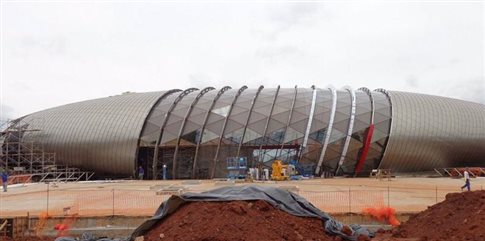
Το Aquarium Pantanal, κόστους 53 εκατ. δολαρίων, υποτίθεται ότι θα ήταν έτοιμο από τα τέλη του 2014

Περισσότερα από 10.000 ψάρια, πολλά από αυτά σπάνια, πέθαναν σε προσωρινές δεξαμενές πριν προλάβουν να μεταφερθούν στο ολοκαίνουργιο Aquarium Pantanal της Βραζιλίας, το «μεγαλύτερο ενυδρείο γλυκού νερού στον κόσμο».

Το περιστατικό συνέβη πριν από μήνες, μόλις τώρα όμως αποκαλύπτεται από τοπικά μέσα. Έγγραφο της εταιρείας που είχε αναλάβει τη φροντίδα των ψαριών δείχνει ότι το 80% των εκθεμάτων του υπό κατασκευή ενυδρείου πέθαναν από πτώση της θερμοκρασίας καθώς ο χειμώνας πλησίαζε στο νότιο ημισφαίριο.

Η εισαγγελία της πολιτείας Μάτο Γκρόσο ντο Σουλ έχει ξεκινήσει έρευνα για το τραγικό ατύχημα, καθώς η τοπική κυβέρνηση και η εταιρεία αλληλοκατηγορούνται για αμέλεια.

Το ενυδρείο των 53 εκατ. δολαρίων υποτίθεται ότι θα ήταν έτοιμο από τα τέλη του 2014 αλλά οι εργασίες κατασκευής καθυστέρησαν. Από το Νοέμβριο, τα ψάρια ανατέθηκαν προσωρινά στην εταιρεία Anambi που εξασφάλισε συμβόλαιο για την φροντίδα τους. «Η μεταφορά των ψαριών προγραμματιζόταν για τον Ιανουάριο ή τον Φεβρουάριο, οι δεξαμενές όμως δεν ήταν έτοιμες» δήλωσε εκπρόσωπος της εταιρείας στην εφημερίδα Folha de Sao Paulo.

Κυβερνητικοί αξιωματούχοι, αναμεταδίδει το Γαλλικό Πρακτορείο Ειδήσεων, υποστηρίζουν ότι εντόπισαν σοβαρά τεχνικά προβλήματα στις προσωρινές δεξαμενές της Anambi -μεταξύ άλλων, ανεπαρκή οξυγόνωση, παρουσία βακτηρίων και πλημμελή καθαρισμό.

Πολλά από τα ψάρια είχαν εισαχθεί από την Αφρική, την Ασία και την Ωκεανία.

Η ημερομηνία ολοκλήρωσης του Aquarium Pantanal δεν έχει ακόμα ανακοινωθεί.

Πηγή:in.gr

Μέρκελ: Πρώτα η ψήφιση στην Eλληνική Βουλή και μετά τα υπόλοιπα Κοινοβούλια

95D7C87C3BF4C73F5AFD41A38CB3A732

Την ικανοποίησή της για τη συμφωνία ύψους 82-86 δισ. ευρώ για τρία χρόνια ανακοίνωσε η Άνγκελα Μέρκελ.

Στη συνέντευξη Τύπου που παραχώρησε, η καγκελάριος ξεκαθάρισε ότι τα προαπαιτούμενα πρέπει να περάσουν από τη Βουλή των Ελλήνων έως 15 Ιουλίου, προτού η συμφωνία ψηφιστεί από τα υπόλοιπα κοινοβούλια.

«Τα θετικά υπερίσχυσαν των αρνητικών. Επιβεβαιώθηκαν οι αρχές της αλληλεγγύης και της υπευθυνότητας» σημείωσε.

Η καγκελάριος αναφέρθηκε στα μέτρα που πρέπει να ψηφιστούν στη Βουλή των Ελλήνων μέχρι τις 15 Ιουλίου για τον ΦΠΑ, τα εργασιακά και τα φορολογικά.

Για το θέμα του χρέους αναφέρθηκε στη συμφωνία του 2012, λέγοντας ότι «θα συζητήσουμε για το χρέος μόλις έχουμε την πρώτη θετική αξιολόγηση. Εκτός συζήτησης η ονομαστική διαγραφή χρέους».

Εκτίμησε ότι περίπου 25 δισ. ευρώ θα πρέπει να χρησιμοποιηθούν για την ανακεφαλαιοποίηση των τραπεζών.

Σε ερώτηση για το περίφημο σχέδιο εξόδου της Ελλάδας από την Ευρωζώνη για πέντε χρόνια, η καγκελάριος ξεκαθάρισε ότι αυτό δεν υφίσταται. «Το σχέδιο Α έχει επαληθευθεί δεν υπάρχει σχέδιο Β, δηλαδή Grexit» τόνισε.

Σε άλλη ερώτηση για το αν τα μέτρα θα τα «σηκώσουν» οι πολίτες, η Μέρκελ είπε ότι «βρέθηκαν ευρείες πλειοψηφίες στο ελληνικο Κοινοβούλιο που δεν υπήρχαν στο παρελθόν».

Η καγκελάριος ρωτήθηκε επίσης για το τι τελικά σήμανε το «όχι» στο πρόσφατο δημοψήφισμα, λέγοντας ότι οι Έλληνες διατράνωσαν την επιθυμία τους να παραμείνουν στην Ευρωζώνη, επικαλούμενη μάλιστα τις σχετικές δηλώσεις του Αλέξη Τσίπρα.

Πηγή:in.gr

Τσίπρας: Δώσαμε μια σκληρή μάχη και παλέψαμε μέχρι τέλους για ό,τι καλύτερο

429172B552F2BE55F96A937540833D3F

«Βρεθήκαμε μπροστά σε δύσκολες αποφάσεις και σκληρά διλήμματα. Δώσααμε μια σκληρή μάχη και παλέψαμε μέχρι τέλους για ό,τι καλύτερο» δήλωσε ο Αλέξης Τσίπρας μετά το πέρας της 17ωρης Συνόδου Κορυφής, η οποία κατέληξε σε συμφωνία για τρίτο πρόγραμμα.
Ο κ. Τσίπρας αναγνώρισε ότι η συμφωνία είναι δύσκολη, «αλλά αποτρέψαμε το σχέδιο της χρηματοπιστωτικής ασφυξίας και του χρηματοπιστωτικού συστήματος. Σχέδιο που είχε σχεδιαστεί στην εντέλεια».

«Τα μέτρα δημιουργούν υφεσιακές τάσεις, αλλά το πακέτο Γιούνκερ των 35 δισ. ευρώ, η συμφωνία για το χρέος και η χρηματοδότηση της χώρας απομακρύνουν το Grexit και έτσι μπορούν να επιστρέψουν οι επενδύσεις» συνέχισε.

«Δώσαμε μάχη μέχρι τέλους, θα υπάρξει κοινωνική δικαιοσύνη, τα βάρη θα τα φορτωθούν οι έχοντες και όσοι είχαν καταφέρει να ξεφύγουν γιατί τους προστάτευαν οι προηγούμενες κυβερνήσεις» διαβεβαίωσε.

Πηγή:in.gr

Ο υπ. Αγροτικής Ανάπτυξης της Κύπρου στις εκδηλώσεις μνήμης στην Αυστραλία

epseka

Ανακοίνωση της ΠΑ.Σ.Ε.Κ.Α.

Ο κ. Νίκος Κουγιάλης, υπουργός Γεωργίας, Αγροτικής Ανάπτυξης και Περιβάλλοντος, θα αντιπροσωπεύσει τον Πρόεδρο της Κυπριακής Δημοκρατίας, κ. Νίκο Αναστασιάδη στις Εκδηλώσεις Διαμαρτυρίας και Συμπαράστασης στον αγωνιζόμενο λαό της Κύπρου μας που οργανώνουν σε όλες τις Πολιτείες της Αυστραλίας οι Συντονιστικές Επιτροπές Κυπριακού Αγώνα.

Ο κύριος υπουργός θα είναι μαζί μας για να συμμετάσχει, να ενισχύσει και να είναι ο κύριος ομιλητής στις ακόλουθες Πολιτείες:

Την Κυριακή, 19 Ιουλίου στο Σίδνεϊ. Το πρόγραμμα έχει δημοσιευθεί ήδη και περιλαμβάνει Μνημόσυνο Πεσόντων, Καταθέσεις Στεφάνων, Πορεία Διαμαρτυρίας και Πολιτιστική Εκδήλωση στο οίκημα της Κυπριακής Κοινότητας Νέας Νότιας Ουαλίας.

Την Τετάρτη, 22 Ιουλίου, θα λάβει μέρος στις Εκδηλώσεις Διαμαρτυρίας στη Νότια Αυστραλία, όπου θα ψαλεί Μνημόσυνο Πεσόντων, Καταθέσεις Στεφάνων και Πολιτιστική Εκδήλωση στο οίκημα της Κυπριακής Κοινότητας Νότιας Αυστραλίας. Την Πέμπτη, 23 Ιουλίου θα συναντηθεί με Πολιτικούς στο Κοινοβούλιο της Νότιας Αυστραλίας και θα αναχωρήσει για τη Μελβούρνη.

Την Παρασκευή, 24 Ιουλίου θα είναι μαζί μας και θα είναι στη διάθεση των ελληνικών ΜΜΕ για συνεντεύξεις εφ’ όλης της ύλης. Στις 5.00μμ θα διαμαρτυρηθεί μαζί μας στα σκαλοπάτια της Βουλής της Βικτώριας και αμέσως μετά θα παρευρεθεί στο Δείπνο Λιτότητας όπου θα απευθύνει χαιρετισμό.

Το Σάββατο, 25 Ιουλίου, θα επισκεφθεί παροικιακούς Οργανισμούς, θα παρακαθήσει σε συνεδριάσεις με Διοικητικά Συμβούλια και στελέχη της Σ.Ε.Κ.Α.

Την Κυριακή, 26 Ιουλίου θα εκκλησιαστεί στο Μητροπολιτικό Ναό Αγίου Ευσταθίου όπου θα τελεστεί και το ιερό Μνημόσυνο των πεσόντων και σφαγιασθέντων από την τουρκική θηριωδία. Αμέσως μετά θα μεταβεί στο χώρο εκκίνησης της μεγάλης Πορείας Διαμαρτυρίας που θα καταλήξει στα σκαλοπάτια της Βουλής όπου θα εκφωνήσει την ομιλία του και το μήνυμα του Προέδρου της Κυπριακής Δημοκρατίας.

Τη Δευτέρα, 27 Ιουλίου θα παρευρεθεί και θα μιλήσει σε Εκδηλώσεις Διαμαρτυρίας που οργανώνονται στη Βρισβάνη.

Ο κύριος υπουργός θα συνοδεύεται από τηνΎπατη Αρμοστή της Κυπριακής Δημοκρατίας στην Ωκεανία, κ. Ιωάννα Μαλλιώτη.

Παρακαλούνται όλοι όπως παρευρεθούν σε όλες τις Εκδηλώσεις Διαμαρτυρίας για να συμπαρασταθούμε και έμπρακτα προς τον αγωνιζόμενο λαό μας και να δείξουμε σε όλους ότι ΔΕΝ ΞΕΧΝΟΥΜΕ ΚΑΙ ΑΓΩΝΙΖΟΜΑΣΤΕ ΜΕΧΡΙ ΤΗΝ ΤΕΛΙΚΗ ΔΙΚΑΙΩΣΗ.

ΚΩΝΣΤΑΝΤΙΝΟΣ

ΠΡΟΚΟΠΙΟΥ

Πρόεδρος ΠΑΣΕΚΑ

Πηγή:Νέος Κόσμος

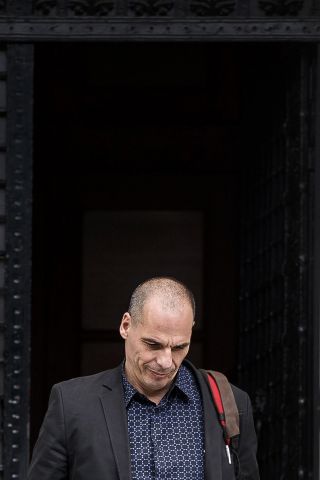
Yanis Varoufakis: Game Over

varoufakis

Yanis Varoufakis has exited stage left – but don’t think the world’s most colourful finance minister went gently into that good night

When SYRIZA was elected, Yanis Varoufakis quoted the Welsh poet Dylan Thomas, saying that on that day, “Greek democracy chose to stop going gently into the night,” and instead “to rage against the dying of the light”.

Last Sunday, Greek democracy raged once more, but within hours the Greek finance minister was gone.

The motorcycle-riding economist, theoretician and blogger – noted for a healthy mistrust of politicians – burned like a comet for the past five months, until his trajectory reached its apex in the referendum vote.

SYRIZA’s call to arms at the polling booths, invoking Greece’s ancient democratic values, spurred a nearly two-thirds majority to dismiss the eurozone’s latest – if by then invalid – bail-out deal.

No small part of that historic poll is down to Varoufakis and his ability, not only to enrage eurozone ministers, but to translate the complex world of global capital movement, of bond yields and macroeconomics, into a spiritual crusade for millions of Greeks.

At the heart of his argument was not only to defeat the mantra of austerity, but to reimagine the relationship between what individual states want, and the collective will of those joined in a federation like the European Union.

Greece’s insolvency he vowed would remain until European-wide reforms and what he called the EU’s “fiscal water-boarding” was challenged.
On his elevation to minister, Varoufakis set out to destroy what he called the “extend and pretend” strategy: extending loan repayments and pretending Greece’s debt could be repaid.

As the academic-turned-politician sought to turned his theories into practice, Varoufakis’ eloquence, along with his T-shirts, 1300cc Yamaha, love of game theory and undiplomatic tweets, confused and unsettled the ‘eurocracy’.

As Greece bathed in a moment’s joy at the sheer defiance of the creditors last weekend, Varoufakis resigned to help smooth Greece’s negotiations with its lenders on a deal.

In his farewell statement he said he would “wear the creditors’ loathing with pride”.

Meanwhile he has his critics beyond Europe’s shores. Professor of Modern Greek Studies at the University of Sydney, Vrasidas Karalis said his departure was inevitable and necessary.

“He had many good ideas, indeed he came up with some visionary solutions, but most of them were totally unrealistic… his ideas offered utopian solutions to questions that really asked for mere mathematics”.

Melbourne University professor Nikos Papastergiadis, a long-time friend, believes ‘walking away’ from the job would have been anathema to Varoufakis.
“I know as a fact he did not acquiesce,” says Papastergiadis.

“Tsipras wanted to make the wiggle-room and Yanis was the sacrificial lamb, and that’s a tragedy”.

Papastergiadis believes the key to understanding Varoufakis’ mass popularity, beyond the ‘flamboyant rebel with a cause’ hype, is rooted in substance.
“His analysis has never been properly contradicted. He exposed fallacies and cant and hypocrisy, as well as the authoritarian behaviour that goes on in the European ‘club’.

“He communicated economic policies and theories with a clarity that has previously been unknown in these debates. For the first time we’ve had a translator, and we’ve lost that now.

“Love him or hate him, at least you got to see what was going on behind that curtain.”

by Michael Sweet

source:Neos Kosmos

Greek crisis: surrender fiscal sovereignty in return for bailout, Merkel tells Tsipras

untitled

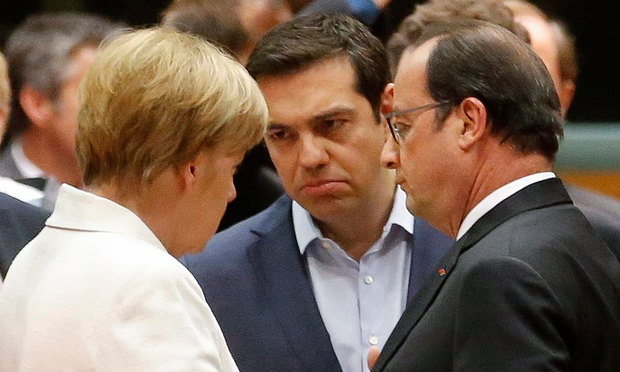
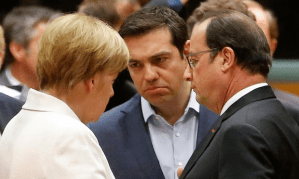
Angela Merkel, Alexis Tsipras and François Hollande talk at the eurozone leaders summit in Brussels. France and Germany have been split over their approach to the eurozone crisis. Photograph: Olivier Hoslet/EPA

European leaders have confronted the Greek government with a draconian package of austerity measures entailing a surrender of fiscal sovereignty as the price of avoiding financial collapse and being ejected from the single currency bloc.

A weekend of high tension that threatened to break Europe in two climaxed on Sunday night at a summit of eurozone leaders in Brussels where the German chancellor, Angela Merkel, and President François Hollande of France presented Greece’s radical prime minister, Alexis Tsipras, with an ultimatum.

In what a senior EU official described as an “exercise in extensive mental waterboarding” to secure Greek acquiescence to talks on a third bailout in five years worth up to €86bn (£62bn), the two leaders pressed for absolute certainty from Tsipras that he would honour what was on offer.

Two days of high-stakes negotiations between the finance ministers of the currency bloc resulted in a four-page document that included controversial German elements leaked on Saturday. Those measures included Greece leaving the euro temporarily by taking a “time-out” from the currency bloc if it refuses terms for talks on the new bailout or, in the event of agreement, that Greece sets aside €50bn worth of assets as collateral for new loans and for eventual privatisation. Both passages, however, did not enjoy a consensus among eurozone leaders.

Under the terms set before Tsipras on Sunday night, the Greek parliament has to endorse the entire package on Monday and then pass several pieces of legislation by Wednesday, including on pensions reform and a new VAT regime, before the eurozone will agree to negotiate a new three-year rescue package.

The terms are much stiffer than those imposed by the creditors over the past five years. This, said the senior official, was payback for the emphatic no to the creditors’ terms delivered by the snap referendum that Tsipras staged a week ago.

“He was warned a yes vote would get better terms, that a no vote would be much harder,” said the senior official.

The Eurogroup document said experts from the troika of creditors – the International Monetary Fund, European Commission and European Central Bank – would be on the ground in Athens to monitor the proposed bailout programme. The trio would also have a say in all relevant Greek draft legislation before it is presented to parliament. Furthermore, the Greeks will have to amend all legislation already passed by the Syriza government this year that had not been agreed with the creditors.

While Greece’s fate was being debated in Brussels, in Athens the ruling leftwing Syriza party was showing signs of disintegration. Demands that the reforms be approved by the Greek government and put into law by Wednesday were described as “utter blackmail” by leading party members and met with disbelief.

Although sources close to Tsipras said the leader was determined to do whatever was needed to keep Grexit at bay, political tumult also beckoned. Insiders conceded that a cabinet reshuffle – removing ministers who had refused to vote the austerity package through parliament early on Saturday – could come as early as Monday.

By late Sunday night it had become clear that Tsipras’s U-turn on measures he had once spurned had produced a potentially far-reaching split. In addition to 17 MPs breaking ranks at the weekend – stripping his government of a working majority – 15 other lawmakers also indicated they would not approve the agreement in its entirety. The resistance raises the spectre of Tsipras being forced to call fresh elections – a move described as potentially catastrophic for the country.

“Greece can bend up to a point,” said Aristides Hatzis, a prominent political commentator. “But after that there is no bending, only breaking.”

Although billed as the last chance to secure “the ultimate agreement” on the Greek debt crisis, the prospects of a grand political bargain to keep Greece in the eurozone are far from assured.

Entering the leaders’ meeting, Tsipras said he was looking for compromise: “We can reach an agreement if all parties want it.”

But France and Germany are split on their approach to the Greek question, while Finland could refuse outright to sign up to a third bailout for Greece.

France’s Hollande vowed to do everything possible to get an agreement on Sunday night, but Merkel said there wouldn’t be an agreement at any cost.

Other eurozone countries urged Germany to drop its objections. “Grexit has to be prevented,” said Jean Asselborn, the Luxembourg foreign minister. “It would be fateful for Germany’s reputation in the EU and the world.

“Germany’s responsibility is great. It’s about not conjuring up the ghosts of the past,” he told German newspaper Süddeutsche Zeitung. “If Germany goes for Grexit, it will trigger a deep conflict with France. That would be a catastrophe for Europe.”

Italy’s prime minister, Matteo Renzi, was expected to tell Merkel at the leaders’ meeting that “enough is enough” and the eurozone should not humiliate Greece when it had already given up so much.

Earlier on Sunday, eurozone finance ministers said they had made some progress after 14 hours of talks over two days and failing to reach any agreement on Saturday. “We have come a long way, solved a lot of issues, but some big issues still remain,” said Jeroen Dijsselbloem, who chairs the Eurogroup of finance ministers.

Donald Tusk, the president of the European Council, cancelled an emergency full summit of the 28 countries that was to deal with the fallout from Greece’s ejection, in order to give eurozone leaders a last chance to reach an accord saving Greece and forestalling what would be a devastating schism, sowing deep resentment and division between Europe’s leaders.

The intractable problem is that many governments do not trust the Greek government to implement a €12bn (£8.6bn) programme of spending cuts and reforms that will be delivered as part of a bailout. Eurozone governments are seeking proof from Athens it can keep its promises, in exchange for agreeing to start talks on a deal.

“The main obstacle to an agreement is trust,” said Pier Carlo Padoan, finance minister of Italy, one of the countries most sympathetic to Greece.

The Irish taoiseach, Enda Kenny, urged his fellow leaders to “look at the bigger picture”. Kenny, who has been Ireland’s leader since the early days of its own bailout programme, said in his country’s case trust was built incrementally.

“We don’t want to look back in 10 years’ time and think this could have been saved, but wasn’t,” he said.

The German news magazine Der Spiegel called Sunday the biggest day of Merkel’s 10-year chancellorship and appealed to her to “show greatness” and save Europe.

If Der Spiegel was right about the momentousness of Merkel’s day, the same could be said for Hollande of France who, with his government and officials, has been campaigning tirelessly in recent weeks to keep Greece in the euro, helping Athens to draft its proposals.

A decision to go ahead with a so-called Grexit, which has never been closer, would be a shattering failure for Hollande and the resulting Franco-German recrimination would be deeply damaging, say observers.

source:theguardian.com

Europe pushes Athens to the brink

821120-2caf5d52-2900-11e5-b51a-609e8c108313

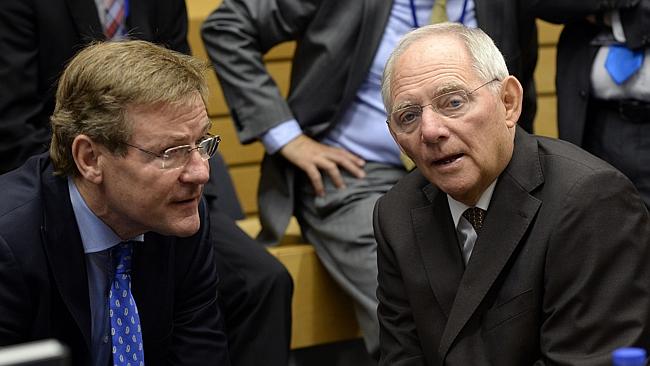
German Finance Minister Wolfgang Schauble, right, speaks with his Belgian counterpart Johan Van Overtveldt before the Brussels summit.

Europe’s ultimatum to Greece, demanding full capitulation as the price of any new bailout, marks the failure of a rebellion by a small, debt-ridden country against its lenders’ austerity policies, after Germany flexed its muscles and offered Athens a choice between obeisance or destruction.

The overnight (AEST) statement on Greece by eurozone finance ministers will go down as one of the most brutal diplomatic démarches in the history of the European Union, a bloc built to foster peace and harmony that is now publicly threatening one of its own with ruination unless it surrenders.

The weekend’s power play also reinforced divisions between Greece’s creditors — especially Germany and the International Monetary Fund — as the cost of keeping Greece in the euro spirals out of control. Part of the reason for Germany’s hard line vis-a-vis Athens: Maximally tough austerity in Greece reduces IMF pressure for Europe to write off its Greek loans.

The other 18 euro members were early today (AEST) pushing Greece to implement all of the austerity measures and broader economic overhauls its voters have twice rejected — in elections in January and in a referendum on July 5 — not in return for new rescue loans, but as a precondition for even talking about them.

The Greek government of left-wing Prime Minister Alexis Tsipras, which has spent all year trying to challenge Europe’s bailout policies, has ended up a near-powerless pariah in Europe — even though Mr Tsipras is politically dominant inside Greece. Its only remaining option for disobedience — to default and leave the euro — would satisfy rather than horrify many of its European critics, led by German Finance Minister Wolfgang Schäuble.

The fall of the Tsipras government under the creditors’ heavy pressure would please many European policy makers. In Berlin and other northern European capitals, officials have made little secret of their view they can’t trust Mr Tsipras to deliver his side of a bailout deal, even if he were to sign one. But most officials know that Mr Tsipras’s fall after only six months would raise awkward questions about the scope for democracy in an EU that presents itself as a beacon of popular sovereignty for the world.

Greece hasn’t complied with creditors’ demands yet. But its only alternative appears to be the gamble of a euro exit, which most Greeks fear would bring worse economic devastation.

In the end, the telling factor in the standoff may be that Greeks fear their country’s exit from the euro more than Germany does. That gives Berlin the stronger hand to impose its austerity-and-reforms prescription.

The demands from the so-called “Eurogroup” of finance ministers range from handing Greek public assets to a fund in Luxembourg to auction off to giving international technocrats powers to approve or veto draft laws in Athens.

“The Eurogroup is pushing Tsipras to effectively hand over the keys to the country; he may have neither the will nor the authority to do so, opting to walk out and resign instead,” Wolf Piccoli, managing director of political-risk consultancy Teneo Intelligence, wrote in a research note.

Behind Europe’s show of force lie three main factors: Fury at Mr Tsipras’s delay tactics, shock at the rising cost of any and all Greek scenarios, and a worsening clash between German-led Europe and the IMF.

Since his election in January, Mr Tsipras has oscillated between his hard-line and pragmatic advisers, Greek officials say. The pragmatists urged him to sign a bailout deal early, even if it meant accepting politically hard-to-sell austerity measures, because the terms of any deal would get tougher as the months passed and Greece’s economy deteriorated.

Nonsense, argued others such as now-ousted finance minister Yanis Varoufakis: Greece would get the best bailout terms, including less austerity and more debt relief, if it waited until the last moment before debt default. Europe would get scared of the destabilising fallout from a Greek euro exit, this camp argued.

Mr Tsipras went with the second school of thought, figuring also that his left-wing Syriza party would only swallow a bailout deal involving austerity if the alternative were imminent economic meltdown.

For months, Mr Tsipras saw to it that Europe’s normal channels for negotiating bailout terms — the Eurogroup, and teams of EU-IMF inspectors — were paralysed. He instead bet on face-to-face talks with German Chancellor Angela Merkel, believing that she would make a fundamentally political decision to keep Europe united, even at the expense of German economic orthodoxy.

It proved an epic miscalculation. Backed into a corner by Mr Tsipras’s referendum, in which Greeks overwhelmingly rejected their creditors’ austerity demands, Ms Merkel hardened her line. A deal with Athens that let Greece off tough economic reforms would be worse for Europe and splinter the eurozone, she argued.

Ms Merkel’s openness to Greek euro exit — an outcome she had previously resisted as too hard to calculate or control — has allowed her finance chief, Mr Schäuble, free rein. Long convinced that Greek politicians simply aren’t up to running their country well enough to be a euro member, Mr Schäuble stunned Greece on Saturday by proposing that the country take a five-year “time-out” from the common currency.

Official Europe, it appears — at least this weekend — can play chicken better than Mr Tsipras. Germany, once provoked, has proved more willing than Mr Tsipras expected to contemplate a Greek euro exit, or “Grexit.” That makes the eurozone’s German-inspired ultimatum more credible than Syriza’s implicit threat of euro exit — which Mr Tsipras knows his nation overwhelmingly fears.

Yet the weekend’s unequal test of strength in Brussels can’t be counted as a simple victory for Germany and its eurozone allies. Ms Merkel wanted to lend Greece money while it overhauled itself, and to get the money back in a reasonable time. Now the cost of keeping Greece afloat in the euro is reaching a multiple of what Ms Merkel originally expected. Not only does Greece need as much as €86 billion ($128 billion) more in financing, but the European part of the roughly €216 billion in funding that Greece has received so far needs restructuring.

Regardless of whether the German stance prevails, Ms Merkel also faces one of the deepest political crises of her decade-long tenure. Her coalition partner, the left-of-centre Social Democrats, have criticised her for being prepared to kick Greece out of the euro. Meanwhile, her conservatives are demanding an even harder line than she has wanted to commit to.

How much restructuring is the subject of tug of war between the IMF and German-led Europe. The IMF insists that comprehensive debt relief is needed to make Greece solvent again, such is the damage that the recent weeks’ events have done to the country’s economy and banking system. The Germans insist outright debt forgiveness is unacceptable to them and illegal among EU nations.

The IMF says that the less debt relief Greece gets from Europe, the harsher the terms of Greece’s overhauls-and-austerity program have to be. Greek taxpayers have to carry the full cost of repairing the country’s solvency if Germany and the rest of the eurozone won’t. Ms Merkel needs to keep the IMF on board to sell further aid for Greece to her increasingly sceptical parliament. That — as well as her finance minister’s anger at Greek politicians — is why the chancellor is now tightening the screws on Mr Tsipras.

source:theaustralian.com.au

Greece nears euro exit as bailout talks break up without agreement

Greek-finance-minister-Eu-009

Last-ditch negotiations to resume on Sunday after eurozone’s fiscal hawks put up fierce resistance to Alexis Tsipras’s rescue plan

Greece’s final attempt to avoid being kicked out of the euro by securing a new three-year bailout worth up to €80bn ran into a wall of resistance from the eurozone’s fiscal hawks on Saturday.

Finland rejected any more funding for the country and Germany called for Greece to be turfed out of the currency bloc for at least five years.

The last-chance talks between the 19 eurozone finance ministers in Brussels ended at midnight, as they struggled to draft a policy paper for national leaders at yet another emergency summit on Sunday that was billed as the decisive meeting.

With Greece on the edge of financial and social implosion, eurozone finance ministers met to decide on the country’s fate and on what to do about its debt crisis, after experts from the troika of creditors said that new fiscal rigour proposals from Athens were good enough to form “the basis for negotiations”.

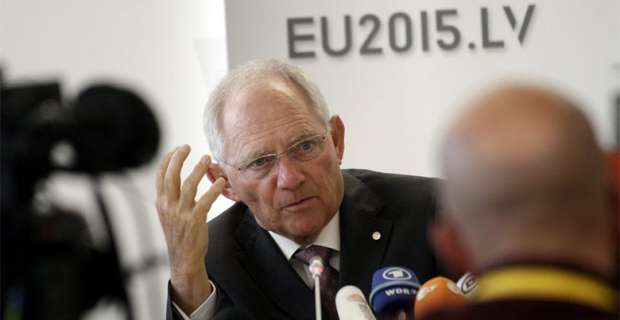
But the German finance minister, Wolfgang Schäuble, dismissed that view, supported by a number of northern and eastern European states. “These proposals cannot build the basis for a completely new, three-year [bailout] programme, as requested by Greece,” said a German finance ministry paper. It called for Greece to be expelled from the eurozone for a minimum of five years and demanded that the Greek government transfer €50bn of state assets to an outside agency for sell-off.

Timo Soini, the nationalist True Finns leader, meanwhile, threatened to bring down the government in Helsinki if Alex Stubb, the finance minister, agreed to a new bailout for Greece. Stubb apparently came to the crunch meeting on a new bailout without a mandate to agree one.

“The hawks are very vocal,” said an EU diplomat. “It’s very tough.” Berlin also demanded stronger and more intrusive powers for outside monitors to police the economic and fiscal reforms that Alexis Tsipras, the leftist Greek prime minister, would need to commit to to secure the new bailout.

Saturday night’s talks were not to agree on a third bailout, but were negotiations on whether to launch more talks on Greece’s third rescue package in five years. The ministers faced formidable problems, said Schäuble, who argued debt relief for Greece, broadly seen as essential, was banned by the EU treaties: “Athens’s proposals are far from sufficient. The funding gaps are way beyond anything we’ve seen so far,” he said.

The hard line was echoed by Peter Kazimir, finance minister of Slovakia, who said that new austerity measures tabled by Athens were already past their sell-by date.

The eurozone has been united for five months in the negotiations with Tsipras, but with the stakes rising greatly in the last 10 days, major divisions have surfaced, with the French working tirelessly to save Greece and the hardliners now pushing Greece’s expulsion for the first time openly.

The European commission and the European Central Bank issued dire warnings that a failure to grant Greece new rescue funds of up to €78bn would put the country on a trajectory of complete banking and financial collapse.

The widening gulf between eurozone hawks and doves paves the way for an acrimonious summit on Sunday, with France and Italy lining up against Germany and the northern and eastern Europeans. Matteo Renzi, the Italian prime minister, is expected to tell chancellor Angela Merkel that enough is enough and that Greece should not have to put up with any more humiliation.

Merkel is under intense pressure from the Americans not to “lose” Greece and is worried about her own legacy. But Greece fatigue is becoming endemic in Germany, and she faces growing unrest in her party ranks where Schäuble’s hard line is popular. She was said to have endorsed Schäuble’s tough position.

If the talks break down irretrievably and Greece is allowed to slide into even greater chaos, relations between Berlin and Paris will come under tremendous strain. Michel Sapin, the French finance minister, lauded Tsipras for putting his austerity proposals before parliament and saw the moves of the past few days as “positive”.

Tsipras won a sweeping majority with the support of opposition parties, but many in his Syriza movement defected, leading to speculation that he could either call new elections or ditch his hardliners and lead a new “national unity” government.

On Thursday, Tsipras performed a remarkable U-turn and accepted more austerity measures than had been rejected in the referendum he called for five days earlier. The prompt volte-face confounded negotiators.

source:theguardian.com

Αυτός είναι ο πραγματικός λόγος της αδιαλλαξίας Σόιμπλε

178000-schauble3426

Ο Βόλφκανγκ Σόιμπλε και η γερμανική ηγεσία της Ευρωζώνης έχουν σοβαρούς λόγους να ανησυχούν και να διατηρούν μία αδιάλλακτη στάση στις διαπραγματεύσεις με την Ελλάδα. Όμως η αποπληρωμή του ελληνικού χρέους που ανέρχεται σε 317 δισεκατομμύρια ευρώ  δεν είναι ένας από τους πιο σημαντικούς. Το ελληνικό χρέος είναι αμελητέας σημασίας, σε σύγκριση με το χρηματοπιστωτικό δυναμίτη των γερμανικών (και άλλων) τραπεζών, ο οποίος τους τελευταίους μήνες δίνει καθημερινά περισσότερα σημάδια ανάφλεξης.

Μόνο η Deutsche Bank, η μεγαλύτερη τράπεζα της Γερμανίας, βρίσκεται σημαντικά εκτεθειμένη, κατέχοντας αμφιβόλου αξίας χρηματοπιστωτικά προϊόντα, γνωστά ως «παράγωγα», ύψους 67 τρισεκατομμυρίων  ευρώ. Πρόκειται για ποσό παρόμοιο με το ΑΕΠ όλης της υφηλίου και 20 φορές μεγαλύτερο από το ΑΕΠ της Γερμανίας. Οποιαδήποτε σύγκριση με την κατάσταση της τράπεζας Lehman Brothers το 2008 δεν θα ήταν καθόλου άστοχη. Απλώς όταν χρεοκόπησε η Lehman Brothers είχε στη διάθεσή της παράγωγα  αξίας μόνο 31.5 τρισεκατομμύρια ευρώ. Η κρίση του 2008 επιβεβαίωσε τον συνοπτικό ορισμό των παραγώγων που είχε προτείνει ο Αμερικανός μεγιστάνας Warren Buffet: «οικονομικά όπλα μαζικής καταστροφής».

Μπορεί το 2008 να αποτελεί παρελθόν, αλλά οι πρόσφατες εξελίξεις είναι ιδιαίτερα δυσοίωνες για τη Deutsche Bank. Οι αρμόδιες αρχές των ΗΠΑ και της Βρετανίας επέβαλαν στη τράπεζα τον Απρίλιο ένα πρόστιμο-ρεκόρ, (το οποίο, μαζί με ένα προηγούμενο πρόστιμο, ανέρχεται συνολικά σε 2.2 δισεκατομμύρια ευρώ), για νοθεία των διατραπεζικών επιτοκίων. Στις αρχές Ιουνίου παραιτήθηκαν αιφνιδιαστικά οι δύο συν-διευθύνοντες σύμβουλοί της. Εναντίον ενός από αυτούς και τεσσάρων πρώην στελεχών της τράπεζας είχε ήδη ασκηθεί δίωξη από τις γερμανικές δικαστικές αρχές για ψευδείς δηλώσεις και παραπλανητικές καταθέσεις. Λίγες μέρες αργότερα εισαγγελικές αρχές έκαναν έφοδο στα γραφεία της τράπεζας στη Φρανκφούτρη για να συλλέξουν στοιχεία πελατών της.

Ταυτόχρονα, τα χρηματοπιστωτικά προϊόντα γίνονται καθημερινά πιο επισφαλή. Αμέσως μετά την ανακοίνωση της αποτυχίας των διαπραγματεύσεων των «θεσμών» με την Ελλάδα στις 12 Ιουνίου, το ρίσκο των ομολόγων της Ευρωζώνης σημείωσε κάθετη άνοδο. Ο γερμανικός δείκτης οικονομικής προοπτικής ZEW έπεσε στις 16 Ιουνίου για τρίτο συνεχόμενο μήνα, και έχει σημειώσει πτώση 43% μέσα σε τρεις μήνες.

Ομολογουμένως, η Γερμανία δεν αποτελεί εξαίρεση. Άλλες χώρες έχουν παρόμοια προβλήματα, όπως η Αυστρία, η Ολλανδία και η Φιλανδία. Όμως αυτά είναι ελάσσονος σημασίας σε σύγκριση με το μέγεθος των επισφαλών επενδύσεων της Deutsche Bank.

Εν όψει των παραπάνω προβλημάτων, μια πιθανή στάση πληρωμών της Ελλάδας δεν θα έπρεπε να προκαλεί ιδιαίτερη ανησυχία στην Ευρωζώνη, ιδίως όταν έχει ανακοινωθεί επανειλημμένα ότι οι «θεσμοί» έχουν έτοιμα σχέδια αντιμετώπισης ενδεχομένου Grexit. Μήπως όμως οι εντατικές προσπάθειες της γερμανικής ηγεσίας να προβάλλει την κρίση των οικονομιών της ευρωπαϊκής περιφέρειας (Ελλάδα, Ισπανία κοκ.) ως το κύριο πρόβλημα της Ευρωζώνης, απλώς αποτελούν ένα προπέτασμα καπνού για να καλυφθεί η εγγενής σαθρότητα του χρηματοπιστωτικού συστήματος; Διότι όπως έχουν δείξει οι μέχρι σήμερα εξελίξεις, ο πρωταρχικός στόχος της ευρωπαϊκής ηγεσίας είναι η προστασία των τραπεζών.

Όταν μία γιγαντιαία τράπεζα πρέπει να ξεφορτωθεί «σκάρτα» ομόλογα ή να προμηθευτεί επιπλέον ρευστότητα, στρέφεται προς την ΕΚΤ. Αμέσως πριν το PSI, η ΕΚΤ βοήθησε τη Deutsche Bank, μεταξύ άλλων, να πωλήσει σε καλή τιμή τα «τοξικά» ελληνικά ομόλογα που κατείχε. Τα οποία έχει τώρα στην κατοχή της η ΕΚΤ, που βέβαια υποστηρίζεται από τους Ευρωπαίους φορολογουμένους. Η Deutsche Bank και οι υπόλοιπες τράπεζες είχαν σχετικά αμελητέες απώλειες από το PSI, σε αντίθεση με τους Έλληνες συνταξιούχους. Και αφού οι τράπεζες δεν υπέστησαν πάθημα, δεν χρειάστηκε να μάθουν κανένα μάθημα, έχοντας την πεποίθηση ότι οι ηγέτες της βορειοδυτικής Ευρώπης δεν θα τις άφηναν σύξυλες σε μία παρόμοια συγκυρία στο μέλλον.

Η συγκυρία αυτή πλησιάζει καθημερινά, και ακόμη και ένα μικρό ταρακούνημα της τραπεζικής βάρκας (μια ελληνική στάση πληρωμών), μπορεί να έχει απρόβλεπτες συνέπειες, όπως μία ανεξέλεγκτη αλυσιδωτή χρεοκοπία. Διότι αν κάτι πάει στραβά, η Deutsche Bank, όπως και οι περισσότερες τράπεζες, έχει τη δυνατότητα να καλύψει μόνο ένα μικρό μέρος των «παραγώγων» και άλλων τοξικών προϊόντων τα οποία κατέχει.

Συνεπώς έχουν κάθε λόγο να ανησυχούν ο κ. Σόιμπλε, η κ. Μέρκελ και οι λοιποί «σκληροί» της Ευρωζώνης. Βέβαια, ο πραγματικός λόγος της ανησυχίας τους και της αδιάλλακτης στάσης τους δεν μπορεί να είναι το ελληνικό χρέος, το οποίο αντιστοιχεί στο 0.5% των παραγώγων που κατέχει μόνο μία γερμανική τράπεζα, αλλά η ανασφάλεια που δημιουργεί η πιθανότητα αναταραχής του χάρτινου πύργου της χρηματοπιστωτικής οικονομίας.

Για τη γερμανική ηγεσία, η ελληνική κρίση αποτελεί ένα βολικό αποδιοπομπαίο τράγο, για να αποσπαστεί η προσοχή του Ευρωπαϊκού κοινού από την επώδυνη πραγματικότητα. Ενώ η σκληρή στάση των δανειστών προς την Ελλάδα και τις χώρες της περιφέρειας της Ευρώπης αποβλέπει κυρίως στην αποφυγή δύο ανεπιθύμητων εξελίξεων. Πρώτον, ενός ταρακουνήματος της αγοράς, το οποίο μπορεί να προκαλέσει μία στάση πληρωμών ή μία διαγραφή μέρους του ελληνικού χρέους. Δεύτερον, μίας σειράς παραχωρήσεων προς την Ελλάδα, που θα απειλήσουν το ευρωπαϊκό νεοφιλελεύθερο κατεστημένο. Όμως όταν η τραπεζική βάρκα μπάζει νερά, η προσαρμογή των Ελλήνων επιβατών στις εντολές των καπετάνιων δεν δύναται από μόνης της να την διατηρήσει εν πλω.

Μάλλον γνωρίζουν πολύ περισσότερα οι Έλληνες διαπραγματευτές από όσα τους πιστώνουν οι συνομιλητές τους και οι «θεσμοί». Οι οποίοι χρησιμοποιούν μία Οργουελιανή τακτική για να παρουσιάσουν ως «απειρία» την εμπεριστατωμένη άρνηση της ελληνικής πλευράς να προσαρμοστεί μέσα σε ένα σαθρό χρηματοπιστωτικό πλαίσιο.

Πηγή:tvxs.gr

Germany won’t spare Greek pain – it has an interest in breaking us

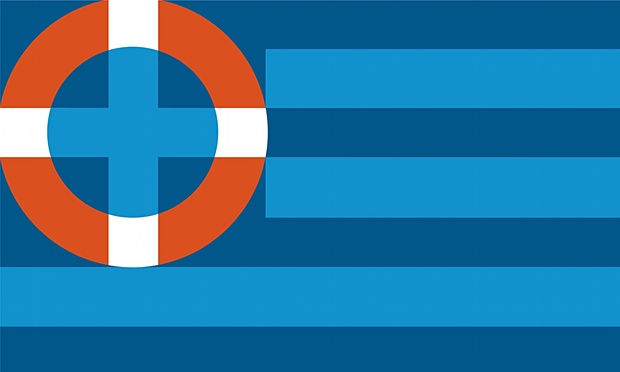
Noma-Bars-lifebuoy-for-Gr-009

Greece’s financial drama has dominated the headlines for five years for one reason: the stubborn refusal of our creditors to offer essential debt relief. Why, against common sense, against the IMF’s verdict and against the everyday practices of bankers facing stressed debtors, do they resist a debt restructure? The answer cannot be found in economics because it resides deep in Europe’s labyrinthine politics.

In 2010, the Greek state became insolvent. Two options consistent with continuing membership of the eurozone presented themselves: the sensible one, that any decent banker would recommend – restructuring the debt and reforming the economy; and the toxic option – extending new loans to a bankrupt entity while pretending that it remains solvent.

Official Europe chose the second option, putting the bailing out of French and German banks exposed to Greek public debt above Greece’s socioeconomic viability. A debt restructure would have implied losses for the bankers on their Greek debt holdings.Keen to avoid confessing to parliaments that taxpayers would have to pay again for the banks by means of unsustainable new loans, EU officials presented the Greek state’s insolvency as a problem of illiquidity, and justified the “bailout” as a case of “solidarity” with the Greeks.

To frame the cynical transfer of irretrievable private losses on to the shoulders of taxpayers as an exercise in “tough love”, record austerity was imposed on Greece, whose national income, in turn – from which new and old debts had to be repaid – diminished by more than a quarter. It takes the mathematical expertise of a smart eight-year-old to know that this process could not end well.

Once the sordid operation was complete, Europe had automatically acquired another reason for refusing to discuss debt restructuring: it would now hit the pockets of European citizens! And so increasing doses of austerity were administered while the debt grew larger, forcing creditors to extend more loans in exchange for even more austerity.

Our government was elected on a mandate to end this doom loop; to demand debt restructuring and an end to crippling austerity. Negotiations have reached their much publicised impasse for a simple reason: our creditors continue to rule out any tangible debt restructuring while insisting that our unpayable debt be repaid “parametrically” by the weakest of Greeks, their children and their grandchildren.

In my first week as minister for finance I was visited by Jeroen Dijsselbloem, president of the Eurogroup (the eurozone finance ministers), who put a stark choice to me: accept the bailout’s “logic” and drop any demands for debt restructuring or your loan agreement will “crash” – the unsaid repercussion being that Greece’s banks would be boarded up.

Five months of negotiations ensued under conditions of monetary asphyxiation and an induced bank-run supervised and administered by the European Central Bank. The writing was on the wall: unless we capitulated, we would soon be facing capital controls, quasi-functioning cash machines, a prolonged bank holiday and, ultimately, Grexit.

The threat of Grexit has had a brief rollercoaster of a history. In 2010 it put the fear of God in financiers’ hearts and minds as their banks were replete with Greek debt. Even in 2012, when Germany’s finance minister, Wolfgang Schäuble, decided that Grexit’s costs were a worthwhile “investment” as a way of disciplining France et al, the prospect continued to scare the living daylights out of almost everyone else.

By the time Syriza won power last January, and as if to confirm our claim that the “bailouts” had nothing to do with rescuing Greece (and everything to do with ringfencing northern Europe), a large majority within the Eurogroup – under the tutelage of Schäuble – had adopted Grexit either as their preferred outcome or weapon of choice against our government.

Greeks, rightly, shiver at the thought of amputation from monetary union. Exiting a common currency is nothing like severing a peg, as Britain did in 1992, when Norman Lamont famously sang in the shower the morning sterling quit the European exchange rate mechanism (ERM). Alas, Greece does not have a currency whose peg with the euro can be cut. It has the euro – a foreign currency fully administered by a creditor inimical to restructuring our nation’s unsustainable debt.

To exit, we would have to create a new currency from scratch. In occupied Iraq, the introduction of new paper money took almost a year, 20 or so Boeing 747s, the mobilisation of the US military’s might, three printing firms and hundreds of trucks. In the absence of such support, Grexit would be the equivalent of announcing a large devaluation more than 18 months in advance: a recipe for liquidating all Greek capital stock and transferring it abroad by any means available.

With Grexit reinforcing the ECB-induced bank run, our attempts to put debt restructuring back on the negotiating table fell on deaf ears. Time and again we were told that this was a matter for an unspecified future that would follow the “programme’s successful completion” – a stupendous Catch-22 since the “programme” could never succeed without a debt restructure.

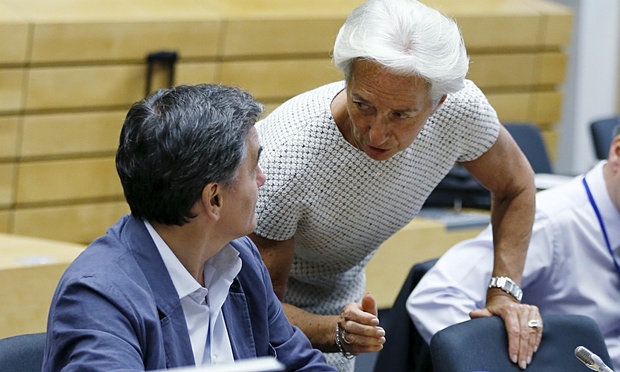
This weekend brings the climax of the talks as Euclid Tsakalotos, my successor, strives, again, to put the horse before the cart – to convince a hostile Eurogroup that debt restructuring is a prerequisite of success for reforming Greece, not an ex-post reward for it. Why is this so hard to get across? I see three reasons.

One is that institutional inertia is hard to beat. A second, that unsustainable debt gives creditors immense power over debtors – and power, as we know, corrupts even the finest. But it is the third which seems to me more pertinent and, indeed, more interesting.

The euro is a hybrid of a fixed exchange-rate regime, like the 1980s ERM, or the 1930s gold standard, and a state currency. The former relies on the fear of expulsion to hold together, while state money involves mechanisms for recycling surpluses between member states (for instance, a federal budget, common bonds). The eurozone falls between these stools – it is more than an exchange-rate regime and less than a state.

And there’s the rub. After the crisis of 2008/9, Europe didn’t know how to respond. Should it prepare the ground for at least one expulsion (that is, Grexit) to strengthen discipline? Or move to a federation? So far it has done neither, its existentialist angst forever rising. Schäuble is convinced that as things stand, he needs a Grexit to clear the air, one way or another. Suddenly, a permanently unsustainable Greek public debt, without which the risk of Grexit would fade, has acquired a new usefulness for Schauble.

What do I mean by that? Based on months of negotiation, my conviction is that the German finance minister wants Greece to be pushed out of the single currency to put the fear of God into the French and have them accept his model of a disciplinarian eurozone.

source:theguardian.com