Category Archives: Uncategorized

Αυστραλία:To πλαστικό χρήμα παντού και πάντοτε

untitled

Η Αυστραλία στην πρώτη γραμμή των χωρών που οι καταναλωτές χρησιμοποιούν, ως επί το πλείστον, πιστωτικές κάρτες.

Η Αυστραλία βρίσκεται στην πρώτη γραμμή χωρών οι καταναλωτές των οποίων χρησιμοποιούν, ως επί το πλείστον, πιστωτικές κάρτες για τις αγορές τους.

Πάνω από το 80% των καταναλωτών χρησιμοποιούν τις νέες, ταχύρρυθμες μεθόδους πληρωμής στα ταμεία που μειώνουν το χρόνο σε έξι δευτερόλεπτα για την ολοκλήρωση της συναλλαγής.

Ο διευθύνων σύμβουλος του Australian Payments Clearing Association, Chris Hamilton, εκτιμά ότι το αυστραλιανό κοινό δέχεται με ενθουσιασμό τις διαρκώς αυξανόμενες καινοτομίες στον τρόπο συναλλαγών με το πλαστικό χρήμα και πέρα από αυτό.

Ο ίδιος υπογραμμίζει ότι ενώ οι κάρτες θα εξακολουθήσουν προφανώς να αποτελούν τον πρωταρχικό τρόπο πληρωμής στο εγγύς μέλλον, η Αυστραλία βρίσκεται στο κατώφλι μεγάλων εξελίξεων σ’ αυτόν τον χώρο.

Πηγή:Νέος Κόσμος

Αυστραλία:Δεξιά στροφή του Εργατικού Κόμματος

untitled

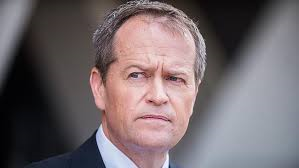
Επικράτηση του Bill Shorten και της Δεξιάς Πτέρυγας στο συνέδριο του Κόμματος.

Με νικητή τον Bill Shorten, αλλά και απώλειες όσον αφορά την ενότητα, έληξε χθες το ταραχώδες τριήμερο συνέδριο του Εργατικού Κόμματος, το οποίο ξεδίπλωσε την πολιτική πλατφόρμα επί της οποίας θα πολιτευτεί η παράταξη, εν όψει και των επερχόμενων εκλογών, οι οποίες αναμένονται για την άνοιξη του 2016.

Στο Συνέδριο κονταροχτυπήθηκαν η Αριστερή και η Δεξιά Πτέρυγα του Κόμματος της αξιωματικής αντιπολίτευσης, πάνω σε μία σειρά θεμάτων, από την διεθνή πολιτική και το μεταναστευτικό, μέχρι τη φορολογία, την οικολογία και τον γάμο ομοφύλων ζευγαριών. Η συζήτηση διεξήχθη σε τεταμένο κλίμα, καθώς δεν ήταν λίγα τα μέλη του Kόμματος που ξέσπασαν σε δάκρυα, ενώ δεν έλειψαν και τα απρόοπτα, όπως ήταν οι παραστάσεις διαμαρτυρίας.

“ΑΓΚΑΘΙ”

ΤΟ ΜΕΤΑΝΑΣΤΕΥΤΙΚΟ

Δύο ήταν τα βασικά ζητήματα που καθόρισαν τον δημόσιο διάλογο – και την αντιπαράθεση μεταξύ των συνέδρων. Το θέμα που μονοπώλησε το ενδιαφέρον των συνέδρων το Σάββατο ήταν η πρόταση του Bill Shorten να ακολουθήσει -σε μία ενδεχόμενη κυβέρνηση του Εργατικού Κόμματος- την πολιτική της κυβέρνησης Abbott, της αποτροπής των πλοίων που μεταφέρουν μετανάστες χωρίς έγγραφα και πρόσφυγες αιτούντες άσυλο και την προώθησή τους στην Ινδονησία, “σε περιπτώσεις που αυτό είναι ασφαλές”, σύμφωνα με την τοποθέτηση του Bill Shorten.

Η πρόταση αυτή, η οποία αποτελεί υπαναχώρηση από την μέχρι τώρα θέση του Εργατικού Κόμματος, συνάντησε την σθεναρή αντίσταση της Αριστερής Πτέρυγας του Κόμματος, η οποία μέχρι την τελευταία στιγμή προσπάθησε να περάσει αλλαγές στην διατύπωση. Προσπαθώντας να κάμψει τις αντιδράσεις τους, ο αρχηγός του Εργατικού Κόμματος περιέβαλε την πρόταση με μία σειρά μέτρων ανθρωπιστικού χαρακτήρα, τα οποία θα περιλαμβάνονται στην μεταναστευτική πολιτική της κυβέρνησής του. Ανάμεσά τους είναι ο διπλασιασμός του αριθμού των προσφύγων που θα μπορεί να δεχτεί η Αυστραλία και ο οποίος θα ανέλθει σε 27 χιλιάδες μέχρι το 2025, αλλά και η επαναφορά των δεσμεύσεων της σύμβασης του ΟΗΕ για τους πρόσφυγες στην σχετική νομοθεσία.

Παράλληλα, ο κ. Shorten δεσμεύτηκε ότι μία κυβέρνηση Εργατικού Κόμματος θα προσφέρει 450 εκατομμύρια δολάρια στην επιτροπή του ΟΗΕ για τους πρόσφυγες, ποσό μεγαλύτερο από ό,τι έχει προσφέρει στο παρελθόν η Αυστραλία. Σχετικά με τα κέντρα κράτησης, εισηγήθηκε την δημιουργία ανεξάρτητης αρχής που θα τα εποπτεύει, καθώς και τον διορισμό συνηγόρου του παιδιού, ενώ δεσμεύτηκε ότι όλες οι σχετικές επιχειρήσεις θα διεξάγονται υπό καθεστώς πλήρους διαφάνειας.

Η πρότασή του έγινε δεκτή από τους συνέδρους, αποσπώντας 225 ψήφους, επί συνόλου 390, σηματοδοτώντας μία σαφή ήττα της Αριστερής Πτέρυγας και προσωπικά τριών από τους επιφανέστερους βουλευτές του Εργατικού Κόμματος: της υπαρχηγού Tanya Plibersek – η οποία έλαμψε δια της απουσίας της από τον δημόσιο διάλογο – της Penny Wong και του Anthony Albanese.

H συζήτηση επισκιάστηκε και από την εισβολή στον χώρο του συνεδρίου ομάδας διαδηλωτών, οι οποίοι ξεδίπλωσαν πανό που έγραφε “όχι στην απώθηση των προσφύγων”, φωνάζοντας συνθήματα όπως “πνίξτε τον Shorten, όχι τους πρόσφυγες”.

ΣΥΜΒΙΒΑΣΜΟΣ ΓΙΑ

ΤΟΝ ΓΑΜΟ ΟΜΟΦΥΛΩΝ

Εξίσου θερμό κλίμα επικράτησε και την Κυριακή, καθώς το θέμα που κυριάρχησε ήταν η ψήφος για την επέκταση του δικαιώματος του γάμου για τα ομόφυλα ζευγάρια. “Το εργατικό Κόμμα θα παλέψει για την ισότητα του γάμου σ’ αυτήν την χώρα”, δήλωσε ο Bill Shorten, στο παρασκήνιο όμως μαινόταν ο πόλεμος για το είδος της ‘πάλης’. Στόχος της Αριστερής Πτέρυγας ήταν να υπάρξει δέσμευση όλων των βουλευτών του κόμματος ότι θα ψηφίσουν υπέρ του γάμου ομοφύλων ζευγαριών, όμως επικράτησε η τάση της Δεξιάς Πτέρυγας, η οποία προέβαλε το επιχείρημα ότι μία δεσμευτική ψήφος θα συσπείρωνε το κυβερνών κόμμα, αποκλείοντας το ενδεχόμενο οι βουλευτές του συνασπισμού να ψηφίσουν κατά συνείδηση, κάτι που θα καταδίκαζε τις πιθανότητες να περάσει το μέτρο.

Στην τοποθέτησή του, ο αρχηγός της αξιωματικής αντιπολίτευσης κάλεσε τον πρωθυπουργό να επιτρέψει στους βουλευτές του να ψηφίσουν ελεύθερα επί του θέματος, ώστε να κάνουν το ίδιο και οι βουλευτές του Εργατικού Κόμματος. Στο πλαίσιο των ζυμώσεων, οι βουλευτές της Αριστερής Πτέρυγας αναγκάστηκαν να υπαναχωρήσουν των θέσεών τους, αποδεχόμενοι μία ψήφο κατά συνείδηση πριν τις εκλογές, με αντάλλαγμα μία δεύτερη, δεσμευτική αυτήν την φορά ψηφοφορία, σε δεύτερη φάση.

ΦΟΡΟΣ ΓΙΑ ΤΟΥΣ ΠΛΟΥΣΙΟΥΣ

Μπορεί στα δύο αυτά θέματα -που αναμένεται να κυριαρχήσουν στην προεκλογική περίοδο, καθορίζοντας το διακύβευμα των εκλογών του 2016-, να σηματοδότησαν την ήττα της αριστερής πτέρυγας και την στροφή του Εργατικού Κόμματος σε μια πιο συντηρητική πολιτική, προκειμένου να αντλήσει από την δεξαμενή των ψηφοφόρων του Φιλελεύθερου κόμματος. Ωστόσο, το συνέδριο δεν άφησε χωρίς νίκες την αριστερή πλευρά. Ανάμεσα στις προοδευτικές πολιτικές προτάσεις που ακούστηκαν ήταν οι εξαγγελίες για το περιβάλλον, ενώ ως προσωπική νίκη του Anthony Albanese πρέπει να θεωρηθεί η δέσμευση για θέσπιση φορολογίας για τα ανώτερα εισοδήματα. Ο σκιώδης υπουργός υποδομών – ο οποίος έχασε την αρχηγία του κόμματος από τον Bill Shorten το 2013 – πρότεινε την θέσπιση ενός μέτρου ανάλογου με τον “νόμο Buffett” που προσπαθεί να περάσει στις ΗΠΑ ο Μπαράκ Ομπάμα. Ο νόμος πήρε το όνομά του από τον Αμερικανό δισεκατομμυριούχο Warren Buffett, ο οποίος, όταν διαπίστωσε ότι πληρώνει λιγότερους φόρους από τους υπαλλήλους του, ξεκίνησε μία εκστρατεία υπέρ της φορολογικής δικαιοσύνης, καλώντας την κυβέρνηση να θεσπίσει πιο αυστηρή και υψηλή φορολογία για τα υψηλότερα εισοδήματα.

Αντιστοίχως, ο Anthony Albanese πρότεινε να τεθεί φόρος της τάξης του 35% για τα υψηλά εισοδήματα, κάτι που θα πρέπει να είναι μη διαπραγματεύσιμο. Στην ομιλία του, ο κ. Albanese επικαλέστηκε στοιχεία της Εφορίας, σύμφωνα με τα οποία 75 Αυστραλοί πολίτες με εισόδημα μεγαλύτερο του ενός εκατομμυρίου δεν πλήρωσαν καθόλου φόρους.

Παράλληλα, το Εργατικό Κόμμα δεσμεύτηκε, όταν βρεθεί στην εξουσία, να συμπαραταχθεί με κράτη που αναγνώρισαν την παλαιστινιακή κοινότητα ως κρατική οντότητα, καθώς και να προωθήσει με κάθε τρόπο την επίλυση του Κυπριακού.

Πηγή:Νέος Κόσμος

Aυστραλία:Ερασιτέχνης ψαράς κατέληξε στα σαγόνια καρχαρία

great

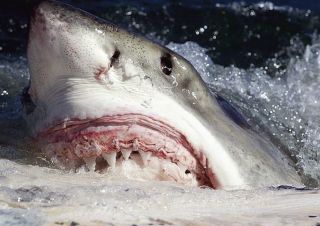
Σπάνια η επίσκεψη άσπρου καρχαρία στα νερά του νησιού Lachlan στην Τασμανία.

Ένας δύτης, ερασιτέχνης ψαράς γύρω στα πενήντα του που ψάρευε χτένια (scallops) μαζί με την κόρη του κατασπαράχθηκε από καρχαρία στα νερά μεταξύ του νησιού Lachlan και της Τασμανίας.

Το τραγικό ατύχημα συνέβη μπρος στα μάτια της κόρης του δύτη, η οποία έκανε κατάδυση με τον πατέρα της αλλά κατάφερε να αναδυθεί εγκαίρως και να μπει στην βάρκα απ’ όπου και έριξε φωτοβολίδα για να ζητήσει βοήθεια.

Κάτοικοι της περιοχής ανέφεραν το Σάββατο, μετά την επίθεση ότι τα νερά της περιοχής είναι ρηχά και κανένας δεν περίμενε να δει ένα κύτος όπως είναι ο λευκός καρχαρίας εκεί, προσέθεταν δε ότι μεγάλος αριθμός ερασιτεχνών ψαράδων επισκέπτεται τα νερά εκείνα για να ψαρέψει χτένια.

Το νησί Lachlan βρίσκεται στην ανατολική πλευρά της Τασμανίας και σύμφωνα με κατοίκους της περιοχής τα τελευταία 14 χρόνια, στα νερά εκείνα καρχαρίας εθεάθη μόνο δύο φορές.

Πηγή:Νέος Κόσμος

Alexis Tsipras is wearing the emperor’s old clothes

fghgfhjghj

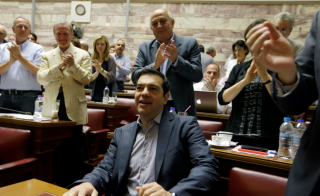
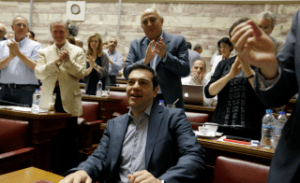
Prime Minister Alexis Tsipras being applauded by SYRIZA MPs in the Greek Parliament earlier this month. PHOTO: AP/THANASSIS STAVRAKIS.

Since 1974, my generation, the people who grew up under the dictatorship of 1967, fought persistently for the connection of the fragile Greek democracy with the European Union because we understood that Europeanisation meant modernisation, and that the European project was the only way to take Greece out of its Balkan solitude and its Ottoman legacies.

Pioneers in this struggle were the parties of the Left, the ancestors of contemporary SYRIZA, under the democratic leadership of Leonidas Kyrkos and Mihalis Papayiannakis. The Synaspismos, as it was called back then, understood that the political elites did not want to democratise the exercising of power by the Greek state; far from it.

The political order which prevailed after the restoration of the republic in 1974 tried immediately to protect themselves from any true democratisation, accountability and transparency.

Greece joined the European Union just seven years later, providing a unique opportunity to re-structure Greek society. Yet the old two social and political tendencies within the country – the European and the Balkanist – retained their opposition.

The Balkanist isolationist power structure morphed on many occasions throughout the last 40 years: its first incarnation as part of the ‘deep’ PASOK during the 1980s and 1990s – reaping the benefits of the EU without accepting its obligations.

The same strategy was followed by the populists of New Democracy, who also believed they could use the financial assistance of the EU to simply cater for their clientelist armies appointed as public servants. Both parties promoted the deleterious doctrine of Greek exceptionalism – that Greece was always a ‘special case’ which needed special consideration, hence extra financial assistance.

These were the two pseudo-prophets of deferred modernisation: political elites which promised to deliver the country into the 21st century. They failed abysmally, unable to act against their own ideology.

What’s more, they kept the Greek people in the dark about the process of the European integration. Why? To maintain a political system beyond any democratic control.

The European project was questioned because of the failure of these political forces to implement policies integrating Greece to other member states of the union. On the contrary, the two parties used participation in the EU to expand their privileges, legitimise their power and quash all opposition: their opaque system of oligarchic and plutocratic governance, without checks and balances, was beyond any transparency and accountability.

SYRIZA was elected six months ago because of the frustration and anger of the Greek people against those political elites. In the elections of 2009, it was a small party of 4 per cent. In 2015 it rose up to 37 per cent. How did this happen? What is its platform and its explicit program? For those who have studied programs and statements of New Democracy and SYRIZA in recent years, the 2012 Samaras Zappeion statement (of renegotiations with the EU) and the 2014 Thessaloniki SYRIZA program bear close resemblance – indeed on many occasions they read like the same text.

Both were full of platitudes: forgiveness of the enormous debt, structural changes in the public sector, investments for development and growth. However, successive Greek governments insisted on removing the debt but nothing else. No prime minister admitted to the Greek people (the current PM included) what sort of changes had to take place.

Instead, they employed florid nationalistic rhetoric against the foreigners (and their collaborators in the recent farcical referendum), spreading fear that if any such changes were implemented, they would lose power and control over society.

The SYRIZA ideologues are supposedly Marxists, but they fail to provide a Marxist analysis of the administration of power and the social forces that resist change.
The truth is that the central body politic of the country is structured around the petit (or indeed petty) bourgeoisie which defines the dominant political activity and determines most modes of political thinking. The working class is diminished after the de-industrialisation of the country and high unemployment. No real middle class was ever developed as productive activity was always held or funded by the corrupt state bureaucracy.

The petit bourgeoisie constitutes the central body of voters who change governments according to their short-term interests. The astounding number of public servants (who mostly constitute this class) is not the main problem for the Greek economy; the main problem is that most of them are unqualified, inexperienced and untrained. This generates the excessive bureaucracy we find in all encounters with the Greek state.

All political parties gamble their election to office by using the fears and anxieties of this class. Thus, the main state ideology is right-wing or left-wing populism fused with an aggressive form of nineteenth century nationalism. Ethnopopulism is the central ideological axis that brings all political forces together and maintains the grip of the Balkanist ideology on the people to this day.

Such ideological parochialism is exacerbated by the absence of modern capitalist structures (an understanding which is totally missing from the various analyses by Paul Mason, for example, or Paul Krugman). What prevails is a resale economy, with state monopolies, or private oligopolies, controlling implicitly or explicitly all financial institutions (the banks for example). It’s hardly surprising that favouritism and nepotism, and clientelism, are the central practices.

This model of economics bears close resemblance to the fascist corporatist economy in Mussolini’s Italy; it is what Cornelios Castoriadis called ‘bureaucratic’ or ‘state capitalism’, a model of production which is completely obsolete under the current conditions of globalised and interconnected economies.

Unfortunately, the SYRIZA government continues this model, centralising it even further; maximising the benefits of the public sector, ignoring the rights of private enterprises and implementing policies of heavy taxation on the latter in order to protect the benefits of the former.

After six months in power not a single measure has been taken by the Tsipras government for the protection of the 1.5 million unemployed people of the private sector. All measures that do exist were taken by the previous, much-excoriated government.

The main discussion was, and still is, about public servants and their rehabilitation in fully-paid positions. SYRIZA continues to express the dominant conservative stream in political activity and has no other option but to continue corrupt and nepotistic traditions of previous governments. Culturally, it represents the reactionary Balkan-oriented elites who wish to isolate the country from the European project.

Certainly the European Union is not a paradise; there are conflicting interests and competing agendas between its member states, with Germany having taken the hegemony and created a block of satellite nations. But the European project does not belong to Germany, and it will be a serious error with geopolitical consequences if we abandoned it to them. If you want to win a battle you must be on the battlefield – not behind the lines.

Unfortunately, the current government expresses the statist elite which will fight until the death against all forms of modernisation. The idea that the state can be a single huge corporation – which extracts the surplus-value of its workforce in order to invest in further production – is pure and unadulterated utopian socialism. We know all too well how this experiment ended.

Instead of enhancing the presence of the working class, the Greek government relies once again on its main enemy, the state-sponsored petit bourgeoisie. SYRIZA taxes people not to pay off debt, but to maintain the clientelist state.

Wages are dependent on wealth, not the other way around. The good of the state is not always the good of the public. In order to invest capital you must first create and accumulate it – not simply borrow it from the ‘infamous’ creditors, or Russia, China, Iran or Goldman Sacks for that matter.

Unfortunately, SYRIZA expresses the most distorted forms of left-wing ideology. Its policies are right-wing dressed up in left-wing phraseology. Despite its grand – though increasingly transparent – rhetoric, it will, like so many previous governments, destroy the public good in order to protect state power. The worst is still to come.

* Professor Vrasidas Karalis teaches Modern Greek at the University of Sydney.

source:Neos Kosmos

Return to austerity:Greek parliament backs further reforms as tax increases bite

jfdg

Greece took a major step towards meeting its obligations in order to receive the agreed €86bn ($128bn) bailout, after its parliament passed a second set of reforms in the early hours of Thursday morning.

Despite fears of a rebellion by SYRIZA MPs, in the end Prime Minister Alexis Tsipras gained the support he required easily, with 230 votes in favour and 63 against. Almost half the dissenting MPs were members of his own party.

Unlike last week’s vote, this time around Yanis Varoufakis voted with the government; the former finance minister declaring that he felt it important “to protect the unity of SYRIZA” even though he believed the program agreed with the creditors was “designed to fail”.

The reforms passed include changes to the banking system to protect savers’ deposits of less than €100,000 ($150,000) and the introduction of rules to ensure shareholders and creditors – not taxpayers – cover the costs of a failed bank.

Meaures were also taken to overhaul the judiciary system.

During the debate Mr Tsipras told the parliament once again that he was not happy with the measures that the lenders had imposed.

“We chose a difficult compromise to avert the most extreme plans by the most extreme circles in Europe,” he told MPs, adding that the deal was the only way Greece could remain in the eurozone.

Negotiations will now begin with the creditors on agreeing the detailed terms of the bailout. Due to be completed within a month, a likely scenario is that once concluded, the full agreement will usher in early elections.

However major sticking points are still possible. The most contentious measures – including the phasing out early retirement and tax hikes for farmers – have been pushed back to August.

Meanwhile Greeks this week faced a new era of austerity. They woke on Monday able to enter banks for the first time in weeks, but with Value Added Tax increased from 13 per cent to 23 per cent, the cost of the bailout deal was immediately felt in their pockets.

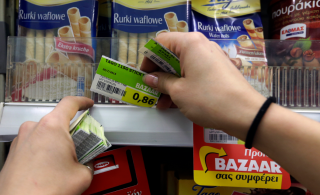
Many everyday supermarket basics have increased in price. Services hit by the increase include restaurants and cafes, funeral parlours, taxis, and the much used tutorial schools – held precious by tens of thousands of parents trying to give their kids a better start in life.

To get a sense of the mood across the country this week Neos Kosmos spoke to a handful of those affected.

27-year-old Stav Balafas in Athens was shocked by price increases to the most basic necessities.

“We’d get coffee and sparkling water every day for €4 and the next day we were surprised to pay €5. They listed coffee and sparkling water under luxury goods. Even tea is seen as luxury goods. No joke.

“People are concerned about public transport tickets prices, taxis and petrol getting more expensive. Air, bus and even boat fares are up. The internet and phone calls got a top-up.”

Valia Evangelatou (26) in Chios thinks the imposition of higher tax rates for virtually identical products is confusing.

“Normal bread stays the same, bread with olives gets a hike. Normal milk stays the same, chocolate milk goes up. You need to have a masters degree in advanced economics to figure it all out,” said Ms Evangelatou.

Despina Varsami (21) on holiday in Chania was bemused by the jump in price of that modest staple – the souvlaki.

“I swore to eat one a day while I’m here. It used to be €1.80 and now it’s €2.30. I wonder if they taxed each ingredient separately!”

Ilias Katrakis in Chalkidiki says the VAT hike will not get to the root of Greece’s economic problems but instead hit the poorest.

“The increase will once again hurt the little man when we should be looking at tax evasion.

“I say increase the VAT to 28 per cent for cash transactions but keep it at 18 per cent for card transactions. This will offer the incentive to move away from our outdated cash system, which is a huge part of the problem.”

Kosta Karageorgiou in Mykonos echoed his sentiments. “People need to start paying taxes, yes, mainly the rich, but not on basic commodities and tourism. Tourism is what keeps this country alive and right now the prices are unappealing even to holiday makers from abroad.”

Panagiota Stamou (26), a single mum living in Thessaloniki, sums up the mood of most Greeks who expected more from a government that vowed to fight austerity.

“I’m struggling to make ends meet on a salary of just €400 a month. If the price of food, electricity and water goes up, but my wage stays the same there is absolutely no way I can survive, “says the 26-year-old Ms Stamou.

“My child and I are already living on the absolute bare minimum. I didn’t vote SYRIZA for this. I voted for change. I voted ‘No’ This is far worse than anything I expected from them”.

source:Neos Kosmos

‘Mustafa Akinci understands the crime that happened against Greek Cypriots’.

cyprusgrief

Cyprus’ president Nicos Anastasiades (left) and Turkish Cypriot leader Mustafa Akinci (right), at a bi-communal event in Nicosia earlier this month. PHOTO: AP Photo/Pavlos Vrionides

Minister Kougiales upbeat on talks

On a visit to Australia this week, Cyprus’ Minister of Agriculture Nikos Kougiales told Neos Kosmos he is optimistic about the direction of current negotiations.

“We hope we’ll have a sincere and substantial talk, and I hope by the end of these talks something positive will happen for the Cyprus problem,” Mr Kougiales said.

The minister says the recent election of Turkish community leader Mustafa Akinci may be a game-changer in the ongoing discussions to find a resolution to ‘the Cyprus issue’.

“Mr Akinci has a very positive attitude. The way he behaves and what he has said the last month is positive, and it seems that he understands what happened in Cyprus in 1974; he understands the crime that happened against Greek Cypriots and I’m pretty confident that if he continues to behave the same way, that an agreement will be reached,” said Mr Kougiales.

Despite the agreement Greece has reached with its creditors, the state of Greece’s weakened economy has raised fears that the country’s perilous situation might impact Cyprus’ negotiating position within the United Nations, but it’s not a concern shared by the minister.

“Of course we always like Greece to be strong economically, but I don’t think this weakness of Greece will affect the negotiations.

“Greece is always there for Cyprus … always supports the negotiations … and Turkey has to do the same thing,” Mr Kougiales added.

With Cyprus’ own economy in huge difficulty two years ago, and faced with its own €10 billion bailout, the minister says he is confident that the tide has turned.

“I think the banking system and the economy are becoming stable now. Pretty soon we will get out of the financial support mechanism. We expect to see some higher rates of growth and I expect 2016 will be a good year for the Cypriot economy,” he said.

The minister’s first appearance down under took place in Sydney last Sunday, when Greek and Cypriot communities gathered to show their solidarity in a church service for the fallen of the 1974 invasion.

Following a visit to South Australia, the minister was due to attend a demonstration scheduled for yesterday evening at the Victorian Parliament, followed by a candlelight vigil.

Events marking the 41st anniversary of the Turkish invasion which the minister will attend have been organised nationwide by the Pan-Australian Justice for Cyprus Coordinating Committee (PASEKA).

Constantinos Procopiou, president of PASEKA, said the rallies and other ceremonies across Australia not only paid tribute to those who lost their lives in the invasion, but were a demonstration “against the continuing occupation of Cyprus, and a show of our support to the struggle for freedom”.

Tomorrow a liturgy will take place at the church of Saint Efstathios in South Melbourne, followed by a protest march at 12.30 pm commencing and ending on the steps of the Victorian parliament.

source:Neos Kosmos

$3m Greek community cultural centre rises in Box Hill

boxhillcentre

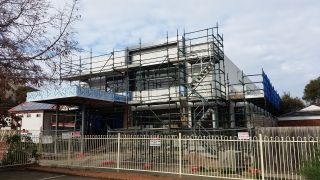
Taking shape: the new Community Cultural Centre. Photo supplied

New Greek community hub to be completed by September.

After almost two years of building work, the Greek Community of Box Hill and Districts (GOCBHD) is in the process of completing its new Community Cultural Centre.

Like most Greek community associations, GOCBHD’s membership is now largely made up of the elderly, with few active younger members, but the new centre has been designed to change that trend.

In order to address the issues raised by the organisation’s evolving demographic, the Community carried out detailed consultations with groups who used the premises, such as senior citizens, teachers in the Greek language school and its students, and local people.

Nick Farlecas, president of GOCBHD, said he was “very proud and relieved” to see the building nearing completion.

“We wanted to do something for the community’s future. There were many consultations, we put on fundraising events and used our savings but we also had to take out a loan,” he said.

In addition to the loan of $1.8 million, the Community contributed its own capital, while a grant of $600,000 from the Victorian government made up the rest.

The result is a two-storey building incorporating a multi-purpose hall with kitchen, child care centre and flexible areas suitable for meetings and social events.

While the facility will cater mainly for the needs of the language school, the rooms will be able to double up for use by private and commercial groups.

Jim Darmous, a member of GOCBHD and project manager for the construction, said the biggest challenges faced as the Community’s dream turned into bricks and mortar was “keeping the costs down, getting value for money, and monitoring the quality”.

“The structure’s up, the roof’s on, and the internal fit out is underway. It’s all good,” he said.

source:Neos Kosmos

Avatar 2: James Cameron Waiting for the Right Technology, Scripts for the Three Sequels Complete

Avatar-2

It’s been a long wait of six years for fans of Avatar. The ground-breaking film by James Cameron is set to have three sequels and by the looks of it Cameron seems to have completed the scripts for the films.

James Horner, the noted music director who worked with Cameron in Titanic and Avatar had revealed in an interview with Entertainment Weekly that the Oscar winning director was taking a lot of time preparing the scripts for Avatar 2, Avatar 3 and Avatar 4.

James Cameron wanted to make one more film based on Pandora, but his contract mentioned only three sequels and hence he was reworking the whole idea to make it fit within three films.

It is sad to note that Horner would have contributed to the background score of Avatar 2 as he had done with Avatar, but he recently passed away in plane crash. Horner and Cameron had been good friends and his loss is a huge setback to the whole team working on Avatar 2. There has been no announcement about who will be replacing the Oscar winning music director.

James Cameron is known to create magic in his films. Avatar brought to life the rich plants and animals in Pandora. In Avatar 2 James Cameron is planning to depict the water ecosystem of the planet.

According to Clapway, James Cameron is planning on using a technology that will help him film beautiful scenes underwater. The technology that he plans on using is still not present and there is work being done to bring it to existence because of which there is a slight delay in the production process.

Cameron himself has revealed that the technology will help them speed up the filming process. A lot of the graphics and computer software have been developed at Weta Digital in New Zealand where Avatar 2’s animation and special effects is worked upon.

Producer Jon Landau said that Avatar 2 will have a team who is going to help them test out new technology for underwater motion capture. Landau said that they can use animation and graphics to simulate the water, but the same can’t be done for the actors. For this very reason they need technology that helps them capture the actor’s experience when they shoot inside a tank for Avatar 2.

Screen Rant reported that Cameron had pushed back the release-date of Avatar 2 from December 2016 to December 2015 so that he has adequate technological back up. This delay will also give him time to iron out the scripts of the three films because the production of the films will start simultaneously.

Avatar 2 and the subsequent films will release one after another and the work on them will start at the same time for which Cameron needs to check and double check that everything has been fine tuned because he will have his hands full when the filming begins in full force.

Cameron has an elaborate idea about the world of Pandora and he has roped in different screenwriters to help him pen down the three upcoming films. Avatar 2 has been written by Amanda Silver and Rick Jaffa, these two have been the screenwriters for Rise of the Apes.

Avatar 3 has been done by the writer of Terminator: The Sarah Connor Chronicles, Josh Friedman and Avatar 4 by Shane Salerno who wrote Savages along with director Oliver Stone.

The different screenwriters will make sure that the audience gets a new experience every time they go to watch an Avatar sequel. The films are going to be released within a year from each other and the different writers will ensure that each experience is slightly different from the other.

Avatar 2 will see many of the old actors coming back in their original roles. Colonel Miles Quaritch (Stephen Lang) and Dr. Grace Augustine (Sigourney Weaver) who were killed in Avatar will be back in Avatar 2. There is no news about what role they will be playing in the script and if they will appear in the flashback mode. Sam Worthington and Zoe Saldana will reprise the lead roles of Jake Sully and Neytiri respectively.

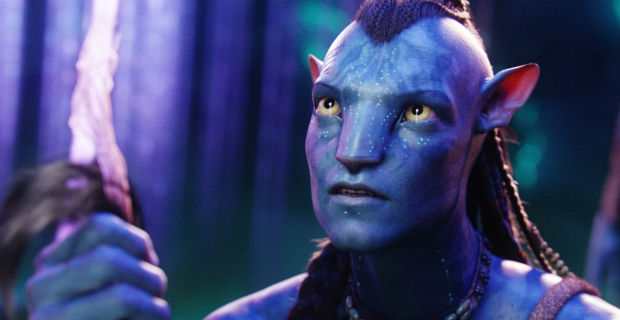
Avatar is set in Pandora, a moon of the Alpha Centauri star system. Pandora is inhabited by the Na’vis, who have high respect for the plants and animals of their planet. However, the humans from the earth encroach on their land and endanger the inhabitants. Jake Sully a disabled soldier sent to Pandora enters the world of the Na’vi and helps them fight to keep their world safe from the humans.

Preproduction work for Avatar 2 started in 2014. The film will be shot extensively in New Zealand.

Leave a comment and tell us what you expect from Avatar 2.

source:dyaherald.com

Eλλάδα: Τέρμα στο χύμα τσίπουρο

tsipouro

// // //

Με απόφαση του ΟΟΣΑ

Συνολικά οι εμπειρογνώμονες του Οργανισμού εξέτασαν 482 νομοθετικές ρυθμίσεις που διέπουν τη λειτουργία των κλάδων αυτών καθώς και της κλωστοϋφαντουργίας και του μηχανολογικού εξοπλισμού, τομείς στους οποίους δεν βρέθηκαν εμπόδια στον ανταγωνισμό. Οι συστάσεις που περιλαμβάνονται στην εργαλειοθήκη προβλέπουν 82 αλλαγές στον κλάδο των ποτών και 6 στα πετρελαιοειδή, οι οποίες έχουν τεθεί υπόψη της κυβέρνησης προκειμένου να λάβει τις τελικές αποφάσεις.

Η μελέτη του κλάδου των ποτών ο ΟΟΣΑ επικεντρώνεται στην παραγωγή και διακίνηση «χύμα» τσίπουρου και συναφών προϊόντων και καταλήγει στο συμπέρασμα ότι ετησίως 17 – 19 εκατ. λίτρα τσίπουρου διακινούνται αφορολόγητα, με αποτέλεσμα να δημιουργείται αθέμιτος ανταγωνισμός.

Το μέγεθος αυτό προκύπτει αν υπολογίσει κανείς την παραγωγή των 67 μεγάλων μονάδων του κλάδου (3 εκατομμύρια λίτρα που φορολογούνται με 12,75 ευρώ ανά λίτρο καθαρής αλκοόλης) και των 30.000 περίπου μικρών αποσταγματοποιών (που δηλώνουν ότι παράγουν 5-7 εκατ. λίτρα και έχουν πολύ μικρότερη φορολογία, 1,33 ευρώ ανά λίτρο αλκοόλης) και συγκρίνει τα μεγέθη αυτά με την συνολική ποσότητα που διακινείται στην αγορά η οποία σύμφωνα με τον ΟΟΣΑ είναι 24 εκατ. λίτρα.

Η πρόταση του Οργανισμού είναι να καταργηθεί η διακίνηση «χύμα» τσίπουρου, ούτως ώστε όποιες ποσότητες δεν είναι τυποποιημένες να κατάσχονται και να περιοριστούν οι μικροί παραγωγοί αποκλειστικά στην κάλυψη των δικών τους αναγκών. Η πρόταση αυτή όπως αναγνωρίζει ο ίδιος ο Οργανισμός είναι βλαπτική για τα συμφέροντα των μικρών αποσταγματοποιών αλλά έχει το πλεονέκτημα ότι η εφαρμογή της μπορεί εύκολα να ελεγχθεί, Εναλλακτικά προτείνεται να υποχρεωθούν οι μικροί παραγωγοί να εκδίδουν φορολογικά παραστατικά, κάτι που όμως έχει το μειονέκτημα της δυσκολίας στους ελέγχους.

Για την μπύρα η πρόταση είναι να θεσπιστεί κλιμακωτή φορολογία στους μικρούς παραγωγούς, ούτως ώστε να τους δοθούν κίνητρα, όπως ισχύει και σε άλλες χώρες της ΕΕ. Προτείνεται επίσης η άρση σειράς εμποδίων όπως τα ελάχιστα τετραγωνικά μέτρα για εγκαταστάσεις παραγωγής μπύρας, οινοπνευματωδών, εμφιάλωσης, επεξεργασίας νερού, κ.α., η υποχρέωση των ζυθοποιείων να διαθέτουν ξεχωριστή αποθήκη πρώτων υλών, η απαγόρευση παραγωγής ξυδιού και αλκοολούχων ποτών από τα οινοποιεία κ.α.

Στον κλάδο των πετρελαιοειδών οι προτάσεις του Οργανισμού επικεντρώνονται στο καθεστώς τήρησης των αποθεμάτων ασφαλείας καυσίμων και περιλαμβάνουν μεταξύ άλλων την κατάργηση της ελάχιστης διάρκειας των συμβάσεων τήρησης, την θέσπιση υποχρέωσης να τηρούνται αποθέματα για το σύνολο των προϊόντων, τη διευκόλυνση της τήρησης αποθεμάτων σε άλλη χώρα-μέλος της ΕΕ (που επιτρέπεται ήδη από τη νομοθεσία) κ.α.

Πηγή:Νέος Κόσμος

Varoufakis reveals cloak and dagger ‘Plan B’ for Greece, awaits treason charges

Yanis Varoufakis claims he had approval to plan a parallel banking system Photo: Kostas Tsironis/Bloomberg

// <![CDATA[
for(var i = 0; i < optimizely["activeExperiments"].length; i++){
var expid = optimizely["activeExperiments"][i];
var experimentname = optimizely.data.experiments[expid].name;
var variationname = optimizely.variationNamesMap[expid];
optimizely.$("head").prepend("”);
}
// ]]>//

Former Greek finance minister Yanis Varoufakis claims he was authorised by Alexis Tsipras to look into a parallel payment system.

// <![CDATA[
for(var i = 0; i < optimizely["activeExperiments"].length; i++){
var expid = optimizely["activeExperiments"][i];
var experimentname = optimizely.data.experiments[expid].name;
var variationname = optimizely.variationNamesMap[expid];
optimizely.$("head").prepend("”);
}
// ]]>// Varoufakis reveals cloak and dagger ‘Plan B’ for Greece, awaits treason charges – Telegraph &amp;lt;img height=”1″ width=”1″ alt=”” style=”display:none” src=”https://www.facebook.com/tr?id=678338115628438&amp;amp;amp;ev=PixelInitialized&#8221; /&amp;gt;

A secret cell at the Greek finance ministry hacked into the government computers and drew up elaborate plans for a system of parallel payments that could be switched from euros to the drachma at the “flick of a button” .

The revelations have caused a political storm in Greece and confirm just how close the country came to drastic measures before premier Alexis Tsipras gave in to demands from Europe’s creditor powers, acknowledging that his own cabinet would not support such a dangerous confrontation.

Yanis Varoufakis, the former finance minister, told a group of investors in London that a five-man team under his control had been working for months on a contingency plan to create euro liquidity if the European Central Bank cut off emergency funding to the Greek financial system, as it in fact did after talks broke down and Syriza called a referendum.

The transcripts were leaked to the Greek newspaper Kathimerini. The telephone call took place a week after he stepped down as finance minister.

“The prime minister, before we won the election in January, had given me the green light to come up with a Plan B. And I assembled a very able team, a small team as it had to be because that had to be kept completely under wraps for obvious reasons,” he said.

Yanis Varoufakis (right), Greece’s former finance minister, with Prime Minister Alexis Tsipras

Mr Varoufakis recruited a technology specialist from Columbia University to help handle the logistics. Faced with a wall of obstacles, the expert broke into the software systems of the tax office – then under the control of the EU-IMF ‘Troika’ – in order to obtain the reserve accounts and file numbers of every taxpayer. “We decided to hack into my ministry’s own software programme,” he said.

The revelations were made to a group of sovereign wealth funds, pension funds, and life insurers – many from Asia – hosted as part of a “Greek day” on July 16 by the Official Monetary and Financial Institutions Forum (OMFIF).

Mr Varoufakis told the Telegraph that the quotes were accurate but some reports in the Greek press had been twisted, making it look as if he had been plotting a return to the drachma from the start.

“The context of all this is that they want to present me as a rogue finance minister, and have me indicted for treason. It is all part of an attempt to annul the first five months of this government and put it in the dustbin of history,” he said.

“It totally distorts my purpose for wanting parallel liquidity. I have always been completely against dismantling the euro because we never know what dark forces that might unleash in Europe,” he said.

The goal of the computer hacking was to enable the finance ministry to make digital transfers at “the touch of a button”. The payments would be ‘IOUs’ based on an experiment by California after the Lehman crisis.

A parallel banking system of this kind would allow the government to create euro liquidity and circumvent what Syriza called “financial strangulation” by the ECB.

// <![CDATA[
for(var i = 0; i < optimizely["activeExperiments"].length; i++){
var expid = optimizely["activeExperiments"][i];
var experimentname = optimizely.data.experiments[expid].name;
var variationname = optimizely.variationNamesMap[expid];
optimizely.$("head").prepend("”);
}
// ]]>// Varoufakis reveals cloak and dagger ‘Plan B’ for Greece, awaits treason charges – Telegraph &amp;lt;img height=”1″ width=”1″ alt=”” style=”display:none” src=”https://www.facebook.com/tr?id=678338115628438&amp;amp;amp;ev=PixelInitialized&#8221; /&amp;gt;

“This was very well developed. Very soon we could have extended it, using apps on smartphones, and it could become a functioning parallel system. Of course this would be euro denominated but at the drop of a hat it could be converted to a new drachma,” he said.

Mr Varoufakis claimed the cloak and dagger methods were necessary since the Troika had taken charge of the public revenue office within the finance ministry. “It’s like the Inland Revenue in the UK being controlled by Brussels. I am sure as you are hearing these words your hair is standing on end,” he said in the leaked transcripts.

Mr Varoufakis said any request for permission would have tipped off the Troika immediately that he was planning a counter-attack. He was ready to activate the mechanism the moment he received a “green light” from the prime minister, but the permission never came.

“I always told Tsipras that it not be plain sailing but this is the price you have to pay for liberty,” he told the Telegraph.

“But when the time came he realised that it was just too difficult. I don’t know when he reached that decision. I only learned explicitly on the night of the referendum, and that is why I offered to resign,” he said. Mr Varoufakis wanted to seize on the momentum of a landslide victory in the vote but was overruled.

He insisted that his purpose has always been to go on the legal and financial offensive within the eurozone – placing the eurozone creditors in a position they would be acting outside EU treaty law if they forced Grexit – but nevertheless suggested Syriza did have a mandate to contemplate more radical steps if all else failed.

“I think the Greek people had authorised us to pursue energetically and vigorously that negotiation to the point of saying that if we can’t have a viable agreement, then we should consider getting out,” he said in the tape.

Mr Varoufakis said the real aim of Germany’s Mr Schauble’s tough stance on Greece is force a revolution in the whole structure of monetary union, with France squarely in his sights.

“Schauble believes that the eurozone is not sustainable as it is. He believes there has to be some fiscal transfers, some degree of political union. He believes that for that political union to work without federation, without the legitimacy that a properly elected federal parliament can render, can bestow upon an executive, it will have to be done in a very disciplinary way,”

“And he said explicitly to me that a Grexit is going to equip him with sufficient terrorising power in order to impose upon the French, that which Paris has been resisting: a degree of transfer of budget making powers from Paris to Brussels.”

Mr Varoufakis told the Telegraph that the Mr Schauble has made up his mind that Greece must be ejected from the euro, and is merely biding his time, knowing that the latest bail-out plan is doomed to failure.

“Everybody knows the International Monetary Fund does not want to take part in a new programme but Schauble is insisting that it does as a condition for new loans. I have a strong suspicion that there will be no deal on August 20,” he said.

He said the EU authorities my have to dip further into the European Commission’s stabilisation fund (EFSM), drawing Britain deeper into the controversy since it is a contributor. By the end of the year it will be clear that tax revenues are falling badly short of targets – he said – and the Greek public ratio will be shooting up towards 210pc of GDP.

“Schauble will then say it is yet another failure. He is just stringing us along. he has not given up his plan to push Greece out of the euro,” he said.

Meanwhile, the Greek stock market could reopen on Tuesday after almost a month out of action. The Athens Stock Exchange has been shuttered since June 29, when the banks were also temporarily closed to stem the exodus of deposits.

“It’s certain that it will not open on Monday, maybe on Tuesday,” a spokesperson for the exchange told Reuters on condition of anonymity.

source:telegraph.co.uk