Category Archives: Uncategorized

Newcastle’s Greek community supports mental health sculpture initiative

11855722_919667964772197_5987062672570846636_n

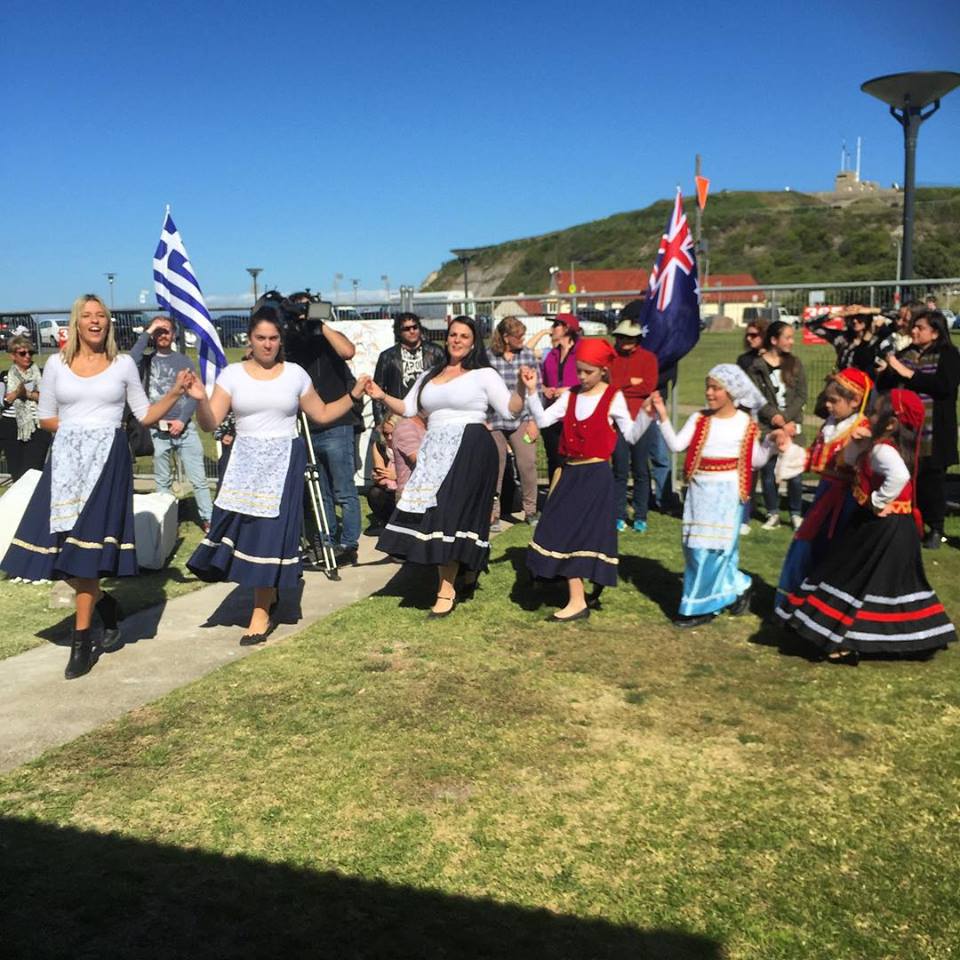
NEWCASTLE’s Greek community has used traditional music, dance and cuisine to demonstrate its support for the Resilience Sculpture Project, which will be unveiled in Newcastle’s Foreshore Park next month.

The Newcastle Herald has previously reported how psychotherapist Joanne Sinclair approached renowned sculptor Roger McFarlane about three years ago with her vision to create a work that would recognise the impact mental illness has made on the community.

Mr McFarlane travelled to a quarry on the Greek island of Thassos three months ago to choose two blocks of marble weighing a combined 21 tonnes that were installed on July 15 at his base at Camp Shortland.

‘‘I chose Thassos marble because it was reasonably clear, had no cracks through it, was predominantly pure white with a few grey shadows through it and it sparkled in the light,’’ Mr McFarlane said.

‘‘Later, I was at a function at the United Service Club and met a man who had come from the Greek mainland about 12 kilometres from Thassos and told him our story.

‘‘Since then, the Greeks have adopted us.’’

Honorary consul for Greece in northern NSW Geoff Antoniades, rector of The Holy Apostles Greek Orthodox Church of Newcastle Father Nicholas Scordilis and the church’s Hellenic dancers were among the community members who visited the partially completed sculpture on Sunday, saying it was another symbol of the connection between Greece and the Hunter.

‘‘We were really amazed that the marble had come all the way from Thassos, but the real reason we were impressed and pleased to be someway involved is because of what this sculpture will mean for Newcastle,’’ Father Scordilis said.

‘‘The people behind this project deserve our gratitude and respect, because they’re helping to raise awareness that people in our community are suffering and it can be a rough journey.’’

11836713_10152934978526010_4406440328967563049_n
Ms Sinclair said everyone knew someone who had suffered from mental illness.

‘‘Services can do so much to help people but the community has to do its bit too,’’ she said.

Mr McFarlane is often joined by volunteers as he works for at least eight hours a day on the sculpture – an abstract figure of a female sitting in contemplation, on a rectangular base bearing the word ‘‘resilience’’.

The sculpture will be installed at its permanent location on September 5.

11831808_10207533869722844_6195239876295745896_n

source:theherald.com.au

Αυστραλός ψαράς σκότωσε καρχαρία-τίγρη εξίμισι μέτρων

57A51D2FCC05296D4EBE433FC3E74EBE

Σίδνεϊ, Αυστραλία
Σοκ και δέος προκαλούν οι φωτογραφίες του νεκρού καρχαρία-τίγρη που αλιεύτηκε το προηγούμενο Σαββατοκύριακο στη βόρεια Νέα Νότια Ουαλία στην Αυστραλία.

Το θαλάσσιο κήτος, μήκους σχεδόν εξίμισι μέτρων, πιάστηκε από έναν αυστραλό ψαρά, ονόματι Μάθιου (αγνώστων λοιπών στοιχείων), το περασμένο Σάββατο στα ανοιχτά της παραλίας Σέβεν Μάιλ στη περιοχή Λένοξ Χεντ.

Ο καρχαρίας απείλησε αρκετές φορές να σκοτώσει σέρφερ και αυτοδύτες, για το λόγο αυτό και κάποιοι -άγνωστο ποιοι ακριβώς- πλήρωσαν τον Μάθιου προκειμένου να κυνηγήσει και να σκοτώσει το κήτος, καθώς η περιοχή προσελκύει πολλούς λάτρεις των δυο συγκεκριμένων σπορ από όλο το κόσμο.

Όπερ κι εγένετο.

shark

Ο Μάθιου μίλησε στην αυστραλιανή εφημερίδα Northern Star λέγοντας πως έπιασε τον καρχαρία-τίγρη «πριν λίγες ημέρες στην θαλάσσια περιοχή που είναι γνωστή ως Τουίντ Χεντς».

Επίσης είπε πως κράτησε τα σαγόνια του ως ενθύμιο, κατά τη γνωστή ναυτική συνήθεια, μάλλον για να τα κρεμάσει στον τοίχο.

Ο καρχαρίας-τίγρης είναι ένα από τα μεγαλύτερα είδη καρχαρία που επιτίθεται και στον άνθρωπο. Τον αποκαλούν και «σκουπιδοτενεκέ της θάλασσας» καθώς τρώει οτιδήποτε, από φώκιες, δελφίνια κι ανθρώπους, μέχρι πινακίδες αυτοκίνητων, πλαστικά είδη και γενικά ό,τι του σερβίρουν…

Πηγή:in.gr

A year on, no answers to ancient Greek tomb mystery

amfipoligeniko-thumb-large

A year after being hailed as one of Greece’s greatest archaeological finds and a possible resting place of Alexander the Great, the largest tomb ever discovered in the country lies almost forgotten in the blazing summer sun.

The buzz of cicadas and wasps gives no hint that Amphipolis, some 60 kilometres (37 miles) from the northern city of Serres, drew a media stampede in August 2014 after authorities declared it a “unique” find.

“No one works here any more. The project is frozen, like everything else in Greece,” says a young guard, referring to the country’s economic crisis that in addition to mass layoffs and revenue cuts has also hit spending on cultural projects.

“We still don’t know if the country is going to run out of money,” he adds, refusing to give his name.

At the time of its discovery, there was speculation that archaeologists had found the tomb of Alexander the Great (356 BC to 323 BC) — or perhaps someone close to him like his mother Olympias or wife Roxana.

But a room-by-room search of the massive box-like tomb has failed to give conclusive answers to date.

Though the remains of an elderly woman were found — raising hopes it could be Alexander’s mother — the bones of two men, a newborn baby and animals including a horse were also discovered.

Out of 550 bone fragments found, 157 had been matched to specific bodies so far — including that of a fifth person whose sex has not been identified.

Culture Minister Nikos Xydakis has publicly criticised the previous conservative administration over its handling of the excavation.

“The way the excavation was carried out and (its) promotion… had elements of a show,” Xydakis said in a televised interview in March.

On Tuesday, the ministry said significant sums of money and time would be required to make the monument accessible to visitors.

“The work required to protect, rehabilitate and highlight the monument is enormous,” it said.

The ministry said 200,000 euros ($220,000) had been earmarked after the excavation work was carried out, but the imposition of capital controls in June linked to the economic crisis has delayed the release of funds.

As the scientific world awaits further clarification, a dispute has arisen over whether the tomb is actually Macedonian or was built under the Romans.

Leftist daily Avgi, the newspaper of the ruling SYRIZA party, on Sunday said a group of experts had dated the tomb to the first or second century BC — up to 300 years after Alexander’s death, and it dismissed efforts to link the monument to his family as a “fiasco”.

The head archaeologist at Amphipolis, Katerina Peristeri, fired off an angry letter to the newspaper to defend her evaluation.

“The tomb complex was built in the final quarter of the fourth century BC (325-300 BC)… and was used until Roman times,” Peristeri said.

“The Macedonians sealed it for protection in the second century BC,” she said, adding that a full evaluation would be made in the autumn.

The tomb, measuring 500 metres (1,640 feet) in circumference and dug into a 30-metre hill — was found to contain sculptures of sphinxes and caryatids, intricate mosaics and coins featuring the face of Alexander the Great.

Built on the banks of the river Strymon, Amphipolis was an important city of the ancient Macedonian kingdom under Alexander.

Alexander built an empire stretching from modern Greece to India. He died in Babylon and was buried in the city of Alexandria, which he founded. The precise location of his tomb is one of the biggest mysteries of archaeology.

The Amphipolis tomb’s location was known in antiquity, and it is believed to have been repeatedly looted following the conquest of the ancient Macedonian kingdom by Rome in the second century BC.

No funerary offerings were found, and the culture ministry has confirmed that even the single grave found inside the tomb had been searched.

Historians had dismissed from the start the possibility that the tomb’s occupant could be Alexander himself, who conquered the Persian empire and much of the known world before his death in Babylon at the age of 32 in 323 BC.

source:ekathimerini.com

Greece sends riot police to crisis-hit Aegean island

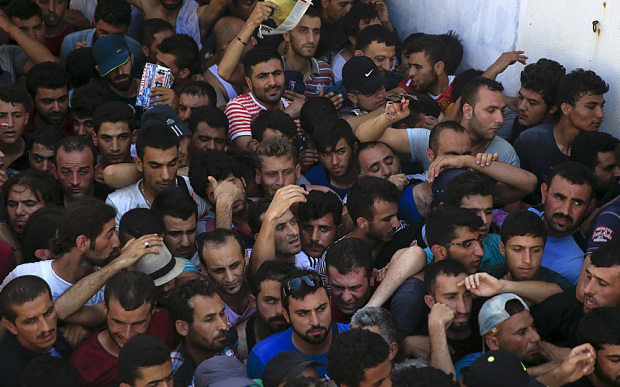
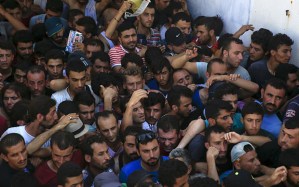
Migrants and refugees are packed in a crowded line during a registration procedure at the national stadium of the Greek island of Kos, August 12, 2015. The United Nations refugee agency (UNHCR) called on Greece to take control of the "total chaos" on Mediterranean islands, where thousands of migrants have landed. About 124,000 have arrived this year by sea, many via Turkey, according to Vincent Cochetel, UNHCR director for Europe. REUTERS/Alkis Konstantinidis      TPX IMAGES OF THE DAY

Migrants and refugees are packed in a crowded line during a registration procedure at the national stadium of the Greek island of Kos, August 12, 2015. The United Nations refugee agency (UNHCR) called on Greece to take control of the “total chaos” on Mediterranean islands, where thousands of migrants have landed. About 124,000 have arrived this year by sea, many via Turkey, according to Vincent Cochetel, UNHCR director for Europe. REUTERS/Alkis Konstantinidis TPX IMAGES OF THE DAY

For a second day, police on Kos struggled to keep control of hundreds of refugees penned into an old football stadium, waiting to receive official travel documents.

Greece sent a detachment of riot police to the island of Kos on Wednesday, as police used fire extinguishers for the second day running to control a huge crowd of refugees.

“Two units, or 40 men, have arrived in Kos. Other reinforcements are being sent from other eastern Aegean islands,” a police spokesman said.

The tiny holiday island is struggling to deal with around 7,000 migrants who have arrived in the last month, as humanitarian groups said they were “appalled” at the treatment meted out by the Greek authorities.

The refugees, many of them Syrians and Afghans fleeing war in their home countries, were herded into an old football stadium as the authorities attempted to register them and issue official travel documents which will enable them to take ferries to the mainland and from there head to other parts of Europe.

“The situation here is very bad and police here they beat a boy, they beat a man, they beat children, it’s too bad,” Laith Saleh, a Syrian refugee inside the stadium, told The Associated Press by telephone. “We can’t go out.”

Progress was painfully slow. Inside the stadium, three police officers struggled to register hundreds of refugees, who queued for hours in baking temperatures.

For the second day, police used fire extinguishers to control the crowd.

Dozens more refugees and migrants arrived on the island in rubber dinghies, adding to the unprecedented 125,000 who have reached a string of eastern Aegean islands so far this year – a 750 per cent increase on last year.

The refugees are enduring appalling conditions – with the authorities providing no food, drinking water, shelter or lavatories, they have been sleeping in makeshift camps and in public parks and squares.

The emergency has brought surreal sights to the popular holiday destination – refugee families sleep on the ground, as late-night revellers tumble out of nightclubs and bikini-clad women jog along the seafront.

More than 7,000 migrants reached Kos in July alone.

Some have money to buy food, while others rely on islanders for hand-outs. Inside the stadium, some people fainted from hunger and the heat.

The situation on the island was “very concerning”, said Medecins Sans Frontieres. “No food has been provided by the authorities since April. MSF has been calling for basic services to be provided to the refugees for eight months, but no improvements have been made,” the charity said.

Police used force to control a crowd of around 2,000 people at the stadium on Tuesday, spraying them with fire extinguishers and beating them with batons.

The refugees held at the football stadium include women, children and babies.

Brice de le Vingne, MSF’s director of operations, said: “What was previously a situation of state inaction is now one of state abuse, with police using increasingly heavy-handed force against these vulnerable people.

“The Kos authorities have clearly stated that they have no intention of improving the situation for these people as they believe that this would constitute a ‘pull factor’. But the truth is that people fleeing war will keep on coming, whether or not the authorities are trying to stop them from doing so.”

The charity was “appalled” to see that the Greek authorities had failed to establish decent reception centres for the refugees in the Dodecanese.

“One is left to wonder what more [reason] the Greek authorities need to rise up to the occasion, take their responsibilities and receive these people humanely and with dignity,” said Mr de le Vingne.

The route into Greece from the coast of Turkey has become more popular in recent months because fighting in Libya has made the crossing from there to Italy more dangerous.

From Greece most of the migrants and refugees trek through the Balkans, hoping to reach wealthier northern European countries such as Britain, Germany and Scandinavia.

“Aleppo is the worst city in the world,” Dirar, an English literature graduate, told AP. “There’s no electricity, no water, no Internet. My home was destroyed by a rocket blast,” he said, showing a picture on his mobile phone of himself in the wreckage.

“I was so happy to be alive that I took a selfie,” he said. “From Greece, I will travel through Macedonia, Serbia and Hungary to Germany.”

source:telegraph.co.uk

 

Search for man who sparked Sydney school lockdown

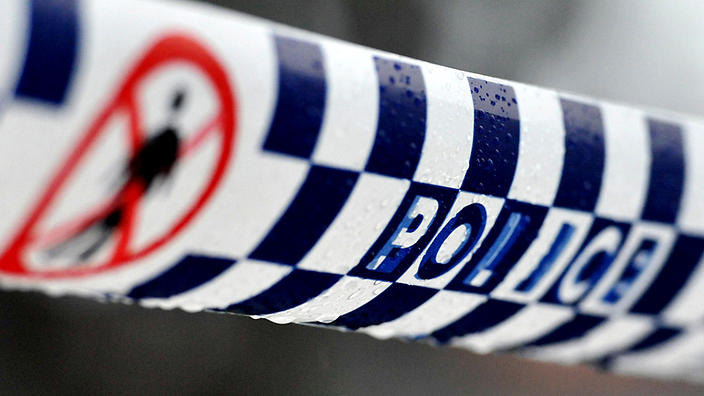
Police tape restricts access to a crime scene north of Sydney, Friday, July 24, 2015. (AAP Image/Joel Carrett) NO ARCHIVING

Police tape restricts access to a crime scene north of Sydney, Friday, July 24, 2015. (AAP Image/Joel Carrett) NO ARCHIVING

Police say a man seen on the grounds of Sydney Boys High School was spotted carrying a shopping bag not a firearm.

A search is underway for a man who sparked a lockdown at Sydney Boys High School.

Police were called to the Moore Park school on Wednesday afternoon after a teacher challenged a man who was spotted on school grounds.

He was seen carrying a grey shopping bag but police stressed, contrary to earlier reports, at “no time was a firearm sighted”.

The man was later seen leaving the school and police began searching for him.

The lockdown at the school has been lifted.

source:sbs.com.au

Μελβούρνη:Ιστορικά μαγαζιά, είδος προς εξαφάνιση

eplygon1

Τα ακριβά ενοίκια «καταστρέφουν» τις παραδοσιακές γειτονιές της Μελβούρνης.

Πριν από λίγες εβδομάδες ο «Νέος Κόσμος» ασχολήθηκε με έναν χώρο-ορόσημο για την ελληνική παροικία των κεντρικών Βορείων προαστίων της πόλης. Ο λόγος για το καφενείο στην περιοχή του Brunswick, που σε λίγες μέρες βάζει λουκέτο. Ένας από τους λόγους που οι ιδιοκτήτες του αποφάσισαν να κλείσουν ένα μαγαζί που έθρεψε τρεις οικογένειες επί δεκαετίες, είναι τα υψηλά ενοίκια που καθιστούν την λειτουργία του μη οικονομική από κάθε πλευρά.

Εν μέρει, το ίδιο σκηνικό, εξελίχθηκε -και εξελίσσεται για καιρό τώρα- και στην παραδοσιακή ελληνική οδό του Lonsdale Street, από την οποία εξαφανίζονται μέρα με την μέρα τα πάλαι πότε ελληνικά μαγαζιά που έγραψαν ιστορία όχι μόνο στην ζωή των ομογενών, αλλά και στον εν γένει χαρακτήρα της οδού, καθώς χάρη σ’ αυτά και σε άλλες ελληνικές επιχειρήσεις το Lonsdale Street μετονομάστηκε στην ελληνική γωνιά του κέντρου της πόλης.

Τώρα τα πανάκριβα ενοίκια «ετοιμάζονται να σκοτώσουν» άλλη μία ιστορική γωνιά της πόλης, την περιοχή που έχει συνδεθεί με την παρουσία των ιταλικής καταγωγής μεταναστών στην Μελβούρνη, αυτή του Lygon Street.

Το ένα μετά το άλλο εστιατόρια και καφετέριες, χώροι αναψυχής τριών τουλάχιστον βάζουν λουκέτο καθώς οι ιδιοκτήτες τους δεν μπορούν να ανταπεξέλθουν στα ακριβά ενοίκια που απαιτούν οι ιδιοκτήτες τους.

Μία μικρή έρευνα σε κτηματομεσιτικά γραφεία που ενοικιάζουν μαγαζιά στην περιοχή έδειξε ότι τα ενοίκια που καλούνται να πληρώσουν οι επιχειρηματίες φτάνουν ακόμα και τις $3,000 για ένα χώρο εστιατορίου.

Επιχειρηματίες της περιοχής αποφάσισαν πριν από μερικές μέρες να επισκεφθούν τον Δήμαρχο της πόλης Robert Doyle, προκειμένου να ζητήσουν την βοήθειά του. Ο κ. Doyle αναγνώρισε το πρόβλημα αλλά και την κορύφωσή του καθώς ανέφερε ότι η κατάσταση για τους επιχειρηματίες της περιοχής δυσκολεύει μέρα με τη μέρα και εξέφρασε την ανησυχία του για το μέλλον της Lygon Street και για το ότι αν η κατάσταση συνεχιστεί ως έχει θα χαθεί και ο χαρακτήρας της.

Πρέπει να αναφέρουμε ότι το ιστορικό Borsari Ristorante πριν από λίγο καιρό έκλεισε για πάντα τις πόρτες του και στο σημείο που βρισκόταν πρόκειται να ανοίξει υποκατάστημα της τράπεζας ΑΝΖ. Δεν έχει, όμως, αρνητικό αντίκτυπο μόνο στο χαρακτήρα της περιοχής τo γεγονός ότι οι μικρές επιχειρήσεις που δραστηριοποιούνταν στον χώρο της εστίασης κλείνουν τις πόρτες τους για να πάρουν την θέση τους μεγάλες επιχειρήσεις που μπορούν να πληρώσουν τα πανάκριβα ενοίκια. Έχει αρνητικό αντίκτυπο και στην εμπορική κίνηση αυτών που απομένουν, οι ιδιοκτήτες των οποίων διαπιστώνουν ότι αυτές οι σταδιακές αλλαγές της σύνθεσης των μαγαζιών έχει διώξει πολύ κόσμο από το Lygon Street, γεγονός που σε συνάρτηση με τα υψηλά ενοίκια αναμένεται σε λίγα χρόνια να εξαφανίσει κάθε ίχνος του χαρακτήρα της ιστορικής αυτής οδού, μετατρέποντάς την σε μία απρόσωπη κεντρική οδό της πόλης.

Όπως χαρακτηριστικά ανέφερε σε σχετικό δημοσίευμα της «Herald Sun», ο Marco Riggio ιδιοκτήτες του Grinders Coffee, που βρίσκεται στο Lygon Street για πάνω από 10 χρόνια τώρα, η πτώση της εμπορικής κίνησης τον τελευταίο χρόνο είναι δραματική. «Ποτέ δεν ήταν έτσι» είπε χαρακτηριστικά.

Με βασικό στόχο να επενέβη ο δήμαρχος καταστηματάρχες της περιοχής ζήτησαν από τον κ. Doyle να οργανωθούν δρώμενα στην περιοχή έτσι ώστε να επιστρέψει ο κόσμος για να τονωθούν οικονομικά οι επιχειρήσεις που έχουν απομείνει. Μεταξύ άλλων, ο κ. Doyle, είπε ότι ο Δήμος σχεδιάζει στα πλαίσια αυτής της προσπάθειας θα εισηγηθεί και την ανακαίνιση δύο πλατειών που βρίσκονται στην περιοχή, την πλατεία Lincoln Square και University Square.

Πηγή:Νέος Κόσμος

Mελβούρνη:Ένα μνημείο ιστορικής σημασίας

paagalma

Πλήθος κόσμου και επισήμων στα αποκαλυπτήρια του χάλκινου μνημείου αφιερωμένο στη μνήμη των Αυστραλών στρατιωτών και νοσοκόμων που βρέθηκαν στη Λήμνο στη διάρκεια του Α’ Παγκοσμίου Πολέμου. Φώτο: Κώστας Ντεβές

Το χάλκινο μνημείο που αναπαριστά μία νοσοκόμα και ένα Αυστραλό στρατιώτη εγκαινιάστηκε το Σάββατο στο Albert Park της Μελβούρνης.

Τα αποκαλυπτήρια του χάλκινου Μνημείου αφιερωμένο στον ιδιαίτερο ρόλο των Αυστραλών γυναικών νοσοκόμων της Λήμνου στη Μάχη της Καλλίπολης κατά τον Α’ Παγκόσμιο Πόλεμο έγινε το Σάββατο. Το μνημείο, φιλοτεχνημένο από τον διάσημο Αυστραλό γλύπτη, Peter Corlett, βρίσκεται στη γωνία των οδών Foote και Graham Streets, στο προάστιο Albert Park της Μελβούρνης. Εννιακόσιοι Έλληνες συμμετείχαν εθελοντικά στην εκστρατεία των ANZACS στη Μάχη και 300 απ’ αυτούς ήταν από την Κρήτη. Οι Έλληνες αυτοί σχημάτισαν το περίφημο 5ο Τάγμα Πεζικού, και στο οποίο συμμετείχε και ο Ελληνοαυστραλός Κωνσταντίνος Νικόδημος – Bell από το Albert Park. Επιβιβάστηκε στο Πολεμικό πλοίο HMAT Orvieto στο Port Melbourne και πριν από 100 ακριβώς χρόνια μαχόταν στο Lone Pine στην Καλλίπολη.

Το άγαλμα αναπαριστά μία νοσοκόμα και έναν Αυστραλό στρατιώτη και η πρωτοβουλία ανήκει στην Επιτροπή Μνήμης Λήμνου-Καλλίπολης και δύο ομογενών πρώην πολιτικών, των Λι Ταρλάμη και Γιάννη Πανταζόπουλου. Στο Μνημείο Λήμνος-Καλλίπολη υπάρχει και πλακέτα με τα ελληνικά και αγγλικά ονόματα των χωριών απ’ όπου πέρασαν οι Αυστραλοί στρατιώτες που βρέθηκαν εκεί.

Η ημέρα που επιλέχθηκε για τα αποκαλυπτήρια του αγάλματος δεν είναι τυχαία. Η 8η Αυγούστου ήταν η μέρα κατά την οποία συμπληρώθηκαν 100 χρόνια από τότε που οι πρώτες Αυστραλές νοσοκόμες έφτασαν στη Λήμνο.

Στην τελετή παραβρέθηκαν πολιτικοί όλων των κομμάτων, στελέχη της Παροικίας, διπλωματικοί εκπρόσωποι της Ελλάδας στην Αυστραλία, αλλά και απόγονοι των νοσοκόμων που υπηρέτησαν στη Λήμνο και στρατιωτών που πολέμησαν στη Μάχη. Ο Λι Ταρλάμης, ως πρόεδρος της Επιτροπής Μνήμης Λήμνου-Καλλίπολης, εξέφρασε την υπερηφάνεια του για τις νοσηλεύτριες και τους στρατιώτες που βρέθηκαν στη Λήμνο στις δύσκολες στιγμές του 1915. Η παρουσία τους στο νησί της άλλαξε τη ζωή δραματικά και για πάντα τη ζωή των ντόπιων. “Τώρα είναι η ώρα να ακουστεί και η ιστορία της Λήμνου και των κατοίκων της, είναι η αρχή μιας προσπάθειας για την ευαισθητοποίηση των Αυστραλών για ένα θέμα που δεν πρέπει να ξεχαστεί”. Στην Επιτροπή κύριο ρόλο έχουν και οι Jim Claven και Λάμπης Εγγλέζος.

4.000 περίπου Αυστραλοί και Νεοζηλανδοί στρατιώτες νοσηλεύθηκαν στη Λήμνο με τη συνδρομή 96 Αυστραλών νοσοκόμων. Το νοσοκομείο εκστρατείας είχε στηθεί στο χωριό Σαρπί, καθώς και σε πλοία. Δυστυχώς, 148 Αυστραλοί και 76 Νεοζηλανδοί στρατιώτες υπέκυψαν στα τραύματά τους και άφησαν την τελευταία τους πνοή εκεί. Οι σοροί τους ενταφιάστηκαν σε δύο συμμαχικά νεκροταφεία στη Λήμνο, στο Πορτιανού και στο Μούδρο.

Πηγή: Νέος Κόσμος

On Greek island, tourists come for the sun and stay to help refugees

imrs.php

MOLYVOS, Greece – The vacation had been everything that Angelique and Onno Bos dreamed it would be.

With their four children, the Dutch couple had taken full advantage of the first-class amenities on the picture-perfect Greek island of Lesbos: They power-boated through aqua-green waves, scootered along breathtaking mountain passes and whiled away the days on secluded sandy beaches.

At 10 p.m. the night before their flight back to Holland, they did something impulsive and uncharacteristic: They canceled their trip home – not to extend their idyll, but to provide aid to some of the thousands of refugees who, like the tourists, have been drawn to Lesbos this summer.

“We’d seen refugees all over the island, walking along the roads. And we kept saying to each other: What can we do to help?” said Angelique Bos, a tanned, fit and blonde 47-year-old.

As an extraordinary tide of migrants has washed up on the island’s shores in recent months from across the sea in Turkey, local authorities are overwhelmed, the nearly bankrupt Greek government is unable to help and the European Union is nowhere to be seen. The result is that the migrants, the vast majority of them fleeing war and persecution, spend their first days and nights in the E.U. living in squalor, with little access to food, water or medicine.

International aid organizations have stepped into the breach. But so, too, have Lesbos residents, as well as some of the well-heeled European tourists who came here for the sun but who unexpectedly found themselves drawn to help.

For Angelique Bos, help meant doling out cookies, water and hugs one recent day to dozens of migrants minutes after their flimsy rubber raft was picked up by the Greek Coast Guard and towed into shore. The migrants – a cross-section from the world’s conflict zones – thanked her repeatedly. Bos said she was the one feeling grateful.

“It’s been the best vacation ever,” she said. “We’ve been helping for 12 days now, and we’ll stay five more. Then we’ll have to stop.”

But that won’t be the end of their efforts. Back in Holland, they intend to raise money to buy a car to ferry the migrants across the island and to pay for housing for future volunteers.

“I always felt sorry for the refugees when I saw them on television,” Bos said. “But now it’s different. We’ve met them.”

Melinda McRostie, who has lived on the island for 45 years and coordinates relief efforts from the kitchen of her family’s restaurant at the island’s northwestern tip, said the tourists have played an indispensable role in her all-volunteer campaign.

“The fridge broke down the other day. Someone stepped in and bought me a new one,” she said as she prepared the night’s dinner offerings and juggled calls on multiple phones reporting new arrivals and migrants in distress. “It’s been amazing how many people want to help.”

Not everyone, of course, is so eager to lend a hand. Several doors down from McRostie’s restaurant along this village’s quaint cobblestone seafront, another restaurant owner complained that the presence of the migrants had been terrible for his business.

“I’m very sorry for them. But I’m also sorry for my own family,” said the owner, who only gave his first name, Michalis. “I know there is war where there they come from, but what about us? We’ve got a financial crisis here in Greece.”

The presence of the migrants may be putting off some tourists. But for others, it’s all the more reason to keep coming back.

Laura Ferris and Pete Oldroyd, a couple in their mid-50s from Yorkshire, England, walked out of their hotel at dawn one recent morning and found dozens of migrants sleeping in the street. They had come in on a boat only hours before and were exhausted from the treacherous journey.

Throughout the morning, Ferris and Oldroyd handed out food and water, and entertained the children while their parents rested. Oldroyd lent the kids his binoculars. “Take a look!” he said, as the children peered out at an ancient stone castle, one of the top local attractions.

When the couple first heard about the migrant crisis gripping their intended holiday destination, they weren’t sure what to think. The plan had been to lie on the beach and soak up the rays they don’t get enough of in England.

But the plan soon changed. When they boarded their flight, they came prepared with extra suitcases packed full of donations.

“I have no T-shirts when I get home because Laura gave them all away,” said Oldroyd, a logistics manager.

Instead of hanging out on the beach, they picked up trash from a migrant camp that even veteran international aid workers say is abysmally managed. “It’s the most humbling thing I’ve ever seen in my life,” Oldroyd said as he choked back tears.

When it came time for the migrants who had landed that morning to board a bus to take them to the camp, everyone was crying: the children and their parents, the tourists and the local volunteers.

“These people have come through so much to get here, and this is only half their journey,” said Ferris, who intends to return with Oldroyd in September. “It breaks your heart.”

source:washingtonpost.com

Ο άνθρωπος που έχει ταξιδέψει και στις 198 χώρες της υφηλίου

11D401D34F156734A97C2810E04F87F9

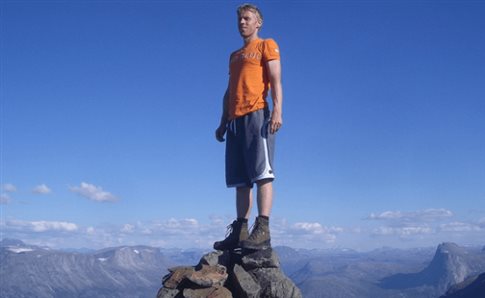
Είναι δίχως αμφιβολία η σύγχρονη εκδοχή του Φιλέα Φογκ: ο Γκούναρ Γκάρφορς, όπως κι ο αντίστοιχος ήρωας του Ιουλίου Βερν, έχει γυρίσει όλο τον κόσμο, έστω κι αν του πήρε κάτι παραπάνω από 80 ημέρες για να ολοκληρώσει το ταξίδι του.

Συγκεκριμένα, του πήρε μερικά χρόνια, αλλά και πάλι, ο 38χρονος νορβηγός δημοσιογράφος είναι, πιστοποιημένα, ο νεότερος άνθρωπος στην ιστορία που έχει ταξιδέψει σε 198 χώρες, δηλαδή σε όλα τα κράτη του πλανήτη.

Το 2008 ο Γκάρφορς συνειδητοποίησε ότι είχε καταφέρει να επισκεφτεί ήδη 85 χώρες. Κάπως έτσι, είπε από μέσα του «έχω άλλες 113 να επισκεφτώ».

Και το έκανε πράξη: μέσα στα επόμενα επτά χρόνια πήγε σε 113 διαφορετικά κράτη –το διαβατήριο του πρέπει να μην χωράει άλλες σφραγίδες.

Το πιο αξιοσημείωτο της υπόθεσης, δε, είναι πως ο Γκάρφορς κατάφερε να το κάνει αυτό όχι ως άνεργος ή χομπίστας ταξιδιώτης, αλλά με μια δουλειά πλήρους απασχόλησης να γεμίζει πολλές ώρες της καθημερινότητας του.

«Κατάφερα να ταξιδέψω σε κάθε χώρα του κόσμου έχοντας ταυτόχρονα μια κανονική δουλειά. Αυτό που έδειξα είναι ότι δεν χρειάζεται να παρατήσεις την εργασία σου προκειμένου να καταφέρεις κάτι τέτοιο. Απλώς, χρειάζεται να κάνεις σωστό προγραμματισμό, αλλά ταυτόχρονα να μπορείς να είσαι και παρορμητικός. Το ξέρω, είναι οξύμωρο αυτό που λέω» τονίζει ο Γκάρφορς.

Όπως υπολογίζει, πρέπει να έχει μπει σε αεροπλάνο γύρω στις 4.000 φορές. Ωστόσο, η πλειοψηφία των ταξιδιών του έχει γίνει με το αυτοκίνητο του.

Μάλιστα, σε μια περίπτωση κατάφερε μέσα σε 24 ώρες να διασχίσει 18 ευρωπαϊκές χώρες: ξεκίνησε το πρωί από την Βουλγαρία και πέρασε διαδοχικά από ΠΓΔΜ, Κόσοβο, Σερβία, Κροατία, Βόσνια, Σλοβενία, Αυστρία, Ουγγαρία, Σλοβακία, Τσεχία, Γερμανία, Ολλανδία, Βέλγιο, Λουξεμβούργο, Γαλλία, Ελβετία, για να καταλήξει στο Λίχτενσταϊν.

Ένας άλλος στόχος που καταρρίφθηκε ήταν να επισκεφτεί πέντε διαφορετικές ηπείρους σε μια ημέρα! «Παίζοντας» έξυπνα, όπως λέει, με τις διαφορετικές χρονικές ζώνες ανά τον κόσμο, κατάφερε μέσα σε 28 ώρες να ταξιδέψει αεροπορικώς σε Ασία, Ευρώπη, Αφρική, Βόρεια Αμερική και κατόπιν Νότια Αμερική.
Μετά το πέρας των ταξιδιών του, ο 38χρονος έγραψε ένα βιβλίο με τίτλο «198: Πώς ξέμεινα από χώρες», όπου περιγράφει τις εμπειρίες του, ενώ δημιούργησε κι ένα site (www.garfors.com) στο οποίο δίνει ταξιδιωτικές συμβουλές. «Με πολλές αεροπορικές εταιρείες χαμηλού κόστους να λειτουργούν πλέον παντού, είναι πολύ εύκολο να πας οπουδήποτε με πολύ φθηνές τιμές, αρκεί φυσικά να κλείσεις νωρίς τα εισιτήρια σου. Επίσης, ο επίδοξος ταξιδευτής πρέπει να εξοικειωθεί με πράγματα όπως το ωτοστόπ ή το Couch Surfing προκειμένου να μπορεί να κοιμάται δωρεάν σε σπίτια, χωρίς να κάνει περιττά έξοδα. Ωστόσο, το πιο σημαντικό είναι να αντιμετωπίζει κανείς αυτήν την εμπειρία με χαμόγελο και μια διάθεση να προσεγγίσεις ξένους ανθρώπους. Οι περισσότεροι εκτιμούν μια τέτοια τακτική και, ποιος ξέρει, μπορεί στην πορεία να αποκομίσεις και μια καινούργια φιλία» καταλήγει ο Γκάρφορς.
Πηγή:in.gr

Επιστημονική μελέτη αλλάζει τη χρονολόγηση του τάφου στην Αμφίπολη

0127CBBCC304E0FA9D117905A9A896FB

Νέα δεδομένα έρχονται στην επιφάνεια αναφορικά με τον αρχαίο τάφο στην Αμφίπολη, καθώς -σύμφωνα με την Αυγή της Κυριακής- έκθεση αυτοψίας έγκριτων αρχαιολόγων με πολυετή ανασκαφική εμπειρία στη Μακεδονία, τοποθετεί η χρονολόγηση του μνημείου στους ύστερους ελληνιστικούς χρόνους, δηλαδή στο β’ μισό του 2ου – 1ου αιώνα π.Χ., και όχι στον 4ο π.Χ αιώνα.

Το γεγονός αυτό έρχεται σε πλήρη αντίθεση με τη θεωρία πως ο τάφος της Αμφίπολης ανήκει στους Μακεδονικούς χρόνους και έκρυβε -αν όχι τον Μέγα Αλέξανδρο, όπως κάποιοι ήθελαν να πιστεύουν- κάποιο μέλος της μακεδονικής βασιλικής οικογένειας.

Απαντώντας σε ερώτηση του βουλευτή των ΑΝΕΛ Δημήτρη Καμμένου για την «επικοινωνιακή και επιστημονική μεθόδευση της ανασκαφής της Αμφίπολης», ο αναπληρωτής υπουργός Πολιτισμού Νίκος Ξυδάκης είπε ότι η μελέτη προέκυψε «μετά την αυτοψία στον αρχαιολογικό χώρο και το Μουσείο της Αμφίπολης που πραγματοποίησε στις 30 Μαΐου κλιμάκιο του υπουργείου Πολιτισμού».

Σύμφωνα με την εφημερίδα, οι ζωγραφικές παραστάσεις των μαρμάρινων επιστυλίων που βρέθηκαν στο δεύτερο χώρο του μνημείου καθώς και η κεραμική από διάφορα σημεία του εσωτερικού του μνημείου χρονολογούνται μεταξύ του δεύτερου μισού του 2ου αιώνα π.Χ ή στις αρχές του 1ου π.Χ αιώνα.

Στην ίδια περίοδο χρονολόγησης με την κεραμεική τοποθετούνται, επίσης, οι Καρυάτιδες, οι Σφίγγες αλλά και τα αρχιτεκτονικά στοιχεία του μνημείου, το ψηφιδωτό με την αρπαγή της Περσεφόνης από τον Πλούτωνα, που παραπέμπει στη γνωστή τοιχογραφία του βασιλικού νεκροταφείου των Αιγών, αποδίδεται σε αντιγραφή αυτής, αλλά και άλλων μεταγενέστερων αποτυπώσεων του θέματος.

Πηγή:in.gr