Category Archives: Uncategorized

Aυστραλία:Πεζοπόρος χάθηκε σε Εθνικό Πάρκο και σώθηκε με μήνυμα στην… άμμο

85D7D71B9A7C59A65B07D8B2927175F4

Το μήνυμα «βοήθεια» στην άμμο ήταν καθοριστικό για τον εντοπισμό του Κις (φωτ. από το blog του)

Ο 63χρονος βρετανός τουρίστας Τζεφ Κις έκανε πεζοπορία στο Εθνικό Πάρκο του Μπρίσμπεϊν της Αυστραλίας, και έκανε το λάθος να προσπαθήσει να βρει έναν καταρράκτη «κόβοντας δρόμο».

Κατέληξε να περιπλανάται αποπροσανατολισμένος για δύο ημέρες και σώθηκε μόνο χάρη σε… μήνυμα που έγραψε στην άμμο.

Η εξαφάνισή του κινητοποίησε τις Αρχές του Μπρίσμπεϊν, που ξεκίνησαν έρευνες για τον εντοπισμό του. Όπως συμβαίνει στις (όχι εντελώς σπάνιες) περιπτώσεις φυσιολατρών που χάνονται στις τεράστιες εκτάσεις της αυστραλιανής υπαίθρου, η έρευνα έγινε και με ελικόπτερα.

Ο Κις σκέφτηκε περισσότερο σαν ναυαγός στην παραλία παρά σαν χαμένος στην ξηρά: Έγραψε στην άμμο το μήνυμα SOS.

«Ήταν το πιο έξυπνο πράγμα που έκανα» αναγνώρισε, περιγράφοντας την περιπέτειά στο προσωπικό του blog.

Η αστυνομία ανέφερε ότι το μήνυμα, που διάβασαν συνεργεία που πέταξαν πάνω από το σημείο, έκανε μάλλον τη διαφορά μεταξύ ζωής και θανάτου για τον Κις. Σύμφωνα με τα όσα αναφέρουν οι τοπικοί Brisbane Times, τα συνεργεία ήταν έτοιμα να ξεκινήσουν να ψάχνουν σε άλλη περιοχή μέχρι που έγινε αντιληπτό το μήνυμα.

Πηγή:in.gr

Mελβούρνη:Τέλος τα Θρησκευτικά από τα σχολεία

merlino_0

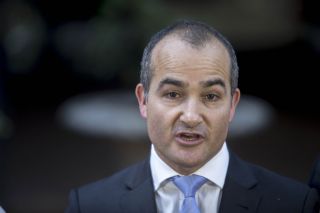
O Yπουργός Παιδείας της Πολιτείας της Βικτώριας, James Merlino. Photo: AAP/Glenn Hunt

Αντικατάστασή τους από μάθημα «σχέσεων σεβασμού»

Εκτός του προγράμματος σπουδών των σχολείων της Βικτώριας θα βρεθεί το μάθημα της Ειδικής Θρησκευτικής Αγωγής, σύμφωνα με την απόφαση του Υπουργού Παιδείας James Merlino. Το εν λόγω μάθημα, η παρακολούθηση του οποίου δεν είναι υποχρεωτική, διδάσκεται από εθελοντές, την ώρα της λειτουργίας των σχολείων και παρακολουθείται από το 20% των μαθητών, κάτι το οποίο σημαίνει ότι η συντριπτική πλειοψηφία αναγκάζεται εκείνη την ώρα να απασχολείται με άλλες δραστηριότητες στις σχολικές βιβλιοθήκες, τους διαδρόμους και το προαύλιο. Aπό την νέα σχολική χρονιά, το μάθημα αυτό, το οποίο έχει χαρακτηριστεί από τους επικριτές του προγράμματος ως “προσηλυτισμός” ή “κατήχηση”, θα εξοβελιστεί εκτός των ωρών διδασκαλίας, πριν ή μετά τις κανονικές ώρες μαθημάτων, ή την ώρα του διαλείμματος για μεσημεριανό φαγητό. “Καταλαβαίνω ότι κάποιοι θα ενοχληθούν με αυτήν την απόφαση, αλλά είναι προς την σωστή κατεύθυνση” δήλωσε ο κ. Merlino.

Η κατάργησή του χαιρετίστηκε με θέρμη από τον οργανισμό για την Θρησκευτική Δικαιοσύνη στα σχολεία (Fairness for Religion in Schools), ο οποίος έχει γίνει αποδέκτης πληθώρας παραπόνων από γονείς παιδιών, τα οποία χάνουν χρόνο από τα μαθήματα. Η κατάργησή του, αφήνει ανοιχτό ένα περιθώριο μισής ώρας την εβδομάδα στο πρόγραμμα σπουδών, το οποίο θα καλυφθεί από ένα νέο μάθημα “οικοδόμησης σχέσεων σεβασμού”, το οποίο θα είναι υποχρεωτικό για όλους τους μαθητές μέχρι το δέκατο έτος σπουδών. Μέρος του καινούριου μαθήματος, το οποίο θα ενταχθεί στο πρόγραμμα σπουδών από την νέα σχολική χρονιά, το 2016, θα είναι η κατανόηση των διαφορετικών πολιτισμών, των ηθών, των εθίμων και των παραδόσεων του κόσμου, η ισότητα των φύλων, η διδασκαλία της ανεκτικότητας, αλλά και η αντιμετώπιση της μισαλλοδοξίας και της οικογενειακής βίας. “Αυτό το νέο μάθημα θα βοηθήσει όλους τους μαθητές, ανεξαρτήτως πίστης ή κοινωνικής προέλευσης, να κατανοήσουν τον κόσμο που τους περιβάλλει, καθώς και το σύστημα αξιών και ιδεών που συνθέτει αυτόν τον κόσμο”, δήλωσε ο Υπουργός.

Πηγή:Νέος Κόσμος

Helen’s Taxithi: A theatrical play exploring the odyssey of Greek migrant women

patersontax

The more everything changes and evolves, the more we move away from our beginnings … the more fascinated we become with our past.

People of migrant backgrounds are even more susceptible to this form of nostalgia, to nostos as it is called in Greek, which is what Taxithi – an Australian Odyssey touches upon.

Taxithi is the child of a survey involving more than 20 Greek-born women who have called Australia home since the 1950s and 1960s. Their stories have been adapted into a successful musical, which performed at the Hellenic Museum in March, exciting and moving the audience at the same time. Patterson came up with the idea for the musical after her maternal grandmother, Eleni Constantinou, died in 2010. Those last few days she would mainly talk about the baby she lost while she was trying to come to Australia, and how that child would have been 80 years old.

“I grew up with my yiayia in the house, and Greek is all that was spoken to me at home up until the age of five,” says Helen Yotis Patterson, writer and director.

“When you are away from your land of origin, you try harder to connect to your heritage and preserve your national identity.”

When her grandmother passed away, her fourth baby went to school, and for the first time in 15 years, she had to find a creative outlet. Instead of taking her little boy to the cafe, she took her computer. She would sit there and watch people until one day she began to write.

“I started to consider the number of changes migrants endure, arriving in a foreign land, most of the time so far away from home, and unfamiliar with the spoken language,” Patterson says.

“All my life I’d come across these ladies on the street with their broken English, but once I told them ‘I speak Greek’, their personalities would come to life.”

Travelling back to Greece, she noticed that Greeks there have actually been able to move on, but for most diaspora Hellenes, time stands still.

“In my father’s mind Greece is still in 1964. Migrants tend to think that they’ll always go back to their country,” she muses.

Having all that free time on her hands, she ventured on to interview as many women of Greek background as she could. She asked them all the same three questions: “Why did you leave”, “what happened on the ship”, and “how did you feel when you arrived”. The incredible variations of those answers surprised and moved her so much that she became determined to give voice to these women’s experiences.

“I heard some incredibly sad and happy things that these women had never told anyone before,” she adds.

“All it took was just a gentle push. Taxidi kind of wrote itself.”

Patterson is still fascinated by the many different stories out there which have proven to be of great historical and cultural value, providing younger generations with an insight into the migration experience. A lot of the women who took part in her survey are in their 60s or older, giving in to depression after exhausting their tremendous energy resources.

“These women had to keep moving forward in order to succeed in a new country, to provide their families with a better quality of life,” Patterson continues.

“Their rhythm finally slows down, only for them to be confronted with a crude reality. So many people before us had to part with their homeland, family and friends … to sacrifice an entire life so that we can enjoy the fruits from their struggles today.”

Patterson, who is also a professional singer, has incorporated songs from the era in the production, which she says capture the hopes, fears and dreams of the women who were heading into an unknown future. Helen remembers that during certain songs in the piece, a lot of people in the audience nodded their head and reminisced, cried even. Then they too shared their stories. Stories that burn. Stories that never heal.

Stories like this one…

“One lady from the audience convinced her father to let her go with her brother and come to Australia when she was 18. He lets her go, and then he decides that he doesn’t want to go through with it. When they get to the port, he’s trying to tear the papers out of her hand, however, she has the strength to hold on to them and fight to get on the ship. And she does. And she can hear somebody scream her name. She looks down and her dad is following the ship in a little boat, screaming her name with his arms outstretched, and she’s standing there looking at him cry.”

“This story hurt me to my bones,” she admits, bringing back the memory of this woman’s face whilst sharing her predicament.

“Back then, in the ’60s, when you came to Australia you couldn’t just go back. In 1974, her father passed away.”

Even though Patterson was born and raised in Australia, she identifies with many of the stories in her play. Her Cypriot mum came to Australia in 1951 and her father, who is from Leros, arrived in 1964 at the age of 19. Helen Yotis Patterson’s paternal grandmother Georgia (90) arrived in Australia with her husband Efthimios in 1964. Georgia lost her arm in WWII when a bomb dropped on her home in Leros.

“I guess this is a pain we are all aware of. Migrant children know that their parents carry around pain. It doesn’t belong to us, but we feel it.

“A very strong emotion arises when you see the people in the audience relate to the stories on stage; there’s an instant connection.”

Taxithi’s three main stories represent the three ‘fates’ of migration: the decision, the journey and the arrival, told in the sound of Greek soul tunes.

“Greek soul music is honest and so full of emotions,” she says.

“In rebetika people sing with their heart; these songs are the best representation of our journey and pain.”

The writer and director is considering to run a part two, which will include the male perspective, however, she is worried men might not be as forthcoming as the ladies.

“The acknowledgement of publicly sharing a very personal story might have a negative effect for some people,” she explains, partially blaming the old Greek mentality.

“Many migrant men have been suffering in silence whilst presenting a rock-solid facade to their wives and children, who were relying on them.”

Taxithi will be performed as a rehearsal on 7 September at fortyfivedownstairs, 45 Flinders Lane. The full production is on in March next year, and a concert to raise funds will be staged on 23 November featuring Greek women singers in Melbourne.

source:Neos Kosmos

Red-bellied black snake trapped in a can of bourbon in Wyong

1440460378387

Curiosity is not just a problem for cats. A red-bellied black snake interested in a can of bourbon and cola got stuck and had to be rescued by staff at the Australian Reptile Park.

A former volunteer brought the poisonous snake in to the park after finding it in suburban Wyong on the weekend with its head stuck in the can.

Australian Reptile Park general manager Tim Faulkner said the incident illustrated how litter in the bush can have serious effects on native animals.

“The red-bellied black snake would have curiously slithered through the opening of the littered can looking for food and, given its scales only run in one direction, when trying to back out, the scales would have prevented it from release, ” Mr Faulkner said.

“Skilled snake handlers at Australian Reptile Park released the snake by cutting the tin can and carefully extracting the snake to ensure its scales were not damaged.”

The snake is being kept for observation at the Australian Reptile Park to ensure it has no further injuries. It will later be released back into its native habitat.

“Animals don’t deserve to get caught in our litter, whether it’s sea turtles or birds eating plastic or snakes and small animals getting caught in tin cans, litter should be in the bin not the bush or the beach,” Mr Faulkner said.

source:smh.com.au

Eurogroup agrees to third Greek bailout after Athens endorses deal

bouli63_199013506

The Greek parliament has approved the draft deal for the $93bn bailout package allowing the deal to be taken to the meeting of European finance ministers in Brussels.

The move saves Greece from a disorderly default on its debts which could have come as soon as next week and helps to cement its membership of Europe’s single currency, but means more hardship for ordinary Greeks.

European Commission (EC) President Jean-Claude Juncker said that the approval of the third bailout by the Eurogroup proved that “Greece is and will irreversibly remain a member of the euro area”.

Despite rebellion in the ranks of Tsipras’ leftist Syriza party, the 400-page text is thought likely to pass through the Athens legislature with the support of opposition parties in a vote not expected until the early hours of Friday.

In an appeal to lawmakers before the vote, Tsipras defended the decision to accept a program that comes at the price of tax hikes, spending cuts and economic reforms, saying it was a choice between “staying alive or suicide”.

As Greece faces a 3.2 billion euro debt repayment deadline on August. 20, approval of the bailout by the eurozone of Friday is critical.

After the changes in the government and the crises that we had, the cooperation with, let’s say, the changed Greek government is very constructive, very well organised“, Mr Jeroen Dijsselbloem, the Dutch minister who chaired the Brussels meeting, told reporters.

The first tranche of loans will be for 26 billion euros ($28 billion). “There is no chance of that”, lawmaker Makis Voridis said, after parliament approved the latest bailout bill, Reuters reported. “If we don’t find a solution, we will have to do bridge financing”, he said, referring to a short-term loan so Greece can make its next debt payment on August. 20.

“But Berlin opposes writing off any Greek debt, although it is open to the idea of extending grace periods before Athens has to start paying interest and principal on its bailout loans. They have tested the patience of policy-makers and they have tested the patience of our citizens even more“, Juncker said. Lawmakers from the so-called Left Platform of his party refuse to support the continuation of austerity, accusing him of betraying his pledges and the Greek people’s mandate.

Eurozone finance ministers were also discussing the deal.

International Monetary Fund chief Christine Lagarde welcomed the agreement but warned Greek debt had become unsustainable.

Earlier in the morning, the Greek parliament overwhelmingly voted in favour of adopting series of new austerity measures to secure the long-awaited bailout plan.

But Greece is hoping that agreement to the tough measures will garner it some good will with exasperated EU leaders and possibly a degree of debt relief, which some Eurozone ministers have hinted is possible.

source:ifreepress.com


Φυτό σκοτώνει το 98% των καρκινικών κυττάρων μέσα σε 16 ώρες!!

main_1440419902_7032382

Οι επιστήμονες προσπαθούν συνεχώς και με αρκετούς τρόπους να… καταφέρουν να θεραπεύσουν την επάρατη νόσο και να οδηγήσουν στο οριστικό τέλος του καρκίνου.

Σύμφωνα με επιστημονικό άρθρο που δημοσιεύθηκε στο έντυπο Life Science η αρτεμισινίνη, παράγωγο του «Sweet wormwood» ή του «Artemisia Annua», που χρησιμοποιούταν από την Κινεζική ιατρική μπορεί να….. «σκοτώσει» το 98% των καρκινικών κυττάρων εντός μόλις 16 ώρων.

«Οι κύριοι τύποι φαινολικών συστατικών στα περισσότερα από τα βότανα που ελέγχθησαν αναγνωρίστηκαν πρωταρχικά και αναλύθηκαν, περιέχοντας κυρίως φαινολικά οξέα, φλαβονοειδή, τανίνες, κουμαρίνες, λιγνάνες, κινόνες, στιλβένες και κουρκουμινοειδή.

Τα συγκεκριμένα φαρμακευτικά βότανα έχουν εμφανίσει έως τώρα πολύ ισχυρότερη αντιοξειδωτική δράση και περιέχουν σημαντικά υψηλότερα επίπεδα φαινολικών συστατικών από τα κοινά φυτά και φρούτα.

Τα Παραδοσιακά Κινεζικά φαρμακευτικά φυτά που σχετίζονται με αντικαρκινικές ιδιότητες μπορεί να αποτελούν πιθανές πηγές ισχυρών φυσικών αντιοξειδωτικών και ωφέλιμων παραγόντων αναστολής, καθυστέρηση ή αναστροφής της καρκινογένεσης (σ.σ. pentapostagma.gr – chemopreventive agents)» αναφέρει η επιστημονική ομάδα στην σύνοψη του άρθρου στο επιστημονικό περιοδικό Life Sciences.

Το εν λόγω βότανο, εάν χρησιμοποιηθεί από μόνο του, μειώνει τα καρκινικά κύτταρα κατά 28%, αλλά σε συνδυασμό με το σίδηρο η “Artemisia Annua” καταφέρνει να «εξολοθρεύσει» επιτυχώς τον καρκίνο. Παράλληλα, στα πειράματα που διενεργήθησαν η αρτεμισινίνη δεν προκαλούσε βλάβες στα υγιή κύτταρα του πνεύμονα.

Η αρτεμισινίνη χρησιμοποιήθηκε κατά το παρελθόν ως μία ισχυρή θεραπεία κατά της ελονοσίας. Πλέον, όμως, αποδεικνύεται ένας εξαιρετικός σύμμαχος στη μάχη κατά του καρκίνου. Όταν οι επιστήμονες προσέθεσαν σίδηρο κατά τη διάρκεια της μελέτης, και στη συνέχεια τον «ενσωμάτωσαν» στους ιστούς του πνεύμονα και ειδικότερα στα καρκινικά κύτταρα του πνεύμονα, η αρτεμισινίνη επιτέθηκε επιλεκτικά κατά των καρκινικών κυττάρων δίχως να προξενεί βλάβες στα υγιή κύτταρα..

“Εν γένει, τα αποτελέσματα μας δείχνουν ότι η αρτεμισινίνη σταματά επιτυχώς τον παράγοντα μεταγραφής E2F1 και παρεμβαίνει στην διαδικασία καταστροφής των καρκινικών κυττάρων, εννοώντας ότι παρουσιάζει έναν νέο τρόπο μεταγραφής βάσει του οποίου η αρτεμισινίνη ελέγχει την διαδικασία αναπαραγωγής και ανάπτυξης των καρκινικών κυττάρων”, ήταν το συμπέρασμα των ερευνών που διεξήχθησαν στο εργαστήριο μελετών κατά του καρκίνου στο Πανεπιστήμιο της Καλιφόρνια.

Πηγή:makeleio.gr/

Nick Kyrgios gets final warning after insulting Stan Wawrinka, Donna Vekic

1440444691749

Former Wimbledon quarter-finalist Nick Kyrgios will escape further penalties for his insults directed at French Open champion Stan Wawrinka provided he stays out of further trouble for six months.

The 20-year-old Australian faces a $US25,000 ($34,728) fine and a 28-day suspension from the ATP World Tour if he is fined for “verbal or physical abuse” or receives penalties of more than $US5000 ($6946) for other offences at ATP events before February 24, the men’s tour said in a statement on Monday.

The ATP had already fined Krygios $US12,500 ($17,364) for two incidents during a match against Wawrinka two weeks ago at the Rogers Cup in Montreal. The world no. 37 was heard on camera making lewd suggestions regarding Wawrinka’s girlfriend Donna Vekic and another Australian player, Thanasi Kokkinakis.

Gayle David Bradshaw, executive vice-president, rules & competition at the ATP, called the incident “egregious and reflected poorly on our sport”.

She added Kyrgios had “expressed regret, and the best result would be that he learns a lesson from this incident and that he understands he is responsible to the tour and to fellow players for both his actions and his words. It is with these factors in mind I feel he should have the opportunity to ‘earn’ his way out of additional sanctions”.

The ATP said at the time of the incident that it would start an investigation into his behaviour. The maximum penalty for aggravated behaviour or “conduct contrary to the integrity of the game”, is a $US100,000 ($138,914) fine and a three-year ban.

source:smh.com.au

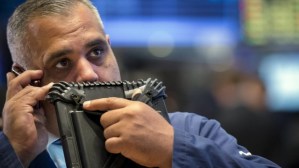
Wall Street crashes in sharp sell-off

1440451111500

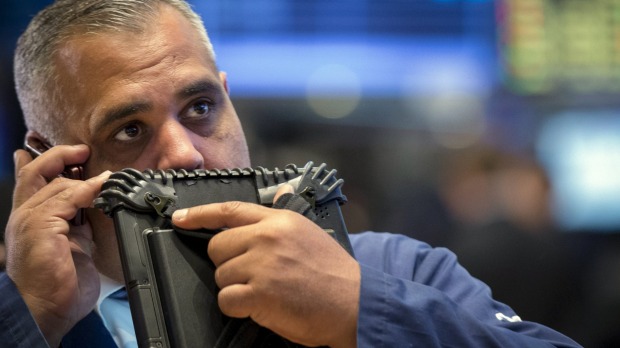
More than $US5 trillion has been erased from the value of global equities since China unexpectedly devalued the yuan on August 11. Photo: Reuters

A wave of selling has gripped global markets overnight, setting up another bloodbath today for Australian markets.

US stocks joined selloffs in Europe and Asia, with the Standard & Poor’s 500 Index tumbling toward its first correction in almost four years. Chinese shares sank the most since 2007 and stocks in Germany headed for a bear market.

Commodities fell to a 16-year low as crude plunged 4.1 per cent. The yen strengthened and 10-year Treasury yields slid below 2 per cent for the first time since April.

“There is no doubt that the panic begets panic in this market,” Michael Holland, chairman at Holland & Co, said in a Bloomberg Television interview. “Yet you called Black Friday, we certainly have Black Monday morning starting for us, so it’s a psychological thing. It’s pervasive. It’s everywhere.”

More than $US5 trillion has been erased from the value of global equities since China unexpectedly devalued the yuan on August 11, fuelling concern that the slowdown in the world’s second-largest economy is worse than anticipated. The rout is shaking confidence that the global economy will be strong enough to withstand higher US interest rates, even as bets ease on a September increase.

Black Tuesday on the way for ASX

On Monday, the ASX experienced its worst day since the GFC, finishing the day over 4.1 per cent down at 5001.3 points, the lowest level in more than two years. Investors are bracing for more pain on Tuesday. with the futures pointing to a drop of around 200 points (or 4 per cent) at the open.

Wall Street slides, volatility explodes

US stocks have finished sharply lower but far above the session’s floor following a bruising day in global financial markets sparked by mounting worries over the Chinese economy.

The broad-based S&P 500 tumbled 77.68 points (3.94 per cent) to 1,893.21 on Monday, pushing the index into “correction” territory, normally defined as a loss of 10 per cent or more.

The Dow Jones Industrial Average dropped 588.47 (3.58 per cent) to 15,871.28, while the tech-rich Nasdaq Composite Index shed 179.79 (3.82 per cent) at 4,526.25.

US stocks were in the red all day after the latest plunge in the Shanghai equity index ignited another round of turmoil in global equity markets. Bourses in England, France and Germany all fell at least 4.5 per cent.

But the main Wall Street indices finished well above their lows for the session. The Dow fell more than 1,000 points, or six per cent, after the opening bell, but soon recovered some of those losses. The Nasdaq was down more than 9.0 per cent at one point.

Overshoot eyed for shareholder value

The S&P 500’s rout sent valuations tumbling. The price-to- earnings ratio for the gauge sank to 16.76, the lowest level since the October pullback. Then, the measure bottomed just above 16.50, the cheapest since January 2014.

“It may overshoot in the near term to the downside, creating value for shareholders,” said Jeff Mortimer, the Boston-based director of investment strategy for BNY Mellon Wealth Management, which oversees almost $US193 billion. “We are looking at those companies that don’t have as much international exposure,” and instructing portfolio managers to steer clear of large-caps.

Selling eased after the open, as investors sought opportunities among the biggest declines. The Dow lost nearly 1100 points before cutting that slide in half, while the S&P 500 fell more than 5 per cent in the first 10 minutes of trading.

“As prices go lower, we see selective opportunities to buy as opposed to a provocation to become more bearish,” said Bruce McCain, chief investment strategist at Key Private Bank in Cleveland, the private-banking unit of KeyCorp that oversees more than $US25 billion in assets. “We’re emphasising large-caps relative to smaller ones” and within the US, companies that are less export-oriented, he said.

Some prominent money managers and forecasts said the selling has gone too far, too fast. Jonathan Golub, chief market strategist at RBC Capital Markets, says the bloodbath in biotechnology and tech stocks is temporary, and investors should buy back the best performers of 2015.

More selling tipped

Laszlo Birinyi, the investor whose bullish calls have repeatedly come true since 2009, says that while the selloff lashing global equities is painful, its cause is no mystery – and that’s a reason for optimism.

“When the issues are on the table, the market will do what it has to to adjust and come out OK on the other end,” Birinyi, the president of Birinyi Associates in Westport, Connecticut, said in an interview on Bloomberg Radio’s “Surveillance” with Michael McKee. “That other end may be a while, and it may not be fun getting there.”

Doug Ramsey, the chief investment officer of Leuthold Weeden Capital Management LLC, whose quantitative research into market breadth, valuation and investor sentiment foreshadowed the drubbing in American stocks last week, says the selling will worsen.

All but three of the shares in the Stoxx Europe 600 Index retreated Monday, driving the gauge down 4.5 per cent. Germany’s DAX Index retreated 3.9 per cent, taking the decline from its peak in April to more than 20 per cent.

London’s FTSE 1000 plugned 4.67 per cent to 5898.

Investors withdrew $US1.9 billion from US exchange-traded funds that buy in emerging-market stocks and bonds last week, the most since March.

The Bloomberg Commodity Index fell 1.8 per cent, heading for the lowest closing level since August 1999.

Brent and West Texas Intermediate crudes both traded at six-year lows of $US43.48 and $US38.89 a barrel, respectively. Gold, a haven for investors during volatile trading, was little changed at $US1159.60 an ounce, erasing earlier losses, while copper slipped 3.1 per cent.

Resource currencies lead declines

Currencies of basic resource-producing countries led declines, with the ruble tumbling 2.5 per cent to 70.86 per dollar and Malaysia’s ringgit sliding 1.8 per cent to a fresh 17-year low. South Africa’s rand dropped 2.1 per cent and New Zealand’s currency weakened 1.8 per cent.

Turkey’s lira retreated 1.2 per cent. A deadline for a coalition government passed, putting the country on course for its second parliamentary election this year.

The yen advanced with the euro as Treasuries rallied amid speculation the global selloff will forestall the Federal Reserve’s first interest-rate increase since 2006.

Japan’s currency jumped 1.8 per cent to 119.95 per dollar, the strongest since May 19 and the euro climbed for a fourth day against the dollar, strengthening to $US1.15 for the first time since February.

Fed funds futures now show a probability of a December rate increase at 51 per cent versus 61 per cent on Friday. Bets on the first increase in rates in almost a decade in September fell to 28 per cent, down from 34 per cent. The calculation is based on the assumption that the effective fed funds rate will average 0.375 per cent after the first increase.
source:smh.com.au

 

Influx grows as Germany, France eye unified response

idomeni-thumb-large

Thousands of migrants and refugees continued to reach the shores of Greece’s eastern Aegean islands on their way to Western Europe, as France and Germany called for a unified response to the mounting crisis.

According to police estimates, between 8,500 and 9,000 refugees on the island of Lesvos were Monday awaiting transfer to the Greek mainland. A ferry charted by the Greek government – the Eleftherios Venizelos – was expected to pick up another 2,500 Syrians from the island at 2.30 this morning and bring them to Athens.

“The foreigners that leave the island every day are replaced by the same number of people arriving from the Turkish coast,” Lesvos Mayor Spyros Galinos told Kathimerini.

Authorities said a second ferry would be added to the route in the coming days.

The Hellenic Coast Guard yesterday recovered the bodies of two people who drowned after the vessel they were traveling in capsized due to strong winds off the island’s coast. Another person was still missing late yesterday while eight were rescued.

Meanwhile, more than 3,000 migrants and refugees remained stranded on Kos island. Also yesterday on Kos, a fire broke out at the derelict Captain Elias hotel which is used as temporary accommodation by refugees. It was the second time the building had caught fire, prompting Kos Mayor Giorgos Kyritsis to threaten legal action against property owners Piraeus Bank.

Warning of “an exceptional situation,” German Chancellor Angela Merkel and French President Francois Hollande Monday called for a unified asylum system across Europe. “Rather than wait, we should organize and reinforce our policies, and that is what France and Germany are proposing,” Hollande said.

Frontex, the EU’s border agency, said last week that a record 107,000 migrants were at the bloc’s borders last month, with more than 20,000 arriving in Greece last week alone.

Tension appeared to ease Monday on the border between Greece and the Former Yugoslav Republic of Macedonia (FYROM) as Skopje lifted a blockade of its border. Hundreds more people entered FYROM from Greece yesterday, after nearly 10,000 people crossed into Serbia over the weekend.

source:ekathimerini.com

Malaka Brothers: To ελληνικό γυράδικο στο Λος Άντζελες

malaka_brothers_941460515_213297966
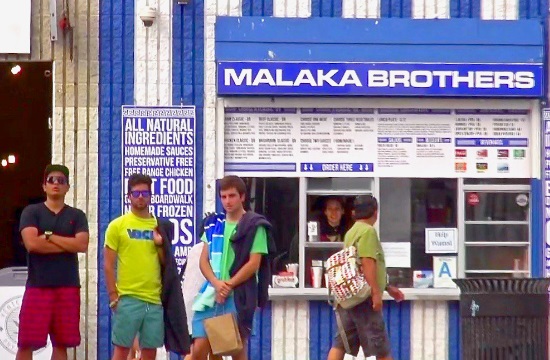
Μalaka Brothers επέλεξαν να ονομάσουν τη νέα ψησταριά που ανοίγουν στη διάσημη παραλία Venice στο Boardwalk του Λος Άντζελες δύο ομογενείς από την Καλιφόρνια, οι οποίοι ίσως σκέφτηκαν οτι η πιο αναγνωρίσιμη ελληνική λέξη μπορεί να αποτελέσει το κλειδί για… καλές δουλειές.

Λίγους μήνες πριν, εικόνες ενός μεγάλου μπάνερ με την επιγραφή Malaka Brothers Gyro, κυκλοφόρησαν στο διαδίκτυο, με πολλούς να θεωρούν ότι επρόκειτο για πλάκα.

Όμως, η ομάδα φίλων με ελληνική καταγωγή επιβεβαιώνουν ότι η επιγραφή θα είναι η ονομασία του νέου εστιατορίου που θα ανοίξουν στην περιοχή, το οποίο υπόσχεται να σερβίρει «το πιο φρέσκο και καλύτερο γύρο στην περιοχή του Λος Άντζελες».

Δείτε στο βίντεο τον μάνατζερ του εστιατορίου, Guy Puglia να εξηγεί γιατί οι ομογενείς επέλεξαν αυτό το όνομα για το εστιατόριο. Όπως παραδέχεται άλλωστε και ο ίδιος, πολλοί περαστικοί βγάζουν φωτογραφίες στο εστιατόριο και γελούν υστερικά στη θέα του ονόματός του. Όμως φαίνεται πως είναι ένα παιχνίδι μάρκετινγκ…

Πηγή:madata.gr