Category Archives: Uncategorized

Μεγαλώνει το χάσμα πλούσιων-φτωχών Αυστραλών

c

Η περιουσία των δέκα πλουσιότερων Αυστραλών ξεπερνά τα $46,5 δισ. Σήμερα στην Αυστραλία υπάρχουν 29 δισεκατομμυριούχοι.

Η περιουσία των πλουσιότερων Αυστραλών είναι 70 μεγαλύτερη από εκείνη των φτωχότερων, τη στιγμή που παραμονεύει ύφεση.

Οι πλούσιοι γίνονται πλουσιότεροι και οι φτωχοί φτωχότεροι, σύμφωνα με τα νέα στοιχεία της Στατιστικής Υπηρεσίας της Αυστραλίας, την ώρα που κορυφαίος αναλυτής εκτιμά ότι η ύφεση είναι “προ των πυλών”. Τα εισοδήματα του πλουσιότερου 20% των Αυστραλών αυξήθηκαν κατά 7%, ενώ εκείνα των νοικοκυριών της μεσαίας τάξης μόνο 1.3%, κάτι που μπορεί να αλλάξει προς το χειρότερο σε περίπτωση που επέλθει ύφεση στην αυστραλιανή οικονομία.

Τα νούμερα αυτά αφορούν την περίοδο 2013-14 και μάλιστα δεν αφορούν τις αλλαγές στις αξίες των ακινήτων, των superannuation και των μετοχών. Οι πλουσιότεροι Αυστραλοί “βγάζουν” κατά μέσο όρο $2.5 εκατομμύρια ετησίως και οι φτωχότεροι μόνο $35,500. Επιπλέον, ο μέσος όρος των εβδομαδιαίων εισοδημάτων των πλουσιότερων Αυστραλών έφτασε τα $2037 ενώ ο αντίστοιχος των “μεσαίων” βρίσκεται στα $843. Το μέσο ύψος του “βδομαδιάτικου” βρίσκεται σήμερα στα $998 και ο μέσος όρος της αξίας των περιουσιών των Αυστραλών είναι στα $809,900, όταν την περίοδο 2011-12 βρισκόταν στα $764,500.

Το πρώην στέλεχος της Αποθεματικής Τράπεζας της Αυστραλίας, καθηγητής Warwick McKibbin πιστεύει ότι η καθυστέρηση της επικύρωσης της υπογραφής της Συμφωνίας Ελεύθερου Εμπορίου με την Κίνα από το Κοινοβούλιο και η ακύρωση της κατασκευής του αυτοκινητοδρόμου East West Link στη Βικτώρια θα συμβάλουν αρνητικά στην οικονομική ανάπτυξη του συνόλου της χώρας. Μάλιστα, όπως λέει ο καθηγητής, αν δεν αλλάξει κάτι αμέσως, τότε η ύφεση θα φτάσει και στη χώρα μας στους επόμενους 12 μήνες.

Προτείνει να υπάρξουν φορολογικές μεταρρυθμίσεις, αύξηση του φόρου GST, η αγορά εργασίας να γίνει πιο ελαστική με τους εργοδότες να μπορούν να μειώνουν τους μισθούς των εργαζομένων τους αντί να τους απολύουν και τέλος να υπάρξουν μεγαλύτερες δημόσιες επενδύσεις σε υποδομές. Ο καθηγητής McKibbin τονίζει ότι αν δεν γίνουν οι αλλαγές, η ανάπτυξη της οικονομίας θα λάβει αρνητικό πρόσημο και συνέπεια μιας τέτοιας εξέλιξης θα είναι και η επιδείνωση της οικονομικής κατάστασης των φτωχότερων συμπολιτών μας.

Σύμφωνα με τους αναλυτές, το χάσμα πλουσίων – φτωχών διευρύνεται συνεχώς τα τελευταία 20 χρόνια και αυτό μετά από επανελλειμμένες προσπάθειες των κυβερνήσεων να το περιορίσουν. Ακόμα, το κόστος ζωής αυξάνεται γρηγορότερα από την αύξηση των μισθών, ενώ ο πλούτος των πιο πλούσιων αυξάνεται κυρίως μέσω των επενδύσεων τους.

Πηγή:Νέος Κόσμος

Two Indian sisters to be raped as ‘punishment’ after brother eloped

1440897614226

Two sisters in India – one aged only 15 years – are to be raped as “punishment” for their brother running away with a married woman from a higher caste in the latest case to shock the country.

Meenakshi Kumari, who is 23, and her younger sister, will then be paraded naked with their faces blackened through the streets, according to a ruling from the all-male village council.The sisters have petitioned the country’s Supreme Court to be protected from the so-called “eye-for-an-eye” ruling from the village council in Uttar Pradesh state, 50 kilometres from the capital Delhi.


The family are from the Dalit caste, historically known as “untouchables”. However, the brother fell in love with a woman from the higher, Jat, caste.
The woman was forced into an arranged marriage in February with a man from her own caste despite her relationship, according to Zee news, citing the elder sister Meenakshi.

The couple eloped in March, but returned to the village after the man’s family were allegedly tortured by police.

The village council then made its ruling that the Dalit family should be dishonoured to “avenge” the brother’s supposed crime.

Meenakshi and her sister ran away to the capital after the ruling was handed out and were able to submit their petition for protection for their family at the Supreme Court. However, they are still facing the punishment when they return home.

Khap panchayats are the archaic systems of village justice that exist in much of rural India. They are dominated by the Jat caste and are almost always run by male village elders.

The “courts” often order honour killings and sexual “punishments” and are frequently allowed to operate completely outside the Indian legal system, despite the Supreme Court labelling them “kangaroo courts”.

Jats are powerful sources of votes and few politicians have been prepared to challenge the system.

Amnesty International has set up a petition against the punishment, stating: “Nothing could justify this abhorrent punishment. It’s not fair. It’s not right. And it’s against the law.”

Rachel Alcock, Amnesty UK’s urgent action coordinator, said: “Rape is a revolting crime, not a punishment. It’s no wonder this disgusting ‘sentence’ has provoked global outrage.

“These Khap courts routinely order vile sexually violent punishments against women. India’s supreme court has rightly declared such orders illegal.

“The government of Uttar Pradesh has an urgent duty to keep this family safe.

“There must also be a proper, independent investigation into these barbaric and illegal orders which apparently continue to be issued by the khap panchayat courts.”

The gang rape of a 23-year-old student in Delhi in December 2012horrified the country and led to mass street protests and the central government vowing reform of the penal code.

However, last December, the girl’s father said the promises of legal reform had not been met. A BBC documentary called India’s Daughter broadcast in March proved highly controversial for its portrayal of how widespread the problem of rape is in India.

source:smh.com.au

Tassos Tzioumis: A journey in astronomy

Australia_Telescope

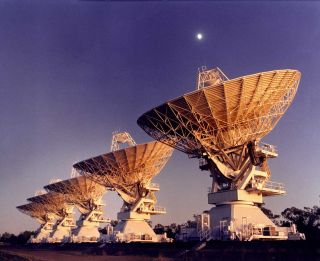
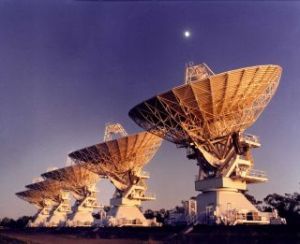
Five antennas of CSIRO’s Australia Telescope.

Tassos Tzioumis left Greece as a boy, his father’s advice ‘to have a go’ guiding his voyage in life. Today he’s the man who keeps Australia’s telescopes in focus. Alex Economou tells his story

When Galileo Galilei invented the telescope to view the heavens, it is unlikely that even his genius could have conceived of the many parts of the light spectrum that astronomy would venture into by the 21st century.

The telescope is no longer a tube of lenses that concentrates the visible light emitted from distant stars and planets; there are now telescopes that are uniquely sensitive to emissions in x- and gamma rays, as well as infra-red, ultra-violet and radio waves, and each presents a different facet of the worlds that inhabit the universe.

The radio telescope at Parkes in New South Wales made world news when it relayed to the world the first live images of man’s landing on the moon in 1969.

More recently, in May 2014, an astronomical team at Parkes detected a Fast Radio Burst from a very distant portion of the universe, 11 billion light years away – so fast was this burst of massive energy that it registered as a blip lasting milliseconds.

While such an event had occurred before, it had only been noticed after the fact from the data that had been recorded on computer. The Parkes FRB was the first time that such an event has been detected by astronomers in real time. The problem has been to locate the source to be better prepared to observe the next such emission and many other phenomena out there.

The man who is helping keep Australia’s telescopes in focus for such rare cosmic events is Greek-born Dr Tassos Tzioumis. He is the leader for all the programs for radio telescope technology at CSIRO under the Australia Telescope National Facility.

“One of my interests at the moment is as an engineer, not as an astronomer. The engineering group [which Tzioumis heads as project manager] is tasked to build high-tech radio receivers for the Australian Square Kilometre Array Pathfinder (ASKAP) – a new radio telescope complex that is being built at the Murchinson Radio Astronomy Observatory in Western Australia,” says Tzioumis.

“There are 36 antennas, each fitted with a ‘feed’ of 188 elements, and they will enable the new telescope to look at 36 directions at the same time. We can synthesise the beams and look at several places at once. With such equipment, the new radio telescope will be able to survey the whole southern sky in months rather than years.”

Murchinson Shire is an ideal location for such a telescope; the size of the Netherlands, the shire has only 102 inhabitants. That means that the super-sensitive radio telescope will not have to contend with interference from mobile telephones, television and radio signals and other man-made noise. The universe will be observed in its purest possible form. But precautions are necessary, and Tzioumis’ engineers have some serious designs for the building that houses the telescope’s equipment.

“We try up to a point to protect data. So we have a fairly large building where we put all the equipment that can generate interference into shielded rooms. These rooms are surrounded by a double cage. There are no wires and fibre optics connect the signals from the antennas to high-tech electronic equipment in the shielded room. After processing, the digital data is sent via fibre to a supercomputer facility in Perth, more than 700 kilometres away.

“Optical instruments you protect from the light of cities by building them on top of mountains. For radio telescopes the ‘lights’ are your radio and TV transmitters, your mobile phones and wi-fi, so you have to put them out of the way of such interference. Radio astronomy has a set of allocated frequencies that have to be protected,” says Tzioumis.

Tzioumis is a key figure in helping to formulate national and international legislation affecting his branch of research. In this role, he travels to Geneva up to three times a year. Every four years there is a full session where the international treaty is revised to take into account new technologies that affect radio frequencies.

In November he will be in Geneva as a delegate for the Australian government, preparing and presenting a brief signed by Minister of Communications Malcolm Turnbull.

“When I made my first contribution to the brief for the minister, I freaked out. I thought: ‘I’m the guy who used to look after sheep and here I am writing a policy document for the government of Australia. It is unbelievable and it cannot be happening to me.’ This world is crazy, and if you have the drive at the right time and the right place, you can do anything,” says Tzioumis.

The fact is Tzioumis is the eldest son of a peasant family in Kerastari, Arcadia, in the Peloponnese. “My childhood was bucolic. I went to school in the morning and minded the sheep in the afternoon. We made our own bread and cheese. My mother made blankets and jumpers which I still have. It was very primitive,” he recalls.

At the village school where he shone at maths, the young Tzioumis first learned to concentrate. “When I’m working, a bomb can go off next to me and I will not notice,” he says.

“High school changed me. I moved to Tripolis when I was 12 and lived in a room with another older child from the village. Each week, I went back to the village and would return with a loaf of bread from mother, a bag of potatoes and some meat.

“I was good at maths and science and the teachers spoiled me. I was a bit of a nerd, but I was respected and needed by my fellow students who turned to me to help them with their homework.”

At 15 years of age the high-achieving student knew his future was down to him. “My parents loved me but they did not have the financial resources to help me. By Year 11 or 12 there was already talk of me going to Australia with my aunt Panayota.”

My father was very open-minded and he spoke words to me that I will never forget: ‘Australia is on the other side of the world. We have no idea what it is like. You are young, just go and have a look and see what it is like. If you can work, you can save to get the ticket to come back. If you can’t, I will borrow the money to get you back. But just go and see the world.’

“This is the best advice my father ever gave me. I still subscribe to it. If there is an opportunity for change, for something different, I feel almost compelled to have a go. If it is a challenge, have a go.”

After arriving in Sydney in 1970, Tzioumis spent two years working in factories while studying in the evenings.

“My first job in Australia was to package toilet paper. I always say that I got a bottom-level introduction,” he quips.

He put himself through night school to learn English and catch up with what was being taught in Australian schools. The maths and physics were easy, but learning the language was a tougher task, and in the ensuing years he purposefully did not speak Greek to focus on English.
He enrolled in the science faculty of the University of Sydney and found the first term gruelling.

“Even if I could do the maths, I did not know the words, especially the connectives like ‘hence’ and ‘therefore’. After a while I picked up and got a couple of distinctions.”

He went on to complete three degrees and majored in physics before gaining honours in electrical engineering.

“The professor of physics at the time came to speak to the class and offered valuable advice. He said: ‘Don’t worry about getting a job at this stage. Worry about being the best at what you can do. If you are the best at what you do, the job will follow you.'”

And sure enough the job did follow him. The University of Sydney’s engineering department had built a radio telescope (Fleurs) at Badgery’s Creek near Sydney and Tzioumis built instruments for the project. A professor offered him a role as a laboratory assistant and radio astronomy became the subject of his PhD thesis.

“I had to design special equipment for the telescope and make it work, take the observation, analyse it and write the science.

“These days you build multi-billion instruments with a huge team of people, and other people do the astronomy. In those days you did it yourself, which gives you a lot of experience.”

Today Tzioumis desribes himself as a jack of all trades. “I can do everything but not to the level that a specialist can. Now I run a department of 40 engineers, most of them can do the detailed things a lot better than I can, but I have the overall picture …”

Tzioumis remains grateful for the opportunities that Australia has offered him and his family. He’s maintained his links to Greece and is a member of the Greek Astronomical Society. He’s also held conferences in his home village that have attracted some of the best minds in his profession.

“We’ve been trying to get radio telescopes for Greece, but the financial crisis there means the country cannot afford such equipment. Traditionally Greece is strong in theoretical astronomy,” he says.

“These days a lot of astronomy is done with computers, but some of it is still done with ideas. They don’t have expensive instruments in Greece, but they do astronomy through mathematics. There are some strong departments in theoretical astrophysics. However, there are more Greek astronomers working outside Greece than there are within the country.”

As for the future, Tzioumis plans to keep ‘having a go’. “I’m old enough to retire if I wanted to. But I am having fun doing what I am doing. I’m building instruments for the telescopes, doing a little bit of astronomy. It is not a job but a vocation. Astronomy is a bit of a passion, you are always thinking about it. You are living it.”

source:Neos Kosmos

US study offers hope to ‘turn off’ cancer

cancer1

Greek American doctors at the forefront of new research

A study conducted by Dr Panos Anastasiadis, a leading Greek American researcher into cancer treatment, has shed light on how cancerous cells can be transformed back into healthy tissue.

Co-author of the study, Dr Antonis Kourtidis, told Neos Kosmos: “This is a basic biological discovery at the cellular level, that improves our understanding of how cells work and what goes wrong in cancer.”

Following five years of experiments, the researchers found a new mechanism within normal cells which suggests that an adhesion structure – the ‘glue’ that keeps cells together – is responsible for suppressing cell growth through molecules known as ‘miRNAs’.

Under normal circumstances, miRNAs prevent cells from dividing when they have replicated sufficiently, a process that fails in tumours, where cell growth becomes uncontrolled.

The investigators discovered that, by restoring the adhesion structure, aberrant growth of the cells was reversed.

According to Dr Anastasiadis the finding represents “an unexpected new biology that provides the code, the software for turning off cancer”.

Published in the scientific journal Nature Cell Biology the study was the product of work undertaken by thirteen researchers based at the Mayo Clinic and contributors from the University of Geneva.

The majority of the experiments to date have been performed on breast, kidney and bladder cancers.

According to Dr Kourtidis, it will be several years down the road before their theory can be put into practice.

“We need to go through a number of steps, which include testing our findings in pre-clinical models, identifying the miRNAs that are affected in each cancer, (since they differ from tissue to tissue), and develop delivery methods for miRNAs…”

The breakthrough achieved by the team raises hopes that it could turn back the clock on cancer cells, and provide a roadmap for developing new therapeutics.

“However, it may always be necessary to be used in combination with other treatments,” says Dr Kourtidis.

Dr Anastasiadis and Dr Kourtidis began their academic careers graduating from the Aristotelian University of Thessaloniki.

Kourtidis, who emigrated to the US from Greece in 2004, says the brain-drain that has increasingly affected his crisis-stricken homeland, dates back in the pre-crisis era.

He blames the negligence shown towards academic institutions and science from Greek political parties, and the society overall, stressing that no country can go forward in the modern world without seriously investing in science and technology.

“There is no reason why Greece cannot be a scientific, academic or the technological hub of the Mediterranean and Europe; the human resource is of very high quality and strongly motivated,” says Kourtidis.

“However, for this to happen, there has to be a new frame that will leave institutions free to work, devoid of any political interventions, and with a serious commitment from the state to invest strongly in academia and science.”

Kourtidis’ advice to Greek students embarking on careers is “to follow their dreams and do the best they can to advance themselves, either in Greece or abroad. At the end of the day, Greece will benefit from having the best-trained personnel, either those that stay there, or get trained abroad but then return.”

source:Neos Kosmos

New poll gives Syriza narrow lead in Greece’s snap election

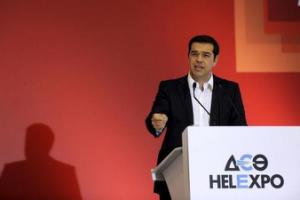
Former Greek prime minister and leader of leftist Syriza party Alexis Tsipras delivers a speech during the annual International Trade Fair of the northern city of Thessaloniki, Greece September 6, 2015. REUTERS/Alexandros Avramidis

Former Greek prime minister and leader of leftist Syriza party Alexis Tsipras delivers a speech during the annual International Trade Fair of the northern city of Thessaloniki, Greece September 6, 2015. REUTERS/Alexandros Avramidis

ATHENS (Reuters) – Greece’s leftist Syriza party has a 0.5 percentage-point lead over the conservative New Democracy party before a snap election on Sept. 20, according to a poll published on Monday.

Former prime minister Alexis Tsipras’s Syriza is on course to win 27 percent of the vote and New Democracy should get 26.5 percent, the poll by Pulse for the bankingnews.gr website found.

Tsipras started out as the frontrunner in the race, but the two parties have been neck-and-neck in recent polls, making the election unexpectedly close.

Two polls over the weekend also put Syriza marginally ahead, even though its lead is shrinking. Two other polls published last week showed New Democracy beating Syriza for the first time.

In Monday’s poll, the far-right Golden Dawn party, whose leader and senior lawmakers are standing trial on charges of being a criminal group, ranked third with 6.5 percent of the vote.

The Independent Greeks, Tsipras’s junior coalition partner, is expected to get 2.5 percent of the vote, below the 3 percent threshold needed to enter parliament.

As many as 35 percent of Greeks want the two first parties to form a coalition government, the poll showed. Tsipras has so far ruled out doing any such deal with New Democracy. His opponent, Evangelos Meimarakis, has said he is open to cooperating.

source:yahoo.com

‘Seize the moment’ Nigel Farage rallies Britons to vote NO in EU referendum


farage-603638NIGEL Farage urged Britons to seize the moment of a lifetime and vote to sever ties with Brussels as he kicked off Ukip’s campaign to quit the EU last night.

The Ukip leader said that the current migrant and refugee crisis engulfing Europe had focussed people’s minds on the ineptness of the European Union, insisting life would be better outside the 28-nation bloc.

His rallying cry to more than 1,500 supporters comes after a recent poll showed that 51 per cent of people would vote to quit the EU if a referendum was held now.

It shows a major swing towards the Eurosceptic camp and comes as a hammer blow to David Cameron.Speaking to the Daily Express ahead of last night’s rally in Margate, Kent, Mr Farage said the momentum was now with the “No” campaign.

“The poll, Cameron’s plans unravelling and the Electoral Commission changing the referendum question – it’s looking good for us at the moment,” he said.“There are going to be loads of fluctuations,” he said.

“I have said that the key issue will be immigration, open borders and control. The migrant crisis has made people really concerned about what is going, whether we should be part of a European Union which has embarked on a disastrous policy failure.”

He said he was pleased that Tory Party was fighting amongst itself while his grassroots-led campaign gathers momentum.

“There seems to be no one else out campaigning at that moment so that’s good for us. And you only have to look at the Tory revolt in the Commons to see that all is not well in their camp.”

Mr Farage, looking recharged after spending the summer holidaying in the South West, fishing and playing cricket, returned to a familiar stomping ground to launch what he hopes will be a more successful campaign than his run at becoming the MP for South Thanet in May.

“I suspect the referendum will be sooner rather than later but a longer campaign would suit us more,” he said.“It is now time for people in Briton to seize the moment whenever the referendum is.”

Mr Farage said he “hoped” that some Tory Ministers would quit their posts so they could campaign to leave the EU.

“The Migrant crisis, low growth in the Eurozone and tensions in Brussels really say that Cameron isn’t going to get very much at all from his renegotiations. It will be interesting what some senior Tories do when he doesn’t come back with anything worthwhile.”

The Ukip leader reiterated his wish for Labour leadership frontrunner Jeremy Corbyn to campaign for Britain to leave the EU.

“A Corbyn victory would be a game changer for the referendum,” he said.

In a wide-ranging interview he also hit out at George Osborne, who announced at the weekend that millions of pounds of the foreign aid budget would be spent on councils to cope with an influx of refugees coming to Britain.

“Last year when we had the somerset floods with a lot of people really suffering I asked for a tiddly widdly bit of foreign aid money to be used for Somerset and was told plain know,” he said.

“We have been very critical of the foreign aid budget but I have never been against giving money for humanitarian relief.”

He said the government was in chaos over whether to carry out air strikes on Syria.

“I have not heard one decent argument from them yet,” he said.

source: express.co.uk

Παγκόσμια αξονική τομογραφία δείχνει τη Γη να κοχλάζει

682DC1386B4567064310594DF860A08F

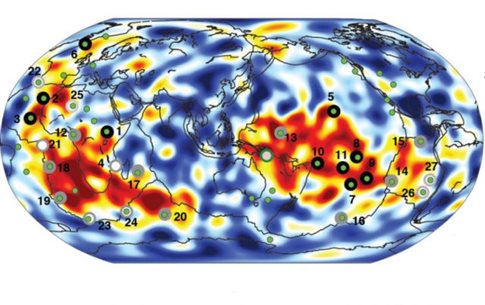
Το υπολογιστικό μοντέλο δείχνει δεκάδες στήλες καυτών πετρωμάτων να αναβλύζουν από τη βάση του μανδύα (Πηγή: University of California – Berkeley)

Ένας τρισδιάστατος χάρτης του γήινου μανδύα, ο οποίος δημιουργήθηκε με προσομοιώσεις και ανάλυση σεισμικών δεδομένων, επιβεβαιώνει την κρατούσα θεωρία για τις στήλες καυτού βράχου που αναβλύζουν από βάθος 2.900 χιλιομέτρων και συχνά γεννούν ηφαίστεια στην επιφάνεια.

Το εσωτερικό της Γης μοιάζει με κρεμμύδι: ο εξωτερικός φλοιός, ο οποίος περιέχει τους ωκεανούς και τις ηπείρους, καλύπτει έναν παχύ μανδύα από θερμό αλλά στέρεο βράχο. Κάτω από τον μανδύα βρίσκεται ο εξώτερος πυρήνας, αποτελούμενος από λιωμένο σίδηρο και νικέλιο, κάτω από τον οποίο κρύβεται ο εσώτερος μανδύας, μια γιγάντια σφαίρα από συμπαγή σίδηρο.

Η θερμότητα του πυρήνα αναγκάζει τα πετρώματα του μανδύα να ανεβαίνουν μέχρι τον φλοιό όπου ψύχονται και αρχίζουν να ξαναπέφτουν προς το κέντρο -το ίδιο συμβαίνει για παράδειγμα με το νερό που θερμαίνεται στη βάση μιας κατσαρόλας.

Το 1971, ο αμερικανός γεωφυσικός Τζέισον Μόργκαν πρότεινε τη θεωρία ότι οι τεκτονικές πλάκες του φλοιού επιπλέουν πάνω από στατικές, ανοδικές στήλες καυτού βράχου, οι οποίες αναβλύζουν από το όριο ανάμεσα στον μανδύα και τον φλοιό. Σε αντίθεση με τις τεκτονικές πλάκες που διαρκώς μετακινούνται, αυτές οι στήλες, γνωστές και ως λοφία, παραμένουν στη θέση τους για εκατομμύρια χρόνια.

Σε ορισμένες περιπτώσεις, τα λοφία διαπερνούν τον υπερκείμενο φλοιό που κινείται και δημιουργούν έτσι αλυσίδες ηφαιστειακών νησιών όπως το αρχιπέλαγος της Χαβάης.

Μέχρι σήμερα, επισημαίνουν οι συντάκτες της νέας μελέτης, οι ενδείξεις για την ύπαρξη αυτών των στηλών παρέμεναν ανεπαρκείς.

Η νέα έρευνα, η οποία δημοσιεύεται στο περιοδικό Nature, δείχνει τώρα να επιβεβαιώνει τη θεωρία. Οι ερευνητές του Πανεπιστημίου της Καλιφόρνια στο Μπέρκλεϊ ανέλυσαν την πορεία των σεισμικών κυμάτων από 273 ισχυρούς σεισμούς την τελευταία εικοσαετία. Η ταχύτητα και η πορεία των κυμάτων αυτών επηρεάζεται από μεταβολές της πυκνότητας, επιτρέποντας στους ερευνητές να υπολογίσουν τη δομή ολόκληρου του μανδύα.

Το υπολογιστικό μοντέλο που προέκυψε δείχνει δεκάδες λοφία καυτού βράχου να κοχλάζουν κάτω από τον φλοιό. «Μέχρι σήμερα κανείς δεν είχε δει αυτά τα κιονοειδή αντικείμενα που συνεχίζονται από τη βάση του μανδύα μέχρι το ανώτερο τμήμα του» υπερηφανεύεται ο Σκοτ Φρεντς, πρώτος συγγραφέας της δημοσίευσης.

Το εντυπωσιακό είναι πως όλα τα λοφία δείχνουν να πηγάζουν από δύο θερμές περιοχές στη βάση του μανδύα, διαμέτρου 5.000 χιλιομέτρων η καθεμία, οι οποίες βρίσκονται σε αντιδιαμετρικές θέσεις κάτω από την Αφρική και τον Ειρηνικό.

Σε βάθος 1.000 χιλιομέτρων από την επιφάνεια, τα λοφία έχουν διάμετρο 600 έως 1.000 χιλιόμετρα. Πάνω από αυτό το βάθος αρχίζουν να απλώνονται σαν τα δέλτα των ποταμών. Σε αυτές της περιοχές του φλοιού υπάρχουν συχνά ηφαίστεια, έστω κι αν δεν βρίσκονται ακριβώς πάνω από το λοφίο.

Τα λοφία είναι τουλάχιστον 400 βαθμούς Κελσίου πιο θερμά από τον υπόλοιπο μανδύα και πιθανότατα έχουν ελαφρώς διαφορετική χημική σύσταση, κάτι που αποτυπώνεται και στη σύσταση των ηφαιστείων πάνω από τα λοφία.

Τα λοφία εκτιμάται ότι παραμένουν ενεργά και στάσιμα για πολλά εκατομμύρια χρόνια. Το εντυπωσιακό όμως είναι ότι οι δύο γιγάντιες θερμές περιοχές από όπου αναβλύζουν τα λοφία εκτιμάται ότι παραμένουν στη θέση τους, κάτω από την Αφρική και τον Ειρηνικό, εδώ και 250 εκατομμύρια χρόνια.

Πηγή:in.gr

Κάτω από το Στόουνχεντζ, ένα μυστηριώδες υπόγειο μνημείο

0BDA151C1A5D54823E6957E0923AD318

Σε απόσταση μόλις 1,6 χλμ από το μνημείο του Στόουνχεντζ εντοπίστηκε με ειδικά ραντάρ ένα παρόμοιο μνημείο που είναι θαμμένο περίπου ένα μέτρο κάτω από την επιφάνεια.

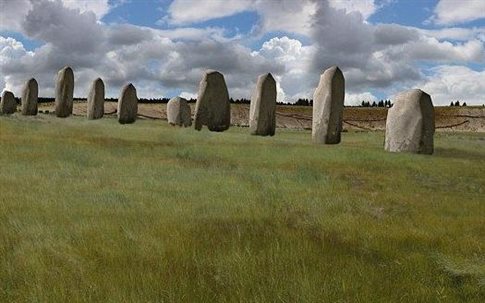
Τα ραντάρ εντόπισαν περίπου 90 λίθους ύψους πέντε μέτρων ο καθένας. Σε αντίθεση με το Στόουνχεντζ που οι λίθοι είναι τοποθετημένοι κυκλικά οι… υπόγειοι λίθοι είναι τοποθετημένοι σε ευθεία γραμμή. Σύμφωνα με τις πρώτες εκτιμήσεις των ειδικών το μνημείο έχει ηλικία περίπου 4,5 χιλιάδες έτη και αποτελούσε μέρος ή κάποιου είδους προέκταση του μνημείου που γνωρίζουμε αλλά επιλέχθηκε από τους δημιουργούς του να παραμείνει αθέατο τοποθετώντας τους λίθους κάτω από το έδαφος.

Αυτό το θαμμένο μνημείο δεν είναι το πρώτο που έχει εντοπιστεί τα τελευταία χρόνια στην ευρύτερη περιοχή του Στόουνχεντζ. Έχουν εντοπιστεί και άλλα μνημεία και κατασκευές κάτω από το έδαφος σε κοντινές αποστάσεις από το μυστηριώδες αρχαίο αξιοθέατο της Βρετανίας. Τα νέα ευρήματα κάνουν τους ειδικούς να πιστεύουν ότι υπήρχε στην περιοχή του Στόουνχεντζ ένα πολύ μεγάλο θρησκευτικό και πολιτιστικό κέντρο με επίκεντρο πιθανώς το μνημείο που έχει διασωθεί.

stone1_1441616889707

Καλλιτεχνική απεικόνιση του μνημείου με τους λίθους όπως θα ήταν αυτό αν βρισκόταν στην επιφάνεια

Πηγή:in.gr

Σαουδική Αραβία, εκεί που αποκεφαλίζεται ένας άνθρωπος κάθε δύο ημέρες

A863E140B9942D62697DF5E56880CE04

Σύμφωνα με νέα έκθεση που τιτλοφορείται «Σκοτώνοντας στο όνομα της δικαιοσύνης: η θανατική ποινή στη Σαουδική Αραβία» και δημοσιεύθηκε από την Διεθνή Αμνηστία, στο πρώτο εξάμηνο του 2015 έχουν ήδη εκτελεστεί στην Σαουδική Αραβία 102 καταδικασμένοι εγκληματίες.

Ο αριθμός αυτός είναι πολύ μεγάλος, αν αναλογιστούμε πως μέσα στο 2014, είχαν εκτελεστεί 90 άνθρωποι.

Άρα με 102 εκτελέσεις μέχρι στιγμής, το νούμερο αυτό αναμένεται να είναι το διπλάσιο μέχρι το τέλος του 2015, σε σχέση με το αντίστοιχο της περασμένης χρονιάς.

Η Διεθνής Αμνηστία σημειώνει ότι ο ρυθμός των εκτελέσεων αυξήθηκε ξαφνικά τον Αύγουστο του 2014 και συνέχισε ανοδικά επί του νέου βασιλιά Σαλμάν, από τον περασμένο Ιανουάριο.
Η Σαουδική Αραβία έχει εκτελέσει τουλάχιστον 175 ανθρώπους από το διάστημα Αύγουστος 2014-Αυγουστος 2015, δηλαδή με ρυθμό έναν αποκεφαλισμό κάθε δύο ημέρες!
Η έκθεση σημειώνει πως στους εκτελεσθέντες περιλαμβάνονται παιδιά που ήταν κάτω των 18 ετών όταν διέπραξαν το αδίκημα, ακόμη και άνθρωποι που είχαν νοητική αναπηρία.

Τουλάχιστον 2.208 άνθρωποι έχουν εκτελεστεί στο βασίλειο των Σαούντ από τον Ιανουάριο του 1985, με βάση την αυστηρή εφαρμογή της Σαρίας, του ισλαμμικού ιερού νόμου.

Σχεδόν οι μισοί από αυτούς, το 48,5%, ήταν ξένοι υπήκοοι, ο οποίοι, όπως λέει η Αμνηστία, υποφέρουν δυσανάλογα υπό το καθεστώς της Σαουδαραβικής δικαιοσύνης λόγω του συνδυασμού της ξενοφοβικής προκατάληψης και της άγνοιας της αραβικής γλώσσας, που δεν τους επιτρέπει να κατανοήσουν τη διαδικασία.

Περισσότεροι από ένας στους τέσσερις -το 28% από το 1991- εκτελέστηκαν για αδικήματα που σχετίζονται με ναρκωτικά.

Θανατικές ποινές εκτελέστηκαν επίσης για άλλα εγκλήματα που πολλές φορές δεν είναι καν αδικήματα σύμφωνα με τα διεθνή πρότυπα.

«Το σύστημα της σαουδαραβικής δικαιοσύνης, η οποία ενέκρινε τις δολοφονίες αυτές, είναι βαθύτατα ελαττωματικό», υπογραμμίζει ο Σαϊντ Μπουμπεντούχα, διευθυντής Μέσης Ανατολής και Βόρειας Αφρικής της Διεθνούς Αμνηστίας.

«Η χρήση της θανατικής ποινής είναι τρομακτική σε όλες τις περιστάσεις, και είναι ιδιαίτερα απογοητευτικό όταν εφαρμόζεται αυθαίρετα μετά από άδικες δίκες. Οι αρχές της Σαουδικής Αραβίας θα πρέπει να επιβάλλουν ένα επίσημο μορατόριουμ για τις εκτελέσεις και να εφαρμόσουν τα διεθνή πρότυπα δίκαιης δίκης σε όλες τις ποινικές τους υποθέσεις» τονίζεται στην έκθεση της Διεθνούς Αμνηστίας.

Πηγή:in.gr

Dubai seeks to woo Greek shipowners

ploiaperama--2-thumb-large

At first it was Cyprus and now it’s Dubai that is attempting to attract Greek shipowners, who are contemplating shifting their bases to new shores following the country’s new bailout agreement and the new taxes that Athens has promised to introduce with it.

The emirate has already started promoting the tax and institutional advantages that it offers the sector to Greek shipping companies.

Last week a seminar took place in Athens with the participation of shipping law firms both from Greece and the Middle East. The aim was to highlight the advantages that Dubai offers companies through special maritime zones in the emirate.

Notably, in the last couple of months Greek shippers have increased their contacts with Cypriot shipping authorities to see whether setting up subsidiaries on the island would be beneficial.

source:ekathimerini.com