Category Archives: Uncategorized

Jürgen Klopp Q&A: Bundesliga expert Alex Howell runs the rule on Liverpool’s new manager

klopplfc-6525200447

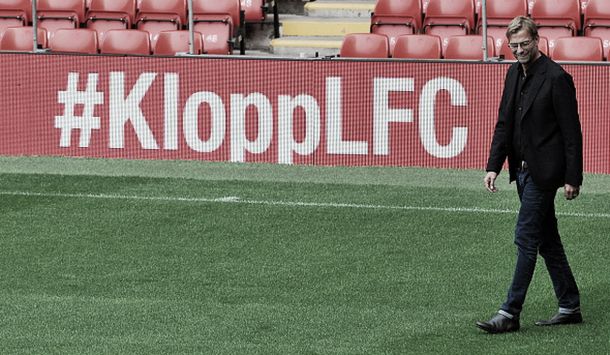
With Jürgen Klopp having made a fine impression in his early days as Liverpool FC manager, VAVEL Liverpool’s Charlie Malam speaks to enthusiastic Bundesliga expert Alex Howell to get his views on whether the German is as highly-rated as everyone has been making out this week.

It’s been a fairly hectic week for Liverpool Football Club, even though it’s been an international break since last Sunday.

After a dismal draw in the 225th Merseyside Derby, Brendan Rodgers was given the sack for a poor run of form and just a few days later, the club’s supporters could barely believe the fact that Jürgen Klopp is officially their new manager.

The charismatic German is renowned for his sensational seven-year spell with Borussia Dortmund, whom he lifted to back-to-back Bundesliga titles, a Champions League final and a DFB Pokal amongst other silverware-laden memories.

The 48-year-old, who left Dortmund in May, was unveiled on Friday afternoon as the British media swooned over him deep in the bowels of Anfield.

Since, social media has been swarmed with various quotes and pictures as Reds the world over begin to dream about what Klopp could bring to the table on Merseyside.

In the aftermath of his official unveiling, VAVEL Liverpool editor Charlie Malam spoke to VAVEL Bundesliga expert Alex Howell to see what the hype is all about.

Q: Jurgen Klopp is officially now Liverpool’s new manager – but is Merseyside, and indeed the Premier League, the right destination for him?

AH: Obviously it’s too early to say that Jürgen Klopp’s tenure at Anfield will be entirely successful and it’d be naive for me to proclaim that the former Borussia Dortmund man will instantly slot into the groove of the Premier League; but one thing worth noting is the similarity of the situation the Black Forest native inherits on Merseyside, to the one he faced at the Westfalenstadion in 2008, and we all know how that one ended up.

In terms of style the Premier League is not too dissimilar to the Bundesliga, so in that sense it seems the perfect league for Klopp to join after his short lived sabbatical. He has a good grasp of the English language, as I’m sure you’ll be aware, so the infamous cultural barrier many foreigners face shouldn’t be an issue for Klopp. It’s been a feeling in Germany for quite some time now that a move to England was the well thought out next step for Jürgen Klopp and finally that has come to fruition.

As for Liverpool FC, for me at-least it seems the most natural fit within the league. As anyone who knows anything about Jürgen Klopp will tell you, he’s a huge football romanticist and the lure of turning a struggling Reds side, so to speak, back to former glories will have been what appealed to the former Dortmund man the most. It just seems a natural fit between the two.

Q: He’s come highly recommended from various ex-professionals and pundits worldwide throughout the course of the week. Is Klopp as world-class a manager as people are making out?

AH: As with the last question, you just need to look at his time with die Schwarzgelben, as well as his earlier stint with 1. FSV Mainz 05, to see his credentials. What Klopp achieved with firstly a relatively unknown Mainz side, and secondly a downtrodden Borussia Dortmund team is quite frankly a miracle; or maybe not when achieved twice…

There’s a reason why effectively the whole of Germany, and perhaps world, took note of Klopp’s work – the sheer unorthodox approach and perhaps unknown way of doing it as well as the sheer audacity to win back to back titles against Bayern Munich, which was unfound in the country for many a year.

For those who may not be aware, when he arrived at Borussia Dortmund the club was on its knees. Years of managerial instability and financial turmoil contributed to the very real threat of relegation for one of Germany’s premier clubs. What he transformed die Schwarzgelben into over an eight year period will have lasting impacts on German football for many years to come. Two Bundesliga titles, one DFB Pokal, two DFB Super Cups and a Champions League Final appearance would’ve seemed a mere pipe dream when Klopp took over at the Westfalenstadion, but he made it happen.

Even on a smaller scale, his time at 1. FSV Mainz 05 shows his qualities; transforming a perennial underachieving 2. Bundesliga side into the Europa League qualifiers is something that only ever usually happens on Football Manager, but once again Klopp made it happen.

That’s why “Kloppo” is so highly rated.

With all the positives and praise that has been attributed with Klopp’s arrival – are there any flaws? Is there, for example, something he should/shouldn’t have done at Dortmund?

AH: The one continual major criticism of Klopp in his time in the Bundesliga, was his inability and perhaps stubbornness in regards to his famous style of play and formation. When the going got tough in his well documented swansong year at the Westfalenstadion, Klopp failed to adapt as many of the sides his team came up against had worked out how to play against his high octane style of play and a repeat of this in the Premier League could spell disaster for Klopp.

Another thing often aimed at Klopp was his sometimes questionable transfer policy. Despite the captures of Robert Lewandowski, Mats Hummels and Ilkay Gündogan for relative peanuts there were also a number who’s time at Borussia Dortmund was not as fruitful as the previous trio, most evidently Adrian Ramos, Ciro Immobile and even Henrikh Mkhitaryan (who has began to flourish under Thomas Tuchel, mind) but maybe that’s me trying to pick criticisms of Klopp, as no manager can claim a clean slate when it comes to poor transfers.

Q: The reaction to his appointment, and even simply the Reds’ interest in him earlier in the week, has stirred great excitement – but should supporters be wary of expecting too much, too soon?

AH: I think one thing for Liverpool fans to take in heed, is that at both clubs before Liverpool it’s taken time for Klopp’s works to bear fruit. It took three years at Borussia Dortmund for example for the first League title, so as previously mentioned it’d be naive to expect instant success; although an upturn in the recent mediocrity under Rodger’s should be easily within Klopp’s powers.

But one other thing for Reds fans to take note, when the trophies did come, it wasn’t trophy as a singular.

A lot of comparisons have been drawn between the fanbases of Liverpool and Dortmund, but is it possible that Klopp can develop a relationship similar to the one he had with Dortmund fans, with the supporters at Liverpool?

AH: Has he not got one already?!

One of the main cogs in the success Jürgen Klopp enjoyed at Borussia Dortmund was the bond he had between himself and the fans. This resonated with the squad to form somewhat of a siege mentality, or a never say die attitude. It’s vital for Klopp that he achieves the same on Merseyside, but it looks more of an when than if, as he already looks well on his way to forming a similar bond to the one he had on the Ruhrpott.

Q: We’ve all heard the term ‘gegenpressing’ when it comes to the style Klopp will look to bring to Anfield – but can you tell us more about what that phrase actually entails?

AH: The literal translation of the term is “against pressing”, which in actual fact couldn’t be anything further from the truth.

In actual fact the Anglo-German term means “Counter-Press” and is a more dynamic and action based take on the infamous style of Pep Guardiola’s FC Barcelona. As a slight resemblance, Klopp’s style should in some ways mirror Luis Suarez, Raheem Sterling and Daniel Sturridge in their pomp in the regards that opposing teams have no time to breathe; it is constant press, press and even more pressing.

The aim of that is to win the ball high up the pitch where eleven men cannot be behind the ball and thus in a perfect world Liverpool score every time. It requires physically fit players (which may seem obvious, as all players should be fit, no?) and more importantly mobile players so that the press can be efficiently carried out so in that sense players like Jordan Henderson and James Milner should perform wonders under Klopp, but don’t hold me to that!

Another thing key to “gegenpressing” is holding a high line. If there isn’t a high line, there is too much space to press allowing sides to play out and then pick passes further up the field and hurt the defence, and this was one of the main inefficiencies in Klopp’s final year at the Westfalenstadion. Whilst i’m not saying that Klopp will transform Dejan Lovren into the next Franz Beckenbauer, in theory the Reds should defend as a whole much better although at the moment that may not be too much of a task.

Klopp himself commented on the style with, “gegenpressing is the best playmaker there is” and in many ways he’s correct. If it works Klopp’s teams are unplayable a good example of this would be the away game at Manchester City in 2012; I’d recommend all Liverpool fans at-least take a quick look at Dortmund’s tactics that night or even just Marco Reus’ goal.

Continuing tactically, his favoured formation in Germany seemed to be a 4-2-3-1- are there any other systems he’s particularly inclined to using?

AH: Although Klopp most definitely favours the 4-2-3-1 it’s not to say that his sides can’t field in other systems. His sides have been well known to take to the pitch in 4-3-3 or even 4-4-1-1 formations, but I think although the presence of “gegenpressing” will remain a constant the formation adopted to carry it out will depend on Klopp’s verdict on the personnel LFC possess.

During his time with Borussia Dortmund there was no doubt that the strength lay in the attacking midfield, much the same as Liverpool you could perhaps say, with players such as Shinji Kagawa, Marco Reus and Mario Goetze all fielding for Klopp.

One difference however is that die Schwarzgelben mostly operated with a single top quality striker, firstly Lucas Barrios then Robert Lewandowski and finally Pierre Emerick Aubameyang. Those in reserve were often a step below in quality to their fellow strikers, the difference at Liverpool is that there are two quality centre forwards in Daniel Sturridge and Christian Benteke. This will be the main dilemma the Stuttgart born manager will face when deciding his system to deploy at White Hart Lane next weekend and finding a balance between the plethora of midfield options and the quality of Benteke and Sturridge will be crucial for Klopp and the Reds in the months to come.

Despite their post-Christmas revival, Klopp’s final season at Dortmund was a little disappointing – as they finished 7th. Should that be concerning to Liverpool fans?

AH: The general consensus in Germany was that Klopp could be afforded one “bad” year after changing Borussia Dortmund’s fortunes around so quickly. But on a more general basis, how often do managers stay in a role for eight years and have a perfect season every year? Not very often, if at all. After so many good seasons, the chances were that after an annual pillaging by Bayern Munich and the ageing of other players, that Dortmund were eventually going to break, so to speak, and a new man would be required at the helm – that happened to be last season.

On paper and from an outside perspective you could easily brandish Klopp’s last season at the Westfalenstadion as a complete failure, but as mentioned in the question itself Klopp managed to turn it around from the post-Christmas mire and part with die Schwarzgelben having climbed ten league places and qualifying for Europe; that alone should be of more promise to Liverpool fans than the early season struggles.

Q: Do you think there could be any possibility of him looking at some of his former players at Dortmund when he comes to tweak his squad in January? Or any other potential players in the Bundesliga which he may have taken a liking to in previous years?

AH: It’s very hard to say in all honesty. I think most Liverpool fans would be willing to admit that players like Marco Reus and Mats Hummels are most probably out of reach for the Reds despite the nouveau Klopp connection. We could see a move for some younger or bit part players at Borussia Dortmund, like Neven Subotic or Jonas Hoffmann despite the former enjoying a good start to the season under Tuchel.

I also think it’d be a very sensible opinion to conclude that Klopp will look at the Bundesliga for new signings. This is the league that he handpicked players like Ilkay Gündogan and Mats Hummels as well as Marco Reus and turned them into world class players, although Reus returned to Dortmund from Borussia Moenchengladbach for a fee of around £15 million. An example of a potential transfer target could be Patrick Herrmann, as Klopp does love a good fast winger (see Jakub Blaszczykowski at Borussia Dortmund) and Herrmann was a thorn in the side of Klopp in-particularly last season.

To conclude I think it’d be very naive of Klopp not to turn to Bundesliga for some of his earlier transfer targets, at-least if he has managed to wrangle control back from the dreaded transfer committee.

Finally, in your opinion, do you think Klopp will be a success at Anfield?

AH: In a word, yes.

It’ll take time, as always you’ve got to bear in mind that at the two clubs he’s managed the shortest tenure he’s had is seven years. But once his work has began to bear fruit at either respected club before, it has been the start of some very good times for firstly Mainz and secondly Dortmund fans.

The match between the two, Liverpool and Klopp, just seems right. Jürgen Klopp is a romantist and Liverpool need someone with true character (sorry Brendon) and determination to give the club some purpose once more. Klopp should prove to be a breath of fresh air on Merseyside. His well publicised man management skills, in tandem with is coined “gegenpressing” style suit the Premier League down to the ground in theory and although the proclamation of a first League title in over 20 years have been met by ridicule in certain quarters (despite the literal mistranslation as Klopp said “titel” which means “trophy”), it may not be a too far of a claim.

source:vavel.com

Μελβούρνη:«Οι φιλίες που δημιουργούνται εν καιρώ πολέμου είναι παντοτινές»

epaustralianmemorial

Ανακοινώθηκαν οι νικητές του σχολικού διαγωνισμού του Αυστραλοελληνικού Μνημείου στη Μελβούρνη

«Οι φιλίες που δημιουργούνται εν καιρώ πολέμου είναι παντοτινές». Μ’ αυτά τα λόγια συνόδευσε ο Χορχέ Ανδριόπουλος στην εικόνα που ζωγράφισε και απέστειλε στο Ίδρυμα του Αυστραλοελληνικού Μνημείου για να λάβει μέρος στο σχολικό διαγωνισμό που το Ίδρυμα προκήρυξε πριν από μερικούς μήνες.

Την περασμένη Κυριακή και σε ειδική εκδήλωση στους χώρους του Μνημείου ο μικρός Χορχέ βραβεύτηκε ως ο πρώτος νικητής του σχολικού διαγωνισμού. Στο διαγωνισμό οι μαθητές ελληνικής καταγωγής καλούνταν να αποδώσουν με τον δικό τους τρόπο, λόγο ή εικόνες, τη σημασία του Αυστραλοελληνικού Μνημείου στην απόδοση τιμής σε όλους όσους σκοτώθηκαν στους δύο Παγκοσμίους Πολέμους. Μαθητές, γονείς, δάσκαλοι και στελέχη του Ιδρύματος Ελληνοαυστραλιανού Μνημείου που για έξι χρόνια τώρα διοργανώνει το διαγωνισμό παραβρέθηκαν στην ειδική τελετή απονομής των βραβείων. Είκοσι έξι από τους 300 συνολικά μαθητές που έλαβαν μέρος στο διαγωνισμό έλαβαν και χρηματικό έπαθλο που κυμαίνεται από $50 – $250, ανάλογα με την ηλικία τους.

Πηγή: Νέος Κόσμος

Nεοελληνικά στην Μελβούρνη:Από το κακό στο… χειρότερο!

imagesH7WEHCOS

Σε λίγο παραπάνω από δύο εκατοντάδες μειώθηκαν οι μαθητές και μαθήτριες που παίρνουν μέρος στις φετινές εξετάσεις Ελληνικών του VCE.

Λίγο παραπάνω από δύο εκατοντάδες είναι οι μαθητές και μαθήτριες που παίρνουν μέρος στις φετινές εξετάσεις Ελληνικών του VCE. Επίσης, υπολογίζεται ότι το 10% περίπου των μαθητών αυτών είναι από οικογένειες που έφτασαν στη Βικτώρια από την Ελλάδα, τα τελευταία χρόνια, ως αποτέλεσμα της κρίσης.

Και μόνο από τα στοιχεία αυτά, προκύπτει, πέραν αμφιβολίας, ότι η μάχη των Ελληνικών χάνεται και απαιτείται άμεση δράση για να μη χαθεί οριστικά και αμετάκλητα.

Μία παροικία δεκάδων χιλιάδων ατόμων ελληνικής καταγωγής, “εμπλουτισμένης” με δεκάδες παροικιακούς πολιτιστικούς οργανισμούς, με 40 περίπου ιδιωτικά εκπαιδευτήρια ελληνικής γλώσσας, με μια σειρά επιτυχημένων πολιτιστικών Φεστιβάλ, αλλά και με έναν ολόκληρο μήνα, τον Μάρτιο, αφιερωμένο στην ελληνική γλώσσα, δεν κατάφερε να προωθήσει την ελληνική γλώσσα.

Τα παραπάνω στοιχεία παρουσιάστηκαν πρόσφατα σε ένα επιτυχημένο Σεμινάριο, αφιερωμένο στις φετινές εξετάσεις του VCE, που έγινε με πρωτοβουλία του Συλλόγου Εκπαιδευτικών Νέων Ελληνικών Βικτώριας. Το διαρκείας 90 λεπτών Σεμινάριο παρακολούθησαν δεκάδες μαθητές και μαθήτριες, αλλά λίγοι μόνο εκπαιδευτικοί των ελληνικών σχολείων της παροικίας.

Η αίθουσα του Πανεπιστημίου Μελβούρνης “ηλεκτρίστηκε” σε αρκετές περιπτώσεις. Πολλοί μαθητές και γονείς, με τους οποίους επικοινώνησε ο “Νέος Κόσμος”, δήλωσαν ανήσυχοι για το κατά πόσο η -όπως αναμένεται- άριστη απόδοση των νεοαφιχθέντων Ελλήνων μαθητών θα αυξήσει τον μέσο όρο της βαθμολογίας – κάτι που, ίσως, δυσκολέψει πολλούς μαθητές να πετύχουν ικανοποιητική βαθμολογία που θα συμπληρώσει τον τελικό βαθμό τους για την εισαγωγή τους στο πανεπιστημιακό ίδρυμα που επιθυμούν.

Ο αντιπρόεδρος του Συλλόγου, Χρήστος Γκιντίδης, μαζί με τις εκπαιδευτικούς, Μαρία Χαραλάμπους και Διονυσία Διακοδημητρίου, παρουσίασαν αναλυτικά στους συμμετέχοντες τις πτυχές των εξετάσεων των Ελληνικών στο επίπεδο του VCE. Οι προφορικές εξετάσεις ξεκίνησαν αυτήν την εβδομάδα του Οκτώβρη και οι γραπτές θα γίνουν τον Νοέμβριο.

Πηγή:Νέος Κόσμος

No place left to die on Lesvos for refugees lost at sea

grave_migrant_web-thumb-large

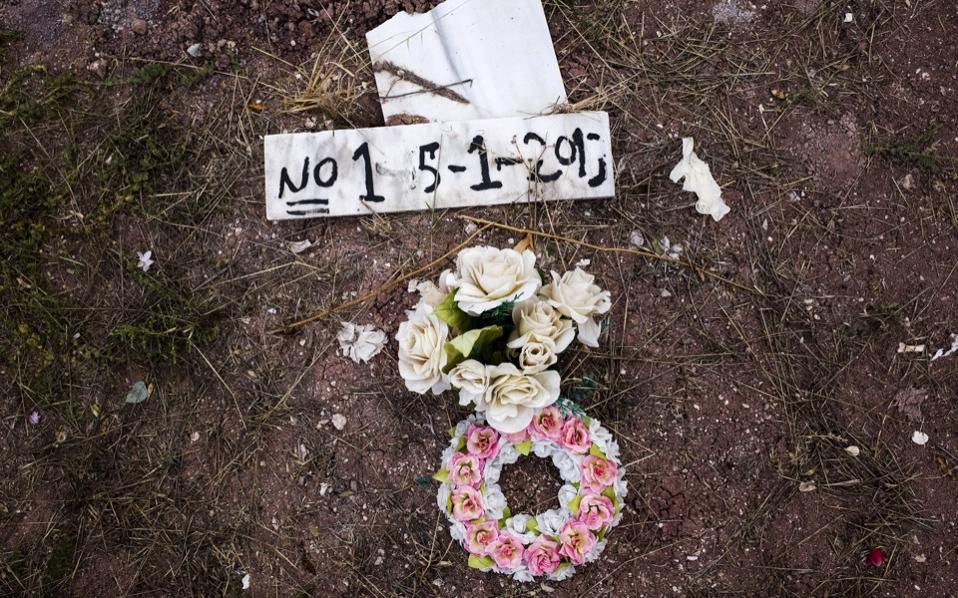
Flowers are placed on the grave of an unidentified migrant, who drowned at sea during an attempt to cross a part of the Aegean Sea from the Turkish coast, at the Saint Panteleimon cemetery of Mytilene, on the Greek island of Lesvos, October 7.

He stood on the mud, crows cawing overhead, pointing at unmarked graves. “Here’s a mother with her baby. And here’s another young woman. Over there, that’s a 60-year-old man.”

Buried beneath low mounds of earth, facing Mecca, lay Afghan, Iraqi and Syrian refugees who drowned this summer in the Aegean Sea trying to reach Europe in flimsy inflatable boats.

Scanning the area, Christos Mavrakidis, a somber, hardened man who looks after one of the main cemeteries on Greece’s Lesvos island, listed the years of other deaths: “2013, 2014, 2015.”

Now there is no room left in the narrow plot of land in the pauper’s section of St. Panteleimon cemetery, close to where the colonnaded tombs of wealthy Greeks are built in the classical Greek style, and flowers adorn lavish marble graves.

“Something must be done,” he said. “They are a lot. They are too many.”

No one can say where the next bodies will be buried.

Nearly half a million people, mostly Syrians, Afghans and Iraqis fleeing war and persecution, have made the dangerous journey to Europe this year. Almost 3,000 have died, the UN
refugee agency estimates.

Just 4.4 km (2.8 miles) off the Turkish coast, Lesvos, Greece’s third-biggest island and popular with tourists, is one of the preferred entry points for migrants into the EU.

Arrivals surged in late summer to sometimes thousands a day as people rushed to beat autumn storms that make the Aegean Sea even more treacherous. The number of burials at St. Panteleimon has also risen. More than three dozen migrants are buried in a tiny, dusty plot on a hill overlooking the island. Four were buried there last week alone.

Some of the makeshift, earthen graves bear a small marble plaque with a name in paint or marker: “Saad 4-9-2015.” Others state simply: “Unknown 25-8-2015”; “Unknown 28-8-2015”; “No 14 5-1-2013”. The most recent graves lack any marking.

Mavrakidis placed his hand over his mouth and nose, the air filled with what he called “the stench of death” rising from the open grave of a young Iraqi man whose body was exhumed that morning after his family managed to trace him through DNA.

Many more dead have never been found. Locals say fishermen sometimes dump bodies back into the sea, like fish they are not permitted to catch, to avoid having to hand them over to the authorities and face questioning and bureaucracy.

The living and the dead

The impact of the huge migration flow into Europe is visible across Lesvos, an island with a history of mostly Greek refugees who fled Asia Minor in the 1920s. Restaurants and shops now have menus and signs in Arabic. Cafes are full of refugees charging mobile phones.

The long shoreline near the airport has turned bright orange from hundreds of discarded life jackets. But nowhere is their uncertain fate starker than at St. Panteleimon, patron saint of the sick and destitute.

Every village on the island has its own cemetery but spaces are limited to less than a dozen for the locals. Refugees were buried at St. Panteleimon also because it was well-guarded, even from stray dogs who roam at night, Mavrakidis said.

Local relief organisations accuse the authorities of doing little to address the space problem. Efi Latsoudi, a volunteer who helps organise funerals for refugees, says she is tired of hearing “we have no budget, it’s not our responsibility”.

Even the island’s morgue complains it is running out of space to keep the bodies, pushing for more burials, she said.

“It’s someone’s responsibility. And if it isn’t, someone should claim it,” Latsoudi said.

The island’s mayor, Stavros Galinos, says he has never made money an issue despite being stretched financially because of the country’s prolonged economic crisis.

“This is a humanitarian issue and I would never weigh it on the same scale as the financial issues,” he said at his office overlooking the port from which thousands of refugees depart for the mainland every day.

“There’s a problem and we’re trying to solve it. People are drowning every day so we’re looking for space,” he said. “Not only do we have to manage living migrants, we have to manage the dead as well.”

Reach Europe or die

Afghan refugee Mohammad Talib Jabarkhail, who sought help from the same association that organises funeral and prayers for the dead, was among the lucky ones who reached Europe alive.

Some of his friends were killed in a suspected US air strike on an Afghan hospital run by aid group Medecins Sans Frontieres (MSF) in Kunduz, he said.

“I escaped from Afghanistan because I was targeted. ISIS (Islamic State insurgents) and the Taliban threatened me three times,” said Jabarkhail, a 30-year-old community worker and women’s rights activist who worked for foreign NGOs.

The three-week trip to Europe through Pakistan, Iran and Turkey with his cousin and nephew cost 2,500 dollars in bribes to various people, including a man code-named “Red Apple.”

They were shot at by Iranian police and kidnapped and robbed on the Iranian-Turkish border, leaving him with no money to continue his journey to his desired destination: Germany.
His wife and four young children are left behind, waiting.

Like others who set off on this dangerous journey, Jabarkhail said he was well-aware of the risk of death on the way. “When I started my journey I had two options: to reach Europe, or to die. This is the reality,” he said.

source:ekathimerini.com

Ankara bombing: At least 97 killed, scores injured in blasts outside train station in Turkey’s capital

6844280-3x2-340x227

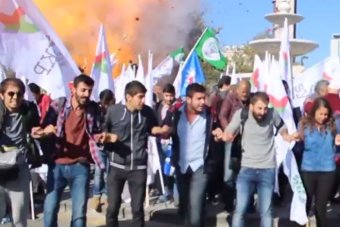
At least 97 people have been killed in twin explosions in Turkey’s capital Ankara, targeting activists gathering for a peace rally organised by leftist and pro-Kurdish opposition groups.

Turkish prime minister Ahmet Davutoglu said the blasts were likely carried out by two suicide bombers and declared three days of national mourning.

Sixty-two people died at the scene of the blasts and 24 more then succumbed to their wounds in hospital, health minister Mehmet Muezzinoglu told reporters in Ankara. He said that 186 people were wounded, including 28 who are in intensive care.

Bodies were covered by flags and banners, including those of the pro-Kurdish opposition Peoples’ Democratic Party (HDP), with bloodstains and body parts scattered on the road.

The area was to have hosted a peace rally organised by leftist groups later in the day, including the HDP.

“Many of the injured people are heavily injured, so there is a fear that the number of dead people may increase,” the party said in a statement.
There have been no claims of responsibility for the attack.

Turkish police fired in the air to disperse demonstrators angered by the deaths of their fellow activists from the scene.

Witnesses said the two explosions happened seconds apart shortly after 10:00am local time as hundreds gathered for a planned “peace” march to protest against the conflict between Turkish security forces and Kurdish militants in the south-east.

“I heard one big explosion first and tried to cover myself as the windows broke. Right away there was the second one,” said Serdar, 37, who was working at a newspaper stand in the train station.

“There was shouting and crying and I stayed under the newspapers for a while. I could smell burnt flesh.”

There were scenes of chaos after the blasts, as ambulances raced to get to the wounded and police cordoned off the area around the train station.

Bodies lay in two circles around 20 metres apart where the explosions had taken place.

Those involved in the peace march tended to the wounded lying on the ground, as hundreds of stunned people wandered around the streets.

“We heard one huge blast and then one smaller explosion and then there was a great movement and panic. Then we saw corpses around the station,” Ahmet Onen, 52, said.

“A demonstration that was to promote peace has turned into a massacre, I don’t understand this.”

The United States condemned the bombing, calling it a heinous terrorist attack on peaceful demonstrators.

“In light of the ongoing violence in Turkey and the region, it is particularly important at this time that all Turkish citizens recommit to peace and stand together against terror,” the US State Department said in a statement.

‘We are faced with a murderous state’

Turkish president Tayyip Erdogan cancelled his engagements to consult with senior security and government officials, while HDP leader Selahattin Demirtas and the leader of the main opposition CHP, Kemal Kilicdaroglu, also cancelled their plans for Saturday.

“I strongly condemn this heinous attack on our unity and our country’s peace,” Mr Erdogan said in a statement posted on the presidency’s website.

“Like other terror attacks, the one at the Ankara train station targets our unity, togetherness, brotherhood and future,” he said in a statement, calling for “solidarity and determination”.

Mr Demirtas said he blamed a “mafia state” in the country for the twin explosion.

“We are faced with a very big massacre, a vicious, barbarous attack,” he said.

“We are faced with a murderous state which has turned into a mafia and a state mentality which acts like a serial killer.

“Is it possible that a state with such a strong intelligence network did not have prior information on the attack?”

He drew a parallel with the bombing of an HDP rally in the south-eastern city of Diyarbakir on the eve of the last election in June and a suicide bombing blamed on Islamic State in the town of Suruc near the Syrian border in July, which killed 33 mostly young pro-Kurdish activists.

The attack comes with Turkey on edge ahead of November 1 polls and a wave of unrest over recent months.

Fighting has resumed between the militant Kurdistan Workers’ Party (PKK) and government forces after the collapse of a two-year ceasefire in July.

Over 140 members of the security forces have since been killed while Ankara claims to have killed over 1,700 Kurdish militants in a relentless bombing campaign.

After the attack the PKK declared a “state of inactivity” after months of attacks in Turkey, pledging to suspend all offensive actions ahead of the November polls.

“Heeding calls from Turkey and abroad, our movement has decided on a state of inactivity by our guerrillas, unless our people and our guerilla forces are attacked,” Kurdistan Communities Union (KCK), an umbrella movement that includes the PKK, said in a statement.

“During this process, our guerilla forces will refrain from carrying out planned activities, will not engage in any kind of activity apart from preserving its current position and make no attempts to hinder or harm the exercise of a fair and equal election,” it said.

Designated a terrorist group by Turkey, United States and the European Union, the PKK launched a separatist insurgency in 1984 in which more than 40,000 people have been killed.

source:abc.net.au

Μειώνονται οι μισθοί υπουργών, βουλευτών και στελεχών του Δημοσίου

ImageHandler

Καταργείται το αφορολόγητο για βουλευτές με αποτέλεσμα να μειώνεται κατά 20% η αποζημίωση – Τσίπρας: Όταν μπαίνει το ζήτημα της κατάργησης των φορολογικών εξαιρέσεων για τους αγρότες, δεν μπορούμε να κάνουμε τους δήθεν αδιάφορους για τα δικά μας.

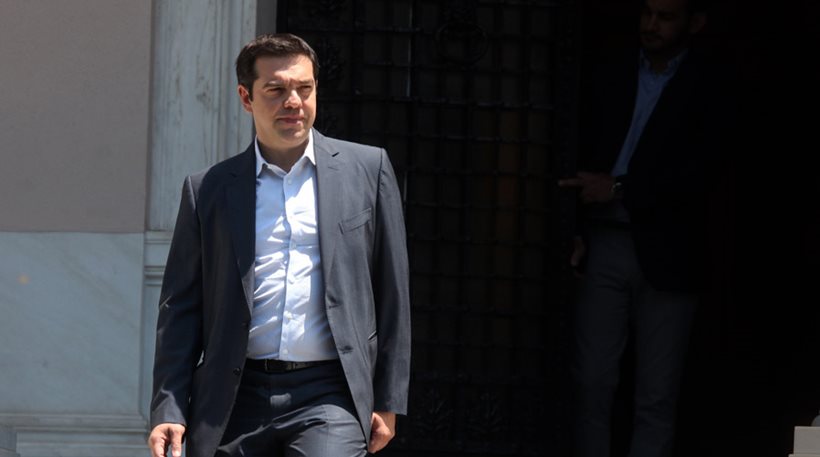
Μειώσεις στους μισθούς υπουργών και στελεχών του δημόσιου τομέα αποφάσισε ο πρωθυπουργός Αλέξης Τσίπρας έπειτα από σύσκεψη που είχε με τον αναπληρωτή υπουργό για θέματα Διοικητικής Μεταρρύθμισης, Χριστόφορο Βερναρδάκη, τον αναπληρωτή υπουργό για θέματα Γενικού Λογιστηρίου του Κράτους Δημήτρη Μάρδα και τον Γραμματέα του Υπουργικού Συμβουλίου Σπύρο Σαγιά.
Οι μειώσεις θα αφορούν τις αποζημιώσεις των υπουργών, των Διοικητών ΔΕΚΟ και των Προέδρων των Ανεξάρτητων Διοικητικών Αρχών.

Μιλώντας στη σύσκεψη, ο πρωθυπουργός Αλέξης Τσίπρας είπε μεταξύ άλλων:

«Όταν στο τραπέζι των διαπραγματεύσεων, μπαίνει το ζήτημα της κατάργησης των φορολογικών εξαιρέσεων που ισχύουν για τους αγρότες, δεν μπορούμε να κάνουμε τους δήθεν αδιάφορους για τις φορολογικές εξαιρέσεις που ισχύουν για εμάς τους ίδιους… Το πολιτικό σύστημα οφείλει να ανταποκρίνεται στο κοινό αίσθημα. Γι αυτό πρέπει να κατατεθεί άμεσα το νομοσχέδιο που καταργεί το αφορολόγητο των βουλευτών, και εξορθολογίζει τις αποδοχές των Υπουργών, των Διοικητών Οργανισμών και των Προέδρων των ανεξάρτητων αρχών. Είναι μια πολιτική πρωτοβουλία όχι μόνο με οικονομικό αποτέλεσμα, αλλά και με συμβολικό περιεχόμενο. Και η πρωτοβουλία αυτή δεν επιβάλλεται από την τρέχουσα διαπραγμάτευση, αλλά από την υποχρέωση του πολιτικού συστήματος να μην εξαιρεί τον εαυτό του από τα μέτρα τα οποία λαμβάνει».

Σύμφωνα με πληροφορίες το νομοσχέδιο θα κατατεθεί σήμερα και θα περιλαμβάνει μειώσεις κατά 25% σε υπουργούς που είναι και βουλευτές, 15% σε όσους δεν είναι βουλευτές, ενώ για τα μέλη των ΔΣ των Ανεξάρτητων Αρχών οι μειώσεις θα αγγίξουν το 40%. Κατά μέσο όρο οι μειώσεις που αποφασίστηκαν είναι της τάξης του 30%.

Επίσης αποφασίστηκε να αλλάξει το φορολογικό καθεστώς των βουλευτών με στόχο την εξομοίωση με αυτό που ισχύει για τα φυσικά πρόσωπα. Με την κατάργηση του αφορολογήτου μειώνεται η βουλευτική αποζημίωση κατά 20%.

Όπως έχουν δηλώσει πηγές του υπουργείου Οικονομικών «ακόμα και σήμερα από τα περίπου 100.000 ευρώ βουλευτικών εισοδημάτων, τα 30.000 ευρώ φορολογούνται με κλίμακα και τα υπόλοιπα τα λαμβάνουν “μαύρα”». Κατά μέσο όρο κάθε βουλευτής λαμβάνει το χρόνο περίπου 93.000 ευρώ από βουλευτική αποζημίωση, αποζημίωση για συμμετοχή σε κοινοβουλευτικές επιτροπές και διάφορα «χρυσά» επιδόματα. Για το συγκεκριμένο ποσό πληρώνει φόρο περίπου 5.500 ευρώ όσο δηλαδή και ένας μισθωτός ή συνταξιούχος με ετήσιο εισόδημα 25.000 ευρώ. Στην περίπτωση που εφαρμοζόταν ο νόμος, ο ίδιος βουλευτής θα έπρεπε να καταβάλει 39.000 ευρώ! Με άλλα λόγια το Δημόσιο εισπράττει σήμερα περίπου 1.650.000 ευρώ από την φορολόγηση των 300 εθνοπατέρων ενώ θα μπορούσε να εισπράξει 11.700.000 ευρώ.

Σε δήλωση που έκανε εξερχόμενος του Μεγάρου Μαξίμου, ο κ. Βερναρδάκης ανέφερε ότι «η λογική είναι ότι δεν μπορεί να υπάρξει εξαίρεση του πολιτικού προσωπικού και μάλιστα του ανώτερου πολιτικού προσωπικού τη στιγμή που ο λαός βρίσκεται σε πολύ δύσκολη κατάσταση, επομένως πρέπει να δούμε μια συνολική μείωση των αποδοχών και των προνομίων που απολαμβάνει το κεντρικό πολιτικό προσωπικό της χώρας». «Για τον σκοπό αυτό», συμπλήρωσε, «σήμερα θα κατατεθεί αντίστοιχο νομοσχέδιο το οποίο θα προβλέπει όλες αυτές τις μειώσεις και τις ρυθμίσεις».

Πηγή:in.gr

Γιατί οι ελέφαντες δεν παθαίνουν καρκίνο

9E8EA9E12B3C998FC40BDFB27462EF53

Βιολογικό μυστήριο: H πιθανότητα θανάτου από καρκίνο είναι πολύ μικρότερη στους ελέφαντες από ό,τι στους ανθρώπους

Οι ελέφαντες έχουν τουλάχιστον 100 φορές περισσότερα κύτταρα από έναν άνθρωπο, θεωρητικά επομένως θα έπρεπε να εμφανίζουν και 100 φορές περισσότερους καρκίνους στη μακρά ζωή τους. Το μυστήριο βασάνιζε για δεκαετίες τους βιολόγους, όμως δύο μελέτες δείχνουν να προσφέρουν τώρα τη λύση.

Οι ελέφαντες, αναφέρουν δύο ερευνητικές ομάδες ανεξάρτητα η μία από την άλλη, διαθέτουν 40 αντίγραφα του ογκοκατασταλτικού γονιδίου p53, το οποίο υπάρχει στους ανθρώπους μόνο σε δύο αντίγραφα (ένα από τον κάθε γονέα).

Η ανακάλυψη δείχνει να εξηγεί γιατί ο καρκίνος σκοτώνει μόνο το 5% των ελεφάντων, συγκριτικά με 11 έως 25 τοις εκατό των ανθρώπων.

Το p53, έναν από τους σημαντικότερους μηχανισμούς για την πρόληψη του καρκίνου κωδικοποιεί μια πρωτεΐνη η οποία εμποδίζει τον πολλαπλασιασμό κυττάρων που έχουν υποστεί γενετικές βλάβες. Τα ελαττωματικά κύτταρα είτε αυτοεπιδιορθώνονται ή απλά αυτοκτονούν.

Για να ελέγξουν το κατά πόσο τα επιπλέον αντίγραφα του p53 προστατεύουν όντως τους ελέφαντες, ερευνητές του Πανεπιστημίου της Γιούτα απομόνωσαν λευκά αιμοσφαίρια από τα παχύδερμα και τα εξέθεσαν σε μεταλλαξιγόνο ακτινοβολία. Στην ίδια δοκιμή υποβλήθηκαν λευκά αιμοσφαίρια από υγιείς ανθρώπους καθώς και από ασθενείς που έφεραν μόνο ένα λειτουργικό αντίγραφο του p53 και αντιμετωπίζουν 90% πιθανότητα να εμφανίσουν καρκίνο.

Το πείραμα έδειξε ότι τα κύτταρα των ελεφάντων ήταν δύο φορές πιθανότερο να καταστραφούν μετά την έκθεση σε ακτινοβολία, συγκριτικά με τα κύτταρα υγιών ανθρώπων.

Πηγή:in.gr

Τόμσεν: Μη βιώσιμο το ελληνικό χρέος, ανάγκη για γενναία αναδιάρθρωση

C56140EDC4E7E81A032D03412242F937

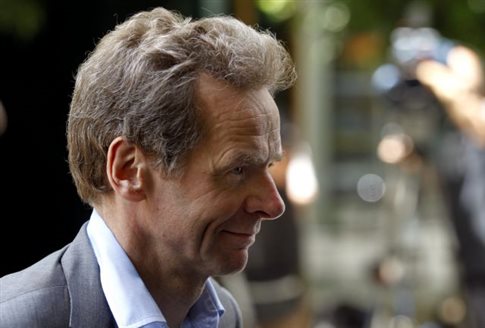
Ο επικεφαλής του Ευρωπαϊκού Τομέα του ΔΝΤ Π.Τόμσεν (Φωτογραφία: ΑΠΕ )

Έμμεση πλην σαφή απάντηση στον επικεφαλής του Eurogroup Γερούν Ντάισελμπλουμ έδωσε ο επικεφαλής του Ευρωπαϊκού Τομέα του Διεθνούς Νομισματικού Ταμείου Πολ Τόμσεν, ο οποίος, μιλώντας από τη Λίμα του Περού, τόνισε ότι ότι το χρέος της Ελλάδας δεν είναι βιώσιμο και ξεκαθάρισε ότι το «ΔΝΤ δεν πρόκειται να συμμετάσχει στη χρηματοδότηση του ελληνικού προγράμματος, αν προηγουμένως η Ευρώπη δεν προχωρήσει σε μία γενναία ελάφρυνση του δημοσίου χρέους της χώρας».

Το χρέος της Ελλάδας έχει γίνει εξαιρετικά μη βιώσιμο (highly unsustainable), είπε ο κ. Τόμσεν προτρέποντας τους Ευρωπαίους να προχωρήσουν σε μία γενναία ελάφρυνσή του, καθώς, όπως είπε, οι μεταρρυθμίσεις από μόνες τους δεν αρκούν, προκειμένου η χώρα να επανέλθει στο δρόμο της βιώσιμης ανάπτυξης.

Ξεκαθάρισε ότι χωρίς ελάφρυνση του χρέους, το ΔΝΤ δεν θα συμμετάσχει χρηματοδοτικά στο νέο πρόγραμμα, ενώ απέφυγε να προσδιορίσει το πώς εννοεί το ΔΝΤ την ελάφρυνση αυτή.

O πρόεδρος του Eurogroup Γερούν Ντάισελμπλουμ ανέφερε την Παρασκευή υπάρχει «ευρεία συναίνεση» πως η ελάφρυνση του ελληνικού χρέους θα πρέπει να επιτευχθεί με την επιβολή ετήσιου ορίου στο κόστος εξυπηρέτησής του, σε επίπεδα μέχρι το 15% του ΑΕΠ.

Σχολιάζοντας την αναφορά αυτή, ο Πολ Τόμσεν δήλωσε «το ποιος θα είναι ο ακριβής στόχος θα πρέπει να το συζητήσουμε, όμως δεν υπάρχει αμφιβολία για εμάς ότι εάν η Ευρώπη επιλέξει να παράσχει ελάφρυνση χρέους με επιμήκυνση της περιόδου χάριτος και των περιόδων αποπληρωμής, τότε μιλάμε για μία ιδιαίτερη σημαντική περίοδο χάριτος και μία ιδιαίτερα σημαντική περίοδο αποπληρωμής.

Ο κ. Τόμσεν εκτίμησε ότι ο κίνδυνος αναζωπύρωσης της κρίσης στην Ελλάδα έχει περιοριστεί σημαντικά με τη νέα συμφωνία που υπέγραψε η ελληνική κυβέρνηση το καλοκαίρι. Όπως είπε, η ελληνική κυβέρνηση εμφανίζεται έτοιμη να συζητήσει για τις αναγκαίες μεταρρυθμίσεις στις οποίες πρέπει να προχωρήσει η χώρα.

Ωστόσο, διευκρίνισε ότι η ατζέντα των μεταρρυθμίσεων στις οποίες θα πρέπει να προχωρήσει η κυβέρνηση, κυρίως στο συνταξιοδοτικό, αλλά και στο δημοσιονομικό πεδίο, είναι αρκετά μεγάλη. Ωστόσο, όπως είπε χαρακτηριστικά, «καλωσορίζουμε την ελληνική κυβέρνηση η οποία φαίνεται να αντιλαμβάνεται αυτή την αναγκαιότητα».

Πηγή:in.gr

Eurozone, IMF still at odds over Greek debt

dijsselbloem_eurogroup_web-thumb-large

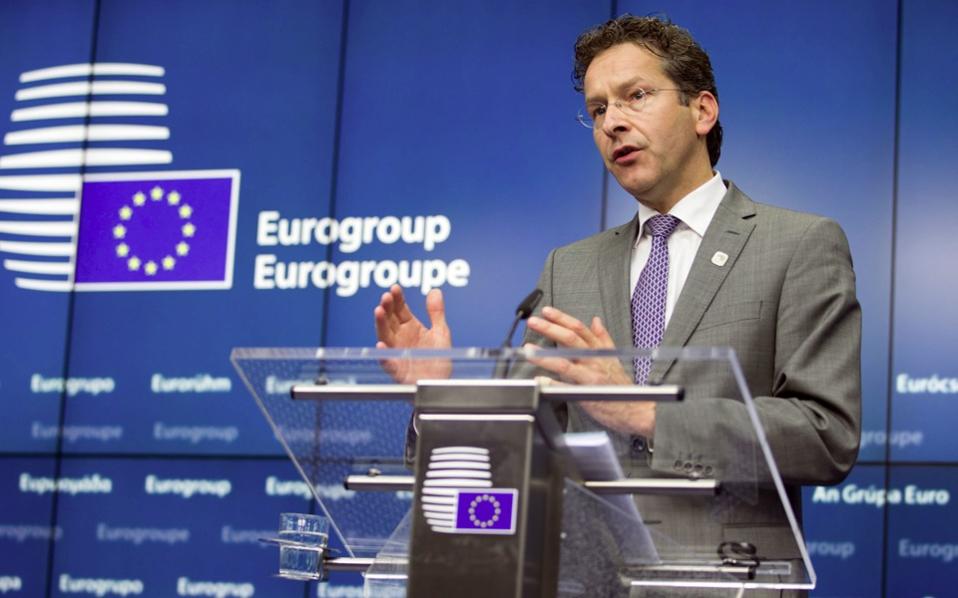
Under increasing pressure from the International Monetary Fund to ease Greece’s debt, Eurogroup head Jeroen Dijsselbloem said on Friday that the sustainability criterion for the country’s arrears is that the yearly cost of servicing them does not exceed 15 percent of the Greek gross domestic product. However, the IMF is calling for a “significant” extensions to Greece’s grace period and the repayment period.

Dijsselbloem said any measures to be decided regarding the further restructuring of Greece’s debt will be in the long term and under certain conditions that the eurozone is currently examining, adding that the real need for a lightening of the debt will come in 15 years’ time.

This came as a response to Athens’s insistence on putting the issue on the agenda, effectively telling the government it should not expect any major relief moves.

Dutch Finance Minister Dijsselbloem also told Reuters that the analyses of the European Stability Mechanism foresee no funding problems in Greece during the next 15 years and that “we’ll see whether there is an increase to the funding needs in the next 30 years.” However, he noted that the definitive decisions on the issue will only be made after consulting with the members of the eurozone, the European Commission and the IMF.

Poul Thomsen, the IMF’s director for Europe, reiterated the Fund’s position that, as it stands, the Greek debt is unsustainable and requires interventions of a “significant” size by the creditors.

“We think the Greek debt has become highly unsustainable,” Thomsen told a news conference on the sidelines of an IMF meeting in Lima on Friday. “We think that Greece cannot deal with its debt just through reforms and adjustment, without debt relief,” he said.

Thomsen added that the discussion on how to provide debt relief to Greece has shifted from a nominal haircut on the stock of its debt to capping gross financing needs, but without referring to the 15 percent threshold. “What the exact targets should be, we will have to discuss, but there is no doubt in our mind that if Europe wants to go the route of providing relief by lengthening the grace period and lengthening the repayment period, we are looking at a significant lengthening of the grace period and significant lengthening of the repayment period,” Thomsen said.

The Fund has made it known it will only take part if the eurozone takes some new debt relief measures, and Dijsselbloem stressed that he desires the participation of the IMF in the new bailout program for Greece, before adding that the loans offered by the IMF have a far higher interest rate than the European ones and part of the current program concerns the gradual replacement of the IMF loans with more European ones.

Speaking to Bloomberg, the Dutch minister commented that “it will take one or two additional measures and assurances [for the IMF] to participate. One of them is the social security reform, plus certain assurances on the fiscal issues and of course the debt; we will come to it in November,” said Dijsselbloem.

He did add that “approach is becoming ever more clear. We will examine how Greece will be able to manage its debt on an annual basis.” He said that, in this context, “we have done a lot to reduce the interest that Greece will have to pay and we have granted a repayment period of 32.5 years. Therefore, there should be no problem with the management of the debt; but we will discuss with the IMF on that. I am sure we will reach an agreement.”

source:ekathimerini.com

Greek Islands see surge in refugee arrivals

lesvos_refugees_arrival-thumb-large

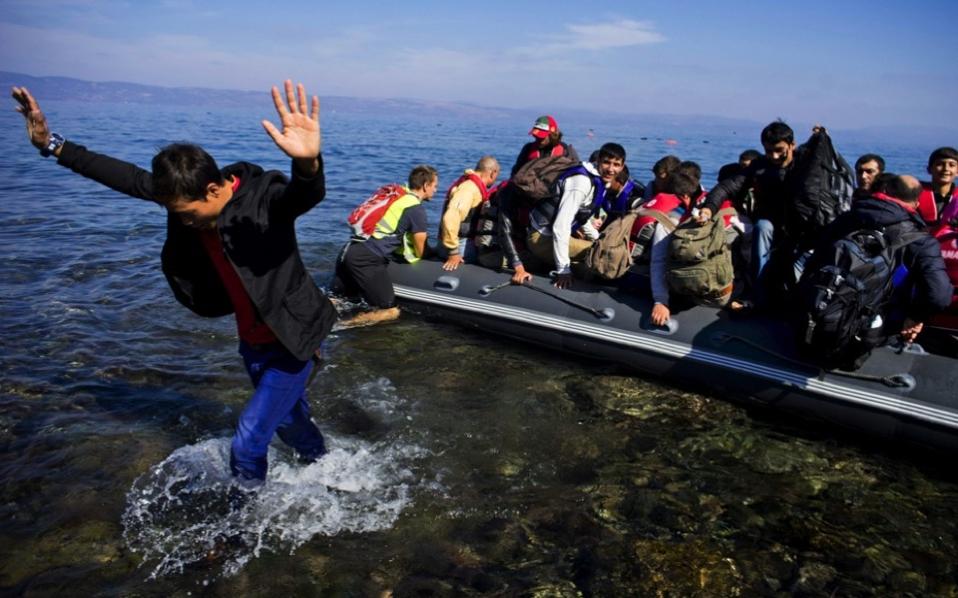
The number of refugees arriving on Greek islands has risen from 4,500 a day in late September to 7,000 over the past week, the International Organization for Migration (IOM) said Friday, as a toddler was found dead off the coast of Lesvos in the eastern Aegean.

Speaking ahead of a visit to Lesvos Saturday and a meeting with Prime Minister Alexis Tsirpas in Athens later in the week, UN High Commissioner for Refugees Antonio Guterres said asylum seekers appeared to be making a move before weather conditions deteriorate.

“All of a sudden, with the kind of weather that you have in the Balkans, this can be a tragedy at any moment,” Guterres said.

The IOM data came as a baby died after the motor of the rubber dinghy carrying him and another 56 people broke down off Levsos, the coast guard said Friday. The 1-year-old boy, whose nationality was not reported, was found unconscious and taken to a hospital, where he was pronounced dead.

Investigation

Also Friday, sources said that a police officer who was photographed kicking a refugee in a temporary reception center on Lesvos had been identified. He is expected to be summoned to explain himself following an urgent investigation into the incident.

Meanwhile, the UN refugee agency (UNHCR) welcomed the departure Friday of a first group of asylum seekers from Italy to Sweden under the EU’s relocation scheme and expressed hope that the Greek program will start soon.

“We think it will be a slow start but will accelerate once the process functions,” UNHCR spokesperson Melissa Fleming said.

Skepticism

In a related development Friday, Greece’s opposition voiced skepticism over the “Draft Action Plan” unveiled during Turkish President Recep Tayyip Erdogan’s visit to Brussels. According to the plan, which is expected to be ratified by the next EU summit later this month, Turkey will join Greek coast guard operations in the Aegean.

“The wording of the plan is extremely worrying as it does not specify the sea area in which the neighboring country will have a right to operate,” conservative heavyweight Dora Bakoyannis said.

source:ekathimerini.com