Monthly Archives: August 2015

The barbarian invasions…?

idomeni-thumb-large

When talking of invasions, barbarians and refugees, let us consider who is the true barbarian

“The situation is dire. Waves and waves of illegal immigrants are flooding our shores. We are dealing with an invasion. We are not safe anymore.”

This is the manner in which a cousin from Samos expressed his feelings about the flood of refugees reaching the shores of that island, along with many others, in their thousands recently. Those refugees are fleeing the continuing conflict in Syria and Iraq that has caused thousands of civilian deaths and displaced millions, in what is possibly the largest humanitarian catastrophe of our present age.

In Kos, it is reported that refugees may possibly outnumber residents. As the already beleaguered Greek state struggles and not particularly succeeds in accommodating floods of people fleeing war, this is leading to social disruption, racism and, on the part of some desperate and hungry refugees, crime. One can see why the plight of 2,000 refugees, including women, babies and small children, who were locked in a football stadium without access to food, water or bathroom facilities last week on Kos can exacerbate already present feelings of desperation and frustration on the part of refugees already brutalised by war, leading to the riots and acts of violence on that island.

The Greek state and the largely sympathetic Greek people currently have neither the resources nor the capability to accommodate, even for a short period, the sojourn of these refugees. The refugees (for they are not, as is insensitively claimed, ‘illegal immigrants’) in turn will do whatever they can to secure the resources they need to feed their families. If it was your infant child that was compelled to sleep on a piece of cardboard in the open air, as is depicted in the picture accompanying these words, most plausibly, you would be willing to act in a similar fashion.

As refugees who have fled the region during past conflicts have told me, no one wishes to leave their countries unless they absolutely have to. The refugees who make their way to Greece, after first having lost their homes and having to pay people smugglers a small fortune in order to find a place on overcrowded and unseaworthy vessels, do so, not in the hope of staying in Greece or subjecting Greece to Islam (which is ridiculous since a large percentage of them are Christians fleeing religious persecution), but in search of temporary succour in their quest to reach the more developed, democratic and safe Western world they have heard so much about.

The hysterical claims by many frustrated Greeks, however, to the effect that Greece and more broadly Europe is facing a barbarian invasion that will have untold social and economic ramifications upon the continent, require closer scrutiny.

A millennium and a half ago, much of Europe was ruled by the Roman Empire, a state that had reached an unprecedented level of material wealth, bureaucratic and ideological conformity. Arguably, the longevity and internal cohesion of that empire rested upon a gradually-realised consensus that Roman rule was justified. Such a consensus was the product of a complex conversation between the central government and its far-flung peripheries. It follows logically that those immediately without that periphery would, if not adopt, at least become familiar with the Roman way of life and in times of crisis, when there own customs, institutions and resources failed them, to seek refuge and or to avail themselves of the benefits of Romanity.

The Gothic refugee crisis further illuminates the point. In the summer and autumn of 376, tens of thousands of displaced Goths and other tribes arrived at the border of the Roman Empire on the Danube River, seeking asylum from the Huns who were attacking them. The Gothic leader, Fritigern, appealed to the Roman emperor Valens for asylum across the Danube in Roman territory. Valens agreed, stipulating however that the weak, old, and sickly must be left on the far bank to fend for themselves against the Huns.

Rome was unable to supply the Goths with either the food they were promised or land. Instead, they were herded into a temporary holding area surrounded by an armed Roman garrison. There was only enough grain left for the Roman garrison, and so they simply let the Goths starve. When Fritigern appealed to Valens for help, he was told that his people would find food in the distant city of Marcianopolis. When they arrived there, they were denied entry and assassination attempts were made against their leaders. Consequently, the Goths embarked upon plundering expeditions that led to a war in which they were able to kill Valens, plunder most of the Balkans to an extent that they did not recover for centuries and extort protection money from the Romans.

Similarly 100,000 of the beleaguered Slavic peoples, seeking refuge from the Turkic Avars, who in turn were being persecuted by other nomadic tribes, poured into Thrace in the late sixth century, taking over Roman cities and gradually making their way down to the Peloponnese, where they settled in large numbers.

In the first instance, failure by the Romans to accommodate Gothic refugees adequately, address their needs or find a solution to their humanitarian catastrophe led to the wholesale sack of the Roman Empire and untold misery. A similar set of circumstances took place in the US in the aftermath of Cyclone Katrina, proving that this is not a phenomenon of civilisation but rather, one of the human condition.

In the second instance, which was occasioned by Roman inability to police their borders owing to wars with the Persians, a campaign of gradual assimilation (punctuated, of course, by bouts of violence on both sides) seemed to pay dividends, as these populations gradually assimilated within the Empire, although not without strife or occasional disharmony.

There are lessons that Greece and Europe can learn from the ‘barbarian invasions’. They can and will happen, regardless of how much we attempt to ‘turn back the boats’ and the more inept or indeed callous the treatment of those on the periphery seeking to get in (recently a visiting Polish dignitary advised the Italian mayor of Lampedusa, where the refugee crisis from Libya has reached cataclysmic proportions, to merely let the refugees drown), the more violent in their desperation they will become, with unforeseen consequences for their host societies and for humanity in general as refugees become ‘barbarians’ and are thus dehumanised.
When Rome was the world, the world was Rome, and the rest of the globe was largely isolated from the effects of the refugee crises of late antiquity. Now, when the ‘West’ spans the globe, the after-shocks of the mass movement of population, caused partly by the mismanagement of world affairs by the West itself, is a global responsibility.

The refugees, first and foremost, need our sympathy, not expressions of fear, horror and indignation at their presence. They need to be humanely processed, housed, fed and accommodated fairly and it is in the interests of all developed countries to partake in this endeavour. It goes without saying that effective action to cease the multitude of wars blighting our planet is the one main preventative measure that would nip such crises in the bud.
Finally, when talking of invasions, barbarians and refugees, let us consider who is the true barbarian: he who has everything and denies another who has lost everything his needs, or he who has nothing and must do whatever he can to survive. In this, the finally word goes to the Theanthropos Himself, by way of the Gospel of Matthew:
“For I was hungry, and you gave me to eat; I was thirsty, and you gave me to drink; I was a stranger, and you took me in.”

* Dean Kalymniou is a Melbourne solicitor and freelance writer.

Source: Neos Kosmos


Panathinaikos dumped out of Europe

article1983_w_hr

Athens club knocked out by a team from Azerbaijan formed just ten year ago

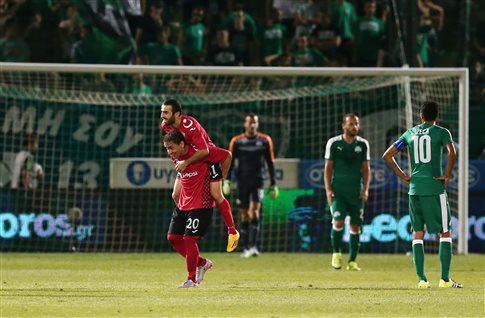
Supporters of Panathinaikos are calling for the immediate resignation of coach Yiannis Anastasiou after their side was eliminated from the Europa League by a club from Azerbaijan that was established just ten years ago.

A 2-2 draw in Athens on Thursday saw Azerbaijani side Qabala go through on the away goals rule.
PAO fans begun chanting against Anastasiou, almost all the players and club president Yiannis Alafouzos.

Qabala opened the scoring in just the sixth minute when a Dodô headed home from very close range to the bottom left corner following a corner.

PAO equalised in the 34th minute through their star player, Swedish striker Marcus Berg, whose left footed shot from the centre of the box went into the top left corner.

Dodô then scored his second of the night to put Qabala back in the lead as his right footed shot from the centre of the box flew into the top right corner.

PAO then grabbed one back through Nano González in the 78th minute when his right footed shot from outside the box found the net following a set piece situation.

That set up a frantic final ten minutes but PAO was unable to find the winning goal and was eventually booed off the field by the home supporters.

In Denmark, Thessaloniki club PAOK drew 1-1 with local side Brondby, giving PAOK a 6-1 win on aggregate.
In front of just 6630 supporters Brondby never looked like threatening PAOK’s commanding first leg 5-0 lead.

PAOK went ahead through a first half header by Ricardo Costa, only for Brondby to draw level through Elba Rashani, who capitalised on an error by PAOK’s goalkeeper.

In Istanbul Turkish club Fenerbahce defeated Atromitos 3-0 in the second leg of the Europa League qualifiers to go through 4-0 on aggregate.

The Brazilian striker Fernandao scored two goals. The third was an own goal by the Belarusian goalkeeper Andrey Gorbunov.
That leaves PAOK and Asteras Tripolis as the only two Greek sides in the Europa League this season.

Source: Neos Kosmos

Champion’s League: Tough draw for Olympiakos

Fussball-Die-Gegner-des-FC-Bayern-Muenchen-in-der-Gruppenphase_image_630_420f

Greeks to face Bayern Munich and Arsenal in Champions League

Olympiakos will begin their European Champions League campaign with a home tie against German giants Bayern Munich on Wednesday 16 September.

The Greek Champions were drawn into Group F, alongside Bayern, English Premier League club Arsenal and Croatian champions Dinamo Zagreb.

Olympiakos have only ever met Bayern once in Europea competition in the 1980/81 European Champion Clubs’ Cup first round, a 4-2 triumph in Piraeus setting up Bayern’s 7-2 aggregate success.

Arsenal and Olympiakos are in the same group for the fourth time in seven seasons, having also been drawn together in 2009/10, 2011/12 and 2012/13. Each of the six preceding games has been won by the home team. This will be the third time that the final game of the group stages will be Olympiakos versus Arsenal in Piraeus.

Dinamo and Olympiakos have faced off in two previous ties, each winning one. Dinamo overturned a 3-1 away defeat in the 1977/78 UEFA Cup first round courtesy of a 5-1 second-leg triumph and then Olympiakos took belated revenge in the 1998/99 UEFA Champions League group stage, collecting four points with a 2-0 home victory and 1-1 away draw.

Olympiakos defender Dimitris Siovas says the draw is a difficult one but Olympiakos can be the surprise package.

“We were drawn into a tough group, but we have proved in the past that we can respond to challenges. We are strong at home and we will try to make the most of it – that will be key. We have beaten Arsenal before and that is why we can dream of progress – we can snatch second place from them,” Siovas said after the draw.

source: Neos Kosmos

Στη Λήμνο 60 νοσοκόμες από την Αυστραλία και τη Νέα Ζηλανδία

246adfa6b5ee191ff0ce8f3559bae9d6_L

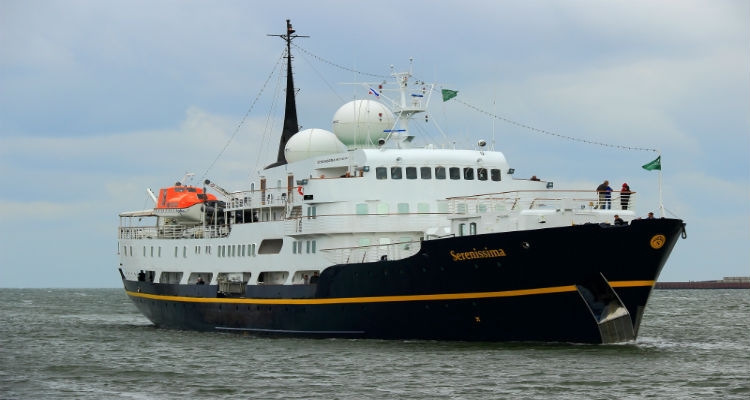
Την Πέμπτη 3 Σεπτεμβρίου πρόκειται να πραγματοποιήσουν διήμερη επίσκεψη στη Λήμνο 60 νοσοκόμες από την Αυστραλία και τη Νέα Ζηλανδία και 10 ακόμη επισκέπτες, οι οποίοι θα καταφθάσουν με κρουαζιερόπλοιο, προκειμένου να αποτίσουν φόρο τιμής στις νοσοκόμες που προσέφεραν τις υπηρεσίες τους στη Λήμνο κατά τον 1ο Παγκόσμιο Πόλεμο.

 Μία από τις πιο σημαντικές ημερομηνίες στην ιστορία Anzac-Λήμνου είναι η 8η Αυγούστου 1915, κατά την οποία ένα μεγάλο σώμα αυστραλών νοσοκόμων έφθασε στη Λήμνο για να περιθάλψει έναν τεράστιο αριθμό τραυματιών που μεταφέρθηκαν στο νησί.

Οι νοσοκόμες που πρόκειται να επισκεφθούν τη Λήμνο, με επικεφαλής την κ. ClareAshton, στην οποία ανήκει η πρωτοβουλία του ταξιδιού, φορώντας στολές εκείνης της εποχής, θα περπατήσουν στο δρόμο όπου οι αυστραλές νοσοκόμες περπάτησαν στην Πούντα πριν από 100 χρόνια.

Το κρουαζιερόπλοιο που θα μεταφέρει τις νοσοκόμες ονομάζεται “Serenissima” και προγραμματίζεται να καταπλεύσει στη Λήμνο την Πέμπτη 3 Σεπτεμβρίου και να δέσει στο Μούδρο, ενώ στις 4 Σεπτεμβρίου θα καταπλεύσει στη Μύρινα.

Ακολουθεί το πρόγραμμα:

Πέμπτη 3 Σεπτεμβρίου

7:30 π.μ. – Άφιξη Κρουαζιερόπλοιου

8:30 π.μ. μεταφορά στην Πούντα και παρέλαση με τις στολές των νοσοκόμων του 1ου Παγκοσμίου Πολέμου.

xartis

10:00 π.μ. Ομιλίες από εκπροσώπους τοπικών αρχών και νοσοκόμων. (κίτρινο Χ στο χάρτη)

10:30 π.μ. αναχώρηση για το Πορτιανού, επίσκεψη στο «AnzacCafé», επίσκεψη στο Συμμαχικό Νεκροταφείο του Πορτιανού, όπου θα γίνει μία μικρή τελετή μνήμης με ανάγνωση κειμένων.

12:00 μ.μ.  Επιστροφή στο πλοίο

15:00 Μεταφορά στο Συμμαχικό Νεκροταφείο του Μούδρου

Επίσκεψη στο Συμμαχικό Νεκροταφείο, τη φωτογραφική έκθεση και το μνημείο στο Μούδρο


Παρασκευή 4 Σεπτεμβρίου

07:30 π.μ.  Άφιξη στη Μύρινα

14:00   Επίσκεψη στα Θέρμα και την Ηφαιστία

18:00   Αναχώρηση για το Τσανάκαλε

Πηγή:limnosfm100.gr

Psychosis, HIV: The reality of ice addiction from inside Australian hospital

Horrific … this is the reality of ice addiction as seen in Australian hospitals. Picture: Gary Ramage

WE left Royal Perth Hospital thinking what we’d seen was as bad as it could get: an HIV-positive ice user, in a state of extreme fury, spitting at emergency and security staff try to help him.

We missed what happened the following day. A fly-in, fly-out worker, who’d taken ice in the morning, suffered a massive brain bleed, caused by rocketing blood pressure. He was an organ donor by lunchtime.

So many users, so many hurting parents and so many people in recovery. Somehow, ice has got under the nation’s guard.

Hidden face of addition … Angela (not her real name) in emergency being treated for ice-related illness. Picture: Gary Ramage

Those who quarrel whether or not we should call it an “ice epidemic” are having a time-wasting conversation with themselves. On a four-week national journey undertaken by News Corp Australia, it was clear ice has insinuated itself on every town and city.

ICE NATION: RETRACE OUR JOURNEY HERE

It continues to move fast among the population as criminals hunt huge profits for a drug that is almost worthless to produce, while police struggle to keep up with complex financial transactions, big and small imports, local makers and local marketplaces, otherwise known as neighbourhoods.

Without being a pharmacologist, it is hard to understand why ice, properly called methylamphetamine, is so different to its siblings: common amphetamine, known as speed; and to MDMA, known as ecstasy.

WHAT’S YOUR SOLUTION? JOIN THE EXPERTS IN OUR ICE
BLOG AT NOON AEST, 11:30am IN SA & 10am IN THE WEST

Professor George Braitberg, head of emergency at Royal Melbourne Hospital, explains in simple terms: “Methylamphetamine is the amphetamine molecule with a methyl on the end of it.

“What that does is drive it into the brain faster. You get the sudden rush and that is the most addictive part.”

What we found was that emergency departments in big cities — where shifts comprise 20 or 30 workers, each whom needed to agree to the media being present — were glad to give us access.

We never heard them whining about their frontline burden, even though they are at risk. But they don’t like what they’re dealing with and want the public to understand the magnitude of the problem.

We met one or two small-town coppers who were defensive, saying the ice issue was overblown. You got the idea maybe they thought it was a poor reflection on their own policing.

Traumatic … a young man in the emergency ward of Royal Perth Hospital in a state of ice-induced psychosis. Picture: Gary Ramage

Most police were unashamed to say their communities are overrun. Some, in outback or rural towns, admit police-community relations have been poor for decades.

And that was about the only positive we saw out of ice problem. Police are using it to try and rebuild relations as they explain this is a shared problem that goes beyond traditional policing.

They say chucking every user in jail is not the answer. They want a modern solution for a current problem.

What is not clear is why ice is so popular in this country, apart from the fact that criminals are relentlessly shoving it in the faces of citizens.

One explanation is that the first try is so good it’s hard to deny yourself a second. That doesn’t explain why you’d try it in the first place.

We visited and then parked outside a Cloud 9 shop in Perth, which legally sells bongs and ice pipes. The foot traffic coming in and out of that shop in a short time was remarkable — mostly young men.

The morality of such operations aside, it was put to us by one older user that his kid, who is also a user, thinks owning an ice pipe is cool.

Operation Crossroads … Director of Emergency Medicine at Royal Melbourne Hospital, Professor George Braitberg. Picture: Derrick den Hollander

When a drug such as ice becomes socially acceptable among young Australians, unfortunately it means schoolchildren need exposure to a strong countering message.

They need to see what a psychotic who has shredded his inhibition really looks like; and for those who live in places where they already see such behaviour, perhaps among their parents, they need it explained to them.

They need to know they are at risk from things children would never normally think of, such as heart attack and stroke. And of mental illness, now firmly linked to prolonged ice use.

They need to understand how short the step is from the ice pipe to the needle, where the risks of contracting Hep C and HIV become high, as does the chance of becoming someone who sources black-market opiates to get relief from ice binges.

Desperate for a new start … ice addict Melissa Collins, 28, from Canberra, is seeking help at the Fresh Start foundation in Perth because she says there’s nothing for her in the east. She has been using for 16 years and has a son in foster care because of her addiction. Picture: Gary Ramage

There is an army of parents and recovering users who are already mobilised and sharing their stories.

But how do you place “Angela”, a long-time Melbourne user with infected veins, in a national conversation? She told us: “I don’t think about not using it. I wish I could get more.”

The head of the Australian Crime Commission, Chris Dawson, as a former WA deputy police commissioner, gained a reputation as someone who cares deeply about problems in indigenous communities.

Now he oversees the nation’s ice problem. He says that everyone in the country has in some way been touched at a personal level by ice.

It’s pretty easy to test that statement to see if it holds true. I can think of three, straight up.

source:theaustralian.com.au

Lionel Messi beats Cristiano Ronaldo and Luis Suarez to Uefa’s best player award

&MaxW=640&imageVersion=default&AR-150829040

Lionel Messi was on Thursday voted Uefa’s best player in Europe for 2014-2015 with Germany’s Celia Sasic winning the women’s award.

The Argentina forward, who won the Uefa Champions League, Spain’s Primera Liga and Copa del Rey with Barcelona, claimed the award for the second time ahead of Cristiano Ronaldo and Luis Suarez.

“I am happy to win the award. I thank all my teammates because they deserve part of it. I depend a lot on the team like everyone else,” the 28-year-old said.

Messi also won in 2010-2011 and succeeds Real Madrid rival Ronaldo who won last year.

FFC Frankfurt’s Sasic, 27, was voted the best women’s player ahead of France’s Amandine Henry and fellow German Dzsenifer Marozsan.

Sasic, who retired last month, was the top scorer in the Champions League which Frankfurt won, the Bundesliga and at the Women’s World Cup in Canada where she won the Golden Boot award.

source:thenational.ae

Judge Vassiliki Thanou sworn in as Greece’s first female prime minister

1440713895747

Los Angeles: Vassiliki Thanou, president of Greece’s supreme court, was sworn in on Thursday as head of a caretaker government that will lead the heavily indebted nation until elections expected next month.

President Prokopis Pavlopoulos​ appointed Ms Thanou, 65, as the country’s first female prime minister after leaders of the three main political parties failed to form a coalition to replace the government of outgoing Prime Minister Alexis Tsipras. Her administration will be sworn in on Friday, according to a statement from Mr Pavlopoulos’ office.

Mr Tsipras announced his resignation last week and said he would seek a new mandate after members of his radical-left party, Syriza, rebelled over austerity measures demanded by the nation’s creditors.

The party won election in January on promises to end the deep budget cuts and tax increases imposed in exchange for two bailouts from Greece’s European partners and the International Monetary Fund totaling nearly €245 billion ($380 billion) since 2010. Greece’s economy contracted 25 per cent and unemployment soared to as high as 26 per cent over the five years of belt-tightening.

More than 60 per cent of Greek voters rejected the terms of a new package of loans in a referendum last month, only to have Mr Tsipras agree to even tougher conditions for a €85 billion bailout. He said it was the best deal he could get to save Greece’s banks from imminent collapse, keep the country in the euro currency and avoid defaulting on international loans.

Parliament approved the agreement, but only with the support of opposition parties. The former energy minister, Panagiotis Lafazanis, broke with Syriza last week to form the new Popular Unity party.

Mr Tsipras said it was now up to voters to decide “who will lead Greece, and how”. He remains popular, but it is unclear whether Syriza can win enough parliamentary seats to govern without a coalition partner.

In an interview Wednesday with Greece’s Alpha TV, Mr Tsipras ruled out forming a government with the conservative New Democracy, the socialist PASOK or the centrist To Potami parties.

That could leave Syriza’s current partner, the small, right-wing Independent Greeks, as the only viable option.

source:smh.com.au

Μπάγερν, Αρσεναλ και Ντιναμό Ζ. στον δύσκολο όμιλο του Ολυμπιακού

74DB408A6A0529CCAE4FC4983B14E804

Μαχαίρια… ήταν τα χέρια του Κάρλες Πουγιόλ, καθώς ο παλαίχαμος άσος της Μπαρτσελόνα τράβηξε το μπαλάκι του Ολυμπιακού και τον έστειλε στον 6ο όμιλο, έναν από τους πιο δύσκολους, απέναντι στη Μπάγερν Μονάχου, την Αρσεναλ και τη Ντιναμό Ζάγκρεμπ. Η 1η αγωνιστική των ομίλων θα διεξαχθεί στις 15 και 16 Σεπτεμβρίου. Αυτοί είναι οι τρεις «ερυθρόλευκοι» αντίπαλοι με ονόματα και αριθμούς!

Το πρόγραμμα του (6ο) ομίλου του Ολυμπιακού:

1η αγωνιστική – Τετάρτη 16 Σεπτ. 2015
Ντιναμό Ζάγκρεμπ – Αρσεναλ
Ολυμπιακός – Μπάγερν

2η αγωνιστική – Τρίτη 29 Σεπτ. 2015
Μπάγερν – Ντιναμό Ζάγκρεμπ
Αρσεναλ – Ολυμπιακός

3η αγωνιστική – Τρίτη 20 Οκτ. 2015
Αρσεναλ – Μπάγερν
Ντιναμό Ζάγκρεμπ – Ολυμπιακός

4η αγωνιστική – Τετάρτη 4 Νοεμβρ. 2015
Μπάγερν – Αρσεναλ
Ολυμπιακός – Ντιναμό Ζάγκρεμπ

5η αγωνιστική – Τρίτη 24 Νοεμβρ. 2015
Αρσεναλ – Ντιναμό Ζάγκρεμπ
Μπάγερν – Ολυμπιακός

6η αγωνιστική – Τετάρτη 9 Δεκ. 2015
Ντιναμό Ζάγκρεμπ – Μπάγερν
Ολυμπιακός – Αρσεναλ

Δείτε πώς σχηματίστηκαν όλοι οι όμιλοι της εφετινής κορυφαίας διασυλλογικής διοργάνωσης…

1ος όμιλος
Παρί Σεν Ζερμέν (Γαλλία)
Ρεάλ Μαδρίτης (Ισπανία)
Σαχτάρ Ντόνετσκ (Ουκρανία)
Μάλμε (Σουηδία)

1η αγωνιστική – Τρίτη 15 Σεπτ. 2015
Παρί Σ.Ζ. – Μάλμε
Ρεάλ Μαδρίτης – Σαχτάρ Ντόνετσκ

2η αγωνιστική – Τετάρτη 30 Σεπτ. 2015
Σαχτάρ Ντόνετσκ – Παρί Σ.Ζ.
Μάλμε – Ρεάλ Μαδρίτης

3η αγωνιστική – Τετάρτη 21 Οκτ. 2015
Μάλμε – Σαχτάρ Ντόνετσκ
Παρί Σ.Ζ. – Ρεάλ Μαδρίτης

4η αγωνιστική – Τρίτη 3 Νοεμβρ. 2015
Σαχτάρ Ντόνετσκ – Μάλμε
Ρεάλ Μαδρίτης – Παρί Σ.Ζ.

5η αγωνιστική – Τετάρτη 25 Νοεμβρ. 2015
Μάλμε – Παρί Σ.Ζ.
Σαχτάρ Ντόνετσκ – Ρεάλ Μαδρίτης

6η αγωνιστική – Τρίτη 8 Δεκ. 2015
Παρί Σ.Ζ. – Σαχτάρ Ντόνετσκ
Ρεάλ Μαδρίτης – Μάλμε

2ος όμιλος
Αϊντχόφεν (Ολλανδία)
Μάντσεστερ Γ. (Αγγλία)
ΤΣΣΚΑ Μόσχας (Ρωσία)
Βόλφσμπουργκ (Γερμανία)

1η αγωνιστική – Τρίτη 15 Σεπτ. 2015
Βόλφσμπουργκ – ΤΣΣΚΑ Σόφιας
Αϊντχόφεν – Μάντσεστερ Γ.

2η αγωνιστική – Τετάρτη 30 Σεπτ. 2015
Μάντσεστερ Γ. – Βόλφσμπουργκ
ΤΣΣΚΑ Σόφιας – Αϊντχόφεν

3η αγωνιστική – Τετάρτη 21 Οκτ. 2015
ΤΣΣΚΑ Σόφιας – Μάντσεστερ Γ.
Βόλφσμπουργκ – Αϊντχόφεν

4η αγωνιστική – Τρίτη 3 Νοεμβρ. 2015
Μάντσεστερ Γ. – ΤΣΣΚΑ Σόφιας
Αϊντχόφεν – Βόλφσμπουργκ

5η αγωνιστική – Τετάρτη 25 Νοεμβρ. 2015
ΤΣΣΚΑ Σόφιας – Βόλφσμπουργκ
Μάντσεστερ Γ. – Αϊντχόφεν

6η αγωνιστική – Τρίτη 8 Δεκ. 2015
Βόλφσμπουργκ – Μάντσεστερ Γ.
Αϊντχόφεν – ΤΣΣΚΑ Σόφιας

3ος όμιλος
Μπενφίκα (Πορτογαλία)
Ατλέτικο Μαδρ. (Ισπανία)
Γαλατασαράι (Τουρκία)
Αστάνα (Καζακστάν)

1η αγωνιστική – Τρίτη 15 Σεπτ. 2015
Γαλατασαράι – Ατλέτικο Μαδρ.
Μπενφίκα – Αστάνα

2η αγωνιστική – Τετάρτη 30 Σεπτ. 2015
Αστάνα – Γαλατασαράι
Ατλέτικο Μαδρ. – Μπενφίκα

3η αγωνιστική – Τετάρτη 21 Οκτ. 2015
Ατλέτικο Μαδρ. – Αστάνα
Γαλατασαράι – Μπενφίκα

Αστάνα – Ατλέτικο Μαδρ.
4η αγωνιστική – Τρίτη 3 Νοεμβρ. 2015
Μπενφίκα – Γαλατασαράι

5η αγωνιστική – Τετάρτη 25 Νοεμβρ. 2015
Ατλέτικο Μαδρ. – Γαλατασαράι
Αστάνα – Μπενφίκα

6η αγωνιστική – Τρίτη 8 Δεκ. 2015
Γαλατασαράι – Αστάνα
Μπενφίκα – Ατλέτικο Μαδρ.

4ος όμιλος
Γιουβέντους (Ιταλία)
Μάντσεστερ Σίτι (Αγγλία)
Σεβίλη (Ισπανία)
Γκλάντμπαχ (Γερμανία)

1η αγωνιστική – Τρίτη 15 Σεπτ. 2015
Μάντσεστερ Σίτι – Γιουβέντους
Σεβίλη – Γκλάντμπαχ

2η αγωνιστική – Τετάρτη 30 Σεπτ. 2015
Γκλάντμπαχ – Μάντσεστερ Σίτι
Γιουβέντους – Σεβίλη

3η αγωνιστική – Τετάρτη 21 Οκτ. 2015
Γιουβέντους – Γκλάντμπαχ
Μάντσεστερ Σίτι – Σεβίλη

4η αγωνιστική – Τρίτη 3 Νοεμβρ. 2015
Γκλάντμπαχ – Γιουβέντους
Σεβίλη – Μάντσεστερ Σίτι

5η αγωνιστική – Τετάρτη 25 Νοεμβρ. 2015
Γιουβέντους – Μάντσεστερ Σίτι
Γκλάντμπαχ – Σεβίλη

6η αγωνιστική – Τρίτη 8 Δεκ. 2015
Μάντσεστερ Σίτι – Γκλάντμπαχ
Σεβίλη – Γιουβέντους

5ος όμιλος
Μπαρτσελόνα (Ισπανία)
Λεβερκούζεν (Γερμανία)
Ρόμα (Ιταλία)
ΜΠΑΤΕ Μπορίσοφ (Λευκορωσία)

1η αγωνιστική – Τετάρτη 16 Σεπτ. 2015
Λεβερκούζεν – ΜΠΑΤΕ Μπορίσοφ
Ρόμα – Μπαρτσελόνα

2η αγωνιστική – Τρίτη 29 Σεπτ. 2015
Μπαρτσελόνα – Λεβερκούζεν
ΜΠΑΤΕ Μπορίσοφ – Ρόμα

3η αγωνιστική – Τρίτη 20 Οκτ. 2015
ΜΠΑΤΕ Μπορίσοφ – Μπαρτσελόνα
Λεβερκούζεν – Ρόμα

4η αγωνιστική – Τετάρτη 4 Νοεμβρ. 2015
Μπαρτσελόνα – ΜΠΑΤΕ Μπορίσοφ
Ρόμα – Λεβερκούζεν

5η αγωνιστική – Τρίτη 24 Νοεμβρ. 2015
ΜΠΑΤΕ Μπορίσοφ – Λεβερκούζεν
Μπαρτσελόνα – Ρόμα

6η αγωνιστική – Τετάρτη 9 Δεκ. 2015
Λεβερκούζεν – Μπαρτσελόνα
Ρόμα – ΜΠΑΤΕ Μπορίσοφ

6ος όμιλος
Μπάγερν (Γερμανία)
Αρσεναλ (Αγγλία)
ΟΛΥΜΠΙΑΚΟΣ
Ντιναμό Ζάγκρεμπ (Κροατία)

7ος όμιλος
Τσέλσι (Ισπανία)
Πόρτο (Αγγλία)
Ντιναμό Κιέβου (Ουκρανία)
Μακάμπι Τελ Αβίβ (Ισραήλ)

1η αγωνιστική – Τετάρτη 16 Σεπτ. 2015
Ντιναμό Κιέβου – Πόρτο
Τσέλσι – Μακάμπι Τελ Αβίβ

2η αγωνιστική – Τρίτη 29 Σεπτ. 2015
Μακάμπι Τελ Αβίβ – Ντιναμό Κιέβου
Πόρτο – Τσέλσι

3η αγωνιστική – Τρίτη 20 Οκτ. 2015
Πόρτο – Μακάμπι Τελ Αβίβ
Ντιναμό Κιέβου – Τσέλσι

4η αγωνιστική – Τετάρτη 4 Νοεμβρ. 2015
Μακάμπι Τελ Αβίβ – Πόρτο
Τσέλσι – Ντιναμό Κιέβου

5η αγωνιστική – Τρίτη 24 Νοεμβρ. 2015
Πόρτο – Ντιναμό Κιέβου
Μακάμπι Τελ Αβίβ – Τσέλσι

6η αγωνιστική – Τετάρτη 9 Δεκ. 2015
Ντιναμό Κιέβου – Μακάμπι Τελ Αβίβ
Τσέλσι – Πόρτο

8ος όμιλος
Ζενίτ Αγ. Πετρούπολης (Ρωσία)
Βαλένθια (Ισπανία)
Λιόν (Γαλλία)
Γάνδη (Βέλγιο)

1η αγωνιστική – Τετάρτη 16 Σεπτ. 2015
Βαλένθια – Ζενίτ Αγ.Πετρ.
Γάνδη – Λιόν

2η αγωνιστική – Τρίτη 29 Σεπτ. 2015
Λιόν – Βαλένθια
Ζενίτ Αγ.Πετρ. – Γάνδη

3η αγωνιστική – Τρίτη 20 Οκτ. 2015
Ζενίτ Αγ.Πετρ. – Λιόν
Βαλένθια – Γάνδη

4η αγωνιστική – Τετάρτη 4 Νοεμβρ. 2015
Λιόν – Ζενίτ Αγ.Πετρ.
Γάνδη – Βαλένθια

5η αγωνιστική – Τρίτη 24 Νοεμβρ. 2015
Ζενίτ Αγ.Πετρ. – Βαλένθια
Λιόν – Γάνδη

6η αγωνιστική – Τετάρτη 9 Δεκ. 2015
Βαλένθια – Λιόν
Γάνδη – Ζενίτ Αγ.Πετρ.

Πηγή:in.gr

Αποκλεισμός ντροπή για ΠΑΟ, έξω ο Ατρόμητος, πέρασε ο ΠΑΟΚ

3075B145DD27465722C53B49BFBEE5A9

Ο Παναθηναϊκός έγραψε μία από τις πιο ντροπιάστηκες σελίδες στην ευρωπαϊκή Ιστορία του, καθώς με την ισοπαλία που έφερε στη Λεωφόρο (Παναθηναϊκός – Καμπάλα 2-2), γνώρισε τον αποκλεισμό από την Καμπάλα στο Europa League. Επεισόδια μετά το τέλος του αγώνα. Με σκυμμένο κεφάλι ο Αναστασίου, τον στηρίζει ο Αλαφούζος.

Αντίθετα, ο ΠΑΟΚ απλά «σφράγισε» το εισιτήριο στους ομίλους παίρνοντας την ισοπαλία (Μπρόντμπι – ΠΑΟΚ 1-1) στη Δανία κόντρα στη Μπρόντμπι.

Ο Ατρόμητος δεν μπόρεσε να πετύχει το θαύμα με τη Φενέρμπαχτσε να παίρνει τη νίκη – πρόκριση (Φενέρμπαχτσε – Ατρόμητος 3-0).

Επτάσφαιρη Ντόρτμουντ, νοκ άουτ η Σαουθάμπτον

Στο μεταξύ, από τις υπόλοιπες ποδοσφαιρικές αναμετρήσεις του Europa League, η Ντόρτμουντ προκρίθηκε με το εξωπραγματικό 7-2 κόντρα στην Οντ Γκρένλαντ.

Ίσως την έκπληξη της βραδιάς πέτυχε η Μίντιλαντ που απέκλεισε την Σαουθάμπτον, ενώ σχετικά δύσκολα προκρίθηκαν Άγιαξ, Μπιλμπάο, Μπορντό και Σεντ-Ετιέν

Πηγή:in.gr

UEFA Champions League group stage draw

2275352_w2

The UEFA Champions League group stage draw threw up a reunion for José Mourinho while Paris Saint-Germain will meet Real Madrid and Juventus face Manchester City and Sevilla.

The UEFA Champions League group stage is set following the draw in Monaco on Thursday.

Chelsea manager José Mourinho will return to Porto, with whom he won the UEFA Champions League in 2004, while Paris Saint-Germain are up against Real Madrid in Group A. In Group D, meanwhile, last season’s runners-up Juventus will face Manchester City as well as 2014/15 UEFA Europa League winners Sevilla. The holders, Barcelona, take on Bayer Leverkusen, Roma and BATE Borisov.

FULL FIXTURE LIST

2015/16 UEFA Champions League group stage draw
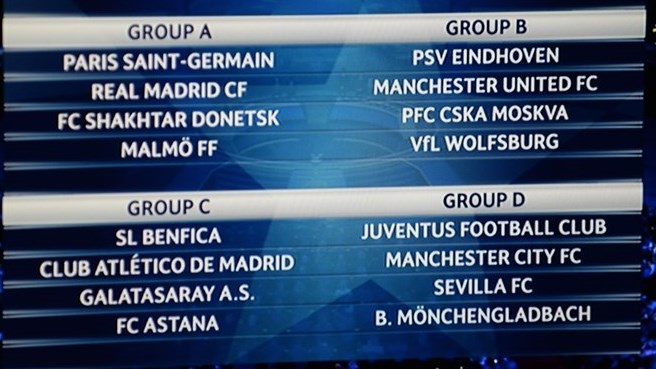
Group A: Paris Saint-Germain, Real Madrid, Shakhtar Donetsk, Malmö

Group B: PSV Eindhoven, Manchester United, CSKA Moskva, Wolfsburg

Group C: Benfica, Atlético, Galatasaray, Astana

Group D: Juventus, Manchester City, Sevilla, Borussia Mönchengladbach

Group E: Barcelona, Bayer Leverkusen, Roma, BATE Borisov

Group F: Bayern München, Arsenal, Olympiacos, Dinamo Zagreb

Group G: Chelsea, Porto, Dynamo Kyiv, Maccabi Tel-Aviv

Group H: Zenit, Valencia, Lyon, Gent

Group stage dates
Matchday one: 15–16/09/14
Matchday two: 29–30/09/14
Matchday three: 20–21/10/14
Matchday four: 03–04/11/14
Matchday five: 24–25/11/14
Matchday six: 08–09/12/14

source:uefa.com