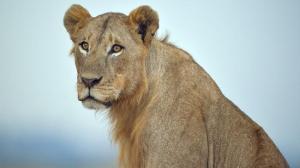
A lion has attacked a tour guide in the same Safari park in which a much-loved lion was killed by a US tourist.
A lion has attacked and killed a safari guide in the same Africa game park in which Cecil the lion was controversially hunted down in July.
The attack happened in Zimbabwe when the guide was leading a group of tourists in the national park that was the home of Cecil the lion, who was killed by an American bow hunter.
Quinn Swales was leading a walking safari in Hwange National Park when he spotted six lions on Monday, police spokeswoman Charity Charamba said on Tuesday.
“One of the lions had cubs and they became hostile. Mr. Swales at first manage to scare the lions away but then the male lion later made a U-turn and attacked him,” Charamba told The Associated Press. None of the tourists was harmed, she said.
Swales was taking six tourists on a walking safari when he spotted fresh lion spoor and decided to track a pride of lions consisting of two females, two cubs and two males, according to the Zimbabwe National Parks and Wildlife Management Authority.
The lion, named Nxaha, attacked Swales, the parks authority said. The lion had a collar that allowed researchers to track his movements.
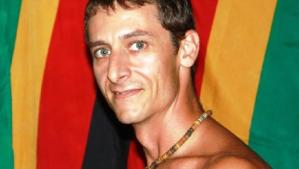
Zimbabwe tour guide Quinn Swales was mauled by the lion where ‘Cecil’ was killed. Picture: Facebook
Camp Hwange, the safari company that employed Swales, said the 40-year-old guide succumbed to the injuries on the same day he was attacked.
“It is with deep regret and great sadness that we are able to confirm the death of Quinn Swales, a Camp Hwange professional guide, who was fatally mauled by a male lion whilst out on a walking safari,” Camp Hwange said.
“He was tracking lions when a male lion unexpectedly charged,” said the park’s statement issued on Monday, adding that Swales was leading a photographic walking safari when he was attacked.
Camp Hwange’s Facebook page says it offers game drives and game walks where “game likely to be encountered include all of the cat family, wild dog, elephants and buffalo in huge numbers.”
Swales was an experienced professional with an excellent reputation in the safari community.
On the Camp Hwange Facebook page, where a statement of Swales’ death was posted, one user who went on a 10 kilometre walking safari led by Swales said: “After we left Hwange, our group talked about who we would want near if the end of the world ever came. Quinn was top of the list.”
Walking safaris in which tourists hike through African reserves teeming with dangerous big game are “highly popular and attacks by animals extremely infrequent,” said Trevor Lane, an official of the Safari Operators Association of Zimbabwe.
“I don’t recall any such incidents of an unprovoked attack around the Hwange area in the last 30 to 40 years,” said Lane.
“This is no reason to stop walking safaris. It’s been going on for years and it is a great experience. It is very popular, highly sought after.”
The killing of Cecil by dentist James Walter Palmer just outside Hwange park sparked outrage. Cecil was also collared for an Oxford University study.
Cecil was reportedly lured with bait from the safety of the park before being killed by Mr Palmer, an American dentist armed with a bow and arrow who paid $US55,000 ($76,804.92) to shoot a lion.
Palmer’s guide on the expedition, Zimbabwean Theo Bronkhorst, appeared in court last month and was granted $US1,000 bail pending his trial on September 28 on charges of organising an illegal hunt.
In a separate incident in Zimbabwe, the parks authority said a man who sold curios to tourists was killed by an elephant in the resort town of Victoria Falls, about 100 kilometres from Hwange, also on Monday.
Source: theaustralian.com.au









 STUDIO 3 NEWCASTLE AUSTRALIA