Monthly Archives: July 2015

Australia stands with Greece

pro-euro-protestors-in-athens-greece-data%20(1)

Solidarity rallies are being held in Melbourne, Sydney and Brisbane.

This Sunday 5 July, the people of Greece are called to make a critical decision about their future within the Eurozone in a referendum.

Greeks are called to vote either ‘YES’ to another round of harsh demands imposed by the EU, ECB and IMF, or ‘NO’ to further austerity, which will lead the country in uncharted territory.

In a show of solidarity, the people of Melbourne are holding a peaceful demonstration tomorrow, Saturday 4 July outside the Parliament Of Victoria.

Organised by The Greek Ambassadors (Πρεσβευτές της Ελλάδας) non-profit organisation, the official rally will begin at 1.00 pm and will be joined by thousands of expatriate Greeks.

A second rally is also being held in Victoria which will start from the Oakleigh Station Square Shopping Centre’s entrance at 6.30 pm.

Down under Greek communities are pressured to send money back home, hence an Australian Hellenic Initiative has been set up so locals can raise money for crisis relief of poor families.

Brisbane’s Greeks have been called join a solidarity march held in Brisbane’s King George Square on Saturday, at 10.00 am.

“Please join us in this historic moment and let the Greek people know that Sydney Stands With Greece,” says Christine Stamatis Hatzikalimnios.

Mrs Hatzikalimnios started a Facebook page to support a peaceful demonstration outside the Sydney Opera House on the same day from 1:00 pm until 2:30 pm.

“We stand for Democracy and whatever the Greek people decide. We trust that they are capable of making their own decisions for their country,” she adds.

source:Neos Kosmos

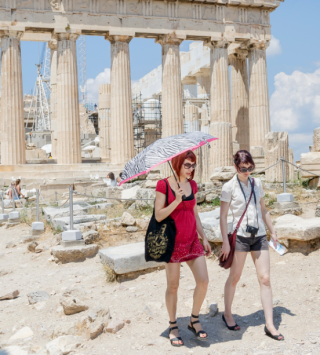
Australians heading to Greece?

acro

Flights to Athens full but keep your cash close, say travel agents.

Heightened tensions in the Hellenic Republic are unlikely to disrupt the plans of thousands of Australians jetting off for the Aegean summer, according to travel agents.

Capital controls imposed this week by the Greek government only affect Greek bank account holders, with credit and debit card holders with Australian banks immune from the €60 limit set on daily ATM withdrawals.

But the real problem may be finding ATMs with cash to dispense and visitors should be prepared for lengthy queues.

Greece’s tourism ministry said on Monday that an extended ‘bank holiday’ would be in effect until at least Monday July 6.

In a statement to international media the ministry added that the country had “adequate fuel supplies as well as products and services, to ensure that everyday holiday experiences of visitors will not be disrupted on the islands or in mainland Greece”.

Melbourne travel agent Jaqui Preketes told Neos Kosmos that as news of the Greek government’s rejection of the creditors’ proposal spread, many people were trying to get last-minute flights to Greece to withdraw as much of their money as they could.

Ms Preketes said that with visitors to Greece being advised to take more cash than usual, risks to personal security are higher.

“Travellers should always maintain a sense of caution, no matter where they are.”

Touchdown Tours’ managing director said one of her concerns was the effect on hotel operators and customers without pre-paid bookings.

“I do worry how this inability to access cash will affect them. If a client doesn’t have a credit card and can only access limited funds from ATMs, how will they pay their hotel bill if it hasn’t been pre-paid from Australia?”

With huge uncertainty about the aftermath of the referendum when tensions are likely to increase further, Ms Preketes said avoiding the centre of Athens might be advisable.

“Syntagma Square is often where riots are likely begin, if they do start.”

Fellow Victorian travel agent Kon Kavalakis said that with Greek Australians used to periods of anxiety in Greece, travellers heading to Athens would take it in their stride.

“Concerns are there, but no one is cancelling their trip. We’ve had enquiries about the money situation, but tourists won’t have problems using their cards.

“A lot have gone over in the last couple of weeks, and at the moment you can’t find a seat,” said the managing director of Grecian Tours, who will handle up to 3,000 bookings, mostly from Greek Australians over the European summer.

“Given the situation as it stands, if you’re going to Greece, it’s probably good to carry more cash to cover any shortfall, but from what we’re told by our operators there it’s business as usual.”

Asked what long-term impact there would be on tourism if Greece was forced to leave the eurozone, Mr Kavalakis said there could be benefits, if not for the Greek people, for overseas visitors.

“There’d be a timeframe where things would be in limbo, but we’ll just have to cope with that. With the drachma being so much weaker than the Australian dollar, it would probably make holidays cheaper for Australians.”

source:Neos Kosmos

Deal will be done regardless of referendum result – Varoufakis

imageAJWP8XK1

Finance minister denies Sunday’s vote will determine Greece’s membership of euro

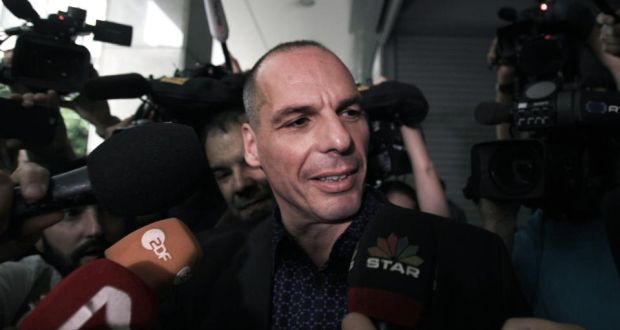
Greece’s finance minister Yanis Varoufakis said a deal on his country’s debt would be agreed regardless of the outcome of Sunday’s referendum.

Mr Varoufakis said if people vote Yes to the proposed bailout terms the Greek government would sign up to the deal on the table.

However, if they vote No, as his government is urging, a deal would also be done, he said.

“During this week of impasse, we’ve had some very decent proposals coming from official Europe, confidentially, and a deal is more or less done,” he told RTE’s Morning Ireland programme.

“The difference between a Yes and a No vote is that a Yes is going to lead to an unsustainable…a very bad agreement for both Greece and Europe,” Mr Varoufakis said.

He said behind-the-scene negotiations were continuing despite public pronouncements from European leaders that no negotiations would take place until after Sunday’s vote.

Mr Varoufakis denied the vote would determine whether Greece remained in the euro zone, insisting the country would stay in the single currency and that deposits in Greek banks were safe.

“The creditors have chosen this path of playing hardball, of blackmailing our government with bank closures but that’s going to end after the referendum, when we deliver a verdict one way or the other.”

He was speaking as a new poll gave a slight lead for the Yes vote in favour of the bailout conditions at 44.8 per cent against 43.4 per cent on the No side, with 11.8 per cent undecided.

The latest poll was published a day after the International Monetary Fund (IMF) delivered a stark warning of the huge financial hole facing Greece, suggesting the country needed major debt restructuring and a possible debt write-down to tackle its “unsustainable debt”.

Mr Varoufakis admitted the IMF’s assessment was “music to his ears” as he and his government had been arguing all along that Greece’s debt was unsustainable.

Responding to Taoiseach Enda Kenny’s assertion that Greece should not be given debt relief, he said the Irish people had been “saddled with a preposterous debt” and that they should join forces with the Greeks and possibly the Portuguese to request “a very sensible” debt relief exercise.

source:irishtimes.com

Greece will need relief for ‘unsustainable debt’, says IMF

image

Anti-Euro protesters scuffle with riot police at the European Union representation offices in Athens, Greece, July 2nd, 2015. Photograph: Panayiotis Tzamaros/Reuters

Missed repayment and capital controls likely to have ‘significant adverse impact’

Greece will need debt restructuring and a possible debt write-down to tackle its “unsustainable debt”, the International Monetary Fund (IMF) said on Thursday in a stark analysis of the embattled Greek economy.

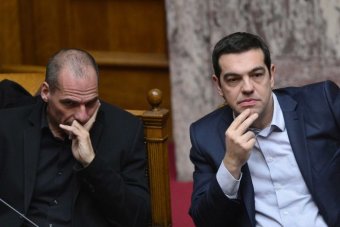
While the renewed call for debt relief is likely to provide a boost to Greek prime minister Alexis Tsipras ahead of Sunday’s referendum, the IMF also warned the chain of events that saw Greece miss a loan repayment to the IMF and the imposition of capital controls this week are likely to have “a significant adverse economic and financial impact” on the Greek economy.

The IMF predicts Greece will need more than €50 billion in new financing over the next three years. It also slashed its growth forecast for Greece this year from 2.5 per cent to 0 per cent.

The report was published amid increasing signals from European Union lenders that a No vote on Sunday would jeopardise discussion of a further bailout programme.

Speaking in The Hague, eurogroup president Jeroen Dijsselbloem said Greece was likely to “have no place in the euro zone” if it voted no in Sunday’s referendum.

Illusion
Mr Dijsselbloem directly contradicted claims by Syriza that a No vote would strengthen Greece’s hand in future negotiations with lenders. “One illusion must be swept from the table: that if the outcome is negative then everything can be renegotiated and you will end up with an easier and more attractive package.”

French prime minister Manuel Valls was also unequivocal. “We are asking [Greek voters] to vote with their eyes open and think hard about all the consequences of a No vote, which could lead Greece to leave the euro zone.”

The comments were echoed by ECB board member Josef Bonnici, who said that the terms of any future emergency funding for Greek banks would depend on the outcome of the referendum.

As banks in Greece remained closed for a fourth day, Greek finance minister Yanis Varoufakis said he would resign if Greece voted Yes in the plebiscite, though he would remain a member of parliament. “I personally won’t sign an extend and pretend [agreement]” he said.

Calling for a No vote, he insisted Greek banks would open on Tuesday as planned, and blamed creditors for shutting the banks.

source:irishtimes.com

IMF admits: we failed to realise the damage austerity would do to Greece

IMF-chief-Christine-Lagar-010

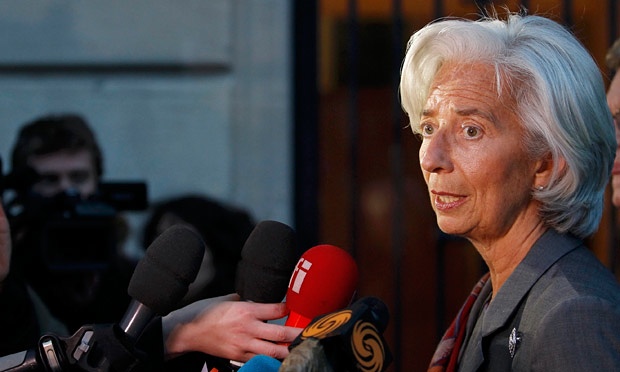
IMF chief Christine Lagarde. Greek media recently quoted IMF her describing 2011 as a ‘lost year’, partly because of miscalculations by the EU and IMF. Photograph: Stephane Mahe/Reuters

Athens officials react to report with glee, saying it confirms that the price extracted for country’s bailout package was too high

The International Monetary Fund admitted it had failed to realise the damage austerity would do to Greece as the Washington-based organisation catalogued mistakes made during the bailout of the stricken eurozone country.

In an assessment of the rescue conducted jointly with the European Central Bank (ECB) and the European commission, the IMF said it had been forced to override its normal rules for providing financial assistance in order to put money into Greece.

Fund officials had severe doubts about whether Greece’s debt would be sustainable even after the first bailout was provided in May 2010 and only agreed to the plan because of fears of contagion.

While it succeeded in keeping Greece in the eurozone, the report admitted the bailout included notable failures.

“Market confidence was not restored, the banking system lost 30% of its deposits and the economy encountered a much deeper than expected recession with exceptionally high unemployment.”

In Athens, officials reacted with barely disguised glee to the report, saying it confirmed that the price exacted for the €110bn (£93bn) emergency package was too high for a country beset by massive debts, tax evasion and a large black economy.”

Under the weight of such measures – applied across the board and hitting the poorest hardest – the economy, they said, was always bound to dive into an economic death spiral.

“For too long they [troika officials] refused to accept that the programme was simply off-target by hiding behind our failure to implement structural reforms,” said one insider. “Now that reforms are being applied they’ve had to accept the bitter truth.”

The IMF said: “The Fund approved an exceptionally large loan to Greece under an stand-by agreement in May 2010 despite having considerable misgivings about Greece’s debt sustainability. The decision required the Fund to depart from its established rules on exceptional access. However, Greece came late to the Fund and the time available to negotiate the programme was short.”

But having agreed that there were exceptional circumstances that warranted the biggest bailout in the Fund’s history, officials were taken aback by the much bigger than expected slump in the Greek economy. The country is now in its fifth year of recession and the economy has contracted by 17%. The IMF thought it would contract by just 5.5%.

In the evaluation of the package provided in 2010, the IMF said: “Given the danger of contagion, the report judges the programme to have been a necessity, even though the Fund had misgivings about debt sustainability.

“There was, however, a tension between the need to support Greece and the concern that debt was not sustainable with high probability (a condition for exceptional access).

“In response, the exceptional access criterion was amended to lower the bar for debt sustainability in systemic cases. The baseline still showed debt to be sustainable, as is required for all Fund programmes.”

In the event, the report added, the Fund was open to criticism for making economic projections that were too optimistic.”

While the report says a deep recession was unavoidable, it is critical of senior officials in Brussels and European capitals who said Greece would fare better outside the euro. Concerns that Greece could be ejected from the euro and return to the drachma intensified an already febrile situation.

“Confidence was also badly affected by domestic social and political turmoil and talk of a Greek exit from the euro by European policymakers,” it said.

Brussels also struggled to co-ordinate its policies with the ECB in Frankfurt, according to the report.

“The Fund made decisions in a structured fashion, while decision-making in the eurozone spanned heads of state and multiple agencies and was more fragmented.”

The Greek media recently quoted IMF managing director Christine Lagarde describing 2011 as a “lost year” partly because of miscalculations by the EU and IMF.

The authoritative Kathimerini newspaper said the report identified a number of “mistakes” including the failure of creditors to agree to a restructuring of Greece’s debt burden earlier – a failure that had had a disastrous effect on its macroeconomic assumptions.

“From what we understand the IMF singles out the EU for criticism in its handling of the problem more than anything else,” said one well-placed official at the Greek finance ministry.

He added: “But acknowledgement of these mistakes will help us. It has already helped cut some slack and it will help us get what we really need which is a haircut on our debt next year.”

source:theguardian.com

Greek debt crisis: IMF says another 52 billion euros in funding required

6181138-3x2-340x227

The International Monetary Fund has warned that Greece will probably need an extra 52 billion euros in bailout loans over the next three years.

Earlier this week, Greece became the first developed economy to fall in arrears to the IMF when it missed a 1.5 billion euro loan repayment.

Now an IMF staff report has warned that Greece has fallen so far behind on its previous bailout commitments under a program agreed in 2012 that it will need over 50 billion euros ($73 billion) in concessional financing from international and European agencies between October 2015 and October 2018.

Using existing arrangements as a guide, around two-thirds of that would need to come from euro area states, who are reluctant to extend Greece further funding without more austerity on the part of the Greeks.

Even with such concessional loans, the IMF has warned that Greece will remain very vulnerable to economic and financial shocks, with government debt hardly easing, from nearly 180 per cent of GDP now to an estimated 150 per cent in 2020 and 140 per cent in 2022.

As a comparison, Australia’s government debt to GDP ratio is around 30 per cent.

The IMF said that for Greece to meet the debt targets outlined in the 2012 bailout agreement it is likely that creditors will need to take a haircut equivalent to a reduction in debt of over 30 per cent of Greece’s GDP.

However, that looks increasingly unlikely, with European Union leaders talking tough ahead of Greece’s Sunday referendum on whether Greeks support the savings, tax and reform measures put forward by creditors.

The head of the Eurogroup has warned that if Greece votes “no” to austerity measures this weekend it risks its place in the eurozone.

Greek government likely to resign if ‘yes’ vote wins

The comments are a direct rebuke to Greece’s prime minister, who has twice urged his constituents to vote “no”.

The country is busily preparing for this weekend’s referendum, just as limits on cash withdrawals start to bite.

There are now plenty of shops that are refusing to accept credit cards or bank cards. Some discretionary spending is being avoided altogether.

At an optometrist in the Athens suburb of Kallithea, there has not been a single customer all week.

Owner Stavroula Kyerianidou said she does not know how long the current financial crisis will drag on for, but she cannot endure too much more.

“Of course it has a great impact on me. My only income is from this shop. So if people are not spending money and don’t come here, I don’t earn anything,” she said.

Authorities in Athens insist the banks will be open next week, after the referendum to decide whether Greeks should accept the terms of the latest bailout deal.

The result will likely be close: an opinion poll indicates 47 per cent of Greeks will vote yes and 43 per cent will reject the austerity measures. That means 10 per cent of voters are yet to make up their minds.

Whatever happens, the implications will be widespread. Greek finance minister Yanis Varoufakis said, if the country accepts the harsh reality of more austerity, he will resign.

The prime minister, Alexis Tsipras, has not been quite as explicit, but he is widely expected to do the same.

He is also warning against handing over control of the country’s finances to its creditors.

“Despite the fact that we are in unprecedented economic difficulty, we must keep the core of our sovereignty,” Mr Tsipras told his constituents.

“We will decide how to distribute the funds. We will decide where to make the cuts.”

source:abc.net.au

Ηχηρό μήνυμα από ΗΠΑ: Να υπάρξει βιώσιμη λύση για την Ελλάδα

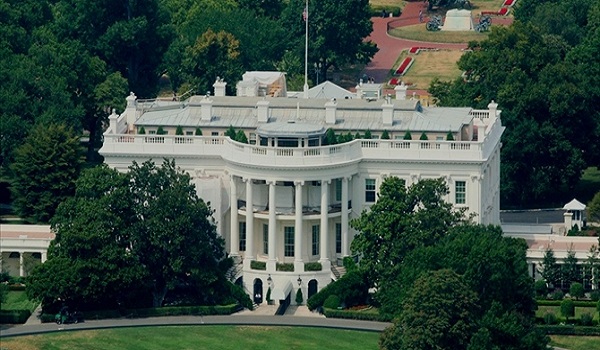
leukos_oikos_madata_242570935

«Η Ελλάδα δεν είναι απλά μία χώρα της Ευρώπης, αλλά μια πολύ σημαντική χώρα στην Ευρώπη», τόνισε ο πρεσβευτής των ΗΠΑ στην Ελλάδα, εκφράζοντας την ευχή και την ελπίδα να υπάρξει βιώσιμη λύση μεταξύ Αθήνας και δανειστών.

Στο χαιρετισμό που απηύθυνε στους προσκεκλημένους στην δεξίωση που δόθηκε στην πρεσβευτική κατοικία με την ευκαιρία της επετείου της 4ης Ιουλίου, κατά την οποία τιμάται η υιοθέτηση της Διακήρυξης της Ανεξαρτησίας των Ηνωμένων Πολιτειών, ο Ντέιβιντ Ντ. Πιρς επεσήμανε την ανάγκη να ξεπεραστούν τα υφιστάμενα προβλήματα και να μπει η Ελλάδα στον δρόμο της ανάπτυξης και της προόδου, με την υιοθέτηση μεταρρυθμίσεων.

Παρόντες στην δεξίωση ήταν ο υπουργός Εξωτερικών, Νίκος Κοτζιάς, ο υπουργός Άμυνας, Πάνος Καμμένος, ο υπουργός Δικαιοσύνης, Νίκος Παρασκευόπουλος, ο αναπληρωτής υπουργός Διοικητικής Μεταρρύθμισης, Γιώργος Κατρούγκαλος, ο αναπληρωτής υπουργός Υποδομών, Μεταφορών και Δικτύων, Χρήστος Σπίρτζης, ο αναπληρωτής υπουργός Πολιτισμού, Νίκος Ξυδάκης, ο υφυπουργός Εθνικής Άμυνας, Νίκος Τόσκας, η πρόεδρος της Ένωσης Ελληνικών Τραπεζών, Λούκα Κατσέλη, πρώην υπουργοί, βουλευτές, διπλωμάτες και εκπρόσωποι του επιχειρηματικού κόσμου.

Στη διάρκεια της εκδήλωσης παιδική χορωδία έψαλε τους εθνικούς ύμνους των ΗΠΑ και της Ελλάδας και τραγούδησε το τραγούδι «Απρίλη μου ξανθέ», του Μίκη Θεοδωράκη.

Πηγή:madata.gr

ΔΝΤ: Μη βιώσιμο το χρέος της Ελλάδος. Προτείνει κούρεμα στο 30%

imf_sign_web-thumb-large

Κούρεμα του Χρέους κατά 30%, προκειμένου να καταστεί βιώσιμο, προτείνει το Διεθνές Νομισματικό Ταμείο στην Έκθεση Βιωσιμότητας που εκδόθηκε το μεσημέρι της Πέμπτης.

Σύμφωνα με την Έκθεση, το ΔΝΤ προβλέπει ότι το Χρέος της χώρας θα βρίσκεται στο 150% του ΑΕΠ το 2020 και κοντά στο 140% του ΑΕΠ ΤΟ 2022.

Το ΔΝΤ εκτιμά ότι οι χρηματοδοτικές ανάγκες της Ελλάδος για την τριετία 2015-2018 θα φθάσουν τα 50 δισεκ. ευρώ και εκτιμά ότι είναι αναγκαίο ένα νέο πρόγραμμα βοήθειας ύψους τουλάχιστον 36 δισεκ. ευρώ από την Ευρωπαϊκή Ένωση.

Το ΔΝΤ θεωρεί ότι εξαιτίας της εύθραυστης δυναμικής που παρουσιάζει το Δημόσιο Χρέος απαιτούνται ευρύτερες συναινέσεις μεταξύ των πιστωτών της χώρας προκειμένου να αποκατασταθεί η βιωσιμότητα του.

Στο πλαίσιο αυτό προτείνει να επεκταθεί η περίοδος χάριτος που έχει παραχωρηθεί για τα δάνεια του Μνημονίου στα 20 χρόνια και σταδιακή αποπληρωμή των δανείων που έχει χορηγήσει η ΕΕ στα 40 χρόνια.

Αναλυτικά η ανακοίνωση του Ταμείου:

«Στην τελευταία αξιολόγηση τον Μάιο 2014, το δημόσιο χρέος της Ελλάδας εκτιμήθηκε ότι επιστρέφει στην οδό της βιωσιμότητας, αν και παρέμενε πολύ ευάλωτο στα σοκ. Μέχρι αργά το καλοκαίρι του 2014, με τα επιτόκια να έχουν μειωθεί περαιτέρω, φάνηκε ότι δεν θα χρειαζόταν περαιτέρω ελάφρυνση χρέους βάσει του πλαισίου του Νοεμβρίου 2012, αν το πρόγραμμα εφαρμοζόταν όπως είχε συμφωνηθεί.

Όμως σημαντικές αλλαγές που έγιναν έκτοτε στις πολιτικές –χαμηλότερα πρωτογενή πλεονάσματα και μια αδύναμη μεταρρυθμιστική προσπάθεια που θα επιβαρύνει την ανάπτυξη και τις ιδιωτικοποιήσεις– οδηγούν σε σημαντικές νέες ανάγκες χρηματοδότησης.

Με δεδομένο επιπλέον το πολύ υψηλό υφιστάμενο χρέος, αυτές οι νέες χρηματοδοτικές ανάγκες καθιστούν μη βιώσιμη τη δυναμική του χρέους. Το συμπέρασμα αυτό ισχύει είτε εξετάσει κανείς το χρέος βάσει του πλαισίου του Νοεμβρίου 2012 είτε στρέψει την προσοχή στην εξυπηρέτηση του χρέους ή στις συνολικές χρηματοδοτικές ανάγκες.

Για να εξασφαλισθεί με υψηλές πιθανότητες ότι το χρέος είναι βιώσιμο, οι ελληνικές πολιτικές πρέπει να επανέλθουν σε σωστή πορεία, αλλά επίσης, κατ’ ελάχιστον, οι ωριμάνσεις των υφιστάμενων ευρωπαϊκών δανείων πρέπει να επιμηκυνθούν σημαντικά, ενώ θα χρειασθεί να παρασχεθεί νέα ευρωπαϊκή χρηματοδότηση με παρόμοιους όρους παραχώρησης για να καλυφθούν οι χρηματοδοτικές ανάγκες τα επόμενα χρόνια.

Όμως αν το πακέτο των μεταρρυθμίσεων που εξετάζεται αποδυναμωθεί περαιτέρω –ιδιαίτερα μέσω μιας περαιτέρω μείωσης των στόχων για το πρωτογενές πλεόνασμα και ακόμη ασθενέστερων διαρθρωτικών μεταρρυθμίσεων– θα καταστεί απαραίτητο να γίνουν κουρέματα του χρέους».

Πηγή:madata.gr

Whether Greece votes Yes or No, austerity is here to stay

web-co-huebner-0702

Kurt Hübner is Jean Monnet Chair for European Integration and Global Political Economy in at the University of British Columbia’s Institute for European Studies.

Berlin and Brussels have toughened up their position: No further negotiations with the Greek government before the outcome of Sunday’s referendum is known.

Chance are that the Yes camp will succeed. If so, the current Greek government would lose all its credibility, and the international institutions would have no reason to offer it further compromises. If the No side prevails, the situation would be slightly different, at least in terms of shifts in negotiation power, as the Syriza-led government would then have a good hand for its case to at least slightly soften austerity, and more so to move to a debt-restructuring plan.

But all the political theatre and posturing of the past few days can’t make Greece’s economic realities disappear. And these realities are dire.

Greece won’t be able to make its debt service payments to the European Central Bank in July or August. Unlike its defaults to the International Monetary Fund, this default will have immediate negative consequences. The ECB will have to make the difficult decision to stop accepting the collateral that allows Greece’s central bank to continue its emergency liquidity assistance (ELA), for the simple reason that a default on ECB payments will undermine, even destroy the quality of collateral of Greek banks.

Until now, ELA has been the channel that kept Greek banks liquid, kind of. If the ECB shuts this channel down, the problems will get messier by the day. At the moment, the combination of capital controls and selective bank holidays prevent an immediate breakdown of the Greek financial industry. A withdrawal of ELA will require Greek banks to write off their claims against the Greek state – claims amounting to about €22-billion – which would bring down the equity capital of Greek banks to about €30-billion ($41-billion Canadian).

That’s not enough to keep them working properly: Euros would become a scarce asset, and banks might have problems filling ATMs. A recapitalization of the banking industry would be necessary, and the question would be who provides the funds. If the euro zone was a complete monetary union, this would be the ECB’s task, as a lender of last resort. Given its legal restrictions and the political resistance of key members, though, it can’t play this role. The result would be that the weakest Greek banks go bankrupt, and thus potentially start a downward spiral of the financial system that would bring the country even closer to the brink.

Whether you call it austerity or find a nicer word, economic and social hardship are here to stay.

A Greek government dealing with the consequences of a broad default would have no other option than to further tighten its belt in order to re-establish relations with its creditors.

With a Yes vote, the situation wouldn’t be so different. The creditors would probably deal with a new Greek government more kindly. They might even offer a few goodies, but there can be no doubt that a third program for Greece would come with harsh conditionalities – austerity. And yet, this would differ in two respects.

First, it wouldn’t be under the auspices of the quickly improvised rescue mechanism but under the conditions of the European Stability Mechanism. This would allow for a bit more leeway on the side of creditors. Second, some of the creditor leaders may not like it, but any such program only makes sense in combination with a debt-restructuring plan that actually reduces public debt obligation. The IMF has proposed such a step for a while, indirectly accepting that its previous debt sustainability analyses were plain wrong.

This economic insight, though, currently has no political counterpart. German Chancellor Angela Merkel, in particular, will have serious difficulties explaining to her party and her voters that Germany has to accept losses. The German public is wrongly under the impression that Germany is already paying for the party of the past – making the case that it needs to shoulder €10-billion ($13-billion) in order to support Greece will add fuel to a public fire that already destroyed trust between the two countries. And yet, without significant forgiveness, Greece will have no options for returning to a sustainable growth path.

But creditors will be willing to cross this Rubicon only if the next Greek government makes credible promises to implement reforms that eventually generate the primary budget surplus target of up to 3.5 per cent of GDP. Yes or No, austerity is here to stay.

source:theglobeandmail.com

World leaders speak out on Greece

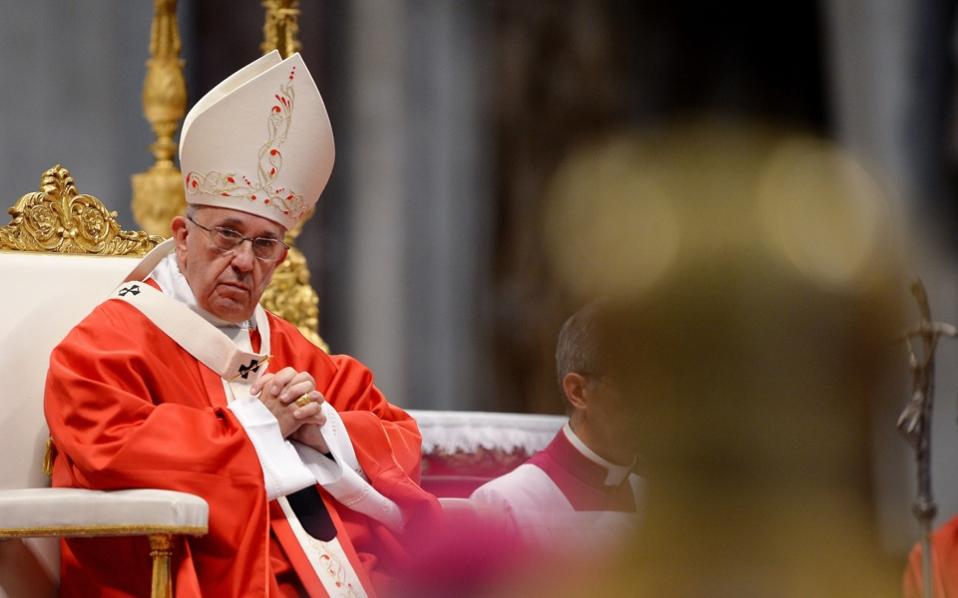
pope_francis-thumb-large

The state of affairs in Greece on Wednesday prompted world leaders – and not only in the sphere of politics – to speak out.

In an unusual move, Pope Francis expressed solidarity with Greeks experiencing a “keenly felt human and social crisis.” According to the Vatican spokesman, the Reverend Federico Lombardi, the pope is urging the faithful “to unite in prayer for the good of the beloved Greek people.”

In the arena of politics, there was less obvious sympathy.

President Francois Hollande of France suggested that talks were needed in the coming days. “We need to be clear. The time for a deal is now,” Agence-France Presse quoted him as saying.

German Chancellor Angela Merkel, who has championed austerity in Greece, said further negotiations can only be held after a Greek referendum planned for Sunday.

Emphasizing the importance of trust and compromise, Merkel said Berlin would nonetheless not make concessions at any cost.

Merkel told the German Parliament that “the door to talks with the Greek government was always open and will always stay open.” But she also criticized Greece for basically ending negotiations unilaterally by announcing Sunday’s referendum. She added that Europe has become stronger over the past five years, adding “we can wait calmly,” referring to the referendum result.

In a statement, the White House said it believed all parties involved in negotiations over Greece’s financial crisis wanted the country to stay in the eurozone and encouraged all sides to recognize the mutual interest they have in resolving the situation.

source:ekathimerini.com