Monthly Archives: July 2015

Jodi Magi: Australian woman jailed in Abu Dhabi over Facebook posts released and deported from UAE

6617196-3x2-340x227

Australian woman Jodi Magi, who was arrested in Abu Dhabi over Facebook posts, has been released after two days in jail and deported from the United Arab Emirates.

The 39-year-old West Australian woman was arrested and jailed on Sunday morning after she had been found guilty of “writing bad words on social media”.

Ms Magi was taken to the airport by authorities on Tuesday evening and flown out of the country.

She had spent 53 hours in custody where she claims she was shackled at the ankles, strip-searched, forced to sleep on a concrete floor without a mattress or pillow and had no access to toilet paper or eating utensils.

Ms Magi, who says she was traumatised by the experience, said she was affected by the many women she met in the Abu Dhabi jail system who were what she called “victims of rampant and systemic police corruption where evidence, ethics and due process are unheard-of concepts”.

“I have nothing to complain about compared to the vast majority of women I met whose only crime was being poor, marrying the wrong guy, getting pregnant outside of marriage,” Ms Magi wrote.

“I still feel incredibly guilty leaving them in there when I am typing this from the luxury of an airport restaurant.”

Ms Magi said she owed her “speedy” release to her nationality, intense media coverage, the Australian embassy and support from family, friends and “people I have never even met”.

“I am sending out a massive thank you to all of you for your good wishes and practical efforts to help,” she wrote.

Human rights group Amnesty International said there were more than 60 local activists in prison in the United Arab Emirates for political reasons.

Three Emirati sisters were recently released after spending three months in jail after they tweeted support for their imprisoned pro-democracy activist brother.

Found guilty of ‘writing bad words on social media’

In February, Ms Magi took a photo of a car in her apartment block in Abu Dhabi that was parked across two disabled parking spaces without any disability stickers.

She blanked out the number plate and put it on Facebook, drawing attention to the seemingly selfish act but not providing any identifying details or names.

However, someone in the apartment block complained to police and the case went to an Abu Dhabi court in June.

Ms Magi, who had lived in Abu Dhabi since 2012, was forced to sign multiple documents in Arabic without any translation.

Two weeks ago she was found guilty of “writing bad words on social media about a person” and told she would be deported.

Last week Ms Magi tried to voluntarily deport herself and pay the approximately $3,600 fine, but the authorities would not allow her to leave without presenting herself to court. She was then arrested when she presented herself at the court last Sunday.

Ms Magi told the ABC she was shocked and confused by the court’s decision and she did not have any understanding of what she was supposed to have done that was illegal.

“I have zero idea. I used the internet,” Ms Magi said before being arrested.

Ms Magi flew to Asia, where she said she was going to “decompress” after the experience.

source:abc.net.au

Raheem Sterling relieved with £49m Manchester City move from Liverpool

untitled

Raheem Sterling has expressed relief at the completion of his acrimonious transfer from Liverpool to Manchester City for an initial £44m and believes he is joining a club “capable of winning things year in, year out”.

The fee for the 20-year-old could rise to £49m with add-ons linked to appearances and honours, all considered to be obtainable by the Merseyside club, and establishes Sterling as the most expensive English player. The forward, who passed a medical on Tuesday, has signed a five-year contract believed to be worth around £200,000 a week and will wear the No7 shirt at the Etihad stadium.

The player, who had cited the pursuit of silverware as more significant than financial rewards when agitating for his move, will now fly out to Australia to join up with his new club-mates on their pre-season tour. His new manager, Manuel Pellegrini, has described him as “one of the best attacking players in world football”.

“It’s a good feeling and a really happy time for me and my family,” said Sterling, who spoke with his new club-mate, Joe Hart, about the prospective move while on England duty in Slovenia last month. “I’m just glad it’s all over and done with and I can’t wait to get on the training field. Things have come really fast in the last couple of years.

“I’ve just had to learn to take it all in my stride but I never imagined I’d be at this point at the age I am now and breaking a British transfer record fee … the world-class players that are here and a squad that are capable of winning things year in, year out. The more quality players that are around you, the more quality it brings out in you so I can’t wait to get started and play alongside them.”

Sterling, speaking to Manchester City’s website, went on to thank his managers at Liverpool, including Brendan Rodgers, for offering him the opportunities to develop and impress in the topflight, as well as his family and agent, Aidy Ward. “They’re top class – there’s everything you need here and plenty more,” he added when asked about the facilities at his new club. “There’s everything you need to take you to the next level so there’s no excuses.”

Advertisement

“Raheem Sterling is one of the best attacking players in world football and I am very much looking forward to him joining our squad out in Australia later this week,” said Pellegrini. “He is a young player with outstanding ability and I am sure the Manchester City fans will be very excited about seeing him in action for the team.”

Confirmation of the moves brings to a conclusion one of the more protracted and acrimonious transfer story-lines of the last four months. Sterling’s relationship with the hierarchy at Liverpool had deteriorated markedly over the course of last season once talks over a new contract at Anfield, which were initiated last October, quickly stalled.

The player rejected a proposed deal worth £100,000 a week in March and, despite making 52 appearances for the club last season and having two years left to run on his deal, appeared destined to leave ever since.

City lodged two bids earlier in the summer – the first for an initial £25m rising to £30m, and the second £35m with add-ons taking the deal closer to £40m – which were knocked back, though Sterling made clear to the Liverpool manager, Brendan Rodgers, his desire to leave on the first day of pre-season training last week.

He had requested to be omitted from the Merseysiders’ squad for a two-week tour of Thailand, Malaysia and Australia and duly called in sick twice, missing two days’ training, amid suggestions the Professional Footballers’ Association might have to be called in to try and broker a peace. Rodgers has since insisted there was “no issue” with the player. Liverpool are now expected to test Aston Villa’s resolve to retain Christian Benteke.

Sterling’s career at Anfield ultimately amounted to 129 appearances and 23 goals since a switch from Queens Park Rangers five years ago. The west London club, who gained £600,000 potentially rising as high as £5m, are due 20% of the profit on the fee that took the player to the Etihad and will effectively pocket their biggest profit yet on a player sale.

source:theguardian.com

Avatar 2: Release Date Revealed, James Cameron Pays Tribute to James Horner, And More

Avatar-2

The sequel of Avatar, a sci-fi epic Avatar 2, is to be released in December 2017 during the Christmas holidays. The movie Avatar, directed by James Cameron, was a blockbuster in the year 2009, which has been confirmed by the CEO of Fox, Jim Gianopulos. He says that the other two sequels, Avatar 3 and Avatar 4 will release in the year 2018 and 2019 respectively.

In an interview with Variety, Gianopulos revealed the reason behind making Avatar 2 after a long eight-year gap after Avatar was released since the director James Cameron “has his pace”. Gianopulos also said that when Cameron pitched the idea of the movie “Avatar”, the Fox executives got perplexed. There was a lot riding on the film, and this riding charged $237 million.

In the first movie, Cameron created technology that was very much far ahead of its time. Well now all the section is in its position and the story is being finalized.

Avatar 2 will have various sets. The Fox CEO said that he saw several images, characters and worlds spread out over the room when he met Cameron at his New Zealand office.

David Cameron is directing from a screenplay by Rick Jaffa and Amanda Silver. The cast comprises of Sigourney Weaver, Zoe Saldana, Sam Worthington and Stephen Lang. The three sequels that are Avatar 2, Avatar 3 and Avatar 4 are to be filmed concurrently.

Avatar, which premiered on December 10, 2009 in London, and was released universally on December 16, 2009, received critical analysis for the poignant and amazing visual effects, and broke a number of box office records, to become the highest grossing film of all time. It was nominated for nine Academy Awards, which includes Best Picture, Best Director and has also won three awards for Best Art Direction, Best Cinematography, and Best Visual Effects.

In an interview with IMDb, Cameron said that he wants to shoot many of the scenes of Avatar 2 underwater. To shoot the underwater scenes, he is developing a very innovative technology and also a new submarine to permit him to pursue this dream. The buzz was that the ocean ecosystem of Pandora would have been the spotlight of the sequel and originally was scheduled to be released in January 2017, but then it was postponed to Christmas 2017. The delay in releasing the movie was simply done just to give adequate time to make the necessary technologies perfect.

Cameron and his Avatar producing colleague Jon Landau issued a statement together honoring Horner and also said that the Avatar society has lost one of the grand imaginative lights.

While the preparation and production of the highly expected sci-fi film Avatar 2 was going on, at that point of time the studio got astonished by the news about the death of the film’s music director James Horner who died in a plane crash in California just a week ago.

In an interview with People, the film’s director James Cameron said that Horner’s death has bewildered everyone who is currently working in this movie. The director also says that he could have made such great music, and now they are looking forward to the next performance together.

It seems like Cameron, and his whole group of writers have shaped out how to and what to change and modify the scripts without putting the creativity and the story at risk. The stories for each movie have been finalized. Cameron unveiled the fact that was preparing to film the sequels at an advanced frame rate in contrast to the Hollywood industry’s standard 24 frames per second.

source:dayherald.com

Public sector calls Wednesday strike over new austerity measures

adedy_protest-thumb-large

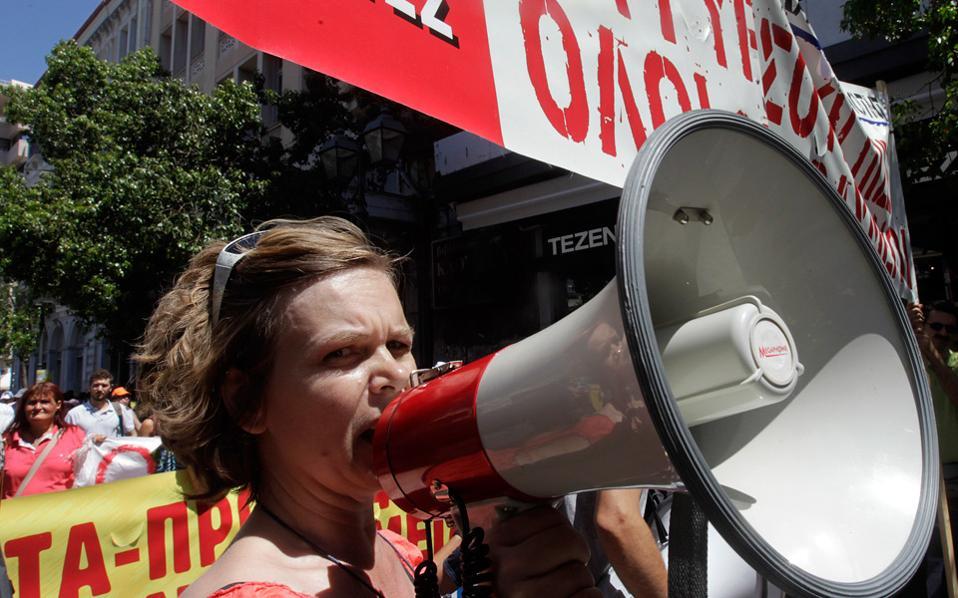
Public sector union ADEDY on Tuesday called a 24-strike of all civil service workers on Wednesday to coincide with the first round of voting in Parliament on a raft of new austerity measures needed to clinch a third bailout deal with Greece’s international creditors.

ADEDY also called on public sector workers to gather in front of the House at Syntagma Square at 7 p.m. to protest Monday’s agreement between the SYRIZA-lef government and eurozone leaders.

More rallies are expected on the same day.

source:ekathimerini.com

Europeans clash over Greece cash crunch options

eurozone_flags_web--4-thumb-large

European governments clashed over options to help Greece meet its short-term cash needs while it waits for a eurozone bailout deal to be finalised, officials said on Tuesday.

Britain, which does not use the euro, has already said it will resist contributing to any bridge financing to get Greece through several huge debt repayments while details are settled after Monday’s hard-won agreement.

“I can confirm that concerns were raised by several non-euro member states, this is something we will have to take into account,” said Valdis Dombrovskis, the EUs Vice-President for the euro after a meeting with European finance ministers.

“Pretty much all options are quite difficult and have political, legal and financial complications,” the former Latvian premier said.

Bilateral loans are another option that have been raised, but like the others that would pose difficulties, ministers said.

Finnish Finance Minister Alexander Stubb said it would be “difficult for any member states putting fresh money without conditionality.”

Greek Prime Minister Alexis Tsipras struck an 85 billion euro bailout deal with his eurozone partners on Monday that involves painful reforms and a parliamentary vote by Wednesday on key austerity measures.

But the deal will take at least four weeks to finalise and implement, and Greece’s creditors estimate Athens needs 12 billion euros to get through mid-August.

Next Monday Greece owes the European Central Bank 4.2 billion euros and a default would force the ECB to cut off emergency loans keeping Athens banks afloat.

Greece already on Monday missed a second debt payment to the International Monetary Fund in two weeks, bringing the country’s arrears to the IMF to 2.0 billion euros, an unprecedented embarrassment for a developed nation.

British Finance Minister George Osborne reiterated that he would refuse any attempt to use EU rescue cash to bridge the financing gap.

“Britain is not in the euro, so the idea that British taxpayers are going to be on the line for this Greek deal is a complete non-starter,” Osborne said in Brussels.

Britain believes that the European bloc in 2010 agreed to no longer tap an EU-wide emergency fund, the European Financial Stabilisation Mechanism (EFSM), to underwrite bailouts of eurozone countries.

Reports said that France as well as the European Commission were pushing to turn to the fund and would only require a weighted majority of member states to do so.

An EU source said that using the EFSM remained one of the “most feasible options” to help Greece survive the cash crunch and urged Britain to give ground on the issue.

In another option that would certainly prove to be controversial, German Finance Minister Wolfgang Schaueble proposed that Greece issue IOUs to pay pensions and other domestic bills, thereby saving its scarce euros for debt payments.
0
But the creation of IOUs is also seen as a first step towards the return of the Greek drachma, and risks rekindling talk of Grexit that Monday’s bailout deal was supposed to have buried.

Other options include transferring 3.5 billion euros in profits on Greek bonds held by the ECB.

source:ekathimerini.com

Greece rewrites economic textbooks with austerity on austerity

arcade_dark-thumb-large

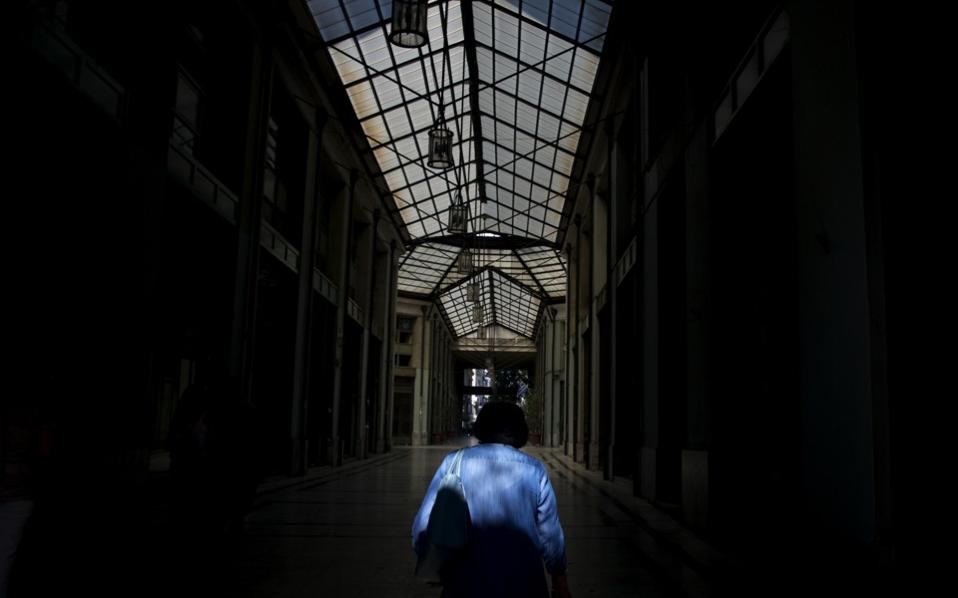
It could be a chapter in an economics textbook: What happens when severe austerity is imposed on an economy that’s already lost a quarter of its output?

Greece will find out how bad it could be.

The package of measures that Tsipras was strong-armed into agreeing to early Monday after an all-night summit with euro leaders requires pension curbs and tax increases, with no promise of debt relief. To prove his commitment to reforms, Prime Minister Alexis Tsipras must pass those measures through parliament as early as Wednesday.

The country’s economic slump has already saddled it with a 26 percent unemployment rate as previous governments implemented budget cuts at the behest of creditors, and output may fall by 10 percent this year. The International Monetary Fund admitted in a report two years ago that it underestimated the recessionary impact of the original 2010 bailout plan.

“If there’s a permanently horrible business environment it just prolongs the agony,” said Gabriel Sterne, head of macro research at Oxford Economics in London. “It already is one of the worst post-crisis output performances ever apart from uber- commodity slumps and wars.”

Greece could also see a rerun of the kind of civil strife seen in central Athens up to 2012 during parliamentary votes on budget bills. While protests in recent weeks, both for and against a deal with creditors, have been peaceful, minor scuffles have broken out with riot police at rallies organized by anarchist groups. Public sector workers are set to strike on Wednesday, indicating the first general strike since November might follow.

Reform implementation

The prime minister has one hope, says Constantine Michalos, president of the Athens Chamber of Commerce and Industry: Succeed where previous governments failed and fully implement the market-opening reforms that were also part of the package Tsipras agreed to keep his country in the euro.

The seven-page statement issued at the end of the summit, which lists measures Greece must take before funds can be released for its cash-starved economy, begins with the need for “ownership” of the program by Greek authorities.

Ramping up state asset sales and liberalizing product markets are measures that Tsipras should embrace to foster growth in Greece, Michalos said in a Bloomberg TV interview. Without them, gross domestic product could be another 10 percent lower five years from now, he said.

“We needed a deal, come what may, because the only other alternative would have been absolutely catastrophic,” Michalos said. “Greece can’t stand on its own two feet with national currency, the old Greek drachma, simply because it’s not a production-based economy.”

Capital controls

The new fiscal measures will amount to at least 8 billion euros of tightening for this year and 2016. Meanwhile, the bank holiday and capital controls since June 28 risk plunging the country’s mostly state-owned lenders into insolvency. The summit agreement foresees the cost of re-capitalizing them as as much as 25 billion euros, or 14 percent of 2014 gross domestic product.

GDP contracted for a second quarter at the start of this year, putting Greece officially back in recession. The drop in GDP for the first half of the year is running at annualized rate of 10 percent, JPMorgan Chase Bank economists Greg Fuzesi and Marco Protopapa said in a client note on Monday, noting this estimate is a holder and could change.

Internal revolt

Tsipras is already facing a revolt within his coalition government, with the Left Faction of his Syriza party and his junior party in his coalition both indicating they will vote against the deal. Even if he passes the reform measures with support from opposition parties, as is likely, the revolt within his party risks early elections that would amplify the suffering the economic pain.

Among the measures that Greece will have to legislate by July 22 is an overhaul of civil procedures, which could speed up protracted court cases that have acted as deterrents to foreign investment. The IMF says state asset sales, ramped up in Monday’s plan, are necessary to improve efficient management of the resources as much as they are for raising revenue.

“The most important thing for debt sustainability is always a growing economy, which Greece has been lacking,” Moritz Kraemer, managing director of sovereign ratings at Standard & Poor’s, said in a Bloomberg TV interview. “It’s partly been lacking because there’s been so little progress on the reforms. They’ve been very successful on the recessionary austerity.”

Confidence boost

Tsipras told reporters in Brussels after the summit on Monday that while the package contains recessionary measures, he hoped this would be offset by the restoration of confidence after the threat of euro exit ends and financial stability is resorted. That uncertainty undermined the government’s efforts to negotiate a better deal as Greeks took 34 billion euros of deposits out of the country’s banks, 21 percent of the total, in the six months through May.

“The short-term economic impact will be to deepen the recession,” said Frederik Ducrozet, an economist at Credit Agricole SA in Paris. “ It’s a lot about confidence in Greece, or lack thereof so far. But ultimately it’s not completely unrealistic to expect a sharp rebound in the Greek economy next year if everything goes according to plan.”

source:ekathimerini.com

PM Alexis Tsipras faces fierce dissent on bailout deal

parliament-thumb-large

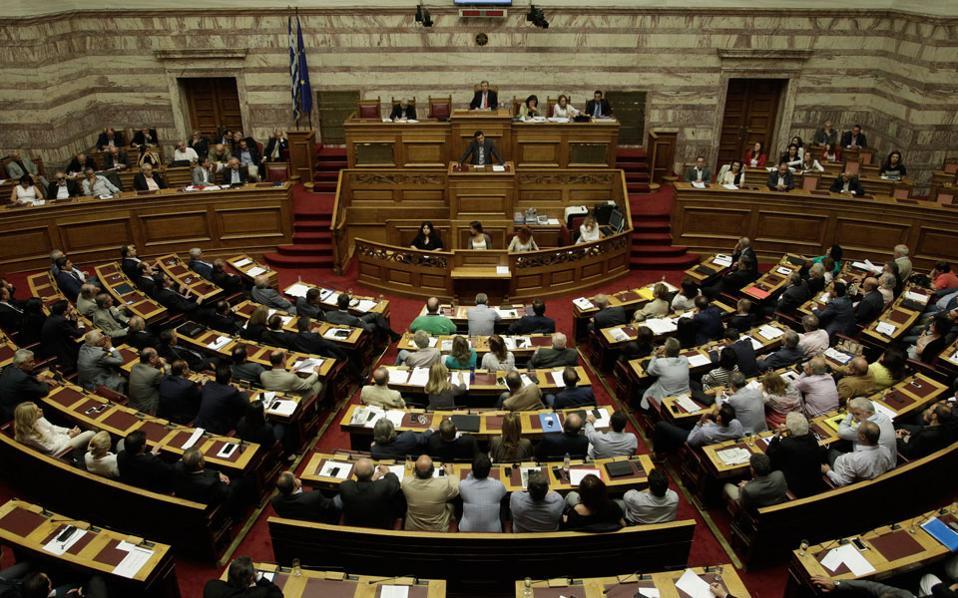
With members of his own party openly denouncing a preliminary rescue deal struck with Greece’s European creditors, Prime Minister Alexis Tsipras must fight to cling to his government’s majority after he was forced to shred election promises and introduce punishing austerity measures in exchange for the bailout.

Tsipras, who flew home Monday from grueling night-long negotiations with European leaders, will chair an executive meeting of his SYRIZA party early Tuesday before lawmakers begin a two-day debate on the deal — set to heap more tax hikes and spending cuts on a country already suffering through six years of recession.

The deal ensures that Greece avoids an imminent financial catastrophe and an exit from the Eurozone. But Panos Kammenos, leader of the junior partner in Tsipras’ coalition government, called the bailout plan a German-led “coup.”

“This deal introduced many new issues … we cannot agree with it,” Kammenos said after meeting with Tsipras.

Other Greeks rallied Monday night outside Parliament in Athens, urging lawmakers to reject the new demands.

Around 30 out of SYRIZA’s 149 lawmakers are likely to vote against the government. Many held private meetings late Monday.

Tsipras had to consent to a raft of austerity measures, including sales tax hikes and pension and labor reforms — measures he had campaigned vociferously against over the last five years of Greece’s financial crisis.

“We managed to avoid the most extreme measures,” Tsipras said.

But in many cases, ordinary Greeks now face tougher measures than those they voted down in a nationwide referendum a little over a week ago.

SYRIZAs Left Platform, a group of traditionalists in Tsipras’s own party, swiftly denounced the agreement as the “worst deal possible … (one) that maintains the country’s status: a debt colony under a German-run European Union.”

Experts were divided over the result.

“It was the best deal the Greeks could get,” says Jacob Kirkegaard, a senior fellow at the Peterson Institute for International Economics. “They did not do too badly given the terrible, terrible, disastrous starting point the current government put them in.”

But Ashoka Mody, visiting professor of international finance at Princeton University, says the deal just repeats policies that have already failed.

“The economics of this program have been set up for failure,” he told The Associated Press. “In three years, if this program is implemented, the Greek economy will be 10 percent smaller than it was and the debt burden will be higher.”

If Greece meets all of the requirements spelled out in Monday’s agreement, the country will get a three-year rescue program and the commitment to restructure its debt, which is unsustainably high at around $352 billion, or around 180 per cent of its annual GDP.

Since 2010, Greece has received two bailouts totaling $268 billion in return for deep spending cuts, tax increases and reforms agreed to by successive Greek governments. Although the country’s budget deficit has fallen sharply, its public debt burden has increased as the Greek economy has shrunk by a quarter.

source:ekathimerini.com

Italy’s FinMin says only three states supported deal with Greece

padoan-thumb-large-thumb-large

Italy’s finance minister says that only Italy, France and Cyprus supported a compromise deal with Greece, while the rest of the eurozone nations fell in behind Germany’s hard-line position.

Pier Carlo Padoan says in an interview published Tuesday in daily Il Sole 24 Ore that he was surprised by how many countries fell in behind Germany, and that “in the end, only we, the French and little Cyprus were for a compromise.”

Greece on Monday agreed on a preliminary rescue deal with its fellow eurozone partners. Before it can get loans, it has to implement a string of tough economic measures.

Padoan says, “we avoided the worst. But from today a very complex path, whose outcome can’t be taken for granted.”

source:ekathimerini.com

Political big bang has started

flag_protest_web-thumb-large

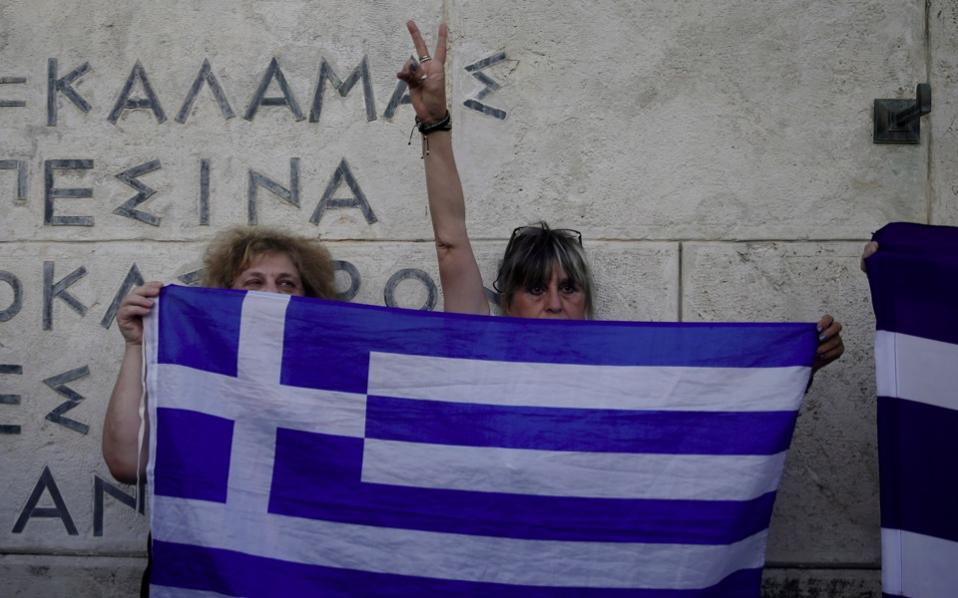
There are two dangerous things lurking around the corner for Greece: the anti-Greek sentiment that has taken root in the minds of powerful eurozone players and the anti-European sentiment growing among Greek citizens.

German Finance Minister Wolfgang Schaeuble and his allies want to prove that Greece cannot survive. Meanwhile, we are facing a tough new bailout agreement that is politically toxic and incredibly challenging on the implementation level.

The hawks are waiting for Greece to fail in some aspect of its implementation so they can say that they had been right all along and the country is indeed incapable of radical reform.

At the same time, the country is set to have entered another period of recession by fall, there will be little hope of positive change and even today’s champions of the deal will have grown despondent from the increasing tax burden.

It is very likely that we will see the formation of a strong anti-European block in the next few months that will challenge Prime Minister Alexis Tsipras’s hold on power, making the governance of the country even harder than it is right now.

The solution lies with Tsipras himself. If the young politician has decided to put his past behind him and sees himself as a reformist, then he is looking at an amazing opportunity. He has to be openly and brutally honest, however, because any sign of obfuscating will sink him like it did all the other prime ministers during the crisis before him who tried to balance between two different sides.

By moving closer to the center and by making use of individuals of a leftist leaning who are serious and experienced, he will have a chance, though it will be short-lived. After all, he is the only political leader in Greece right now who could convince people who voted “no” in last Sunday’s referendum to support his efforts to keep Greece in the eurozone.

The ideal scenario, of course, would be an interim government of politicians and technocrats to serve for a period of two years and get the country back in order. It would take at least a year or so to get the economy back on its feet and just as long to quell the flames of indignation that will certainly flare up in society.

Will the country’s political staff find the nerve and determination to see the agreement through? We will know which way Tsipras is headed very soon. That said, the big bang of the political system has already started.

source:ekathimerini.com

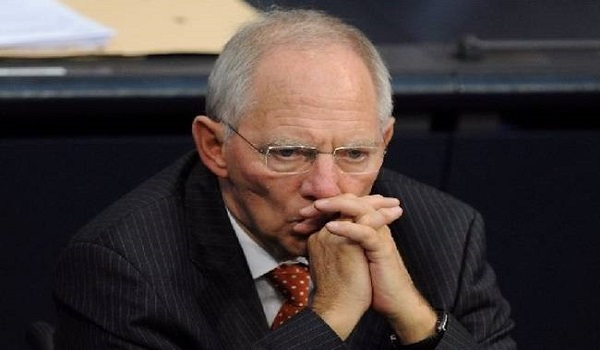
Έξαλλοι οι Γερμανοί βουλευτές με τον Σόιμπλε!

soimple_madata_793730524

Σκληρή κριτική άσκησε ο Kάρστεν Σνάιντερ, οικονομικός εμπειρογνώμονας του σοσιαλδημοκρατικού κόμματος (SPD) στον Βόλφγκανγκ Σόιμπλε, κατηγορώντας τον ότι διέπραξε σοβαρά σφάλματα κατά τις διαπραγματεύσεις με την Ελλάδα.

“Με το σχέδιο για προσωρινή έξοδο τη Ελλάδας από τα ευρώ ο Γερμανός υπουργός οικονομικών απομόνωσε τη Γερμανία στην Ευρώπη”, είπε ο Σνάιντερ στο πρώτο δημόσιο γερμανικό κανάλι ARD και πρόσθεσε: «Επανέφεραν την εικόνα του «πολύ σκληρού Τεύτονα…Δεν μπορώ να αντιληφθώ με ποιο τρόπο αυτό που έκανε ο κύριος Σόιμπλε ήταν χρήσιμο».

Ο Κάρστεν Σνάιντερ τόνισε ακόμη ότι «ο κύριος Σόιμπλε ήθελε στην πραγματικότητα την έξοδο της Ελλάδας (από την ευρωζώνη),αλλά αυτός δεν ήταν ο στόχος μας. Οι σοσιαλδημοκράτες θεωρούν πολύ υψηλό ρίσκο το να εγκαταλείψει η Ελλάδα το ευρώ, ιδίως για τις άλλες ευρωπαϊκές χώρες. «Με το να τα παίζει όλα για όλα, κατά την άποψή μου, ο Σόιμπλε περισσότερο έβλαψε παρά ωφέλησε».τόνισε ο σοσιαλδημοκράτης εμπειρογνώμονας.

Ο Σνάιντερ απέρριψε το επιχείρημα των Χριστιανοδημοκρατών ότι η απειλή βοήθησε τις διαπραγματεύσεις. «Εκ των υστέρων όλα εξηγούνται ως στρατηγική και μάλιστα ότι συνέβαλαν στην επιτυχία», είπε. «Υπήρχε σε αυτό το σημείο μια διαφορά ανάμεσα στον κύριο Σόιμπλε, ο οποίος προτιμούσε να φύγει η Ελλάδα από το ευρώ και της κυρίας Μέρκελ η οποία είχε κατά νου συνασπισμούς σε όλη την Ευρώπη».

Αλλά και οι πράσινοι (DIE GRÜNEN) επέκριναν με δριμύ τρόπο τον Γερμανό υπουργό οικονομικών για την πρότασή του αυτή. «Το γεγονός ότι η γερμανική κυβέρνηση προωθεί μια ενδεχόμενη προσωρινή έξοδο της Ελλάδας από το ευρώ είναι ένα ιστορικό λάθος», δήλωσαν οι κοινοβουλευτικοί εκπρόσωποι των Πρασίνων, Κάτριν Γκέρινγκ-Εκαρντ και Αντον Χοφράιτερ». Τα σχέδιά του Σόιμπλε «δεν είναι μόνο απαράδεκτα, αλλά και αντισυνταγματικά», δεδομένου ότι η γερμανική βουλή δεν ρωτήθηκε για το περιεχόμενο του εγγράφου που έγινε γνωστό το Σάββατο,σημείωσαν οι εκπρόσωποι των Πρασίνων.

Πηγή:madata.gr