Monthly Archives: July 2015

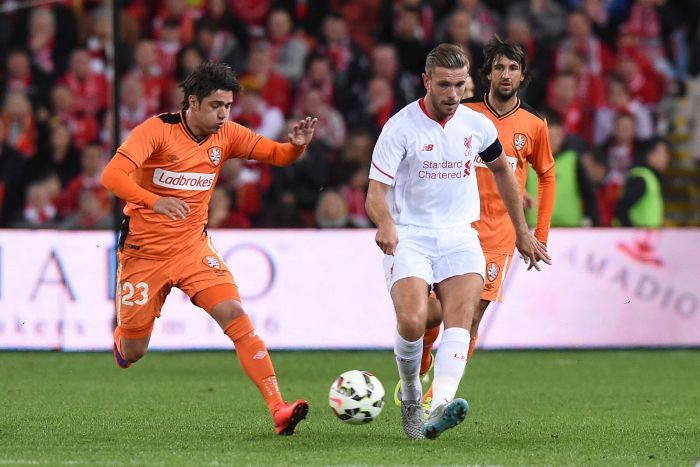
Liverpool beats Brisbane Roar 2-1 at Lang Park in Premier League side’s first game in Australia

6629746-3x2-700x467

It may just have been an early season hit-out for both sides, but Liverpool’s 2-1 win over the Brisbane Roar at a chilly Lang Park was another unforgettable occasion for Australian Reds fans.

It was always going to take a monumental effort to match the MCG crowd’s rousing rendition of Liverpool fan anthem You’ll Never Walk Alone before the game against the Victory in 2013, but the more intimate atmosphere and brilliant acoustics of the Cauldron ensured the visiting players well and truly felt the love once more as the song was belted out at full volume.

Supporters of the Premier League outfit had been practicing the tune for hours before at the nearby entertainment district of Caxton Street, along with less family-friendly ditties praising the virtues of recently departed ‘King’ Steven Gerrard or pointing out the flaws of bitter rival Manchester United.

Outside the stadium itself, the sea of red was broken only occasionally by the orange of a Brisbane Roar shirt or scarf, while selfies were snared with the bronze statue of the king of another football code, Wally Lewis.

The action on the pitch was high on entertainment, especially considering both sides had the right to be somewhat rusty.

In the 17th minute Roar young gun Dimitri Petratos found space in the area before dancing himself into a shooting position and stroking the ball past a diving Simon Mignolet for an opener good enough to feature on Match of the Day.

Adam Lallana sent the decibels in the stands much higher a short time later, however, when he brought a high cross down brilliantly and curled it into the top corner for a cracking Liverpool equaliser.

Visiting Merseyside journalists were full of praise for Brisbane’s upbeat style of possession-based football, and highly impressed by the debut of teenager defender Joe Gomez.

Most heartening for Liverpool manager Brendan Rogers will be the strong performance of James Milner, the man brought in as a replacement for Gerrard at the heart of the midfield.

Milner’s well-taken goal in the 75th minute saw the EPL giants take the lead for the first time in the match.

It became a case of hanging on to a very respectable scoreline after that for the hosts, as legs tired and Liverpool threatened to blow out the margin.

source:abc.net.au

Greece’s Surrender: A Return to 1919, or to 1905?

Cassidy-Tsipras-Parliament-690-472-16183751

With the vote by Greece’s parliament, early Thursday morning, to accept the harsh terms demanded by the country’s creditors, the debate about how we got to this point is sure to intensify. In a post earlier in the week, when Prime Minister Alexis Tsipras first agreed to the deal, Larry Elliott, the Guardians economics editor, pointed the finger at Tsipras’s Syriza government, saying, “Greeks will be asking today what has been the point of the last month of diplomatic theatre: the endless meetings, the violent rhetoric, the walkouts, and the calling of the referendum. The answer is less than nothing. Untold damage has been caused to the Greek economy for no purpose whatsoever.”

That is a harsh judgment. But Elliott was only echoing what some of Tsipras’s critics inside Greece, on the left as well as on the right, have been saying. This time last year, the country’s blighted economy was enjoying a modest recovery, and its former Prime Minister, Antonis Samaras, was talking of the country abandoning its existing bailout, funded by the troika of the European Central Bank, the European Commission, and the International Monetary Fund, and seeking financing on the private markets instead. Now, almost six months into Syriza’s rule, the economy is in another deep recession. An assessment released last week by the European Commission says that Greece’s G.D.P. will decline by between two and four per cent this year, and that positive growth won’t return until 2017. With tax revenues declining and the budget deficit widening, the Greek government desperately needs more credit to stay afloat—perhaps seventy-five billion euros between now and 2018, according to the E.C. assessment. The country’s banks are on the brink of collapse, and, even assuming an emergency financing deal is finalized in the coming days, capital controls may need to remain in place for months, or years, to prevent Greeks from moving their savings abroad.

And all of this, for what? Two weeks ago, Greeks voted against an offer from the country’s creditors, in the belief that it would keep the economy stuck in the trap caused by the troika’s austerity policies; with this new deal, the country has accepted a package that is equally, or even more, severe. Yanis Varoufakis, the former Greek finance minister, who resigned after the referendum, was one of more than thirty Syriza parliamentarians to vote against the deal. Before the vote was taken, he described the measures agreed upon in Brussels over the weekend as “a new Versailles Treaty”—a reference to the Carthaginian peace that Germany’s enemies imposed upon it after the First World War.

Setting aside the awkward truth that Varoufakis was an architect of the negotiating strategy that led Greece to this juncture, his historical analogy is worth considering. This is not because it’s a dig at the Germans, who have had such outsized influence in imposing austerity measures on Greece, but because it provides an example of an unrealistic agreement between a sovereign state and its creditors—one that had to be repeatedly amended and, ultimately, scrapped.

After the First World War ended, France and the other victorious powers demanded about twelve and a half billion dollars in reparations, which was a bit more than Germany’s G.D.P. at the time. Since Germany clearly couldn’t pay that sum all at once, the Allies asked for annual payments of five hundred million dollars a year, or about four per cent of G.D.P. In 1923, after Germany fell behind on its payments, the Allies occupied the Ruhr, but that didn’t improve matters. The next year, and again in 1928, under the Dawes Plan and the Young Plan, the country’s debts were revised and extended, but this didn’t work either. Eventually, in 1932, most of the reparations were cancelled. (By then, tragically, Adolf Hitler was just months away from being invited to form a government.)

Currently, Greece’s debts amount to about a hundred and seventy-five per cent of its G.D.P., and, unlike Weimar Germany, it doesn’t have powerful export industries that could theoretically generate the funds to pay them off. Going forward, there is little doubt that some of Greece’s obligations, which have already been revised once, in 2012, will have to be written off. Twice in the past couple of weeks, the International Monetary Fund has said as much, and even Wolfgang Schäuble, Germany’s finance minister, appears to agree. In Schäuble’s view, however, which he took public on Thursday, such write-offs violate the rules and spirit of the eurozone—and so, he said, leaving the currency zone and negotiating a new debt agreement from the outside “would perhaps be the better way for Greece.”

It is now patently clear that Schäuble and many of his countrymen would like to get rid of their pesky southern neighbors, leaving unchallenged the German vision of the eurozone as a modern-day gold standard. The Greeks, however, have no intention of leaving, and therein lies a glimmer of hope. For all of their U-turns and failures, Tspiras, Varoufakis, and their colleagues did succeed in highlighting the illogic of endless austerity policies, and they also succeeded in putting debt restructuring on the table. (On Thursday, Mario Draghi, the chairman of the European Central Bank, became the latest expert to say that debt relief is necessary.) For those who viewed the last five months as not just a dispute about the finances of a small country but as part of a much larger battle about the future of Europe, these are important developments. And they will affect not only Greece but other other heavily indebted countries, such as Ireland, Portugal, Italy, and France.

From this perspective, Saturday’s agreement with the creditors isn’t the end: it is the beginning of a movement to wrench Europe away from technocracy, debt deflation, and Teutonic fiscal orthodoxy. This was the vision that Varoufakis spoke about in a speech he gave in Berlin last month, when he called for an end to the vicious cycle of austerity and depression and for a new Europe. And it is the vision that motivates Tsipras and other members of Syriza. “The neoliberals have had the upper hand in Europe for thirty years and we want to move away from that, in form as well as substance,” Dimitris Tzanakopoulos, Tsipras’s chief of staff, told Robert Misik, an Austrian journalist, who has just published a long piece about Greece on Social Europe. “These are political mechanisms that, in the end, disenfranchise whole nations, and you can’t change them all within four months.”

In the Marxist intellectual tradition, from which many senior members of Syriza hail, progress comes about gradually. To overthrow the existing order, you have to first mobilize the masses by stripping back the democratic veil and showing the real workings of the system: only then will the “objective conditions” be ripe for revolutionary change. Tsipras and Syriza didn’t create the conditions to change. But in bringing Greece to the brink, and demonstrating that its creditors were willing to see it collapse if it didn’t buckle to their demands, they did, arguably, succeed in showing up the eurozone as a deflationary straightjacket dominated by creditors. And they did this with all of the world watching. “One must know who the enemy is, in order to fight the enemy,” Alex Andreou, a Greek blogger who is sympathetic to Tsipras, wrote last week. “Syriza has achieved that. Now, it is over to you, Spain. Take what we’ve learned and apply it wisely.”

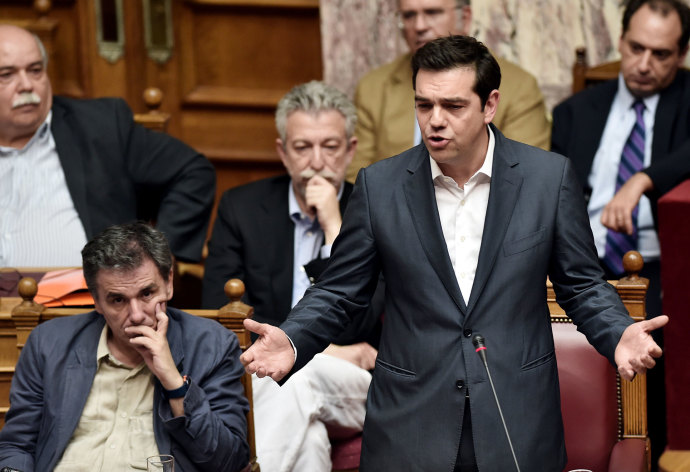
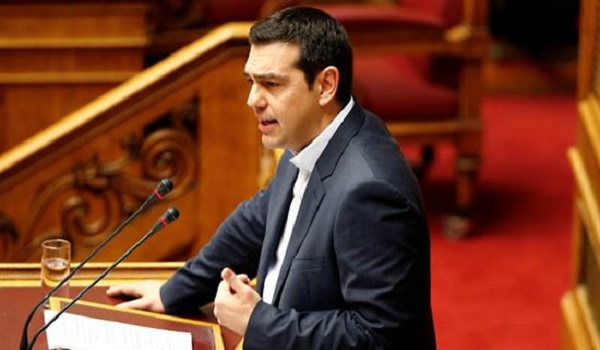
Under this analysis, Syriza’s surrender wasn’t necessarily an ignominious one. As Lenin commented of the failed 1905 revolution in Russia, it was a retreat for a new attack, which ultimately proved successful. “I’m not going to sugarcoat this and pass it off as a success story,” Tsipras said to parliament on Wednesday, prior to the vote, acknowledging that the spending cuts and tax increases contained in the agreement would deal another blow to the Greek economy. However, that wasn’t the full story, Tsipras insisted. “We have left a heritage of dignity and democracy to Europe,” he said. “This fight will bear fruit.”

Only time will tell if that was wishful thinking.

source:newyorker.com



Liverpool FC Tour: Reds train at Brisbane’s Suncorp Stadium

1437047308913

First there were koalas, then there were Wallabies but there was rarely a dull moment at Liverpool’s opening training session on Thursday night.

Okay, so the koalas stayed at Caxton Street but the rest is true.

Wallabies captain Stephen Moore and Scott Fardy made an appearance down the sideline to prepare for a cross-code photo ops when internationals come to town, stopped by punters on their way up the race

Not long after, Broncos and Queensland forward prop Sam Thaiday turned up, with a few observant punters calling out to the local celebrity

“Holy Grail” blared out of the speakers at Suncorp Stadium but the fans themselves were relatively subdued, perhaps saving their best for a Friday night belting.

One lone voice chimed in part way through the session, but had few friends in his musicality.

Roughly 6000 people turned out to the session, the only chance to see the players in action ahead of Friday night’s game and maybe the only chance for some of those who missed out on tickets.

While many English power clubs know little about the A-League, Reds coach Brendan Rodgers has an intimate knowledge of at least one of Brisbane’s players.

Rodgers recruited Roar goal keeper Jamie Young as an Academy player at Reading and Rodgers had plenty of praise for 29-year-old.

“Jamie, the goal keeper was one of the young guys I took from Australia when I was the academy director a Reading,” he said.

“It seemed a long way at the time for him to come over but he was a wonderful boy to work with very hungry to learn.”

The cricket fan, probably to his disappointment, wasn’t asked about the looming second Ashes Test in the pre-training press conference but that mightn’t be so surprising given the number of Australians in the room.

The Reds will not be leaving their big guns on the shelf either when they face the Roar.

Jordan Henderson will be captaining the side as per usual, while James Lallana, James Milner and Martin Skrtel will also be among the big names in the starting side.

After a season of overhaul, including the farewell of club legend Steven Gerarrd to Major League Soccer, this match might have a shade more meaning than most pre-season friendlies.

The Roar will be without captain Matt McKay and defender Luke DeVere in the clash at Suncorp Stadium, their first under new coach John Aloisi.

Ironically, it appears that high-profile loss Raheem Sterling, who was transferred to Manchester City for 102 million pounds, could make his City debut on the Gold Coast hours before his former club plays in Brisbane.

It truly felt like the calm before the Red storm that is preparing to hit Suncorp Stadium tomorrow.

source:smh.com.au


Europa League:Ο ΠΑΟΚ ρίχνεται από νωρίς στην ευρωπαϊκή «μάχη»

1DC0868CCDDFEEBEC6C8CD566BE5EE9A

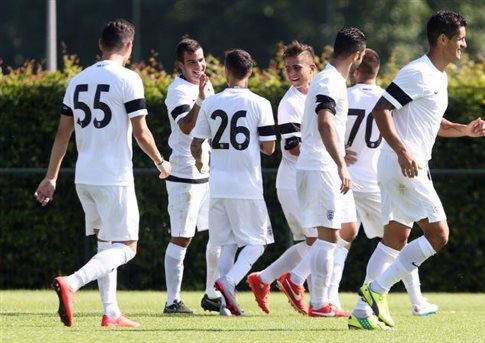
Το πρώτο βήμα για την πρόκριση θέλει κάνει απόψε (21:00 Novasports 2) ο ΠΑΟΚ, που μπαίνει στη μάχη των ευρωπαϊκών κυπέλλων και συγκεκριμένα στο πρώτο ματς για τον Β’ προκριματικό γύρο του Europa League, στην Κροατία κόντρα στη Λοκομοτίβα Ζάγκρεμπ.

Ο προπονητής του «δικέφαλου», Ιγκορ Τούντορ, δεν θα έχει στη διάθεση του τους Λούκας Πέρεθ, Περέϊρα και Νομπόα.

Ο «δικέφαλος» μετά το τραγικό περσινό φινάλε στο ελληνικό πρωτάθλημα που τον βρήκε στην 4η -και τελευταία- θέση των πλέι οφ και 5η συνολικά στο πρωτάθλημα, καλείται πλέον να αρχίσει τη νέα σεζόν από πολύ νωρίς και να «σώσει» την παρουσία του στο Europa League.

Από εκεί και πέρα στις κυπριακές ομάδες, εκτός έδρας αγωνίζεται η Ομόνοια, η οποία θα παίξει στην Πολωνία κόντρα στη Γιαγκελόνια Μπιάλιστοκ, ενώ ο Απόλλων Λεμεσού θα παίξει στην έδρα του κόντρα στην Τρακάι από τη Λιθουανία.

Συνοπτικά το πρόγραμμα των πρώτων αγώνων για τον Β’ προκριματικό γύρο του Europa League έχει ως εξής:

Λοκομοτίβα Ζάγκρεμπ (Κροατία) – ΠΑΟΚ (ΕΛΛΑΔΑ)
Κουκέσι (Αλβανία) – Μλάντοστ Ποντγκόριτσα (Μαυροβούνιο)
Μπερόε Στάρα Ζαγόρα (Βουλγαρία) – Μπρόντμπι (Δανία)
Σάμροκ Ρόβερς (Ιρλανδία) – Οντς (Νορβηγία)
Ρέϊκιαβικ (Ισλανδία) – Ρόζενμποργκ (Νορβηγία)
Χάποελ Μπέερ Σεβά (Ισραήλ) – Τουν (Ελβετία)
Σλόβαν Μπρατισλάβας (Σλοβακία) – Γιουνιβέρσιτι Κόλετζ Ντάμπλιν (Ιρλανδία)
ΑΙΚ Στοκχόλμης (Σουηδία) – Σιράκ (Αρμενία)
Καϊράτ Αλμάτι (Καζακστάν) – Αλασκέρτ (Αρμενία)
Φερεντσβάρος (Ουγγαρία) – Ζελέζνιτσαρ (Βοσνία)
Λέγκια Βαρσοβίας (Πολωνία) – Μποτοσάνι (Ρουμανία)
Βοϊβοντίνα (Σερβία) – Σπαρτακς Γιούρμαλα (Λετονία)
Βαντούζ (Λιχτενστάιν) – Νόμε Καλιου (Εσθονία)
Ντάτσια Κισινάου (Μολδαβία) – Ζίλινα (Σλοβακία)
Γιαγκελόνια Μπιάλιστοκ (Πολωνία) – ΟΜΟΝΟΙΑ (Κύπρος)
Γέλγκαβα (Λετονία) – Ραμποτνίτσκι (ΠΓΔΜ)
Μλάντα Μπόλεσλαβ (Τσεχία) – Στρομσγκόντσετ (Νορβηγία)
Χαφναρφιορντούρ (Ισλανδία) – Ιντερ Μπακού (Αζερμπαϊτζάν)
Τσουκαρίτσκι (Σερβία) – Καμπάλα (Αζερμπαϊτζάν)
Τσέρνο Μόρε Βάρνα (Βουλγαρία) – Ντιναμό Μινσκ (Λευκορωσία)
Ινβερνές (Σκοτία) – Άστρα (Ρουμανία)
Σαχτιόρ Σολιγκόρσκ (Λευκορωσία) – Βόλφσμπεργκερ (Αυστρία)
Ριέκα (Κροατία) – Αμπερντίν (Σκοτία)
Σπαρτάκ Τρνάβα (Σλοβακία) – Λίνφιλντ (Β. Ιρλανδία)
Τραμπζονσπόρ (Τουρκία) – Ντιφερντάνζ (Λουξεμβούργο)
Γουέστ Χαμ (Αγγλία) – Μπιρκίρκαρα (Μάλτα)
Κοπεγχάγη (Δανία) – Νιούταουν (Ουαλία)
Σαρλερουά (Βέλγιο) – Μπεϊτάρ Ιερουσαλήμ (Ισραήλ)
Απόλλων Λεμεσού (Κύπρος) – Τρακάϊ (Λιθουανία)
Σλασκ Βρότσλαβ (Πολωνία) – Γκέτεμποργκ (Σουηδία)
Ράντερς (Δανία) – Ελφσμποργκ (Σουηδία)
Κόπερ (Σλοβενία) – Χάϊντουκ Σπλιτ (Κροατία)
Σκόντο (Λετονία) – Ντεμπρετσένι (Ουγγαρία)

**Οι ρεβάνς θα διεξαχθούν στις 23 Ιουλίου.

FT: Το απόλυτο έγκλημα της Μέρκελ

tsipras_merkel1_595962822

Όταν το σχεδιαζόμενο ελληνικό πρόγραμμα διάσωσης κατατεθεί προς ψήφιση στην Bundestag την Παρασκευή, η Γερμανίδα καγκελάριος Άγκελα Μέρκελ δεν θα νιώθει καμία ανησυχία για το αν θα εγκριθεί.

Αλλά θα δεχτεί ισχυρές πιέσεις να υπερασπιστεί την διαχείριση της κρίσης και να απαντήσει στα σοβαρά ερωτήματα που εγείρει για την ευρωζώνη, την Ε.Ε. και τον κεντρικό της άξονα, την σχέση ανάμεσα στην Γερμανία και την Γαλλία.

Αν και η καγκελάριος απολαμβάνει ισχυρή στήριξη από το συντηρητικό της κόμμα (CDU/CSU) και από μεγάλο μέρος της κοινής γνώμης, η σκληρή στάση της στην μαραθώνια Σύνοδο της ευρωζώνης στις Βρυξέλλες που διήρκησε ως το πρωί της Δευτέρας έχει παρακινήσει τους επικριτές της στο εσωτερικό και στο εξωτερικό να την κατηγορήσουν για εκφοβισμό της Ελλάδας και ταπείνωση του ηγέτη της.

Για ορισμένους, διέπραξε το απόλυτο έγκλημα στην εξωτερική πολιτική της Γερμανίας: έβαλε σε κίνδυνο την δέσμευση της χώρας στην ευρωπαϊκή ενότητα. «Η Γερμανία έκανε ένα ιστορικό λάθος. Για πρώτη φορά τα τελευταία 60 χρόνια η Γερμανία απαίτησε λιγότερη αντί για περισσότερη Ευρώπη» σημειώνει ο Σβεν Κριστίαν Κίντλερ,

Δεν είναι η πρώτη φορά που ακούγονται οι κατηγορίες αυτές για την 62χρονη καγκελάριο, η οποία προσπαθεί εδώ και καιρό να διευθύνει την Ευρώπη μέσω του Βερολίνου, μερικές φορές παρακάμπτοντας συμμάχους και ευρωπαϊκούς θεσμούς. Αλλά η επίθεση που δέχεται ως η κυρίαρχη ηγέτιδα της Ευρώπης έχει φθάσει σε πρωτοφανή επίπεδα.

Το Spiegel, ένα κεντρο-αριστερό περιοδικό που είναι συχνά επικριτικό απέναντι στην κ. Μέρκελ, ανέφερε σε σχόλιο που αναρτήθηκε στο διαδίκτυο: «Η γερμανική κυβέρνηση κατέστρεψε επτά δεκαετίες μεταπολεμικής διπλωματίας σε μια εβδομάδα».

Η φιλελεύθερη Suddeutsche φιλοξένησε πρωτοσέλιδο για την κ. Μέρκελ με τίτλο: «O νέος εχθρός της Ευρώπης».

Τα γερμανικά μέσα έχουν μεταδώσει τις επικρίσεις κατά του Βερολίνου από το εξωτερικό, ειδικά την έκκληση του Ιταλού πρωθυπουργού να σταματήσει η ταπείνωση της Ελλάδας: «Λέω στην Γερμανία: Ως εδώ».

Στο Βερολίνο, η αντίληψη που επικρατεί είναι ότι η Γερμανία δεν υπονομεύει την ενότητα της ευρωζώνης, αλλά υπερασπίζεται τους κανονισμούς και βοηθάει ένα απείθαρχο μέλος με ένα πακέτο διάσωσης πάνω από 86 δισ. ευρώ. Η κυβέρνηση βρίσκει στήριξη στο γεγονός ότι στην συνάντηση των υπουργών Οικονομικών πριν από την Σύνοδο των ηγετών, 15 από τους 18 εταίρους στην ευρωζώνη επέμειναν από κοινού να ζητηθούν πιο σκληροί όροι από αυτούς που προτάθηκαν την περασμένη εβδομάδα από την Ελλάδα. Μόνο ηΓαλλία, η Ιταλία και η Κύπρος υποστήριξαν ότι το ελληνικό σχέδιο πληροί τις προϋποθέσεις για να αρχίσουν οι τυπικές διαπραγματεύσεις.

Η καγκελάριος θα είναι επίσης ικανοποιημένη με την δημόσια στήριξη που απολαμβάνει με βάση δημοσκοπήσεις που δημοσιεύτηκαν αυτήν την εβδομάδα. Σε δημοσκόπηση τoυ ARD, το 57% τάχθηκε υπέρ του σχεδίου διάσωσης. Μόνο το 13% ανέφερε ότι πηγαίνει πολύ μακριά στις παραχωρήσεις που ζητάει από τον Έλληνα πρωθυπουργό Αλέξη Τσίπρα. Ένα 22% υποστήριξε ότι θα έπρεπε να είναι πιο αυστηρό.

Η κ. Μέρκελ είναι βέβαιο ότι θα κερδίσει την ψήφο της Παρασκευής, με την στήριξη του μεγαλύτερου μέρους του δικού της μπλοκ και άλλων κομμάτων. Αλλά μπορεί να μην δραπετεύσει χωρίς αμυχές. Είναι αντιμέτωπη με την εξέγερση μιας μερίδας σκληροπυρηνικών βουλευτών του κόμματος της που βλέπουν το ελληνικό πρόγραμμα ως μια σπατάλη χρημάτων.

Η Bild, το συντηρητικό ταμπλόιντ, συμφωνεί, λέγοντας την Τετάρτη ότι το κόστος της αποτροπής ενός Grexit – μιας εξόδου της Ελλάδας από την ευρωζώνη – είναι υπερβολικά υψηλό.

Βουλευτές υποστηρίζουν ότι μπορεί να υπάρξουν 50 με 70 αντάρτες μεταξύ των Χριστιανοδημοκρατών και Χριστιανοκοινωνιστών, περίπου διπλάσιοι από τους 29 που αντιτάχθηκαν στην κυβέρνηση στην τελευταία ψήφο για την ελληνική διάσωση την Παρασκευή. Χωρίς τους σκληρούς όρους που η κ. Μέρκελ εξασφάλισε, λένε ότι οι αντάρτες θα μπορούσαν να φτάσουν ως και τους 100 από τους 311 του κόμματος της.

Αν και οι αντάρτες δεν απειλούν το αποτέλεσμα της ψηφοφορίας, μπορεί να πλήξουν την φήμη της καγκελάριου. Μπορούν επίσης να επηρεάσουν την στάση του Βερολίνου στις επερχόμενες διαπραγματεύσεις: Η ψήφος της Παρασκευής απλά δίνει το πράσινο φως για την έναρξη των διαπραγματεύσεων. Ο φόβος μιας ακόμα μεγαλύτερης εξέγερσης, όταν οι βουλευτές θα κληθούν να ψηφίσουν το ίδιο το πρόγραμμα, μπορεί να κάνει ακόμα πιο σκληρή την στάση της κ. Μέρκελ.

Ο Βόλφγκανγκ Σόιμπλε, ο υπουργός Οικονομικών της, φαίνεται ακόμα να είναι υπέρ του προσωρινού Grexit που πρότεινε στις Βρυξέλλες. «Υπάρχουν πολλοί άνθρωποι, πολλοί από αυτούς στην ομοσπονδιακή κυβέρνηση, οι οποίοι είναι πεπεισμένοι ότι για το συμφέρον της Ελλάδας και του ελληνικού λαού είναι πολύ καλύτερη λύση ότι προτείναμε» δήλωσε την Τρίτη.

Ακόμα και ουδέτεροι πολιτικοί αναλυτές την Γερμανία ανησυχούν για την ζημιά που έχει προκαλέσει η υπερβολική σκληρότητα του Βερολίνου στην φήμη της χώρας στην Ευρώπη. «Είμαι φοβισμένος από την ένταση του θυμού» λέει η Κοντάνζ Στελτσενμούλερ του Brookings Institute. «Πρέπει να αλλάξουμε. Μιλάμε στους Ευρωπαίους εταίρους σαν να είναι απλά παρατηρητές».

Ιδιαίτερη ανησυχία προκαλεί το πλήγμα στις γερμανο-γαλλικές σχέσεις, τον άξονα της Ε.Ε., καθώς ανοίγεται ένα ξεκάθαρο ρήγμα ανάμεσα στις πιέσεις της κ. Μέρκελ για αυστηρούς κανόνες και τις εκκλήσεις του Γάλλου προέδρου Φρανσουά Ολάντ για αλληλεγγύη. Οι δύο ηγέτες, που προσπαθούν να παρουσιάσουν μια εικόνα ευρωπαϊκής ενότητας, βρίσκονται συχνά σε αντίθετα μέτωπα, με την κ. Μέρκελ να κρατάει μια σκληρή γραμμή απέναντι στην Ελλάδα και τον κ. Ολάτν να εκλιπαρεί για επιείκεια.

Η εφημερίδα Frankfurter Allgemeine εξέφρασε λύπη για το ότι η «πολιτική της Γερμανίας για την Ευρώπη έχει γίνει εξαιτίας της κλιμάκωσης της ελληνικής κρίσης πιο γερμανική και της Γαλλίας πιο γαλλική».

Πηγή:madata.gr

Welt: Ακόμη και σε νέες εκλογές, ο Τσίπρας θα είναι και πάλι νικητής

tsiprasbouli_prog_madata_418685847

Είτε το θέλει η Ευρώπη είτε όχι, σημειώνει η γερμανική εφημερίδα Die Welt, στο άμεσο μέλλον δεν υπάρχει καλύτερος εταίρος για τους Ευρωπαίους στην Ελλάδα από τον πρωθυπουργό Αλέξη Τσίπρα.

Ο Τσίπρας κατάφερε να περάσει το νομοσχέδιο με τα προαπαιτούμενα από την ελληνική Βουλή, παραβιάζοντας τις υποσχέσεις του, επισημαίνει η Welt.

Μπορεί κανείς να απαιτήσει από τον Τσίπρα να χαιρετίσει ικανοποιημένος την υιοθέτηση των μεταρρυθμίσεων στις οποίες συμφώνησε με τους πιστωτές της Αθήνας, όταν πρόκειται για μεταρρυθμίσεις που έρχονται σε αντίθεση με την αριστερή ιδεολογία του, διερωτάται η γερμανική εφημερίδα, σύμφωνα με το Αθηναϊκό Πρακτορείο.

Μπορεί να περιμένει κανείς από τον Έλληνα πρωθυπουργό να τις πουλήσει ως τις καλύτερες ιδέες που είχαν οι πιστωτές και ο ίδιος, την ώρα που μερικές ημέρες νωρίτερα είχε ζητήσει από τους Έλληνες να απορρίψουν ένα παρόμοιο πρόγραμμα μεταρρυθμίσεων; Ποιος θα τον πίστευε;

Όμως, τονίζει η Welt, μπορεί κανείς να περιμένει από τον Τσίπρα να τηρήσει τις υποσχέσεις του. Να τις εφαρμόσει τηρώντας τις διορίες. Να μην σαμποτάρει τις προϋποθέσεις. Και αυτό το έκανε.

Παρά τις διαφωνίες από το εσωτερικό του κόμματός του, ο Έλληνας πρωθυπουργός τάχθηκε υπέρ της υιοθέτησης του νομοσχεδίου με τα προαπαιτούμενα στην ομιλία του στην ελληνική βουλή και τελικά κατάφερε να το περάσει και μάλιστα με μεγάλη πλειοψηφία, υπογραμμίζει η εφημερίδα.

Όπως μάλιστα εκτιμά η Welt ακόμη και σε περίπτωση διεξαγωγής νέων εκλογών στην Ελλάδα, είναι σχεδόν βέβαιο ότι ο Τσίπρας θα είναι και πάλι νικητής.

Αν και είναι ιδιαίτερα δημοφιλής στην Ελλάδα, ο Τσίπρας έχασε απέναντι στους Ευρωπαίους, έτσι τουλάχιστον το βλέπουν πολλοί Έλληνες. Όμως παράλληλα η άποψη πολλών Ελλήνων είναι ότι αντιστάθηκε και πολέμησε σαν άνδρας, σχολιάζει η Welt.

Αυτή τη στιγμή στην Ελλάδα δεν υπάρχει κανένας καλύτερος εταίρος για να συνεργαστεί με τους Ευρωπαίους, εκτιμά η εφημερίδα. Άρα θα πρέπει να ελπίζουν ότι ο Τσίπρας θα είναι σε θέση από πολιτική άποψη να σταθεροποιήσει την εύθραυστη οικονομικά χώρα.

Να μπορέσει να συμπαρασύρει στον δρόμο των μεταρρυθμίσεων το κόμμα του. Να βάλει στην άκρη τους διαφωνούντες.

Πηγή:madata.gr

Hockey: «Άθικτη» η οικονομία της Αυστραλίας από την ελληνική κρίση

imagesJQV2DAAQ

Mας προετοιμάζει όμως για αυξήσεις στο GST

Η οικονομία της Αυστραλίας δεν επηρεάστηκε από το κλίμα αβεβαιότητας και τις δραματικές εξελίξεις στην Ευρωζώνη, ούτε από το κατρακύλημα των μετοχών στο κινεζικό χρηματιστήριο και βρίσκεται στην καλύτερη θέση των τελευταίων επτά χρόνων, από τότε δηλαδή που ξέσπασε η παγκόσμια οικονομική κρίση.

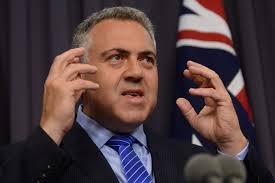
Μετά από ειδική σύσκεψη του υπουργικού συμβουλίου, την οποία συγκάλεσε ο Θησαυροφύλακας της χώρας, Joe Hockey, την Τρίτη το βράδυ, προκειμένου να ενημερώσει τα κυβερνητικά στελέχη για το πώς αντέδρασε η αυστραλιανή οικονομία στις αναταραχές που προκλήθηκαν στις χρηματαγορές του κόσμου λόγω της ελληνικής κρίσης, αλλά και του πτωτικού ράλι στο κινεζικό χρηματιστήριο, ο κ. Hockey δήλωσε ότι δεν υπήρξαν προβλήματα και ότι η οικονομία της χώρας για πρώτη φορά τον Ιούνιο έδειξε μία ιδιαίτερη αναπτυξιακή δυναμική.

«Η αυστραλιανή οικονομία δεν επηρεάστηκε απ’ αυτά που συμβαίνουν στην Ελλάδα και την Κίνα. Ο Ιούνιος ήταν πολύ καλός μήνας για την αυστραλιανή οικονομία, και αυτό το αποδεικνύουν και τα στοιχεία για την απασχόληση, που δημοσιεύθηκαν πρόσφατα» είπε ο κ. Hockey.

Ο Θησαυροφύλακας έκανε ειδική αναφορά στην Ελλάδα, λέγοντας ότι είναι πεπεισμένος ότι οι ηγέτες της Ευρωζώνης χειρίζονται το θέμα με τον καλύτερο τρόπο. «Με είχαν διαβεβαιώσει ότι έχουν την κατάσταση υπό έλεγχο και οι εξελίξεις το απέδειξαν» είπε χαρακτηριστικά για τις μέχρι τώρα εξελίξεις όσον αφορά την επίτευξη συμφωνίας μεταξύ των χωρών της Ευρωζώνης και της Ελλάδας.

Τα καλά μαντάτα του Θησαυροφύλακα για την οικονομία επιβεβαιώνονται και από την καθιερωμένη οικονομική επισκόπηση της τράπεζας Νational Australia Bank για το μήνα Ιούνιο. Όπως προκύπτει από τα πορίσματα της επισκόπησης, ο αριθμός των επιχειρήσεων που δήλωσε ότι βρίσκεται σε πολύ καλύτερη θέση απ’ αυτές που δήλωσαν το αντίθετο είναι κατά 11% υψηλότερος κάτι που συμβαίνει για πρώτη φορά μετά το ξέσπασμα της παγκόσμιας οικονομικής κρίσης. Μέχρι σήμερα η διαφορά μεταξύ αυτών των επιχειρήσεων που δήλωναν ότι βρίσκονται σε πολύ καλή κατάσταση και αυτών που δήλωναν το αντίθετο κυμαινόταν γύρω στο 6%.

ΘΑ… «ΠΛΗΡΩΣΟΥΜΕ» ΤΑ ΚΑΛΑ ΜΑΝΤΑΤΑ ΜΕ ΑΥΞΗΣΗ ΤΟΥ ΦΟΡΟΥ GST (;)

Αυτό το, οικονομικά τουλάχιστον κλίμα ευφορίας επέλεξε ο Joe Hockey για να επανέλθει σε ένα θέμα στο οποίο πρωτοαναφέρθηκε πριν από ένα χρόνο περίπου και τότε δεν του είχε βγει σίγουρα «σε καλό».

Πρόκειται για το θέμα της αύξησης του φόρου GST από τις πολιτείες ώστε τα έξτρα έσοδα να χρησιμοποιηθούν για την χρηματοδότηση των αναγκών που προκύπτουν στους τομείς της Υγείας και της Παιδείας.

Η επιστροφή του κ. Hockey στο θέμα της αύξησης του φόρου GST έρχεται μόλις λίγες μέρες πριν την συνάντηση του πρωθυπουργού με τους πολιτειακούς πρωθυπουργούς και επικεφαλείς υπουργούς των πολιτειών όλης της επικράτειας.

Όπως δήλωσε ο Θησαυροφύλακας οι πολιτειακοί ηγέτες θα πρέπει να σκεφτούν σοβαρά την προοπτική αύξησης του φόρου GST αν αυτό που λένε για ουσιαστική φορολογική μεταρρύθμιση το εννοούν. Από τα λεγόμενα του κ. Hockey προκύπτει ότι στην ουσία η ομοσπονδιακή κυβέρνηση θέλει να ξεφορτωθεί όχι μόνο τις οικονομικές απαιτήσεις των πολιτειών για την κάλυψη των αναγκών στους τομείς της υγείας και της παιδείας, αλλά και την ευθύνη για την αύξηση του φόρου GST. Ο Θησαυροφύλακας κάλεσε όλους τους πολιτειακούς ηγέτες αλλά και την Αντιπολίτευση να συμφωνήσουν με την κυβέρνηση ώστε να αυξηθεί ο φόρος, προσθέτοντας ότι οι πολιτείες πρέπει να αναλάβουν την συνολική ευθύνη των προϋπολογισμών τους και των εξόδων τους που αυξάνονται συνεχώς, όπως τα έξοδα του συστήματος υγείας που θα αυξηθούν αισθητά λόγω της γήρανσης του πληθυσμού».

Εν τω μεταξύ ο Θησαυροφύλακας προκειμένου να μην πάθει αυτό που έπαθε την προηγούμενη φορά που αναφέρθηκε στο θέμα του GST και ξεσήκωσε τσουνάμι αντιδράσεων από τους πολιτειακούς ηγέτες, έκανε λόγο για πιο ουσιαστική μεταρρύθμιση του φορολογικού συστήματος και για κατάργηση φόρων που θεωρούνται μη αποδοτικοί.

Αξίζει να αναφερθεί ότι η ευκαιρία στον κ. Hockey να βάλει και πάλι το θέμα GST στο τραπέζι των διαπραγματεύσεων, δόθηκε μέσα από ένα ειδικό φόρουμ που διοργανώνεται από την PricewaterhouseCoopers και το οποίο πραγματεύεται το θέμα της φορολογικής μεταρρύθμισης.

Η Ελλάδα ως παράδειγμα προς αποφυγή αλλά και ως παράδειγμα μίας «αρτηριοσκληρωτικής» οικονομίας που «αρνήθηκε» να αλλάξει σύμφωνα με τα κοινωνικά και οικονομικά «προστάγματα» των καιρών ήταν ένα από τα πρώτα επιχειρήματα που χρησιμοποίησε ο Θησαυροφύλακας στην ομιλία του προκειμένου να αιτιολογήσει το γιατί η φορολογική μεταρρύθμιση είναι απαραίτητη.

«Είναι ένα επίκαιρο μάθημα για όλους μας, η ελληνική τραγωδία που λαμβάνει χώρα τις τελευταίες εβδομάδες, τα τελευταία χρόνια. Οι χώρες που δεν κάνουν τις οικονομικές μεταρρυθμίσεις που οι κοινωνικές αλλαγές επιβάλλουν, είναι καταδικασμένες και δεν θέλουμε να βρεθούμε σ’ αυτή τη θέση. Γιατί εκείνοι που πληρώνουν το υψηλότερο και επώδυνο τίμημα δεν είναι οι εύποροι αλλά οι μη προνομιούχοι, όπως συμβαίνει αυτή τη στιγμή στην Ελλάδα» είπε χαρακτηριστικά ο κ. Hockey.

Πηγή:Νέος Κόσμος

Greece:Deal with lenders approved

3000

Parliament backs austerity package despite strong SYRIZA opposition.

Greek Parliament passed the prior actions demanded by lenders to pave the way for bridge financing and a third bailout in a vote during the early hours of Thursday morning. A total of 229 MPs voted for the measures, 64 voted against, six voted present and one was absent.

Prime Minister Alexis Tsipras saw 32 of his MPs vote against the measures, while another six abstained. All of the deputies from coalition partner Independent Greeks backed the legislation. This means that the number of coalition lawmakers supporting the bill remained above the 120-mark, which is the level below which the government is considered not to have a mandate to continue.

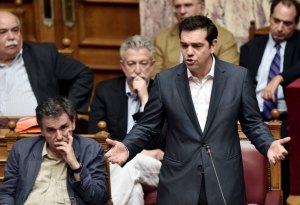
Before the vote, Tsipras said the agreement with lenders was the only viable option open to him and challenged rebels within his party to propose a better one.

In his speech before Parliament, Finance Minister Euclid Tsakalotos sought to defend Greece’s agreement with creditors as a necessary evil. “It’s a difficult agreement, a deal which only time will show if it is economically viable,” he said. “I don’t know if we did the right thing, but I know we felt we had no choice,” he said. “We never said this was a good agreement,” he added, noting that “a lot will depend on how politicians will handle the many changes included in the agreement.”

Economy Minister Giorgos Stathakis, for his part, declared that “these are moments for responsibility,” noting that everyone “must state clearly where they stand on Greece’s dilemma. The government received a half-finished second bailout which was frozen and was confronted by non-viable system,” he said.

SYRIZA’s parliamentary spokesman Nikos Filis accused eurozone officials of executing a “coup” at a summit in Brussels on Monday when the agreement was reached. Their aim, he said, was “to topple the Greek government, to give the message that a leftist administration cannot survive in Europe.”

The opposition delivered harsh criticism against SYRIZA, and against Tsipras for his absence in the early part of the debate but also indicated they would back the bill.

The leader of the centrist Potami, Stavros Theodorakis accused Tsipras of intentionally delaying an agreement with creditors as “he was afraid of his party.” He called on the premier not to keep in his government those MPs who break ranks. As for Potami, he said it would back the government on the deal “even though a much better one could have been reached.”

New Democracy’s rapporteur Kyriakos Mitsotakis told Parliament that Greece “is paying very dearly for the political coming-of-age of SYRIZA.” “We believe in the depoliticization of the public administration. I strived for that as minister,” he added. “We will vote for the measures due to political conscience not due to party-imposed discipline,” he said, specifying that ND will vote for the prior actions this week and next week but that the government cannot rely on an “a la carte governing majority in which MPs can vote for some measures but not others.”

Source: Kathimerini, The Guardian

The Greek debt crisis is providing fuel for the country’s neo-Nazi movement Golden Dawn

GetInline.aspx

Despite its various charity fronts, the Greek neo-Nazi movement is a dark and dangerous beast. Photo: Reuters

The latest EU bailout deal for Greece offers so little in the way of economic relief for the average Greek citizen that it risks emboldening a growing neo-Nazi movement that is casting its gangs of thugs as saviours of the poor.

As supporters of the neo-Nazi Golden Dawn party set up “Greeks only” food banks to help feed the unemployed, the leftist coalition government of Prime Minister Alexis Tsipras​ is facing an uphill battle to sell yet another version of austerity to an already traumatised nation.

Tsipras’ Syriza Party and their coalition allies came to power riding a wave of nationalistic revolt over EU-imposed austerity measures, buoyed by heady, if unrealistic, popular expectations for change.

Syriza’s capitulation to EU negotiators this week leaves the deep-seated resentment and frustration that austerity, poverty and widespread unemployment have stoked casting around for alternative avenues of political expression. With a weak political centre that supports the EU bailout, the anti-austerity mantle and all the emotion it carries could swiftly default to the political far right. Golden Dawn, which opposed the EU package, is flexing its muscles in the wings.

Advertisement

The Greek neo-Nazi movement, however, is a dark and dangerous beast despite its various charity fronts. It uses violence to advance its aims and actively promotes racism, anti-Semitism, anti-Islamic sentiment, homophobia and social division, particularly by assaulting and demonising immigrants as scapegoats for the nation’s woes.

Today’s Greek neo-Nazis found their political voice in the form of Golden Dawn as youth unemployment hit 50 per cent, and overall joblessness about 25 per cent, once austerity measures began to bite. The stresses of the economic contraction within Greek communities are palpable; even the rates of stillbirths have increased because many women can no longer afford neo-natal screening or care.

Against this backdrop of declining living standards and acute uncertainty about the future, Greece is also facing relentless waves of immigrant arrivals by sea. In the first four months of this year alone over 21,000 people arrived by boat, mainly fleeing Syria, compared to about 33,000 people for all of 2014. Unfortunately, this confluence of factors adds up to a textbook scenario for the rise of political extremism.

Golden Dawn took to the national political stage in 2012, winning 21 seats to enter the Hellenic Parliament for the first time. In national elections earlier this year it won more than 6 per cent of the primary vote, even though its leadership had been jailed under anti-gang laws.

More ominous than the popular vote, perhaps, is its considerable support within the Greek security forces. About half the Greek police voted for Golden Dawn in 2012. The chief of the Hellenic Police, Nikos Papagiannopoulos, has since been reported as telling his officers to make the lives of immigrants “unbearable” and members of the Greek coastguard unit have been accused of beating migrants and dumping them at sea in Turkish territorial waters and of carrying out “mock” waterboardings.

The neo-Nazi presence in Parliament has given oxygen to overt racism. On the streets, such sentiment is playing out in violent attacks on immigrants and street battles between far left groups and Golden Dawn-aligned gangs. In my own research I uncovered countless incidents in which fascists and neo-Nazis were protected by the riot police during clashes, or even had the use of a riot police van to hide their rocks, bricks and baseball bats.

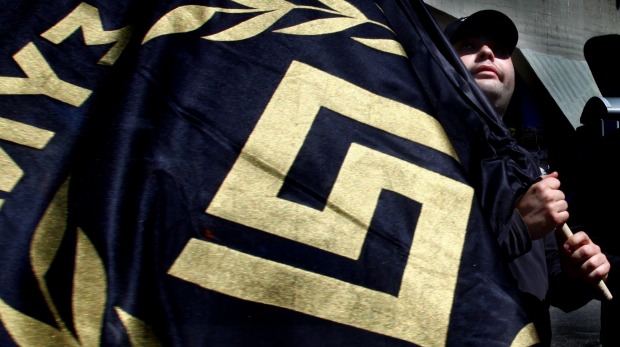
At the same time, the movement is seeking to bolster its popular appeal with food banks, as part of a larger charity effort, albeit one that only assists Greeks. In 2014, Australian Greeks from Melbourne unwittingly contributed to Golden Dawn’s largesse, by donating goods that were handed out from crates stamped with Golden Dawn’s Nazi symbols.

Certainly, Greece’s recent history must limit the popular appeal of the neo-Nazi right. The Greeks suffered under a brutal military junta between 1967 and 1974 and still have pride in the people’s movement that overthrew the colonels. Extreme right-wing movements, however, less interested in popularity than in stoking the kind of civil unrest that might offer the security forces a pretext to step up or step in.

Few would argue that Prime Minister Tsipras had any real choice in negotiations with the EU, despite his brinkmanship. Austerity might be bad, but being cut loose from the EU looked even worse. But, now no matter what his government does, the new EU package will trigger new, incendiary domestic political stresses.

While the world crunches the numbers of the Greek bailout mark III it is critical this delicate, and potentially dangerous, political balancing act isn’t overlooked.

Dr Nick Apoifis is a lecturer in International Relations at UNSW. His book on radical political movements in Greece is due out later this year.

source:smh.com.au

European Central Bank may not restore credit to Greece

image

FRANKFURT, Germany — European Central Bank head Mario Draghi faces a blizzard of questions about Greece at his news conference Thursday.

His appearance follows a meeting at which, analysts say, the bank may hold off on restoring emergency credit to Greek banks despite the dire situation there.

Greece desperately needs the ECB to start letting Greek banks tap emergency central bank credit. They have been closed since June 29, more than two weeks ago, since the ECB’s governing council halted the credit flow due to concerns Greece’s banks would go broke and not pay the money back.

To start the money flowing again and get the banks open, the ECB would need a clear sign that the country has a chance at a rescue package that would keep it government and banks solvent. Greece and other eurozone countries have agreed to hold talks on what would be a bailout worth 82 billion-86 billion euros ($83 billion-$87 billion).

When that line is actually crossed, however, is very much a judgment call.

Analysts say the bank can act now that Greece’s parliament has approved new cutbacks demanded as a condition for starting talks. Or, it could wait until Germany’s parliament and others approve the start of talks.

Greece’s parliament voted 229-64 early Thursday to implement more austerity measures that include pension cuts and sweeping sales tax hikes. But the large majority was provided by pro-European opposition parties and in spite of deepening dissent within Prime Minister Alexis Tsipras’ left-wing Syriza party.

In any case, the issue is pressing. Greece’s banks have been closed for more than two weeks to prevent them from collapsing as fearful depositors withdraw their savings en masse. ATM withdrawals have been limited to 60 euros per person per day. Normal commerce is impossible as suppliers demand businesses pay cash they don’t have.

Every day of delay makes Greece’s recession worse, costs the government lost tax revenue, and increases the amount of money needed to rescue the government from bankruptcy.

The other big Greek issue at the meeting will likely be Draghi re-stating that the bank is willing to use all the stimulus measures at its disposal to prevent turmoil from Greece spreading to government bond markets or the economies of other countries. Greece is less than two per cent of the economy of the 19 countries that share the euro, but earlier phases of the six-year-old Greek crisis created financial pressure for other indebted countries who found their market borrowing costs rising.

“We expect Draghi to state this commitment very clearly,” wrote Marco Valli, chief eurozone economist at UniCredit Research, in an email to investors.

One reason markets have been relatively calm is the ECB’s 1.1 trillion euro ($1.2 trillion) monetary stimulus. The ECB has been buying 60 billion euros a month in government and corporate bonds, a measure known as quantitative easing, or QE. The effect is to push newly created money into the financial system. That steadies bond markets — since market participants know there is a buyer with unlimited purchasing power — and is also intended to raise inflation that is considered too low at 0.2 per cent annually.

Ben May, lead eurozone economist at Oxford Economics, said the news conference “will provide Mario Draghi with the perfect opportunity to once again talk up the ongoing success of its QE program, while signaling that more can be done if conditions warrant.”

The bank won’t cut interest rates. It has already said its benchmark rate, now at a record low 0.05 per cent, is as low as it can go.

source:ctvnews.ca