Daily Archives: July 29, 2015

Australian Home and Away actress Maggie Kirkpatrick charged with child sex offences

Maggie-Kirkpatrick_3390645b

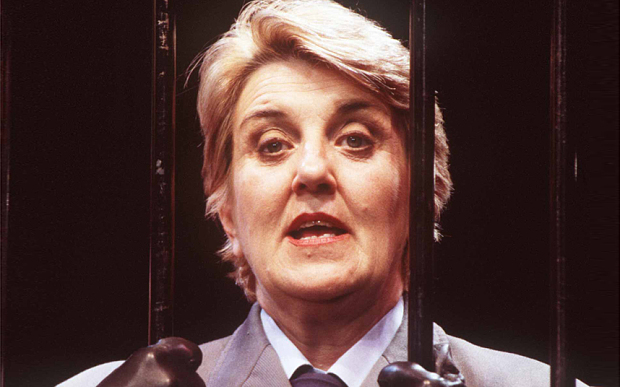
Kirkpatrick came to prominence on the Australian television show Prisoner Cell Block H in which she played Joan Ferguson Photo: Camera Press

Kirkpatrick was charged with indecent assault of a minor in the 1980s buts says the allegations are “ridiculous”

Maggie Kirkpatrick, a veteran Australian television star who appeared in Home and Away and Prisoner Cell Block H, has been charged with child sex offences.

The 74-year-old was charged with indecent assault of a 13-year-old in the 1980s and will appear in a court in Melbourne on August 19.

She strenuously denied the charges.

“I need to go to court to have this ridiculous situation quashed. Allegations have been levelled at me, yes. Are they true? Absolutely not,” she told Sydney’s Daily Telegraph.

“The evidence is in the court. I don’t think it’s appropriate that I say any more.”

Kirkpatrick came to prominence in the 1980s on the Australian television show Prisoner Cell Block H, in which she played Joan Ferguson, a lesbian warden nicknamed “The Freak”.

She appeared in 1991 as Jean Chambers in Home and Away and then featured again in the show in 2003 and 2004 as Viv “The Guv” Standish.

The alleged victim was reportedly not connected to the entertainment industry.

The charges come as a royal commission investigates child abuse across Australia, including in the entertainment industry.

source:.telegraph.co.uk


Panathinaikos shakes off red card to beat Bruges 2-1

ninis_berg_web-thumb-large

Ten-man Panathinaikos turned bad luck into a rather good result as it beat visiting Club Bruges 2-1 in the first leg of the Champions League third qualifying round on Tuesday.

The Greens braved the loss of a penalty kick and the red card to one of its central defenders from the 43rd minute to score a precious victory in an action-packed game at the Apostolos Nikolaidis Stadium in Athens.

The Belgians opened the score before the completion of the 10th minute as Bobo capitalized of a storm in the Greek defense to slot the ball home.

Playing with three at the back the Belgians were able to weather the Panathinaikos attacks in the first half-hour, while the center of the Greek defense had major problems in containing the visitors, partly due to the inability of Giorgos Koutroumbis as the lone holding midfielder to lift a barrier to the Belgian strikers.

When Sotiris Ninis fed Nikos Karelis in the box he was fouled and the penalty was given, but Marcus Berg saw his spot kick parried by Bruges keeper Sebastien Bruzzese on the 34th minute.

Yet the Swedish striker was not to be denied again three minutes later when he made it 1-1 from a close range after a cross by Ninis, as the Belgian back line started wavering.

Things turned more difficult for Panathinaikos just before half-time with the red card shown to central defender Sergio Sanchez for shirt-pulling.

Bruges was dominant in the second half, enjoying a man’s advantage and trying to beat the error-prone Greek defense.

However in a rare attack for the Greens in the 65th minute they earned another penalty after a Bobo handball, and this time Karelis converted it for 2-1.

As the time went on the intense heat (31 degrees centigrade) took its toll mainly on the visitors, with Panathinaikos gaining some ground in its effort to hold on to the result.

The return leg is scheduled for August 4 in Belgium.

source:ekathimerini.com

Fixing Greece’s Economy Might Prove To Be A Herculean Task

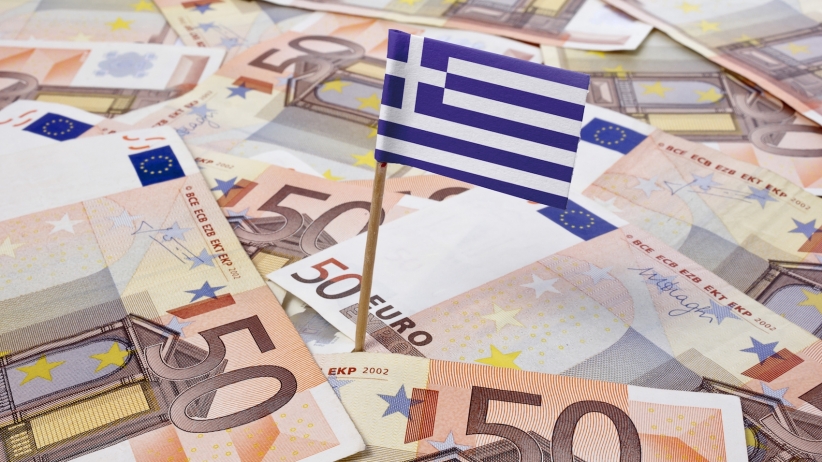
20150728050412-shutterstock-243975121

Syriza’s election victory in late January looked like a new turning point for Greece. The left-wing political party won support from many of the country’s citizens by focusing their campaign on austerity relief, which has been a source of concern for many Greeks worried about their nation’s handling of its debt crises.

The new leading party, which formed an interesting coalition with the right-wing Independent Greeks, hoped to change EU measures, especially with the appointment of new Finance Minister Yanis Varoufakis. Those who were in doubt of the new approach saw this as a potential Greek exit from the Eurozone, many referring to it as a “Grexit.”

But did they ever sort out an agreement to change things for Greece? As many expected, it was a much tougher task than what one thought, perhaps Herculean. Syriza reassured the press that they had no intention on leaving the Eurozone, but wouldn’t settle for a deal that they found too much of a compromise on their part. German Chancellor Angela Merkel was unrelenting to say the least, not willing to provide any debt relief without additional austerity measures. French President François Hollande was in the picture too, but while he seemed to be slightly more sympathetic to Varoufakis and co., Merkel had the final word on the EU’s part. Greece caved in to some of Germany’s demands, notably agreeing to privatize its only licensed horse racing gambling company.

There was what many expected to be a turning point in the negotiations deadlock. On June 27, Prime Minister Alexis Tsipras announced in a speech to the public that a referendum would take place to decide whether the Greek government should agree to the bailout conditions by the IMF, European Central Bank (ECB), and the European Commission (EC). Should the majority of votes be a “yes”, the Syriza-led government was expected to step down.

The “No” vote received a little over 61% of the votes, and many speculated a potential Greek exit from the Eurozone; several banks even closed down. But what happened just after 24 hours shocked many. Finance Minister Yanis Varoufakis resigned, after “other European participants” told Prime Minister Tsipras that they preferred having Varoufakis out of the picture. Tsipras eventually agreed to a new bailout deal, causing rifts among his own supporters and even fellow MPs and ministers. That being said, views are mixed on the matter. Many economists, even those who lean towards similar politics as Syriza’s, see this a deal that can lead to sustainable relief. Others see this as a betrayal to the referendum, with many citing Germany’s lack of empathy, because they were once relieved of their debt in 1953.

We don’t know how things will go with this deal just yet; however, there have been some voices of concern coming from unexpected sources. The IMF immediately refused to endorse the deal, saying it was simply not viable and unsustainable, and that in order for a sustainable recovery, Greece needs much more debt-relief than offered by Europe, with even British Prime Minister David Cameron agreeing that more debt-relief is required.

source:entrepreneur.com