Daily Archives: July 27, 2015

Η Λήμνος στην… «καρδιά» της Μελβούρνης

epstatue1

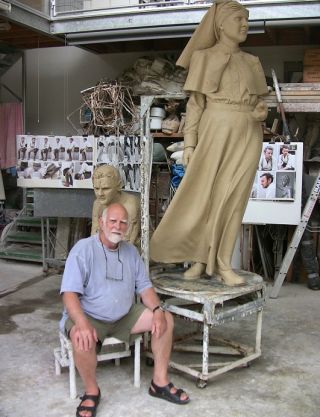
Ο γλύπτης, Peter Corlett OAM, δίπλα στο άγαλμα της νοσοκόμας Matron Grace Wilson, λίγο πριν την ολοκλήρωσή του. Η Matron Grace Wilson ήταν μία από τις Αυστραλές νοσοκόμες που υπηρέτησαν στη Λήμνο

Σε λίγες μέρες τα αποκαλυπτήρια του Μνημείου Λήμνος-Καλλίπολη.

Το Μνημείο Λήμνος-Καλλίπολη, προς τιμήν των κατοίκων της Λήμνου και των Αυστραλών νοσοκόμων που υπηρέτησαν στο νησί κατά τη διάρκεια της επιχείρησης των ANZAC στην Καλλίπολη το 1915, ολοκληρώθηκε και στις 8 Αυγούστου θα γίνουν τα επίσημα αποκαλυπτήριά του.

Το άγαλμα που αναπαριστά μία νοσοκόμα και έναν Αυστραλό στρατιώτη φιλοτεχνήθηκε από τον διακεκριμένο γλύπτη Peter Corlett, και για την υλοποίησή του βοήθησε όλη η παροικία της Μελβούρνης, ενώ η πρωτοβουλία ανήκει στην Επιτροπή Μνήμης Λήμνου-Καλλίπολης και δύο ομογενών πρώην πολιτικών, των κ.κ. Λι Ταρλάμη και Γιάννη Πανταζόπουλου.

Η ημέρα που επιλέχθηκε για τα αποκαλυπτήρια του αγάλματος δεν είναι τυχαία. Η 8η Αυγούστου είναι η μέρα κατά την οποία συμπληρώνονται 100 χρόνια από τότε που οι πρώτες Αυστραλές νοσοκόμες έφτασαν στη Λήμνο.

Η τελετή των αποκαλυπτηρίων θα λάβει χώρα στις 11.00 το πρωί και είναι ανοικτή στο κοινό.

Στην τελετή αναμένεται να παραστούν, εκτός από πολιτικά πρόσωπα, ηγετικά στελέχη της παροικίας μας, διπλωματικοί εκπρόσωποι της Ελλάδας στην Αυστραλία, αλλά και απόγονοι των νοσοκόμων που υπηρέτησαν στη Λήμνο.

Το άγαλμα έχει στηθεί στην πλατεία του Foote Street, στην περιοχή του Albert Park που βρίσκεται απέναντι από το Γυμνάσιο Albert Park Secondary College και το Κέντρο Τέχνης, Gasworks Art Village.

Εκτός από το άγαλμα, στο Μνημείο Λήμνος-Καλλίπολη συγκαταλέγεται και πλακέτα στην οποία είναι γραμμένα, στην ελληνική και αγγλική γλώσσα, τα χωριά απ’ όπου πέρασαν οι Αυστραλοί στρατιώτες που βρέθηκαν εκεί.

Αναφερόμενος στα επερχόμενα αποκαλυπτήρια, ο κ. Λι Ταρλάμης, πρόεδρος της Επιτροπής Μνήμης Λήμνος-Καλλίπολη, που μόχθησε για να υλοποιηθεί το Μνημείο, είπε ότι τόσο γι’ αυτόν (σημειωτέον αίρει την καταγωγή του από τη Λήμνο), όσο και για τα υπόλοιπα στελέχη και μέλη της Επιτροπής αυτή η στιγμή είναι πολύ σημαντική.

«Είναι η στιγμή που η σφραγίδα της Λήμνου και της προσφοράς της στο ιστορικό γίγνεσθαι της Αυστραλίας μπαίνει ανεξίτηλη στον φυσικό χώρο της Αυστραλίας. Είναι μία στιγμή που άργησε πολύ» είπε χαρακτηριστικά.

«Η περιοχή Albert Park, έχει μία ιδιαίτερη θέση για όλους τους Έλληνες που μετανάστευσαν στην Αυστραλία κατά τις δεκαετίες ’50 και ’60, στο κοντινό Princess Pier, έφτασαν με τα υπερωκεάνια και αυτή η περιοχή ήταν η πρώτη εικόνα που είχαν από τη νέα χώρα στην οποία έφτασαν. Γι’ αυτό η ανέγερση αυτού του αγάλματος εδώ έχει μία ιδιαίτερη συμβολική αξία. Θα υπάρχει εδώ για να υπενθυμίζει ότι η σχέση των Ελλήνων και της Αυστραλίας δεν άρχισε μέσα από το μεταναστευτικό κύμα της μεταπολεμικής περιόδου αλλά από τον Πρώτο Παγκόσμιο Πόλεμο» ανέφερε ο γραμματέας της Επιτροπής Μνήμης, ιστορικός και φιλέλληνας, Jim Claven.

Για την ιστορία να αναφέρουμε ότι περίπου 4.000 Αυστραλοί και Νεοζηλανδοί στρατιώτες νοσηλεύθηκαν στη Λήμνο με τη συνδρομή 96 Αυστραλών νοσοκόμων. Το νοσοκομείο εκστρατείας είχε στηθεί στο χωριό Σαρπί, καθώς και σε πλοία. Δυστυχώς, 148 Αυστραλοί και 76 Νεοζηλανδοί στρατιώτες υπέκυψαν στα τραύματά τους και άφησαν την τελευταία τους πνοή εκεί. Οι σοροί τους ενταφιάστηκαν σε δύο συμμαχικά νεκροταφεία στη Λήμνο, στο Πορτιανού και στο Μούδρο.

Πηγή:Νέος Κόσμος

Μελβούρνη:Συμπάροικος αγωνίζεται να σώσει τον «Παλιό Ελληνικό» κινηματογράφο του Richmond

epold1

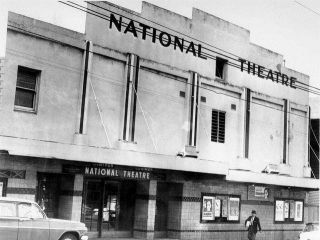
Ο κινηματογράφος κάποτε

Ένας κινηματογράφος ορόσημο για τον ελληνισμό της Μελβούρνης

Ένας κινηματογράφος ορόσημο για τον ελληνισμό της Μελβούρνης, που λόγω της μακροχρόνιας σχέσης του με την παροικία, είναι γνωστός με το όνομα Old Greek (Παλιός Ελληνικός), κινδυνεύει να θυσιαστεί στο βωμό του οργασμού δόμησης διαμερισμάτων στα εσωτερικά προάστια της Μελβούρνης.

Ο ομογενής Νίκος Ψαλτόπουλος (πρώην συνεργάτης του “Νέου Κόσμου”) δημιούργησε ειδική σελίδα στο κοινωνικό δίκτυο Facebook που φέρει το όνομα “Save The Greek” καλώντας όσους γνώρισαν τον κινηματογράφο αλλά και την ευρύτερη παροικία και κοινότητα να μοιραστούν τις ιστορίες τους και να ενώσουν τη φωνή τους μαζί του ώστε να αποφευχθεί η κατεδάφιση της πρόσοψής του, που είναι το μόνο τμήμα του κτιρίου που παραμένει ακόμα άθικτο. Το υπόλοιπο τμήμα του κτίσματος έχει αλλάξει και αυτή τη στιγμή λειτουργεί ως χώρος εμπορικών καταστημάτων.

Η κινητοποίηση του κ. Ψαλτόπουλου έρχεται μετά την απόφαση της κατασκευάστριας εταιρίας Little Projects να προσφύγει στο Διαιτητικό Δικαστήριο VCAT προκειμένου να ανατρέψει την απόφαση του Δήμου Yarra που ακύρωσε τα σχέδιά της για την ολοκληρωτική κατεδάφιση του κτιρίου προκειμένου στη θέση του να αναγερθεί πολυκατοικία 14 ορόφων, συνολικού κόστους $70 εκατ.

«Για μένα αλλά και για χιλιάδες άλλους συμπάροικους, αυτό το εμβληματικό κτίριο κουβαλά αναμνήσεις και αντιπροσωπεύει μία πτυχή της σχέσης μας με την Ελλάδα όταν ήμασταν ακόμα παιδιά» λέει ο κ. Ψαλτόπουλος προσθέτοντας ότι το Old Greek είναι επίσης μία σελίδα της κοινωνικής ιστορίας του Richmond και της Μελβούρνης γενικότερα. Εκείνο που επιδιώκει είναι η οποιαδήποτε αλλαγή στην πρόσοψη του κτιρίου να γίνει με σεβασμό στην ιστορία του και σύμφωνα με τη γνώση τόσο του Δήμου όσο και των κατοίκων της περιοχής.

Το κάποτε National Theatre (Εθνικό Θέατρο) που βρίσκεται στο Bridge Road του κεντρικού προαστίου της Μελβούρνης Richmond, φιλοξένησε στους χώρους του χιλιάδες συμπαροίκους, εκατοντάδες ελληνικές ταινίες, συναυλίες ελληνικής μουσικής και ελληνικές θεατρικές παραστάσεις και αποτελεί αναπόσπαστο κομμάτι της νιότης και της διασκέδασής τους.

Μετονομάστηκε από τον κόσμο της περιοχής και

έγινε ευρύτερα γνωστό, όπως προαναφέραμε, ως Old Greek γι’ αυτόν ακριβώς το λόγο.

Το National Theatre του Richmond χτίστηκε το 1921 αντικαθιστώντας έναν θερινό σινεμά που βρισκόταν στο συγκεκριμένο σημείο.

Από το 1961 έως και το 1983 ήταν ένας χώρος αποκλειστικά αφιερωμένος στον ελληνικό κινηματογράφο ενώ μετά το 1983 στους χώρους του φιλοξένησε πολλές συναυλίες Ελλήνων αλλά και ξένων, τραγουδιστών και συγκροτημάτων. Στις αρχές του 1990 έπαψε να λειτουργεί ως συναυλιακό κέντρο και οι χώροι του μετατράπηκαν σε καταστήματα.

Πηγή:Νέος Κόσμος

Αυστραλία:To πλαστικό χρήμα παντού και πάντοτε

untitled

Η Αυστραλία στην πρώτη γραμμή των χωρών που οι καταναλωτές χρησιμοποιούν, ως επί το πλείστον, πιστωτικές κάρτες.

Η Αυστραλία βρίσκεται στην πρώτη γραμμή χωρών οι καταναλωτές των οποίων χρησιμοποιούν, ως επί το πλείστον, πιστωτικές κάρτες για τις αγορές τους.

Πάνω από το 80% των καταναλωτών χρησιμοποιούν τις νέες, ταχύρρυθμες μεθόδους πληρωμής στα ταμεία που μειώνουν το χρόνο σε έξι δευτερόλεπτα για την ολοκλήρωση της συναλλαγής.

Ο διευθύνων σύμβουλος του Australian Payments Clearing Association, Chris Hamilton, εκτιμά ότι το αυστραλιανό κοινό δέχεται με ενθουσιασμό τις διαρκώς αυξανόμενες καινοτομίες στον τρόπο συναλλαγών με το πλαστικό χρήμα και πέρα από αυτό.

Ο ίδιος υπογραμμίζει ότι ενώ οι κάρτες θα εξακολουθήσουν προφανώς να αποτελούν τον πρωταρχικό τρόπο πληρωμής στο εγγύς μέλλον, η Αυστραλία βρίσκεται στο κατώφλι μεγάλων εξελίξεων σ’ αυτόν τον χώρο.

Πηγή:Νέος Κόσμος

Αυστραλία:Δεξιά στροφή του Εργατικού Κόμματος

untitled

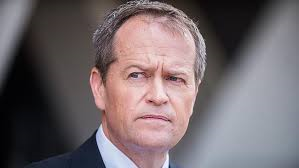
Επικράτηση του Bill Shorten και της Δεξιάς Πτέρυγας στο συνέδριο του Κόμματος.

Με νικητή τον Bill Shorten, αλλά και απώλειες όσον αφορά την ενότητα, έληξε χθες το ταραχώδες τριήμερο συνέδριο του Εργατικού Κόμματος, το οποίο ξεδίπλωσε την πολιτική πλατφόρμα επί της οποίας θα πολιτευτεί η παράταξη, εν όψει και των επερχόμενων εκλογών, οι οποίες αναμένονται για την άνοιξη του 2016.

Στο Συνέδριο κονταροχτυπήθηκαν η Αριστερή και η Δεξιά Πτέρυγα του Κόμματος της αξιωματικής αντιπολίτευσης, πάνω σε μία σειρά θεμάτων, από την διεθνή πολιτική και το μεταναστευτικό, μέχρι τη φορολογία, την οικολογία και τον γάμο ομοφύλων ζευγαριών. Η συζήτηση διεξήχθη σε τεταμένο κλίμα, καθώς δεν ήταν λίγα τα μέλη του Kόμματος που ξέσπασαν σε δάκρυα, ενώ δεν έλειψαν και τα απρόοπτα, όπως ήταν οι παραστάσεις διαμαρτυρίας.

“ΑΓΚΑΘΙ”

ΤΟ ΜΕΤΑΝΑΣΤΕΥΤΙΚΟ

Δύο ήταν τα βασικά ζητήματα που καθόρισαν τον δημόσιο διάλογο – και την αντιπαράθεση μεταξύ των συνέδρων. Το θέμα που μονοπώλησε το ενδιαφέρον των συνέδρων το Σάββατο ήταν η πρόταση του Bill Shorten να ακολουθήσει -σε μία ενδεχόμενη κυβέρνηση του Εργατικού Κόμματος- την πολιτική της κυβέρνησης Abbott, της αποτροπής των πλοίων που μεταφέρουν μετανάστες χωρίς έγγραφα και πρόσφυγες αιτούντες άσυλο και την προώθησή τους στην Ινδονησία, “σε περιπτώσεις που αυτό είναι ασφαλές”, σύμφωνα με την τοποθέτηση του Bill Shorten.

Η πρόταση αυτή, η οποία αποτελεί υπαναχώρηση από την μέχρι τώρα θέση του Εργατικού Κόμματος, συνάντησε την σθεναρή αντίσταση της Αριστερής Πτέρυγας του Κόμματος, η οποία μέχρι την τελευταία στιγμή προσπάθησε να περάσει αλλαγές στην διατύπωση. Προσπαθώντας να κάμψει τις αντιδράσεις τους, ο αρχηγός του Εργατικού Κόμματος περιέβαλε την πρόταση με μία σειρά μέτρων ανθρωπιστικού χαρακτήρα, τα οποία θα περιλαμβάνονται στην μεταναστευτική πολιτική της κυβέρνησής του. Ανάμεσά τους είναι ο διπλασιασμός του αριθμού των προσφύγων που θα μπορεί να δεχτεί η Αυστραλία και ο οποίος θα ανέλθει σε 27 χιλιάδες μέχρι το 2025, αλλά και η επαναφορά των δεσμεύσεων της σύμβασης του ΟΗΕ για τους πρόσφυγες στην σχετική νομοθεσία.

Παράλληλα, ο κ. Shorten δεσμεύτηκε ότι μία κυβέρνηση Εργατικού Κόμματος θα προσφέρει 450 εκατομμύρια δολάρια στην επιτροπή του ΟΗΕ για τους πρόσφυγες, ποσό μεγαλύτερο από ό,τι έχει προσφέρει στο παρελθόν η Αυστραλία. Σχετικά με τα κέντρα κράτησης, εισηγήθηκε την δημιουργία ανεξάρτητης αρχής που θα τα εποπτεύει, καθώς και τον διορισμό συνηγόρου του παιδιού, ενώ δεσμεύτηκε ότι όλες οι σχετικές επιχειρήσεις θα διεξάγονται υπό καθεστώς πλήρους διαφάνειας.

Η πρότασή του έγινε δεκτή από τους συνέδρους, αποσπώντας 225 ψήφους, επί συνόλου 390, σηματοδοτώντας μία σαφή ήττα της Αριστερής Πτέρυγας και προσωπικά τριών από τους επιφανέστερους βουλευτές του Εργατικού Κόμματος: της υπαρχηγού Tanya Plibersek – η οποία έλαμψε δια της απουσίας της από τον δημόσιο διάλογο – της Penny Wong και του Anthony Albanese.

H συζήτηση επισκιάστηκε και από την εισβολή στον χώρο του συνεδρίου ομάδας διαδηλωτών, οι οποίοι ξεδίπλωσαν πανό που έγραφε “όχι στην απώθηση των προσφύγων”, φωνάζοντας συνθήματα όπως “πνίξτε τον Shorten, όχι τους πρόσφυγες”.

ΣΥΜΒΙΒΑΣΜΟΣ ΓΙΑ

ΤΟΝ ΓΑΜΟ ΟΜΟΦΥΛΩΝ

Εξίσου θερμό κλίμα επικράτησε και την Κυριακή, καθώς το θέμα που κυριάρχησε ήταν η ψήφος για την επέκταση του δικαιώματος του γάμου για τα ομόφυλα ζευγάρια. “Το εργατικό Κόμμα θα παλέψει για την ισότητα του γάμου σ’ αυτήν την χώρα”, δήλωσε ο Bill Shorten, στο παρασκήνιο όμως μαινόταν ο πόλεμος για το είδος της ‘πάλης’. Στόχος της Αριστερής Πτέρυγας ήταν να υπάρξει δέσμευση όλων των βουλευτών του κόμματος ότι θα ψηφίσουν υπέρ του γάμου ομοφύλων ζευγαριών, όμως επικράτησε η τάση της Δεξιάς Πτέρυγας, η οποία προέβαλε το επιχείρημα ότι μία δεσμευτική ψήφος θα συσπείρωνε το κυβερνών κόμμα, αποκλείοντας το ενδεχόμενο οι βουλευτές του συνασπισμού να ψηφίσουν κατά συνείδηση, κάτι που θα καταδίκαζε τις πιθανότητες να περάσει το μέτρο.

Στην τοποθέτησή του, ο αρχηγός της αξιωματικής αντιπολίτευσης κάλεσε τον πρωθυπουργό να επιτρέψει στους βουλευτές του να ψηφίσουν ελεύθερα επί του θέματος, ώστε να κάνουν το ίδιο και οι βουλευτές του Εργατικού Κόμματος. Στο πλαίσιο των ζυμώσεων, οι βουλευτές της Αριστερής Πτέρυγας αναγκάστηκαν να υπαναχωρήσουν των θέσεών τους, αποδεχόμενοι μία ψήφο κατά συνείδηση πριν τις εκλογές, με αντάλλαγμα μία δεύτερη, δεσμευτική αυτήν την φορά ψηφοφορία, σε δεύτερη φάση.

ΦΟΡΟΣ ΓΙΑ ΤΟΥΣ ΠΛΟΥΣΙΟΥΣ

Μπορεί στα δύο αυτά θέματα -που αναμένεται να κυριαρχήσουν στην προεκλογική περίοδο, καθορίζοντας το διακύβευμα των εκλογών του 2016-, να σηματοδότησαν την ήττα της αριστερής πτέρυγας και την στροφή του Εργατικού Κόμματος σε μια πιο συντηρητική πολιτική, προκειμένου να αντλήσει από την δεξαμενή των ψηφοφόρων του Φιλελεύθερου κόμματος. Ωστόσο, το συνέδριο δεν άφησε χωρίς νίκες την αριστερή πλευρά. Ανάμεσα στις προοδευτικές πολιτικές προτάσεις που ακούστηκαν ήταν οι εξαγγελίες για το περιβάλλον, ενώ ως προσωπική νίκη του Anthony Albanese πρέπει να θεωρηθεί η δέσμευση για θέσπιση φορολογίας για τα ανώτερα εισοδήματα. Ο σκιώδης υπουργός υποδομών – ο οποίος έχασε την αρχηγία του κόμματος από τον Bill Shorten το 2013 – πρότεινε την θέσπιση ενός μέτρου ανάλογου με τον “νόμο Buffett” που προσπαθεί να περάσει στις ΗΠΑ ο Μπαράκ Ομπάμα. Ο νόμος πήρε το όνομά του από τον Αμερικανό δισεκατομμυριούχο Warren Buffett, ο οποίος, όταν διαπίστωσε ότι πληρώνει λιγότερους φόρους από τους υπαλλήλους του, ξεκίνησε μία εκστρατεία υπέρ της φορολογικής δικαιοσύνης, καλώντας την κυβέρνηση να θεσπίσει πιο αυστηρή και υψηλή φορολογία για τα υψηλότερα εισοδήματα.

Αντιστοίχως, ο Anthony Albanese πρότεινε να τεθεί φόρος της τάξης του 35% για τα υψηλά εισοδήματα, κάτι που θα πρέπει να είναι μη διαπραγματεύσιμο. Στην ομιλία του, ο κ. Albanese επικαλέστηκε στοιχεία της Εφορίας, σύμφωνα με τα οποία 75 Αυστραλοί πολίτες με εισόδημα μεγαλύτερο του ενός εκατομμυρίου δεν πλήρωσαν καθόλου φόρους.

Παράλληλα, το Εργατικό Κόμμα δεσμεύτηκε, όταν βρεθεί στην εξουσία, να συμπαραταχθεί με κράτη που αναγνώρισαν την παλαιστινιακή κοινότητα ως κρατική οντότητα, καθώς και να προωθήσει με κάθε τρόπο την επίλυση του Κυπριακού.

Πηγή:Νέος Κόσμος

Aυστραλία:Ερασιτέχνης ψαράς κατέληξε στα σαγόνια καρχαρία

great

Σπάνια η επίσκεψη άσπρου καρχαρία στα νερά του νησιού Lachlan στην Τασμανία.

Ένας δύτης, ερασιτέχνης ψαράς γύρω στα πενήντα του που ψάρευε χτένια (scallops) μαζί με την κόρη του κατασπαράχθηκε από καρχαρία στα νερά μεταξύ του νησιού Lachlan και της Τασμανίας.

Το τραγικό ατύχημα συνέβη μπρος στα μάτια της κόρης του δύτη, η οποία έκανε κατάδυση με τον πατέρα της αλλά κατάφερε να αναδυθεί εγκαίρως και να μπει στην βάρκα απ’ όπου και έριξε φωτοβολίδα για να ζητήσει βοήθεια.

Κάτοικοι της περιοχής ανέφεραν το Σάββατο, μετά την επίθεση ότι τα νερά της περιοχής είναι ρηχά και κανένας δεν περίμενε να δει ένα κύτος όπως είναι ο λευκός καρχαρίας εκεί, προσέθεταν δε ότι μεγάλος αριθμός ερασιτεχνών ψαράδων επισκέπτεται τα νερά εκείνα για να ψαρέψει χτένια.

Το νησί Lachlan βρίσκεται στην ανατολική πλευρά της Τασμανίας και σύμφωνα με κατοίκους της περιοχής τα τελευταία 14 χρόνια, στα νερά εκείνα καρχαρίας εθεάθη μόνο δύο φορές.

Πηγή:Νέος Κόσμος

Alexis Tsipras is wearing the emperor’s old clothes

fghgfhjghj

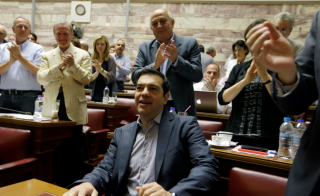
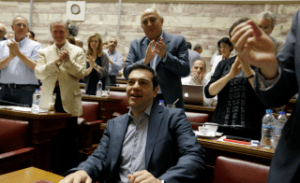
Prime Minister Alexis Tsipras being applauded by SYRIZA MPs in the Greek Parliament earlier this month. PHOTO: AP/THANASSIS STAVRAKIS.

Since 1974, my generation, the people who grew up under the dictatorship of 1967, fought persistently for the connection of the fragile Greek democracy with the European Union because we understood that Europeanisation meant modernisation, and that the European project was the only way to take Greece out of its Balkan solitude and its Ottoman legacies.

Pioneers in this struggle were the parties of the Left, the ancestors of contemporary SYRIZA, under the democratic leadership of Leonidas Kyrkos and Mihalis Papayiannakis. The Synaspismos, as it was called back then, understood that the political elites did not want to democratise the exercising of power by the Greek state; far from it.

The political order which prevailed after the restoration of the republic in 1974 tried immediately to protect themselves from any true democratisation, accountability and transparency.

Greece joined the European Union just seven years later, providing a unique opportunity to re-structure Greek society. Yet the old two social and political tendencies within the country – the European and the Balkanist – retained their opposition.

The Balkanist isolationist power structure morphed on many occasions throughout the last 40 years: its first incarnation as part of the ‘deep’ PASOK during the 1980s and 1990s – reaping the benefits of the EU without accepting its obligations.

The same strategy was followed by the populists of New Democracy, who also believed they could use the financial assistance of the EU to simply cater for their clientelist armies appointed as public servants. Both parties promoted the deleterious doctrine of Greek exceptionalism – that Greece was always a ‘special case’ which needed special consideration, hence extra financial assistance.

These were the two pseudo-prophets of deferred modernisation: political elites which promised to deliver the country into the 21st century. They failed abysmally, unable to act against their own ideology.

What’s more, they kept the Greek people in the dark about the process of the European integration. Why? To maintain a political system beyond any democratic control.

The European project was questioned because of the failure of these political forces to implement policies integrating Greece to other member states of the union. On the contrary, the two parties used participation in the EU to expand their privileges, legitimise their power and quash all opposition: their opaque system of oligarchic and plutocratic governance, without checks and balances, was beyond any transparency and accountability.

SYRIZA was elected six months ago because of the frustration and anger of the Greek people against those political elites. In the elections of 2009, it was a small party of 4 per cent. In 2015 it rose up to 37 per cent. How did this happen? What is its platform and its explicit program? For those who have studied programs and statements of New Democracy and SYRIZA in recent years, the 2012 Samaras Zappeion statement (of renegotiations with the EU) and the 2014 Thessaloniki SYRIZA program bear close resemblance – indeed on many occasions they read like the same text.

Both were full of platitudes: forgiveness of the enormous debt, structural changes in the public sector, investments for development and growth. However, successive Greek governments insisted on removing the debt but nothing else. No prime minister admitted to the Greek people (the current PM included) what sort of changes had to take place.

Instead, they employed florid nationalistic rhetoric against the foreigners (and their collaborators in the recent farcical referendum), spreading fear that if any such changes were implemented, they would lose power and control over society.

The SYRIZA ideologues are supposedly Marxists, but they fail to provide a Marxist analysis of the administration of power and the social forces that resist change.
The truth is that the central body politic of the country is structured around the petit (or indeed petty) bourgeoisie which defines the dominant political activity and determines most modes of political thinking. The working class is diminished after the de-industrialisation of the country and high unemployment. No real middle class was ever developed as productive activity was always held or funded by the corrupt state bureaucracy.

The petit bourgeoisie constitutes the central body of voters who change governments according to their short-term interests. The astounding number of public servants (who mostly constitute this class) is not the main problem for the Greek economy; the main problem is that most of them are unqualified, inexperienced and untrained. This generates the excessive bureaucracy we find in all encounters with the Greek state.

All political parties gamble their election to office by using the fears and anxieties of this class. Thus, the main state ideology is right-wing or left-wing populism fused with an aggressive form of nineteenth century nationalism. Ethnopopulism is the central ideological axis that brings all political forces together and maintains the grip of the Balkanist ideology on the people to this day.

Such ideological parochialism is exacerbated by the absence of modern capitalist structures (an understanding which is totally missing from the various analyses by Paul Mason, for example, or Paul Krugman). What prevails is a resale economy, with state monopolies, or private oligopolies, controlling implicitly or explicitly all financial institutions (the banks for example). It’s hardly surprising that favouritism and nepotism, and clientelism, are the central practices.

This model of economics bears close resemblance to the fascist corporatist economy in Mussolini’s Italy; it is what Cornelios Castoriadis called ‘bureaucratic’ or ‘state capitalism’, a model of production which is completely obsolete under the current conditions of globalised and interconnected economies.

Unfortunately, the SYRIZA government continues this model, centralising it even further; maximising the benefits of the public sector, ignoring the rights of private enterprises and implementing policies of heavy taxation on the latter in order to protect the benefits of the former.

After six months in power not a single measure has been taken by the Tsipras government for the protection of the 1.5 million unemployed people of the private sector. All measures that do exist were taken by the previous, much-excoriated government.

The main discussion was, and still is, about public servants and their rehabilitation in fully-paid positions. SYRIZA continues to express the dominant conservative stream in political activity and has no other option but to continue corrupt and nepotistic traditions of previous governments. Culturally, it represents the reactionary Balkan-oriented elites who wish to isolate the country from the European project.

Certainly the European Union is not a paradise; there are conflicting interests and competing agendas between its member states, with Germany having taken the hegemony and created a block of satellite nations. But the European project does not belong to Germany, and it will be a serious error with geopolitical consequences if we abandoned it to them. If you want to win a battle you must be on the battlefield – not behind the lines.

Unfortunately, the current government expresses the statist elite which will fight until the death against all forms of modernisation. The idea that the state can be a single huge corporation – which extracts the surplus-value of its workforce in order to invest in further production – is pure and unadulterated utopian socialism. We know all too well how this experiment ended.

Instead of enhancing the presence of the working class, the Greek government relies once again on its main enemy, the state-sponsored petit bourgeoisie. SYRIZA taxes people not to pay off debt, but to maintain the clientelist state.

Wages are dependent on wealth, not the other way around. The good of the state is not always the good of the public. In order to invest capital you must first create and accumulate it – not simply borrow it from the ‘infamous’ creditors, or Russia, China, Iran or Goldman Sacks for that matter.

Unfortunately, SYRIZA expresses the most distorted forms of left-wing ideology. Its policies are right-wing dressed up in left-wing phraseology. Despite its grand – though increasingly transparent – rhetoric, it will, like so many previous governments, destroy the public good in order to protect state power. The worst is still to come.

* Professor Vrasidas Karalis teaches Modern Greek at the University of Sydney.

source:Neos Kosmos

Return to austerity:Greek parliament backs further reforms as tax increases bite

jfdg

Greece took a major step towards meeting its obligations in order to receive the agreed €86bn ($128bn) bailout, after its parliament passed a second set of reforms in the early hours of Thursday morning.

Despite fears of a rebellion by SYRIZA MPs, in the end Prime Minister Alexis Tsipras gained the support he required easily, with 230 votes in favour and 63 against. Almost half the dissenting MPs were members of his own party.

Unlike last week’s vote, this time around Yanis Varoufakis voted with the government; the former finance minister declaring that he felt it important “to protect the unity of SYRIZA” even though he believed the program agreed with the creditors was “designed to fail”.

The reforms passed include changes to the banking system to protect savers’ deposits of less than €100,000 ($150,000) and the introduction of rules to ensure shareholders and creditors – not taxpayers – cover the costs of a failed bank.

Meaures were also taken to overhaul the judiciary system.

During the debate Mr Tsipras told the parliament once again that he was not happy with the measures that the lenders had imposed.

“We chose a difficult compromise to avert the most extreme plans by the most extreme circles in Europe,” he told MPs, adding that the deal was the only way Greece could remain in the eurozone.

Negotiations will now begin with the creditors on agreeing the detailed terms of the bailout. Due to be completed within a month, a likely scenario is that once concluded, the full agreement will usher in early elections.

However major sticking points are still possible. The most contentious measures – including the phasing out early retirement and tax hikes for farmers – have been pushed back to August.

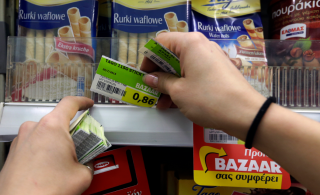
Meanwhile Greeks this week faced a new era of austerity. They woke on Monday able to enter banks for the first time in weeks, but with Value Added Tax increased from 13 per cent to 23 per cent, the cost of the bailout deal was immediately felt in their pockets.

Many everyday supermarket basics have increased in price. Services hit by the increase include restaurants and cafes, funeral parlours, taxis, and the much used tutorial schools – held precious by tens of thousands of parents trying to give their kids a better start in life.

To get a sense of the mood across the country this week Neos Kosmos spoke to a handful of those affected.

27-year-old Stav Balafas in Athens was shocked by price increases to the most basic necessities.

“We’d get coffee and sparkling water every day for €4 and the next day we were surprised to pay €5. They listed coffee and sparkling water under luxury goods. Even tea is seen as luxury goods. No joke.

“People are concerned about public transport tickets prices, taxis and petrol getting more expensive. Air, bus and even boat fares are up. The internet and phone calls got a top-up.”

Valia Evangelatou (26) in Chios thinks the imposition of higher tax rates for virtually identical products is confusing.

“Normal bread stays the same, bread with olives gets a hike. Normal milk stays the same, chocolate milk goes up. You need to have a masters degree in advanced economics to figure it all out,” said Ms Evangelatou.

Despina Varsami (21) on holiday in Chania was bemused by the jump in price of that modest staple – the souvlaki.

“I swore to eat one a day while I’m here. It used to be €1.80 and now it’s €2.30. I wonder if they taxed each ingredient separately!”

Ilias Katrakis in Chalkidiki says the VAT hike will not get to the root of Greece’s economic problems but instead hit the poorest.

“The increase will once again hurt the little man when we should be looking at tax evasion.

“I say increase the VAT to 28 per cent for cash transactions but keep it at 18 per cent for card transactions. This will offer the incentive to move away from our outdated cash system, which is a huge part of the problem.”

Kosta Karageorgiou in Mykonos echoed his sentiments. “People need to start paying taxes, yes, mainly the rich, but not on basic commodities and tourism. Tourism is what keeps this country alive and right now the prices are unappealing even to holiday makers from abroad.”

Panagiota Stamou (26), a single mum living in Thessaloniki, sums up the mood of most Greeks who expected more from a government that vowed to fight austerity.

“I’m struggling to make ends meet on a salary of just €400 a month. If the price of food, electricity and water goes up, but my wage stays the same there is absolutely no way I can survive, “says the 26-year-old Ms Stamou.

“My child and I are already living on the absolute bare minimum. I didn’t vote SYRIZA for this. I voted for change. I voted ‘No’ This is far worse than anything I expected from them”.

source:Neos Kosmos

Australia: Big week of football doesn’t disappoint

1437819052566

Dimitri Petratos celebrates his goal against Liverpool. Photo: Twitter/@brisbaneroar

The football carnival that has been bestowed on Australia continued last night, with Real Madrid and Manchester City closing out the International Champions Cup at the MCG – and the quality of football has not disappointed.

Across six matches Liverpool, AS Roma, Real Madrid and Manchester City have been welcomed by local fans in their droves.

Liverpool tasted success on both of its outings against A-League clubs Brisbane Roar and Adelaide United throughout the week. Brisbane opened its encounter against the Reds last Friday courtesy of Dimitri Petratos in the 17th minute, but it didn’t take long for Liverpool to strike back, with Adam Lallana finding the back of the net in the 18th minute, before a sealer thanks to James Milner in the 75th.

The Reds then travelled to Adelaide on Monday to take on the local side and were greeted to a spine tingling rendition of the infamous You’ll Never Walk Alone across Adelaide Oval, before slotting home two to take the game two-nil.

Liverpool’s Premier League rival Manchester City opened its Australian account with a win against sister club Melbourne City on the Gold Coast. It wasn’t easy for the 2015 Premier League runner-up, which left it late and took the win thanks to an 86th minute Samir Nasri goal in front of just under 22,000 fans.
The Sky Blues then opened their International Champions Cup efforts with a win against AS Roma – but not before Roma defeated Real Madrid in front of 80,000 fans at the MCG a few days earlier. On that occasion the Italian and Spanish giants kept each other goalless, taking the game into penalties, with Roma triumphing 7-6.

Roma’s return match against Manchester City also went to penalties, but it wasn’t before some sublime goals. By the 20th minute mark the sides stood at 1-1, thanks to Raheem Sterling’s goal on debut for his new club. Roma’s Miralem Pjanic scored a pearling equaliser from outside the box moments later, but their efforts at full time saw the sides locked at 2-2 with penalties ensuing, where the Citizens’ ever reliant goalkeeper Joe Hart stood up and helped guide his side to a 5-4 win in the end.

In other international results involving Greek clubs throughout the week, current champion Olympiakos suffered a 3-2 defeat to Fenerbahce, Asteras Tripolis lost 3-2 to Dutch outfit Vitesse, and Panathinaikos suffered a 2-1 loss to Udinese.

Panathinaikos has been drawn to play Club Brugge in the Champions League third qualifying round next week.

source:Neos Kosmos

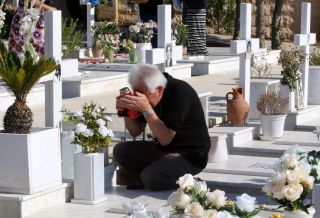
‘Mustafa Akinci understands the crime that happened against Greek Cypriots’.

cyprusgrief

Cyprus’ president Nicos Anastasiades (left) and Turkish Cypriot leader Mustafa Akinci (right), at a bi-communal event in Nicosia earlier this month. PHOTO: AP Photo/Pavlos Vrionides

Minister Kougiales upbeat on talks

On a visit to Australia this week, Cyprus’ Minister of Agriculture Nikos Kougiales told Neos Kosmos he is optimistic about the direction of current negotiations.

“We hope we’ll have a sincere and substantial talk, and I hope by the end of these talks something positive will happen for the Cyprus problem,” Mr Kougiales said.

The minister says the recent election of Turkish community leader Mustafa Akinci may be a game-changer in the ongoing discussions to find a resolution to ‘the Cyprus issue’.

“Mr Akinci has a very positive attitude. The way he behaves and what he has said the last month is positive, and it seems that he understands what happened in Cyprus in 1974; he understands the crime that happened against Greek Cypriots and I’m pretty confident that if he continues to behave the same way, that an agreement will be reached,” said Mr Kougiales.

Despite the agreement Greece has reached with its creditors, the state of Greece’s weakened economy has raised fears that the country’s perilous situation might impact Cyprus’ negotiating position within the United Nations, but it’s not a concern shared by the minister.

“Of course we always like Greece to be strong economically, but I don’t think this weakness of Greece will affect the negotiations.

“Greece is always there for Cyprus … always supports the negotiations … and Turkey has to do the same thing,” Mr Kougiales added.

With Cyprus’ own economy in huge difficulty two years ago, and faced with its own €10 billion bailout, the minister says he is confident that the tide has turned.

“I think the banking system and the economy are becoming stable now. Pretty soon we will get out of the financial support mechanism. We expect to see some higher rates of growth and I expect 2016 will be a good year for the Cypriot economy,” he said.

The minister’s first appearance down under took place in Sydney last Sunday, when Greek and Cypriot communities gathered to show their solidarity in a church service for the fallen of the 1974 invasion.

Following a visit to South Australia, the minister was due to attend a demonstration scheduled for yesterday evening at the Victorian Parliament, followed by a candlelight vigil.

Events marking the 41st anniversary of the Turkish invasion which the minister will attend have been organised nationwide by the Pan-Australian Justice for Cyprus Coordinating Committee (PASEKA).

Constantinos Procopiou, president of PASEKA, said the rallies and other ceremonies across Australia not only paid tribute to those who lost their lives in the invasion, but were a demonstration “against the continuing occupation of Cyprus, and a show of our support to the struggle for freedom”.

Tomorrow a liturgy will take place at the church of Saint Efstathios in South Melbourne, followed by a protest march at 12.30 pm commencing and ending on the steps of the Victorian parliament.

source:Neos Kosmos

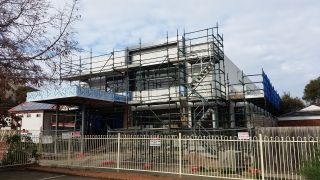
$3m Greek community cultural centre rises in Box Hill

boxhillcentre

Taking shape: the new Community Cultural Centre. Photo supplied

New Greek community hub to be completed by September.

After almost two years of building work, the Greek Community of Box Hill and Districts (GOCBHD) is in the process of completing its new Community Cultural Centre.

Like most Greek community associations, GOCBHD’s membership is now largely made up of the elderly, with few active younger members, but the new centre has been designed to change that trend.

In order to address the issues raised by the organisation’s evolving demographic, the Community carried out detailed consultations with groups who used the premises, such as senior citizens, teachers in the Greek language school and its students, and local people.

Nick Farlecas, president of GOCBHD, said he was “very proud and relieved” to see the building nearing completion.

“We wanted to do something for the community’s future. There were many consultations, we put on fundraising events and used our savings but we also had to take out a loan,” he said.

In addition to the loan of $1.8 million, the Community contributed its own capital, while a grant of $600,000 from the Victorian government made up the rest.

The result is a two-storey building incorporating a multi-purpose hall with kitchen, child care centre and flexible areas suitable for meetings and social events.

While the facility will cater mainly for the needs of the language school, the rooms will be able to double up for use by private and commercial groups.

Jim Darmous, a member of GOCBHD and project manager for the construction, said the biggest challenges faced as the Community’s dream turned into bricks and mortar was “keeping the costs down, getting value for money, and monitoring the quality”.

“The structure’s up, the roof’s on, and the internal fit out is underway. It’s all good,” he said.

source:Neos Kosmos