Daily Archives: July 18, 2015

Greek crisis: the EU solution solved nothing

grexit_465633954
The modern Greek tragedy isn’t over — after an interlude, there will be more acts. The deal of July 13 will, with luck, avert an immediate financial collapse.

But three problems ­remain: Greece must escape the depression, reduce debt and ­restore competitiveness. All three trace to decisions made in the early days of the euro.

Back when the euro was just an idea, economists warned that the countries involved weren’t suited to using a single currency because they weren’t “an optimum currency area” — a group of nations with similar business ­cycles and substantial political unity, labour mobility and cross-country fiscal transfers.

The euro’s founders did not dispute this judgment; they played down its importance. The order can be reversed, they insisted: First we’ll create the common currency, then we’ll create the conditions that make it work.
Germany’s Helmut Kohl and France’s Francois Mitterand went further, sub-ordinating the economics to a big political idea. What’s the theory of optimum currency areas compared with ensuring Germany and France never go to war again? Hard to argue with that, but it doesn’t ­repeal the laws of economics. The eurozone still isn’t an optimum currency area, and that explains much of the Greek problem.

Start with “similar business ­cycles”. The global financial crisis and ensuing recession hit Greece especially hard. Countries have three weapons to fight recessions: fiscal stimulus, monetary stimulus and currency depreciation. Membership in the eurozone forecloses the latter two. Greece’s large pre-crisis debt starkly limits the first. Hence Greek problem No 1: a recession worse than the Great Depression.

The latest agreement looks likely to make this depression worse. Several previous bailouts held things together with chewing gum and baling wire. But in ­return for loans, Greece’s creditors demanded ruinous austerity. Successive rounds of austerity spread misery and ushered in the left-wing Syriza, but did not reduce Greece’s debt-to-GDP ratio.

According to myth, stubborn Greece has done little to fix its budget. In reality, Greece’s structural budget balance moved from an Olympian 17 per cent of GDP deficit in 2009 to about a 1 per cent surplus in 2014, according to OECD estimates. But the Greek economy shrunk so much that the public debt rose as a share of GDP, to 181 per cent from 135 per cent over those five painful years.

Hence Greek problem No 2: unpayable public debt. Some sort of writedown, restructuring or default is inevitable. Sooner and smoother (eg, a mutually agreed restructuring) seems better than later and messier (eg, a unilateral Greek default).

But Greece’s creditors are so far unwilling to offer much debt relief because that means that some third parties must pitch in money or relinquish claims on Greece. And that brings up the second departure from an ­optimum currency area: the eurozone is not a country; its mechanisms for fiscal transfers across borders are under-developed and contentious.

Compare the US. I live in New Jersey, one of the richest states. We New Jerseyans have been making fiscal transfers to poor states like Mississippi, funnelled through the federal government, for decades. But few of us notice it, and we don’t vote on it. The transfers happen automatically ­because New Jersey and Mississippi are in the same country. Germany and Greece are not. Angela Merkel is right to worry that Germans oppose transfers to Greeks. Would Americans vote for transfers to Mexico?

Greek problem No 3, restoring competitiveness, may be insoluble. One of the most remarkable developments since the founding of the euro has been the extent to which Germany has outpaced the pack in competitiveness. According to data compiled by the European Central Bank, Germany’s unit labour costs have fallen 19.5 per cent, relative to its trading partners, since the end of 1998 — leaving the rest of the eurozone in the dust.

And here’s a surprise. After Germany, which eurozone countries do you think are running second and third in competitiveness? Eureka! It’s Cyprus and Greece, where wages have crumbled under the weight of ferocious unemployment. Greek unit ­labour costs are down 7 per cent. But that still leaves them further behind Germany than when Greece joined the euro.

How do you fix that? Under floating exchange rates, some semblance of parity would be ­restored by currency ­depreciation. But that can’t ­happen with a single currency. The answer could be either huge wage hikes in Germany or more devastating wage cuts in Greece — a terrible solution.

So the Greek problem may never be over as long as Greece remains in the eurozone.

The Wall Street Journal

source:theaustralian.com.au
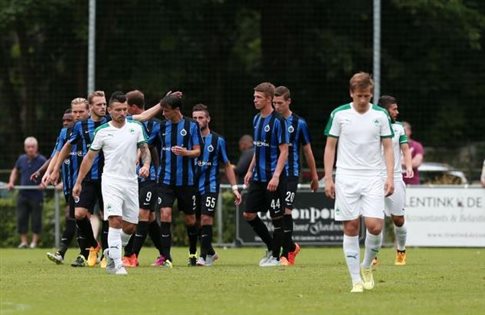
Η βελγική Μπριζ αντίπαλος του ΠΑΟ στο Champions League

BD2EDF8968B038A2F7F58541BC760133

Τη Μπριζ θα αντιμετωπίσει ο Παναθηναϊκός στον 3ο προκριματικό γύρο του Champions League, όπως προέκυψε από τη σχετική διαδικασία που πραγματοποιήθηκε στη Νιόν της Ελβετίας. Το «τριφύλλι» θα δώσει στην Αθήνα την πρώτη αναμέτρηση στις 28 Ιουλίου (21:00), ενώ ο αγώνας ρεβάνς θα λάβει χώρα στο «Γιαν Μπρέιντελ», χωρητικότητας 30.000 θεατών, στις 5 Αυγούστου.

Ετσι, η ομάδα του Γιάννη Αναστασίου απέφυγε την Σαχτάρ Ντόνετσκ, τον Άγιαξ, την ΤΣΣΚΑ Μόσχας και τη Μονακό, πέφτοντας πάνω σε μια ομάδα που αντιμετώπισε πριν από λίγες ημέρες σε φιλικό αγώνα, όπου η Μπριζ επιβλήθηκε με 2-1.

Η Μπριζ είναι μια νεανική ομάδα (μ.ο ηλικίας 23,3 ετών), της οποίας η έλλειψη εμπειρίας, ήταν ένας από τους λόγους που το «πλήρωσε» στα play off του Βελγίου την περασμένη σεζόν. Φέτος τερμάτισε στην πρώτη θέση της κανονικής διάρκειας του πρωταθλήματος, όμως στα play off είδε τη Γάνδη να την ξεπερνά και να της «κλέβει» τον τίτλο, ενώ κατάφερε να κερδίσει το Κύπελλο επικρατώντας της Άντερλεχτ.

Σε γενικές γραμμές πρόκειται για ένα «δεμένο» σύνολο με καλή κυκλοφορία της μπάλας, αλλά και αργή άμυνα, κάτι που πρέπει να εκμεταλλευτεί ο Παναθηναϊκός.

Θεωρητικά, το «αστέρι» της ομάδας είναι ο Μεσελέ που αγωνίζεται στο κέντρο της άμυνας. Στη μεταγραφική περίοδο δεν έχασε κάποιο σημαντικό παίκτη της, ενώ αντίθετα ενισχύθηκε με καλύτερη μεταγραφή αυτή του επιθετικού Αμπντουλαγιέ Ντιαμπί (24 ετών, Μάλι).

Η «παράδοση» είναι με το μέρος της, καθώς συνολικά σε έξι αναμετρήσεις, οι Βέλγοι μετρούν 3 νίκες, 2 ματς έχουν λήξει ισόπαλα και μόνο μία φορά χαμογέλασαν οι «πράσινοι».

Σε περίπτωση πρόκρισης, ο Παναθηναϊκός θα εισπράξει 3.000.000 ευρώ, εκτός εάν προκριθεί και από τα πλέι οφ. Τότε θα εισπράξει 2.000.000 ευρώ συν όσα προβλέπονται από τους ομίλους, ήτοι εξασφαλισμένα 12.000.000 ευρώ. Αντίθετα, ένας αποκλεισμός από τον 3ο προκριματικό γύρο θα προσφέρει στον Παναθηναϊκό μόλις 400.000 ευρώ και το «εισιτήριο» για τα πλέι οφ του Europa League.

ΜΕΤΑΓΡΑΦΕΣ:

Ήρθαν: Χανς Φάνακεν (Λόκερεν), Αμπντουλαγιέ Ντιαμπί (Λιλ), Ντιόν Κολς (Λέουβεν), Μπερνιέ Ιμπίνι Ισέι (Σιπγκ), Σεμπάστιεν Μπρουζεσε (Ζούλτε Βάρεγκεμ), Βαλντεμάρ Σομπότα (Ζενκτ Πάουλι), Μουσαγκα Μπακένγκα (Μόλντε), Έλτον Μοντέιρο (Κοΐμπρα), Βαλερίς Σαμπάλα (Γιάμπλονετς), Νικολάς Καστίγιο (Μάιντζ).

Έφυγαν: Μπίργκερ Φερστράτε (Κορτράικ), Σωκράτης Διούδης (Πανιώνιος), Σβεν Ντοστ (Βέτερεν), Ζίνο Γκάνο (Μπέβερεν), Βλάνταν Κούγιοβιτς, Φρανσίσκο Σίλβα (Οσασούνα).

Προπονητής της ομάδας είναι ο Μισέλ Πρεντόμ, ο οποίος ανέλαβε τα καθήκοντά του στον πάγκο το 2013. Εχει περάσει από τη Σαντάρ Λιέγης, τη Γάνδη, την Τβέντε και την Αλ Σαμπάμπ, ενώ το εφετινό Κύπελλο ήταν ο πρώτος τίτλος που κατέκτησε με τη Μπριζ.

Στα φιλικά προετοιμασίας που έχει δώσει έως σήμερα η Μπριζ έχει φέρει τα παρακάτω αποτελέσματα: Χέιστ – Μπριζ 0-10, Ροεσελάρε – Μπριζ 1-0, Μπριζ – Παναθηναϊκός 2-1, Μπριζ – Μπασακσεχίρ 1-1 και Ντνίπρο – Μπριζ 4-3.
Περισσότερα σε λίγο…

Τα ζευγάρια που προέκυψαν από την κλήρωση έχουν ως εξής:

ΠΡΩΤΑΘΛΗΤΕΣ

Σαράγεβο (Βοσνία) ή Λεχ Πόζναν (Πολωνία) – Βασιλεία (Ελβετία)

Λουντογκόρετς Ράζγκραντ (Βουλγαρία) ή Μιλσάμι Ορχέι (Μολδαβία) – Σκεντέρμπεου (Αλβανία) ή Κρουσέιντερς (Β. Ιρλανδία)

Βέντσπιλς (Λετονία) ή Ελσίνκι (Φινλανδία) – Μάριμπορ (Σλοβενία) ή Αστάνα (Καζακστάν)

Σέλτικ (Σκοτία) ή Στιάρναν (Ισλανδία) – Καραμπάχ (Αζερμπαϊτζάν) ή Ρούνταρ (Μαυροβούνιο)

Τρέντσιν (Σλοβακία) ή Στεάουα Βουκουρεστίου (Ρουμανία) – Παρτιζάν Βελιγραδίου (Σερβία) ή Ντίλα Γκόρι (Γεωργία)

Μίντιλαντ (Δανία) ή Λίνκολν (Γιβραλτάρ) – ΑΠΟΕΛ (Κύπρος) ή Βαρντάρ (ΠΓΔΜ)

Χιμπέρνιανς (Μάλτα) ή Μακάμπι Τελ Αβίβ (Ισραήλ) – Βικτόρια Πλζεν (Τσεχία)

Ντιναμό Ζάγκρεμπ (Κροατία) ή Φόλα Ες (Λουξεμβούργο) – Μόλντε (Νορβηγία) ή Πιούνικ (Αρμενία)

Δε Νιου Σέιντς (Ουαλία) ή Βιντεότον (Ουγγαρία) – ΜΠΑΤΕ Μπορίσοφ (Λευκορωσία) ή Ντάνταλκ (Ιρλανδία)

Σάλτσμπουργκ (Αυστρία) – Μάλμε (Σουηδία) ή Ζαλγκίρις Βίλνιους (Λιθουανία)

ΜΗ ΠΡΩΤΑΘΛΗΤΕΣ
ΠΑΝΑΘΗΝΑΪΚΟΣ (ΕΛΛΑΔΑ) – Μπριζ (Βέλγιο)
Γιούνγκ Μπόις (Ελβετία) – Μονακό (Γαλλία)
ΤΣΣΚΑ Μόσχας (Ρωσία) – Σπάρτα Πράγας (Τσεχία)
Ραπίντ Βιένης (Αυστρία) – Άγιαξ (Ολλανδία)
Φενερμπαχτσέ (Τουρκία) – Σαχτάρ Ντόνετσκ (Ουκρανία)

Πηγή:in.gr

Discovering Greece by the glass

IMG_7543

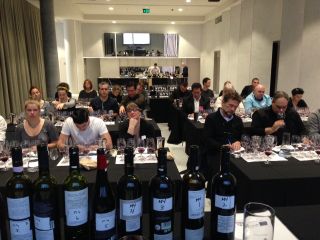
The ‘New Wines of Greece’ masterclasses allowed a variety of Australian professionals to discover the quality of wine the Greek vineyards produce.

The largest deployment of Greek winemakers in Australia proves that, in times of despair, there is an industry that could put the country in the global market.

‘Xinomavro’, ‘agiorgitiko’, ‘assyrtiko’, ‘moschofilero’, ‘malagouzia’. Tongue-twisters are the last thing you expect when you arrive at a wine tasting.

Learning new words, however, is part of the process of discovery, and those who participated in the Greek Wine Masterclasses presented in Sydney and Melbourne in the past couple of weeks seemed to be fascinated by the experience.

“There is a great interest in new wine,” says Yannis Karakasis, who delivered the masterclasses, along with Grigoris Michailos, leading the ‘New Wines of Greece’ roadshow in Australia. The showcase was organised by the Interprofessional Organisation of Vine And Wine of Greece, which brought 27 wine producers from Greece – both established and emerging – to Australia.

The two men are nicknamed ‘the Greek Commanders’, and their webpage (www.winecommanders.com) is a point of reference for the Greek wine community, making them ideal spokespersons for this venture.

“We have many high-profile professionals attending, who are very interested in tasting Greek wine,” says Yannis Karakasis.

“Most of them know next to nothing about Greek wine, they are still stuck in the retsina perception, this is why they are very excited by this tasting.

The average consumer is bored by the same tastes and needs a challenge. Greek wine can do that. We produce wine that goes well with many styles of cuisine – from the simplest to the most complicated dishes – while providing great value for money.

We tasted xinomavro during the masterclass, which is sold in Greece for €7-10 ($10-15) and is great after 15 years. How many wines from other countries in this price-range can do that?”

One of those familiar with Greek wine is David Lamb, who has been importing Greek wine since 2006, thus becoming an unofficial ambassador of the wine.

“It is very important, seeing producers set competition aside and join forces. It wouldn’t happen with other European producers,” he says of the roadshow, which has allowed him make “quite a few contacts and discover new wineries”.

As for the marketability of Greek wine, he believes that “its history alone can be a selling point, let alone its quality. People here are very interested in good food and wine,” he says, hopeful that this could be an important factor.

Eleni Blouchos, project manager of the ‘New Wines of Greece’ roadshow and masterclass, couldn’t agree more.

“Australia has a very healthy and mature wine market; it is experiencing a boom in gastronomy and gourmet restaurants, and the average Australian is a wine-drinker, open to Greek wine,” she says.

“Greece produces wine of high quality, in small quantities. Our strategy should start from that fact. Our aim is to enter a premium market, approaching experts and slowly expanding recognition of Greek wine.”

GREEK WINE IS A SLEEPER

Greek vineyards are found on diverse soil and terrain, at altitudes varying between sea level and often in excess of 1,000 metres. They are largely found on mountain and semi-mountainous terroirs and, to a much lesser degree, on terroirs of continental features.

In geographical terms, Greek vineyards are distinguished into those of northern Greece, central Greece (Attica included), Peloponnese and the Ionian Islands, the Aegean Sea islands and those of Crete. These regions are further subdivided into smaller ones, each with their own particular soil, climate, and topographical features – all of which, when combined with mainly native cultivars, give Greek wines their unique and diverse character.

Assyrtiko (Santorini) wines are rare and distinctive.

These wines are crafted from the indigenous assyrtiko grape, cultivated in some of the world’s oldest vineyards, dating back 3,500 years, on the volcanic island of Santorini. These terroir-driven wines have distinct characteristics structured on minerality and density and complement both seafood and meat dishes. They reflect both the unique volcanic and anhydrous soil of Santorini.

Xinomavro (Naoussa/Amynteo) wines are dry red wines, aged for two years minimum and noted for their bright pale to deep red colour, high acidity, strong tannins and complex aromatic character. The place of origin and most important growing area of the indigenous xinomavro grape is northwestern Greece, in the mono-varietal appellations of Naoussa and Amynteo. These distinguished reds are ideal for food with intense and rich flavours.

According to wine expert Mark Squires, who covers the wines of Greece for the Wine Advocate, a bible for wine connoisseurs around the world, Greek wine is ‘a sleeper’. His statement appeared on a Wall Street Journal report on Greek wines.

“Greece is your classic emerging region”, he is quoted as saying. “When you look at what is happening in Greece, this is a country that is simply a great wine-producing region – they just don’t have much to prove it with yet.”

Angie Giannakodakis, a champion of Greek cuisine through her work for Elyros and Epocha restaurants, begs to differ, and calls for the support of the Greek Australian community.

“The Greek community is not used to Greek wine, given that, in the past, the quality that came to Australia was very poor, for a variety of reasons. But today we have the opportunity to taste very high-quality wine from Greece, from all regions of the country. Greek Australians should drink Greek wine; it is a way to support Greece and help the economy.”

Exports are, in fact, vital for Greek winemakers, given the current situation. “It is the only thing that can support us in a period of crisis,” says Petros Markantonatos, owner of the Gentilini winery in Keffalonia.

“When the Greek economy collapsed, exporting was the only option; it was what supported not only my winery but also many others. Exports will help us grow, produce more and have a safety net outside of Greece, helping the industry survive.”

Find out more at http://www.newwinesofgreece.com

source:Neos Kosmos

« first
‹ previous
1
2

Melbourne stands with Greece

FB_IMG_1437111933643

Evy Yannas talks to Neos Kosmos about the success of the solidarity rally for Greece

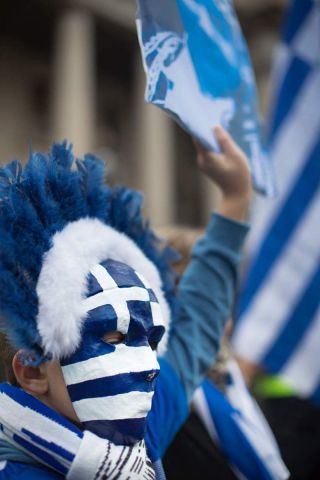
The key purpose of this rally was to bring together Greeks and Philhellenes of Melbourne in a peaceful demonstration of love, support and solidarity towards the Greek people who are going through a very difficult time. Our goal was to show the world that we “Stand with Greece” no matter the outcome of the referendum. Importantly, we wanted the Greek people to know that they were not alone in this critical and historic juncture.

We can confidently say that the rally was a success as it achieved all of the aims that it set out to achieve. Up to 1000 people from both Greek and non-Greek backgrounds braved the cold and rainy Melbourne weather to attend and show their support to the Greek people. Most were from the younger Greek generation.

Whilst, this was an open and apolitical rally, many people who attended supported a “No” outcome in the referendum. The voice of “no” to further austerity was clearly heard. Similar turnouts occurred in rallies throughout the country over the weekend, where most people who attended those rallies also supported this notion.

It’s important to emphasise that at the core of these rallies were individuals who took the initiative to show their support to Greece, and to also show their unity with other Greek-Australian communities for this common purpose. These were truly rallies organised by the people and for the people. No organisations were responsible for organising any of them, although the Greek Ambassadors did support the event in Melbourne. For individuals to mobilise gatherings of more than 1500 people around Australia in only 4 days, and with no formal advertising, is no mean feat!

The rallies were reported in major Greek media outlets and hundreds of thank you messages were received from grateful Greeks back in Greece. The events were also congratulated by the Ambassador of Greece to Australia, the honourable Mr Dafaranos who applauded the collective effort around Australia.

The Greek Ambassadors have been very active in supporting Greece and the Greek people during the financial and social crisis since their inception in 2012, and will continue to do so in the future.

source:Neos Kosmos

New film for Nikos Kazantzakis

smaragdis_b_1

Director Yannis Smaragdis.

Yannis Smaragdis announces filming will begin in 2016

Greek director Yannis Smaragdis, known for the films Kavafy, El Greco and God Loves Caviar, has announced his new feature film, Nikos Kazantzakis.

The plot revolves around the life of the prolific poet, novelist and travel writer Nikos Kazantzakis. We are invited to follow him on his actual and spiritual journeys to places he loved and which led him to achieve, as he claimed, the abolition of fear and the conquest of a higher freedom.

“Through the film we want and we think it will highlight the large and attractive personality of Nikos Kazantzakis and the places he lived, loved and was fascinated by. The great Cretan writer said that what determined his life and work was ‘travelling and dreams’.

“This is what we will seek to emerge through the film. His trips to France, Austria, Germany and China, and through them his philosophical and metaphysical pursuits, as well as the ‘inside’, the ‘inner journey’,” says Smaragdis.

Kazantzakis gained international reputation for his works Zorba the Greek, The Last Temptation of Christ and Christ Recrucified among others.

In 1957, he lost the Nobel Prize for Literature to Albert Camus by one vote. Camus later said that Kazantzakis deserved the honour “a hundred times more” than himself. In total, Kazantzakis was nominated in nine different years.

The filming will take place in five different countries, Greece (Crete, Athens, Aegina) France (Paris and Antipolis), Austria (Vienna), Germany (Berlin) and China and is scheduled to begin in April 2016.

Casting includes Odysseus Papaspiliopoulos as the New Kazantzakis, Marina Kalogerou as Eleni Kazantzakis, Theodore Atheridis as George Zorbas, Zeta Duka as Melina Mercouri and Stathis Psaltis in the role of a monk.

According to the director, artists in general and people of cinema undertake a responsibility to give people courage in difficult times through their work.

“In today’s Europe, where there are tensions and differences, art must play its role, which is to unite people and give them strength,” says Smaragdis.

source:Neos Kosmos

Mak prevents PAOK derailment against Lokomotiva

mak_vs_lokomotiva_web-thumb-large

PAOK vs Lokomotiva.

Robert Mak’s goal deep in injury time gave PAOK some genuine hope of progressing to the next qualifying round of the Europa League, as the Thessaloniki club launched open the new soccer season for Greek teams in Europe with a 2-1 loss at Lokomotiva Zagreb on Thursday.

Wasteful PAOK could not translate its scoring chances into goals and found itself trailing its Croatian host 2-0 at half time due to goals against the run of play by Marko Kolar after 30 minutes and by Franko Andrijasevic in the first-half time added-on.

Coached by a Croat, Igor Tudor, PAOK kept missing chances in the second half and was lucky not concede a third goal as its back line has plenty of work to do to improve.

Just as it seemed the Greeks would have a difficult task in the second leg a week later having to win by three clear goals, Mak scored in the second minute of injury time to redeem himself for his share of the chances that went begging.

Source: Kathimerini

Johnny Depp buys a Greek island

strongiliii

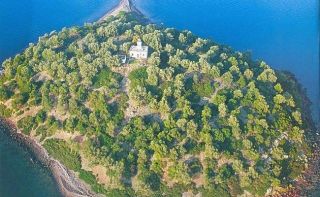
An aerial photo of Strongyli Island, Greece.

The isle of Strogyli, near Kastelorizo to become his new private paradise

Johnny Depp, who is currently filming in Australia is expected in Greece in late July after having reportedly purchased an island in the Aegean.

The Hollywood star has arranged a trip to check out his new property, a small islet in the Dodecanese region, according to the Athens Macedonian News Agency in a statement.

A report by Proto Organization Ltd., a UK agency that handles property acquisitions. claims the actor spent 4 million euros to acquire Strongyli, a tiny islet near Kastelorizo in the Eastern Aegean.

Depp was allegedly represented by the same agent who is handling Angelina Jolie’s and Brad Pitt’s transaction for an island purchase in the Ionian Sea.

source:Neos Kosmos