Daily Archives: July 8, 2015

Τσίπρας σε Ευρωκοινοβούλιο. Θέλουμε συμφωνία οριστικής διεξόδου από την κρίση

tsiprasek_139481307

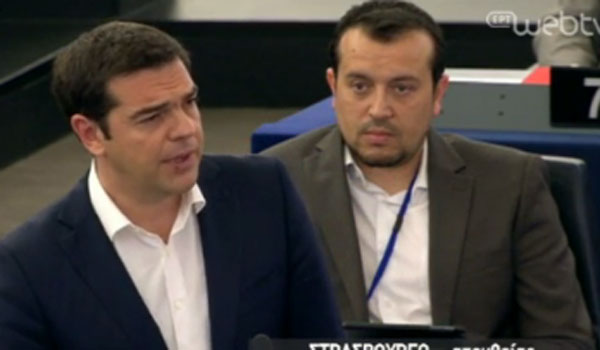
Ευρωκοινοβούλιο ο Αλέξης Τσίπρας. Ο κύριος Τσίπρας στάθηκε στις μεταρρυθμίσεις που επιβλήθηκαν αλλά δεν απέδωσαν, επιβαρύνοντας τους μη έχοντες, ενώ αναφέρθηκε και στα δάνεια που εκταμιεύθηκαν από τους εταίρους με προορισμό όπως είπε τη διάσωση των ελληνικών και ευρωπαϊκών τραπεζών.

Τι είπε στην ομιλία του ο Πρωθυπουργός:

«Είναι τιμή για μένα να μιλώ στο ναό της Δημοκρατίας της Ευρώπης, σας ευχαριστώ θερμά για την πρόσκληση να μιλώ στους αιρετούς εκπροσώπους των λαών της Ευρώπης, σε μια κρίσιμη στιγμή για την πατρίδα μου την Ελλάδα αλλά και για την ευρωζώνη», ανέφερε ο πρωθυπουργός, Αλέξης Τσίπρας ανοίγοντας την ομιλία του στο Ευρωκοινοβούλιο.

«Βρίσκομαι εδώ λίγες μόλις μέρες μετά την ετυμηγορία του ελληνικού λαού για μια βιώσιμη και έντιμη λύση», πρόσθεσε ο Αλέξης Τσίπρας. Ο πρωθυπουργός αναφερόμενος στο δημοψήφισμα της περασμένης Κυριακής είπε πως ο ελληνικός λαός έκανε μια γενναία επιλογή μέσα σε συνθήκες πρωτοφανούς πίεσης. Είπε ακόμη ότι η επιλογή του ελληνικού λαού δεν αποτελεί επιλογή ρήξης αλλά επιλογή επιστροφής στις ιδρυτικές αρχές της Ευρώπης. «Είναι ένα ξεκάθαρο μήνυμα ότι η Ευρώπη το κοινό μας ευρωπαϊκό οικοδόμημα ή θα είναι δημοκρατική ή θα έχει τεράστιες δυσκολίες να επιβιώσει», είπε ο Αλέξης Τσίπρας.

Ο πρωθυπουργός Αλέξης Τσίπρας εισήλθε στην αίθουσα όπου συνεδριάζει το ευρωκοινοβούλιο με χειροκροτήματα από ευρωβουλευτές, αρκετοί από τους οποίους είχαν στα έδρανά τους αναρτήσει το «όχι» γραμμένο με λευκά γράμματα σε κόκκινο φόντο. Είναι η πρώτη φορά που ο Έλληνας πρωθυπουργός είχε την ευκαιρία να απευθυνθεί στους εκπροσώπους των άλλων κρατών και να μιλήσει για την κατάσταση στην Ελλάδα.

«Ελπίζω ότι θα καταφέρουμε τις επόμενες μέρες να ανταποκριθούμε στις απαιτήσεις της κρίσιμης συγκυρίας, τόσο για το καλό της Ελλάδας όσο και της ευρωζώνης θα έλεγα κυρίως όχι μόνο για το οικονομικό αλλά και για το γεωπολιτικό συμφέρον της Ευρώπης» είπε ο Έλληνας πρωθυπουργός και πρόσθεσε: «Θέλω στο σημείο αυτό να είμαι ξεκάθαρος. Οι προτάσεις της ελληνικής κυβέρνησης για τη χρηματοδότηση των υποχρεώσεων της και για την αναδιάρθρωση του χρέους της δεν έχουν στόχο να επιβαρύνουν επιπλέον τον ευρωπαίο φορολογούμενο. Τα χρήματα που δόθηκαν στην Ελλάδα- ας είμαστε ειλικρινείς- δεν κατέληξαν ποτέ στον ελληνικό λαό ήταν χρήματα για να σωθούν οι ελληνικές και οι ευρωπαϊκές τράπεζες αλλά δεν πήγαν ποτέ στον ελληνικό λαό».

«Δεν θέλουμε να συγκρουστούμε με την Ευρώπη αλλά να συγκρουστούμε με τα κατεστημένα στη χώρα μας και με τις κατεστημένες λογικές και νοοτροπίες που βύθισαν την Ελλάδα και βυθίζουν μαζί και την ευρωζώνη», ανέφερε ο πρωθυπουργός.

«Η Ευρώπη βρίσκεται σε ένα κρίσιμο σταυροδρόμι, αυτό που ονομάζουμε ελληνική κρίση δεν είναι παρά η συνολική αδυναμία της ευρωζώνης να βρει μια οριστική λύση σε μια αυτοτροφοδοτούμενη κρίση χρέους. Στην πραγματικότητα πρόκειται για ένα ευρωπαϊκό και όχι αποκλειστικά ελληνικό πρόβλημα. Και σε ένα ευρωπαϊκό πρόβλημα απαιτείται ευρωπαϊκή λύση», είπε ο κ.Τσίπρας και πρόσθεσε: «Η ευρωπαϊκή ιστορία είναι μια ιστορία συγκρούσεων αλλά στο τέλος της ημέρας συμβιβασμών. Αλλά είναι και μια ιστορία συγκλίσεων και διευρύνσεων. Μια ιστορία ενότητας και όχι διαίρεσης. Γι΄ αυτό άλλωστε μιλάμε για την ενωμένη Ευρώπη. Ας μην την αφήσουμε να γίνει διαιρεμένη ευρώπη. Τούτη την ώρα καλούμαστε να βρούμε έναν γόνιμο και έντιμο συμβιβασμό. Προκειμένου να αποφύγουμε μια ιστορική ρήξη που θα ανατρέψει την παράδοση της ενωμένης Ευρώπης. Και είμαι βέβαιος ότι όλοι αντιλαμβανόμαστε την κρισιμότητα της στιγμής και θα ανταποκριθούμε. Θα αναλάβουμε την ιστορική μας ευθύνη».

«Η πατρίδα μου έχει μετατραπεί σε ένα πειραματικό εργαστήριο λιτότητας. Το πείραμα όμως αυτό απέτυχε», είπε ο πρωθυπουργός.

«Η Ελλάδα τα τελευταία πέντε χρόνια, ο ελληνικός λαός έκανε μια πρωτοφανή προσπάθεια προσαρμογής. Αυτή η προσπάθεια έχει εξαντλήσει τις αντοχές του ελληνικού λαού. Βεβαίως, παρόμοια προσπάθεια δεν έγινε μόνο στην Ελλάδα, αλλά και σε άλλες χώρες και σέβομαι απολύτως την προσπάθεια άλλων λαών να αντεπεξέλθουν και κυβερνήσεων να αποφασίσουν σκληρά και δύσκολα μέτρα. Σε πολλές ευρωπαϊκές χώρες εφαρμόστηκαν προγράμματα λιτότητας. Όμως πουθενά αυτά τα προγράμματα δεν ήταν τόσο σκληρά και τόσο μεγάλης διάρκειας όσο ήταν στην Ελλάδα», ανέφερε ο Αλέξης Τσίπρας.

«Δεν θα ήταν υπερβολή να πω ότι η πατρίδα μου έχει μετατραπεί τα τελευταία πέντε χρόνια σε ένα πειραματικό εργαστήριο λιτότητας, το πείραμα όμως πρέπει όλοι να παραδεχθούμε ότι δεν πέτυχε. Τα πέντε αυτά χρόνια η ανεργία εκτοξεύτηκε στα ύψη, η φτώχεια εκτοξεύτηκε στα ύψη, η κοινωνική περιθωριοποίηση διευρύνθηκε, το ίδιο διευρύνθηκε και το δημόσιο χρέος. Που πριν ξεκινήσουν τα προγράμματα ήταν στο 120% του ΑΕΠ και σήμερα βρίσκεται στο 180% του ΑΕΠ. Και σήμερα η πλειοψηφία του ελληνικού λαού, ανεξάρτητα από τις εκτιμήσεις μας, αυτή είναι η πραγματικότητα και πρέπει να τη δεχθούμε, η πλειοψηφία του ελληνικού λαού αισθάνεται πως δεν έχει άλλη επιλογή από το να διεκδικήσει να απελευθερωθεί από αυτή την αδιέξοδη πορεία. Και αυτή την επιθυμία εκπεφρασμένη με τον πιο άμεσο και δημοκρατικό τρόπο, καλούμαστε ως κυβέρνηση να υλοποιήσουμε. Διεκδικούμε μια συμφωνία με τους εταίρους μας, μια συμφωνία όμως που θα δίνει σήμα οριστικής διεξόδου από την κρίση. Που θα δίνει την εντύπωση ότι στο τέλος του τούνελ υπάρχει φως. Μια συμφωνία που θα προβλέπει αξιόπιστες και αναγκαίες μεταρρυθμίσεις, κανείς δεν τις αρνείται, που θα μεταφέρουν όμως τα βάρη σε όσους πραγματικά έχουν τη δυνατότητα να τα σηκώσουν. Και τα τελευταία 5 χρόνια προστατεύθηκαν από κυβερνήσεις και δεν σήκωσαν τα βάρη που μεταφέρθηκαν εξ ολοκλήρου στους ώμους των μισθωτών, των εργαζομένων, των συνταξιούχων, αυτών που δεν μπορούν άλλο πια να σηκώσουν βάρη», ανέφερε ο πρωθυπουργός στην ομιλία του στο ευρωκοινοβούλιο.

Πηγή:madata.gr
Highlights from Wednesday’s debate on Greece in European Parliament

verhofstadt_web-thumb-large

Following are comments from lawmakers at European Parliament on Greece a day after euro zone members gave the country until the end of the week to offer new proposals in return for loans to keep it from crashing out of the single currency bloc.

Ryszard Legutko, MEP from Conservative Group ECR

Something is rotten in the state of Greece, but something is rotten in the EU too. In the beginning there was the original sin of the currency union and today we are reaping its fruits.

I have an impression of a piece de theatre that has been unfolding before our eyes. Nothing really is what it seems. The Greeks want help and at the same time they want to have a free hand apparently not knowing the old saying that “he who pays the piper gets to call the tune”. They organise a referendum which was and at the same time was not about what it was reported to be about.

In Greece-EU relations we have witnessed a number of final rounds of talks and we know that the word ‘final’ does not mean final. It means something else. We heard the currency unionists speak about Greece but what they have in mind is the monetary union and they want to help the monetary union and seeing it as the crucial debate. They say that once Greece is out the entire construction, said to be so magnificently stable and firm, will fall into pieces. Either one or the other.

So if this piece de theatre continues I think we will be more and more confused about who and what we are trying to save. Are we trying to save the currency union, Greek society, the credibility of the government, the creditors, the reputation of Angela Merkel, or the infallibility of ever closer-union? We certainly cannot save all of these. There will be some casualties.

Dimitris Papadimoulis, SYRIZA MEP

A united Europe without Greece is like a child without a birth certificate. The Greek people don’t want a Grexit, 80 percent don’t want it. It would produce a huge cost in economic, social and geopolitical terms.
All of us, urgently, by Sunday, have to do what needs to be done, whatever it takes, as Mr. Draghi says, so we see the word Grexit wiped out of EU vocabulary for ever.

Marine Le Pen, Leader of France’s National Front

Greece must negotiate its way out of this steel clamp.

Nigel Farage, Leader of UK Independence Party UKIP

There is an irreconcilable cultural difference between Greece and Germany, between the North and the South. The European project is beginning to die. There’s a new Berlin Wall and it’s call the euro.
It would be madness, sir, to continue on this course. Greece was very brave.

They will give you no more, these people (euro authorities). Frankly, if you’ve got the courage, you should lead the Greek people out of the euro zone with your head held high.

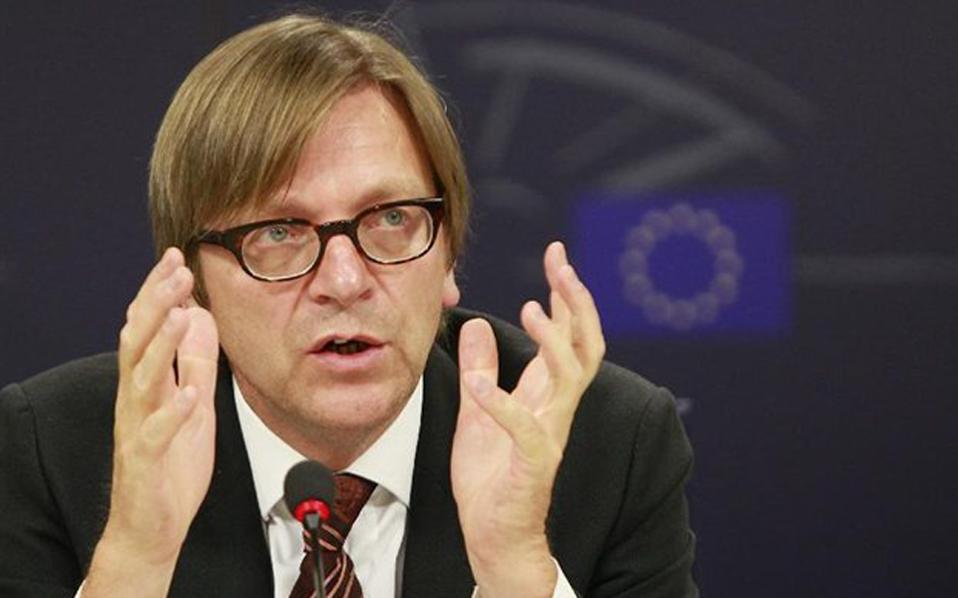
Guy Verhofstadt, Head of the Liberal Group ALDE

The choice you have is very simple. How do you want to be remembered? As an electoral accident who made his people poorer in his country? Or do you want to be remembered Mr. Tsipras as a real revolutionary reformer in the tradition of Trikoupis and Venizelos? That is the choice to make. And I know what your people want, 80 percent of your people want to stay in Europe and in the euro zone. So show what you can do and show you’re a real leader and not a false prophet.

Alexis Tsipras, Greek Prime Minister

I find myself here only a few days after the resounding verdict of the Greek people, after a decision we took to give the floor directly, to ask the Greek people directly, for the their views and be an active part of the negotiations affecting their own future. A few days after these negotiations we’ve now been given a mandate to redouble our efforts to get a socially just and economically sustainable solution to the Greek problem, without repeating the mistakes of the past which condemn the Greek economy to a period of never-ending impasse of austerity which trapped our economy in a recessionary vicious circle.

Let me assure the house that, quite apart from the crisis, we will continue with our reform undertakings. Let’s not forget that for the past five years the Greek people have made a tremendous effort for adjustment but this has exhausted the resilience and the patience of the Greek people.

We demand an agreement with our neighbors but one which gives us a sign that we are on a long-lasting basis exiting from the crisis, which will demonstrate that there’s light at the end of the tunnel.

The proposals we have made to our partners are credible reforms with an acceptable degree of burden sharing without recessionary effects. We need to ensure the medium term funding of our country with a development and growth program because otherwise we won’t exit from this crisis. Our prime objective must be to combat unemployment and to encourage entrepreneurship.

I am not one of those politicians who claim that those responsible for the woes of Greece have been wicked foreigners. Greece has got to the verge of bankruptcy because for many many years, the governments of

Greece have been creating a clientelist governments, they have strengthened the hands of corruption, they have created and nurtured a nexus between political and economic power.

They have allowed tax evasion to run riot and it’s not right. In accordance with a survey by Credit Suisse, 10 percent of Greeks currently have 56 percent of the national wealth and 10 percent in a time of austerity, they have not shared the pressure.

This is a major injustice and the programs, the bailout programs have not made things better. They were supposed to bring about reforms but those reforms have not made things better, on the contrary they have made things worse. We were supposed to bring about reforms but those reforms have not, and too, the tax collection mechanisms which collapsed under the excessive zeal of enlightened terrified national officials.

None of the reforms have helped when it comes to the nexus between the political establishments, the oligarchs and the banks in that three-sided ring. None of the reforms have improved the functioning, the efficiency of the mechanisms of the state which have now become inured to working in the selfish interests, the vested interests rather than the common good.

European history is a history of conflict but conflict leading to compromise, it’s also a history of convergence and enlargements, it is a history of unity and not divisions, and this is why we talk about a united Europe and let us not allow it to become a divided Europe.

At this time, we are called upon to produce a productive and fair compromise which will avoid a break-off in negotiations and this is in line with the traditions of European Union.

All of us have taken the measure of the situation and I believe that together we can rise to this historical challenge.

Donald Tusk, President of the European Council

Our inability to find an agreement may lead to the bankruptcy of Greece and the insolvency of its banking system. And for sure it will be most painful for the Greek people. I have no doubt that this will affect Europe, also in the geopolitical sense, if someone has any illusion that it will not, they are naive.

The stark reality is that we have only four days left to find an ultimate agreement. Until now I’ve avoided talking about deadlines but I have to say it loud and clear that the final deadline ends this week. All of us are responsible for the crisis and all of us have the responsibility to resolve it. As Plutarch once said: To find fault is easy, to do better is difficult. I hope doing better is not as difficult as Plutarch once thought. Let us prove him wrong.

source:ekathimerini.com

Juncker warns Greece it has only days left to retain euro membership

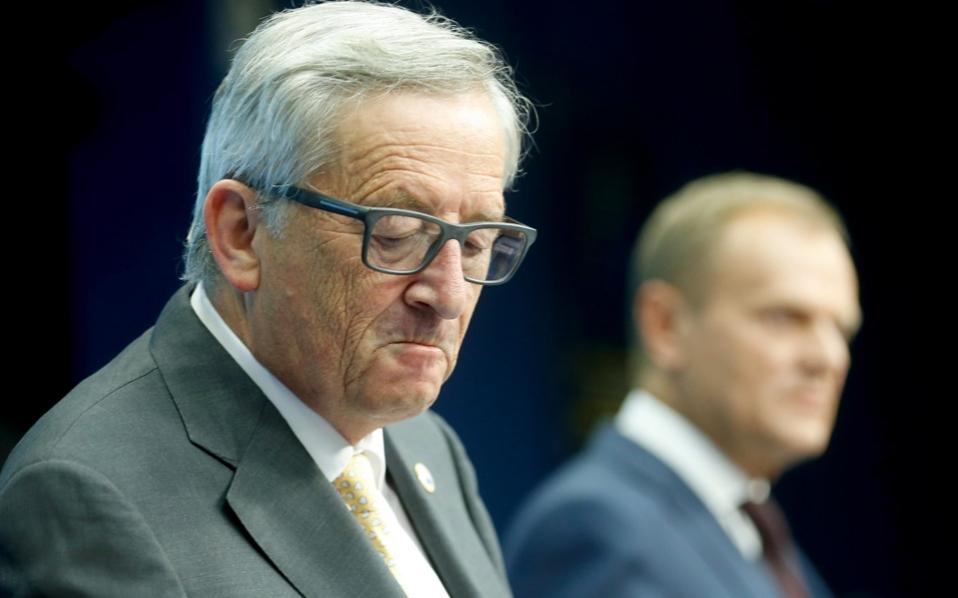
juncker_tusk_web-thumb-large

European Commission head Jean-Claude Juncker said Tuesday that the EU had prepared for every outcome in the Greek debt crisis, including its possible exit from the euro single currency.

“The Commission is ready for everything. We have prepared a Grexit scenario in detail… a humanitarian scenario and the scenario of keeping Greece in the eurozone,” Juncker said after an emergency summit of eurozone leaders on Greece’s future.

European Council President Donald Tusk says the protracted negotiations to keep Greece from financial collapse and in the eurozone “is maybe the most critical moment in our history.”

After calling for the emergency summit in the wake of Sunday’s Greek “no” vote to proposals from its eurozone partners, Tusk said the 19 leaders agreed to give Prime Minister Alexis Tsipras one final shot to keep his nation afloat with the aid of his allies sharing the euro currency.

“I have to say it loud and clear the final deadline ends this week,” he said.

On Sunday, the 28 leaders of the full European Union will meet to assess Greece’s final proposals.

source:ekathimerini.com

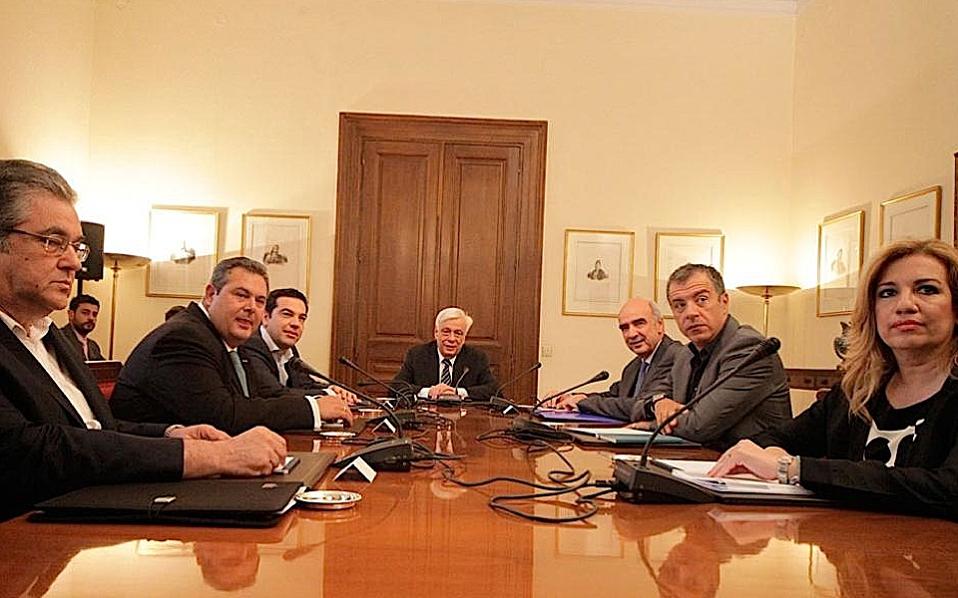
Opposition parties wait for outcome

political_leaders_meeting-thumb-large

Greece’s opposition parties, which have backed Prime Minister Alexis Tsipras’s efforts to bring back a “viable” agreement from Brussels, waited anxiously on Tuesday for the outcome of the premier’s meeting in the Belgian capital.

New Democracy’s political council met for the first time since Vangelis Meimarakis replaced Antonis Samaras as leader. The main topic of discussion was the government’s ongoing talks with the institutions. The meeting concluded with the conservatives calling on Tsipras to sign an agreement, reopen Greek banks and ensure that deposits would be safeguarded.

“The government does not have a mandate for rupture [with lenders] but one for bringing back a viable agreement,” said New Democracy in a statement.

To Potami, whose leader Stavros Theodorakis also signed a joint statement with Tsipras on Monday along with Meimarakis, remained silent on the negotiations taking place in Brussels. Sources said the centrist party was not surprised that Finance Minister Euclid Tsakalotos did not present specific proposals at the Eurogroup as Theodorakis had advised Tsipras that his main goal should be to assure eurozone leaders that his government is committed to remaining in the single currency.

Sources said that Theodorakis intervened a number of times on Monday to ensure that the joint statement did not contain any assertions or language that could be used by lenders to refuse any further discussion with the Greek government.

PASOK leader Fofi Gennimata was in Brussels on Tuesday for a meeting of the Party of European Socialists.

source:ekathimerini.com

Greece faces euro exit unless Tsipras bows to demands Sunday

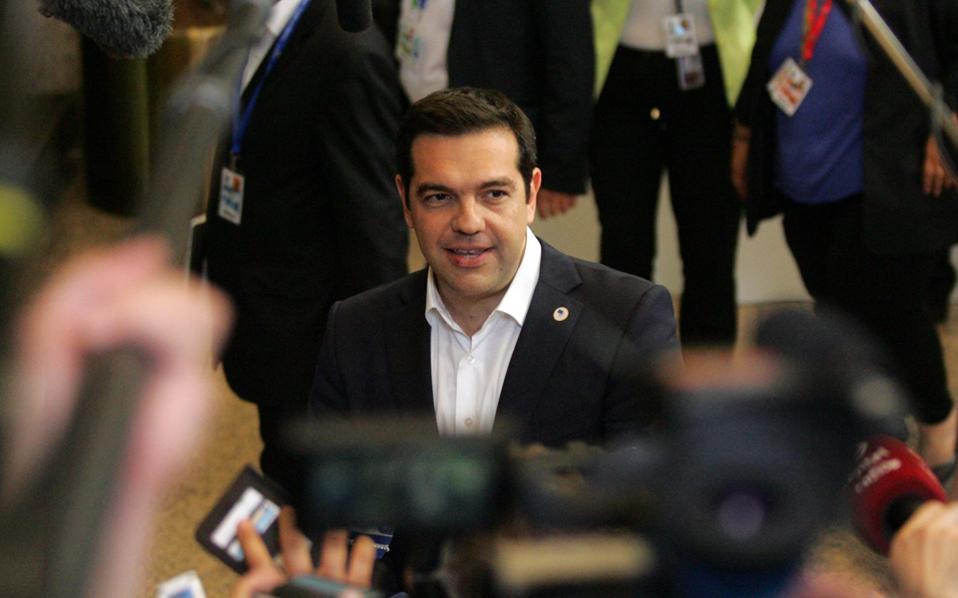
tsipras_micro_web-thumb-large

European leaders set a Sunday deadline for Greece to accept a rescue, saying otherwise they’ll take the unprecedented step of propelling the country out of the euro.

At a Brussels summit, Greece’s anti-austerity government was ordered to make new economic reform proposals that could earn it another aid package and head off financial ruin.

“We have only a few days left to find a solution,” German Chancellor Angela Merkel told reporters late Tuesday after euro area leaders met in Brussels. She conceded that she is “not especially optimistic.”

Sunday now looms as the climax of a five-year battle to contain Greece’s debts, potentially splintering a currency that was meant to be unbreakable and throwing more than half a century of European economic and political integration into reverse.

“We have a Grexit scenario prepared in detail,” European Commission President Jean-Claude Juncker said, using the shorthand for expulsion from the now 19-nation currency area.

The European Central Bank will end its support for Greece if “there is no political accord in sight,” board member Christian Noyer said Wednesday in an interview on France’s Europe 1 radio. “Then our rules force us to stop completely. We’re starting to be very worried.”

The euro slid, and was 0.2 percent lower at $1.0990 at 10:25 a.m. in Athens, hovering near a six-week low. European stocks were little changed near correction levels with the Stoxx Europe 600 Index up less than 0.2 percent to 373.29.

Humanitarian crisis

With shortages of medicine turning Greece’s fiscal crisis into a humanitarian one and Russia sizing up the country as a potential ally inside the European Union, the consequences of shutting off funding to Europe’s most debt-stricken nation go far beyond the narrow economic stakes.

At the center of the storm is Greek Prime Minister Alexis Tsipras, who shored up his domestic position and claimed he’d gained leverage over creditors by winning last week’s anti- austerity referendum with 61 percent of the vote. Tsipras said after the summit that Greece had outlined its new proposals.

Tsipras said the popular groundswell gave him a “strong weapon” to take on the creditors and repeated a vow to offer the “credible reforms” that, he said, prior Greek governments were too timid to broach.

Economic abyss

Greece will make a formal request to the European Stability Mechanism for financial assistance on Wednesday, SYRIZA party parliamentary spokesman Nikos Filis said in comments on Antenna TV Wednesday.

For another few days, the ECB is standing between Greece and the economic abyss that opened up after the government let its aid program lapse. Greek banks, shut since July 3, are running out of paper money for automated teller machines and relying on emergency loans from the ECB to avoid collapse.

“Our inability to find agreement may lead to the bankruptcy of Greece and the insolvency of its banking system,” European Union President Donald Tusk said. “If someone has any illusions that it will not be so, they are naive.”

Deadlines laid out at the summit appeared less fluid than is usually the case in European deliberations. Eurozone finance ministers will hold a conference call Wednesday to weigh Greece’s new aid request and call for an evaluation by the commission.

Hard deadlines

By 8:30 a.m. on Friday, Greece must spell out how it will make the economy more competitive and save money in the process, which would require it to stomach many of the reforms that Tsipras’s left-leaning SYRIZA party has resisted since coming to power in January.

Expert assessment of that package would feed into a final set of meetings, culminating in summits of both eurozone leaders and the broader 28-nation EU on Sunday.

“This is the big one,” Malcolm Barr, an economist at JPMorgan in London, said in a report to clients. “The ‘good’ news for Greece is that it is being given a clear opportunity to put its proposals in a concrete form and have them evaluated by the rest of the region.”

While a new program would stretch for two to three years, finance ministers bandied about technical solutions for the short term. Austria’s Hans Joerg Schelling cited “a number of variants” for getting Greece through the next few weeks, such as using untapped funds or striking ad hoc deals similar to the first aid package in 2010.

Euro ‘irrevocable’

European law treats the euro as “irrevocable” and makes no provision for a country to leave or be pushed out. The likeliest exit mechanism would be for European governments to halt aid to Greece, leading the ECB to stop supplying euros to the country.

“You can’t push Greece out of the eurozone but in fact Greece will reach a situation whereby it will be unsustainable,” said Prime Minister Mark Rutte of the Netherlands, one of the principal backers of the stringent fiscal rules flouted by many countries including Greece.

Tsipras had few sympathizers at the summit. Germany, the Netherlands and Finland have anchored the tight-budget camp since the debt crisis broke out in 2010; Ireland, Portugal, Spain observed strict conditions for their own aid packages and are loathe to see Greece get off more easily.

‘Party time’

Baltic countries that went through phases of austerity and economic contraction after winning independence from the Soviet Union were equally adamant. Lithuanian President Dalia Grybauskaite declared an end to “party time at the expense of others in Greece.”

The most supportive words came from French President Francois Hollande, who warned about the consequences of setting Greece adrift. Hollande said his motto for handling the Greek crisis is “responsibility, solidarity, speed.”

source:ekathimerini.com

Moscovici: Greece, eurozone can still reach a deal

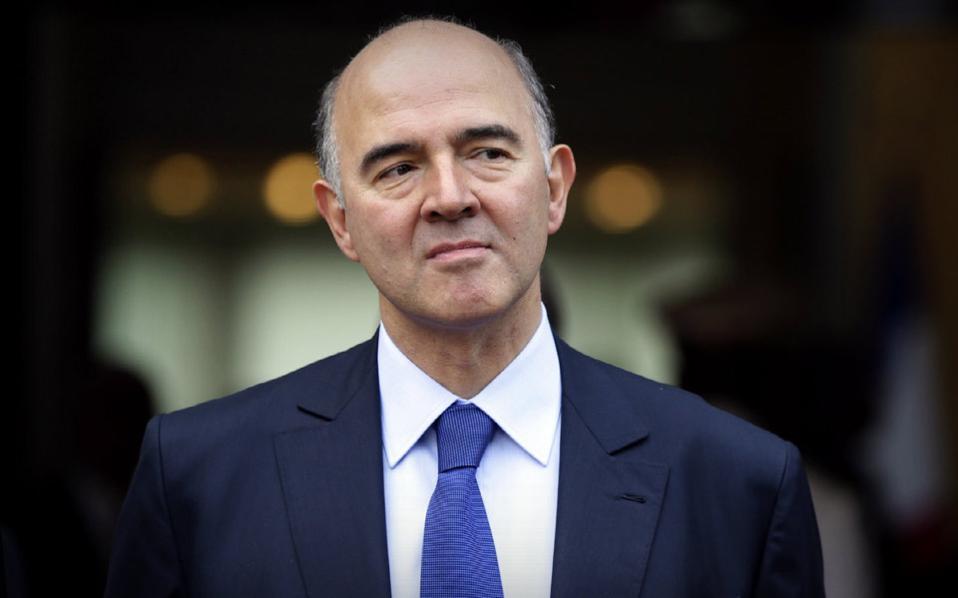
moscovici_web-thumb-large

An agreement between Greece and its eurozone partners is still possible, EU Economics Commissioner Pierre Moscovici told Britain’s BBC radio on Wednesday, adding that the future of the currency bloc was at stake in the talks.

Eurozone members have given Greece until the end of the week to come up with fresh proposals in return for loans that will keep the country from crashing out of Europe’s currency bloc.

“Today, although difficult, very difficult, an agreement is still possible and more necessary than ever,” he said. “Grexit would be a terrible failure, a collective mistake and we are fighting to avoid it.”

Moscovici said the bloc was still waiting to see a set of “comprehensive, credible, complete, tangible set of reforms” from Greece, but that he believed the Greek government remained committed to staying in the eurozone.

Moscovici, a former French finance minister, said it was important for Paris and Berlin to act together to convince Greek Prime Minister Alexis Tsipras to deliver a workable proposal.

“We are certainly in a historical moment where the future of the euro zone is at stake,” he said. “We need to be conscious of that and to act at a level of responsibility which is as important.”

source:ekathimerini.com

Dombrovskis says needs plan from Greece quickly

dombrovskis_web-thumb-large

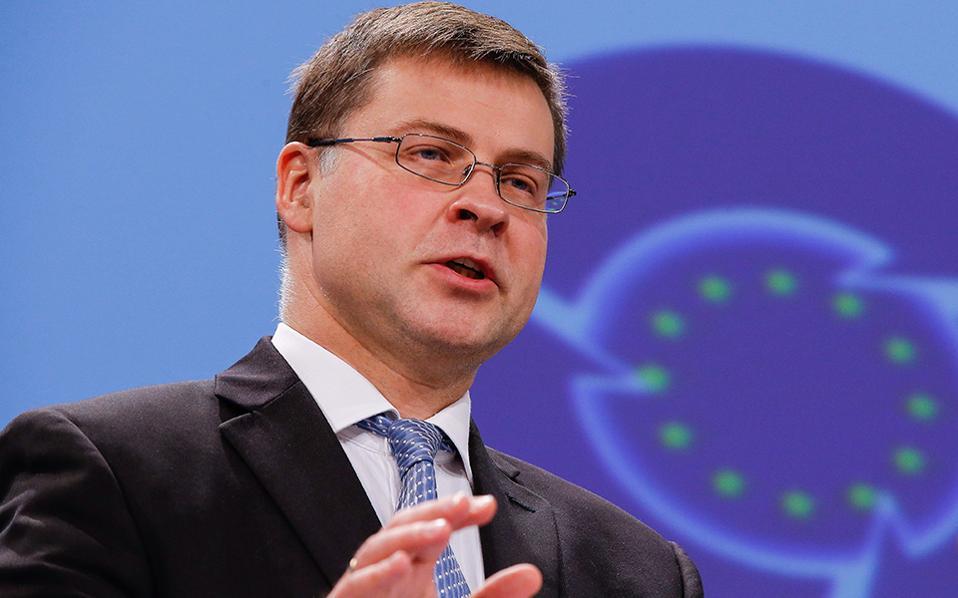
The European Union urgently needs a comprehensive and credible reform plan from Greece to pull it out of its crisis, European Commission Vice President Valdis Dombrovskis told German television on Wednesday.

“We have now, after the summit, until the end of this week to decide about the third aid programme. To make this possible we need the plans from the Greek government,” Dombrovskis told ZDF television.

“It was clear .. that the Greeks are ready to get their plans ready. It is a shame they (the plans) were not there yesterday, they are hopefully ready to present them tomorrow,” he said.

“We really need to find a solution pretty quickly.”

source:ekathimerini.com

Lenders give Greece until Sunday to avoid Grexit

summit_july7_web-thumb-large

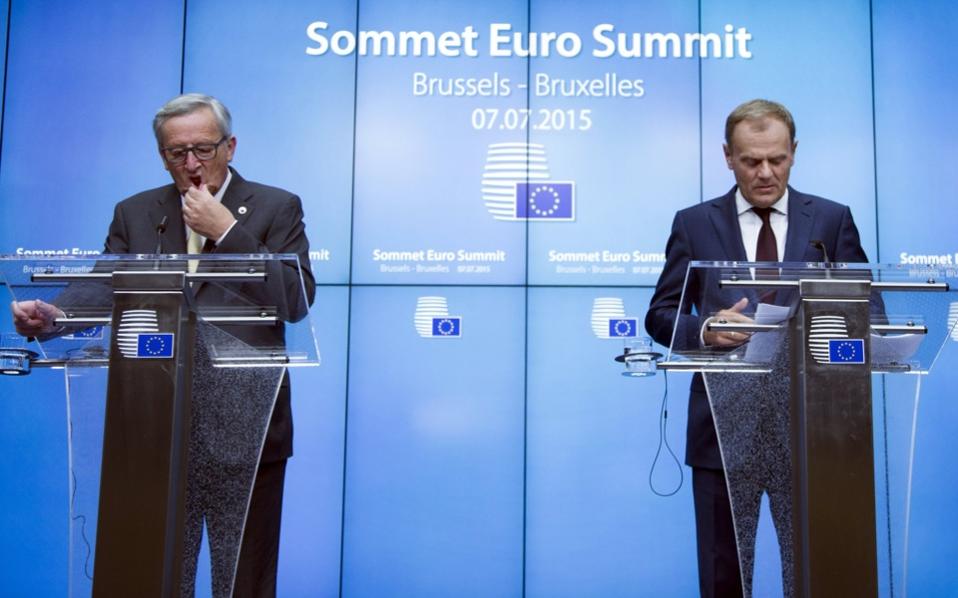
European leaders gave debt-stricken Greece a final deadline of Sunday to reach a new bailout deal and avoid crashing out of the euro, after Greek voters rejected international creditors’ plans in a weekend referendum.

In the first step of its renewed bid for funding, Greece’s leftist government must submit detailed reform plans by Thursday, EU President Donald Tusk said after eurozone leaders held an emergency summit with Greek Prime Minister Alexis Tsipras.

All 28 European Union leaders will then examine the plans on Sunday in a make-or-break summit that will either save Greece’s moribund economy or leave it to its fate.

“Tonight I have to say loud and clear — the final deadline ends this week,” Tusk told a news conference.

“Inability to find an agreement may lead to bankruptcy of Greece and insolvency of its banking system,” he added.

European Commission President Jean-Claude Juncker warned “we have a Grexit scenario prepared in detail” if Greece failed to reach a deal, although he insisted he wanted Athens to stay in the euro club.

German Chancellor Angela Merkel meanwhile warned Greece would need a debt program lasting “several years” and insisted writing off any of Greece’s 320-billion-euro ($350-billion) debt mountain was out of the question.

The deadline came after Tsipras and his new finance minister Euclid Tsakalotos came to Brussels to discuss the fall-out from the dramatic referendum.

Greeks voted by 61 percent to reject creditor demands for more austerity in return fresh EU-IMF bailout funds.

source:ekathimerini.com

Greece files formal request for eurozone loan

flags_web-thumb-large

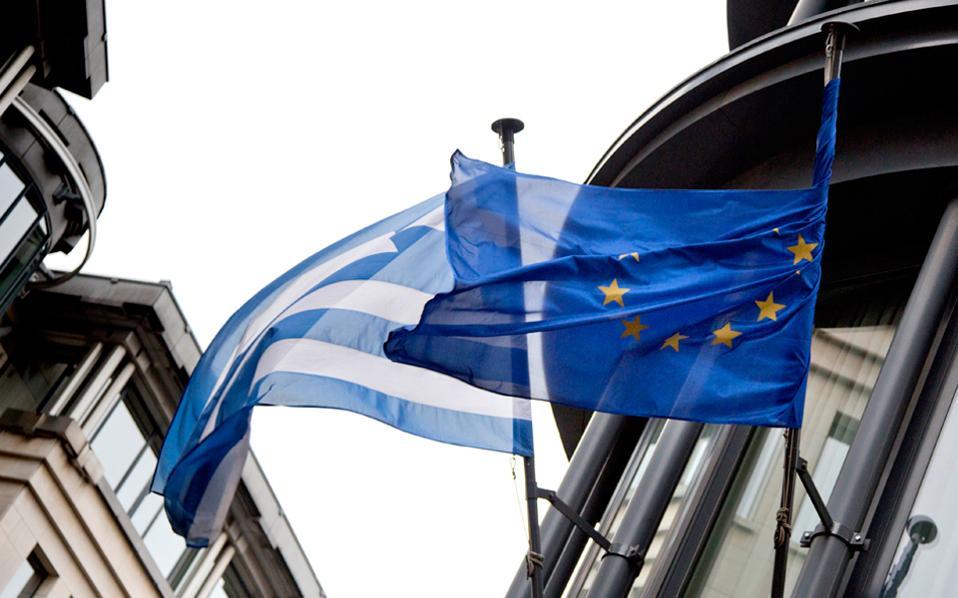
Greece has lodged a formal request for a bailout loan with the eurozone’s special support fund, a spokesman for the European Stability Mechanism (ESM) said on Wednesday.

“The ESM has received the Greek request,” he said.

The Eurogroup of finance ministers is due to consider the application, which is formally addressed to its chairman Jeroen Dijsselbloem, in a conference call on Wednesday.

source:ekathimerini.com