Daily Archives: July 2, 2015

World leaders speak out on Greece

pope_francis-thumb-large

The state of affairs in Greece on Wednesday prompted world leaders – and not only in the sphere of politics – to speak out.

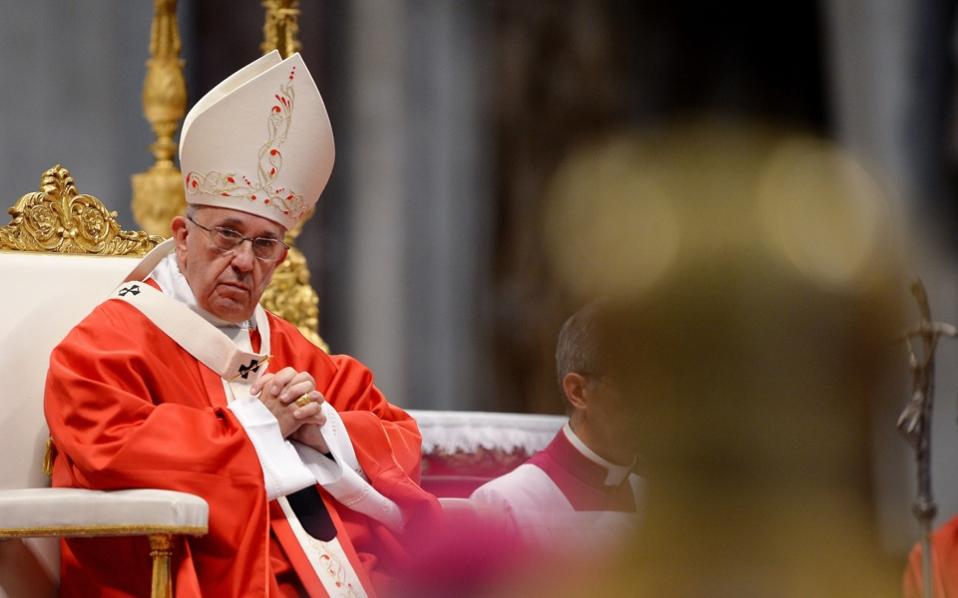
In an unusual move, Pope Francis expressed solidarity with Greeks experiencing a “keenly felt human and social crisis.” According to the Vatican spokesman, the Reverend Federico Lombardi, the pope is urging the faithful “to unite in prayer for the good of the beloved Greek people.”

In the arena of politics, there was less obvious sympathy.

President Francois Hollande of France suggested that talks were needed in the coming days. “We need to be clear. The time for a deal is now,” Agence-France Presse quoted him as saying.

German Chancellor Angela Merkel, who has championed austerity in Greece, said further negotiations can only be held after a Greek referendum planned for Sunday.

Emphasizing the importance of trust and compromise, Merkel said Berlin would nonetheless not make concessions at any cost.

Merkel told the German Parliament that “the door to talks with the Greek government was always open and will always stay open.” But she also criticized Greece for basically ending negotiations unilaterally by announcing Sunday’s referendum. She added that Europe has become stronger over the past five years, adding “we can wait calmly,” referring to the referendum result.

In a statement, the White House said it believed all parties involved in negotiations over Greece’s financial crisis wanted the country to stay in the eurozone and encouraged all sides to recognize the mutual interest they have in resolving the situation.

source:ekathimerini.com

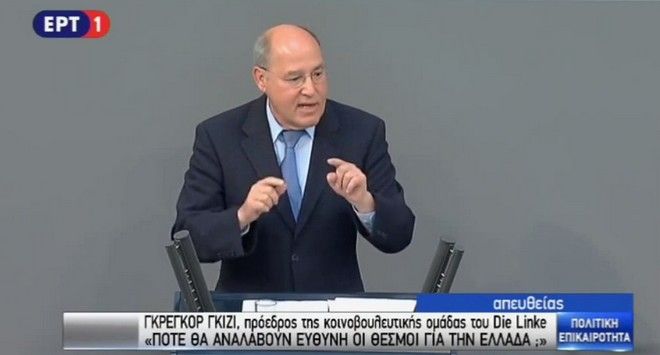
Γκίζι σε Μέρκελ: Τα λεφτά πήγαν στις Eλληνικές τράπεζες και όχι στους Έλληνες

gizi

Δριμεία επίθεση του επικεφαλής του Die Linke σε Μέρκελ και SPD για τους χειρισμούς τους σχετικά με το ελληνικό ζήτημα την ώρα που είμαστε στο συν ένα της ληξιπρόθεσμης οφειλής προς το ΔΝΤ

Σκληρή παραμένει η στάση των εταίρων της Γερμανικής κυβέρνησης. Το SPD τάσσεται κατά των συζητήσεων πριν το δημοψήφισμα, ενώ την ίδια και ίσως πιο σκληρή στάση, κρατάνε οι Χριστιανοδημοκράτες που έχουν και τη μεγαλύτερη δύναμη στην Μπούντεσταγκ.

Απαντώντας στη Γερμανίδα Καγκελάριο, Άνγκελα Μέρκελ που τόνισε πως “το μέλλον της Ευρώπης δεν μπορεί να παιχτεί στα ζάρια”, κάνοντας σαφείς υπαινιγμούς για poker game από πλευράς ΣΥΡΙΖΑ, ο πρόεδρος της ΚΟ του αριστερού κόμματος Die Linke, Γκρέγκορ Γκίζι, είπε:

“Αν λέτε ότι οι Γερμανοί εργαζόμενοι δεν μπορούν να πληρώνουν τους Έλληνες αυτό είναι λάθος και θα πρέπει να ξέρετε ότι κι εμείς αν αποτύχει το ευρώ θα πληρώσουμε σε βάθος χρόνου 80 εκατ. ευρώ και πρέπει και αυτό να το πούμε στον λαό μας”.

Κάλεσε την Άνγκελα Μέρκελ και τον Βόλφγκανγκ Σόιμπλε να παραδεχθούν επιτέλους τα λάθη τους και είπε ότι οι θεσμοί δεν είναι εκλεγμένοι και δεν μπορούν να ζητούν εφαρμογή πολιτικών χωρίς να αναλαμβάνουν την ευθύνη τους.

“Τα λεφτά από το πρόγραμμα διάσωσης πήγαν στις τράπεζες και όχι στον ελληνικό λαό”, ανέφερε μεταξύ άλλων και επιτέθηκε σφοδρά στην κυβέρνηση.

“Αυτή είναι η ιδέα σας για την Ευρώπη; Αυτό είναι σκάνδαλο! Η Ελλάδα δεν είναι η μόνη που παρέβη τους δημοσιονομικούς κανόνες της Ευρωζώνης. Γιατί είναι η μόνη που κατηγορείται; Αυτό που θέλετε είναι να διώξετε την αριστερή κυβέρνηση από την Ελλάδα πριν καν κυβερνήσει”.

Απευθυνόμενος στον Αντικαγκελάριο Γκάμπριελ, ο κ. Γκίζι είπε: “Αναμειγνύεται έντονα στη διαδικασία του δημοψηφίσματος, κάτι που είναι απαράδεκτο”.

“Ζήτησε από τους Έλληνες να ψηφίσουν “ναι”, παρόλο που μετά θα περικοπούν περαιτέρω οι μισθοί και οι συντάξεις και τα συσσίτια θα ταΐζουν ακόμη περισσότερους. Αυτή είναι η επιθυμία του Σοσιαλιστικού Κόμματος; Απίστευτο, είναι το μόνο που έχω να πω”.

Θυμίζουμε ότι η σημερινή συνεδρίαση στην Μπούντεσταγκ έγινε μετά από κάλεσμα του Die Linke το οποίο πρότεινε ψήφισμα στην ολομέλεια της γερμανικής ομοσπονδιακής βουλής  σχετικό με την Ελλάδα.

Το ψήφισμα αυτό καταλήγει στις ακόλουθες προτάσεις:

  1. Να σταματήσουν όλες οι μονομερείς αποφάσεις των Θεσμών μέχρι το τελικό αποτέλεσμα του δημοψηφίσματος στην Ελλάδα.
  2. Να σταματήσουν οι πληρωμές της Ελλάδας προς το ΔΝΤ και την ΕΚΤ και να ληφθούν βραχυπρόθεσμα μέτρα για την εξασφάλιση της ρευστότητας του ελληνικού κράτους και των ελληνικών τραπεζών.
  3. Να αναπτυχθεί ένα νέο σχέδιο για να μπορέσει η Ελλάδα να διαχειριστεί τις τρέχουσες χρηματοπιστωτικές και οικονομικές δυσκολίες της, το οποίο θα σέβεται τις δημοκρατικές αρχές και θα κάνει δυνατό το τερματισμό της αποτυχημένης πολιτικής λιτότητας και την ανοικοδόμηση της οικονομίας. Είναι αναγκαίο ένα Μορατόριουμ για το χρέος της Ελλάδας όπως επίσης μία Συνδιάκεψη για το χρέος  για όλη την Ευρωζώνη.

ΤΙ ΘΑ ΑΚΟΛΟΥΘΉΣΕΙ ΣΤΗ ΝΟΜΙΣΜΑΤΙΚΉ ΈΝΩΣΗ;

Όπως άλλωστε γράφει σήμερα η Deutsche Welle, η Frankfurter Allgemeine Zeitung αναζητεί τα βαθύτερα αίτια της ευρωκρίσης στα λάθη που έγιναν στην προσπάθεια των πολιτικών να παραβιάσουν βασικούς κανόνες της οικονομίας, τόσο στη νομισματική ενοποίηση των δύο γερμανικών κρατών όσο στη συνέχεια και με τη θέσπιση κοινού νομίσματος στην ΕΕ.

“Όπως ο Χέλμουτ Κολ έτσι και η Άνγκελα Μέρκελ διατύπωσαν υποσχέσεις που δεν μπορούσαν εκ των πραγμάτων να υλοποιήσουν”, σημειώνει ο σχολιαστής της.

“Η πολιτική Μέρκελ έναντι της Αθήνας, διατυπωμένη στη φόρμουλα χορήγησης βοήθειας έναντι όρων απέτυχε”. Παρά το κούρεμα το χρέος εκτοξεύτηκε σε πέντε χρόνια στα 330 δις ευρώ “ενώ η ανεργία διπλασιάστηκε. Όλες οι ελληνικές κυβερνήσεις απέτυχαν να προχωρήσουν στην επανίδρυση του κράτους και παρόλα αυτά ζητούσαν την ευρωπαϊκή αλληλεγγύη”.

Και αφού ο σχολιαστής περιγράφει τις αβλεψίες που έγιναν στις προσπάθειες οικοδόμησης της νομισματικής κοινότητας καταλήγει: “15 χρόνια μετά από την υιοθέτηση του ευρώ η σύγκλιση του βιοτικού επιπέδου είναι πιο μακριά από ποτέ (…) Έχει φτάσει η ώρα να αναρωτηθούν οι ‘ευρωδιασώστες’ τι θα ακολουθήσει για τη νομισματική ένωση”.

Πηγή:news247.gr

Greek PM insists on referendum after offering concessions

pensioners_bank_manager-thumb-large

Just a few hours after submitting a new Greek proposal to creditors that offered some concessions in an apparent bid to reach a deal, Prime Minister Alexis Tsipras on Wednesday gave a televised address underscoring his commitment to proceed with a referendum on a proposal tabled by creditors to Greece last week.

The speech by Tsipras fueled confusion as his defiance opposite Greece’s creditors was clear in his insistence that he would proceed with a referendum. This is despite the fact the subject of the proposed plebiscite – a proposal made by Greece’s lenders – is no longer valid, having been revised by the creditors and following the expiry of Greece’s bailout.

In addition, the Council of Europe, Europe’s top human rights institution, said that Greece’s referendum would fall short of international standards if held as planned on Sunday, noting that the time period was too short and “the questions… not very clear.”

Complicating matters further, Tsipras submitted a new proposal to creditors late on Tuesday. In a letter addressed to the leaders of the European Commission, European Central Bank and International Monetary Fund, Tsipras said his government was “prepared to accept” the creditors’ proposals, subject to certain amendments, notably a series of concessions on contentious issues such as pensions and spending cuts. The premier also officially requests what amounts to a third bailout for Greece.

The letter, which was made public on Wednesday, was sent to creditors just a few hours before Greece failed to make a 1.6-billion-euro debt repayment to the International Monetary Fund and before the European portion of its bailout expired. Albeit delayed, the move appeared to indicate that Tsipras was ready to back down and reach a compromise with creditors as political pressure grows following his decision to close banks and impose capital controls at the beginning of this week.

But in a televised speech, Tsipras made it clear he would go ahead with a referendum, which has angered some European officials, and repeated his call for citizens to vote “No” to creditors’ demands. He also stressed that a “No” vote would “not mean a rupture with Europe.” Next Monday, “the Greek government will be at the negotiating table after the referendum, with better terms for the Greek people,” he said, flanked by Greek and EU flags.

Eurozone finance ministers met on Wednesday evening to discuss Greece’s proposals and concluded that there could be no further discussion of credit for Greece until after the referendum, Eurogroup President Jeroen Dijsselbloem, said following a conference call. “I am very sorry about this situation given the strong determination of the Greek people to be a part of Europe and to remain a part of the eurozone, in which we fully support them,” Dijsselbloem said.
Later he sent a letter to Tsipras saying the Eurogroup would re-examine Greece’s request after the plebiscite.
An aide close to Tsipras told Kathimerini that, in the event that the “Yes” vote prevails on Sunday, Tsipras will go to Brussels to tell creditors that the people decided to accept their proposal. Asked whether Tsipras’s government would enforce the creditors’ proposals, the aide indicated that it would not and would call snap elections for the fall without explaining how cash-strapped authorities would finance the period between next week and the fall. In the event of a “No” victory, “then things will be simple,” the official said without elaborating.
Earlier on Wednesday, the government’s stance prompted criticism from across the political spectrum, with many calling Tsipras reckless. President Prokopis Pavlopoulos, for his part, stressed the importance of Greece staying in Europe. “Greece’s course was, is and will be in Europe,” he said and called on the US for support. “We appeal to the USA to boost Greece at this critical moment so that this course can be secured in the future,” he said.

source:ekathimerini.com


H Qantas στις 10 καλύτερες αεροπορικές διεθνώς

images

Πήρε τη 10η θέση

Στην 10η θέση παγκοσμίως ανήλθε η μεγαλύτερη αυστραλιανή αεροπορική εταιρία Qantas στο σύνολο των προσφερόμενων υπηρεσιών της, αποτέλεσμα έρευνας σε 19 εκατομμύρια επιβάτες την περίοδο Σεπτεμβρίου 2014-Μαΐου 2015.

Το «ιπτάμενο καγκουρό» σημείωσε υψηλή βαθμολογία στις διακεκριμένες κατηγορίες (First Class, Business Class, Premium Economy) και βρέθηκε στην 4η θέση στην κατηγορία των υπηρεσιών ψυχαγωγίας που προσφέρει στις πτήσεις της. Η θυγατρική της, η Jet Star, αναδείχθηκε στην 5η καλύτερη αεροπορική εταιρία χαμηλού κόστους στον κόσμο. Ο μεγαλύτερος ανταγωνιστής της, η Virgin Australia, έπεσε μία θέση και βρέθηκε στην 16η, μία θέση πιο πάνω από την Air New Zealand.

Στην υψηλότερη θέση της βαθμολογίας βρέθηκε η αραβικών συμφερόντων Qatar, με δεύτερη την Singapore Airlines και τρίτη την Cathay Pacific, η οποία βρέθηκε στην υψηλότερη θέση την περασμένη χρονιά.

Στα παραλειπόμενα, αξίζει να σημειώσουμε ότι στις 16 Ιουνίου έκλεισε οριστικά το μεγάλο τηλεφωνικό κέντρο της Qantas στο Camberwell, και απολύθηκαν πάνω από 250 άτομα. Η αναδιάρθωση της εταιρίας συνεχίζεται με έντονο τρόπο τα τελευταία χρόνια. Ως αποτέλεσμα των περικοπών -κυρίως- στο εργασιακό κόστος, η μετοχή της Qantas στο αυστραλιανό χρηματιστήριο έχει εκτοξευτεί. Παρένθεση σε αυτό, η περασμένη Παρασκευή, όταν η μετοχή της σημείωσε απότομη πτώση αφού απορρίφθηκε η πρόταση της για επενδυτικό σχέδιο στο αεροδρόμιο του Hong Kong.

Πηγή:Νέος Κόσμος

Στο Aυστραλιανό χρηματιστήριο τα απόνερα της Eλληνικής κρίσης

imf_sign_web-thumb-large

35 εκατομμύρια έχασαν οι μετοχές τη Δευτέρα, αλλά στη συνέχεια οι δείκτες επανέκαμψαν, σημειώνοντας άνοδο.

Η Αυστραλία ήταν η πρώτη χώρα που ένιωσε τους κλυδωνισμούς από την επιβολή Ελέγχου Κινήσεων Κεφαλαίου στις ελληνικές τράπεζες, το πρωί της Δευτέρας. Μαζί με τις ασιατικές αγορές, το Αυστραλιανό Χρηματιστήριο Αξιών σημείωσε πτώση της τάξης του 2%, σημειώνοντας απώλειες 35 δισ. δολαρίων. Μετά την βουτιά της δευτέρας, οι μετοχές ανέκαμψαν την Τρίτη. Οι συναλλαγές ξεκίνησαν με πτώση 30 μονάδων, αλλά αυτό αντιστράφηκε σύντομα και οι αγορές έκλεισαν στις 5459 μονάδες, σημειώνοντας άνοδο 36 μονάδων. Στα ίδια επίπεδα παρέμειναν οι δείκτες την Τετάρτη, καθώς μέχρι την ώρα που γράφονταν αυτές οι γραμμές σημειωνόταν άνοδος της τάξης του 0,7%.

Ωστόσο, αυτό δεν αποτέλεσε παράγοντα εφησυχασμού, καθώς στελέχη της αγοράς δεν κρύβουν την ανησυχία τους για το κλείσιμο των ελληνικών τραπεζών και το πάγωμα των συναλλαγών στην Ελλάδα. Την Τρίτη, ο οίκος αξιολογήσεων Standard & Poor’s υποβάθμισε το αξιόχρεο της Ελλάδας στην κατηγορία CCC- (από CCC), με αρνητική προοπτική, τονίζοντας ότι «ελλείψει μιας μεταβολής των συνθηκών προς το καλύτερο, κάτι που δεν αναμένει να συμβεί, η Ελλάδα θα αθετήσει τις πληρωμές του χρέους της προς ιδιώτες επενδυτές μέσα στους επόμενους έξι μήνες».

Και μπορεί το γεγονός ότι η Ελλάδα δεν τήρησε την υποχρέωσή της απέναντι στο Διεθνές Νομισματικό Ταμείο, να καταβάλλει την δόση του 1,6 δισ. ευρώ (2,3 δισ. δολάρια) τα ξημερώματα της 1ης Ιουλίου να μην θεωρήθηκε πιστωτικό γεγονός, ωστόσο είναι γεγονός ότι η χώρα βρίσκεται σε μία πορεία προς το άγνωστο, αντιμέτωπη με την χρεωκοπία και το ενδεχόμενο εξόδου από την Ευρωζώνη.

Τόσο το ΔΝΤ, όσο και οι ευρωπαϊκοί θεσμοί βρίσκονται σε στάση αναμονής, περιμένοντας την έκβαση του δημοψηφίσματος της Κυριακής, προτού προχωρήσουν σε επανεκκίνηση των διαπραγματεύσεων, αν και αυτό μπορεί να αλλάξει τις προσεχείς ημέρες. Αυτού του είδους η αβεβαιότητα προκαλεί ανησυχία στις αγορές, καθώς οι ειδικοί θεωρούν ότι η Ευρωπαϊκή Ένωση στο σύνολό της οδεύει προς μία συνταγματική κρίση με απρόβλεπτη έκβαση.

Σε μία προσπάθεια να διασκεδάσει τις ανησυχίες, ο Υπουργός Οικονομικών Joe Hockey, δήλωσε ότι η Αυστραλία είναι θωρακισμένη απέναντι στην ελληνική κρίση, καθώς έχει περιορισμένη έκθεση στο ελληνικό τραπεζικό σύστημα. Ο θησαυροφύλακας επίσης τόνισε ότι «το βασικό πρόβλημα της Ελλάδας είναι ότι δεν είχε την βούληση να επιβάλει τις μεταρρυθμίσεις που είναι απαραίτητες για να ορθοποδήσει. Σε σύγκριση με την Ισπανία και την Ιταλία, που προχώρησαν σε μεταρρυθμίσεις, είναι φανερό ότι υπάρχει αντίθεση ανάμεσα στο τι συμβαίνει στην Ελλάδα και τι συνέβη σε άλλες χώρες της Ευρώπης. Ένας παράγοντας που μειώνει την ανησυχία είναι και το γεγονός ότι ο ιδιωτικός τομέας κατέχει μόνο το 13% του ελληνικού χρέους, ωστόσο η ελληνική κρίση έχει σαφέστατα παίξει κάποιο ρόλο στο γεγονός ότι η άνοδος του χρηματιστηρίου στο τέλος του οικονομικού έτους δεν ξεπέρασε το 1,6%, παρά το ότι μέχρι πριν από δύο μήνες έδειχνε ότι θα ξεπεράσει τις 6.000 μονάδες.

Πηγή:Νέος Κόσμος

Greeks drum to a Japanese beat

drums1

Mia-Alexandra Sky (Skiadopoulos) playing a Wadaiko Rindo gig in Melbourne. Photo: Wilari Tedjosiswoyo.

East meets west in an energetic fusion of percussion and culture.

Despite being separated by the vast Asian continent, the people of Greece and Japan share a great deal in common. For one, they both have a passion for epicurean indulgence, especially seafood and fresh produce.

There is also the rich history and mythology of both countries. High school students in Australia are just as likely to learn about Odysseus and the Trojan War as they are about samurai battles of the Japanese feudal era.

It is no understatement to say that both Greece and Japan have very distinctive cultures, and music plays a significant part of that. The sounds of Greek and Japanese instruments are highly evocative, and can easily take the listener away to a breezy Aegean village or to an ancient shrine in a bamboo forest.

However, one form of Japanese music steadily gaining popularity throughout the world is taiko drumming, a physically demanding form of ensemble percussion played on instruments ranging from the size of a snare drum to enormous ‘odaiko’ drums, spanning five feet across and sometimes larger.

Performances are not simply heard, but are also quite literally felt, with the vibration of the drums rattling audiences to the bone.
One of the world’s most renowned taiko groups is Kodo, whose performance in Athens in 1995 at the Herod Atticus Odeon became one of their most prominent recordings in the form of Kodo Live at the Acropolis.

Based on the Japanese island of Sado, their auditions and training regimens are physically gruelling affairs involving 10-kilometre runs every morning before breakfast, toiling in the rice and vegetable fields, and spartan communal living. Ondekoza, an earlier incarnation of Kodo, earned a reputation as notorious fitness fanatics when they ran the 1975 Boston Marathon and then played a concert at the finish line.

Community taiko groups are now springing up throughout the world, including Australia and Greece. Fortunately, for those wishing to join up and beat out some rhythms, the physical demands are nowhere near as rigorous as the professional groups. Wadaiko Rindo is Melbourne’s largest group, consisting of over 130 students taught by founder Toshi Sakamoto.

One of Wadaiko Rindo’s most active members is Mia-Alexandra Sky, who has been playing since 2004 and also handles the group’s PR and online presence. As a Greek Australian with a zeal for music and performing arts – and the daughter of actor, director, and former Neos Kosmos journalist Nikos Skiadopoulos, no less – she is certainly qualified to speculate as to why Wadaiko Rindo has played at a number of Greek festivals throughout Melbourne in recent years.

“I think the fact that we perform at Greek events is a testament to how truly engaged with Melbourne’s multicultural essence the Greek community is,” she says. “Music is also a very uniting art that crosses borders and cultures.”

Mia-Alexandra delves further into the appeal of taiko drumming to Greeks, noting the prevalence of percussion instruments in Greek music from ancient times, such as the rhoptron, crotalum and tambourine.

“Both ancient Greece and Japan used percussion during festivals to revere the gods in the pantheon. But in Japan there is a solemnity associated with gods hearing our prayers through percussion and noise, which is different to Greece, where we used pyres of sacrificial offerings to please them.”

When asked as to whether there are any other similarities in the broader performing arts of Greece and Japan, Mia-Alexandra is undeniably astute in her observations. “No other geographically disparate cultures so closely resemble each other theatrically. Both noh and kabuki have structural similarities to ancient Greek tragedy. Not only in the shapes of the stages and theatres, but also in the form of the plays.”

Despite these parallels, it was only recently that Greece’s first taiko group was formed. Nikos Souliotis, an experienced and multitalented percussionist, organised an Athens taiko drumming seminar in May 2013. He invited Liz Walters, a Londoner with two decades of experience at an international level, to teach the group. A second seminar the following year laid the foundations for what was to become Atena Daiko, consisting of Nikos and the other students in attendance.
Led by Nikos, the group has been conducting regular performances and workshops in Athens over the past year. “We have quite a few performances on our resume now, and we are especially enjoying the bond that is constantly growing between our members,” he says.

“I have studied and experienced many kinds of drums from different places across the world – eastern, Mediterranean, Brazilian, Indian, Latin American, African – but Japanese drums made me shiver with excitement from the first moment I saw them at Kodo’s gig at the Acropolis in 1995,” Nikos enthuses. “I still feel this shiver to this day!”

With a shared heritage and common musical interest, it is perhaps unsurprising that Mia-Alexandra and Nikos eventually made contact through a mutual friend on Facebook. In what proved to be a particularly serendipitous turn of events, a member of Wadaiko Rindo holidaying in Greece last September filled in at the last moment for an Atena Daiko member who was unable to perform a gig, thanks to the quick facilitations of Mia-Alexandra and Nikos.

Whilst the dream of a Wadaiko Rindo tour to Greece – or for that matter, an Atena Daiko tour to Australia – is a long way off, it’s clear that music is capable of transcending the barriers of culture and language, and can bring people together in a way that nothing else can.

The world may not yet be ready for a souvlaki filled with raw tuna and wasabi, but there is plenty in common for Greeks and Japanese to discover and celebrate in each other’s art, music, food and history.

source:Neos Kosmos

Maria Mazis receives Vic Premier’s Award

site_197_Greek_418897

High achiever: Maria Mazis accepts her Victorian Premier’s Award from Education Minister James Merlino

With only 3 years.in Australia, she is amongst Victoria’s best students.

Victorian Premier’s Awards have been bestowed on 250 students from across the state who have excelled in their VCE exams.

Among them is Maria Mazis, a Greek schoolgirl who migrated just a few years ago to Australia.

“I arrived here with my family in July 2012 after finishing the third year of Greek high school,” Ms Mazis said.

“When I came here I went back to ninth grade, mid-year.”

Maria says that she encountered a completely different reality in Australia, as the educational system has almost nothing in common with its Greek counterpart.

She went to the Language Centre to assess her standard of English.

“I was studying English since I was 8 years old,” she said during an interview with SBS Radio.

“My level of reading comprehension and writing skills were quite good, however my ability to speak has improved significantly thanks to my teachers.”

Three years later, she is attending year 12 and not only has she managed to reach the level of her English-speaking classmates but she exceeded her teachers’ expectations with a score of 47/50.

“My dream is to pursue medicine and biochemistry, and it takes a great deal of effort,” she said.

“I’ve always been a good student, but being in a new country with so many opportunities has inspired me to work even harder.”

source:Neos Kosmos

Looming pension changes for Greek Australians

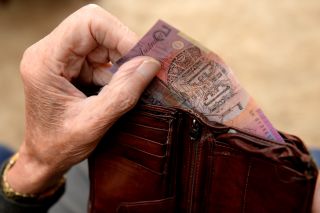
Pensions%2001

The Australian government has allegedly proposed a review of the current pension agreement with Greece. Photo: AAP/Alan Porritt.

SAE Oceania prepares to tackle issues of pensions, taxation and visas

While the fate of Greece remains unknown, Greeks of the diaspora have their own concerns.
As revealed to Neos Kosmos, the Abbott government has allegedly sent a formal proposal to Greece for a review of the pension agreement between the two countries.

Coordinator of the SAE Oceania committee Giorgos Angelopoulos said “we have close links with Greece, we have our informers in the country and confirm the existence of this document”.
This, along with a number of issues affecting expatriate Greeks, will be discussed today at the organisation’s annual General Meeting set to take place at Sydney’s Cypriot Community Club.

As the agreement stands, those entitled to a pension in Australia are permitted to continue receiving their benefits whilst abroad, and vice versa – a situation the Australian government is no longer happy with according to Mr Angelopoulos.

The coordinator expressed his concern, stating that “the changes proposed by the Abbott government are alarming and will affect many pensioners”.
Despite this however, Greek expatriates who own property in Greece can expect to see some positive changes based on a decision by SYRIZA to lower taxes paid by Greeks abroad.

Along with pensions, the meeting will also address the impending work visa agreement between the two countries.
Set to be brought before the Greek parliament, if the visa is ratified Greek nationals will be granted the opportunity to legally work in Australia for 12 months.

The committee will seek to rally support from various organisations, to help encourage the Greek government to place the issue high on the agenda.
A travel warning issued by the Australian government to those travelling to Greece in the summer months has also come up as concern for SAE committee members.

The government-run Smart Traveller website warns:
“Australians visiting Greece should be aware of the possibility that retail banking services throughout Greece may at times become very limited at short notice. Make sure you have more than one means of payment with you (cash, debit cards, credit cards), and make sure you have enough money to cover emergencies and any unexpected delays.”

Not every sector of the Greek community will represented at the meeting, however; president of Melbourne’s Greek Community Bill Papastergiadis declined to attend.
In a letter to the Director General Secretariat for Greeks Abroad Michael Kokkinos, Mr Papastergiadis wrote, “the Community believes that we need to review the whole concept of this organisation. For eight years it has not offered anything significant to the diaspora, nor does it have any direct relationship with diasporic affairs of Australia”.

Mr Angelopoulos was surprised by the statement, though acknowledges the organisation is not functioning to the same extent as in its heyday.
“The only organisations that are still running are ours and the former Soviet Republic. The US, Canada, Europe and Africa have either closed or are barely functioning,” he said. “We remain open because our body is registered and recognised by the Commonwealth, we adhere to our constitution and we have open channels of communication with Greece.”

Currently there are plans to form a new SAE committee, which will be self-funded with the initial support of the Greek state to assist the start up of the initiative.
Plans for this year’s Oceania Panhellenic Games have been postponed until further notice.

source:Neos Kosmos

Eurogroup: To δημοψήφισμα θα κρίνει το αίτημα για νέο πρόγραμμα

untitled

Ο πρόεδρος του συμβουλίου των υπουργών Οικονομικών της ευρωζώνης τόνισε σε επιστολή του προς τον πρωθυπουργό Αλέξη Τσίπρα ότι το αίτημά του για ένα νέο πακέτο στήριξης από τον ESM θα εξεταστεί μετά το δημοψήφισμα και αναλόγως του αποτελέσματος.

«Θα επανέλθουμε στο αίτημά σας για τη χορήγηση υποστήριξης χρηματοοικονομικής σταθερότητας μέσω του ESM μόνο μετά, και στη βάση του αποτελέσματος που θα προκύψει από το δημοψήφισμα», αναφέρει στην επιστολή του ο Ντάισελμπλουμ.

Με την ίδια επιστολή ο Ντάισελμπλουμ επαναβεβαιώνει την απόρριψη του αιτήματος παράτασης του παλαιού προγράμματος «δεδομένου ότι οι συνθήκες που οδήγησαν στην απόφαση (της 27ης Ιουνίου) παραμένουν αμετάβλητες.

Σημειώνει επίσης ότι με την εκπνοή του συγκεκριμένου προγράμματος, την Τρίτη, χάθηκαν οι επιστροφές των SMP και υπενθυμίζει ότι «στις 20 Φεβρουαρίου οι ελληνικές αρχές συμφώνησαν να επαναλάβουν την κατηγορηματική δέσμευσή τους να εκπληρώσουν τις οικονομικές τους υποχρεώσεις στο ακέραιο και εγκαίρως».

Πηγή:in.gr

Αποστάσεις κρατά ο Ολάντ από τη Μέρκελ στο θέμα της Ελλάδας

DAA374848BE13E08F94C475AD0301521

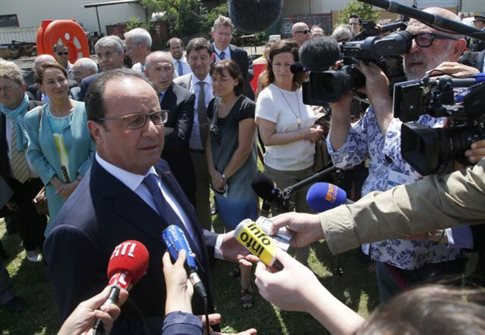
Ο γάλλος προέδρος Φρανσουά Ολάντ απαντά σε ερωτήσεις των δημοσιογράφων φθάνοντας στη Λυών

Έκκληση για άμεση συμφωνία πριν από το δημοψήφισμα απηύθυνε ο γάλλος πρόεδρος Φρανσουά Ολάντ, σηματοδοτώντας την πρώτη σοβαρή απόκλιση από τη γερμανική πλευρά όσον αφορά την πορεία των διαπραγματεύσεων.

Η καγκελάριος Ανγκελα Μέρκελ απέκλεισε κατηγορηματικά την Τετάρτη συζήτηση για νέο πρόγραμμα βοήθειας προς την Ελλάδα πριν την ολοκλήρωση της διεξαγωγής του δημοψηφίσματος της 5ης Ιουλίου.

Από τη Λυών, όπου πρόκειται να παραβρεθεί σε συνέδριο για την καταπολέμηση της υπερθέρμανσης του πλανήτη, ο Ολάντ εξέφρασε την άποψη ότι μία συμφωνία δεν μπορεί να περιμένει έως την Κυριακή και το δημοψήφισμα.

«Πάει καιρός που μιλάμε γι’ αυτή τη συμφωνία, ας γίνει!», δήλωσε ο γάλλος πρόεδρος φθάνοντας στη Λυών. «Είναι χρέος μας να κρατήσουμε την Ελλάδα στην ευρωζώνη. Αυτό εξαρτάται από την Ελλάδα… Εξαρτάται όμως και από εμάς», τόνισε προσθέτοντας ότι αυτή η ώρα δεν είναι και βέτο και «αμείλικτες δηλώσεις», αλλά για διάλογο.

«Η στρατηγική Τσίπρα έσπασε τη γαλλογερμανική συμμαχία» ανέφερε η γαλλική εφημερίδα Le Monde, λέγοντας ότι η συμμαχία αυτή ήταν φαινομενική. Ωστόσο, κοινή στάση φαίνεται να κράτησαν οι υπουργοί Οικονομικών στο Eurogroup της Τετάρτης που διήρκεσε μόλις λίγα λεπτά.

Πάντως, η γερμανίδα καγκελάριος απέρριψε ότι υπάρχει διάσταση απόψεων με τη Γαλλία.

Απαντώντας σε σχετική ερώτηση, η γερμανίδα καγκελάριος δήλωσε ότι «δεν υπάρχει διαφορά απόψεων σχετικά με το ότι πρέπει κάποια στιγμή να μιλήσουμε ».

Πηγή:in.gr