Daily Archives: July 1, 2015

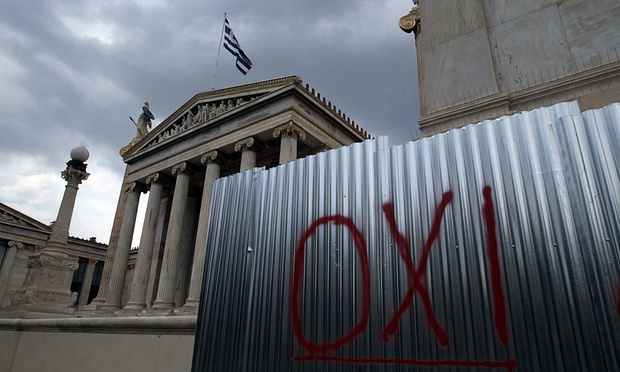
As Greece prepares to hold its referendum, the stakes are high for the 60-year-old project of a peaceful, united Europe

untitled

If you believe political leaders in Berlin, Paris, Brussels, this Sunday marks a make-or-break moment not only for the eurozone but for the EU itself. An extraordinary state of affairs given that – on one level at least – the only thing happening this weekend is that Greece, a country representing just 2% of the entire EU population, will hold a referendum on whether or not to accept the latest deal offered by creditors.

The rhetoric coming from Athens is as heated, where there is talk of European “blackmail” against the free will of Greek voters, as if Europe’s creditor nations don’t have voters of their own. If cool heads are to prevail, they must first reflect on how things have turned so sour. Unless a last-minute deal can be reached between Greece and its creditors, the only thing that can be hoped for is serious damage limitation. In the worst-case scenario of a Greek exit from the euro, it would pile disaster upon disaster if the country were to leave the European Union. Europe must stare into this abyss to prevent itself from falling into it.

No side bears sole blame for the current mess. From the very start, the idea of a common European currency was built on a logical flaw. Put at its crudest, monetary union all but requires fiscal union, which in turn requires political union. Yet when the euro was launched, there were no such institutions or mechanisms, just the perennial but vague hope of ever closer union. What’s more, the world’s largest currency area was run on two unsustainable economic motors: Germany exporting ever more to southern Europe and the rest of the world, and southern Europe relying on cheap credit. That fragile system was crushed under the rubble of the financial crisis.

Nor is there much dispute that creditors have mismanaged the Greek dossier ever since the first bailout in 2010. The troika of creditors – the European Central Bank, the EU commission and the IMF – told Greece that the only way to fix its economy was to adopt severe austerity, medicine that felt to Greeks like the shredding of cherished labour rights and benefits. This programme not only failed to make the debt sustainable; it has recreated the kind of poverty that western Europe thought it had left behind. Meanwhile, the bulk of the €240bn (£170bn) total bailout money Greece received in 2010 and 2012 went straight back to the banks that lent it money before the crash.

But both sides in this clash have motives of their own, not all of them unconnected with democracy. The creditors point to some of Europe’s poorest nations, the likes of Portugal and Ireland, whose voters have endured their own austerity and who would look askance if Greece were now let off the hook. Even the reviled IMF can explain its hard line: given the bitter programmes it has imposed on countries from the global south, it can hardly now be lenient towards a European country that is, relatively, better off.

Greece’s woes are not wholly of others’ making. Witness the decades of clientelist Greek politics of left and right, the notoriously poor tax collection, and the fudging of statistics when the country joined the euro in 2001. Much of this predated Alexis Tsipras and Syriza, but it’s also true that the party won power in January partly by promising that less would have to change than, in reality, it would.

Nor has the Greek prime minister helped his cause by framing Sunday’s referendum question in terms that hardly suggest a great democratic moment. The question put to Greek voters is so technical that it defies understanding, and it relates to an offer (made by creditors on 25 June) that has since disappeared. Negotiations were cut off by Greece before a belated new offer could even be considered.

For all that, Greece’s break from the eurozone, not to mention the EU, would amount to a historic weakening of Europe at moment when solidarity has never been more needed. It may be possible to have a Greek default without a Grexit from the euro, but that will require much creativity – something that has been lacking from this generation of unstatesmanlike European leaders. It is also unclear whether a euro-Grexit would lead to a Greek withdrawal from the EU altogether: the legal debate is complex. This would nevertheless be the absolute worst scenario. A Greek exit from the EU is an outcome no one should want. Whatever the result of the Greek referendum, Europe must not be allowed to self-destruct. The brinkmanship must end, if the 60-year-old project of a peaceful, united Europe is to be pulled back from the brink.
source:theguardian.com
IMF: austerity measures would still leave Greece with unsustainable debt

untitled

Secret documents show creditors’ baseline estimate puts debt at 118% of GDP in 2030, even if it signs up to all tax and spending reforms demanded by troika

Greece would face an unsustainable level of debt by 2030 even if it signs up to the full package of tax and spending reforms demanded of it, according to unpublished documents compiled by its three main creditors.

The documents, drawn up by the so-called troika of lenders, support Greece’s argument that it needs substantial debt relief for a lasting economic recovery. They show that, even after 15 years of sustained strong growth, the country would face a level of debt that the International Monetary Fund deems unsustainable.

The documents show that the IMF’s baseline estimate – the most likely outcome – is that Greece’s debt would still be 118% of GDP in 2030, even if it signs up to the package of tax and spending reforms demanded. That is well above the 110% the IMF regards as sustainable given Greece’s debt profile, a level set in 2012. The country’s debt level is currently 175% and likely to go higher because of its recent slide back into recession.

The documents admit that under the baseline scenario “significant concessions” are necessary to improve Greece’s chances of ridding itself permanently of its debt financing woes.

Even under the best case scenario, which includes growth of 4% a year for the next five years, Greece’s debt levels will drop to only 124%, by 2022. The best case also anticipates €15bn (£10bn) in proceeds from privatisations, five times the estimate in the most likely scenario.

But under all the scenarios, which all assume a third bailout programme, looked at by the troika – the European commission, the European Central Bank and the IMF – Greece has no chance of meeting the target of reducing its debt to “well below 110% of GDP by 2022” set by the Eurogroup of finance ministers in November 2012.

In the creditors own words: “It is clear that the policy slippages and uncertainties of the last months have made the achievement of the 2012 targets impossible under any scenario”.

These projections are from the report Preliminary Debt Sustainability Analysis for Greece, one of six documents that are part of the full set of materials that comprise the “final” proposal sent to Greece by its creditors last Friday.

These, which the Guardian has seen, were obtained by Süddeutsche Zeitung after they were sent to all German MPs with the expectation that the deal would need to be approved by the country’s parliament.

A vote in the Bundestag never took place as the Greek prime minister, Alexis Tsipras, rejected the plans and called a referendum on whether to accept the creditors’ demands.

While the analysis underlines the fact that Greece has already benefited from a number of debt-reducing measures – maturities have been extended, interest payments are similar to those of less indebted nations and the PSI in 2012 cut debt by about €100bn – the document also admits that under the baseline scenario “significant concessions” would improve sustainability.

But despite the lenders’ admission that Greece cannot thrive without debt relief the documents provide no clarity about what such a package might look like, nor does it provide any detail of a third bailout programme despite assuming one would exist. They promise only a more detailed debt sustainability analysis in due course.

The documents also throw light on the €35bn investment package that several governments, including Germany’s, have this week pointed out was offered to Greece last week.

The second document in the pack of six, titled Reforms for the Completion of the Current Programme and Beyond, show there was less to this offer than suggested by commission president Jean-Claude Juncker and Germany’s vice-chancellor Sigmar Gabriel. The cash on offer is not an ad hoc investment but is actually an EU grant that is regularly available to all member states. And, as Süddeutsche Zeitung points out, accessing the cash requires a 15% co-financing in Greece’s case, which it cannot afford. Because of this, Greece has unspent sums from its €38bn 2007-2013 pot of available grants.

A third document outlines the “financing needs and draft disbursement schedule linked to the completion of the fifth review”, spelling out how Greece would have received €15bn to meet its obligations until the end of November. The cash would have been handed over in five tranches starting in June (as soon as the Greek parliament approved the proposals) to cover Greece’s financing needs. However, 93% of the funds would have gone straight to cover the cost of maturing debt for the duration of the extension.

The remaining documents cover the nuts and bolts of the actions that were expected to be taken by Greece in consultation with the EC/ECB/IMF. One of these papers was also published by the European commission over the weekend.

The plan is premised on a primary surplus target of 1%, 2%, 3%, and 3.5% of GDP in 2015, 2016, 2017 and 2018 respectively (both sides agree on these targets). It is anchored on VAT changes producing additional revenue of 1% of GDP and a reform of the pension system that leads to savings of 1% of GDP in 2016.

On VAT reforms, the proposal suggests broadening the tax base at a standard rate of 23%, and would include restaurants, and catering. There will be a reduced rate of 13% to cover a limited set of goods, that includes energy, basic foods, hotels and water (excluding sewage).

There was also to be a super-reduced rate of 6% on pharmaceuticals, books and theatres, an increase on tax on insurance and the elimination of tax exemptions on certain islands. The creditors had originally wanted only a two-tier VAT system.

In terms of pensions, which have been the stickiest point in the negotiations, the plan demands reforms to:
Create strong disincentives to early retirement, including changes to early retirement penalties

Adopt legislation so that withdrawals from the social insurance fund will incur an annual penalty, for those affected by the extension of the retirement age period, equivalent to 10% on top of the current penalty of 6%

Ensure that all supplementary pension funds are only financed by own contributions
Gradually phase out the solidarity grant (EKAS) for all pensioners by end-December 2019. This shall start immediately for the top 20% of beneficiaries with the details of the phase-out to be agreed with the institutions

Freeze monthly guaranteed contributory pension limits in nominal terms until 2021

Provide to people retiring after 30 June 2015 the basic, guaranteed contributory, and means-tested pensions only at statutory normal retirement age, currently 67 years

Increase the relatively low health contributions for pensioners from 4% to 6% on average and extend it to supplementary pensions

On Monday Juncker insisted – incorrectly – that these measures did not amount to a cut in pensions. However, the creditors were correct in saying that they had compromised and the plans had some flexibility. They also suggested that Greece could provide alternative proposals as long as they are “sufficiently concrete and quantifiable”.
The creditors’ proposals also suggested that corporation tax rise only from 26% to 28%. Greece wanted the rate set at 29%.

source:theguardian.com

Eurogroup refuses Greece bailout extension

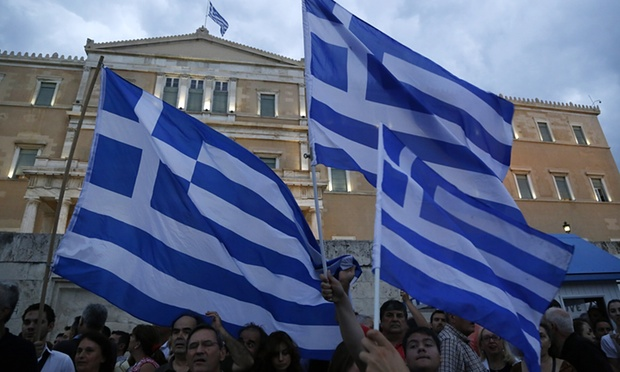
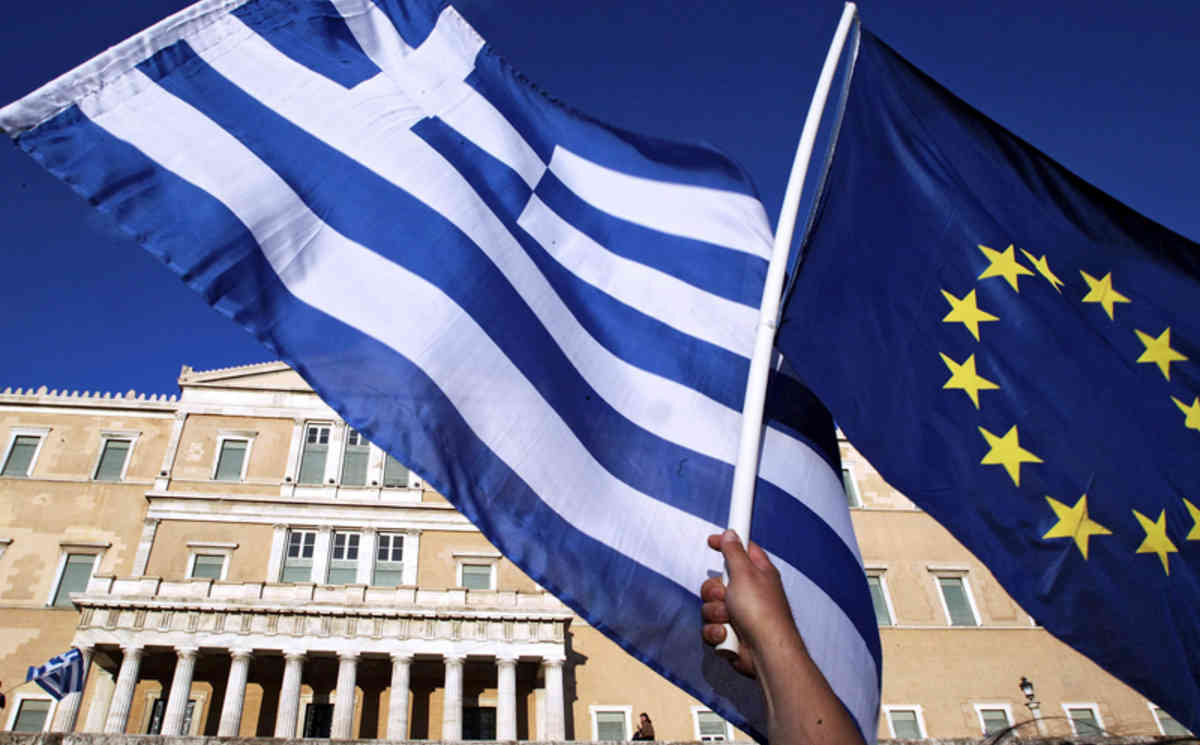
epa04814689 Protesters hold a Greek and a EU flag outside the parliament during a rally demanding Greece to remain in the Eurozone in Athens, Greece, 22 June 2015. The Eurozone's 19 national leaders hold an emergency summit in Brussels to discuss the crisis. Fears are mounting that Greece is about to run out of money, with the country facing a 1.6-billion-euro IMF repayment deadline on June 30.  EPA/SIMELA PANTZARTZI

Eurozone finance ministers have refused to extend Greece’s bailout program, just hours before its expiry and a possible IMF default.Slovakia’s finance minister says parliamentary procedures prevent the program from being extended, but talks are set to continue.

It comes after Greece admitted it won’t meet the deadline for the key payment to the International Monetary Fund.Greek Prime Minister Alexis Tsipras requested a two-year rescue deal with the European Union to save the crisis-hit country, just hours before its international bailout expires later on Tuesday.

Tsipras also requested a short extension to its current bailout program to avoid a ‘technical default,’ with a 1.5 billion euros ($A2.20 billion) payment due to the IMF.

source:skynews.com.au

Ομπάμα: Η ελληνική κρίση «σημαντική ανησυχία» για την Ευρώπη

2EB36284D3D1557A70F86F9FE655A7A3

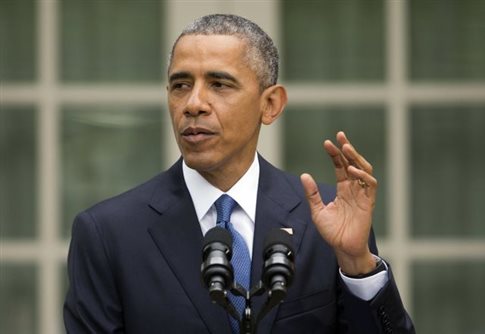
Δηλώσεις για την ελληνική κρίση έκανε ο αμερικανός πρόεδρος Μπαράκ Ομπάμα. Ενθάρρυνε τις δύο πλευρές να συνεχίσουν τις διαπραγματεύσεις προκειμένου να βρεθεί λύση.

Τόνισε ότι η Ελλάδα έχει περάσει δύσκολες στιγμές και πρέπει να βρει το δρόμο προς την ανάπτυξη, παραμένοντας στην Ευρωζώνη.

Σημείωσε, πάντως, ότι είναι σημαντικό να υπάρξει προετοιμασία για κάθε έκτακτη ανάγκη. Πρόσθεσε ότι είναι σημαντική η συνεργασία με την ΕΚΤ και άλλους οργανισμούς, προκειμένου να εξασφαλιστεί ότι δεν θα υπάρξουν μεγάλες επιπτώσεις στις αγορές.

Ο Μπαράκ Ομπάμα είπε ότι το ζήτημα της Ελλάδας αφορά πρωταρχικά την Ευρώπη.

Τόνισε ότι η ελληνική κρίση δεν θα επιφέρει μεγάλο πλήγμα στις ΗΠΑ, αλλά ανέφερε ότι μπορεί να έχει σημαντικές επιπτώσεις στον ρυθμό ανάπτυξης της Ευρώπης. Πρόσθεσε ότι εάν δεν καταγράφεται ανάπτυξη στην Ευρώπη, αυτό θα μπορούσε να έχει δυσμενείς επιπτώσεις για το σύνολο της παγκόσμιας οικονομίας.

Ο ίδιος δήλωσε ότι παίρνει σοβαρά το θέμα της Ελλάδας, σημειώνοντας ότι δεν θα πρέπει να δημιουργηθούν υπερβολικές αντιδράσεις.

«Για τον αμερικανικό λαό, δεν είναι κάτι που πιστεύουμε ότι θα προκαλέσει μεγάλο σοκ στο σύστημα» είπε ο Μπαράκ Ομπάμα σε συνέντευξη Τύπου.

«Φυσικά, είναι πολύ επώδυνο για τον ελληνικό λαό και μπορεί να έχει επιπτώσεις στον ρυθμό ανάπτυξης της Ευρώπης» σημείωσε.

Ο αμερικανός πρόεδρος επισήμανε ότι αντιμετωπίζει το πρόβλημα της Ελλάδας με σοβαρότητα, αλλά δεν είναι κάτι που θα έπρεπε να προκαλέσει «υπερβολικές αντιδράσεις»· πρόσθεσε ότι οι αγορές έχουν ως τώρα αξιολογήσει κατάλληλα τους κινδύνους που διαβλέπουν.

Παρέμβαση Λιού για το ελληνικό ζήτημα

Ο αμερικανός υπουργός Οικονομικών είχε σειρά συνομιλιών με ευρωπαίους αξιωματούχους την Τρίτη, στους οποίους είπε ότι χρειάζεται περισσότερη δουλειά για να μην προκαλέσει η ελληνική κρίση την κατάρρευση της σταθερότητας των αγορών.

Ο Τζακ Λιού είχε τηλεφωνικές συνομιλίες με τον πρόεδρο του Eurogroup Γερουν Ντάισελμπλουμ, τον ιταλό υπουργό Οικονομικών Πιέρ Κάρλο Παντοάν και τον γάλλο υπουργό Οικονομικών Μισέλ Σαπέν.

Στις συνομιλίες που είχε, ο Λιού «σημείωσε τη σημασία του να ληφθούν τα απαραίτητα βήματα για τη διατήρηση της οικονομικής σταθερότητας» και είπε ότι όλες οι πλευρές πρέπει να εργαστούν προς έναν ρεαλιστικό συμβιβασμό, ανέφερε αξιωματούχος του αμερικανικού υπουργείου Οικονομικών.

Πηγή:in.gr

Νέο Eurogroup την Τετάρτη για τις νέες ελληνικές προτάσεις. Όχι σε παράταση – Νέο πρόγραμμα

eurogroup6_819162754

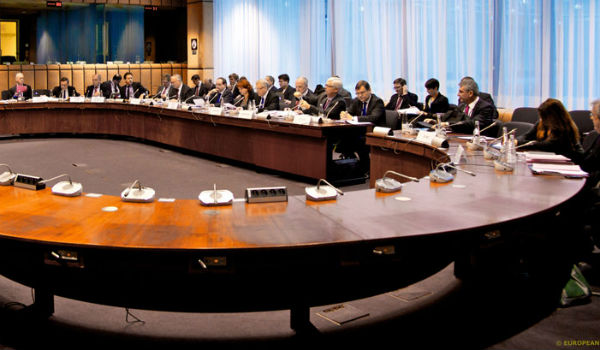
Νέο Eurogroup την Τετάρτη, ανακοίνωσε ο ο Γερούν Ντάισελμπλουμ, για να εξετάσεις νέες ελληνικές προτάσεις, μετά τη σημερινή τηλεδιάσκεψη.

Με ανάρτησή του πριν από λίγη ώρα στο twitter, ο πρόεδρος του Eurogroup Γερούν Ντάισελμπλουμ ενημέρωσε ότι θα πραγματοποιηθεί τηλεδιάσκεψη της Ευρωομάδας στις 11.30 π.μ. ώρα Βρυξελλών (σ.σ. 12.30 μ.μ. ώρα Ελλάδας).

Ο πρόεδρος του Eurogroup Γερούν Ντάισελμπλουμ δήλωσε ότι είναι πολύ αργά για να υπάρξει παράταση του ελληνικού προγράμματος.

Ο πρόεδρος του συμβουλίου των υπουργών Οικονομικών της ευρωζώνης διεμήνυσε ότι οι όροι που θα προβλέπει το ενδεχόμενο νέο πρόγραμμα μπορεί να είναι σκληρότεροι.

Σύμφωνα με τον Ντάισελμπλουμ, οι θεσμοί θα εξετάσουν το αίτημα της ελληνικής κυβέρνησης για ένα νέο πρόγραμμα στήριξης μόνο αφού διεξαχθεί το δημοψήφισμα.

Εκπρόσωπος του Ντάισελμπλουμ,ανακοίνωσε ότι το Eurogroup θα πραγματοποιήσει νέα τηλεδιάσκεψη αύριο Τετάρτη το πρωί για να συζητήσει σχετικά με τις νέες ελληνικές προτάσεις.

“Άλλη μια τηλεδιάσκεψη (θα διεξαχθεί) την Τετάρτη το πρωί μετά την ανακοίνωση της νέας επιστολής της ελληνικής κυβέρνησης”, έγραψε ο εκπρόσωπος στον ιστότοπο κοινωνικής δικτύωσης Twitter.

Ο Φινλανδός ΥΠΟΙΚ δήλωσε μετά τη συνεδρίαση ότι δεν εγκρίθηκε η ελληνική πρόταση.

Σύμφωνα με ανάρτηση στο προσωπικό λογαριασμό του υπουργού Οικονομικών της Φινλανδίας, Αλεξάντερ Στουμπ, η επιστολή του Έλληνα πρωθυπουργού περιελάμβανε αίτημα επέκτασης του προγράμματος ή κούρεμα του χρέους, αλλά και το δάνειο από τον ESM. Όπως επισημαίνει ο κ. Στουμπ εξετάζεται το αίτημα για δάνειο από τον ESM υπό τις κανονικές συνθήκες.

Το σημερινό έκτακτο Eurogroup διήρκησε μία ώρα, οι υπουργοί Οικονομικών της ευρωζώνης εξέτασαν τις νέες ελληνικές προτάσεις που κατέθεσε το Μαξίμου νωρίς το απόγευμα και το οποίο αφήνει όλα τα σενάρια πλέον ανοιχτά ακόμα και εκείνο της συμφωνίας.

Σημειώνεται ότι στο επίκεντρο της τηλεδιάσκεψης βρέθηκε η ελληνική πρόταση για μια νέα συμφωνία χωρίς παράταση του υφιστάμενου προγράμματος και χωρίς το ΔΝΤ, λίγες ώρες πριν την εκπνοή του τρέχοντος προγράμματος.

Η πρόταση της κυβέρνησης περιείχε διετή συμφωνία με τον Ευρωπαϊκό Μηχανισμό Σταθερότητας (ESM) για την πλήρη κάλυψη των χρηματοδοτικών της αναγκών και με ταυτόχρονη αναδιάρθρωση του χρέους.

Η ελληνική πρόταση για τη διετή συμφωνία με τον ESM συνοδεύεται και conditionalities (κατάλογο όρων και προϋποθέσεων). Αυτό δήλωσε πριν από λίγο κορυφαίος παράγοντας του υπουργείου Οικονομικών, χωρίς, πάντως, να υπεισέλθει σε λεπτομέρειες.

Οπως μεταδίδει και τo Reuters, επικαλούμενο Ευρωπαίο αξιωματούχο, η νέα πρόταση της Αθήνας ήταν «πιο κοντά» στην τελευταία πρόταση των θεσμών.

Η ελληνική πρόταση θεωρείται πως η κυβέρνηση αποδέχεται όλη την πρόταση των δανειστών οπως αυτή διαμορφώνεται από τον κ. Γιούνκερ, δηλαδή με ΦΠΑ στα ξενοδοχεία 13% από 23% και εξαίρεση του ΕΚΑΣ από τις απαιτήσεις των δανειστών.

Μετά τη νέα πρόταση της Ελλάδας, έχει σημάνει συναγερμός και στη Γερμανία, με την γερμανίδα καγκελάριο, Άνγκελα Μέρκελ να έχει έκτακτη σύσκεψη με τον σοσιαλδημοκράτη αντικαγκελάριο Ζίγκμαρ Γκάμπριελ, πριν την έναρξη του έκτακτου Eurogroup που ανακοίνωσε ο Γερούν Ντάισελμπλουμ για τις 20:00.

Ο Γερμανός αντικαγκελάριος, κ. Γκάμπριελ δήλωσε πως για να εξεταστεί η νέα πρόταση πρέπει να ακυρωθεί το δημοψήφισμα.

Θετικά βλέπει τις εξελίξεις μετά την κατάθεση της ελληνικής πρότασης ο πρόεδρος του Ευρωπαϊκού Κοινοβουλίου, Μάρτιν Σουλτς, σημειώνοντας παράλληλα ότι ο Έλληνας πρωθυπουργός πρέπει να μετακινηθεί από τη θέση που βρίσκεται σήμερα.

«Ο Αλέξης Τσίπρας επικοινώνησε και μας είπε τι ζητάει αλλά όχι τι προτίθεται να δώσει», είπε χαρακτηριστικά και συμπλήρωσε:

«Εάν ο Αλέξης Τσίπρας κινηθεί σε μια άλλη κατεύθυνση, για παράδειγμα να υποστηρίξει ένα “ναι” στο δημοψήφισμα, θα έχουμε σίγουρα μια τελείως διαφορετική κατάσταση από την Κυριακή το βράδυ. Πάντα υπάρχουν επιλογές όταν κινούμαστε στη σωστή κατεύθυνση».

Η δήλωση Γιούκερ

Ο Πρόεδρος της Κομισιόν, Ζαν Κλοντ Γιούνκερ έκανε μια αινιγματική δήλωση για την Ελλάδα. σύμφωνα με τη Le Monde:

«Σημαντικά γεγονότα για τα οποία δεν είστε προετοιμασμένοι συμβαίνουν στην Αθήνα. Τα γεγονότα αυτά είναι πιθανό να παράγουν αποτελέσματα και δεν ταιριάζουν με αυτά που γράφετε σήμερα».

Αμέσως μετά ο πρόεδρος της Κομισιόν έφυγε βιαστικός από τη συνέντευξη Τύπου.

EFSF: Τέλος του ελληνικού προγράμματος απόψε

Το πρόγραμμα ελληνικής βοήθειας του EFSF λήγει απόψε τα μεσάνυχτα. Κατά συνέπεια, η τελευταία δόση του δανείου του EFSF του 1,8 δισ. ευρώ δεν θα είναι πλέον διαθέσιμη για την Ελλάδα και θα ακυρωθούν τα 10,9 δισ. του EFSF για την κάλυψη του κόστους της πιθανής ανακεφαλαιοποίησης των ελληνικών τραπεζών», αναφέρει η ανακοίνωση.

Το πρόγραμμα του EFSF ξεκίνησε στις 21 Φεβρουαρίου του 2012, σημειώνει ακόμη η ανακοίνωση. Αρχικά θα ολοκληρωνόταν στις 31 Δεκεμβρίου του 2014, αλλά επεκτάθηκε δύο φορές μετά από αίτημα της ελληνικής κυβέρνησης. Στο πλαίσιο του προγράμματος, ο EFSF εκταμίευσηε 141,8 δισεκατομμύρια προς την Ελλάδα. Αυτό το ποσό περιελάμβανε 48,2 δισ. για την κάλυψη του κόστους της τραπεζικής ανακεφαλαιοποίησης. Από αυτό το ποσό, τα 10,9 δισεκατομμύρια δεν χρειάστηκαν και αργότερα επιστράφηκαν στον EFSF. Ετσι, το εξαιρετικό ποσό του δανείου φτάνει τα 130,9 δισεκατομμύρια. Αυτό κάνει τον EFSF το μεγαλύτερο δανειστή έως τώρα

«Είναι λυπηρό για την Ελλάδα ότι το πρόγραμμα του EFSF θα λήξει σήμερα χωρίς κάποιο διακανονισμό για τη συνέχεια και τα θετικά αποτελέσματα του προγράμματος μπαίνουν σε κίνδυνο», ανέφερε σε δήλωσή του ο επικεφαλής του EFSF, Κλάους Ρέγκλινγκ.

«Εξαιτίας των οικονομικών πολιτικών που έχουν υιοθετηθεί υπό το πρόγραμμα του EFSF, η χώρα ήταν σε καλό δρόμο για την ισχυρή ανάπτυξη μέχρι το δεύτερο μισό του 2014. Οι πολλές θυσίες που έπρεπε να κάνουν οι Ελληνες απέδιδαν. Η Ελλάδα κατάφερε να μειώσει το έλλειμμα του προϋπολογισμού και να ανακτήσει ανταγωνιστικότητα. Η χώρα ήταν σε θέση να αποκτήσει πρόσβαση στις αγορές ξανά και είδε το υψηλό ποσοστό ανεργίας να μειώνεται. Σύμφωνα με τον ΟΟΣΑ και την Παγκόσμια Τράπεζα, η Ελλάδα ήταν ο πρωταθλητής των μεταρρυθμίσεων μέχρι το 2014, με ενθαρρυντικές προοπτικές ανάπτυξης. Αυτή η τάση μπορεί να συνεχιστεί, αν ο ελληνικός λαός αποφασίσει να επιστρέψει στο δρόμο της μεταρρύθμισης εντός της ευρωζώνης».

Πηγή:madata.gr