Monthly Archives: May 2014

Αφετηρία προβολής της Ελλάδας στην Αυστραλία

CFP_9304%20(2)

Χαρακτηρίζει το ταξίδι της η Κεφαλογγιάνη αλλά το ΚΚΕ διαφωνεί με τη συμφωνία για χορήγηση βίζας σε νέους.

«Η επίσκεψή μου είναι και μια αφετηρία μεγαλύτερης προβολής της Ελλάδας στην Αυστραλία, «μία πολύ καλή αγορά στην οποία δεν έχουμε δώσει την έμφαση που έπρεπε» σημειώνει η υπουργός Τουρισμού, Όλγα Κεφαλογιάννη, σε συνέντευξή της στη WebTv του ΑΠΕ-ΜΠΕ, λίγο πριν αναχωρήσει για ένα σύντομο και περιεκτικό ταξίδι στην Αυστραλία.

Η κ. Κεφαλογιάννη έφθασε χθες στη Μελβούρνη και σήμερα έχει πολυάριθμες επαφές με διάφορους παράγοντες.
Μεταξύ άλλων, την Τετάρτη θα υπογράψει και διακρατική συμφωνία με την Αυστραλία για χορήγηση βίζας σε 500 άτομα, ηλικίας 18 έως 30 ετών, με δικαίωμα εργασίας έως ένα χρόνο

Από αυστραλιανής πλευράς τη συμφωνία θα υπογράψει ο υπουργός Μετανάστευσης, κ. Σκοτ Μόρισον. Σκοπός της είναι η ενδυνάμωση των δεσμών και η προώθηση της κινητικότητας των νέων μεταξύ των δύο χωρών.

Κατά την παραμονή της στην Αυστραλία, η υπουργός Τουρισμού συναντήθηκε με την εκπρόσωπο της Πολιτειακής Βουλής της Βικτώριας, κ. Christine Fyffe, τον πρόεδρο της πολιτειακής Γερουσίας κ. Bruce Atkinson και ομογενείς γερουσιαστές και βουλευτές.

Επίσης, θα έχει συναντήσεις με τον Αρχιεπίσκοπο Αυστραλίας, κύριο Στυλιανό, τον αντιπρόεδρο της πολιτειακής κυβέρνησης Νότιας Ουαλίας αρμόδιο για θέματα τουρισμού, και τη δήμαρχο του Σίδνεϊ, κ. Clover Moore. Ακόμη η υπουργός συναντήθηκε πριν από λίγη ώρα με το Προεδρείο της Ελληνικής Κοινότητας Μελβούρνης και Βικτώριας, το προεδρείο του HACCI, ενώ απόψε θα επισκεφθεί και το Ελληνικό Μουσείο.

Σήμερα το πρωί, σε ειδικό χώρο του MCG της Μελβούρνης, η κα Κεφαλογιάννη είχε επαφές με εκπροσώπους μεγάλων ταξιδιωτικών οργανισμών και παραχώρησε συνεντεύξεις σε τηλεοπτικά δίκτυα της Αυστραλίας, με στόχο την τουριστική προβολή της Ελλάδας.

ΤΟ ΤΑΞΙΔΙ

Έτσι με λυμένο στη βαλίτσα της το μεγάλο θέμα της γραφειοκρατίας, που αποθάρρυνε έως τώρα τους επενδυτές, δηλώνει «πολύ αισιόδοξη ότι η Ελλάδα μπορεί να τα καταφέρει και φέτος, και τις χρονιές που έρχονται να μεγιστοποιήσει τα οφέλη της από τον τουρισμό».

«Είναι ένα ταξίδι που ξεκίνησε ύστερα από πρόσκληση της κυβέρνησης της Αυστραλίας» εξηγεί η κ. Κεφαλογιάννη και προσθέτει: «Αυτή είναι μία ευκαιρία για να έρθουμε σε επαφή, όχι μόνο με την ομογένεια για την οποία ξέρουμε πολύ καλά ότι είναι δυναμική και πολυάριθμη, αλλά και με Αυστραλούς, οι οποίοι ενδιαφέρονται να επισκεφθούν τη χώρα μας και να επενδύσουν. Γι αυτό, άλλωστε, και το επίσημο πρόγραμμα της επίσκεψής μας ξεκινάει με ομιλία μου στο επιμελητήριο της Μελβούρνης, όπου θα εκθέσω όλες τις επενδυτικές ευκαιρίες που μπορούν να έχουν Αυστραλοί και Ελληνοαυστραλοί στην Ελλάδα».
Όπως εξηγεί, η διμερής συμφωνία αφορά 500 νέους, φοιτητές 18-31 ετών, που θα έχουν τη δυνατότητα να συνδυάσουν ένα ταξίδι στην Αυστραλία ή στην Ελλάδα, αντίστοιχα, με άδεια εργασίας, σε «ένα πιλοτικό πρόγραμμα το οποίο θεωρούμε ότι, αν έχει την επιτυχία που προσδοκούμε, θα μπορούσε να επεκταθεί. Συμφωνία, «που έχει προετοιμαστεί εδώ και αρκετά χρόνια και απλώς δίνεται η ευκαιρία να υπογραφεί τώρα στο επίσημο ταξίδι το δικό μου με τον ομόλογό μου υπουργό που έχει και τα θέματα μετανάστευσης».

Στόχος της επίσκεψής της, σημειώνει η υπουργός, είναι όχι μόνο να δώσει «ένα μήνυμα στους ομογενείς της Αυστραλίας να έρχονται στην Ελλάδα, αλλά και στους Αυστραλούς να γνωρίσουν τις ομορφιές της χώρας, να συνδυάσουν την επίσκεψή τους με την πολύ μεγάλη πολιτιστική παράδοση που έχουμε και ξέρουμε ότι τους ενδιαφέρει ή βεβαίως για ένα ιστορικού ενδιαφέροντος ταξίδι» όπως στην Κρήτη όπου, επί παραδείγματι, οι Αυστραλοί συνέβαλαν τα μέγιστα στη μάχη της Κρήτης το 1941 και υπάρχει, εδώ και χρόνια, μεγάλη επισκεψιμότητα στο νησί γι αυτόν τον λόγο.

Σχετικά με τις επενδύσεις στον τουρισμό, τονίζει ότι «είναι το στοίχημα και ο στόχος του υπουργείου Τουρισμού», με επίκεντρο «τη δημιουργία ενός ασφαλούς επενδυτικού περιβάλλοντος σε ό,τι αφορά τις αδειοδοτήσεις». «Γιατί, να μην ξεχνάμε ότι αυτό ήταν ένα πρόβλημα και ένας παράγοντας, ο οποίος έχει αποτρέψει δυνητικούς επενδυτές να επενδύσουν στη χώρα μας» προσθέτει η κ. Κεφαλογιάννη.

«Εμείς, στο υπουργείο Τουρισμού» σημειώνει «έχουμε βάλει από πολύ νωρίς ένα πολύ συγκεκριμένο πλαίσιο για τις επενδύσεις, τόσο με τη νομοθεσία που έχουμε περάσει από τη Βουλή όσο και με υπουργικές αποφάσεις, έτσι ώστε να μπορούμε να μιλάμε προς τους υποψήφιους επενδυτές, λέγοντάς τους ότι, εδώ, σε ό,τι αφορά τουριστικές επενδύσεις υπάρχει “η υπηρεσία μιας στάσης”, στην οποία μπορούν να απευθύνονται και εμείς είμαστε εκείνοι που τους βοηθάμε να πραγματοποιήσουν την επένδυσή τους από πλευράς αδειοδοτήσεων σε σύντομο χρονικό διάστημα».

«Αυτό το μήνυμα είναι πάρα πολύ ισχυρό και αυτό είναι που θέλουμε να περάσουμε και στην Αυστραλία, στην επαφή μας με τους επιχειρηματίες» διευκρινίζει.
Αποτέλεσμα αυτής της υπηρεσίας, όπως αναφέρει, είναι ότι υπάρχουν πολλά επενδυτικά σχέδια που έχουν κατατεθεί, εκ των οποίων δύο πολύ μεγάλα έχουν εγκριθεί και άλλα 3-4, ύψους πολλών εκατομμυρίων ευρώ, είναι υπό έγκριση για το 2014. «Πρόκειται για καινούρια προϊόντα, για επενδύσεις, οι οποίες θα μπορέσουν να δώσουν πρώτα από όλα την ευκαιρία σε περιοχές της χώρας που δεν έχουν αναπτυχθεί πολύ τουριστικά και θα βοηθήσουν να επεκτείνουμε την τουριστική περίοδο, να ξεφύγουμε από το μοντέλο “ήλιος και θάλασσα”, καθώς αφορούν τομείς όπως ο τουρισμός ευεξίας για σπα, ή γκολφ και να μπορέσουμε να εμπλουτίσουμε την τουριστική προσφορά» σημειώνει.

Σχετικά με το θέμα της Ουκρανίας και τον αντίκτυπο που θα μπορούσε να έχει στην προσέλευση των Ρώσων τουριστών προς την Ελλάδα, η κ. Κεφαλογιάννη λέει: «Δεν έχουμε δει μέχρι στιγμής να ανακόπτεται το ρεύμα αυτό και επιμένουμε στη γραμμή της βελτίωσης -όσο το δυνατόν περισσότερο- της διαδικασίας για χορήγηση των θεωρήσεων. Το 2013, ήταν μια χρονιά κατά την οποία το ΥΠΕΞ βοήθησε πάρα πολύ, ώστε να έχουμε ένα αυξημένο ρεύμα τουριστών από τη Ρωσία, το ίδιο κάνουμε και φέτος. Μέχρι στιγμής, τα μηνύματα ήταν καλά. Δεν έχουμε κάτι που να μας ανησυχεί».

Πηγή: Νέος Κόσμος

Aυστραλία: Σφίξτε το ζωνάρι!

COAG MEETING CANBERRA

Σκληρές περικοπές, αύξηση φόρων, απολύσεις αλλά και «πάγωμα» του μισθού των πολιτικών στον προϋπολογισμό που κατατίθεται σε λίγες ώρες.

Σε μια προσπάθεια να μετριάσει τις αντιδράσεις για τις επικείμενες δρακόντειες περικοπές, τις απολύσεις χιλιάδων δημοσίων υπαλλήλων, την επιβολή φόρου σε υψηλόμισθους για τη μείωση των ελλειμμάτων, την αύξηση του ορίου συνταξιοδότησης στα 70 χρόνια, τον έξτρα φόρο στα υγρά καύσιμα, αλλά και την επιβολή μιας σειράς άλλων τελών για την υγεία και την παιδεία, η αυστραλιανή κυβέρνηση ανακοίνωσε ότι θα προβεί σε «πάγωμα» του μισθού των πολιτικών και των υψηλόβαθμων δημοσίων υπαλλήλων.

Από την 1η Ιουλίου «παγώνουν» οι μισθοί των πολιτικών και έτσι η αύξηση ύψους 2,4% που επρόκειτο να τους χορηγηθεί δεν θα τους δοθεί.
Αυτό σημαίνει ότι ένας απλός βουλευτής θα χάσει $3.900 και ο πρωθυπουργός, Τόνι Άμποτ, $10.000.

«Θα πρέπει να στείλουμε ένα ξεκάθαρο μήνυμα, ότι όλοι μας θα πρέπει να κάνουμε θυσίες για να ξαναγίνουν πλεονασματικοί οι προϋπολογισμοί μας. Οι πολιτικοί δεν μπορούν να αποτελούν εξαίρεση», είπε ο υπουργός Οικονομικών, Τζόε Χόκι.

Σύμφωνα, πάντως, με τον Κρις Ρίτσαρντσον, από το Deloitte Access, οι Αυστραλοί πολιτικοί δεν αμείβονται ικανοποιητικά.
«Το ‘πάγωμα’ των μισθών τους στέλνει ένα πολιτικό μήνυμα, αλλά δεν θα σώσει την οικονομία» είπε.
Σύμφωνα με τα όσα έχουν «διαρρεύσει», ο προϋπολογισμός -που θα κατατεθεί την Τρίτη- θα προβλέπει, μεταξύ άλλων:
*Επιβολή ειδικού φόρου 2% σε άτομα που έχουν ετήσιο μισθό άνω των 180.000 με στόχο την μείωση του ελλείμματος του προϋπολογισμού.
*Αύξηση του φόρου υγρών καυσίμων. Εκτιμάται ότι κάθε οδηγός θα επιβαρυνθεί με 72 δολάρια έξτρα ετησίως.
*Αύξηση του ορίου συνταξιοδότησης στα 70 χρόνια από το 2035.
* Χρέωση επτά δολαρίων για επίσκεψη στον παθολόγο (ή και στα νοσοκομεία για μη επείγοντα περιστατικά).
*Νέοι αυστηροί έλεγχοι και τεστ εισοδήματος για την καταβολή συντάξεων. γήρατος, αναπηρίας και άλλων επιδομάτων.
*Το επίδομα ανεργίας δεν θα καταβάλλεται σε άτομα κάτω των 25 ετών.

Η κυβέρνηση πιστεύει ότι τα σκληρά μέτρα θα έχουν «προσωρινό» πολιτικό κόστος και η εξυγίανση της οικονομίας θα της αποφέρει και εκλογικά οφέλη.
Για την ώρα, πάντως, λόγω των επικείμενων μέτρων η δημοτικότητά της έχει υποστεί καθίζηση.

Σύμφωνα με την τελευταία δημοσκόπηση Fairfax Reach Tel, αν γινόταν τώρα εκλογές, μετά την καταμέτρηση των δεύτερων προτιμήσεων ο κυβερνητικός συνασπισμός Φιλελευθέρων-Εθνικών του Τόνι Άμποτ θα ελάμβανε το 46% έναντι 54% του Εργατικού Κόμματος.

Πηγή: Νέος Κόσμος

Treasurer Joe Hockey’s Budget horror show likely to spawn sequel

1399891817297_jpg-620x349

LIKE any good horror movie, the real bloodshed in this Budget comes right at the end.

To give the plot away: pensioners, motorists, state governments and foreign aid recipients get it in the neck.

Sure, there’s some pretty gruesome scenes in the opening acts of Joe “The Ripper” Hockey’s first Budget.

High-income earners will start paying a debt tax of 2 per cent on everything they earn over $180,000 from 1 July this year.

Families will see their tax benefits frozen for two years and removed if they earn more than $100,000.

From the middle of next year, a trip to the GP will cost $7 more.

But these measured cuts in the first three years of Hockey’s Budget climax into spending cuts of chainsaw massacre proportions in the last year of the budget 2017-18.

Of $36 billion in total savings announced over four years, only $1.7 billion hit in the first year. This rises to $6 billion the year after, then $10.4 billion, then a whopping $17.5 billion in 2017-18.

That’s when the real pain of this Budget kicks in.

There are four things that really help to fix the budget by then: ongoing rises in petrol excise, growing cuts to foreign aid, less generous pension increases and the permanent shredding of the Rudd government’s hospitals and education agreements.

These are serious structural reforms that will help to repair Australia’s broken budget.

The real surprise is how stingy the government has gone on pensioners. More stingy, indeed, than its own Audit Commission. The commission recommended the age pension — the most expensive item in the budget — be increased at the rate of inflation — about 2.5 per cent a year — for a decade, before rising with wages again (about 4 per cent).

Instead, Hockey and Abbott have gone one step further, with an open-ended policy to limit pension increases to inflation, not wages. The change will apply to disability pensions too.

This will have serious repercussions for the generosity of Australia’s pension system, but it will produce serious savings for the budget too.

Given the fragile state of the Australian economy — coming off the highs of the biggest mining boom since Gold Rush days — it makes sense that these spending cuts are delayed.

Any weakness will be offset by Reserve Bank keeping interest rates on hold for longer.

And there’s another upside. If you don’t like this Budget, you’ll get a chance to vote out this government before the real cuts kick in.

But to do so would be consign the nation to budget deficits as far as the eye can see.

Without action, Australia’s budget would be in deficit from here until infinity.

Even with all these cuts, the budget will only be back in surplus in 2019-20. That’s two elections away.

Hockey and Abbott could have gone harder. According to Westpac chief economist Bill Evans, the first Howard government Budget delivered net savings over three years worth $54 billion in today’s dollars.

The 2014 Budget delivers savings by comparison of just $36 billion over four years.

But, if implemented, these spending cuts will go a long way to putting the budget back on a believable path back to surplus.

It’s a decent first step on the road to budget repair.

The next step is the government’s tax review, which must find ways to raise taxes more efficiently than simply slugging personal incomes.

As Hockey admitted: there’s more work to do.

“I want to emphasise that the Budget we announce tonight is the first word and not the last word on Budget repair. There is much work that still needs to be done.”

Didn’t enjoy Hockey’s first horror show?

Too bad.

Like any good horror movie, there’s likely to be a sequel.

source: news.com.au

Australia: Ethnic community radio funding risk

russell anderson 01

Federal Budget to reveal government’s stand.

Proposed cuts to community radio has sparked fears amongst ethnic communities, after the recently released National Commission of Audit Report recommended to cut all funding for the Community Broadcasting Program.

If the proposal goes through in the Federal Budget of Tuesday 13 May, it could mean the end of ethnic radio programs and the closure of community radio stations.

Russell Anderson, the Executive Officer of the peak body of the sector, the National Ethnic and Multicultural Broadcasters’ Council (NEMBC), said that funding cuts to community broadcasting would affect ethnic community broadcasting, as well as regional and rural radio stations and new emerging communities.

Additionally, the NEMBC itself, a national advocate for 130 radio stations with ethnic language content, would be heavily affected as well.

“Presently, when ethnic radio programs are on air, both the station and the program receive funding for being on air, and that money won’t be there if cuts are implemented. So stations won’t be encouraged to support new emerging communities to have their voice heard. At the moment, we are trying to set up a full time ethnic station in Darwin. If the funding is not there, that station will not get off the ground,” Mr Anderson told Neos Kosmos.

“There seems to be a lack of understanding from the Commission of what we do, of the role that community and ethnic community broadcasting play. The small amount of money that goes to community broadcasting goes a long, long way, it’s really cost effective.”

Mr Anderson said that after almost 40 years of commitment to community and ethnic community broadcasting, with the Federal Budget to be released on Tuesday the government will make a decision on whether to cut the funding.

“If the government was to cut the funding for ethnic communities broadcasting, then yes, that would show a real lack of commitment to what previous governments have done.

“We are running a number of campaigns and we hope that the government won’t take on the recommendation, that they will see what the ethnic sector has been through and what multiculturalism means for this country in terms of social cohesion and diversity, and continue its support,” he said.

The Federation of Ethnic Communities’ Councils of Australia (FECCA) has joined the Council in voicing strong opposition to the funding cuts.

FECCA chair, Mr Joe Caputo, said that the recommendation was “alarming”, given that “for people from diverse backgrounds, community broadcasting plays a vital role in enabling the exchange of important information and promoting the incredible diversity of our society”.

George Zangalis, 3ZZZ secretary and broadcaster, told Neos Kosmos that proposed cuts would mean the end of the 30-year plus bipartisan government funding policy for community radio, of which ethnic broadcasting is the major recipient.

“From $2 billion a year funding that has been forked out to ABC and $220 million to SBS – and rightfully so – they came down to community broadcasting that receives $15 million a year to fund their programming in over 300 community radio stations, 80 of which broadcast in ethnic languages. It is hard to believe, and certainly, if it’s proceeded with, it will mean the end of over 30 years of the media set up in Australia.

“Community media have been around for the last 45-50 years. It is not an experiment that has failed. It has succeeded, and it’s the creation of communities including the Greek Australian community, who took a leading role in establishing ethnic radio both at SBS and also in the community sector.”

Voicing their great concern over the proposed funding cut this week was the Greek Orthodox Community of Melbourne and Victoria. The GOCMV has strongly urged the government to reject this recommendation and not only to maintain, but to increase funding to the sector which has enjoyed bipartisan support since its formative years.

Victorian Labor Opposition Leader Daniel Andrews has also condemned the prospect of cuts to multicultural community broadcasting.

“These programs need the support of the government to stay on the airwaves,” he said.

The ethnic community broadcasting sector covers around 4,000 volunteers from 125 distinct cultural groups that produce over 2,118 hours of content every week. Aside from its self-derived funding, community broadcasting requires additional financial support from government.

“Ethnic community broadcasting is one of the major pillars of multiculturalism. It will be a tremendous blow against the essence of multiculturalism – we don’t want the government to praise multiculturalism, when in fact in terms of policy they are subverting it,” Mr Zangalis said.

For more information, or to sign the online petition, visit www.nembc.org.au

Distance does not deter political involvement

Adam%20rorris

The presence of Greece’s main political parties in Australia might not have much pull, but allegiances still remain strong, even if it’s more ideological than participatory.

The Greek diaspora brought many things with them to Australia; their language, their traditions and their European spirit.

What isn’t mentioned as often is the fact that many Greeks migrated with strong political ideologies that they hoped to uphold in their adoptive country.
For many, fleeing the civil war was a way to feel safe to show their political views, albeit thousands of miles away.

Greece’s major political parties have had a presence here for decades, even though their branches don’t have much say in policy making in Greece.
Their main purpose is to champion migrant rights, even if they align themselves with different ideologies.

The branches that exist here from Greece’s current political parties were created with the purpose of promoting the party’s ideals in a more ideological way since they can’t directly affect policy.

For instance, New Democracy, Greece’s right leaning party, has a direct relationship locally with the Liberal Party.

The New Democracy branches in Australia are the most prolific of the Greek parties here, and hold a number of branches in Melbourne and Sydney and one-offs in Tasmania and South Australia.

They have thousands of members, with more than 3,000 in Melbourne alone, says founder Andreas Tsitsanis. A big jump from the initial 250 when the party launched its first branch in 1982.

New Democracy was a late comer to Australia, setting up a branch a few years later than the Communist Party (KKE) and PASOK (the centre left leaning party of Greece).
Mr Tsitsanis says the need to have political representation to make issues from the diaspora known to Greece is the main reason these parties still exist today and is why they are still relevant.

“We help our national interests, the issues of Greece; the Cyprus issue, the Macedonian issue and the Turkish issue,” he tells Neos Kosmos.

“We fight for those issues and our job is to persuade Australians to uphold our Greece issues. That’s our main purpose.”

This united front makes for quite a different atmosphere between the Greek parties in Australia. The bi-partisan approach is miles away from the in-fighting and bickering the parties are known for in Greece.

In fact, PASOK Australia branch head, Angelos Haritou, says the parties have very amicable relationships.
‘There is more of a mature approach to Greek politics here,” he tells Neos Kosmos.

“Here we’re all friends, not foes.”

That ease might also come from the fact that these branches don’t have much say in the running of the party in Greece.

They are effectively championing the ideals of the party, rather than the actions they take during this hard time for Greece.

“We can’t make any decisions in Greece, so we make our counterparts in Greece aware of the issues that are affecting us in Australia in regards to Greek law,” says Mr Tsitsanis.

“We champion our rights abroad, nothing more.”

PASOK is a good example of this, says Mr Haritou.

The party is in dire straights at the moment, with their vote polling to less than 6 per cent. They used to have 40 per cent a couple of years ago.

The party has lost many of its faithful thanks to its policies in order to face the crisis in Greece and due to internal strife, but Mr Haritou believes their socialist ideals will always be relevant and, with better leadership, the party can return to a majority.

He can’t say the same for members here. Sadly, the PASOK movement in Australia has fallen to miniscule levels. From more than 2,000 members in the ’80s and ’90s, the party now stands with just 240 members. It still holds two branches in Melbourne and two in Sydney, but there is not much hope that the party can survive the times.

Mr Haritou says most of the current members are over 60, and that no second or third- generation Greek Australians have an interest in the party, concluding that the party presence in Australia will leave with their aged members.

Even his own children aren’t members and he says they don’t have much of an interest in Greek politics, especially when they have no power to affect it.
On the other hand, New Democracy’s Mr Tsitanis says there are quite a few second-generation Greek Australians with the party in Australia.
“Yes, we have members that are second-generation, from the third not so much. They’re too young and they don’t know what’s happening in Greece at the moment,” he says.
“It’s because the second generation have a strong relationship with Greece, they travel a lot, they study there and they’re interested in bi-lateral issues.
“They’re inspired by the political atmosphere in Greece.”

The political atmosphere in Greece has changed, and now the biggest opposition is coming from the new left-wing SYRIZA party.

Its Australian counterparts are quite new, so new that no formal branches exist. Most followers are Greek Australians interested in the party’s differing policy on austerity measures in Greece.

In fact, there are many non-Greeks interested in SYRIZA’s rapid progression in parliament.

When SYRIZA Shadow Foreign Affairs Minister Kostas Isihos visited Australia last year, auditoriums were packed with many Labor Party members, Greens supporters and unionists, says economist and SYRIZA follower Adam Rorris.

“What they were interested in is how SYRIZA managed to climb so quickly, from being a very small and inconsequential party,” Mr Rorris tells Neos Kosmos.

The party currently is the second biggest political party in Greece and holds the opposition majority in the Greek Parliament at 27 per cent. In 2009, its vote was just 4.6 per cent.

Although its presence in Australia is in its infancy, SYRIZA can have a presence in Australia if there is a need for it.

Mr Rorris doesn’t believe there will be an Australian SYRIZA branch opening anytime soon.

“I just don’t see the need for it,” he says.

“The only way it might happen is if new migrants came out and they were young and interested and they wanted to do it.”

At the moment, the SYRIZA movement piggy-backs on the left-wing movement here in Australia. There are no formal meetings and most Greek Australian followers aren’t ready to create a more formal structure to their discussions.

If Greek Australians are granted the ability to vote in Greek elections, there might be more of a push for people to align themselves with a certain party.
New Democracy certainly thinks their memberships will increase if Greek Australians are given the vote.

“Most members want the right to vote in Greek elections while in Australia,” Mr Tsitsanis says.

“Many of our members travel to Greece to vote.

“If we are given the right to vote, I think more people will want to become members of New Democracy.”

The thought isn’t mutual, says PASOK’s Angelos Haritou. He doesn’t believe PASOK’s presence will increase in Australia until fundamental changes happen in the party.

“PASOK has come to this point many times before,” he says.

“After these elections, there will be some changes in the party and the vote will increase.”

Greece will head to the polls for their local elections on May 18, and again for the European Parliament elections on May 22.

source: Neos Kosmos


Melbourne Greek Community urge Abbott to change stance

imagesCAK5R2AG

Melbourne’s Greek community have entered the debate, urging the Australian PM not to make changes to the Racial Discrimination Act.

The Greek Community of Melbourne have opposed the Australian Government’s plans to repeal section 18C of the Racial Discrimination Act. They join a number of influential community groups who are outspoken in their opposition of the proposed repealing of section 18C. The proposed changes to the Racial Discrimination Act will see the words “offend, insult and humiliate” removed from the current laws and replace with the word “vilify”.

In a letter to the Prime Minister, the community have stated that the laws that celebrate diversity and Australia’s ethnic heritage need to be protected.
“Racial vilification has no place in this country and is at odds with its multicultural foundation,” said Bill Papastergiadis, president of the Greek Community of Melbourne.

“By allowing racial vilification, if anything, we believe it will result in reducing the capacity of people to express themselves freely,” he said in the letter.
The community said one of the benefits of living in Australia is the right to free speech and that Greek Australians have always been involved in robust debate and have therefore enjoyed the benefits of freedom of expression. However, it said it also respects the importance not to defame or incite discrimination when exercising that right.

“Freedom from racial discrimination is just as important as the freedom to express oneself.”

In its submission to the Attorney General’s Department, the Greek Orthodox Community of New South Wales said that it opposed the amendments that “would encourage those racist elements in the Australian community to voice their prejudices, their hatreds, without any recourse to those who are victims of such prejudices…”

NSW Citizenship Minister Victor Dominello and Victorian Multicultural Affairs Minister Matthew Guy said it was vital that the Federal Government did not “weaken protections in place against racial vilification”.

Source: Neos Kosmos


Δίδυμα κοριτσάκια γεννήθηκαν κρατώντας το ένα το χέρι του άλλου

image

Η Sarah Thistlethwaite έγινε μητέρα την Παρασκευή δύο «mono mono» δίδυμων κοριτσιών, έπειτα από καισαρική τομή.

Το να γεννηθούν «mono mono» δίδυμα, δηλαδή δίδυμα που μοιράζονται τον ίδιο αμνιακό σάκο και πλακούντα στη μήτρα της μητέρας τους, είναι ένα εξαιρετικά σπάνιο γεγονός. Σύμφωνα με τους ειδικούς, κάτι τέτοιο συμβαίνει μία στις 10.000 γεννήσεις διδύμων.

Τα δίδυμα κοριτσάκια, όμως, που ήρθαν στον κόσμο την Παρασκευή στο Οχάιο, φαίνεται πως έχουν ήδη σπάσει ένα ακόμη «ρεκόρ» σπανιότητας. Η Jillian και Jenna εκτός από μονοαμνιωτικά δίδυμα, πιθανότατα είναι και τα μοναδικά μωρά που γεννήθηκαν κρατώντας η μία το χέρι της άλλης. Οι γιατροί τα σήκωσαν για να δουν και οι γονείς τη στιγμή τρυφερότητας των δύο αδελφών, με κάποιον από τους παρευρισκόμενους να την απαθανατίζει. Από τότε, η φωτογραφία των κοριτσιών έχει κάνει τον γύρο του διαδικτύου.

Για την ιστορία, η Jillian και Jenna μεταφέρθηκαν αμέσως μετά τη γέννησή τους σε θερμοκοιτίδα, καθώς χρειάστηκαν μηχανική υποστήριξη για να αναπνεύσουν τις πρώτες ώρες. Το απόγευμα της Κυριακής, ανήμερα της Γιορτής της Μητέρας, τα κορίτσια βγήκαν από τις θερμοκοιτίδες και οι γονείς τους τα κράτησαν για πρώτη φορά στην αγκαλιά τους. Οι δυο τους αναμένεται να πάρουν εξιτήριο μετά μετά από δύο εβδομάδες, ενώ η μητέρα αναμένεται να αποχωρήσει από το μαιευτήριο αύριο.

Πηγή: zougla.gr


Τα βρήκαν Ατλέτικο και Τσέλσι για Ντιέγκο Κόστα

0

Η πρώτη μεγάλη μεταγραφή εν όψει της νέας περιόδου είναι έτοιμη. Όπως μετέδωσε το «Sky Sports», ο Ντιέγκο Κόστα πάει Λονδίνο. Συνεχίζει την καριέρα του στην Τσέλσι.

Η ομάδα του Μουρίνιο τα βρήκε σε όλα με την Ατλέτικο Μαδρίτης για την αγορά του Ισπανού επιθετικού έναντι 32 εκατ. λιρών! Οι επαφές είναι προχωρημένες ανάμεσα στις δύο πλευρές και η βασική… σκόπελος -να συμφωνήσουν οι Μαδριλένοι για την παραχώρηση του παίκτη- ήδη ξεπεράστηκε!

Το deal θεωρείται… σχεδόν τελειωμένο κι όπως υποστηρίζουν οι Άγγλοι θα επισημοποιηθεί στις αρχές Ιουνίου, με τον 25χρονο άσο να μετακομίζει στο ΛονΣτην φετινή σεζόν, ο Ντιέγκο Κόστα έχει πετύχει συνολικά 35 τέρματα σε όλες τις διοργανώσεις, εκ των οποίων τα 27 στο πρωτάθλημα.

ΠΗΓΗ: ΑΠΕ – ΑΜΠ


Tony Abbott says first budget will bring ‘pain with a purpose’

1399891817297_jpg-620x349

Tony Abbott says his government’s first budget will bring ‘‘pain with a purpose’’, as the Coalition government braces for a backlash from voters.

During an interview on Sydney radio on Tuesday, Mr Abbott confirmed for the first time that the budget would include a ‘debt levy’ as well as the reintroduction of indexation on fuel excise, the abolition of the lifetime gold pass – a travel perk available to retired politicians – and incentives to business to employ older workers.

But Mr Abbott’s planned debt tax – a 2 per cent levy on people earning more than $180,000 – may falter in the Senate with the Greens, Palmer United Party and thee Senator-elects stating their intention to block the controversial measure.

Tuesday night’s Budget is expected to contain sweeping cutbacks to welfare payments and will contain unpopular announcements such as large cuts to the public service – about 16,000 jobs are speculated to be in the firing line – a GP fee of between $7 and $15 and a future rise in the pension age to 70.

Laying the blame for the “budget crisis” at the feet of his predecessors, the Rudd and Gillard governments, Mr Abbott conceded that some of the measures would be unpopular with voters, but he believed they were necessary.

‘‘Yes, there’s got to be short-term pain, but it’s pain with a purpose,’’ he told Macquarie Radio.

‘‘This is a problem-solving budget because we do have a very serious problem of debt and deficit, stretching as far as the eye can see.

‘‘But it’s also a nation-building budget.’’

Mr Abbott confirmed there would be $11.5 billion set aside for infrastructure projects, and that profits from the rise in the fuel excise would be directly funnelled to road projects

A scheme to pay businesses a $10,000 incentive bonus to employ workers over age 50 will also be contained in the forward estimates, as the centrepiec of a productivity drive by the government to boost participation of mature age workers.

Treasurer Joe Hockey also defended the budget on Tuesday morning, dismissing questions from journalists in Canberra about ”broken promises”.

“I would say to the Australian people if you’re only looking in the budget for your own interests, then you may be disappointed, but if you’re looking for the national interests you will be cheered. This budget is about shaping the destiny of our nation,” he said.

“Don’t assume there are broken promises. The most significant promise we made was to fix the budget, to build a strong economy and tonight we’re getting on with the job.”

But Opposition Leader Bill Shorten said on Tuesday that the budget would be an “agenda of broken promises and twisted priorities”.

“It is not the job of the Abbott Government’s budget to put pressure on family budgets,” he told reporters in Canberra.

“There’s a new petrol tax, there’s a new doctors’ tax, a GP tax, there’s new taxes on medicines, new taxes on going to the hospital.”

Debt levy

But it is the debt levy that is firmly in the sights of the crossbenchers in the Senate, who, after July 1, will control the balance of power at any time the two major parties find themselves at loggerheads.

Clive Palmer, the eponymous leader of the Palmer United Party, which will control a powerful voting bloc in the Senate, has stated his direct opposition to the debt tax, as well as the rise in the fuel excise, describing both as “draconian” and “totally unnecessary”.

“We wouldn’t support either of those measures because we don’t think it’s justified . . . there’s no debt problem,” he said on Monday.

“Why do you have to hit and hurt other people. Should that be the role of a politician?”

On Monday, the Greens said they would also block the debt tax, leaving the government to wrangle a further six of eight crossbenchers to pass legislation allowing the changes.

As it stands, DLP Senator John Madigan opposes the deficit levy, as does Senators-elect  Bob Day, of the Family First Party and Liberal Democrat David Leyonhjelm.

Mr Day told the ABC’s Lateline program on Monday night that he believed the best way for the government to raise more revenue was to lower the tax rate.

“The evidence is in from the around the world that raising taxes does not raise revenue,” he said. “It’s fairly clear that if they want to raise more revenue, then they should lower the tax rate.”

Mr Leyonhjelm said he believed the deficit levy was poor policy.

“It’s an increase in taxes and we don’t like any increase in taxes,” he said.  “We think Australia is already taxed too much.”

Mr Abbott made a final pitch for patience and faith from the Australian electorate before Treasurer Joe Hockey delivers the Budget at 7.30pm, saying he would happily be contributing $6500 from his $500,000 annual salary as part of the bevt levy.

“Everyone is going to be in this, and in this together,” he said on Tuesday of the expected horror budget.

“I don’t want a pensioner to look me in the eye and to say I am feeling pain, why aren’t you?”

Mr Hockey also disputed suggestions that a debt tax would slow the economy, saying there would be ”a significant growth package in the budget.”

He challenged Labor to support all the budget measures and appeared to dismiss worries the Greens would block key aspects of the forward estimates.

“It comes down to whether Labor is prepared to put the nation’s best interest ahead of their own interests. The Green’s policy attitudes are up to them.”

Gold travel pass

Mr Abbott confirmed that the lifetime gold pass – a travel perk for MPs allowing free travel for retired politcians and their spouses – was ”gone, kaput, dead forever”.

While the scheme costs taxpayers just $1.27 million a year, it is believed Mr Abbott and Mr Hockey decided to abolish the scheme as keeping it would have made it much harder to sell tough budget measures.

Mr Hockey joined his leader in blaming Labor for “the Budget mess we are in”.

“We can head for a train wreck or we can take the tough decisions to do what is right for the nation. We didn’t create the mess but we did take up the responsibility to fix it,” he said.

Mr Shorten said that the budget was ”bad news for the cost of living for all Australians”.

“Australians are getting up every day working hard, raising families, battling to make ends meet,” he said.

“We see pensioners under attack, we see disability pensioners having to debate whether or not they are legitimate in receiving the pensions they’re getting. It’s not good enough.”

source: smh.com.au

H αγκαλιά του Γιώργου Σαμαρά στον μικρό με σύνδρομο Down

samarasgiorgos_448561606

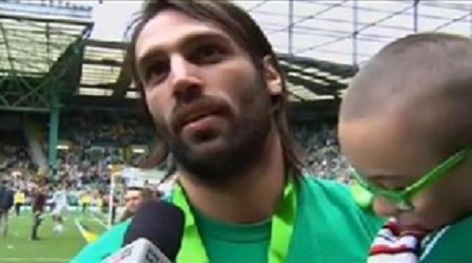
Την ανθρώπινη πλευρά του για ακόμα μία φορά έδειξε ο Γιώργος Σαμαράς, ο οποίος έδωσε μεγάλη χαρά σε έναν μικρό θαυμαστή του με σύνδρομο Down.

Ο Έλληνας επιθετικός, συγκινημένος από το “αντίο” του στην ομάδα μετά από 6,5 χρόνια κι έχοντας σκοράρει στη νίκη επί της Νταντί Γιουνάιτεντ, δεν ξέχασε τους φιλάθλους και δη τους πιο σημαντικούς.

Αρχικά, ο προπονητής της Σέλτικ, Νιλ Λένον, έδωσε το μετάλλιό του στον μικρό Τζέι που βρισκόταν στην πρώτη σειρά καθισμάτων, στην αγκαλιά του πατέρα του και ζητωκραύγαζε για την κατάκτηση του τίτλου.

Στη συνέχεια, ο Σαμαράς αποφάσισε να τον κάνει κι αυτόν μέρος της φιέστας για την κατάκτηση του πρωταθλήματος.

Τον πήρε αγκαλιά και μαζί του έκανε έναν μίνι γύρο θριάμβου στο “Σέλτικ Παρκ”, με αποτέλεσμα να γνωρίσει την αποθέωση από το κοινό που είχε κατακλύσει τις εξέδρες.

Πηγή: madata.gr