Daily Archives: May 14, 2014

Budget: 80 ABC staff out of work in 90 days as Australia Network closes

Mark Scott

ABC chief suggests Abbott government had decided to axe the network while still in opposition.

The Australia Network will close in 90 days, throwing 80 staff out of work and reducing the ABC’s overall news resources in the Asia Pacific.

Cuts of $120m over four years were delivered to the ABC in the budget on Tuesday, as well as an $8m cut to SBS.

“The Australia Network will have a domestic impact as well as international, particularly for our news services,” the ABC’s managing director, Mark Scott, said on its The World program.

“Some of our foreign bureaus are funded by the Australia Network,” Scott said. “Some of the programs that Australia Network helps fund, like this very show, go to air domestically and internationally. So our news budget will be cut by this decision. So therefore we will have to lose staff.”

Scott also said it appeared the Abbott government had decided to axe the Australia Network while still in opposition as it had never shown a willingness to consult on the network’s future, despite its success as an arm of soft diplomacy.

“I don’t know whether, in fact, decisions were made when the government was in opposition; whether commitments were made to others that this will be cut. But I haven’t felt that there has been really an open-minded genuine dialogue and discussion around the future of the network,” he said.

He had no regrets about the ABC’s journalistic partnership with Guardian Australia to report on material leaked by the NSA whistleblower, Edward Snowden, although it had antagonised the government.

He said the ABC had a long history of being an independent media outlet and would never be a puppet or a propaganda arm of the government.

The ABC and SBS staff unions will meet with management to discuss possible staff cuts once the budget impact is clear.

The president of the Community and Public Sector Union, Michael Tull, said the cuts would impact on metro and regional services, and he vowed to fight job cuts.

“This is a broken promise,” Tull said. “Prior to the election Mr Abbott gave an unambiguous promise that there would be no ABC cuts. An efficiency dividend is a cut, and a cut is a broken promise.

“Communications minister Malcolm Turnbull says he expects those efficiencies can be achieved without cutting their diverse range of programs and services, or affecting their editorial independence. Frankly, this is neither achievable or believable.”

The budget was also a blow to television production with a $25.1m cut from Screen Australia across four years and the cessation of funding for the Australian Interactive Games Fund, which gave out development money for projects.

The executive director of Screen Producers Australia, Matthew Deaner, said: “The ABC, SBS and Screen Australia are essential partners to the independent production sector in Australia. Their investments trigger millions of dollars of local and international financing into productions which employ thousands of Australians.

“We recognise the need for efficiencies, but they will take time to implement and we must be sure that the search for efficiencies does not undermine core business.”

The public broadcasters are also bracing themselves for further cuts outlined in the efficiency review by former Seven chief financial officer Peter Lewis, which is now with the communications minister, Malcolm Turnbull.

The ABC has reported that the review covers topics including: working together; harnessing technology; modernising the business; revenue opportunities; better resource allocation; financial management and governance.

The managing director of SBS, Michael Ebeid, said SBS is already a lean and underfunded organisation and a $2m a year funding cut would have an impact across the organisation.

“SBS is an efficient organisation which delivers enormous value to the Australian community with its modest funding, and providing services that reflect our unique multicultural charter will only become more important as Australia continues to grow in cultural complexity,” Ebeid said.

Friends of the ABC said its operational funding had decreased in real terms by 22.5% since 1986 and warned the cuts would mean staff numbers being slashed, more repeats, less investigative journalism and fewer enriching and in-depth programs.

“The Liberal-National Coalition has broken its promise,” said Glenys Stradijot, spokeswoman for ABC Friends national. “They reveal a lack of support for the country’s foremost cultural institution.”

The media director of the Media, Entertainment & Arts Alliance union, Paul Murphy, said the broken promise came after “unprecedented political interference in the editorial independence of public broadcasting in Australia”.

“What is more sinister is that the budget papers say tonight’s cuts are just a ‘down payment’ on even harsher cuts to come out of the efficiency audit currently under way, cuts that will further cripple the broadcasters.”

source: theguardian.com
World’s oldest sperm found in Australian fossil

1400042017525

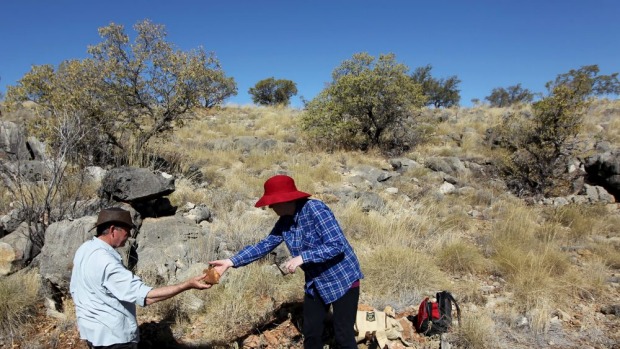
The world’s oldest and best preserved sperm has been discovered in 17 million-year-old fossils unearthed in far north Queensland. 

The sperm of an ancient species of freshwater shrimp, which were found inside a rock taken from the Riversleigh World Heritage area, were not only hardy, but huge compared to the animal’s body size.

The not-so-little swimmers were as long as the crustacean itself, which was only a couple of millimetres in length.

Palaeontologist Michael Archer, one of the three researchers who dug up the fossils in 1988, said: ”99.9 per cent of organisms who have sperm have, relative to their body size, small sperm [because] you’ve got to tuck them away in a little jiblet somewhere in your body.”

It was ”absolutely extraordinary” that the animal’s soft-tissue had been so well preserved, he said.

”When you’re in the field picking up hard, dry rocks and smacking them with hammers the last thing you expect to find in those rocks is a piece of what was once living soft tissue.”

Using a European synchrotron to scan the ancient critters, German researcher Renate Matzke-Karasz found many of the animal’s internal organs had been fossilised, including the sperm cells coiled inside the sex organs and the muscular pumps that thrust the sperm into the female.

Inside the giant sperm they also spied the nuclei that once held the animal’s DNA.

The fossilised shrimp, known as an ostracod, was uncovered on the floor of an ancient cave. ”The site was clearly a cave but the walls and ceiling of the cave have gone,” Professor Archer, from the University of NSW, said.

Research associate at La Trobe University, John Neil, found the fossils in the rubble after vertebrate fossils had been removed from the rock. Out of an ice-cream tub-sized container full of crushed limestone the size of gravel, Mr Neil found 800 specimens. Of those, 23 had some preserved soft tissue and just five contained well-preserved fossils with soft tissue.

”That gives you an idea of the rarity of what has happened,” he said.

A taxonomist, Mr Neil said advances in technology, such as being able to scan fossils using a synchrotron, meant a new frontier was opening up for palaeontologists, who could study the fossil record in greater detail than ever before.

The discovery, outlined in the journal Proceedings of the Royal Society B on Wednesday, shed light on the evolution of shrimps, which have been around for 400 million years. Mr Neil said there was little difference between the structure and organs of the modern-day shrimp and its ancient ancestor.

”This is indicating a long period without change which gives the evolutionary biologists something to think about, which I think is very significant,” he said.

Riversleigh is known for its beautifully preserved fossils because on the death of their owner, they were petrified in water rich in the mineral calcium carbonate, which can dissolve and re-precipitate into solid limestone rock.

”The ostracods were living in a pool in a cave and for some bizarre reason the limestone has preserved the soft tissue,” said Professor Archer.

It was unclear how the cells, including their nuclei, had been fossilised so perfectly, he said.

While soft tissue fossils are extremely rare, those that have been uncovered are usually made of bacteria that, in the process of eating the dead animal’s flesh, had become fossilised themselves.

But Professor Archer suggested it was possible the chemicals inside bat droppings, found in large quantities on the cave floor, may have played a role in preserving the sperm. ”It’s kinda magic stuff.”

source: smh.com.au


Abbott playing games over GST: Newman

Australian Election

The Queensland premier has accused the Abbott government of using the budget as a plot to force the states to campaign for a GST rise.

State and territory leaders are in open revolt, saying the federal budget has handed them back primary funding responsibility for schools and hospitals but not the means to pay for it.

Tuesday’s budget cemented the transfer of responsibilities, but also included $80 billion in cuts to school and hospital funding to state and territory governments.

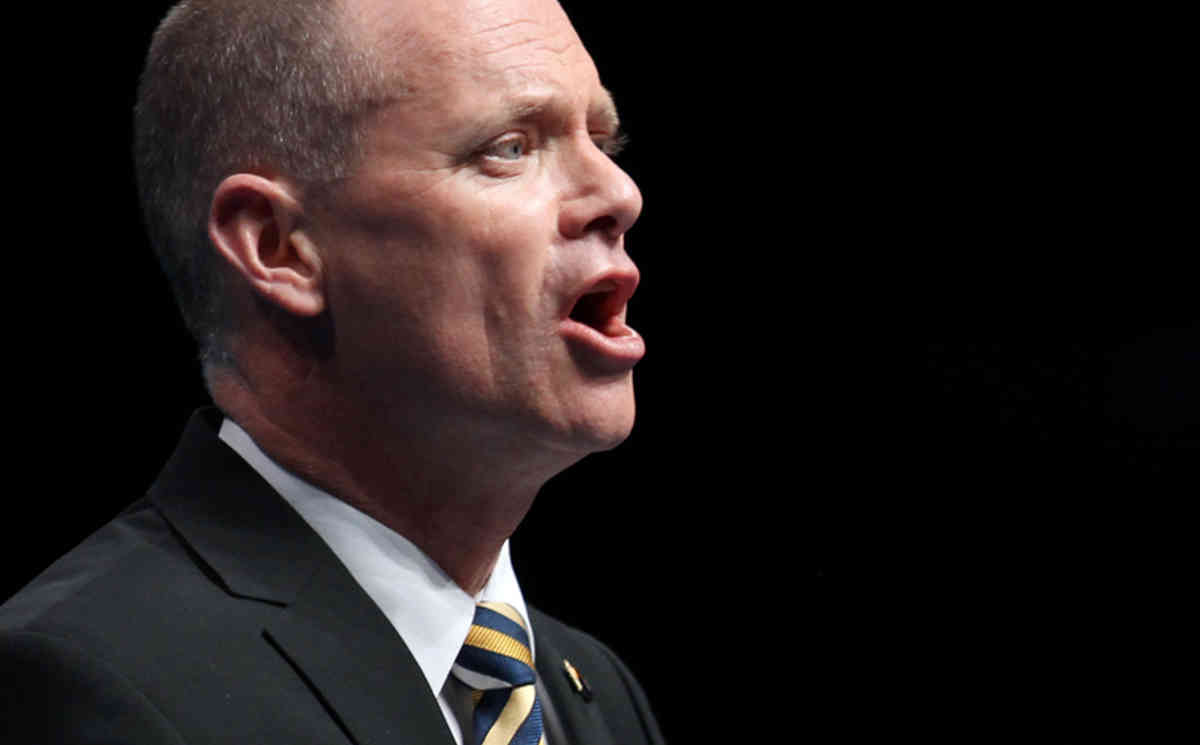
Queensland’s Premier Campbell Newman has demanded Tony Abbott convene an emergency COAG meeting, and accused the prime minister of keeping state leaders in the dark about the changes until budget night.

“We had a COAG meeting only the other day in Canberra. Frankly, I’m disappointed these sorts of moves were not discussed,” Mr Newman told reporters on Wednesday.

He says he’s already spoken to NSW Premier Mike Baird, Victoria’s Denis Napthine, South Australia’s Jay Weatherill and Northern Territory Chief Minister Adam Giles, and they intend to meet separately before any meeting with the prime minister.

Mr Newman said the changes appear to be part of a plot to force the states to campaign for a rise in the GST.

“The GST is like a political wedge the government is playing, and frankly I think most of the first ministers that I’ve spoken to – well the first ministers I’ve spoken to are pretty annoyed about that.”

Treasurer Joe Hockey has told the states they’ll need to become advocates for a GST rise if they want more money to cope with their funding responsibilities.

“If they want to increase funding in their areas of responsibility then they’ve got to run the argument on the GST,” Mr Hockey said on Wednesday.

Mr Newman said Mr Hockey’s comments about the GST had particularly annoyed him.

“This is not about the GST. This should not be about some political wedge,” he said.

“This is about a fair share of the income tax that mums and dads in Queensland pay coming back to fund their hospitals and their schools. They deserve that, they deserve nothing less.”

Mr Newman said recent improvements to Queensland’s hospital services could be undone unless more money flows back to the state, including improvements to emergency department and surgery waiting times.

He said he wanted to meet with Mr Abbott as soon as possible.

“This will not go away. It is not going to be taken lying down. States and territories will pursue this matter,” he said.

source: ninemsn.com.au

Socceroos World Cup 2014 squad: Ange Postecoglou names two new faces

1400030586169_jpg-620x349

Socceroos coach Ange Postecoglou has named two uncapped players in his extended 30-man squad for the 2014 FIFA World Cup by including 21-year-old defender Bailey Wright and German-based winger Ben Halloran in the preliminary team that will travel to Brazil.

The duo are among a rejuvenated Australia squad that has an unprecedented blend of youth, experience and domestic based players with 11 currently playing in the A-League.

Wright, who plays centre back for English League One club Preston North End has been included at the expense of injured defender Trent Sainsbury who was ruled out due to ongoing problems with his knee.

Fortuna Dusseldorf winger Ben Halloran has had a strong finish to the Bundesliga II season with a goal for every third game he features in.

Potential Socceroos captain Mile Jedinak has been declared fit to play in Brazil despite suffering a groin injury on the final day of the English Premier League while playing for Crystal Palace.

Josh Kennedy, the scorer of the vital goal that sealed Australia’s passage to Brazil has been selected for the first time under Ange Postecoglou and will have to prove himself during the 10 day camp in Gosford beginning Thursday, May 15.

Australia will play South Africa in a friendly in Sydney on May 26 before departing for Brazil two days later. The final 23-man squad will be announced on June 2.

Preliminary World Cup Squad

Goalkeepers: Mat Ryan, Mitch Langerak, Eugene Galekovic and Mark Birighitti.

Defenders: Josh Brillante, Jason Davidson, Ivan Franjic, Curtis Good, Ryan McGowan, Matthew Spiranovic, Alex Wilkinson, Luke WIlkshire, Bailey Wright.

Midfielders: Oliver Bozanic, Mark Bresciano, Ben Halloran, James Holland, Mile Jedinak, Massimo Luongo, Matt McKay, Mark Milligan, Tommy Oar, Tom Rogic, Adam Sarota, James Troisi, Dario Vidosic

Forwards: Tim Cahill, Josh Kennedy, Matthew Leckie, Adam Taggart.
source: smh.com.au


Federal Budget 2014: Tony Abbott on the front foot defending budget

155111-5cd4f122-dafa-11e3-8125-0ad81a58de5e

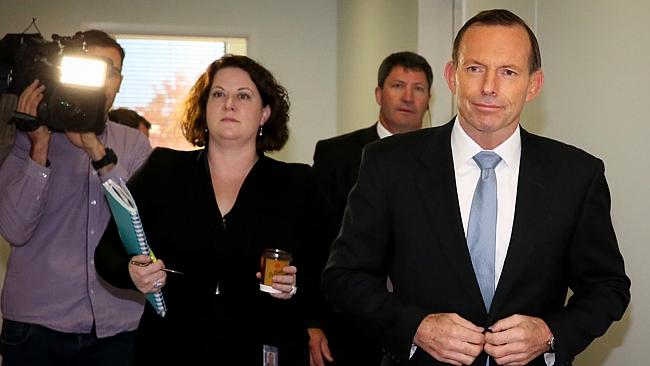
PRIME Minister Tony Abbott has had a tough morning on TV and radio as he sets about spruiking his unpopular Budget.

He copped a serve on Channel 10’s morning show Wake Up when he faced questions from a particularly cranky granny named Vilma.

She was incensed by the change that would see 3.7 million pensioners worse off when payments rise in line with inflation, rather than wages, from 2017.

“Mr Prime Minister, I have never heard of such rubbish in all my life,” she barked.

“Why don’t you leave the pensioners alone? If we pull the belt any tighter we’ll choke to death.”

Mr Abbott said he was happy to hear her give him a piece of her mind.

“I said before the election that we weren’t changing pensions and we’re not changing pensions in this term of parliament,” he said.

“I accept that in 2017 if this government gets elected we’ll go from one system of indexation to CPI indexation and after some time that will produce slower increases in the pension. I accept that but, look, this is a fair Budget, everyone is doing his or her bit, including, dare I say it, politicians.”

Vilma scoffed at this suggestion.

“Oh, you’re a comedian, sir, you’re a comedian,” she said.

Later, Mr Abbott hit the airwaves with Kyle Sandilands and Jackie O on Kiis FM, where listeners were most concerned about raising the pension age to 70 and the plan to make job seekers, aged between 25 and 30, wait six months before receiving unemployment benefits.

Western Sydney listener Natasha, 22, wasn’t pleased with this change, explaining that she had been unemployed for six months, despite have five years’ management experience.

“I can’t find a job and, you know why? Apparently because there’s not enough experience,” she said. “How are (people) going to live if they’re not getting the money they need?” she asked.

Sandilands interjected and suggested she should “toughen up”.

“If you are a young person and you can’t get a job, what about upgrading your qualifications?” Mr Abbott said.

“All of these things will be easier under us because we’re deregulating universities, we’re going to allow support for people doing non-degree studies … and there are the trade support loans that we’re bringing in.”

Mr Abbott had an easier time over on 2Day FM, where he handled some curly questions from Sophie Monk (who said, with more than a little tongue in cheek, she “loved talking politics”).

“How do you feel about Jay Z and Beyonce’s sister having a fight?” she asked the PM.

“I’ve been a sort of Budget hermit, the most exciting things I do is watch colleagues of mine have a cigar, occasionally,” he said in reference to Treasurer Joe Hockey and Finance Minister Mathias Cormann lighting up at the weekend.

“Is that Monica Lewinsky-ish?” Monk said.

Mr Abbott defended his first budget on Channel 9, saying it’s “fundamentally honest” and the right thing for the nation.

“I want to do what’s right for the country, not what’s right for the government,” he told Today this morning.

The government was being upfront with the Australian people about the state of the nation’s finances.

“This is a fundamentally honest Budget,” Mr Abbott said. “We are not going to cook the books, we are not going to make a series of rosy assumptions.”

The government cannot keep using its credit card to pay the nation’s mortgage, he said.

The budget includes a $7 charge for GP visits, lower pension rises and hikes in the fuel excise and income tax for people earning more than $180,000.

It also includes cuts to family benefits, foreign aid and the ABC.

But Mr Abbott is keen to stress the Budget also contains “hope for the future” with its record infrastructure spending and a $20 billion medical research fund.

Asked repeatedly on whether the Budget broke his key election promises, he said: “I think we have kept faith with the Australian public.” But he acknowledged: “Some people will be disappointed, some people will feel let down.”

Mr Abbott also spoke on Sunrise, saying he accepted that “millions and millions of Australians are doing it tough right now”.

“I want to lighten their load, not make it worse. I think the Australian public knew that we were going to get the Budget back under control because if I said it once, I said it several dozen times.

“We weren’t elected to take easy decisions, we were elected to take tough decisions and that’s what we’ve done.”

source:news.com.au

Budget 2014: Tony Abbott and Joe Hockey walking fine line on broken promises

5448448-3x2-340x227

The budget released by Joe Hockey last night seeks to be economically responsible. Cutting, but not too much in the early years when the economy is still relatively fragile, and including an assault on the largesse handed to the middle class when times were really good.

But it does so by breaking some promises, cutting benefits for some, and raising costs for many.

Almost a year ago, in his budget reply speech, Tony Abbott told Parliament that “the carbon tax will go, but no-one’s personal tax will go up, and no-one’s fortnightly pension or benefit will go down“.

It’s true the pension changes that will see lower increases won’t happen until after the next election.

But income taxes for the rich are going up for three years, and family payments are being squeezed on top of a rise in petrol tax and higher medical costs for GP visits, some tests and medicines. All eat away at the “cost of living” savings the Coalition promised would flow from scrapping the carbon tax.

More public servants than promised will lose their jobs (although the Government sheets most of the blame for that to Labor’s cuts to the bureaucracy); states and territories lose some Commonwealth payments; any commitment to the Millennium Development Goals on foreign aid has been ditched in what is one of the largest long-term budget savings; and higher education students could face bigger fees for some courses.

The growth in payments to schools and hospitals will slow, and funding guarantees for public hospitals will go. It will save the Commonwealth $80 billion over the next decade, and the Federal Government is challenging the states and territories to make up the difference.

There is much in this budget for Labor to attack. And attack it will, throwing Mr Abbott’s many pre-election promises back in his face.

But there are swings and roundabouts in this budget.

Far from hitting the budget hard early, the savings task starts off relatively slowly, and only really grows in the final years of the four-year forward estimates.

The money people have to pay to see a GP will be directed in large part towards a new fund to help pay for a big boost to medical research over the long term. And the extra money paid at the petrol bowser will help fund road spending.

There are also smaller “gives” to go along with the “takes”. While some family payments are tightened, low-income parents will get a new $750 payment. While some tertiary students will face higher fees, part of that money goes to a scholarship fund for the disadvantaged.

And the Government, which perhaps sensibly hasn’t said when it can get back to surplus, is making much of the money that will be saved by paying down debt and holding out hope of tax cuts down the track.

It hasn’t touched the National Disability Insurance Scheme; the family home hasn’t, as recommended by the Commission of Audit, been included in assets tests. The Government didn’t shrink the Medicare safety net, and actually went in the opposite direction. It has left the door wide open to future tax cuts.

It’s begun the task of structural repair to a budget in need of it.

Schools and health savings are two of the big saving changes that make a longer-term contribution to budget repair.

Making it harder to be on welfare when someone is young, cuts to foreign aid growth, family tax benefit cuts, changes to the indexing of age and disability pensions, and earlier repayments of higher education loans are the other structural savings that will benefit the budget in the longer term.

And the cuts to welfare have just begun. The Government will pursue those, as it will also pursue the outsourcing of government functions. And it hasn’t yet begun to look at future superannuation or tax changes.

The reality is Tony Abbott and his Treasurer are following a well-worn path in abandoning some election promises.

Paul Keating abandoned tax cuts he legislated.

John Howard introduced the concept of core and non-core promises.

And Kevin Rudd and Julia Gillard paid for reverses in their promises on carbon pricing.

If Tony Abbott hadn’t made so much of keeping all of his commitments, of the centrality of trust in his pitch to be PM, if he’d made more of his promises conditional on budget repair, the Government would be in a more comfortable place.

That’s not to say it is an easy budget for the Government to sell to voters. It does include pain now, and into the future. And the longer-term burden is being felt by low-to-middle-income earners rather than high-income earners who face a temporary increase in tax.

Mr Abbott and his Government will be hoping voters look at the national good, and reward it for being harsh now to be kind to the overall budget later.

He’ll be looking for a verdict on what he did in his first term rather than what he promised in the campaign before it.